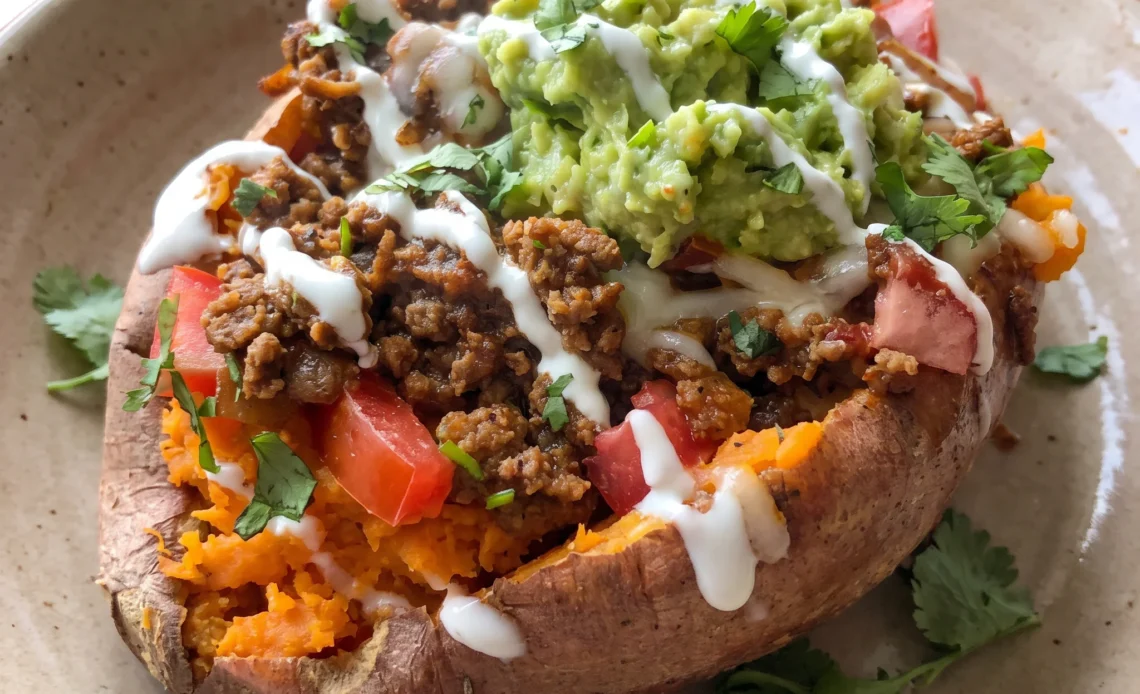
A taco stuffed sweet potato is not a taco on a different starch. It’s a taco filling that finally has something to push against, and the timing is what makes it weeknight work.
Taco meat alone can turn sharp and one-note, all cumin and chili and acid, until it hits that creamy interior and settles down. What makes taco stuffed sweet potatoes worth the habit isn’t the shortcut, though the microwave is why this lands on a table on a Tuesday. It’s the order of things: hot meat, then cheese while the heat is still there, cold toppings last.
Get that sequence right and each bite moves from sweet to savory to cool without any of it running together. Get it wrong and you’re eating a wet potato with stiff cheese on top. The margin is smaller than it looks.
The most common mistake is microwaving the sweet potatoes without poking holes, which traps steam and causes uneven cooking or full. Poking holes lets steam escape so the interior cooks evenly into a fluffy, scoopable texture instead of a waterlogged mash. This step also keeps the skin intact as a natural bowl, preventing the whole potato from collapsing under the taco meat and toppings.
Steam Inside the Skin
Poking holes in a sweet potato before it goes in the microwave is not a superstition. Steam builds inside as the interior cooks, and without an escape route, pressure can split the skin wide open or leave a gummy patch near the center.
The holes let that steam out in a slow, controlled way, so the potato cooks evenly from end to end. What you get is a tender, scoopable interior that stays moist.
That matters once taco meat and toppings land on top. A drier flesh, the kind you get from a long oven bake, tends to crumble and soak up sauce unevenly. Here the skin stays intact and flexible, turning into a natural edible bowl.
When you run a fork through the inside, it fluffs without resistance. The potato holds its shape under a heavy spoonful of meat, and the skin doesn’t fight back when you cut into it.
That structure is why this format works.
Building the Meat Base
Browning ground beef with onion and garlic before any liquid goes in builds a savory foundation that salsa alone can’t provide. The heat drives off moisture and concentrates the beef’s flavor, while the onion softens and sweetens in the rendered fat.
Skipping that step leaves you with steamed, pale crumbles that taste flat. Once the meat is browned, draining the grease is critical.
Leave it in, and the fat pools at the bottom of the skillet, then soaks into the sweet potato when you spoon the meat over. The result is a greasy, soggy bite that weighs down the whole dish.
After draining, the salsa and a splash of water come in. They create a thick, cohesive sauce that clings to every spoonful. The meat should look saucy, not soupy, and it should hold together when you scoop it.
That texture is what prevents dry, scattered bits from falling off the potato.
Why Sweet Meets Savory
Sweet potatoes carry a natural sugar that deepens as they cook. That sweetness is not a background note; it’s a full flavor that stands up to strong seasoning.
Taco seasoning brings cumin, chili, and garlic, all savory and slightly bitter. Salsa adds acidity and a little heat.
On their own, that meat mixture can taste sharp. Against the sweet potato, the edges soften.
The creamy interior acts as a cooling base, calming the spice and giving the sour cream and avocado something mild to play against. Without that contrast, the taco filling would overwhelm the plate.
Avocado or guacamole adds richness that bridges the two sides. The fat coats your tongue and slows down the sweetness, so each bite moves from savory to sweet without a jarring jump. A plain baked potato would leave the meat tasting one-dimensional.
Here, the balance is deliberate. You taste the sweet potato first, then the taco meat, then the cool toppings.
That sequence is what makes the dish work without a tortilla.
Stack the Toppings Right
Shredded cheese needs direct contact with hot taco meat to melt properly. If you pile cold sour cream or diced tomato on first, they block the heat and leave you with stiff shreds.
So spoon the meat over the potato, then scatter cheese right away. Give it a moment to gloss over and soften. After that, cold toppings go on.
Sour cream, tomato, and avocado should stay cool to contrast with the warm potato and meat. Adding them earlier lets them warm through and lose their edge. Diced avocado is better than guacamole here because you get distinct chunks that hold their shape.
Guacamole works, but it spreads and blends into the meat, muting the texture. A little diced tomato adds a juicy pop, and sour cream brings tang. Build in that order and each bite has a mix of temperatures and textures.
The cheese pulls, the avocado stays creamy, and the sweet potato holds it all together.
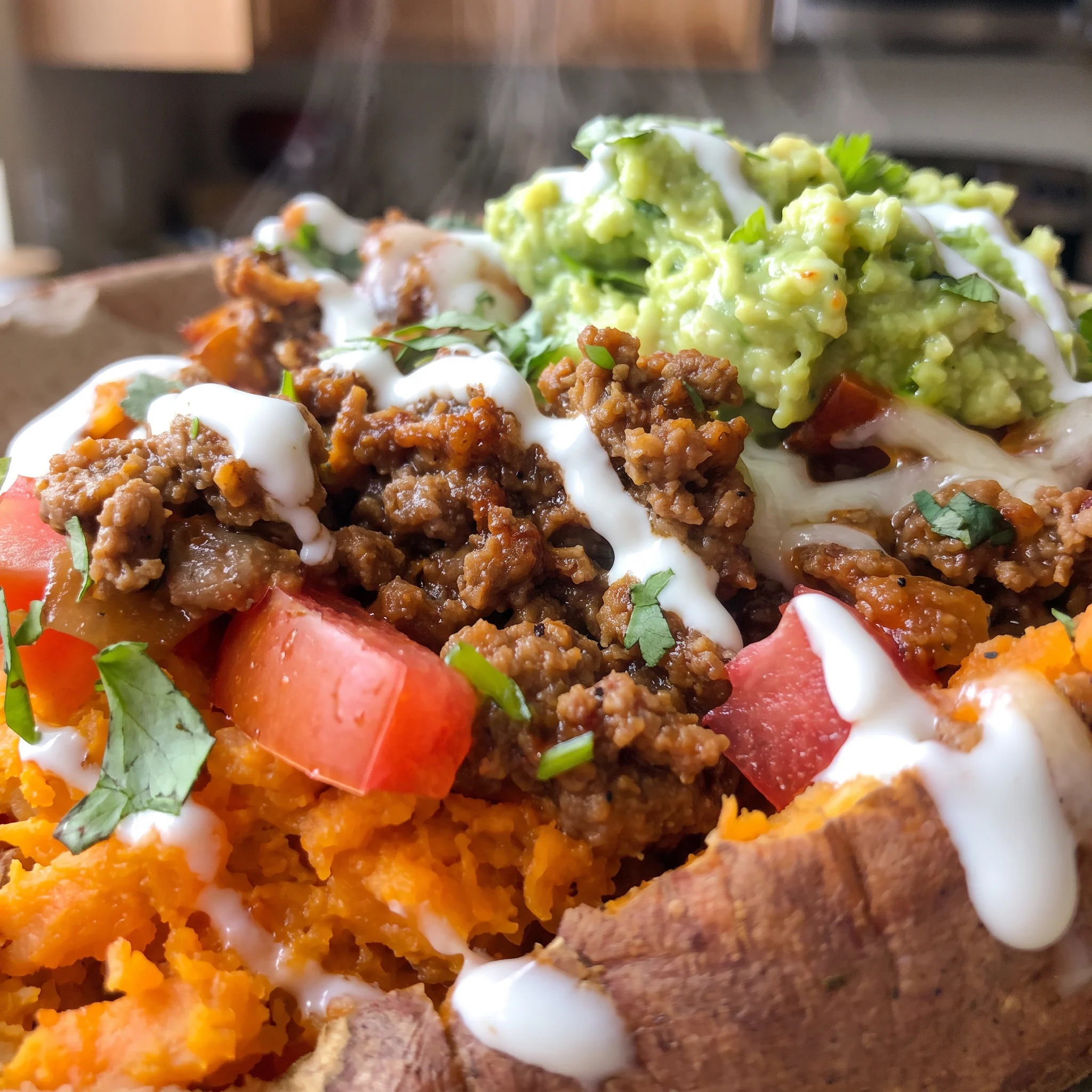
What to Look For Before You Start
lean ground beef: Lean keeps the skillet from pooling with fat, and 1 lb fits four potatoes once the salsa loosens it.
chunky salsa: Chunky gives you tomato pieces that read as texture in the meat, while smooth salsa just thins the sauce.
medium sweet potatoes: Look for 12 to 14 oz each so four of them fill out the servings without crowding the microwave turntable.
shredded Mexican blend cheese: Bagged blend melts fast and evenly, which matters when it only gets heat from the meat below it.
avocado: Pick one that gives slightly when pressed, since a firm avocado cubes into hard, waxy chunks.
Reading the Sweet Potato and the Skillet
When the sweet potato is done steaming
Microwave on high for 8 to 10 minutes, turning once halfway. They’re done when a fork slides in with almost no resistance and the skin feels soft but not split. If there’s any firmness at the center, give it 1 to 3 more minutes.
Underdone potato won’t fluff and you’ll end up mashing it to get a smooth texture. Overcooked and the skin gets slack, so it tears when you load it up.
Judging the meat before you drain
In the skillet, the beef, onion, and garlic are ready to drain when the beef is no longer pink and the onions are translucent, with a thin layer of fat in the pan. If you drain too early, the meat steams instead of browning and tastes flat.
Too late and the fond starts to scorch, leaving a bitter note that salsa won’t cover. Scoop the meat into a colander and let it sit a minute so the grease really leaves.
Getting the sauce to cling, not run
After the salsa goes in, cook over medium-low for about 5 minutes. The mixture should thicken enough that a spoon dragged through leaves a trail that fills in slowly, and the meat looks glossy, not wet. If it’s soupy, keep cooking; the extra water will steam off.
If it’s dry and clumpy, add water a tablespoon at a time up to 1/2 cup. You want it scoopable without dripping.
The moment to open and fluff
Let the potatoes sit 2 to 3 minutes after microwaving. They’re cool enough to handle when you can hold one in a palm without wincing.
Slice lengthwise and run a fork through the flesh. It should separate into soft strands with no resistance, and the skin should stay intact as a bowl.
If you open them too hot, steam burns your fingers and the flesh turns gluey. Too cold and it won’t fluff, it just clumps.
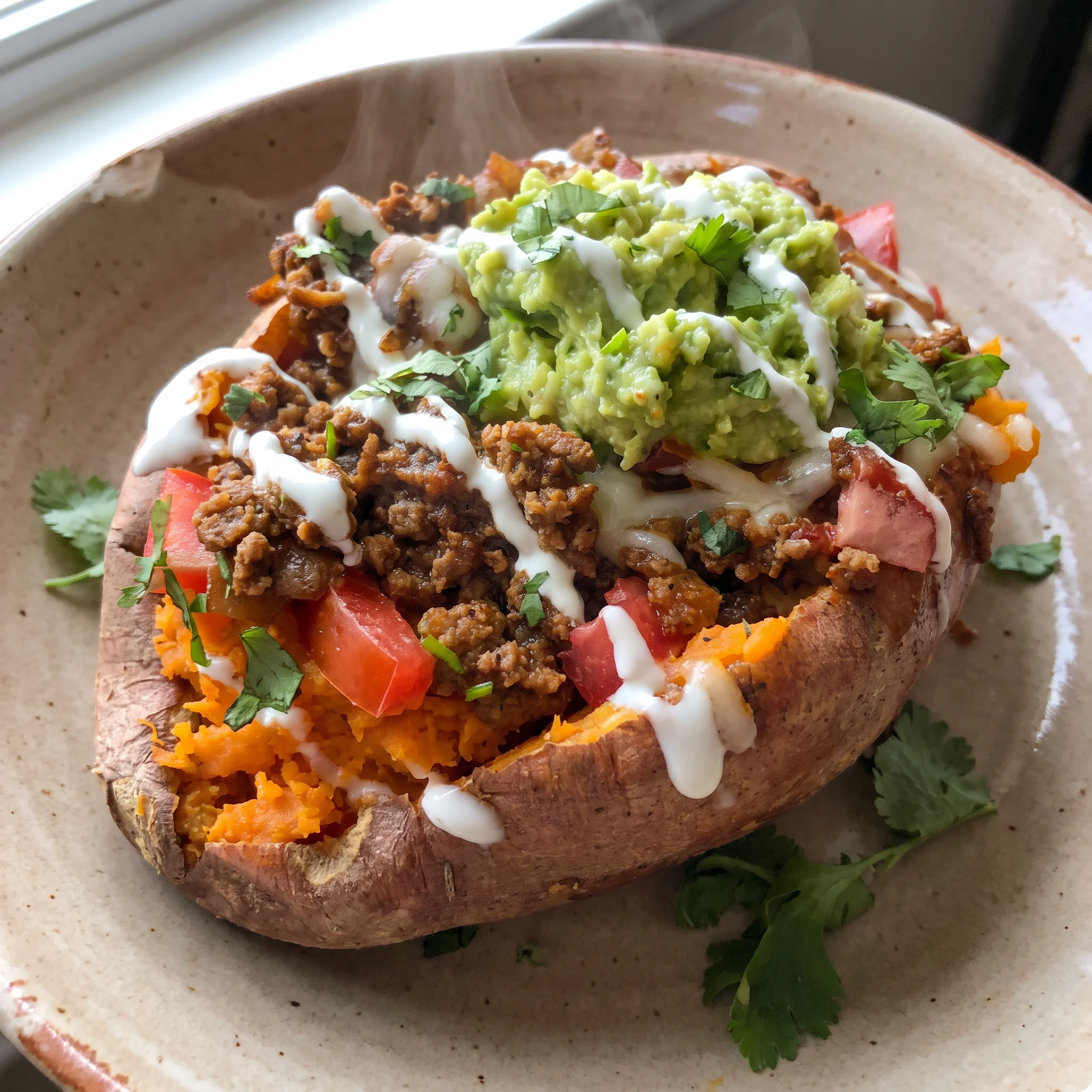
Taco Stuffed Sweet Potatoes with Ground Beef
Ingredients
Method
- In a large skillet over medium-high heat, brown the ground beef, chopped onion, and minced garlic. Drain the grease, then stir in the taco seasoning and salsa.
- Reduce the heat to medium-low and cook for about 5 minutes, until the mixture has thickened and is heated through. Add up to 1/2 cup of water to reach the desired consistency.
- While the meat cooks, poke holes all over the sweet potatoes and microwave on high for 8–10 minutes, turning them over once halfway through. If the potatoes are not soft enough, continue cooking for 1–3 minutes more. Typically two potatoes are cooked at a time, but if the microwave allows, all four can be cooked at once. Let the sweet potatoes cool slightly, then slice them lengthwise and fluff the insides with a fork.
- Spoon the cooked taco meat over the sweet potatoes and add desired toppings such as shredded cheese, diced tomato, avocado, guacamole, or sour cream. Enjoy!
Storing and Reheating Leftovers
Keep the taco meat and the cooked sweet potatoes in separate containers. Together, the potato flesh pulls the sauce out of the meat within an hour, leaving dry crumbles and a soggy interior. The meat holds in the fridge for about four days; the potatoes last about the same.
Reheat the meat in a skillet over medium-low with a splash of water, stirring until it’s glossy and scoopable again, three to four minutes. Microwave the potatoes one to two minutes, until the flesh is warm through. Assemble only what you’ll eat.
Cold toppings go on after reheating: cheese first on the hot meat, then sour cream, tomato, and avocado. Eat within fifteen minutes for the best texture, since the potato firms as it cools. Freeze the meat alone for up to three months; the potatoes don’t freeze well, turning watery and slack.
Tips
- Weigh the four sweet potatoes and pair up the two heaviest and the two lightest. Microwaving a 12 oz potato next to a 14 oz one means the smaller one finishes first and starts to collapse while the larger one still has a firm core. Matching weights per batch, or cooking all four only when they land within an ounce or two of each other, gets them done at the same time without pulling any out early.
- Skip potatoes that feel light for their size. A sweet potato that seems hollow or gives under light pressure has lost moisture in storage, and its flesh steams into a wet, stringy pulp that won’t fluff with a fork. A heavy potato of the same size has denser starch and less free water, so after 8 to 10 minutes it separates into dry, soft strands that hold the taco meat and salsa without turning the skin into a puddle.
Swap the Meat, Keep the Salsa
lean ground beef: ground turkey or ground chicken. Both are leaner, so you won’t get the same beefy depth.
Turkey in particular can dry out and taste a bit flat, but the taco seasoning and salsa will cover a lot. Use the same 1 lb.
Watch the skillet: poultry releases less fat, so there’s less to drain. If the meat looks dry before the salsa goes in, add a splash of water or a little oil to keep it from sticking.
chunky salsa: drained diced tomatoes plus a pinch of cumin. Salsa brings acidity, heat, and body.
Diced tomatoes give you the tomato pieces but not the chili kick. Drain them well or the meat turns soupy. Start with the same 1 cup, then add cumin a pinch at a time.
You’ll lose some of the tang, so taste after it simmers and adjust with a squeeze of lime or a dash of hot sauce if you want that edge back.
shredded Mexican blend cheese: Monterey Jack or cheddar, shredded. Monterey Jack melts smoothly and has a mild tang; cheddar brings sharper flavor and can turn a little oily when it melts.
Either works. Shred it yourself if you can, since bagged pre-shredded cheese often has added starch that keeps it from melting as evenly. Use the same amount you’d normally scatter, about a small handful per potato.
sweet potatoes: leave them alone. The whole dish is built around their sweetness against the seasoned meat.
Russets or regular potatoes turn this into a different meal, one that lacks that contrast. Stick with medium sweet potatoes, 12 to 14 oz each, so they cook in the time given.
taco seasoning packet: leave it alone. A homemade blend won’t match the salt and anti-caking agents in a packet, and you’d have to rebalance the whole filling. If you must avoid a packet for gluten or additives, use a gluten-free taco seasoning packet and follow its directions for 1 lb of meat.
Otherwise, keep the packet.

Frequently Asked Questions
Can I make the taco meat ahead of time and assemble later?
Yes, and it’s the better way to do it. Cook the meat fully, then cool it and store it in a separate container from the sweet potatoes. When you’re ready to eat, reheat the meat in a skillet with a splash of water until it looks glossy and scoopable again, and microwave the potatoes until the flesh is warm.
The reason to keep them apart is that the potato pulls the sauce out of the meat, so if they sit together you get dry crumbles and a soggy interior. Assemble only what you’ll eat right then.
How do I keep the sweet potatoes from getting soggy when stuffed?
The most common cause is undercooked potatoes: if the center still has any firmness, the flesh won’t fluff and you end up mashing it to smooth it out, which releases water and turns gluey. Cook them until a fork slides in with almost no resistance and the skin feels soft but not split.
After they rest a couple of minutes, slice and fluff with a fork; the inside should separate into soft strands without resistance, and the skin should stay intact as a bowl. If yours still seem wet, it’s usually because they sat too long after cooking, so fluff and load them while they’re still warm. The other check is the meat: if it’s soupy, it’ll soak straight through, so let it thicken until a spoon dragged through leaves a trail that fills in slowly.
How is this different from a regular taco or a stuffed potato?
A regular taco uses a neutral, thin tortilla that mostly holds the filling; here the sweet potato brings its own sweetness and a creamy interior that calms the spice and gives the sour cream and avocado something mild to play against. A stuffed potato usually leans on butter, cheese, and bacon, so the flavors stay in one savory lane. This one moves from sweet to savory to cool in a single bite, and you eat the bowl.
The trade-off is that the potato is heavier than a tortilla, so the toppings need to go on in the right order to keep the textures distinct.
