
Someone hands you four cups of grated zucchini and asks what you’re doing with all of it. A batch of sweet zucchini relish is the answer, and it’s the rare preserve where a vegetable that turns limp under heat is the whole reason it works. Zucchini gives up its water readily, so once you push past the salting and the squeeze, you’re left with shreds that drink up brine instead of watering it down.
The hard part isn’t the simmer. It’s the waiting while the shreds drain, and the discipline to taste the pot before it goes into jars, because the sweet-tart line sits in a narrow window and a jar seals in whatever you decided. What comes out is a golden, spoonable relish closer to a chutney than anything you’d buy, and it earns its shelf space.
The most common mistake is skipping or rushing the salt-and-rest step, because grated zucchini looks dry and the recipe seems ready to proceed. During the rest, salt draws moisture out of the zucchini cells through osmosis, and that liquid must be squeezed out after rinsing; if it stays in, the relish turns soupy and the vinegar and sugar become too weak to preserve or properly flavor it.
Salt the Zucchini to Pull Out Water
Grated zucchini is mostly water, and that water has to go somewhere. Leave it in, and it ends up in the jar, diluting the vinegar and sugar until the relish tastes flat and thin.
The salt you toss with the shreds starts drawing moisture out right away. After an hour, you’ll see a pool of liquid in the bottom of the bowl and the zucchini will look limp and collapsed. That’s what you want.
When you rinse the shreds under cold water, you’re washing away the excess salt so the relish doesn’t end up overly salty. Squeezing them dry removes the rest of the liquid. Skipping either step leaves you with a watery relish or one that tastes like brine.
Get the shreds as dry as you can before they go in the pot.
Balance Sugar and Vinegar for a Safe, Sweet-Tart Relish
Sugar and vinegar do more than flavor this relish. Together they create an environment where spoilage organisms can’t thrive. The sugar pulls water out of any remaining cells, and the acid drops the pH low enough that mold and bacteria struggle.
That’s why the ratio matters. Cut back on sugar without increasing vinegar, and you lose both the sweet-tart balance and some of the preservation. The simmer step dissolves the sugar completely and gives the vegetables time to absorb the brine.
It’s not just about cooking them through. You’re building a liquid that will keep the relish stable in the jar.
Taste a spoonful near the end of the simmer. It should be sweet, sharp, and slightly thick, not watery or cloying.
Three Spices, Three Jobs
Mustard seeds bring a sharp, pungent heat and a little crunch that softens as the relish sits. Celery seed gives that unmistakable pickle aroma and a savory backbone that keeps the sweetness from taking over.
Turmeric adds the bright yellow color and a mild earthy bitterness that rounds out the sugar. None of them can do another’s job.
Leave out the celery seed, and the relish tastes flat, more like sweet zucchini than relish. Skip the turmeric, and you lose that golden hue and the subtle edge it brings.
The mustard seeds are the only ones you’ll feel between your teeth, at least for the first week or two. Together they make the relish taste like relish, not just pickled vegetables.
Decide Whether to Water-Bath Process
A water bath gives you shelf-stable jars. The heat drives air out of the headspace, creating a vacuum seal as the jars cool, and it kills any spoilage organisms that might have tagged along.
Skip that step, and the jars must stay in the refrigerator. They’ll keep for a few weeks, but you’re trading pantry space for fridge space. Either way, clean jars and proper headspace matter.
Leave too little room, and the relish may bubble over or not seal. Too much, and the vacuum might not form. Processing also softens the vegetables a bit more, so the texture will be a touch less crisp than the unprocessed version.
If you want crunch, refrigerate. If you want convenience, process.
Both are correct. Just know which one you’re getting.
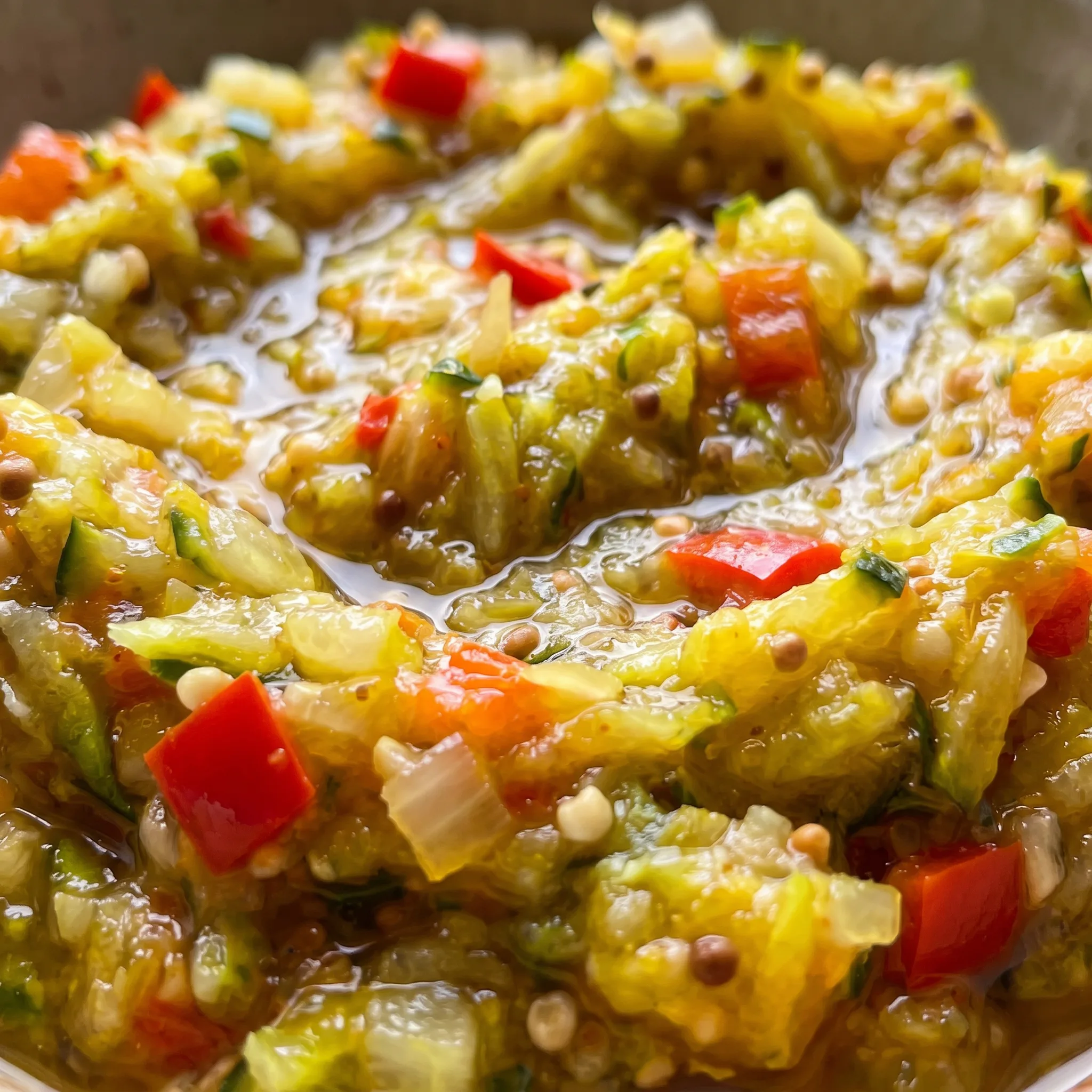
What to Buy and How to Prep the Ingredients That Shape This Relish
Zucchini: Choose firm, young zucchini with glossy skin; oversized ones have watery, seedy centers that dilute the relish even after salting.
Onion: A yellow or white onion gives sharper bite than sweet varieties, which can fade once the sugar and vinegar go in.
Bell Pepper: Red or orange bells bring sweetness and color, while green ones stay sharper and more vegetal against the turmeric.
Apple Cider Vinegar: Use a vinegar labeled 5% acidity for consistent preservation; homemade or unknown-strength vinegar won’t give the same result.
Mustard Seeds: Yellow mustard seeds are milder and crunchier than brown or black, which turn the relish sharply hot.
How to Read the Relish at Every Stage
Judging the squeeze after the rinse
After an hour with salt, the shreds will have given up a lot of water. Rinse them, then grab a handful and squeeze hard. You want them to feel like a wrung-out sponge, not wet and slippery.
If they still drip, squeeze again in batches. Any water left now will thin the brine later.
The shreds should look collapsed and slightly translucent, not bright and crisp.
When the simmer has gone far enough
The relish is done simmering when a spoonful holds together rather than separating into liquid and solids. Twenty to thirty minutes is the window.
Pull a spoonful out and tilt it. If it runs off like water, keep going. If it plops and mounds, it’s ready.
Over-simmer and the vegetables turn soft and the color dulls. Under-simmer and the brine stays thin. Taste a cooled spoonful: sweet, sharp, and slightly thick.
Tasting for the sugar-vinegar balance
Near the end of the simmer, taste a cooled spoonful. The sugar should round out the vinegar without hiding it. If it tastes flat or too sweet, add a splash more vinegar.
If it bites too hard, a pinch more sugar. Adjust in small amounts and simmer a minute longer.
The balance is easier to fix now than after the relish is in jars.
Judging headspace before sealing
As you ladle, leave a quarter-inch of space between the relish and the rim. Too little and the relish may bubble over during processing or seal poorly.
Too much and the vacuum might not form. Wipe the rims clean, then close the lids finger-tight. If you’re not processing, let the jars cool, then refrigerate.
The headspace is the same either way.
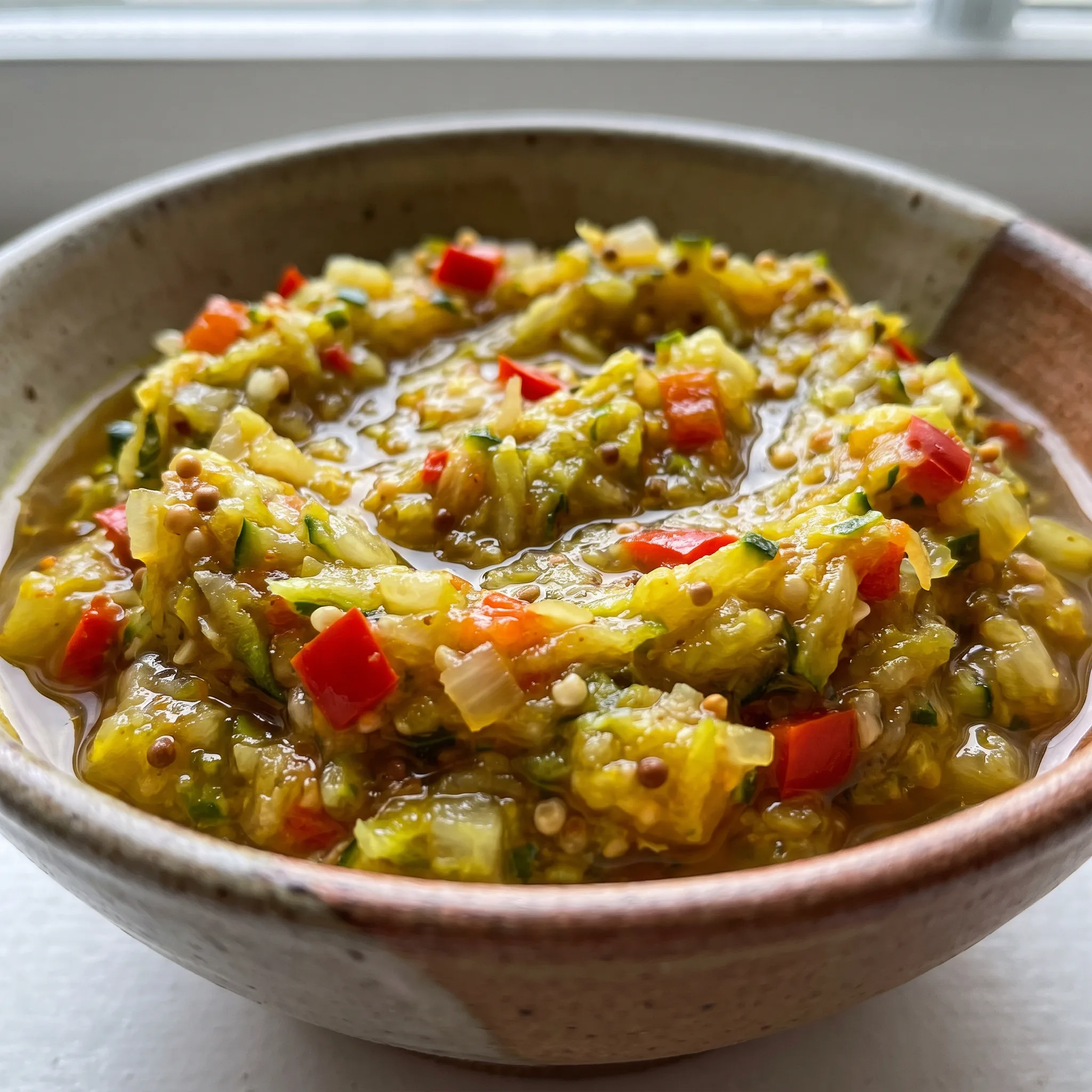
Sweet Zucchini Relish with Onion and Bell Pepper
Ingredients
Method
- Shred zucchini, then dust with salt. Allow to rest 1 hour.
- Under cold running water, wash the zucchini and squeeze out excess liquid.
- Combine in a bowl the zucchini, onion, bell pepper, sugar, vinegar, mustard seeds, celery seed, turmeric, and salt.
- Move the mixture into a pot, heat to boiling, then reduce to a simmer for 20-30 minutes.
- Ladle the relish into sanitized jars, leaving headspace, and close tightly.
- (Optional) Process in a water bath for 10-15 minutes.
Where a Swap Helps This Relish and Where It Breaks the Jar
Sugar: Cutting the sugar or trading it for a low-calorie sweetener. Sugar here is doing preservation work, not just sweetening.
Drop it and the brine turns sharp and thin, and the water activity rises enough that the relish won’t keep the way the recipe intends. Honey or maple syrup can stand in, but both bring their own moisture and a darker flavor that fights the turmeric, and neither measures the same as the 2 cups of granulated. Use the full 2 cups of whatever sweetener you choose, then taste after the simmer and adjust from there.
Apple Cider Vinegar: White vinegar, rice vinegar, or a homemade fruit vinegar. White vinegar works and keeps the same 5% acidity, though it reads harsher and less round than cider. Rice vinegar is milder, so the relish loses some punch and the sweet-tart line shifts toward sweet.
Homemade or unknown-strength vinegar is the one to avoid: without a reliable 5% acidity you can’t count on the preservation, and the flavor can go flat or sour in a way that’s hard to fix after the jars are sealed. Keep the 1 cup quantity and adjust only by taste.
Mustard Seeds: Brown or black mustard seeds, or mustard powder. Brown and black seeds are hotter and less crunchy, so the relish turns sharply spicy and you lose the little pop the yellow seeds give. Mustard powder dissolves into the brine and adds heat without any texture at all.
If heat is what you want, either works, but the relish will taste like a different thing. Stick with yellow seeds at the 1 tbsp the recipe calls for if you want the crunch to come through.
Celery Seed: Celery salt or fresh chopped celery. Celery salt is the closest in flavor, but it carries salt, so cut back on the 1 tsp salt in the recipe or the relish turns too salty. Fresh celery adds water and bulk, and its flavor fades fast in the simmer, so you get less of that pickle aroma.
There’s no true substitute for celery seed here. Leave it out and the relish tastes sweet and flat, more like pickled zucchini than relish.
Tips
- Weigh the grated zucchini after you squeeze it. Four cups of shreds is a volume measure, and how much water they hold varies with the squash, so a pound of drained shreds can start out as five or six cups of grated zucchini. If you end up with noticeably less than four cups after squeezing, the brine will be proportionally stronger, so taste after the simmer and add a splash of water if it bites too hard.
- Grate on the large holes of a box grater, not the fine side. Fine shreds collapse into a paste during the twenty to thirty minute simmer and the relish loses the bits of texture that separate it from a sauce. Coarse shreds hold their shape through the cook and give you something to chew.
Storage and Serving: When Zucchini Relish Tastes Best
This relish is at its most assertive in the first few days after it cools. The vinegar still bites, the mustard seeds pop between your teeth, and the turmeric reads bright.
If you want that sharp, crisp version, eat it within the first week. After two to three weeks in the fridge, the edges soften. The sugar rounds out the acid, the seeds lose their snap, and the whole thing tastes mellow and settled.
Many cooks prefer it this way, so taste at both stages before deciding. Refrigerated jars keep about three weeks.
Water-bath processed jars hold their quality for a year in a cool, dark pantry; once opened, refrigerate and treat them like the fresh version. Freezing works but wrecks the texture.
The vegetables thaw limp and release water, leaving a thin brine. If you must freeze, do it in small portions and use them in cooked applications.
Serve cold or at room temperature alongside grilled meat, sausages, or sandwiches. A spoonful drained of excess liquid keeps bread from getting soggy.
Frequently Asked Questions
How long does homemade zucchini relish last in the fridge?
Refrigerated jars keep about three weeks. That clock starts once the jars have cooled, whether you water-bath processed them or not; processed jars that stay sealed hold their quality for a year in a cool, dark pantry, and once you open one it goes back to the three-week fridge window. Watch for the brine turning cloudy or the surface drying out, and smell a spoonful before you commit it to a sandwich.
Can I make zucchini relish ahead of time and process it later?
Cook the relish, ladle it into clean jars, cool, and refrigerate, then water-bath those jars whenever it’s convenient within that three-week fridge window. The relish doesn’t care that it sat; what matters is that the jars stayed cold and covered the whole time. If you’re holding it more than a few days, check the brine hasn’t thinned or separated before you process, and bring the jars to room temperature first so the glass doesn’t crack in the hot water.
What’s the difference between zucchini relish and cucumber relish?
Cucumber relish tastes greener and crunchier because cucumbers hold their structure through the simmer and carry more water than zucchini does. Zucchini breaks down further after the salt-and-squeeze step, so the finished relish is softer and leans on the sugar, celery seed, and turmeric for its character rather than on the vegetable itself. The trade is texture for availability: you can make this in July when the zucchini pile is absurd and the cucumbers are already spoken for.
