
Ricotta doesn’t make a scone taste like cheese. What it does is keep the crumb soft enough that you can eat one cold the next morning without reaching for coffee to wash it down, which is more than most bakery versions manage by the second day. The fruit is where cranberry ricotta scones get tricky.
Whole berries drop through the dough and leave you with a bare bite, then a sour ambush, so chopping them rough and folding them in late matters more than the recipe lets on. Orange zest in the sugar does the rest of the work, brightening what would otherwise taste like a sweet biscuit with red specks. Warm from the oven, still tacky under the glaze, this is a scone that doesn’t need jam and doesn’t crumble in your hand.
Cold butter cut into tiny pieces stays solid until the oven, where it melts and releases steam that lifts the dough into flaky layers. If the butter warms or the dough is stirred beyond the point where it just holds together, the fat coats the flour proteins and gluten forms, producing a dense, tough crumb instead of a tender one.
Cold Butter, Tiny Pieces
Butter straight from the fridge, cut into small bits, gives you the flaky layers scones are known for. When you work it into the dry ingredients, those cold fragments stay intact, and during baking they create steam that pushes the dough apart.
You’ll see a coarse meal texture, like damp sand with visible butter specks. That look tells you the fat is evenly distributed, not melted into the flour. If you overmix or let the butter warm up, the dough turns dense and tough because the fat blends too thoroughly.
A light hand when stirring and folding keeps the crumb tender. I’ve found that stopping as soon as the dough comes together, even if it’s a bit shaggy, makes all the difference.
The result is a scone that breaks apart in layers, not crumbs.
Ricotta’s Quiet Role
Whole milk ricotta brings a gentle richness to these scones, contributing both fat and moisture without weighing them down. It’s not as heavy as cream, but it has more body than buttermilk, so the dough stays hydrated and the baked scone ends up soft with a slight density.
You’ll notice the texture is tender, not dry, and the ricotta’s subtle tang complements the cranberries. Using whole milk rather than part-skim keeps the fat content up, which helps the crumb stay moist.
When you stir it in with the egg and milk, it blends smoothly into the flour mixture. The dough will feel a bit sticky, but that’s fine. After baking, the interior is soft, with a richness that lingers without feeling heavy.
Cranberries and Orange Zest
Chopping the cranberries ensures their tartness spreads evenly through each scone, so you don’t bite into a sudden sour pocket. Frozen berries work just as well as fresh, but don’t thaw them first; they hold their shape better and keep the dough cold.
Orange zest, rubbed into the sugar, releases citrus oils that perfume the whole batch. That bright note cuts through the buttery dough and echoes in the glaze. The balance is key: sweet from the sugar and glaze, tart from the berries, with a citrus lift that ties it together.
You’ll taste the orange in the background, not overpowering, just enough to make the cranberries sing. Each bite should have a bit of fruit and a hint of zest.
Glaze on Warm Scones
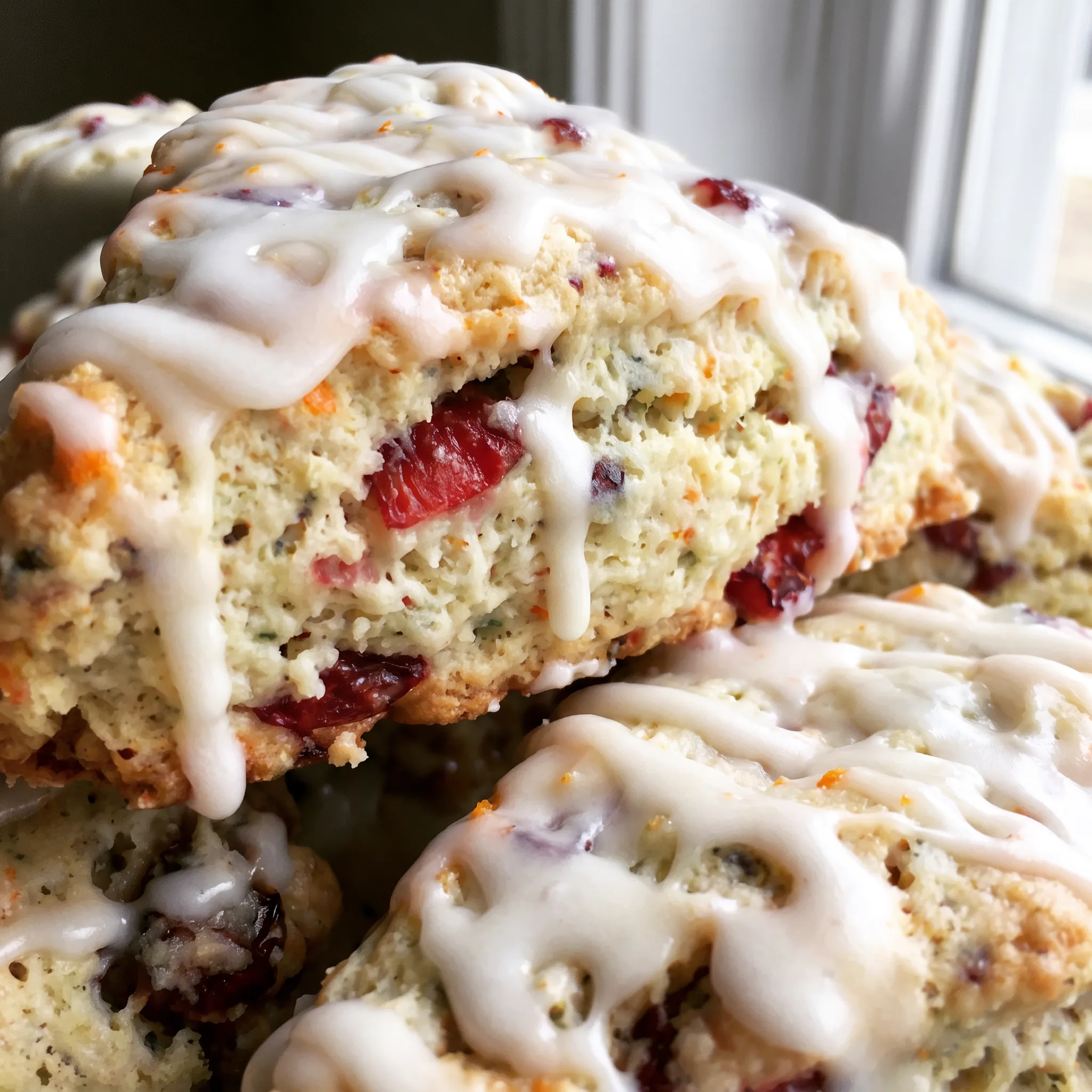
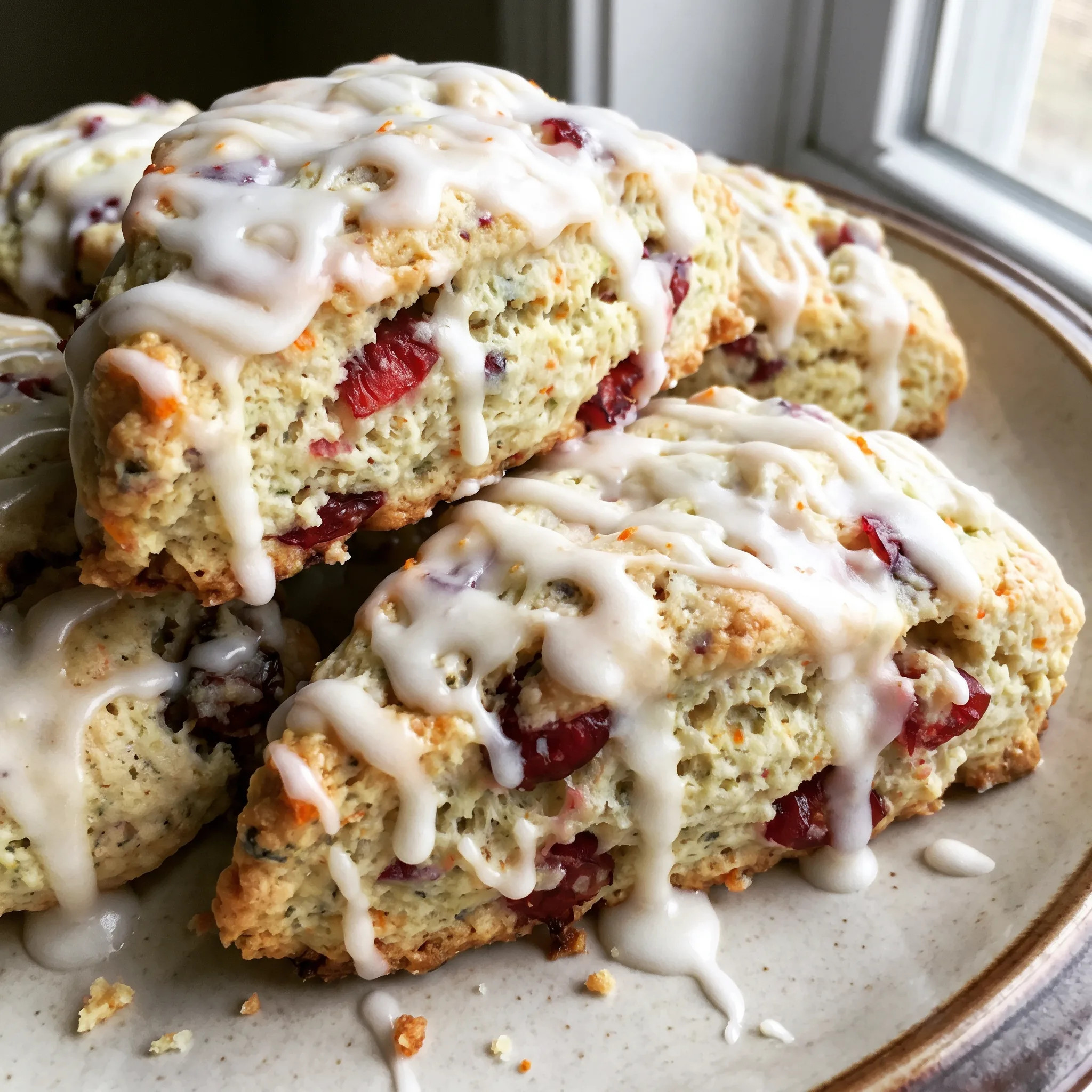
Drizzling the glaze while the scones are still warm lets it soak in slightly, adding moisture and a glossy finish. The pinch of salt in the glaze might seem odd, but it sharpens the orange flavor and keeps the sweetness in check.
If the glaze is too thick, a few drops of juice or milk loosen it; too thin, and a spoonful more confectioners’ sugar brings it back. You want it pourable but not runny, so it coats the top without pooling. That contrast of the bright, citrusy glaze against the golden, tender scone is what makes these feel complete.
I’ve found that glazing warm is the way to go; the scones drink it up and the sheen is unmistakable. Serve them soon after, while the glaze is still tacky.
Buying and Prepping the Four That Matter
Whole milk ricotta: Part-skim ricotta reads grainy in the crumb, so buy whole milk and check the label for a short ingredient list.
Cranberries: Frozen berries go into the dough still frozen and chopped rough, since thawed ones bleed juice and stain the dough pink.
Orange zest: Zest only the outer colored peel, because the white pith underneath turns the sugar bitter.
Confectioners sugar: Lumpy confectioners sugar leaves flecks in the glaze, so sift it if the bag has been open a while.
Unsalted butter: Salted butter would throw off the 1/2 tsp of salt already in the dry mix, so keep it unsalted and very cold.
Reading the Dough at Four Points That Decide the Bake
When the butter stops being butter
Two forks or a pastry cutter, moving fast, until the mixture looks like coarse meal with visible butter specks. Stop there. Push past it and the butter warms into the flour, and the baked scone comes out tight instead of layered.
Feel the bowl: it should stay cool. If the butter starts smearing, slide everything into the freezer for five minutes and pick up where you left off.
The shaggy point
After the ricotta mixture goes in, stir with a fork just until no dry flour streaks remain. The dough will look ragged and a bit sticky, and that’s where you stop. Keep stirring and you develop toughness.
The cranberries go in next, folded with a spatula, and they’ll smear if you overwork. A few streaks of flour are safer than a smooth ball.
Patting out, not pressing down
Turn the dough onto a floured surface and pat it into an 8-inch circle. Use your fingertips, not your palm, and keep the pressure light. If you press hard, you compact the layers you just built with cold butter.
The circle should hold together but still feel soft. A crumbly edge is fine; pinch it back in.
Slice into 8 wedges with a sharp knife, straight down, no sawing.
The color that means done
At 18 minutes, check the tops: they should be lightly golden brown, with the edges just starting to color. If they’re pale, give them another minute or two, but pull them before they darken.
Overbaked scones lose the soft crumb that ricotta gives them. The bottoms should be dry and release from the parchment. If they stick, they need another minute.
Cranberry Ricotta Scones with Orange Glaze
Ingredients
Method
- Set oven to 400°F (205°C). Prepare a large baking sheet by lining it with parchment paper; leave aside.
- In a large bowl, combine the flour, salt, baking powder, baking soda, sugar, and orange zest.
- Cube the butter, then using two forks or a pastry cutter, rapidly incorporate it into the dry mixture until it looks like coarse meal. Set aside.
- In a small bowl, beat together the egg, ricotta cheese, and milk. Pour into the flour-butter mixture and stir with a fork until just moistened.
- Add the chopped cranberries and gently fold them into the dough with a spatula.
- Turn the shaggy dough out onto a clean, lightly floured surface and pat into an 8-inch circle. Slice into 8 wedges and carefully move them to the prepared sheet. Allow about an inch between each scone as they will spread slightly.
- Brush each scone lightly with the egg wash, then sprinkle sugar over the top of each.
- Bake for 18-20 minutes, or until the tops are lightly golden brown. Let scones cool on the pan for 10 minutes, then add glaze and serve warm.
- In a small bowl, whisk together the orange juice, zest, salt, and confectioners sugar. Drizzle over warm scones and serve immediately.
When a Swap Helps and When It Ruins the Crumb
Whole milk ricotta: Part-skim ricotta or drained cottage cheese. Part-skim ricotta is drier and grainier, so the scones come out a touch less tender.
If you only have part-skim, add an extra tablespoon of whole milk to the wet mix. For cottage cheese, drain it well and press it through a sieve; it’ll be lumpier and the texture less uniform, but still workable. Start with the same 1/2 cup and adjust after one batch.
Cranberries: Dried cranberries or chopped tart cherries. Dried cranberries are sweeter and chewy; they won’t burst with tart juice, so the scones taste more like sweet-tart candy than fresh fruit. Soak them in hot water for 10 minutes and drain well before folding in, or they’ll steal moisture from the dough.
Use the same 1 cup. Chopped fresh cherries or blueberries work, but they release more liquid, so pat them dry and expect a softer dough.
Orange zest and juice: Lemon or lime zest and juice. Lemon brings a sharper, cleaner bite that cuts the cranberry tartness differently; lime is more floral and can verge on soapy if you use too much zest. Swap zest one-for-one.
For the glaze, use the same 2 tablespoons of juice, but taste before adding all of it, since lemon and lime can be more acidic.
All-purpose flour and unsalted butter: Gluten-free flour blend or dairy-free butter. A one-to-one gluten-free blend usually needs more liquid; start with the same 2 1/2 cups but add milk a tablespoon at a time until the dough holds together. The crumb will be more crumbly and less layered.
Dairy-free butter sticks work if they’re cold and have a high fat content; tub spreads or margarine melt too fast and turn the dough greasy, so skip those. Keep the butter amount the same. Don’t reduce the butter or flour; those ratios hold the structure.
Storage and Serving: A One-Day Scone
These are at their best within an hour or two of glazing, while the crumb is still tender and the glaze tacky. After that, eat them the same day. The ricotta carries real moisture, so a scone left overnight on the counter softens at the top and the glaze sinks into the crust, leaving a dull, sticky surface.
Once cooled completely, keep leftovers in an airtight container at room temperature for a day. Past that, the crumb turns heavy and the cranberries bleed. To revive one, split it and warm it in a 350°F oven for five minutes; the glaze melts and re-glazes the crust as it cools.
Skip the microwave, which makes the outside rubbery before the center warms. If you want them past a day, freeze the unglazed scones and glaze after reheating.
The glaze itself doesn’t freeze well; it weeps and never sets back to its original sheen. Eat fresh, or plan to revive.
Tips
- The 10-minute rest on the pan after baking does two things at once: the residual heat finishes setting the center, and the scones firm up enough to lift without tearing. Move them to a rack before that window closes and the wedges crumble at the pointed ends where the dough is thinnest.
- Wait until the scones are warm rather than hot to glaze. On a fully hot scone the glaze slides off the sides and pools on the parchment; on a cooled one it sits on top as a stiff cap. Warm is the range where it clings and still soaks in a little.

Frequently Asked Questions
Can I make the dough ahead of time and bake later?
You can mix the dough and hold it in the fridge, but the cranberries will bleed their juice into the dough the longer it sits, turning it pink and slack. If you do chill it, keep it wrapped tight for no more than a few hours, then bake straight from the fridge. The cold butter is what gives you flaky layers, so a cold dough actually helps there.
For the best texture, though, bake them the same day you mix, and if you want to work ahead, freeze the unglazed baked scones and glaze after reheating.
Why did my scones turn out dry and crumbly?
The usual culprit is overworking the dough after the ricotta goes in, which develops toughness and squeezes out moisture. Stop stirring when you still see a few dry flour streaks and the dough looks ragged, not smooth. Another cause is baking past the lightly golden stage; at 18 minutes, check the tops and pull them before they darken, because the ricotta crumb dries out fast.
If you used part-skim ricotta, that also reads drier, so next time add a tablespoon of whole milk to the wet mix.
How should I store leftover cranberry ricotta scones?
Keep them in an airtight container at room temperature for one day only. The ricotta carries real moisture, so after that the top softens and the glaze sinks into the crust, leaving a dull, sticky surface. To revive one, split it and warm it in a 350°F oven for five minutes; the glaze melts and re-glazes the crust as it cools.
Skip the microwave, which makes the outside rubbery before the center warms. For longer storage, freeze the unglazed scones and glaze after reheating, since the glaze itself weeps and never sets back to its original sheen.
What’s the difference between these scones and traditional cream scones?
Traditional cream scones rely on heavy cream for fat and liquid, giving a dense, tight crumb that’s rich but can taste flat. Here, whole milk ricotta brings both fat and moisture with a subtle tang, so the interior ends up softer and slightly more soft, not heavy. The cranberries and orange zest add bright, tart pockets that cut through the butter, and the citrus glaze on warm scones reinforces that lift.
You’ll notice the texture is tender rather than crumbly, and the flavor has a gentle acidity that cream alone doesn’t provide.
