
Pumpkin tres leches cake fails in one of two directions, and both come down to the crumb. Get the bake right and the cake drinks the soak to the center; miss it and the milk either pools on top or the whole thing slumps when you cut. Canned pumpkin is the reason the margin is narrow.
It brings water and fiber to a batter that already leans tender, so the structure you build before the soak is the structure you keep. What makes the pairing work is that the spice and the dairy read as one flavor rather than a mashup, and the cold cream on top keeps each square from landing heavy.
Cooks who know tres leches will feel the difference in the crumb before they taste it.
Pick Three Milks for Three Jobs
Sweetened condensed milk does the heavy lifting. It’s thick and sugary, so it clings to the cake and sweetens every bite. Evaporated milk is thinner and less sweet, and it adds volume so the soak reaches deep without turning cloying.
Half and half brings just enough fat to carry the cinnamon and soften the crumb. That cinnamon isn’t decoration; it ties the pumpkin and dairy together, so the soak tastes like one thing instead of three. Each milk plays a distinct role, and the result is a soak that tastes layered rather than flat.
When you pour it over the cake, you want it to disappear into the crumb, leaving behind a moist, flavorful base.
Pumpkin Changes the Soak Game
Canned pumpkin puree brings water and fiber to the batter. That extra moisture makes the crumb more tender, but it also makes it more fragile.
A classic tres leches cake is sponge-like and sturdy; this one is softer, so it needs a gentle hand. The cake must cool completely before you soak it. While it cools, the structure sets, and that set structure is what allows the cake to drink in the milk without falling apart.
Poking holes across the top gives the soak a path to the interior, so every square gets its share. The pumpkin’s natural sweetness and spice don’t fight the milks; they complement them, adding a warm backdrop that makes the soak taste richer.
Whipped Cream, the Balancing Act
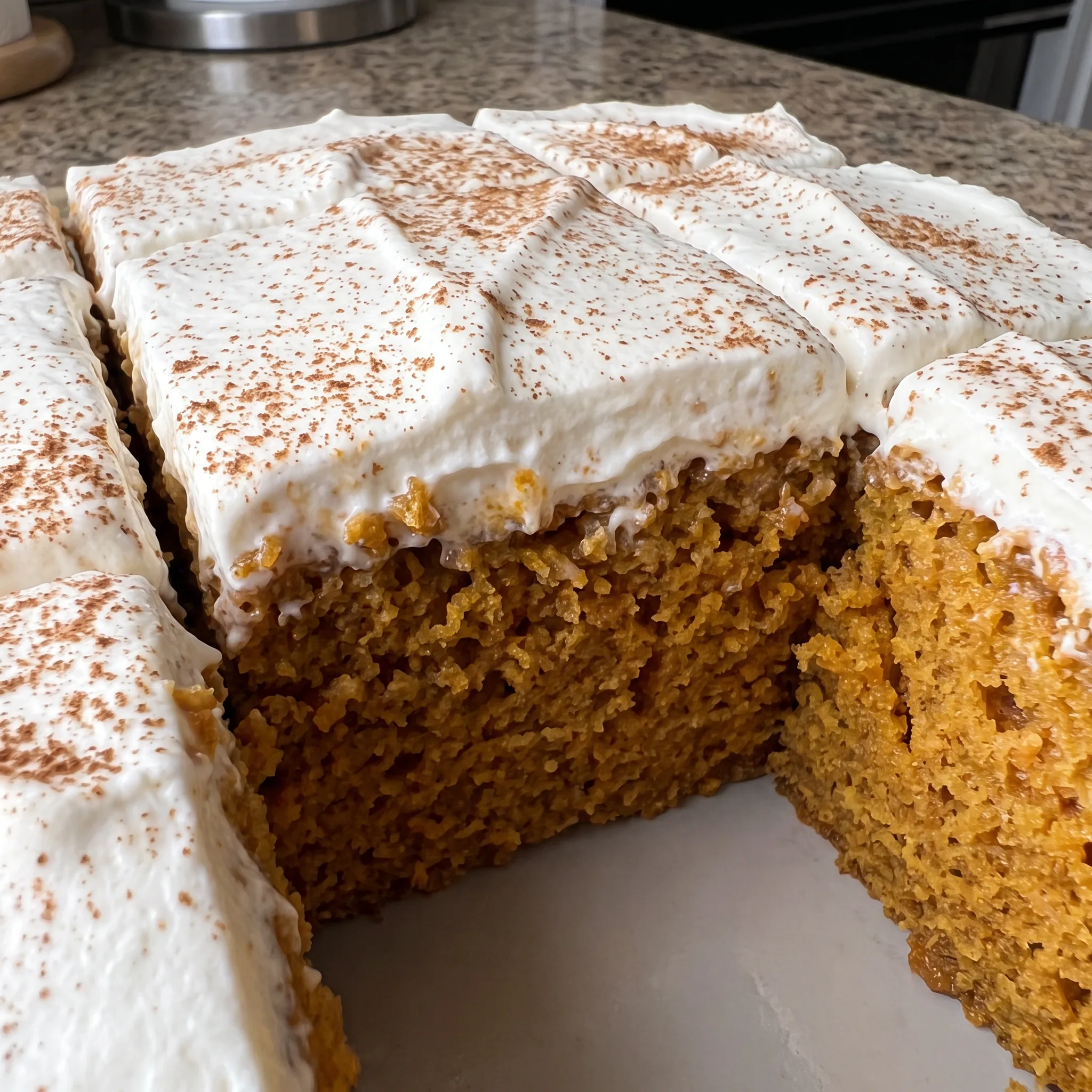
Whipped cream is not just a pretty top. It’s a counterweight. The cake underneath is dense and wet, and the cream is light and airy.
That contrast keeps each bite from feeling heavy. Powdered sugar and vanilla sweeten it just enough, but not so much that it competes with the soaked cake. Spread it on right before serving.
If it sits, it deflates and weeps liquid onto the cake, ruining the texture you worked for. A dusting of pumpkin pie spice on top echoes the spice in the cake, so the flavor carries through. The cream also insulates the cake slightly, helping it hold together when you slice.
That’s why you add it at the last minute.
Chill Time Is Structural
The long chill is not just about serving cold. It’s when the cake finishes absorbing the milk. As it sits, the soak distributes evenly, so every bite is uniformly moist.
Cold also firms the cake, making it easier to cut into clean squares. And over those hours, the flavors come together.
The pumpkin, spice, and milks unify into a single taste rather than separate elements. You can soak the cake and chill it ahead; just add the whipped cream at the last minute. When you’re ready to serve, the cake should feel set but tender, and the cream should sit proudly on top.
That’s the payoff of patience.
What to Buy and How to Prep It
Canned pumpkin puree: Buy 100% pure pumpkin, not pumpkin pie filling, which has added sugar and spice that throw off the batter.
Pumpkin pie spice: Check the date; old jars taste dusty and fade, so the cake and garnish lose their warm edge.
Sweetened condensed milk: Shake the can well before opening; the sugar settles and a quick stir keeps the soak uniform.
Evaporated milk: Use the full 12-ounce can; it’s thinner than condensed and gives the soak enough volume to reach deep.
Half and half: Don’t swap in whole milk; half and half has the fat that carries the cinnamon and softens the crumb.
Heavy whipping cream: Pick a carton labeled heavy whipping cream, not light or half and half, so it whips to stiff peaks.
Judging the Cake Before It Ever Meets the Milk
When the batter is folded enough
Stop mixing the moment the last dry streak disappears. The batter will look a little lumpy, and that’s fine. Overmix and the crumb turns tight and rubbery, and it won’t drink the soak evenly.
Pumpkin puree makes the batter heavy, so you need the lift from those bubbles. If you’ve already gone too far, bake it anyway.
The texture will be denser, but the soak will still soften it.
Reading the toothpick, not the timer
Start checking at 25 minutes. The toothpick should come out clean, with maybe a moist crumb or two.
If it’s wet, give it 2 more minutes and check again. The pumpkin keeps the cake damp, so a slightly fudgy toothpick can fool you into overbaking.
Overbaked cake turns tough and won’t absorb the milk. Underbaked, it collapses under the soak. The center should feel springy, not sunken.
Cooling completely before piercing
The cake must be room temperature all the way through. Warm cake will steam, and the holes will close up as it cools. Pierce when the bottom of the pan feels neutral against your hand.
If you rush, the soak pools on top instead of sinking in. Give it an hour on the counter if needed. There’s no shortcut that works.
Pouring the soak so it doesn’t flood
Add the milk mixture in stages, about a third at a time, and wait until the surface looks wet but not swimming before adding more. The cake will look like it can’t take another drop, then it will. If you dump it all at once, the edges soak while the center stays dry.
Stop when the top glistens and small pools sit in the holes. Any extra will absorb during the chill.
Whipping cream to the right stiffness
Stop beating when the whisk leaves tracks that hold their shape and the cream mounds softly on itself. It should look thick but still glossy.
Overbeat and it turns grainy and starts to separate. Underbeat and it slumps off the cake. If you catch it just before grainy, stir in a spoonful of cold heavy cream to bring it back.
Spread it on right before serving.
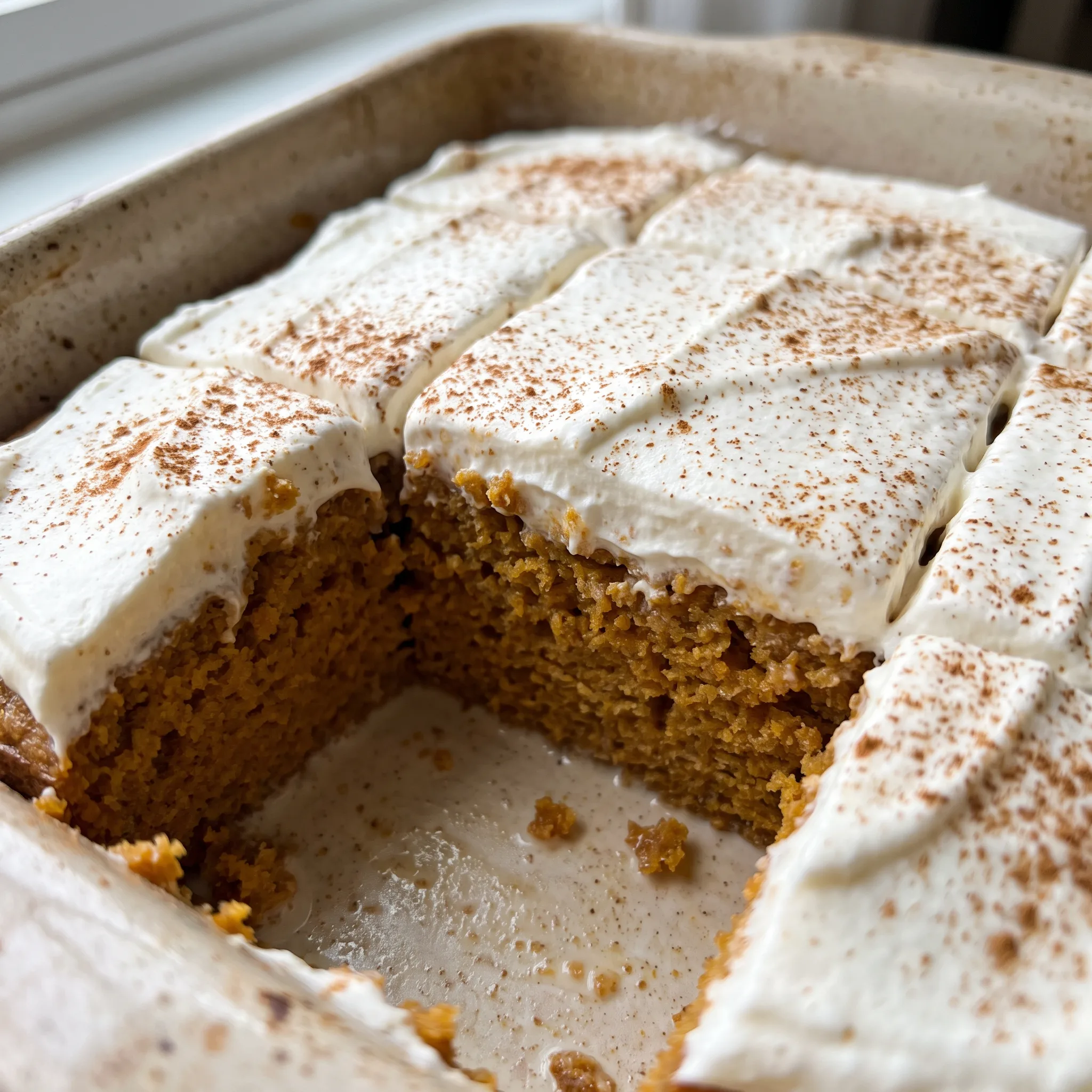
Pumpkin Tres Leches Cake with Cinnamon Cream
Ingredients
Method
- Set oven to 350°F (175°C). Mist a 9×13-inch cake pan with nonstick cooking spray; set aside.
- Whisk flour, pumpkin pie spice, baking powder, baking soda, and salt together in a small bowl.
- In a large bowl, beat eggs, granulated sugar, and brown sugar until thickened and smooth.
- Stir in pumpkin puree and vanilla extract until completely combined.
- Using a silicone spatula, gently fold the dry mixture into the wet mixture just until no flour streaks remain; avoid overmixing.
- Transfer batter to the prepared pan, level the surface, and bake 25–30 minutes, until a toothpick inserted in the center comes out clean. Let cool entirely.
- After the cake reaches room temperature, use a fork to pierce holes across the entire top.
- Whisk sweetened condensed milk, evaporated milk, half and half, and cinnamon in a bowl. Pour slowly and evenly over the cake, letting it absorb between additions. Cover and refrigerate at least 6 hours, preferably overnight.
- Right before serving, prepare whipped cream: in a large bowl using a hand mixer or stand mixer with whisk attachment, beat heavy whipping cream, powdered sugar, and vanilla extract until stiff peaks form, beginning on low speed and increasing as needed.
- Evenly spread whipped cream over the chilled cake and sprinkle with pumpkin pie spice, if desired.
- Cut into squares and serve chilled.
Storage, Serving, and the Cream Clock
Keep the finished cake covered in the fridge and it holds four to five days, since the soak and whipped cream both bring dairy that turns first. The crumb keeps drinking as it sits, so day one is the firmest slice you’ll get and day four is the softest. If that softer texture reads as too wet, cut a square and let it sit at room temperature ten minutes before eating; the chill loosens and the crumb tightens slightly.
Whipped cream is the limiting factor, not the cake. Add it the day you plan to serve, and eat within about two hours of spreading for the best contrast between airy cream and soaked crumb. After that it weeps and slides.
Leftover slices that already carry cream are best eaten cold, straight from the fridge, within a day. For a longer hold, freeze unsoaked cake layers only; the assembled soaked cake does not freeze well because the dairy separates as it thaws.
Tips
- After you pour each third of the soak, press a flexible spatula or the back of a spoon gently over the surface for a few seconds. This nudges milk from the edges toward the center, where it soaks in more slowly, so the whole pan absorbs at the same rate instead of leaving a dry middle and soggy border.
- If any milk still sits in pools on top after the final addition, tilt the pan a few degrees and hold it for 10 to 15 seconds before leveling it again. The tilt moves those pools toward the least-soaked area, and the cake will pull the liquid in within a minute or two, so nothing stays stranded on the surface.
When a Swap Helps and When It Ruins the Soak
Canned pumpkin puree: Butternut squash or sweet potato puree, both cooked and mashed smooth. Start with the same 1 cup (245 g) the recipe uses, then adjust after testing.
Butternut tastes milder and sweeter; sweet potato brings more sugar and water, so the cake can turn wetter and the soak will have less to grab. The color stays orange, but the spice blend will read differently. If you want the pumpkin flavor that defines the cake, leave it as is.
Half and half: For dairy-free, use full-fat oat milk or canned coconut milk. Start with the same 1/4 cup, then adjust after testing. Oat milk keeps the soak thin and neutral, but the cinnamon won’t carry as well because there’s less fat.
Canned coconut milk adds richness and a faint coconut taste; it can also make the soak thicker, so pour more slowly and stop when the top glistens. Whole milk, if you have it, works better than skim because the fat helps the crumb soften evenly.
Sweetened condensed milk: For dairy-free, whisk 1 can (14 oz) full-fat coconut milk with 3/4 cup (150 g) granulated sugar until the sugar dissolves. Use the same amount the recipe calls for, then adjust after testing. This mixture is thinner than condensed milk, so the soak won’t cling as aggressively and the cake may taste less sweet.
Expect a looser soak that needs more chill time to set. The coconut flavor will come through, which can clash with the pumpkin spice if you’re not a fan.
All-purpose flour: For gluten-free, use a 1-to-1 gluten-free flour blend that contains xanthan gum. Start with the same 1 1/4 cups (156 g), then adjust after testing. These blends vary in how much liquid they absorb.
The batter may be thicker or thinner, and the baked cake can be more fragile, so it might not hold up to the soak as well. Check the toothpick a minute or two early; gluten-free cakes often set faster.
The texture will be a bit more crumbly, but the soak still softens it.
Watch the surface as you pour the milk soak: it should turn glossy and slightly darker, but if liquid pools on top and does not disappear within a minute, the cake is already saturated. The crumb will feel spongy and heavy when you press gently; if it gives way like a wet sponge, the structure is compromised. Once the cake starts to slump at the edges or liquid seeps out, it is too late to correct.

Frequently Asked Questions
Can I make pumpkin tres leches cake ahead of time?
Yes, the cake can be soaked and chilled up to four to five days. The long chill is when the soak distributes and the crumb firms, so making it a day ahead actually improves the texture.
Just hold off on the whipped cream until the day you serve; it weeps and slides if it sits. You can also freeze the unsoaked cake layers for longer storage, but the assembled soaked cake does not freeze well.
Why is my tres leches cake soggy or falling apart?
The most likely cause is that the cake was overbaked or overmixed, which makes the crumb too tight to absorb the soak evenly; instead, the milk pools and the structure weakens. Check your crumb: if it’s rubbery, that’s the sign. Another possibility is that the cake wasn’t fully cool before you poured the milk, so the holes closed up and the soak sat on top.
For a quick fix, let a slice sit at room temperature for ten minutes; the chill loosens and the crumb tightens slightly.
How is pumpkin tres leches different from classic tres leches?
Pumpkin puree adds water and fiber, making the crumb more tender but also more fragile than the sponge in a classic version. The soak gets a hit of cinnamon, which ties the pumpkin and dairy together so it tastes like one thing.
The whipped cream topping still provides a light contrast, but the overall cake is softer and needs a gentle hand. Expect a warmer, spiced flavor rather than the plain vanilla profile.
How do I serve pumpkin tres leches cake without the whipped cream sliding off?
Spread the whipped cream right before serving, and eat within about two hours. The cream needs to be whipped to stiff peaks: stop when the whisk leaves tracks that hold their shape and the cream mounds softly. If it’s underbeat, it slumps; overbeat, it turns grainy.
Once spread, the cream insulates the cake slightly, helping it hold together when you slice. For the cleanest squares, cut straight down with a hot knife, wiping between cuts.
