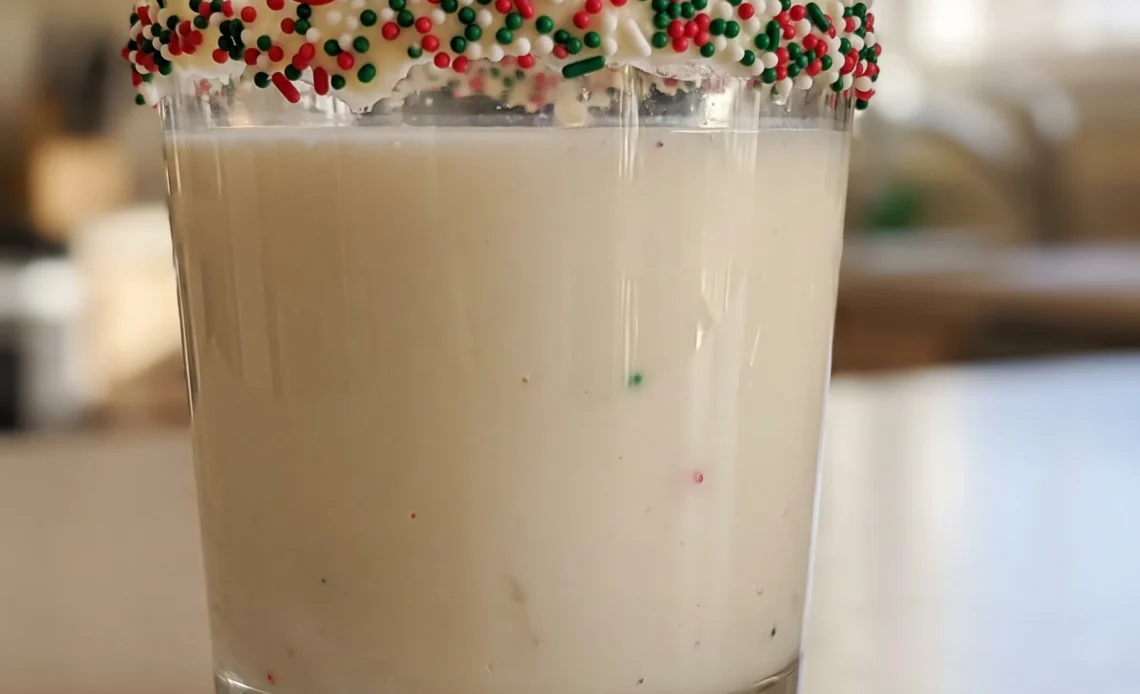
A sugar cookie martini is not a cookie and not a plain vodka drink. It’s a five-minute cocktail that drinks like the frosted version, and the hard part is timing: a dairy cocktail has a narrow window before the texture goes. Get the rim right and you’re ahead, because frosting that’s too cold will drag on the glass and leave bare patches.
The rest comes down to a hard shake and a slow strain. The sugar cookie martini rewards you for paying attention to temperature more than to measurements, since six ounces of liquid doesn’t forgive a warm shaker.
It’s a dessert in a glass, and it tastes like one when everything is cold and fresh. Mix it when you’re ready to drink it, not before.
The Frosted Rim Is the Cookie’s First Bite
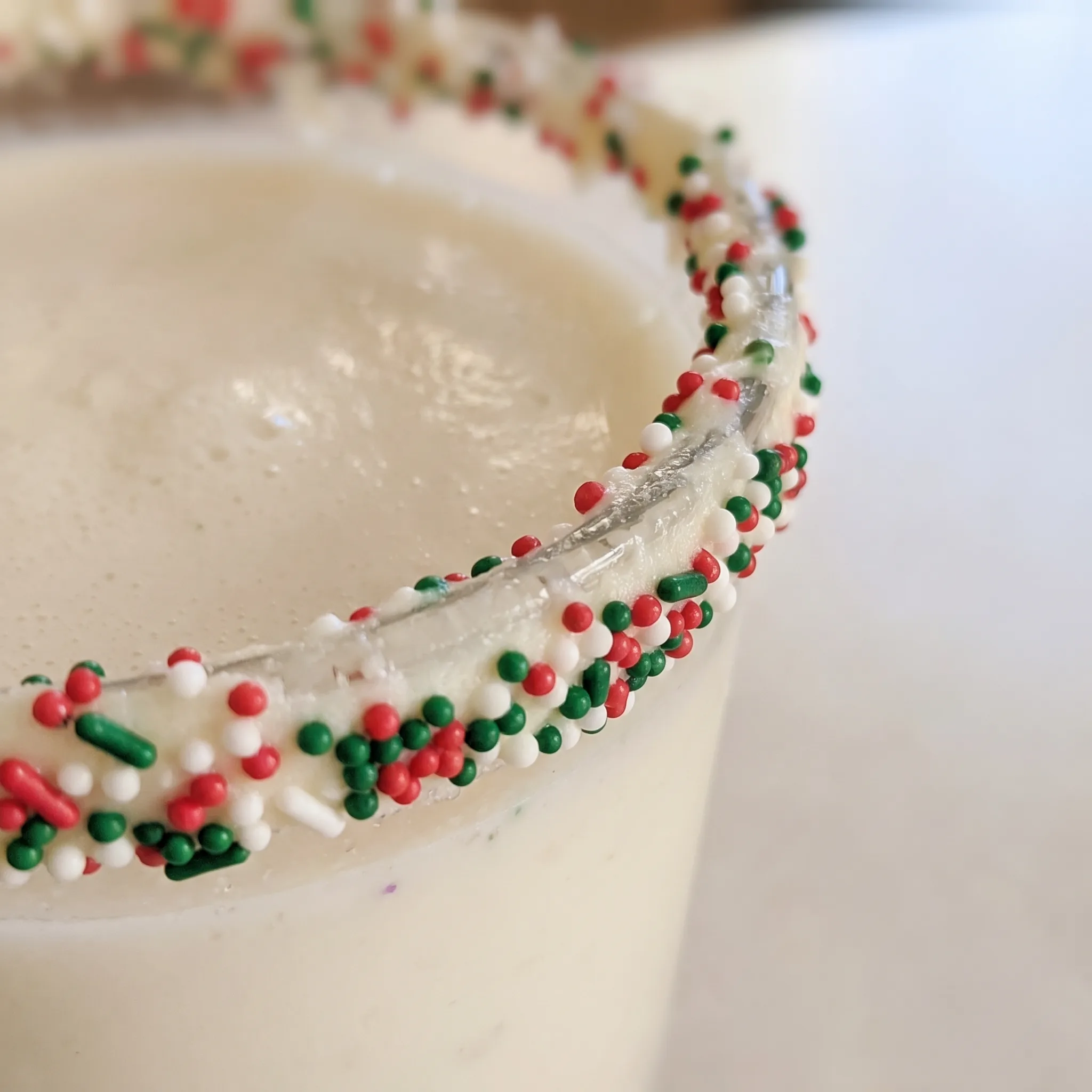
That band of frosting and sprinkles around the rim is what turns a cocktail into a sugar cookie in a glass. Before you taste the drink itself, your lips meet sweet, creamy frosting and the little crunch of sprinkles. That first impression sets the cookie expectation.
The contrast matters: the rim is confectionery, while the liquid below is boozy and rich. Vanilla frosting does double duty, clinging to the glass and giving the sprinkles something to hold onto so they don’t cascade into the drink. Without it, sprinkles would just float.
The rim also balances each sip: you get a hit of sugary, buttery sweetness that cuts through the alcohol and dairy. Think of biting into a frosted sugar cookie, where the icing hits first, then the soft cookie. Here, the icing is on the glass, and the cookie is the drink.
That interplay of textures and temperatures, cool liquid, room-temperature frosting, keeps every sip interesting. It’s not just garnish; it’s the edible signature of the cocktail. So when you lift the glass, the rim delivers the promise of a sugar cookie before the liquid even reaches your tongue.
Vanilla, Cream, and Almond Build the Cookie Dough
The trio of vanilla vodka, Irish cream, and amaretto does the heavy lifting for the cookie flavor. Vanilla vodka brings a clear, aromatic vanilla note without piling on sugar; it’s the backbone. Irish cream adds a soft, creamy texture and a gentle cocoa-vanilla undertone that hints at the butter and brown sugar in cookie dough.
Amaretto steps in with a nutty, almond-like sweetness that echoes the almond extract often used in sugar cookies. Together, they create a layered profile that’s greater than the sum of its parts. The vanilla and almond are classic partners, and the Irish cream smooths the edges, making the drink taste like a liquid cookie.
Each sip should reveal a new facet: first the vanilla, then the almond, with the cream holding it all together. Unlike a plain vodka cocktail, this combination gives depth and a dessert-like character that’s unmistakable. The proportions are key, equal parts vanilla vodka and Irish cream, with amaretto in a supporting role, so no single flavor dominates.
The result is a balanced, aromatic base that sets the stage for the creamy, sweet finish.
A Spoonful of Powdered Sugar Goes a Long Way
Just one teaspoon of powdered sugar might seem like a tiny amount, but it’s a deliberate choice. Unlike granulated sugar, which can leave a gritty texture, powdered sugar dissolves almost instantly when you shake it with the other ingredients.
That means it sweetens the drink evenly without any graininess. It also adds a subtle thickness, giving the cocktail a slightly richer mouthfeel. The sweetness is there to complement the frosting rim, not compete with it.
If you used more, the drink could become cloying and mask the vanilla and almond notes. The powdered sugar also helps balance the bitterness of the alcohol, making the overall sip smoother. Because it’s so fine, it integrates seamlessly into the cold liquid, so you never get a pocket of sweetness.
The result is a drink that’s sweet but not sugary, with a texture that’s just a touch more rich than a standard shaken cocktail. It’s a small addition with a big impact on the final balance.
Milk and Irish Cream Give It a Silky Body
Whole milk and Irish cream are what make this martini feel like a dessert rather than a stiff drink. The milk provides body and dilutes the alcohol without watering down the flavor; it carries the vanilla and almond notes while keeping the drink smooth.
Irish cream adds richness and a silky texture that mimics the creaminess of frosting. Together, they create a consistency that coats your tongue, much like the filling of a cookie. The dairy also tempers the sharpness of the vodka, making each sip rounder and more approachable.
Freshness is crucial here: milk that’s on the edge of turning will curdle when it hits the amaretto, and Irish cream that’s been open too long can taste stale. So use the good stuff, and use it fresh. When you shake, the dairy blends with the other ingredients, chilling and aerating the mixture.
The result is a drink that’s rich but not heavy, with a smooth, creamy finish that lingers. It’s the difference between a cocktail that’s merely sweet and one that’s satisfyingly dessert-like.
What to Buy and Prep for the Cookie in a Glass
Vanilla frosting: Buy a tub of shelf-stable vanilla frosting; cold frosting drags and leaves bare patches on the rim.
Sprinkles: Use fine or sanding sprinkles, not nonpareils or jimmies, so they adhere to the frosting rim.
Vanilla vodka: Choose a clear vanilla vodka, not a dark or spiced one, to keep the drink looking creamy.
Irish cream: A fresh bottle of Irish cream tastes clean; an open bottle past its prime can taste stale and thin.
Whole milk: Whole milk gives the body this drink needs; anything lower in fat tastes watery and won’t coat the tongue.
Amaretto: A standard amaretto like Disaronno brings the almond note; avoid super-sweet or flavored versions that throw off the balance.
Judging the Rim, the Shake, and the Pour
When the frosting coats the rim without clumping
Frosting that’s too cold will drag and leave bare patches; too warm and it slides down the glass. You want a thin, even band that holds its shape and gives the sprinkles something to grip.
If it’s sliding, chill the glass for a minute before you start. If it’s clumping, let the frosting sit at room temperature for a few minutes.
A uneven rim means some sips get all sugar, others none.
The shaker goes from loud to quiet
Fifteen seconds of hard shaking does two things: it chills the drink and aerates it. You’ll hear the ice rattling loud and fast at first, then the sound softens as the outside of the shaker frosts over and your fingers ache from the cold. That’s your cue to stop.
Shake longer and the ice dilutes the drink, washing out the vanilla and almond. Shake less and it’s lukewarm and flat.
Straining without dragging the foam
When you strain, the liquid should flow clear and cold, leaving the ice and any froth behind. If you tip the shaker too far, you’ll get a mouthful of crushed ice and foam that sits on top like dishwater.
Hold the strainer tight against the shaker and pour slowly. The drink should look opaque and creamy, not separated. If it looks curdled, the dairy was too cold or the amaretto too acidic, but a quick stir can sometimes bring it back.
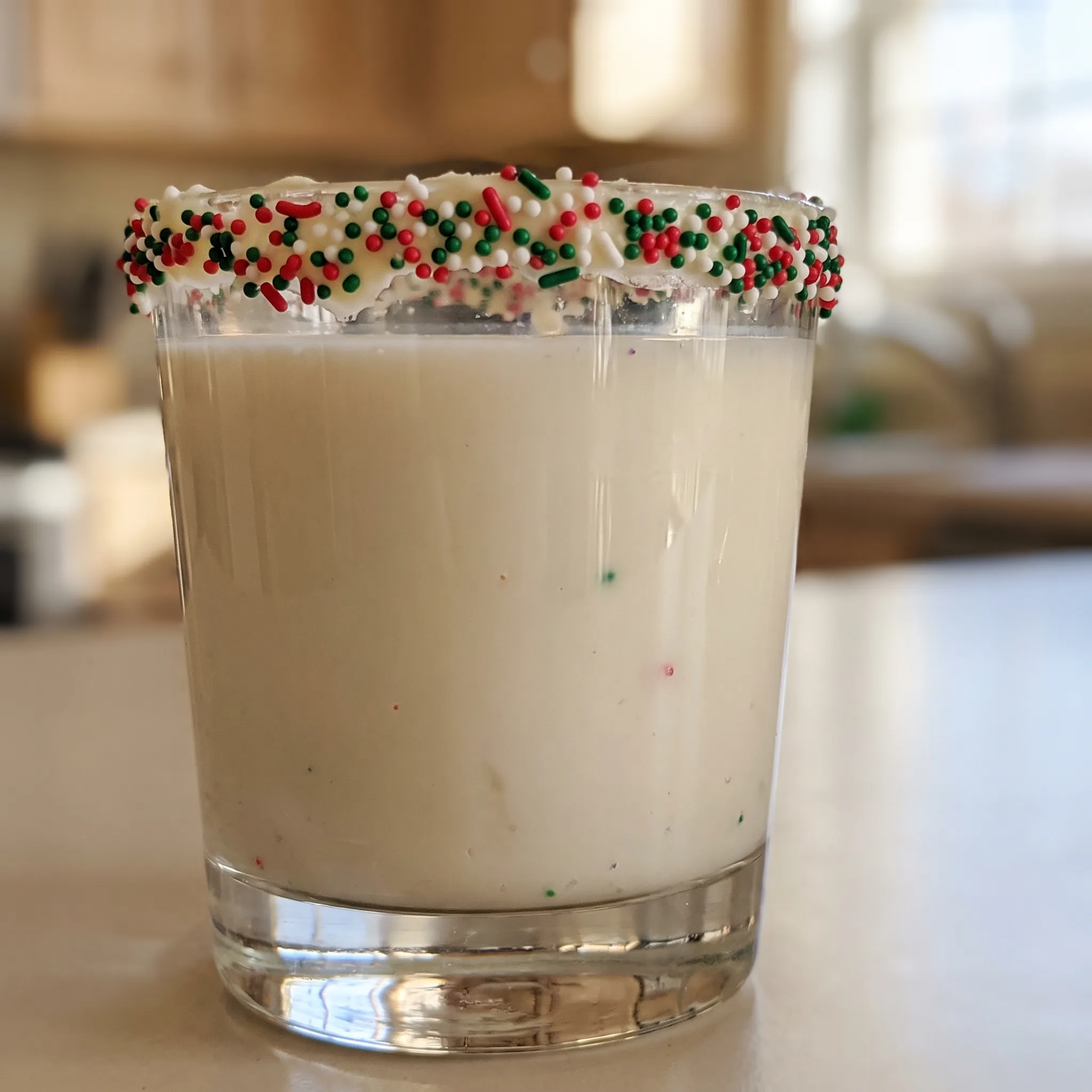
Sugar Cookie Martini with Vanilla Frosting Rim
Ingredients
Method
- Apply vanilla frosting to the rim of a martini glass, either by spreading it around the edge or by dipping the rim into the frosting. Put the sprinkles in a shallow dish or saucer and dip the frosting-covered rim into the sprinkles so they stick. Set the glass aside.
- In a cocktail shaker, mix the vanilla vodka, Irish cream, milk, amaretto, powdered sugar, and ice. Fasten the lid and shake for at least 15 seconds to blend and cool.
- Strain into the prepared glass and serve right away.
This Drink Has a Serving Window, Not a Shelf Life
A shaken dairy cocktail is at its best within about ten minutes of straining. That’s when the aeration is still holding the texture light and the cold is at its peak.
Past fifteen minutes, the foam collapses, the drink warms, and the milk starts to separate from the amaretto and vodka, leaving a thin ring of liquid on top. You can stir it back together, but the texture won’t fully return.
If you need to hold it, keep the mixture in the shaker with the ice still in it, lid on, in the fridge, for up to an hour. Don’t strain it early.
The ice keeps it cold and the dairy stays suspended longer than it would in an open glass. Before pouring, shake again for five seconds to re-chill and re-blend.
This doesn’t freeze. The dairy and amaretto split when thawed, and the texture never comes back. Make it fresh, drink it cold, and don’t plan on leftovers.
Tips
- Chill the martini glass, vodka, Irish cream, milk, and amaretto in the freezer or fridge for at least 30 minutes before you start. Starting with cold ingredients means the 15-second shake only has to drop the temperature a few degrees, so the ice melts less and the drink stays strong instead of watery. If everything is room temperature, that same shake spends its time cooling the liquid and dumps extra water into a drink that only has 6 ounces total to begin with.
Which Swaps Keep the Cookie Intact and Which Crack It
Vanilla vodka: If you don’t have vanilla vodka, use plain vodka and add a quarter-teaspoon of vanilla extract. Or try whipped cream vodka for a softer, sweeter note.
Plain vodka with vanilla extract keeps the vanilla flavor but loses the slight sweetness of the original. Whipped cream vodka makes the drink taste more like frosting and less like cookie dough.
Both are fine, but the balance shifts. The drink might taste a bit sharper or sweeter depending on your choice, so adjust the powdered sugar if needed.
Irish cream: For a dairy-free version, use a coconut-based Irish cream alternative, like Baileys Almande. For a non-alcoholic option, use a coffee creamer with a splash of rum extract.
Coconut-based Irish cream brings a subtle coconut flavor that can clash with the almond and vanilla. It’s also thinner, so the drink won’t coat your tongue as richly.
The non-alcoholic version will be much sweeter and lack the whiskey warmth, making it taste more like a milkshake than a cocktail. If you go that route, cut the powdered sugar to half a teaspoon.
Amaretto: If you don’t have amaretto, substitute with a half-ounce of almond extract mixed with a half-ounce of simple syrup. Or use hazelnut liqueur like Frangelico. Almond extract and simple syrup mimic the almond flavor but lack the complexity of amaretto’s apricot and cherry notes.
The drink will taste more one-dimensional. Hazelnut liqueur brings a different nut profile, more like toasted hazelnut than almond, which changes the cookie character. Both are acceptable, but the classic sugar cookie flavor is best with real amaretto.
Whole milk: For a dairy-free version, use oat milk or full-fat coconut milk. For a lighter option, use 2% milk. Oat milk adds a slightly earthy flavor and is thinner, so the drink won’t feel as silky.
Coconut milk is richer but brings a distinct coconut taste that can overpower the vanilla and almond. 2% milk makes the drink less creamy and more watery, losing the dessert-like body.
If you use a thinner milk, consider adding a tablespoon of cream or half-and-half to restore some richness.
The most common mistake is treating this like a standard martini and shaking it hard for a long time, which over-dilutes the dairy and alcohol and makes the drink thin. The frosting rim is also often applied to a wet or warm glass, so it slides instead of gripping. Because the drink relies on a creamy, dessert-like body, excess dilution destroys its texture and flavor balance.

Frequently Asked Questions
Can I make this sugar cookie martini ahead of time for a party?
Mix it in the shaker and leave the ice in, lid on, in the fridge for up to an hour, then shake again for five seconds before you pour. Don’t strain it into the glass early: the dairy and amaretto drift apart without the ice holding them together, and you’ll see a thin ring of liquid sitting on top. The frosting and sprinkles on the rim can go on the glass ahead of time, but keep that glass cold so the frosting doesn’t slide.
Anything longer than an hour and the texture won’t come back, so mix a fresh batch rather than stretching one.
Why did my sugar cookie martini curdle or separate?
Milk that’s close to its date is the usual culprit. Amaretto is acidic enough to tip dairy over the edge, and milk on the turn curdles the second it hits the shaker.
Check your Irish cream too: a bottle open too long tastes stale and thins out the body, which reads as separation even when nothing has actually curdled. If the drink looks grainy right after straining, a quick stir sometimes pulls it back together, but starting with fresh milk and a fresh bottle is the real fix.
How does this sugar cookie martini differ from a classic vanilla martini?
A vanilla martini is vodka and vanilla liqueur, clear and sharp, with nothing creamy in it. Here the Irish cream and whole milk turn the drink opaque and give it a body that coats your tongue, so it lands closer to a dessert than a stirred cocktail.
Amaretto is the other difference: that almond note is what reads as sugar cookie rather than plain vanilla. You also get the frosted, sprinkle-coated rim, which a classic vanilla martini doesn’t have.
What can I do if my sprinkles won’t stick to the frosting rim?
Switch to fine or sanding sprinkles. Nonpareils and jimmies are too heavy and too round to grab the frosting, so they roll straight off into the drink. The frosting itself has to be the right consistency: if it’s cold from the tub it drags and leaves bare patches, so let it sit out a few minutes until it spreads in a thin, even band.
Dip the coated rim into a shallow dish of sprinkles and press gently, then set the glass down and let the frosting firm up before you pour.
