
Dried black-eyed peas and bacon go into the crockpot raw, and eight hours later you’ve got a pot of creamy, smoky Southern peas without standing at the stove once. That’s crockpot black eyed peas at their best, and the appeal is obvious.
The catch is the window between done and overdone, which is narrower than most slow-cooker beans. Peas that hold their shape one check can collapse into the broth by the next, and some cookers run hot enough to push the liquid line down while you’re at work. The bacon does its work from the bottom, rendering slowly and seasoning the pot as it goes.
Get the timing right and you barely touched it. Miss it and you’ve got a thick, shapeless pot that tastes fine but eats like porridge.
Why Soaking Dried Black-Eyed Peas Matters
Dried black-eyed peas carry an earthy flavor that can turn dull and flat if they go into the pot dry. Soaking overnight pulls out some of the natural compounds that taste muddy, so the finished peas come out sweeter and cleaner. It also helps the peas take on water evenly, which means they all cook at the same rate.
Skip this and you might end up with some peas that stay firm while others soften too fast. The result is a pot with uneven texture, and nobody wants that.
A good soak also cuts down on the starches that cause digestive discomfort. You won’t notice it while eating, but your stomach will later. If you have the time, let them sit in plenty of water for several hours.
The peas will plump up and their skins will look smoother. That’s your cue that they’re ready to cook.
Building Flavor from the Bottom Up
Start with a generous drizzle of olive oil across the bottom of the crockpot. It keeps the peas from sticking and gives fat-soluble flavors something to grab onto.
Next, scatter in the chopped onion and the raw bacon pieces. As the crockpot heats, the bacon renders its fat slowly, basting the peas from below.
That fat carries smoke and salt into every bite, not just the broth. The seasonings go in at this point too: garlic salt, garlic powder, salt, and pepper. Added early, they have time to soak into the peas themselves, so the flavor runs all the way through.
If you dumped everything in at the end, you’d just be seasoning the liquid. Water goes in last, poured gently over the top.
This order keeps the base intact instead of washing it away. When you come back hours later, the peas will be deeply seasoned, and the liquid will have taken on a rich, savory character.
The Long, Slow Cook and Its Risks
Slow cookers are supposed to trap moisture, but some models run hot enough to evaporate more than you’d expect. After a few hours, take a quick look. If the peas are exposed or the liquid looks low, add hot water to cover them again.
Peas that sit above the liquid line will dry out and stay tough, no matter how long they cook. On the other hand, cooking them too long turns them into a soft, shapeless mass.
You want peas that are creamy inside but still hold their shape when you spoon them up. That’s the sweet spot.
Check them occasionally near the end. If they’re starting to break down but still taste firm, they need more time.
If they’re already giving way easily, they’re done. The goal is a thick, saucy pot of peas, not a watery soup. Adjust the liquid as you go, and you’ll end up with the right consistency.
A Southern Classic with Deep Roots
Black-eyed peas have been a New Year’s tradition in the South for generations, served for luck and prosperity. This version keeps things simple with bacon, onion, and a handful of pantry seasonings. The bacon brings a smoky, salty depth that plays off the earthy peas.
Onion adds a gentle sweetness that rounds out the pork. Together they create a flavor profile that feels familiar and satisfying. While this dish is often served as a side, it’s hearty enough to make a meal with a slice of cornbread or a pile of greens.
The peas themselves are the star, though, and they don’t need much else. A bowl of these with a little of the cooking liquid spooned over rice is about as good as it gets.
Whether you’re ringing in the new year or just craving a comforting pot of beans, this recipe delivers.
What to Look For Before the Peas Hit the Pot
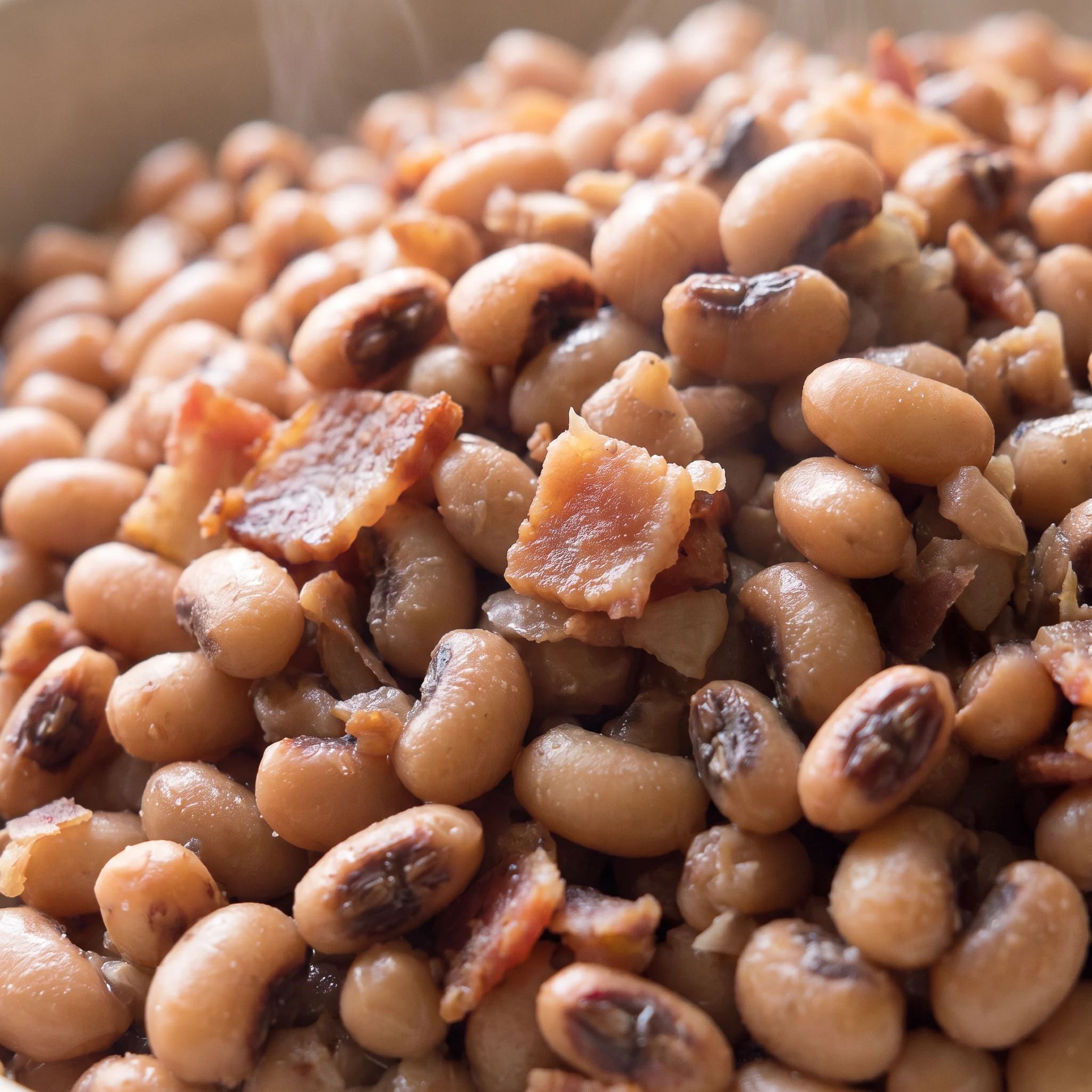
Dried black-eyed peas: Bagged ones from the current year plump faster and cook more evenly than older packages hiding at the back of the shelf.
Bacon: Four slices cut raw from a thick-cut slab render more fat and hold their shape longer than paper-thin strips.
White onion: A firm half with tight, dry skin and no soft spots keeps its sweetness through the long cook instead of turning bitter.
Olive oil: Two tablespoons is enough to coat the bottom, and regular olive oil handles hours of low heat better than an expensive finishing bottle.
Garlic salt and garlic powder: Both go in, so taste a pinch first; some brands are far saltier than others and will swing the whole pot.
Soaking dried black-eyed peas lets water diffuse evenly into the cotyledons, hydrating starch granules and leaching out oligosaccharides and bitter compounds. This uniform hydration means the peas cook at the same rate, so the long, gentle heat of the slow cooker can soften them consistently without turning the outsides to mush before the centers are done. Without soaking, the peas may remain firm or cook unevenly, and the finished dish can taste dull rather than sweet and earthy.
How to Read the Pot While It Cooks
Judging the liquid line
After a few hours, some slow cookers push off more moisture than you expect. Look at the peas.
Any that sit above the liquid will dry out and stay tough, no matter how long they cook. Add hot water to cover them again, but don’t drown the pot.
The goal is peas that stay submerged, not swimming. If you miss this, you’ll get a mix of creamy and chalky peas. Correct it as soon as you see exposed peas.
The point where the peas are done, not just soft
Near the end, scoop up a spoonful. You want peas that give way easily but still hold their shape.
If they break down into a shapeless mass, they’ve gone too far. If they’re still firm in the center, they need more time. Taste one.
It should be creamy inside, not gritty. The difference between done and overdone can be as little as 30 minutes on high. Check often once they start softening.
Reading the broth for thickness
The liquid should coat the peas, not run off like water. If it’s thin, remove the lid and let it cook uncovered for the last 30 minutes.
The extra evaporation thickens it without adding starch. If it’s already thick and saucy, you’re there.
Too thick and the peas will stick and scorch. Adjust with a splash of hot water if needed.
The right consistency is like a loose stew, not soup.
When the bacon has given all it can
The bacon pieces start raw and render their fat slowly. By the end, they should be soft and fully integrated, not chewy bits.
If you see distinct, rubbery pieces after 6 hours on low, they need more time. But if they’ve disappeared into the broth, that’s fine. The fat carries the smoke and salt through the pot.
Don’t fish them out. They’ve done their job.
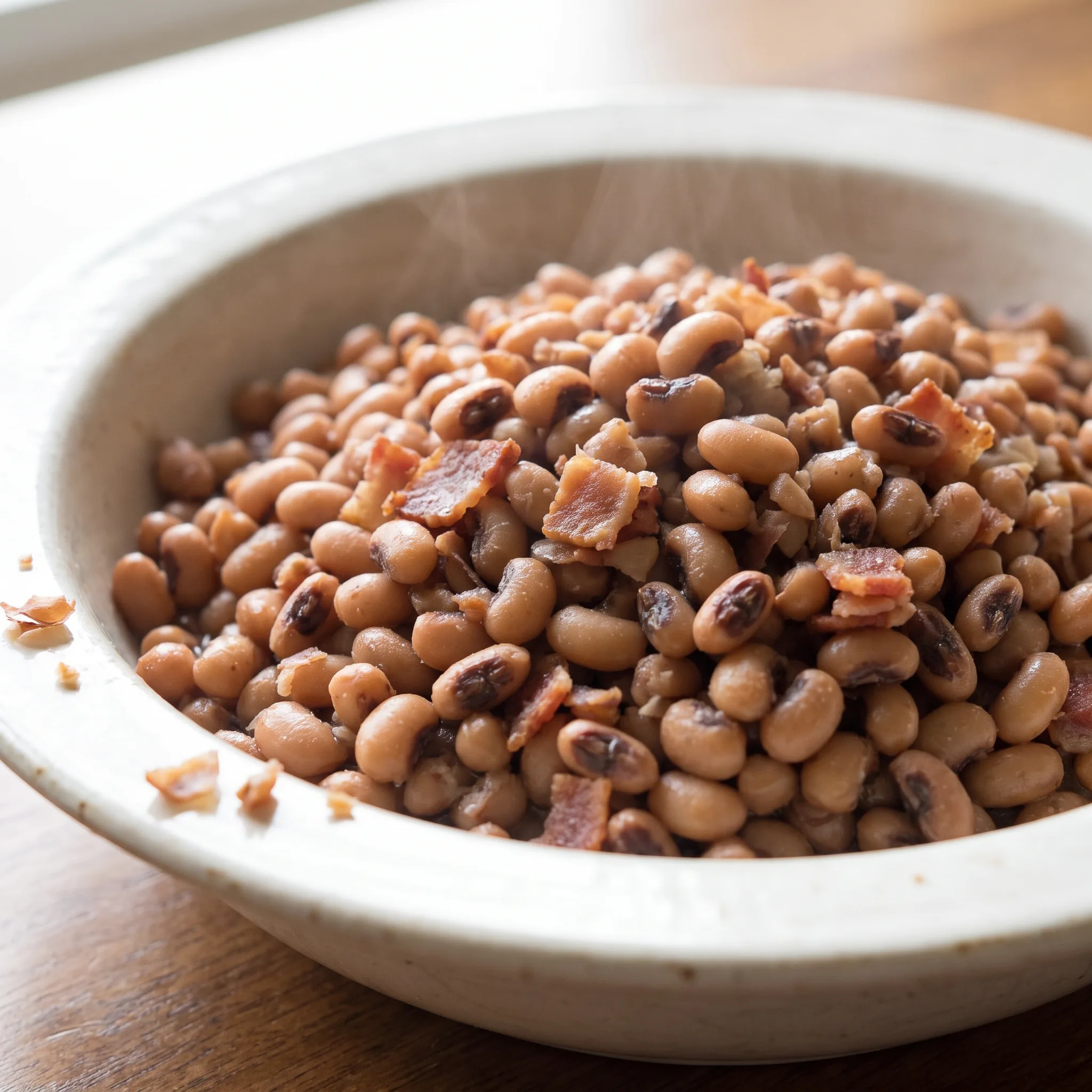
Crockpot Black Eyed Peas with Bacon
Ingredients
Method
- If possible, soak the black-eyed peas for several hours or overnight; if short on time, do a quick soak or skip this step.
- Dice the onion and chop the bacon into small pieces.
- Generously drizzle about 2 tbsp olive oil on the bottom of the crockpot, then add the beans, seasonings, and bacon pieces before adding the water.
- Cook on low for 6 to 8 hours or on high for 4 hours.
- Check and add more water as needed.
When Swapping Bacon, Onion, or Garlic Changes the Broth
Bacon: Smoked turkey bacon, or 4 slices of regular turkey bacon plus a few drops of liquid smoke. Turkey bacon sheds far less fat, so the pot won’t get the same slow basting from below. The broth stays leaner and the smoke reads thinner.
Add the liquid smoke a drop at a time and taste the broth after an hour; you can always add more, but you can’t take it out.
White onion: Yellow onion or a large shallot. Yellow onion brings a sharper bite that softens over eight hours, landing close to the original.
Shallot turns sweeter and milder, so the broth loses some of that savory backbone. Use the same half-onion amount and adjust after the first taste.
Garlic salt and garlic powder: Plain garlic powder plus a separate pinch of salt. The recipe card calls for 1 tsp garlic salt, 1 tsp garlic powder, and 1/4 tsp salt.
If you’re watching sodium, drop the garlic salt and use 1 tsp garlic powder with a small pinch of salt added at the end, after you’ve tasted the broth. The garlic flavor stays; the salt level becomes something you control.
Olive oil: Any neutral oil you already have, like canola or vegetable. The oil’s main job is to keep the peas from sticking and give the fat-soluble flavors something to grab. Neutral oil does that without adding its own taste.
Olive oil’s slight peppery note won’t survive eight hours anyway, so this is one place where the cheaper bottle works fine.
Tips
- Press a pea between your thumbnail and index finger before it goes in the pot. A current-crop pea splits with light pressure; one that resists or dents without breaking is old and will stay firm through all 8 hours on low, so plan to add 1 to 2 more hours or simmer it on the stove first.
- If the peas look shriveled and dusty rather than smooth and tan, extend the soak to 12 hours and stir 1/2 tsp baking soda into the soaking water. The soda softens the skin so the older peas hydrate at the same rate as fresh ones, which keeps the pot from finishing with a mix of creamy and chalky peas.
Storage and Serving: The Window for Black-Eyed Peas with Bacon
Eat this within the first day or two. The bacon and onion taste sharpest right after cooking, and the peas hold a creamy bite before they keep drinking liquid.
After that, the flavors flatten and the texture turns softer. Leftovers keep in the fridge for up to four days in a sealed container.
They thicken as they chill because the peas absorb the broth, so stir in a splash of water or broth when reheating on the stove or in the microwave. Reheat gently until steaming, not boiling, so the peas don’t break apart. The dish freezes well for up to three months.
Thaw overnight in the fridge, then reheat with extra liquid. For serving, spoon over rice or cornbread and add a little of the cooking liquid.
No finishing touch goes on at the end; the bacon and seasonings are already in the pot.
Frequently Asked Questions
Can I put frozen black-eyed peas in the crockpot instead of dried?
Yes, but treat them as a different animal. Frozen peas are already hydrated and fully cooked, so at 480 minutes they’ll collapse into a soft, shapeless pot with no bite left. If you’re set on using them, add them near the end of the cook, just long enough to heat through and take on the bacon and onion flavor.
Dried peas are the ones that need the long soak and the long cook; frozen ones don’t.
How do I keep black-eyed peas from getting mushy in the slow cooker?
Start by tasting a pea, not the broth, once you’re a few hours in. The moment it gives way easily but still has a skin that resists your teeth, cut the heat.
Most slow cookers stay hot on the warm setting, so switch off and leave the lid cracked. If the peas are already past that point, you can’t pull them back, but you can stop the slide.
Next time, cook on low rather than high, since the gentler heat gives you a wider window before they go soft.
Can I make this crockpot black-eyed peas ahead of time and reheat?
You can, and the pot holds in the fridge for up to four days in a sealed container. The catch is texture: the peas keep drinking the broth as they chill, so they come out softer and the liquid turns thick.
Reheat gently with a splash of water or broth, just until steaming, and stop there so they don’t break apart. Flavor flattens after the first day or two, so if you’re making it ahead for a crowd, plan to eat it sooner rather than later.
What’s the difference between this crockpot version and traditional stovetop black-eyed peas?
On the stove, you get more control and a faster pot, often under two hours, but you’re tied to the kitchen stirring and watching the liquid line. The crockpot trades that control for eight hours of unattended time, during which the bacon and onion steep into the peas from below and the broth reduces on its own. The trade-off is that a slow cooker can dry out the top layer if you don’t check, and the peas have a narrower window between done and overdone.
Stovetop gives you a brighter, firmer pea; the crockpot gives you a deeper, softer one.
