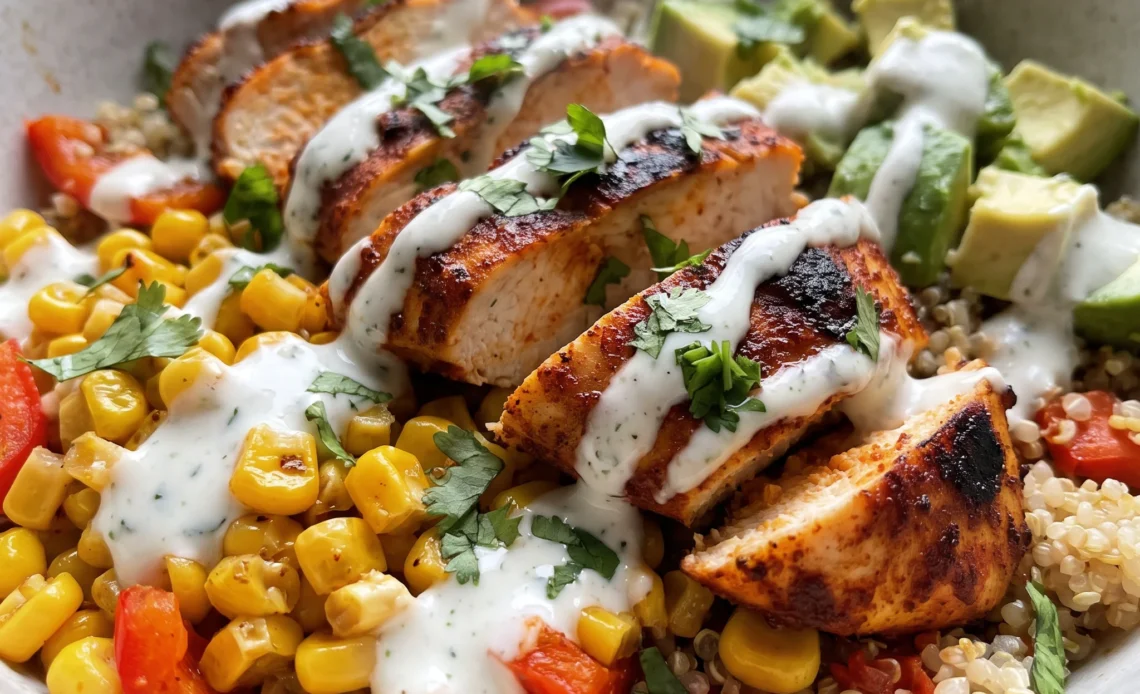
What matters most here is the pan doing double duty. Chicken goes in first, comes out, and the corn and pepper go into what it left behind.
That fond is the whole difference between a street corn chicken bowl that tastes seasoned and one that tastes like a salad with chicken dropped on top. Canned corn is the usual trap.
Drain it hard or it steams instead of blisters, and water in the skillet undoes the work the chicken just did. Fresh corn cut off the cob browns easier, but either works if you’re patient with the moisture.
The other spot with no forgiveness is the grain. Mix it in while it’s still steaming and the avocado and cilantro go soft within minutes.
Warm is fine. It’s a bowl worth making the day you eat it.
Build Flavor in the Skillet
Chicken hits the pan first for a reason beyond getting dinner started. Season it, let it cook through, then pull it out and leave the browned bits and rendered fat behind.
That fond is the savory backbone of the whole bowl. When the corn and chopped red bell pepper go into the same skillet, they pick up those drippings, turning sweet kernels and crisp pepper into something with real depth. You can hear the sizzle change as the vegetables release moisture and start to glaze.
The chicken rests off heat while the corn and peppers get their turn, so nothing overcooks. Each component stays distinct, yet they all carry a thread of the same seasoned pan. That’s how a bowl tastes built rather than assembled.
The vegetables should look glossy and slightly softened, with a few charred spots here and there.
Quinoa or Rice as the Foundation
The grain you choose sets the structure. Quinoa or brown rice gives you a neutral, absorbent base that can handle the juicy lime, creamy avocado, and oily skillet vegetables without collapsing. Think of it as the dry layer that keeps wet ingredients from pooling at the bottom.
If the grain is too hot when you mix everything, the avocado will soften and the cilantro will darken, so spread it out and let it cool just a bit first. You want it warm enough to feel like a meal but not so hot that it wilts the fresh components. A fork fluff before adding it to the bowl helps separate the grains.
Once tossed, the base should look speckled with corn and pepper, not clumped. That texture contrast is what makes each bite interesting.
Finish with Lime, Not Marinate
Lime juice goes in at the very end, after everything else is combined. That timing keeps its sharpness intact. If you add it earlier, the acid dulls as it sits, and the bowl tastes flat.
Squeeze it over the mixture and toss gently. You’ll smell the citrus bloom immediately.
It cuts through the richness of diced avocado and the savory chicken, waking up every other ingredient. The juice also thins the oils from the skillet just enough to coat the grains without making them soggy. Taste a spoonful before serving.
If the flavors feel heavy, a little more lime will lift them. The final bowl should taste bright and clean, with the lime as a clear high note, not a background sourness.
Raw Avocado and Cilantro Keep It Fresh
Avocado and cilantro never touch heat. Dice the avocado and chop the cilantro, then fold them in once the cooked components have cooled slightly.
Their job is contrast: cool, creamy avocado against warm grains, fragrant cilantro against earthy corn. If either gets cooked, that freshness disappears and you lose the snap that makes the bowl feel light.
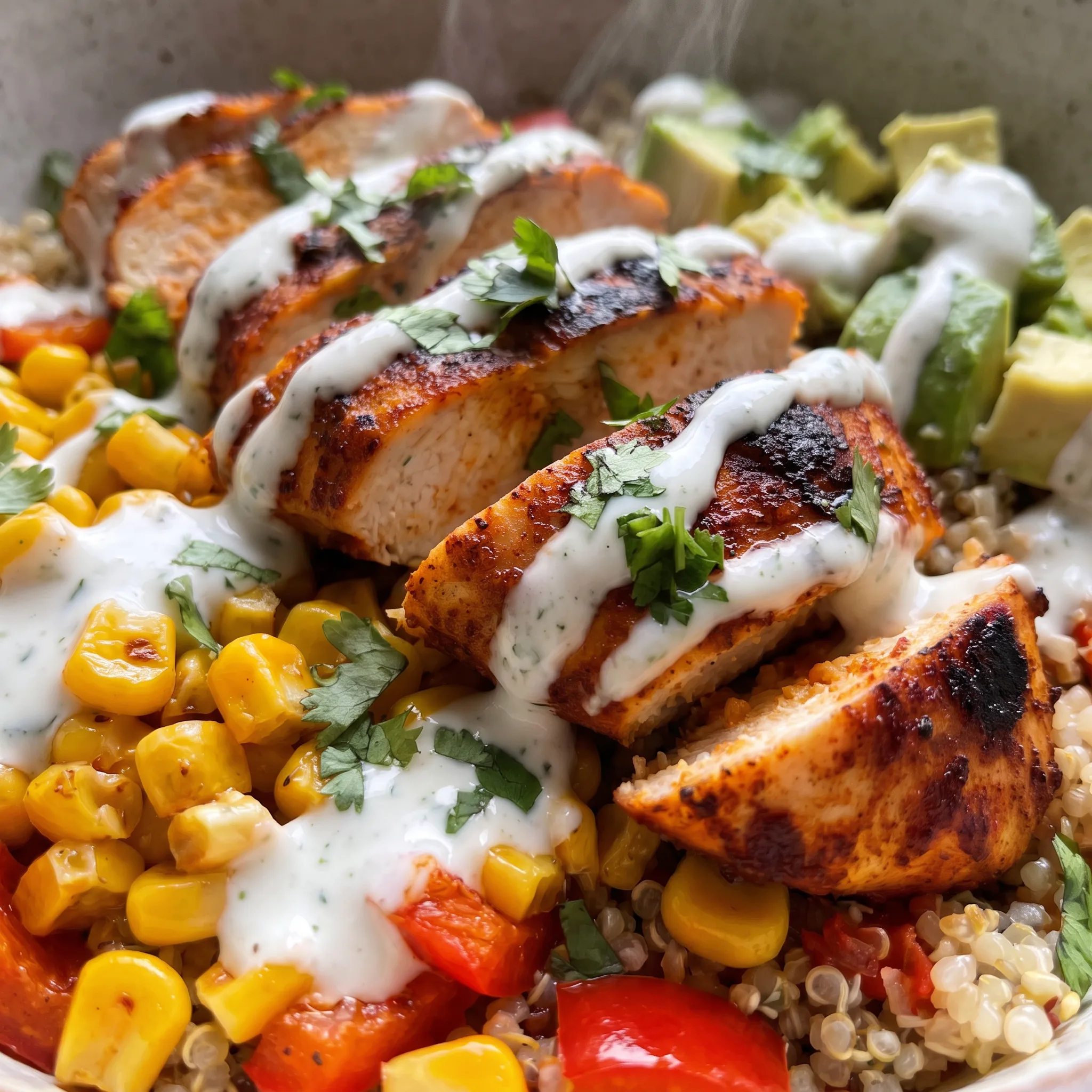
The avocado should hold its shape in the mix, not smear into a paste. Cilantro leaves stay green and distinct. When you stir everything together, you’ll see bright flecks of herbs and chunks of pale green avocado among the golden corn and red pepper.
That visual variety signals the right texture. Serve it right away so those raw elements stay at their peak.
What to Buy and How to Prep It Before the Skillet Heats
Chicken breast: Boneless, skinless breasts around 1 lb total work best; thin ones cook fast and dry out before the center is done.
Corn: Fresh cut off the cob or canned both work, but drain canned corn well so it browns in the skillet instead of steaming.
Quinoa or brown rice: Either one gives you 1 cup cooked; rinse quinoa first if it’s not pre-rinsed, or the bowl picks up a soapy edge.
Avocado: Pick one that yields to a gentle press, since a firm avocado stays hard and a soft one smears when you fold it in.
Red bell pepper: Choose one with tight, shiny skin and no soft spots; a wrinkled pepper goes limp in the pan before it blisters.
Lime: One lime should feel heavy for its size and give slightly when squeezed, since a light, hard lime won’t give up much juice.
The most common mistake is combining everything while the grains and skillet vegetables are still hot. The residual heat turns the avocado soft and greasy and causes the cilantro to lose its fresh flavor, while steam condenses and makes the bowl watery. The grain base must be cooked and cooled slightly before mixing to avoid wilting.
Reading the Pan, the Grain, and the Lime Before You Toss
Knowing when the chicken is done, not just un-pink
Color lies at the edges. A breast can look white on the surface and still be cool at the center, or read pink near the bone and be cooked through. Press the thickest part with a finger: firm with a little give, like the pad below your thumb when your hand is relaxed.
If it springs back hard, it has gone past. Slice the thickest section to confirm no pink remains before you pull it.
The corn and pepper: glossy and blistered, not steaming
They go into a pan still holding chicken fat and browned bits. For the first minute or two they steam as their water cooks off. That is fine.
Watch for the moment the sound shifts from a wet hiss to a sharper crackle and the pepper edges darken in spots. That is the 5 to 7 minute window earning its keep.
Pull them before they go limp, or they will bleed water into the bowl and dull the grain.
Cooling the grain enough to protect the avocado
Quinoa or rice straight off the heat will turn diced avocado soft and gray the cilantro within minutes. Spread the grain on a plate or sheet pan and let it stop steaming. Feel the bottom of the pile with your palm.
Warm is fine. Hot is not.
If you already mixed it hot, stop stirring, spread the bowl out, and accept a softer texture rather than trying to chill it and risk a cold bowl.
Tasting for lime before it hits the table
One lime over four servings is a starting point, not a rule. Squeeze, toss, then taste a spoonful that includes grain, corn, and a piece of avocado.
If the avocado tastes flat and the corn reads sweet with nothing cutting it, add more. If your mouth puckers, you have gone over and a pinch of salt will pull it back. The bowl should taste bright at the front, not sour at the back.
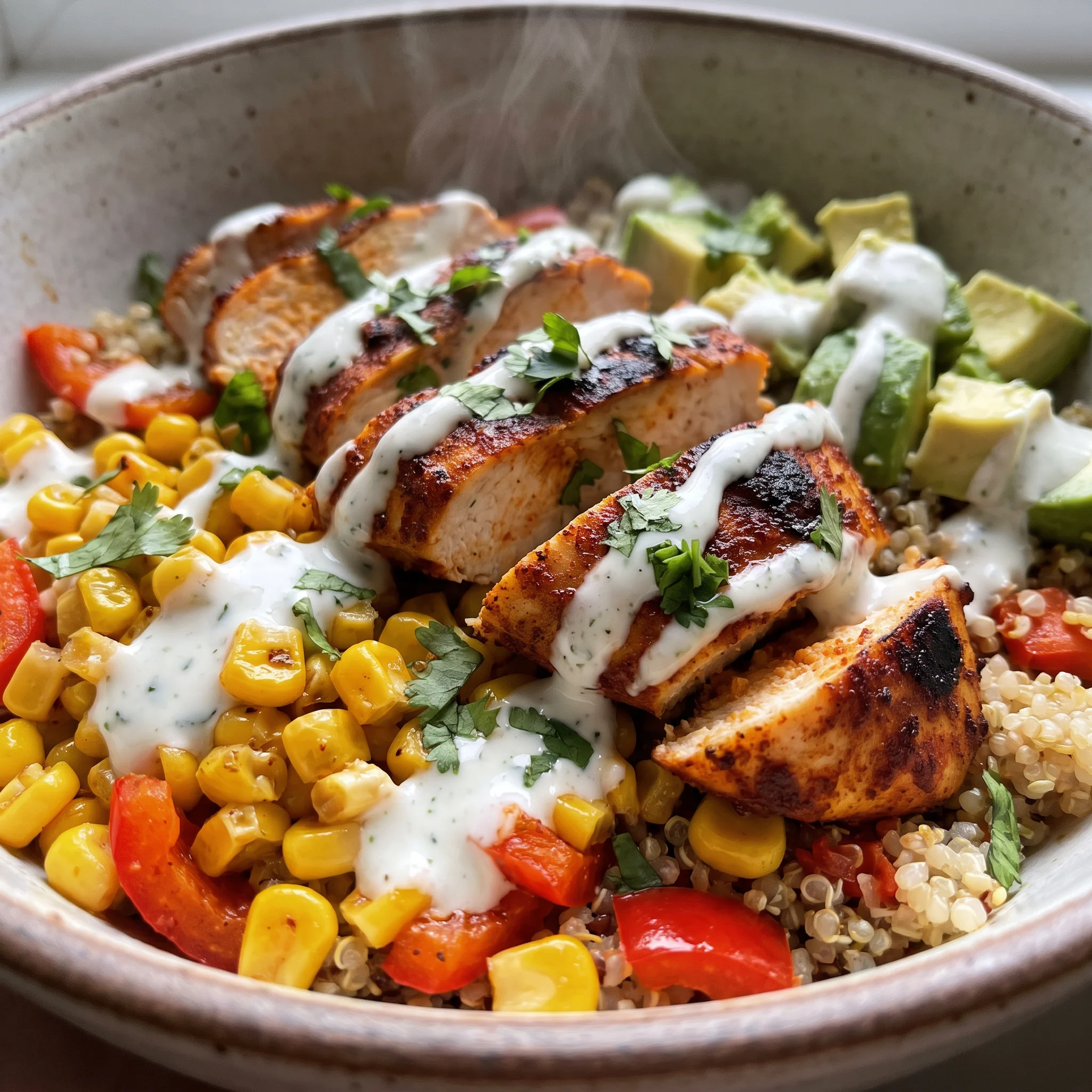
Street Corn Chicken Bowl with Avocado
Ingredients
Method
- Prepare the quinoa or brown rice as directed on the package.
- Sprinkle salt, pepper, and a small amount of olive oil over the chicken breast. Cook in a skillet over medium heat until no longer pink.
- Place corn and red bell pepper into the same skillet; sauté for 5-7 minutes.
- In a large bowl, mix together the cooked quinoa or rice, sautéed corn and peppers, diced avocado, and chopped cilantro.
- Drizzle lime juice over the mixture and toss to combine.
- Cut the chicken into slices and arrange on top of the corn mixture. Enjoy!
Storage and Serving: Eat It the Day You Make It
Assemble this bowl when you plan to eat it, and finish it within a few hours for the best texture. The avocado browns once cut and exposed to air, and the lime that brightens the first serving turns dull as it sits. Those changes happen faster than any container can prevent.
Leftovers keep in an airtight container in the fridge for one day, two at the outside. Past that, the grain has drunk the juices from the corn and lime, and the whole bowl reads wet and heavy.
Reheat a stored portion gently in a skillet, but leave out any avocado that’s already in the mix and add fresh diced avocado and a new squeeze of lime after warming. The chicken and grain reheat fine. The corn and pepper hold up.
If you want to freeze something, freeze only the cooked chicken and the grain separately, up to a month. The assembled bowl does not freeze well. The avocado and cilantro won’t survive thawing, and the texture of the corn turns watery.
Serve stored portions warm, with the cold avocado and lime added last, right before the fork hits the bowl.
Tips
- Let the chicken sit off heat for 5 minutes before slicing it. The fibers relax and reabsorb moisture, so the cut slices stay juicy instead of releasing pink-tinged juice onto the grain when you arrange them on top.
- Slice the chicken against the grain into 1/2-inch pieces. A 1 lb breast is thick enough that cutting with the grain leaves long, chewy strands; crosswise slices break the fibers short so each piece stays tender and the lime and corn juices coat the cut surfaces rather than sliding off.
Three Swaps That Work Here, and One the Bowl Won’t Forgive
Chicken breast: Boneless, skinless thighs, same 1 lb. Thighs stay juicier and bring a deeper, slightly gamy flavor that stands up to the charred corn. They release more fat, so the pan gets glossier; pour off all but a thin film before the peppers go in, or the vegetables will poach instead of blister.
Cook them a couple of minutes longer per side, since they’re denser.
Quinoa or brown rice: The other one, or white rice. Quinoa keeps the bowl loose and a little crunchy, and it drinks up lime without going sticky. Brown rice gives a chewier, nuttier base that holds heat longer, so cool it a touch more before the avocado goes in.
White rice works but turns soft fast under the juicy vegetables; keep it on the firm side when you cook it.
Corn: Frozen kernels, no need to thaw. Frozen corn carries more water than fresh or well-drained canned, so give it an extra minute or two in the skillet and let the sound go from a wet hiss to a crackle before you pull it.
The payoff is sweet, snappy kernels that brown just as well once that water cooks off. If you use canned, drain it hard and pat it dry.
Avocado: Skip it, or serve it on the side. Avocado is what makes each bite cool and creamy against the warm grain and spicy corn. Leave it out and the bowl tastes sharper and drier, more like a chicken salad without dressing.
If you’re feeding someone who doesn’t like it, slice it over the top at the table so the rest of the bowl keeps its balance.
Frequently Asked Questions
Can I make this street corn chicken bowl ahead of time?
Cook the chicken and grain ahead, keep them separate, and assemble the bowl the day you eat it. The reason is the avocado: once diced and folded in, it starts browning, and there’s no container that stops it. Same for the lime.
It brightens the first serving, then goes flat in the fridge. If you want a head start, cook the chicken and grain, store them apart, and add the corn, pepper, avocado, cilantro, and lime when you’re ready to eat.
Why did my bowl turn out watery?
Wet corn is the usual culprit. Canned corn needs draining until it stops dripping, and frozen corn needs extra time in the skillet until the sound goes from a wet hiss to a crackle.
If the corn still had water on it when it hit the bowl, that water ends up in the grain. Second check: the grain itself. Quinoa or rice that’s still steaming hot when you mix will release moisture into everything else, so spread it out and let the steam stop first.
If the bowl already looks wet, drain off what collects at the bottom before you add the avocado.
How is this different from a classic street corn salad?
A street corn salad is corn, mayo, cheese, chile, lime, and herbs, eaten cold or at room temperature as a side. This bowl bulks that out with sliced chicken and a full cup of quinoa or brown rice, so it eats as a meal for four rather than a side. There’s no mayo or cheese in the mix, so the creaminess comes from diced avocado instead.
The corn and pepper get sautéed in the same skillet the chicken cooked in, which gives them a savory backbone a cold salad doesn’t have. And the grain is what makes it a bowl: it soaks up the lime and the pan oils so nothing pools at the bottom.
