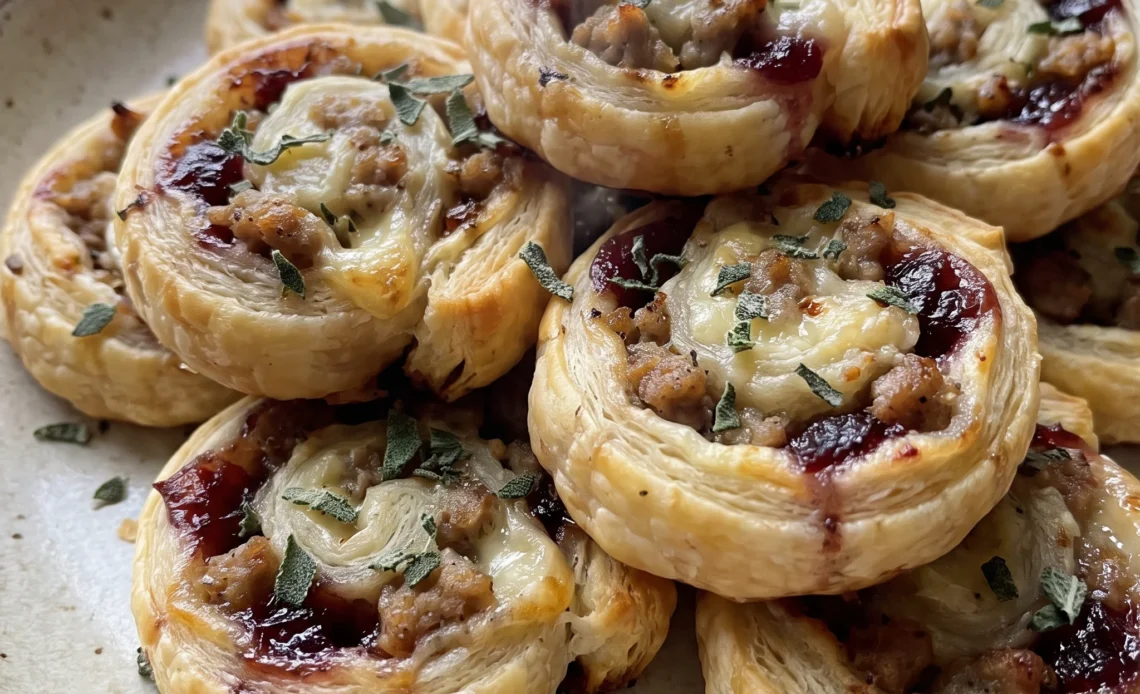
The roll goes into the fridge for ten minutes before you cut it, and that pause is the difference between clean pinwheels and a smear of sausage and brie across the board. Cold brie fights the blade instead of giving way under it, and firm cranberry holds its line rather than dragging into the next slice.
Skip the chill and you’ll be reshaping collapsed spirals on the sheet with your fingers, which works, but the cut faces look rough and the filling migrates. You’re making sausage cranberry brie bites from one sheet of puff pastry, which means the whole batch lives or dies on how that single log slices. Get the chill right and the rest of the project is forgiving.
The Roll’s Orientation Before Slicing
Lay the brie slices so their long edges run horizontal, parallel to the edge you’ll start rolling from. That tiny choice decides whether each slice shows a clean spiral or a lopsided pocket of cheese.
When the brie runs across the dough, rolling from the long side curls the pastry, sausage, and brie into concentric rings. Cut through the log and every bite gets a full turn of filling.
Set those same slices vertical and the roll moves in a different direction, pushing cheese toward the ends where it leaks out during baking. The spiral you see on the cut face comes straight from how the brie was oriented before the first fold. Get it right and the slices hold together, each one a tidy pinwheel.
Get it wrong and you’re scraping melted brie off the parchment. No need to overthink it: horizontal, then roll.
Cranberry Sauce as the Moisture Barrier
Spread the cranberry sauce on the dough first, before any sausage goes down. That order matters because the sauce acts as a shield.
Its sugar and pectin set into a tacky layer that slows the sausage juices from soaking into the pastry. Put the meat directly on the dough and those juices hit the flour almost immediately, turning the bottom crust dense and wet before the bake even starts. The sauce also gives the sausage something to grip, so the filling doesn’t slide when you roll.
If you reversed the order, sausage first, cranberry second, the sauce would just sit on top and most of it would ooze out during baking. You’d lose the tartness that cuts through the rich brie and sausage.
Instead, the barrier holds, the pastry stays crisp, and every bite gets that sweet-tart edge.
Why the Rind Comes Off
That white rind on a wedge of brie doesn’t soften the way the inside does. In a hot oven it stays chewy, almost leathery, even after the interior has gone molten. In a larger wheel that contrast is fine, but in a two-bite pastry it reads as a rubbery band.
Remove the rind and the brie melts into a smooth, oozing layer that spreads through the sausage and cranberry. Leave it on and you’ll bite into pockets of firm, waxy texture that don’t belong.
The rind also insulates the cheese slightly, so the interior stays cooler longer, which can mean the pastry browns before the cheese fully softens. Scraping it off takes a minute with a paring knife, and the payoff is a uniform, creamy filling. What you want is brie that disappears into the bite, not one that announces itself with a chew.
Fully Cooked Sausage Before It Touches Pastry
The sausage needs a full browning in the skillet before it ever meets the dough. Pastry bakes in 15 minutes, and that’s nowhere near enough time to cook raw ground meat through. If you crumbled raw sausage into the roll, the center would still be pink and the juices would turn the surrounding dough gummy.
So brown it first, breaking it into small bits, then stir in the rosemary and sage right at the end. The herbs hit the hot meat and fat, and their oils release in seconds. Sprinkle them on later and you get dried flakes that taste raw and dusty.
After browning, tilt the pan and spoon off the excess fat. Leave it in and the pastry turns greasy, with oil pooling on the parchment. The sausage should be fully cooked, crumbly, and just moist enough to hold together before it goes on the cranberry sauce.
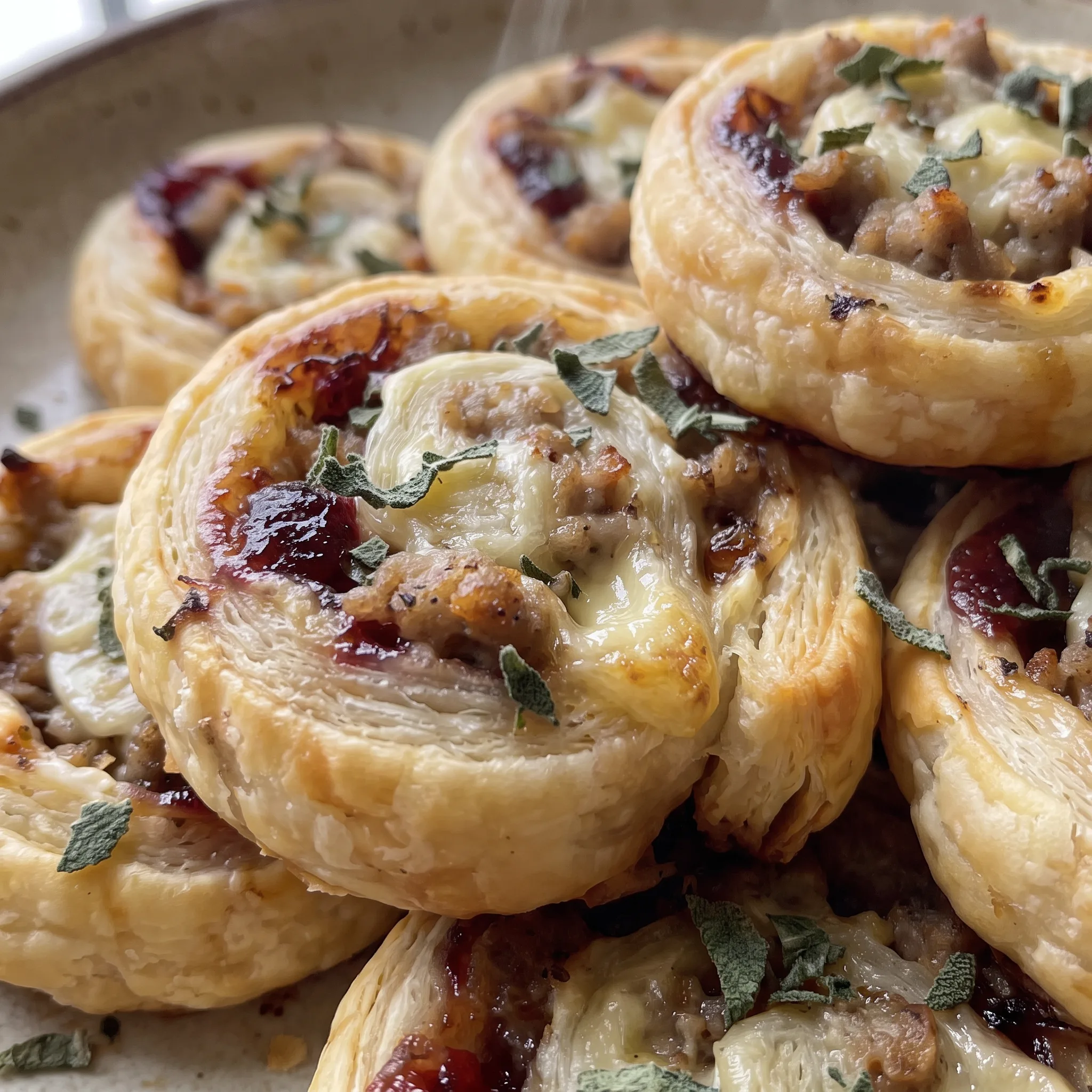
What to Buy and How to Prep It
Frozen puff pastry: Buy all-butter puff pastry if you can find it, since the kind made with palm or shortening bakes up flatter and tastes like nothing.
Johnsonville Ground Italian Sausage: Sweet, Mild, or Hot all work here, but pick one and taste a pinch raw so you know how much heat you’re building in.
Jellied cranberry sauce: You want the canned jellied kind that holds a slice, not whole-berry, which stays loose and runs out of the roll.
Brie: A wedge is easier to work with than a pre-cut round, and you want one that gives slightly when pressed, not one that’s chalky at the center.
Fresh sage and rosemary: Fresh herbs only here, since dried sage and rosemary turn dusty and bitter against the sweet cranberry and rich sausage.
Judging the Roll, the Cut, and the Bake
Reading the dough when it’s ready to roll
Puff pastry thaws unevenly. Press a corner to the touch: if it cracks instead of bending, it’s still too cold and will snap when you roll.
If it’s sticky or leaves a dent that stays, it’s too warm and the butter is melting into the flour, which means tough, greasy layers. You want it pliable but cool, like a leather glove.
If it’s too cold, wait five more minutes. Too warm, slide it onto a baking sheet and chill it for ten.
Sealing the seam so the roll doesn’t uncoil
After you roll the dough into a log, the seam where the dough meets itself needs to be pressed shut. Run your fingers along it with light pressure, then brush a little egg wash under the flap and press again. If you skip this, the log will start to unfurl as it bakes and the filling will spill out the side.
You’ll see the seam opening in the first few minutes in the oven, and by then you can’t fix it. Press firmly but don’t squash the spiral.
Cutting clean slices without crushing the spiral
A sharp knife matters more than pressure. If the blade drags, the sausage and brie get pushed out of shape and the spiral smears. Wipe the blade between cuts; warm cheese and sticky cranberry build up and tear the next slice.
Aim for slices between 3/4 and 1 inch. Thinner than that and the filling overwhelms the pastry; thicker and the center dough stays raw while the outside browns.
If a slice collapses, gently reshape it on the sheet with your fingers.
Knowing when the egg wash has done its job
The wash should look glossy and even, not pooled in the folds. Too much and it runs down the sides, gluing the pastry to the parchment and leaving a scrambled-egg edge. Too little and the crust stays pale and soft.
Brush it on in a thin layer, then check the sides: if you see drips, wipe them with a paper towel before baking. The wash sets the crust’s color, so what you see before the oven is close to what you’ll get.
Pulling them when the cheese is molten but not leaking
At 15 minutes, look for deep golden pastry and brie that has slumped but not broken out of the spiral. If cheese is bubbling over the edges, it’s already past ideal and the cranberry is likely burning on the parchment.
If the pastry is pale, give it two more minutes, but watch closely because brie goes from soft to running in under a minute. The centers should feel slightly soft when you press the top, not firm.
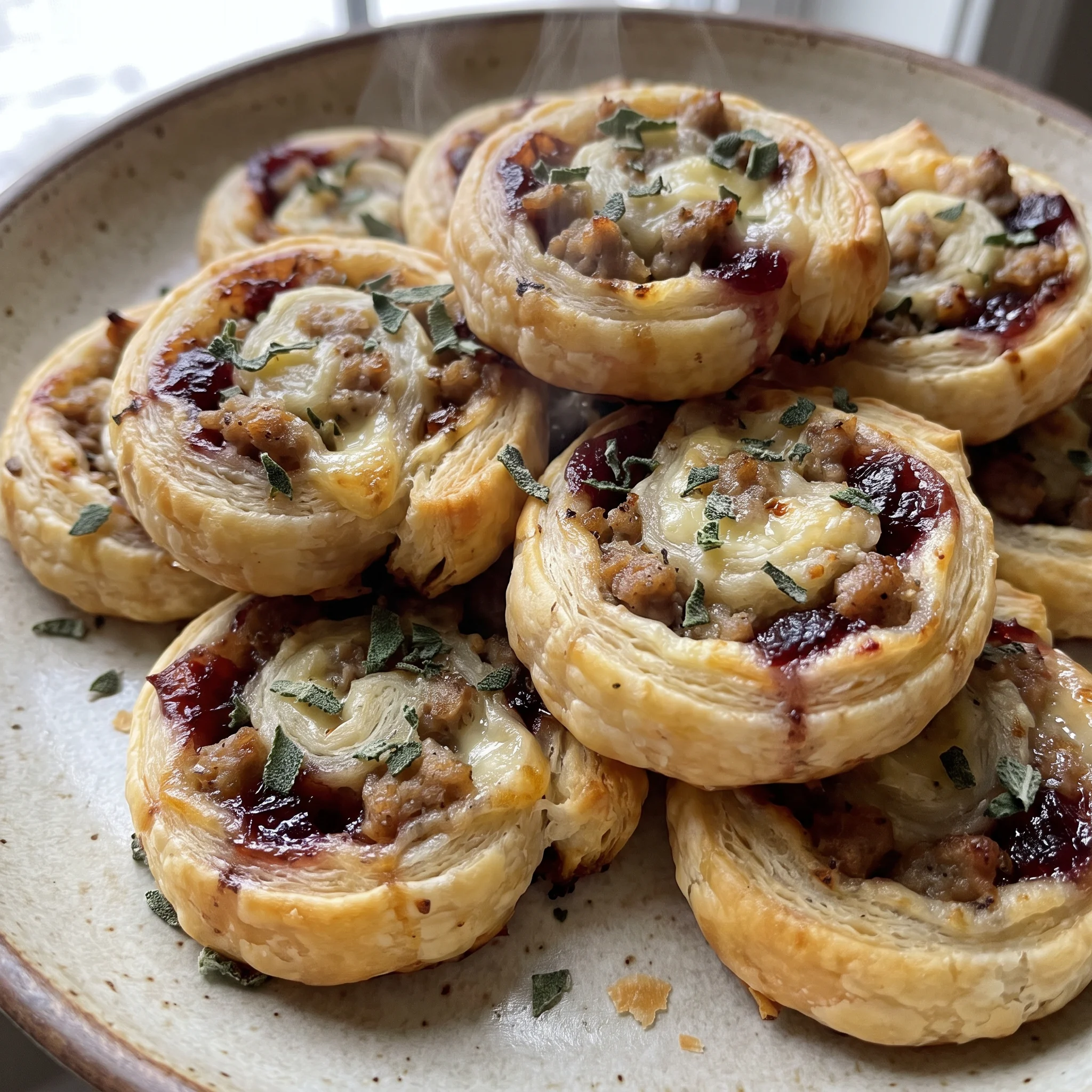
Sausage Cranberry Brie Bites
Ingredients
Method
- Let the pastry sheet thaw for 40 minutes, or follow the package directions.
- Set oven to 400°F (205°C) and prepare two baking sheets by lining them with parchment.
- In a medium skillet over medium heat, brown the sausage with the garlic, crumbling it as it cooks. Stir in the rosemary and sage and continue cooking for an additional 3 minutes, stirring occasionally. Remove excess fat.
- In a small bowl, beat the egg with water to create an egg wash. Put the thawed pastry dough on a lightly floured surface and brush the egg wash over it, extending to all four edges.
- Distribute the cranberry sauce uniformly across the dough.
- Layer the cooked sausage on top of the cranberry sauce.
- Arrange the brie slices evenly over the sausage.
- Starting from one end of the dough where the brie slices are oriented horizontally (not vertically), gently and slowly roll it up into a jelly roll shape.
- With a sharp knife, cut the roll into 14 slices, each about 3/4 to 1 inch thick. Move them to the prepared baking sheets. Brush the tops and sides with egg wash, scatter the remaining sage over them, and bake for 15 minutes.
The Thirty-Minute Window and What Happens After
Serve these within 30 minutes of the oven. That’s the crispest the pastry will ever be, and the brie is still loose enough to pull in a slow thread when you bite. Past that mark, steam from the hot filling migrates outward and softens the laminated layers.
At an hour the crust has gone tender rather than flaky, and by two it reads as chewy. The flavor doesn’t suffer; the texture does.
Cool leftovers completely, then refrigerate in a single layer in a lidded container with parchment between rows so the egg-washed tops don’t stick. The sausage, brie, and cranberry all hold a few days, but the pastry never returns to its baked state. Reheat at 350°F for 8 to 10 minutes, which firms the crust more than a microwave will.
Scatter the garnish sage just before serving, never before storing; it blackens in the fridge and tastes like hay once chilled.
Swaps That Hold the Spiral and Swaps That Break It
Frozen puff pastry: An all-butter puff pastry for the shortening-based kind. All-butter dough browns deeper and shatters into flakes when you bite, while the shortening version puffs more evenly but tastes flat. Both need the same 40-minute thaw, and if you can only find the shortening kind, brush the tops with a little extra egg wash to help them color.
Johnsonville Ground Italian Sausage: Hot or Sweet for Mild, keeping the 8 ounces the recipe calls for. The heat level is the one dial you can turn without changing the structure. Hot sausage brings a sharp backnote that cuts the cranberry’s sweetness; Sweet leans the whole bite toward dessert.
Brown and drain it exactly the same way, since a fattier sausage will leave more oil in the pan.
Brie: A soft-ripened cheese like Camembert, rind removed, for the brie. Camembert melts into an almost identical ooze, though it can run a touch faster in the oven, so check the bites a minute early. Skip harder cheeses like cheddar or gouda: they won’t slump into the spiral and you’ll get firm chunks instead of a creamy layer.
Jellied cranberry sauce: Whole-berry cranberry sauce for the jellied kind. Whole-berry stays loose and wet, so it won’t set into the tacky barrier that keeps sausage juices out of the pastry.
The roll will leak and the bottom crust turns dense. If that’s all you have, pulse it in a food processor until smooth, then spread it thin and expect a slightly softer bite.
Tips
- Once the log is rolled and the seam pressed shut, set it seam-side down on a parchment-lined sheet and refrigerate for 10 minutes before cutting. Cold brie and firm cranberry resist the blade, so the 14 slices come away with clean edges and the spiral stays intact instead of smearing.
The brie’s melting behavior depends on how its slices are oriented relative to the roll direction. When slices are laid horizontally, rolling from that end wraps each slice into a spiral that traps the melting cheese between pastry layers; when slices are vertical, the cheese melts downward and outward, breaking through the dough. This recipe specifies horizontal orientation because it keeps the filling enclosed during the 15-minute bake.
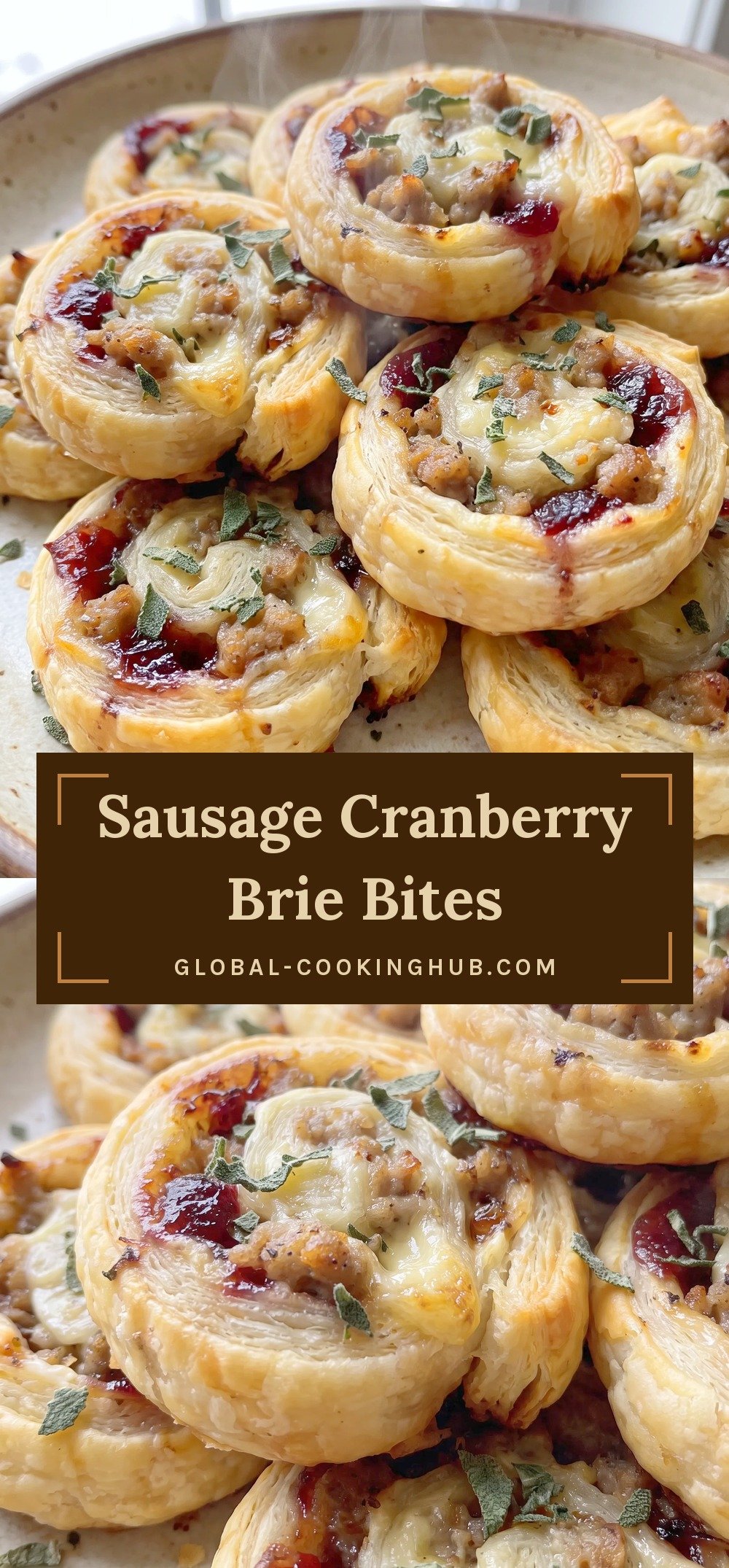
Frequently Asked Questions
Can I assemble these sausage cranberry brie bites the night before and bake them the next day?
You can, but the pastry won’t be as flaky. The dough absorbs moisture from the cranberry sauce and sausage overnight, so the bottom crust bakes up dense rather than crisp.
If you go this route, wrap the unbaked log tightly in plastic and refrigerate; cut and bake straight from the fridge, adding a minute or two to the bake time. The flavor holds up fine, but the texture is a step down from baking the same day.
Why did my brie bites leak cheese and cranberry sauce in the oven?
Most likely the roll wasn’t sealed at the seam. If that flap of dough isn’t pressed shut with egg wash, it unfurls in the first few minutes and the filling spills out.
As a secondary check, look at how you oriented the brie slices: if their long edges ran vertical instead of horizontal, the roll pushes cheese toward the ends and it leaks there. Also make sure the cranberry sauce is the jellied kind, since whole-berry stays loose and runs.
How are these different from traditional sausage balls or pigs in a blanket?
Sausage balls are a biscuit-and-cheese drop dough, dense and uniform, with no layers or filling to speak of. Pigs in a blanket wrap a whole cocktail sausage in pastry, so you get a solid meat core and a simple bread shell. These bites build a spiral: cranberry sauce spread first, then browned sausage, then brie, all rolled into puff pastry so each slice shows a pinwheel of sweet, savory, and creamy.
The brie melts into the sausage and cranberry rather than sitting as a distinct piece.
Do I need to thaw the puff pastry completely before rolling, or can it still be cold?
You want it pliable but still cool, not fully soft. Press a corner: if it cracks instead of bending, it’s too cold and will snap as you roll; if it’s sticky or holds a dent, it’s too warm and the butter is melting into the flour, which bakes up tough and greasy.
If it’s too cold, give it a few more minutes; if too warm, slide it onto a baking sheet and chill for ten. The recipe’s 40-minute thaw is a guide, but your kitchen temperature decides the exact moment.
