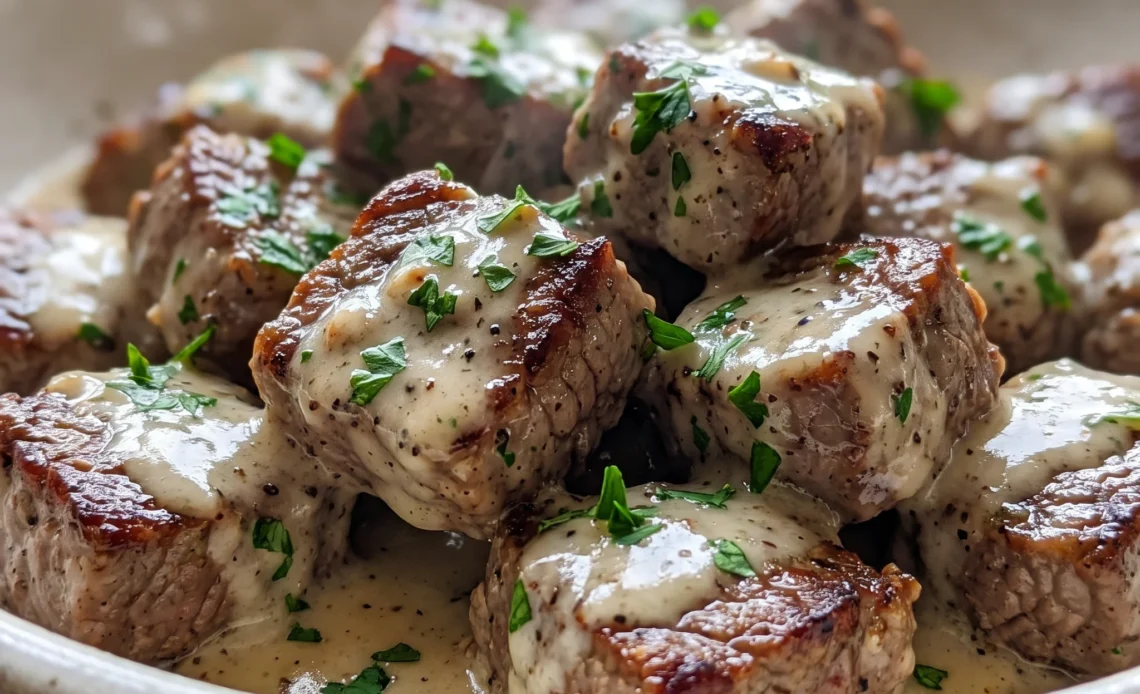
The crust on a properly seared steak bite gives way with a slight resistance, then the inside yields, and the cream sauce that clings to it is glossy enough to catch the light. That contrast is what makes garlic butter steak bites worth the pan.
The trickiest part isn’t the sear or the sauce on its own; it’s timing the two so the meat doesn’t sit waiting while the cream reduces. Sirloin cut into cubes cooks fast, and the window between browned and overdone is narrow.
You can feel it when you press a piece: springy means it’s still got room, firm means it’s past. The sauce forgives more than the beef does. Get the steak off the heat at the right moment and the rest comes together in the same skillet, drippings and all.
Building the Pan Sauce
After you sear the steak and move it off the heat, the skillet holds more than hot fat. Those browned bits stuck to the bottom are what makes this sauce worth the extra step. Pour in the beef broth while the pan is still hot and scrape with a wooden spoon.
The liquid lifts everything that would otherwise stay behind, and what comes up tastes like the steak itself, only concentrated. Cream goes in next, and the pan comes off the heat before the Parmesan.
Keep it on the flame and the cheese can seize into a grainy paste that never smooths out. Off the heat, it melts into something glossy that coats a spoon. The steak goes back in for a final toss, so every piece picks up the garlic butter and cream.
What lands on the plate is a single sauce, not meat sitting in a puddle.
Why You Sear in Batches
A skillet packed with steak pieces drops in temperature fast, and the meat starts releasing water instead of browning. You end up with gray chunks sitting in their own juice, which is steamed beef, not seared.
Spread the pieces out so each one touches the hot pan without touching its neighbor. Do it in two or three rounds if that is what the pan size demands.
The reward is a dark, crusty surface that contrasts with the cream sauce, a texture you can feel when you bite through. That crust also carries flavor the sauce alone cannot provide. Crowd the pan and you lose both the color and the chew.
Give the pieces room and they brown deeply, and the finished dish has a savory edge that makes the cream taste richer, not heavier.
Seasoning the Beef First
Salt, pepper, smoked paprika, and garlic powder go on the raw steak before it ever hits the pan. This is not about marinating. It is about giving the surface something to cling to that will brown along with the meat.
The spices bloom in the hot fat and form a crust that tastes seasoned all the way through, not just on the outside. Let the coated pieces sit for a short rest.
That brief pause gives the salt a chance to draw out a little moisture, which then dries on the surface, and dry surfaces sear better than wet ones. The paprika brings a smoky note that plays well with the garlic butter later.
Without this step, the beef tastes flat next to such a rich sauce. With it, each bite has its own savory backbone before the cream and cheese ever arrive.
Cream, Parmesan, and the Final Toss
Heavy cream and Parmesan turn the pan drippings into something thick enough to cling to the steak instead of running off. The cream adds body and a mild sweetness that rounds out the garlic. Parmesan brings salt and a savory depth that makes the sauce taste like more than just dairy.
Simmer the cream briefly so it thickens, then pull the pan off the heat before the cheese goes in. On a hot burner, Parmesan can clump and turn stringy, and no amount of whisking brings it back.
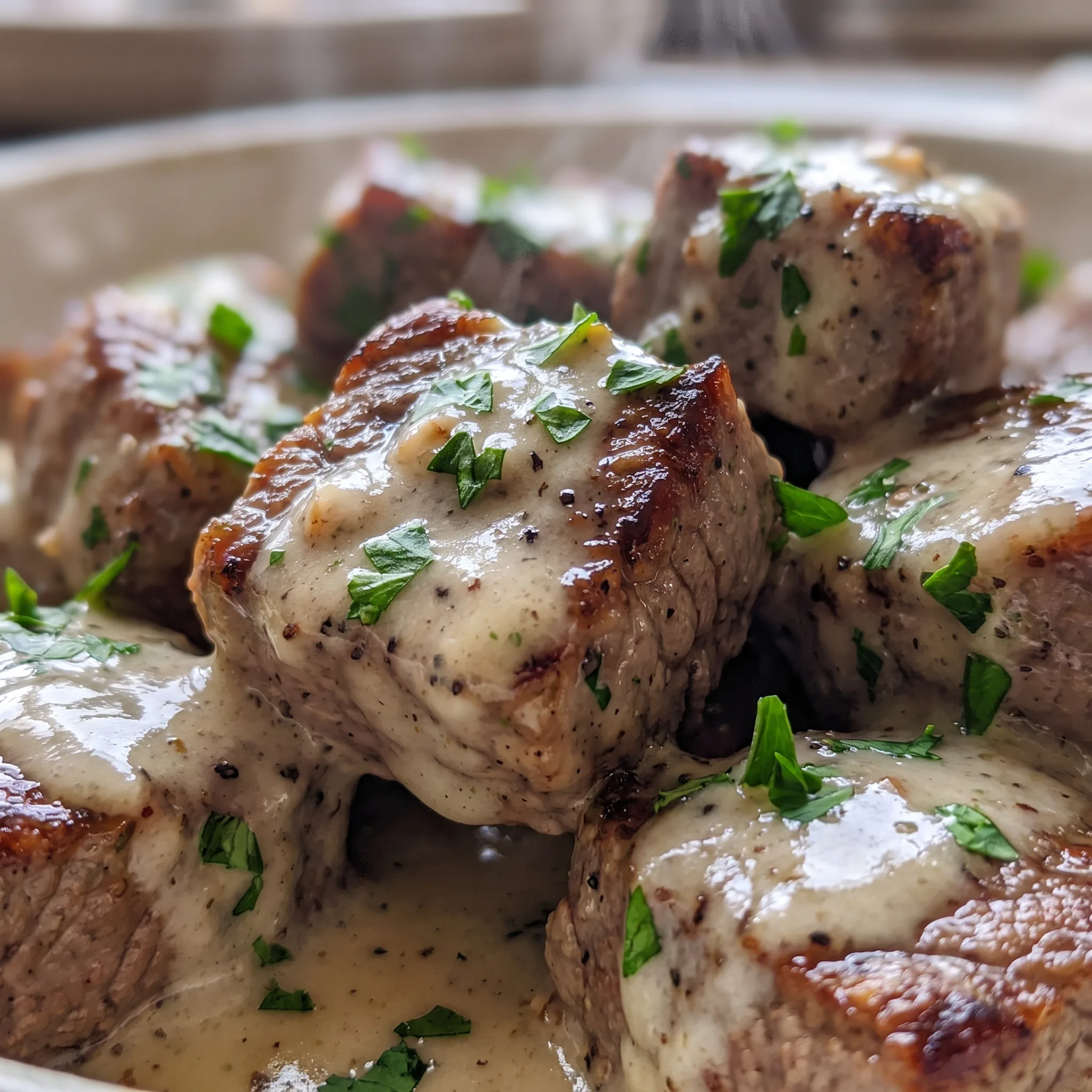
Off the heat, it melts into a smooth, silky sauce that coats the back of a spoon. Return the seared steak and toss until every piece is slick with garlic butter and cream.
Parsley and red pepper flakes go on last for a fresh bite and a little heat. The sauce should hug the meat, not pool beneath it.
What to Buy and How to Cut It for Steak Bites
Sirloin steak: Look for a piece with good marbling and no large gristle bands, since 1-inch cubes cook fast and lean patches turn tough.
Parmesan cheese: Buy a block and grate it yourself; pre-shredded bags are dusted with starch that keeps the cheese from melting smooth.
Heavy cream: Check the label for at least 36 percent butterfat, because lighter cream won’t thicken enough to coat the steak.
Smoked paprika: Smell the jar before you buy; fresh paprika is sweet and sharp, while old stock smells of dust and adds nothing.
Garlic: Five cloves, chopped fine by hand rather than pressed, so the pieces cook evenly in the butter without turning bitter.
How to Read the Pan at Each Stage
Judging the Sear: Color and Release
When the steak hits the pan, it sticks. That’s normal.
The moment to flip is when it releases on its own and the underside is a deep brown, not before. If you force it, you tear the crust. After 3 minutes, check one piece: if it lifts cleanly, turn it.
If not, give it another 30 seconds. The second side needs the same treatment. Pale meat means the pan was too cool or too crowded, and the sauce will lack that savory edge.
Sensing When the Garlic Is Done
Garlic goes from raw to burnt in under a minute. The moment it’s ready is when you smell it, a sweet, nutty aroma that fills the pan, and the edges just start to turn gold. If it’s brown, it’s bitter; start over.
Pull the pan off the heat if you’re unsure. The garlic continues cooking in the hot butter, so err on the side of underdone.
This step sets the flavor base for the sauce.
Thickening the Cream: The Trail Test
After the cream goes in, it needs to simmer for 2 minutes to thicken. You’ll know it’s ready when you drag a spoon through and the trail stays visible for a second before the cream fills it back in. If it’s still watery, give it another minute.
Over-reducing and it’ll be too thick to coat the steak. The cream should nap the back of a spoon, not run off like milk.
Melting the Parmesan Without Seizing
Parmesan turns grainy if the pan is too hot. Off the heat, add it in a few handfuls, whisking until each melts before adding more. The sauce should look glossy and smooth.
If it seizes, return the pan to low heat and whisk in a splash of warm broth or cream to bring it back. But prevention is easier: never let the cream boil after the cheese goes in.

Garlic Butter Steak Bites with Parmesan Cream Sauce
Ingredients
Method
- Coat the steak pieces with salt, pepper, smoked paprika, and garlic powder. Allow to rest 5 minutes.
- In a skillet over medium-high, warm olive oil and 2 tbsp butter. Working in batches, sear the steak pieces 3 minutes per side. Transfer out and set aside.
- Using the same skillet, melt the remaining butter, then add the minced garlic. Sauté 1 minute until aromatic.
- Pour in beef broth, scraping up browned bits. Mix in heavy cream, then simmer 2 minutes.
- Remove from heat and whisk in Parmesan until velvety. Put the steak pieces back, tossing to coat. Top with parsley and red pepper flakes.
Where Swapping Helps and Where It Backfires
Heavy cream: Half-and-half or whole milk. Both are thinner than heavy cream, so the sauce won’t cling to the steak the same way. It’ll still taste rich, but you may need to simmer it longer to thicken.
Start with the same 1 cup the recipe calls for, then adjust after tasting.
Parmesan cheese: Pecorino Romano or Grana Padano. Pecorino is sharper and saltier, so use a little less if you’re sensitive to salt.
Grana Padano is milder and melts similarly. Either way, grate it yourself for a smooth sauce.
Use 3/4 cup as written, then tweak to your taste.
Sirloin steak: Ribeye or strip steak. Ribeye has more fat, so it’ll be more tender and juicy but also greasier in the pan.
Strip is leaner and a bit chewier. Both work, but adjust searing time slightly: ribeye may cook faster due to fat rendering.
Cut into 1-inch pieces as directed.
Tips
- Pat the diced sirloin dry with paper towels until the surface feels tacky rather than slick, then season. Damp meat throws off steam the second it meets the pan, and that steam keeps the spices from toasting onto the surface, so you lose both the crust and the bloomed paprika flavor.
Storing and Reheating the Steak Bites
Eat these within 30 minutes of the final toss. The cream sauce is at its most silky right off the heat, and the crust on the steak still has snap.
Cool leftovers within an hour, then refrigerate in a shallow container with a tight lid. The Parmesan cream will firm up and look grainy cold; that is the cheese and fat setting, not spoilage. It keeps 3 days.
To reheat, warm a skillet over low with a splash of beef broth, add the steak, and stir gently until the sauce loosens, 3 to 4 minutes. High heat breaks the emulsion and toughens the already-seared beef. The sauce will not return to its first-day gloss, but the broth brings back the coating.
Freeze only the steak and sauce, not the parsley, for up to 2 months; thaw overnight in the fridge. Add parsley and red pepper flakes after reheating, never before, so they stay bright.
Parmesan contains casein proteins that tighten and clump when exposed to temperatures above roughly 165°F, and heavy cream’s fat emulsion can split if boiled hard. In this recipe, the sauce is built in a hot skillet after searing, so residual heat can easily push it past that threshold. Adding the cheese off the heat and whisking constantly keeps the proteins from coagulating and the fat from separating, preserving a smooth, silky texture.

Frequently Asked Questions
Can I make garlic butter steak bites ahead of time?
You can sear the steak and refrigerate it, but the cream sauce is best made fresh. The sauce thickens as it sits, and the Parmesan can firm up in a way that never fully smooths out again. If you must, store the components separately: steak in one container, sauce in another, then reheat gently with a splash of broth.
The storage section covers how to bring leftovers back; the same method works here.
Why did my steak bites turn out tough?
Overcrowding the pan is the usual culprit. When pieces touch, they steam instead of sear, and the meat releases water that leaves it gray and chewy. Sear in batches so each piece has room, and let the pan come back to temperature between rounds.
Another possibility: you cut the steak into uneven pieces, so some overcook while others finish. Aim for consistent 1-inch cubes.
How do I keep the Parmesan cream sauce from curdling?
Pull the pan off the heat before the cheese goes in. On a hot burner, Parmesan clumps and turns stringy, and whisking won’t bring it back. Add it in a few handfuls, letting each melt before the next.
The sauce should look glossy and coat the back of a spoon. If it does seize, a splash of warm broth over low heat can rescue it, but keeping the pan off the flame is easier.
What makes this recipe different from classic steak bites?
Classic steak bites often stop at garlic butter in the pan. Here, the drippings become a cream sauce with Parmesan, so the steak ends up coated rather than sitting in a pool of butter. The smoked paprika in the rub adds a smoky note that plays against the richness of the cream.
And the final toss brings everything together, so each bite carries both the seared crust and the sauce.
