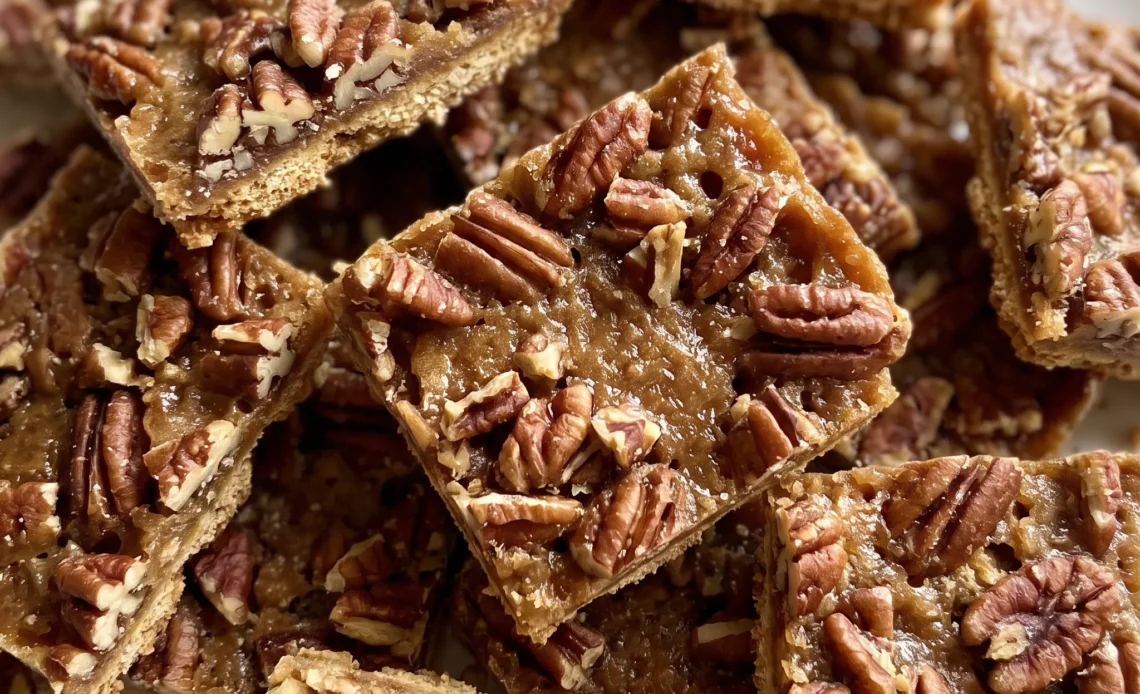
Candy that goes from a bubbling saucepan to a hot oven before it ever sets is a different animal than candy made on the stovetop alone. Pecan pie bark lives in that crossover.
What you’re watching for happens in the pan first: butter, brown sugar, and nuts boiling hard enough that you can’t walk away, because the caramel goes from amber to bitter faster than seems reasonable. Then the whole thing slides into the oven and the surface turns glassy, bubbles crawling across it as the last water leaves.
Get that right and the cooled sheet snaps into shards without a fight. Get it wrong and you’re chewing.
The margin isn’t huge, which is why the timing matters more than the ingredient list suggests.
Graham Crackers Hold the Caramel
A rimmed sheet lined with foil and buttered is only half the containment. Hot caramel is thin and relentless; poured straight onto the pan, it spreads to the edges and thins into a sheet that cools uneven and cracks at random.
The crackers form a continuous, rigid floor that stops that flow. Each piece butts against the next, so the caramel has nowhere to pool and no gaps to drain through.
What you get is an even layer that hardens flat, with a snap that runs clean across the whole pan instead of shattering into sticky shards. The crackers also bring something to the flavor: a faint toasted sweetness and a dry crunch that cuts the richness of the butter and brown sugar. Without them, the pecans would sink and the bark would set with soft, greasy patches.
The base is not a crust in the usual sense; it is a scaffold. It disappears under the caramel, then reappears in the bite as a clean break.
Why Two Minutes of Boiling Matters
Butter, brown sugar, and pecans over medium heat will come to a rolling boil, and that boil is doing two jobs at once. Water is leaving as steam, and the sugar is starting to darken and take on flavor.
Both need time. Pull the pan off the heat as soon as you see bubbles and the mixture still holds too much water; the bark sets soft and chewy, more like a praline than a brittle. Leave it boiling well past two minutes and the sugar goes from caramel to burnt, with a bitter edge that no amount of pecans can cover.
The window is narrow. At exactly two minutes, the color deepens to a warm amber and the smell turns nutty rather than sharp. The mixture thickens enough that the pecans stay suspended instead of floating.
That is the point to add vanilla and move on. A full rolling boil, not a simmer, not a lazy bubble at the edge.
Vanilla Goes In Off the Heat
Vanilla extract is mostly alcohol and water, carrying the aroma compounds that make it worth using. Those compounds are delicate.
Held over a hard boil, they evaporate with the steam, and what remains is a faint, almost dusty sweetness. Stirring the vanilla into the caramel after the pan leaves the heat traps that aroma in the cooling sugar.
The smell changes immediately: sharper, warmer, more floral. You also get a small temperature drop, which slows the cooking just enough to keep the caramel from creeping past the target color while you spread it.
Pour it in, stir until you no longer see streaks, and move to the pan. If the caramel is still bubbling when the vanilla hits, you’ve lost most of what you added. The flavor should read as a background note against the brown sugar and toasted nuts, not as a separate ingredient.
A clean, rounded finish is what you’re after.
The Oven Sets the Final Snap
Stovetop caramel is still soft when it hits the graham base. The oven finishes the job.
Ten to twelve minutes at 350°F drives off the last of the water, and as the moisture leaves, the sugar tightens into a glassy sheet that breaks with a sharp crack rather than bending. The heat also does something to the top layer: pecan halves toast a shade darker, and the exposed edges of the graham crackers crisp again after soaking up butter.
Watch for the edges turning golden brown and small bubbles breaking across the surface. Those bubbles are the last water escaping. When they slow and the caramel looks glossy rather than wet, it’s ready.
Pull it out and leave it alone. The bark hardens as it cools, and cutting it warm gives you ragged, sticky pieces. Once it’s fully crisp, it snaps into clean shards with almost no effort.
That final texture is the difference between candy and a mess.
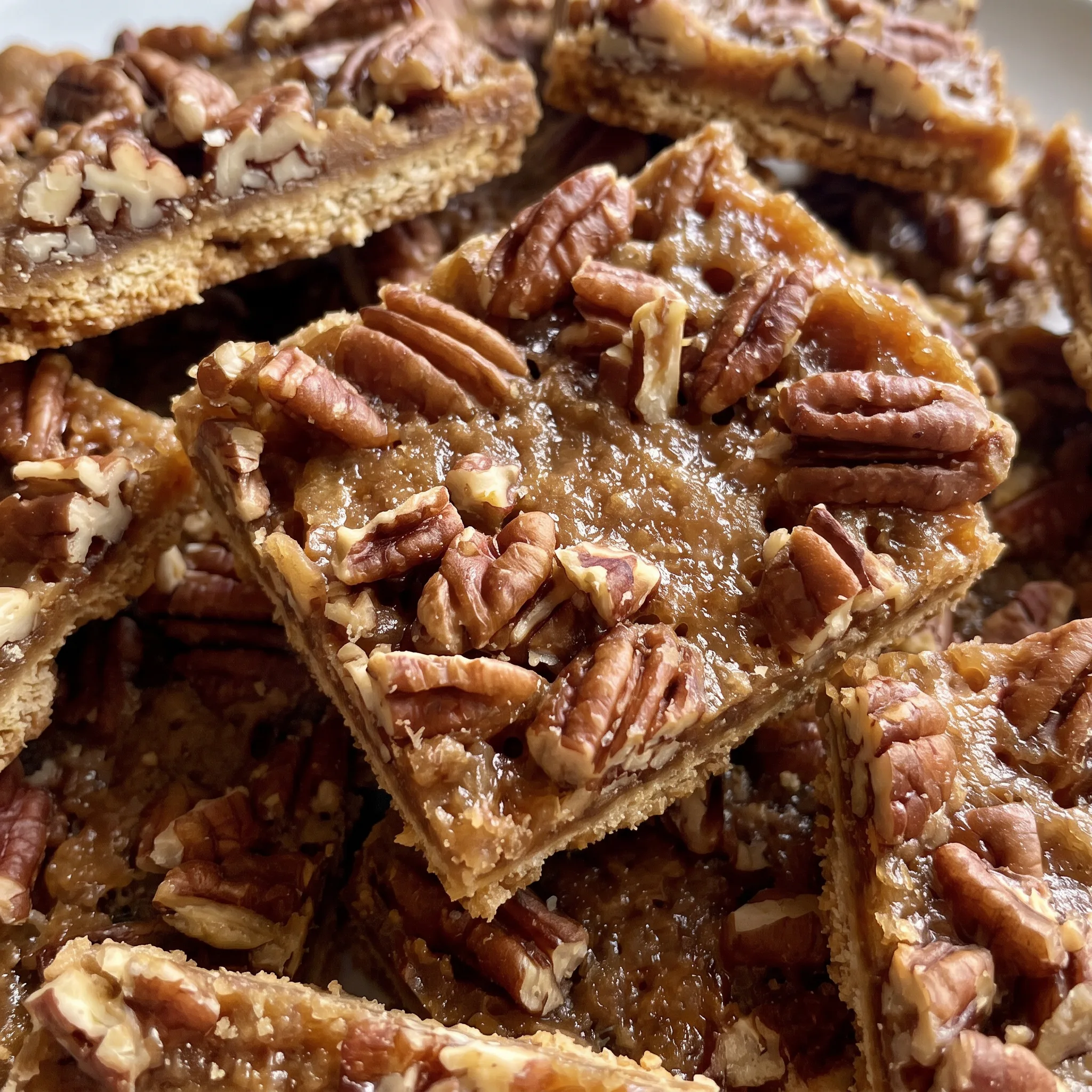
What to Buy and How to Prep for Pecan Bark
Pecan halves: Buy fresh-tasting halves and break them coarsely so they sit flat and toast evenly.
Unsalted butter: Use unsalted butter only; salted butter throws off the ¼ teaspoon salt balance.
Brown sugar: Fresh, soft brown sugar dissolves cleanly; hard clumps leave gritty spots in the caramel.
Graham crackers: Fresh, crisp crackers snap cleanly and form a rigid base without crumbling under hot caramel.
Vanilla extract: Real vanilla extract gives a clean background note; imitation tastes flat and faint.
The most common mistake is pulling the butter and brown sugar off the heat as soon as it looks like a bubbling caramel, which feels done but hasn’t driven off enough water. Without a full two-minute rolling boil, the sugar concentration never gets high enough to set hard when cooled, so the bark stays sticky and bends instead of snapping. Boiling past that point risks scorching the sugars and turning the batch bitter.
Judging the Caramel, the Bake, and the Cool
Reading the boil for the full two minutes
A full rolling boil means bubbles break across the whole surface, not just at the edges. Stir constantly and watch the color and smell.
At two minutes, the mixture turns warm amber and smells nutty, not sharp. Pull it early and the caramel stays soft; leave it longer and it scorches. Start timing only when the entire surface is rolling.
Spreading hot caramel without dragging the crackers
The caramel is hot and thin. Pour it over the graham base and spread gently with a silicone spatula, using light strokes. If you press hard or scrape, you’ll shift the crackers and create gaps where caramel pools.
Work quickly before it cools; if it stiffens, return the pan to low heat for a few seconds.
Watching for the last bubbles in the oven
At 350°F, the caramel is ready when the edges turn golden brown and small bubbles break across the surface. Those bubbles are water escaping.
If they’ve slowed and the surface looks glossy, not wet, pull it out. Overbaking darkens the nuts and can make the caramel bitter.
Underbaking leaves it sticky. The full bake takes 10 to 12 minutes.
Waiting for a hard, complete cool
The bark hardens as it sits at room temperature. Touching it warm feels pliable and leaves indentations. Wait until it’s fully crisp, about 30 minutes, before snapping.
Cutting early gives ragged, sticky pieces that won’t shard cleanly. Once cool, it breaks with a sharp crack.
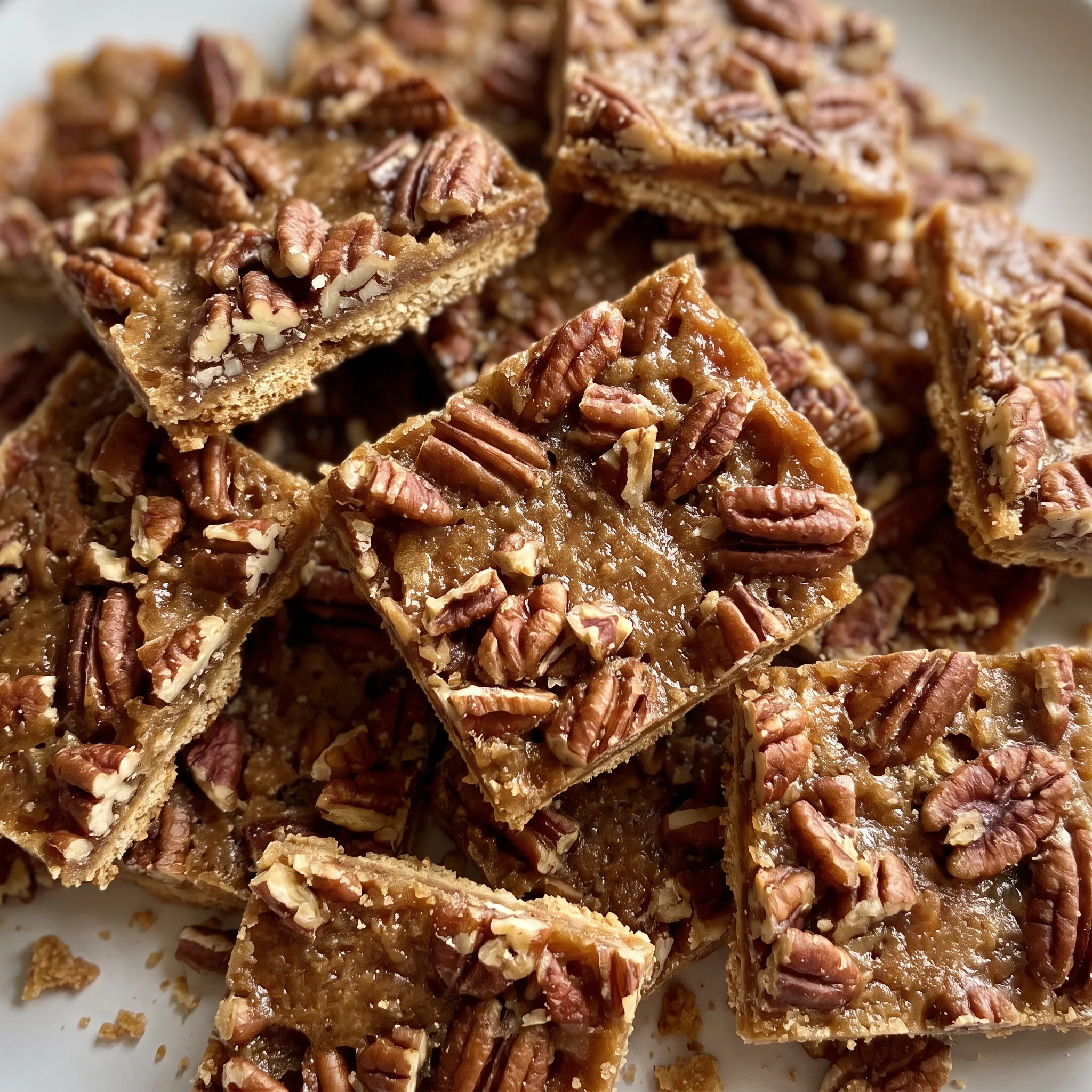
Pecan Pie Bark with Graham Cracker Crust
Ingredients
Method
- Set oven to 350°F (175°C). Cover a rimmed baking sheet with aluminum foil and apply a light coating of butter.
- Place graham crackers in one even layer over the baking sheet, breaking or cutting pieces as needed to form a continuous base that reaches all edges.
- In a medium saucepan, mix together 1 cup (226 g) unsalted butter, 1 cup (220 g) brown sugar, the chopped pecans, and ¼ teaspoon salt.
- Place over medium heat and stir without stopping until the mixture comes to a full rolling boil. Maintain a boil for exactly 2 minutes, stirring constantly to avoid scorching and to achieve uniform caramelization.
- Take off the heat and immediately blend in 1 teaspoon (5 ml) vanilla extract until thoroughly incorporated.
- Spread the hot caramel over the graham cracker base, using a silicone spatula to distribute it evenly and cover the entire surface.
- Place in the preheated oven and bake for 10–12 minutes, until the edges turn golden brown and small bubbles form.
- Take out of the oven and allow to cool entirely at room temperature until the caramel hardens and becomes crisp.
- After it has cooled and hardened completely, snap the bark into uneven, bite-sized shards.
What Swaps Work and What Breaks the Bark
Graham crackers: Another crisp wafer, like digestive biscuits or a firm shortbread. Digestives are denser and less sweet, so the base stays rigid and the bark snaps clean. Shortbread is more buttery and tender; it may soften under the hot caramel and break unevenly.
Keep the same single layer and press pieces together so there are no gaps. If using a thinner cracker, expect a slightly more delicate shard.
Pecans: Walnuts or almonds, coarsely broken. Walnuts are softer and have a slight bitterness; they toast faster, so watch the oven time. Almonds are harder and milder, giving a more neutral crunch.
Either way, break them to about the same size as the pecans so they sit flat and stay suspended in the caramel. The two-minute boil and bake time stay the same.
Brown sugar: Coconut sugar or a mix of white sugar and molasses. Coconut sugar has a lower sweetness and a faint caramel note; the bark will be less sweet and may set slightly softer. For a white sugar and molasses mix, use 1 cup white sugar plus 1 tablespoon molasses to approximate dark brown sugar.
The molasses adds moisture, so the caramel may need an extra 30 seconds of boiling to reach the right consistency. Taste the caramel before spreading; if it seems thin, boil a bit longer.
Unsalted butter: Cultured unsalted butter or a high-fat plant butter stick (not tub spread). Cultured butter has a tangier flavor that comes through in the caramel. Plant butter sticks melt similarly but can separate if boiled hard; keep the heat at medium and stir constantly.
Do not use tub spread or margarine, which contains water and oil that will make the caramel greasy and prevent it from setting crisp.
Tips
- Buy pecan halves, not pieces, and break them by hand into roughly half-inch to three-quarter-inch chunks. Bagged pecan pieces are mostly halves and quarters of similar size, so they pack into the caramel at one even density and the bark sets as a slab you have to bite through. Hand-broken halves give you a mix of large chunks and small fragments, and those gaps let the caramel fill in around the nuts so the shards snap apart along the nut lines instead of cracking your back teeth. Smell the nuts before you use them: fresh pecans smell sweet and faintly buttery, while rancid ones smell like old paint or crayons, and the brown sugar and vanilla will not cover that off note once the bark cools.
Keeping Pecan Pie Bark Brittle
Pecan pie bark is sugar, butter, and nuts, and sugar is hygroscopic: it pulls moisture straight out of the air. The cracker base is dry and crisp when it goes in, and every hour it sits exposed it takes on humidity from the kitchen and softens. Store it in an airtight container at room temperature, layered between sheets of parchment so the shards don’t stick, and keep that container sealed.
The refrigerator is the wrong call. Cold does nothing to stop moisture uptake, and the condensation that forms each time you open the door leaves the surface tacky. Eat it within 3 days for the shatter you want.
By day four the shards bend before they break, and the caramel goes chewy at the edges. There is no finishing touch to add later; the bark is complete once it cools. If a batch does turn soft, 5 minutes in a 300°F oven on a lined sheet brings the snap back.
Serve it straight from the container at room temperature.
Frequently Asked Questions
Can I make pecan pie bark ahead of time?
You can, but plan on eating it within 3 days of making it. The bark is fully done once it cools, so there’s nothing to finish later; it just starts pulling moisture from the air the moment it’s exposed.
Make it the same day you plan to serve it if you can, or the day before and keep the container sealed tight. Past day three the shards bend before they break.
Why did my pecan pie bark turn out sticky instead of crisp?
The most likely cause is underbaking, which leaves water in the caramel that the oven was supposed to drive off. The surface should be glossy rather than wet when it comes out, with small bubbles breaking across it and the edges turned golden brown.
A second check is cooling: if you snapped it while it was still pliable, the pieces never got the chance to set hard. And if it was crisp coming out of the oven but went tacky later, that’s humidity, not the bake.
How is pecan pie bark different from traditional pecan pie?
Pecan pie is a custard filling, soft and spoonable, sitting in a pastry shell. This is a flat sheet of caramelized sugar and butter poured over graham crackers, baked until the top sets glassy, then broken into shards. There’s no corn syrup filling and no slice to cut; you get a thin, brittle bite with a dry cracker crunch underneath instead of a soft center.
Same nuts, same brown sugar warmth, completely different texture.
