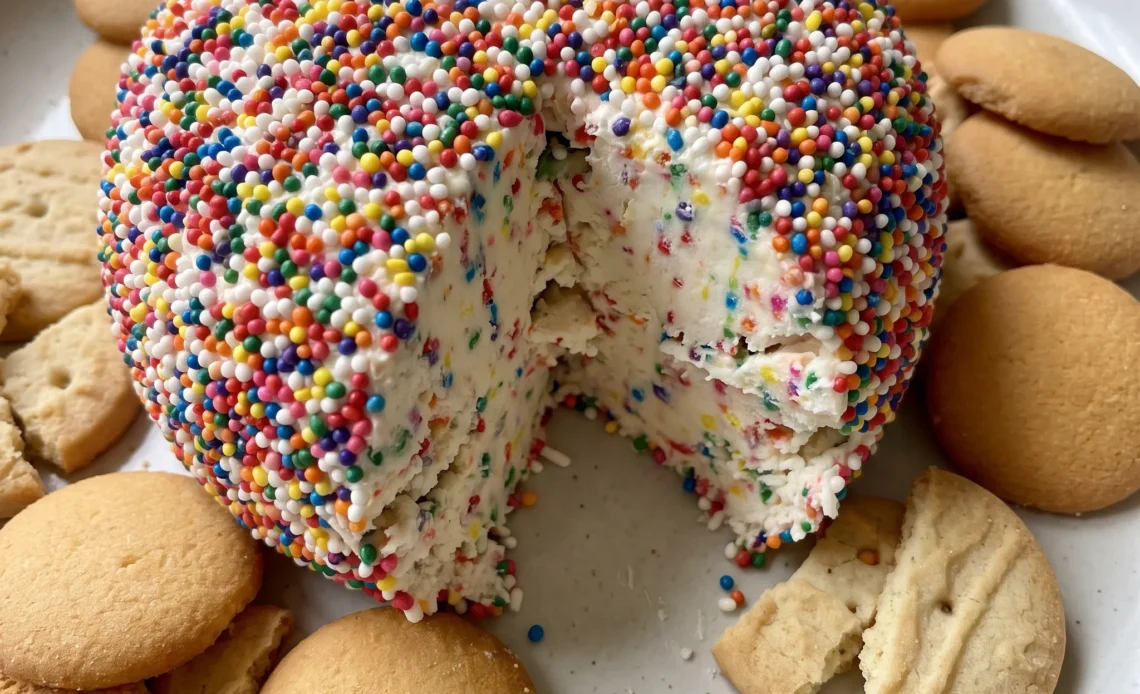
What matters most here is restraint with the butter, and the finished ball tells you right away if you got it wrong. Cream cheese and a full box of funfetti cake mix carry the birthday cake cheese ball; push the butter past the written amount and it slumps on the platter, leaving a slick film on fingers and a coating that won’t grip. The almond extract is the other quiet trap.
Past the ceiling it reads as medicine and flattens the vanilla. Get both right and the whole thing behaves: it holds a sphere, the sprinkles stick in a single layer, and the slice comes out clean. It looks like a party centerpiece.
It is cream cheese and a box of cake mix, and nobody at the table needs to know that. Sift the dry powders, and let a stale box of mix announce itself before it goes anywhere near the bowl.
Why Room Temperature Dairy Matters
Pull the cream cheese and butter from the fridge well before you start. Cold dairy fights the beaters, and lumps that form stay put no matter how long you mix. The result tastes fine but feels grainy on the tongue, and a grainy base never firms into that clean slice you want.
When both are soft enough to press a thumbprint into, they blend into a smooth, even cream that holds the sprinkles and dry ingredients without streaks. That smoothness is what makes the finished ball slice neatly and spread without tearing a cookie. If the dairy is still cool in the middle, you’ll chase lumps around the bowl and end up with a greasy, separated mess that never quite comes together.
Give it the time on the counter, and the rest of the mixing goes quickly.
The Balance of Cream Cheese, Butter, and Dry Mix
This recipe leans on a specific ratio. Cream cheese brings tang and body, butter adds richness and a soft set, and the dry mix plus confectioners’ sugar thickens everything to a spreadable paste. Push the butter higher and the ball turns greasy, slumping at room temperature and leaving a slick film on your fingers.
Add more cake mix or sugar and you get a dry, crumbly mixture that tastes cloying and won’t hold together when you scoop it. The right balance yields a consistency that clings to a vanilla wafer without dripping and slices cleanly straight from the fridge.
You can feel it when you stir: the mixture should be thick but pliable, not stiff enough to crack. That texture is your cue that the proportions are right, so trust the recipe as written and resist the urge to tweak.
The Chill That Makes the Coating Stick
Once the mixture is smooth and combined, it’s still too soft to coat. Warm fat won’t grip sprinkles; they slide off or sink into the surface, leaving bare patches. Chilling sets the fats just enough to firm the outside, creating a surface that holds the sprinkles in place.
The cold also makes the ball easier to handle, so you can roll it evenly without it melting against your palms. You’ll know it’s ready when the ball feels firm to a gentle press and doesn’t leave a smudge on your finger.
That firmness is what gives you a neat, fully covered exterior and a clean slice later. Skip the chill and you’ll be chasing sprinkles around a sticky blob, patching bald spots and losing the funfetti effect. A couple of hours in the fridge does the work, no fuss.
Sprinkle Choice and Coating Texture
Not all sprinkles behave the same. Jimmies, the little rods, give you that classic funfetti look and a faint crunch against the creamy interior. Nonpareils, the tiny balls, bleed color into the mixture and can disappear into a muddy tint, so save those for another project.
Sugar pearls stay distinct but don’t coat evenly, leaving gaps. The recipe calls for rainbow sprinkles, and jimmies are what you want here. Keep a quarter cup back for the inside and the rest for the outside.
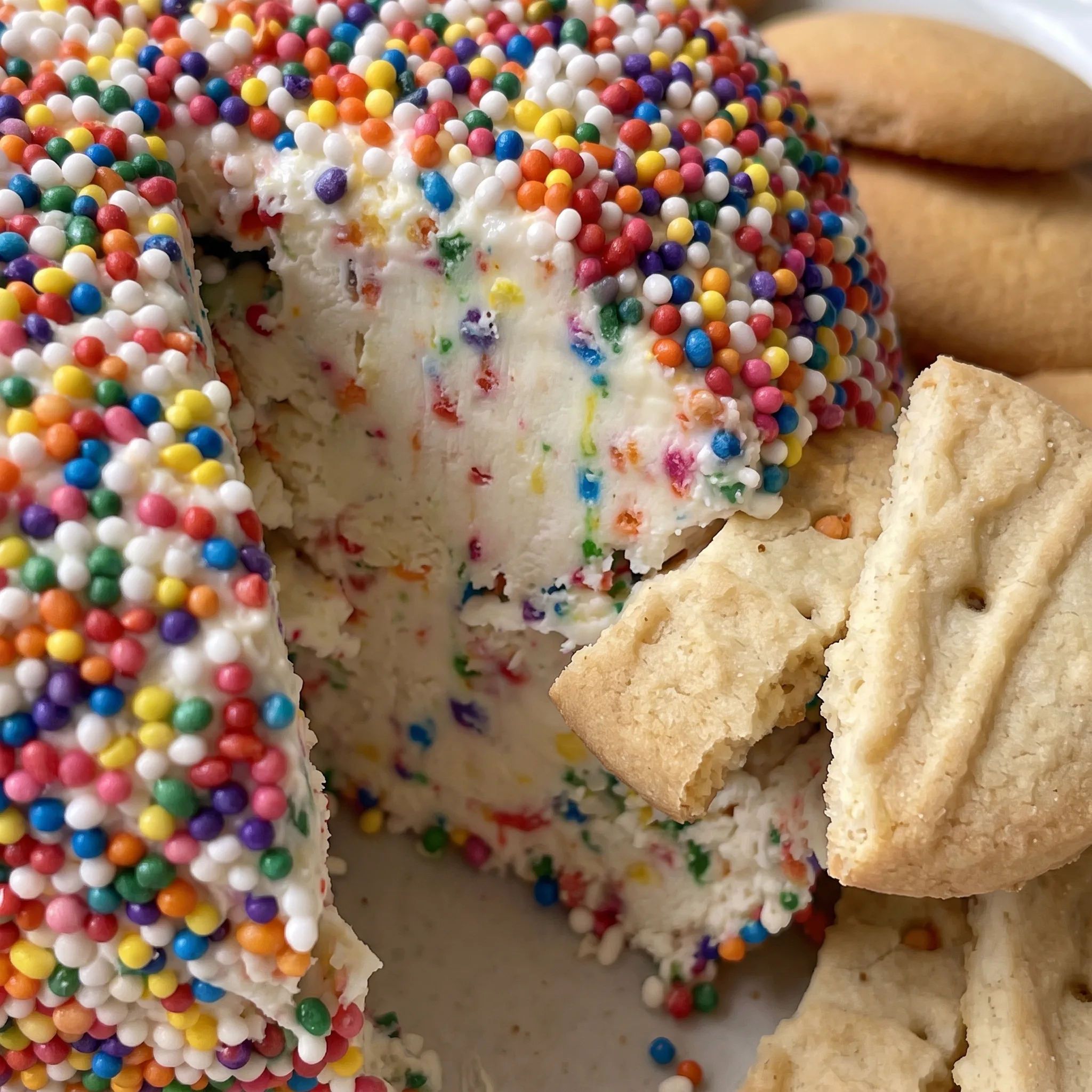
When you roll the chilled ball in the reserved sprinkles, they should stick in a single even layer, no bare spots and no clumps. The coating adds a bit of texture and a burst of color that hints at birthday cake before you even take a bite.
That visual cue sets the expectation, and the flavor delivers.
Dippers That Let the Cake Batter Shine
What you serve alongside matters as much as the cheese ball itself. Vanilla wafers and shortbread cookies are neutral and crisp, giving a clean base that lets the sweet, creamy spread lead. A strong-flavored cookie, like chocolate or spice, would bulldoze right over the delicate cake batter taste.
You want a dipper sturdy enough to scoop without snapping in the mixture. A thin, fragile cookie breaks and leaves debris in the bowl. Shortbread has the right heft; vanilla wafers are light but hold up if you don’t linger.
The contrast of crunchy cookie and soft, cool filling is what makes each bite satisfying. Set out a platter with a few options, and watch which disappear first. The cheese ball stays the star, and the dippers are there to carry it.
What to Buy Before You Beat Anything
Cream cheese: Buy the blocks, not the tub, since the spreadable kind carries extra water and whips loose instead of firm.
Butter: Use unsalted sticks, because the cake mix already brings plenty of salt and the finished ball tastes flat with more.
Funfetti cake mix: One 15.25 oz box, dry and straight from the pantry, since the mix is the thickener and a short box leaves the base slack.
Rainbow sprinkles: Jimmies are what you want for both the inside and the coat; the tiny nonpareils bleed color and turn the base muddy.
Almond extract: Two drops goes a long way and four is the ceiling, since past that the almond reads as medicine over the vanilla.
Chilling the mixture solidifies the fats, turning the surface firm so sprinkles adhere rather than sink. A warm, soft ball lacks the structural integrity to support a coating, while a properly chilled one grips each sprinkle evenly. This recipe relies on that chilled state because the high fat content would otherwise make the coating slide off.
Judging the Mix, the Chill, and the Coating
When the base is smooth enough to stop beating
The cream cheese and butter need to lose every last cold lump before the dry ingredients go in. Run a spatula along the bottom and sides, then press a bit to the touch. One soft, even paste with no cool pebbles means you’re there.
Keep going and you’ll whip in air; the finished ball turns spongy and won’t slice clean. If you still feel lumps, scrape down and beat a little longer, but stay at a moderate speed.
The texture that tells you the dry mix is fully in
Once the cake mix and confectioners’ sugar are in, stop when the mixture looks like thick frosting and holds a soft peak on the spatula. Dry streaks mean the sugar hasn’t dissolved; you’ll taste a powdery pocket later. Overmix and it gets gluey, clinging to the beaters in a tight wad rather than dropping off in soft dollops.
Scrape the bowl once or twice as you go, and trust your eyes over the clock.
Forming a ball that will hold its shape
The mixture is soft and tacky, so the ball you shape on plastic wrap will look smaller and looser than the final chilled version. Aim for a rough sphere, pressing out any hollows.
If it slumps into a patty, you haven’t built enough structure; a tablespoon or two more cake mix can help, but taste first. Wrap tightly, twist the ends, and let the fridge do the firming.
The chill test before you coat
After two hours, the ball should feel firm to a gentle press and leave no smudge on your finger. If your finger sinks in or comes away tacky, it needs more time; cold fat is the only thing that will hold the sprinkles.
Coat too soon and they slide off in bald patches. If you’re short on time, a stint in the freezer can speed it up, but check every fifteen minutes so the outside doesn’t freeze solid.
Rolling for an even coat without crushing the surface
Tip the reserved sprinkles into a wide bowl, then roll the chilled ball with a light hand. Press just enough for the jimmies to sink in a single layer; squeeze and the surface dents, leaving bare spots and a cracked look.
If gaps appear, press a few sprinkles on by hand. The coating should look like a birthday cake’s top: bright, scattered, and stuck for good.
If it’s patchy, the ball warmed up; back in the fridge for ten minutes before a second roll.
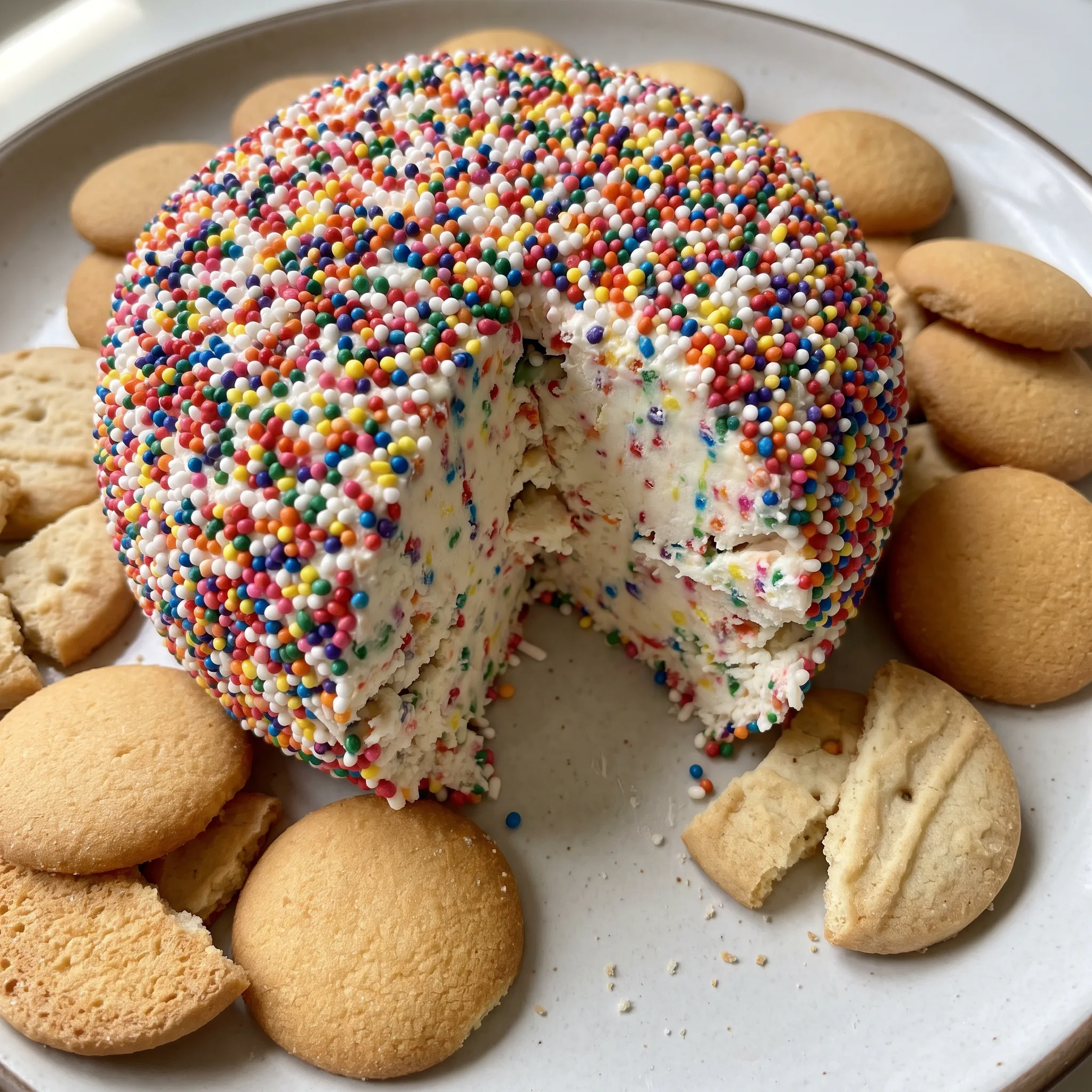
Birthday Cake Cheese Ball with Rainbow Sprinkles
Ingredients
Method
- Using a large bowl, beat together the cream cheese and butter until a smooth consistency is reached.
- Incorporate the cake mix, confectioners’ sugar, vanilla extract, almond extract, and 1/4 cup of the rainbow sprinkles; blend until no dry streaks remain.
- Place the mixture onto a sheet of plastic wrap and, while wrapping, form it into a ball. Chill for about 1–2 hours, until set.
- Just before serving, coat the ball by rolling it in a bowl containing the remaining sprinkles.
- Present the Birthday Cake Cheese Ball alongside vanilla wafers and shortbread cookies, or any cookies you like.
Notes
What You Can Change, and the One Box That Isn’t Worth Trading
Funfetti cake mix: A white or yellow cake mix works, but the confetti bits and the birthday-cake flavor that names this dish go with it. If you use either, add an extra 1/4 cup of rainbow sprinkles to the base to bring the color back.
The texture lands the same, since both mixes thicken like the funfetti box. What disappears is the look and the taste.
A plain white mix reads as sweet vanilla cream cheese, pleasant but anonymous, and you lose the moment when someone cuts in and sees the speckled interior. Stick with a funfetti box if the point is a birthday.
Cream cheese: Neufchatel or a light cream cheese can stand in at the same 16 ounces, but it carries more water. If you go that route, let the formed ball chill an extra 30 minutes before coating, and expect a slightly softer set at room temperature.
The tang comes through a bit sharper and the richness thins out. The ball still slices, just less cleanly, and it slumps faster once it sits out on the platter. Full-fat blocks give you the firm body this recipe is built around, so reach for those unless you have a reason not to.
Butter: A plant butter stick substitutes one for one at 1/2 cup, but only the kind that’s sold in blocks and firm when cold. Tub or whipped spreads won’t work.
Coconut oil does not belong here. Block plant butter behaves close to dairy and the ball sets up fine.
Coconut oil sets hard in the fridge and then goes greasy on the counter, so the coating slides and the slice weeps. Skip it.
Confectioners’ sugar: There isn’t a clean one. A granulated sugar substitute leaves a cooling aftertaste that fights the vanilla, and the mixture turns slack because the cornstarch in confectioners’ sugar is part of what thickens it. If you must cut sugar, take it from the cake mix side instead by using 1 1/2 cups of mix rather than the full box.
You’ll get a looser base that needs a longer chill and tastes less like cake batter. The confectioners’ sugar is doing structural work here, not just sweetening, so treat it as load-bearing and leave it alone.
Tips
- Taste a pinch of the dry cake mix straight from the box before it goes into the bowl. Funfetti mix sits on shelves a long time, and a stale box tastes flat and faintly cardboardy, a flavor that survives the cream cheese and butter and leaves the finished ball tasting like a plain sweet spread. If the mix is clumped or smells off, sift it and taste again before you commit 16 ounces of cream cheese to it.
- Sift the cake mix and the confectioners’ sugar together into the creamed butter and cheese rather than dumping them in. Both are fine powders that clump in humid weather, and a clump that survives the beaters leaves a dry, powdery pocket inside an otherwise smooth ball that you won’t notice until someone slices into it. Sifting takes thirty seconds and the dry ingredients rain in evenly, so the base comes together with less scraping.
Storage, Serving Window, and the Sprinkles on Top
The ball is at its best the day you coat it. The jimmies are crisp, the surface is dry to the touch, and the cream cheese filling is firm enough to scoop without dragging. That window lasts about 8 hours at room temperature on a platter, or 3 days in the fridge if you skip the initial coating.
Once the sprinkles sit against the filling, they soften and bleed color, so coat only what you plan to serve. For leftovers, press plastic wrap directly onto the cut face and refrigerate up to 3 days. The flavor stays, but the outside turns tacky and the color runs.
To revive a stored ball, scrape off the softened coating, return it to the fridge for 30 minutes, then re-roll in fresh jimmies just before serving. Freezing is not recommended for the assembled ball; the cream cheese weeps and the sprinkles turn to paste. If you must, freeze the uncoated base for up to 1 month, thaw overnight in the fridge, then coat and serve within 4 hours.

Frequently Asked Questions
Can I make this birthday cake cheese ball ahead of time?
Yes, but split the work. You can make the uncoated ball up to 3 days ahead and keep it in the fridge; the filling firms and actually scoops better after a day.
Leave the sprinkles off until you’re ready to serve, because once they sit against the filling they soften and bleed color. Coat it right before it goes on the platter, and you get a crisp shell instead of a tacky one.
Why did my cheese ball turn out too soft or greasy?
The usual culprit is soft dairy that never got cold enough before you shaped it. Cream cheese and butter that were too warm, or a bowl that sat out too long, give you a mix that slumps instead of holding a sphere.
If the mixture looked thick and pliable but the finished ball still weeps, check your butter amount; a little extra pushes it greasy. A short re-chill and a re-roll in fresh sprinkles can rescue the surface, but the fix starts with firm, cold blocks and a full chill before coating.
How is this different from a classic cheese ball?
Classic cheese balls go savory: sharp cheddar, cream cheese, Worcestershire, nuts on the outside, served with crackers. This one is built on cream cheese and butter with a full box of funfetti cake mix and confectioners’ sugar, so it eats like cake batter you can scoop. The coating is sprinkles, not chopped pecans, and the dippers are vanilla wafers and shortbread rather than wheat crackers.
Same shape and spreadable texture, completely different flavor and occasion.
