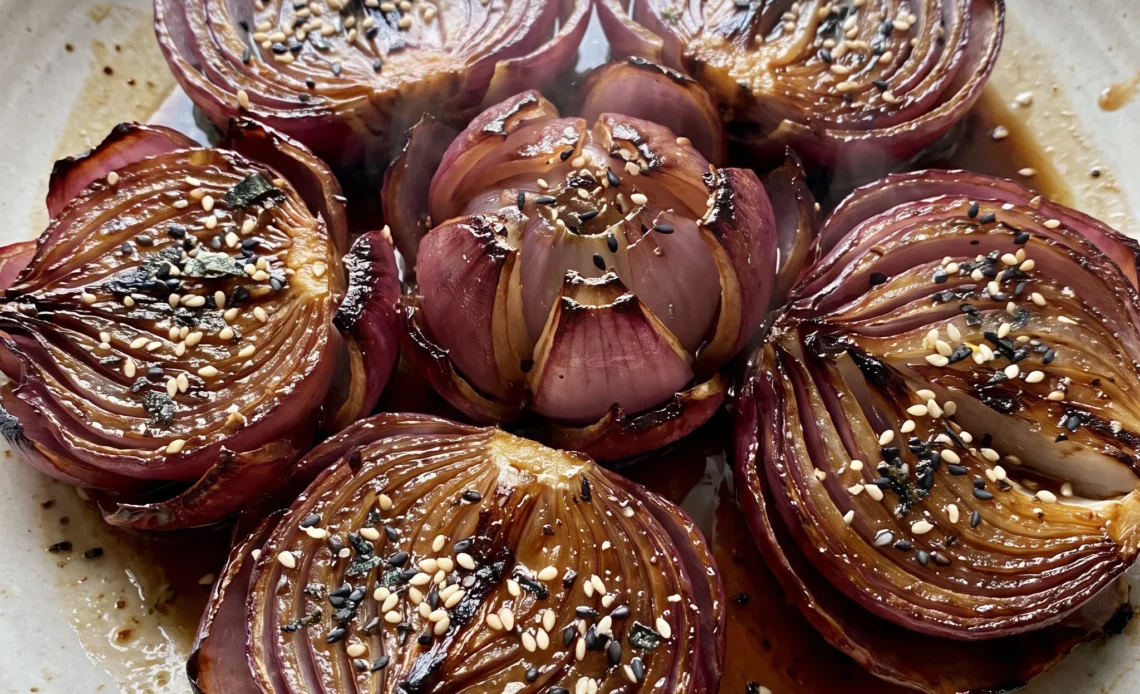
That moment when a whole roasted onion lands on the platter and the wedges have fanned into petals gets people asking how it’s done before they’ve taken a bite. What they don’t see is how narrow the margin is. Cut a fraction too deep toward the root and the segments break off in the water, leaving loose arcs on the tray instead of a bloom.
Stop too shallow and the petals stay clamped shut through the whole roast. The boil buys some forgiveness by making the layers flexible enough to separate without cracking, but it can’t undo a cut that went through the base.
These gluten-free lotus flower onions depend on feel more than any measurement, which is why the finished look tells you whether the earlier decisions held up. Get the hinge right and the rest mostly takes care of itself.
Raw onion layers are stiff and snap when bent, so any attempt to fan them out before parboiling will crack the segments at the base. The 4 to 5 minute boil softens the pectin in the cell walls, making the layers pliable enough to separate without tearing. Read the onion by feel: after boiling and cooling, a layer should yield and peel away with light pressure; if it resists and you have to pull, it is underdone and will tear, and once a petal cracks at the root end it cannot be repaired.
The Cut That Makes Petals Possible
An onion opens into a flower only if the root end stays whole. Slice through it and the wedges fall apart into loose arcs the moment they hit the water, and no amount of arranging on the tray will rebuild the shape. The intact base is the hinge every piece swings from.
Cutting from the stem end down toward the root, stopping about two-thirds of the way, leaves that hinge connected while freeing the upper sections. Six cuts crossed through the middle give you six pie-wedge segments; fewer and the onion reads as a squat globe, more and the pieces get thin enough to collapse once they soften. Depth matters more than count.
Go too deep and the wedge separates; too shallow and the petals stay clamped shut.
Papery skins come off before any of this. Left on, they wrap the outside layers and hold water against them after a boil, and the petals never fan cleanly. Peel first, then cut, and the segments sit open enough to see what you’re working with.
Why a Brief Boil Comes First
Raw onion layers snap. Bend one and it cracks along the curve, which is exactly what happens if you try to spread the segments before any heat touches them. A few minutes in boiling water changes that: the layers turn flexible enough to coax apart with your fingers, and they stay intact while you do it.
That softening carries into the oven. Onions go in already pliable, so as they roast and lose moisture the freed segments keep spreading instead of curling back in. The tips brown while the interior stays soft, and the whole thing opens wider than it did on the cutting board.
Forcing the layers apart cold is the failure mode here. You’ll hear the snap before you see the tear, and once a segment breaks off at the base, it sits on the tray as a stray piece rather than part of the bloom. Let the water do the loosening, then separate gently.
The onion should feel like it wants to open on its own.
A Glaze Built on Vinegar and Honey
Honey alone would slide off the petals and pool on the parchment. Cooked down with rice vinegar, it thickens into something closer to syrup, thin enough to drizzle but heavy enough to grab. That consistency is what the sauce is for: it has to coat the surfaces, not run past them.
The vinegar does more than thin things out. Honey on its own reads flat and sweet against a roasted onion, and the acidity gives it a tart edge that keeps each bite from turning cloying. Tamari brings salt and a faint savory note underneath, so the glaze tastes seasoned rather than candied.
Rice vinegar matters for another reason. It’s brewed from rice and contains no wheat, which keeps the whole dish gluten-free, and it’s milder than cider or wine vinegar, so the tang stays in the background. When the sauce coats a spoon and leaves a slow trail, it’s ready to use.
Two Passes of Sauce, One Crisp Garnish
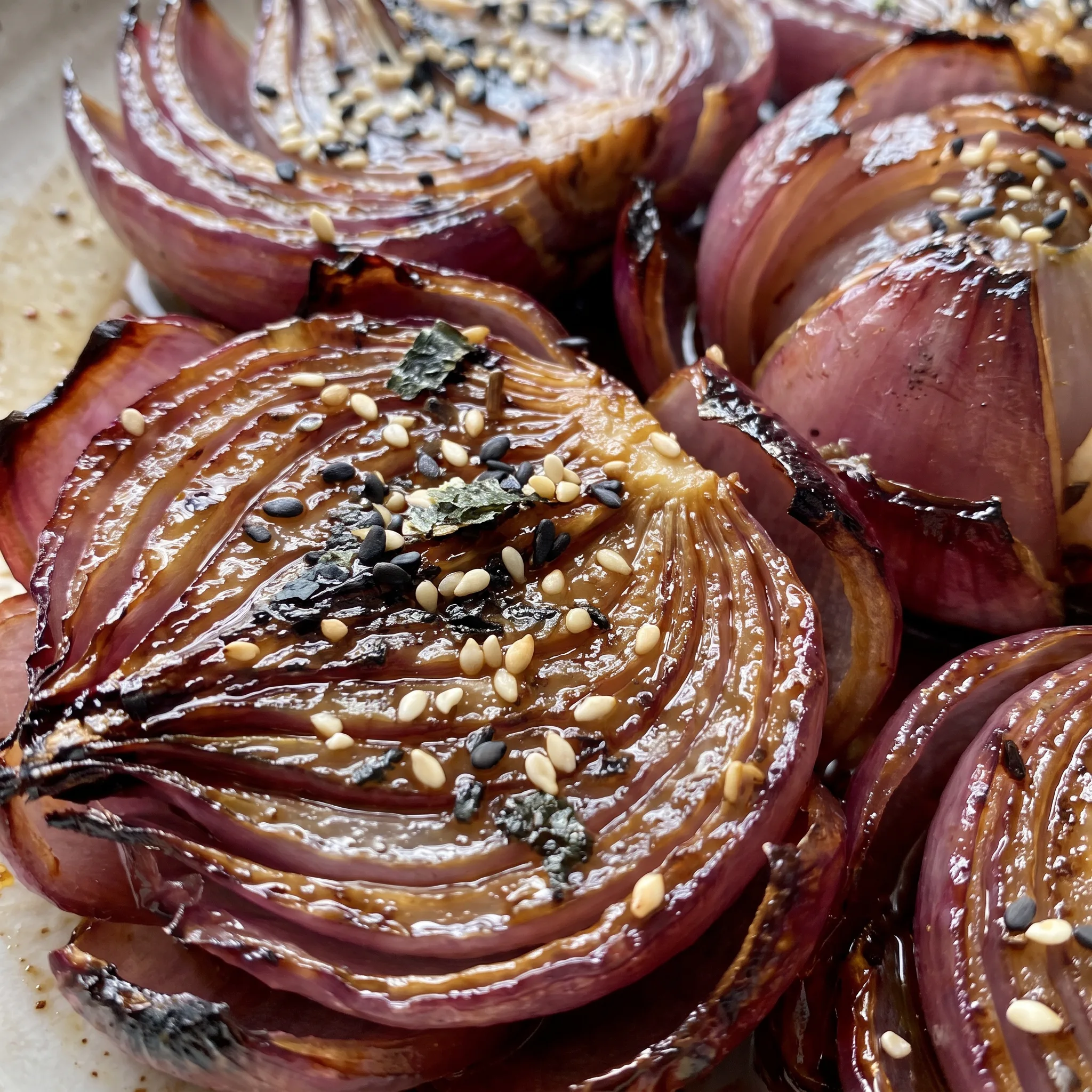
Sauce goes on in two stages, and each one does a different job. The first half goes on while the onions are still in the oven, and the heat sets it into the outer petals, giving them a sticky, slightly caramelized surface that tastes roasted rather than raw. It sinks into the crevices where a cold drizzle would just sit on top.
The second half goes on after the onions come out. That pour stays glossy and bright, a fresh layer against the deeper flavor of the baked-on glaze, and it loosens anything that tightened during the final heat.
Garnish last, always. Furikake and Everything but the Bagel Seasoning both carry sesame and dried flakes that go soft and limp if they sit under a wet sauce or take another pass through the oven. Sprinkled over the finished platter, they stay crunchy and give the soft petals something to push against.
Serve it as soon as the last pinch lands.
What to Buy and Prep Before You Start
Red onions: Choose 6 medium onions, each about the size of a baseball, so they roast evenly and hold their petal shape without going soft.
Rice vinegar: Marukan Genuine Brewed Rice Vinegar is labeled gluten-free and has a milder tang than cider or wine vinegar, which keeps the glaze from turning harsh.
Tamari or gluten-free soy sauce: Standard soy sauce contains wheat, so use tamari or a bottle explicitly marked gluten-free to keep the whole dish safe.
Furikake or Everything but the Bagel Seasoning: Both bring sesame and dried flakes, so check labels for gluten if your furikake blend includes soy sauce powder or other additives.
How to Read the Onions at Every Turn
Judging the Depth of Your Cuts
You want six cuts that stop about two-thirds of the way down. Press the knife until you feel the root end resist, then stop.
If you cut through, the wedges separate in the water and you get loose arcs, not a flower. If you stop too shallow, the petals stay clamped and won’t fan. Test by gently bending one segment: it should give slightly but still hold at the base.
If it feels loose, you’ve gone too deep; if it won’t budge, you’ve been too cautious. Adjust the remaining cuts accordingly.
Knowing When the Layers Are Ready to Separate
After 4 to 5 minutes in boiling water, the onion should feel flexible but not limp. Lift one out and let it cool just enough to handle.
The outer layers should peel away from the center with a light tug, like pulling apart a soft roll. If they crack or snap, they need another minute in the water.
If they slide off in a wet heap, you’ve overcooked them and they’ll turn to pulp in the oven. Work gently; the onion should open on its own, not be forced.
Recognizing When the Onions Are Roasted, Not Steamed
At 425°F, the onions need 40 to 45 minutes to go from pale and soft to deeply sweet with browned tips. The difference is moisture: early on, they steam and look wet; later, the edges dry and curl, and the tips take on color.
If they’re still pale and floppy at 40 minutes, give them more time. If the tips darken too fast, tent with foil. The goal is soft interior, crisp edges, and no raw bite.
The Sauce: When It’s Thick Enough to Coat
Boil the sauce gently for about 2 minutes, but watch the bubbles. At first, they’re thin and pop quickly; as it reduces, they get larger and slower, and the liquid coats a spoon in a thin layer.
If it thickens to the point of stringing, it’s gone too far and will harden on the onions. Pull it off the heat while it still drips slowly, not in sheets.
It’ll thicken a bit more as it cools.
The Final Glaze: Reading the Shine
After the first sauce drizzle and 5 minutes back in the oven, the onions should look glossy and slightly sticky, not wet. If the sauce pools on the parchment, it hasn’t set; return them for another minute or two. The second drizzle goes on off the heat, and it should stay bright and loose, not soak in.
If the onions look dry, add a splash of warm water to the remaining sauce before drizzling. Garnish only after the final sauce, or it’ll go soft.
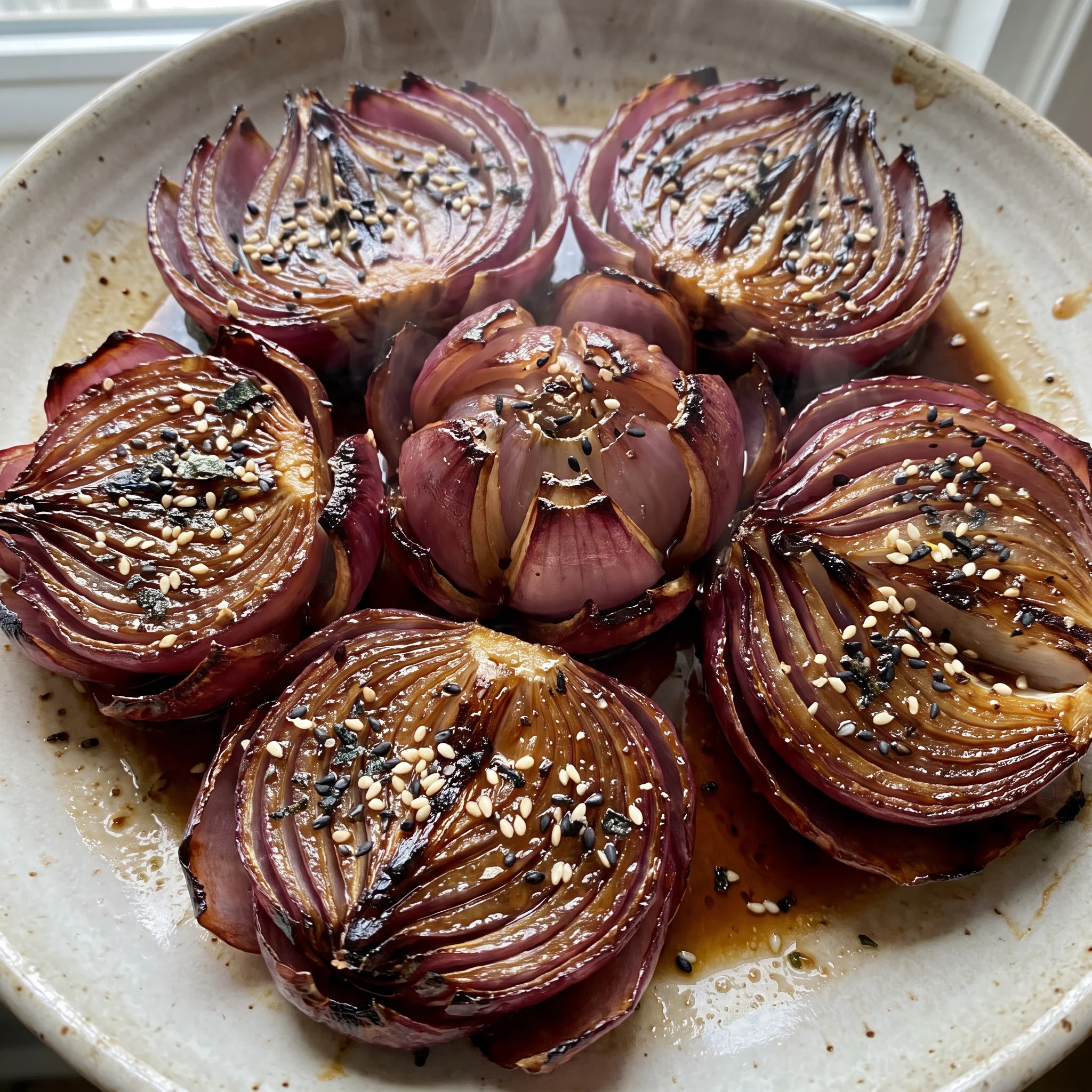
Roasted Red Onion Lotus Flowers with Honey Furikake
Ingredients
Method
- Slice off only enough from the root end of each onion so it stands level, then remove about ¼ inch from the stem end. Set root side down on a cutting board. Make 3 cuts from the stem toward the root, crossing to form 6 pie-wedge segments, cutting only about two-thirds of the way down; avoid cutting completely through. Remove the papery outer skins.
- Heat a large pot of salted water until boiling. Set the oven to 425°F (220°C) and line a baking sheet with parchment paper.
- Place the onions into the boiling water and cook for 4–5 minutes. Take them out and let cool until safe to handle. Carefully separate the layers so they look like flower petals; they will open more while roasting, so do not force them. Drizzle a little olive oil over each onion, put on the prepared baking sheet, and roast for 40–45 minutes, until soft and the tips start to brown.
- In a small pot or skillet, mix the vinegar, honey, tamari, and sesame oil. Bring to a boil and let boil gently for about 2 minutes, until the sauce reduces and thickens to an almost syrup consistency.
- Drizzle half the sauce over the onions and return to the oven for 5 minutes. Move the onions to a serving platter, drizzle with the remaining sauce, and sprinkle with furikake or Everything but the Bagel Seasoning.
Storage and Serving: Keep the Bloom Intact
Serve these onions within 30 minutes of the final drizzle. The petals are at their best when the glaze is still tacky and the furikake or Everything but the Bagel Seasoning is crisp. If they sit longer, the garnish softens and the glaze turns from glossy to dull.
Leftovers keep in an airtight container in the fridge for up to 3 days. After a day, the petals soften further and the glaze becomes tacky and less shiny, but the flavor deepens. To reheat, spread them on a parchment-lined baking sheet and warm at 350°F for 8 to 10 minutes, just until the glaze loosens.
Don’t microwave; the petals collapse. If the sauce has dried out, add a splash of warm water before reheating.
Add fresh garnish after reheating, never before. The assembled dish doesn’t freeze well because the petals turn watery and the glaze separates. If you must, freeze only the roasted onions without sauce for up to 2 months, then thaw, reheat, and sauce fresh.
Swaps That Keep the Glaze and the Gluten-Free Promise Intact
Honey: Maple syrup (same volume, 6 tablespoons) or agave nectar (start with 5 tablespoons, since it’s sweeter). Maple thins the glaze a touch, so it may need an extra 30 seconds on the boil to reach that slow-drip consistency.
Agave brings a neutral sweetness that won’t fight the vinegar, but use less or the sauce tips toward cloying. Both keep the dish gluten-free.
Rice vinegar: Cider vinegar or white wine vinegar, same 6 tablespoons. Cider vinegar is sharper and fruitier; it’ll make the glaze tangier and slightly cloudier. White wine vinegar lands closer to rice vinegar’s mildness but can be a bit more acidic.
If you only have lemon juice, use 4 tablespoons and expect a brighter, thinner sauce that may need less boiling.
Tamari or gluten-free soy sauce: Coconut aminos, same 1 tablespoon. Coconut aminos is sweeter and less salty, so the glaze will taste a little milder and may need a pinch more salt. It’s naturally gluten-free, but check the label if you’re sensitive.
Regular soy sauce contains wheat, so don’t use it if you need the dish gluten-free.
Sesame oil: Toasted sesame oil is already what you want; if you’re avoiding sesame, use 1 teaspoon of neutral oil plus a pinch of toasted sesame seeds for aroma, or skip it entirely. Sesame oil carries most of the sauce’s aroma.
A neutral oil won’t replace that, and the glaze will taste flatter. If you skip it, add an extra dash of tamari for depth.
Don’t substitute chili oil unless you want heat, which changes the dish’s character.
Tips
- Check doneness by feel at the base, not just the tips: slide a thin knife into the thickest part of a wedge where it meets the root. It should pass through with almost no resistance, like a baked potato. If the blade meets any firmness, the interior is still raw even when the tips look browned, so give the tray 5 more minutes; if the wedge slumps when you nudge it and the base feels hollow, they are past done and will collapse on the platter.

Frequently Asked Questions
Can I make these gluten-free lotus flower onions ahead of time?
Roast them, hold back the sauce, and refrigerate the onions in an airtight container for up to 3 days. Warm them on a parchment-lined sheet at 350°F for 8 to 10 minutes, just until the glaze loosens, then sauce and garnish fresh. Anything longer than that and the petals go soft and the surface turns tacky instead of glossy.
The assembled dish doesn’t freeze well, so if you’re planning further ahead, freeze only the roasted onions without sauce for up to 2 months.
Why did my onion petals break when I tried to separate them?
Cold layers snap, so the break usually means the onions hadn’t softened enough before you started pulling. Lift one from the water and let it cool just until you can handle it; the outer layers should peel away from the center with a light tug, like pulling apart a soft roll. If they crack instead, they need a little more time in the water.
A secondary check is your cut depth: if the knife went too far toward the root, a wedge separates there no matter how gently you work, and you get loose arcs on the tray instead of a bloom.
How is this different from a classic blooming onion?
A blooming onion is battered and deep-fried whole, so you get a crisp shell around every petal. These are boiled briefly, fanned open, and roasted at 425°F, which leaves the petals soft and sweet with browned tips rather than crunchy.
The glaze is rice vinegar, honey, tamari, and sesame oil, cooked down to a slow drip, and it goes on in two passes instead of arriving as a dip. Furikake or Everything but the Bagel Seasoning supplies the only real crunch.
What should I serve with gluten-free lotus flower onions?
They carry a lot of sweet-tart glaze, so lean toward plain, savory things that won’t compete. Roasted or grilled protein, a simply dressed green salad, or rice work because they soak up the sauce that runs off the platter.
Keep the sides gluten-free if that matters to your table, since the dish itself is. Serve within 30 minutes of the final drizzle so the garnish stays crisp and the glaze stays glossy.
