
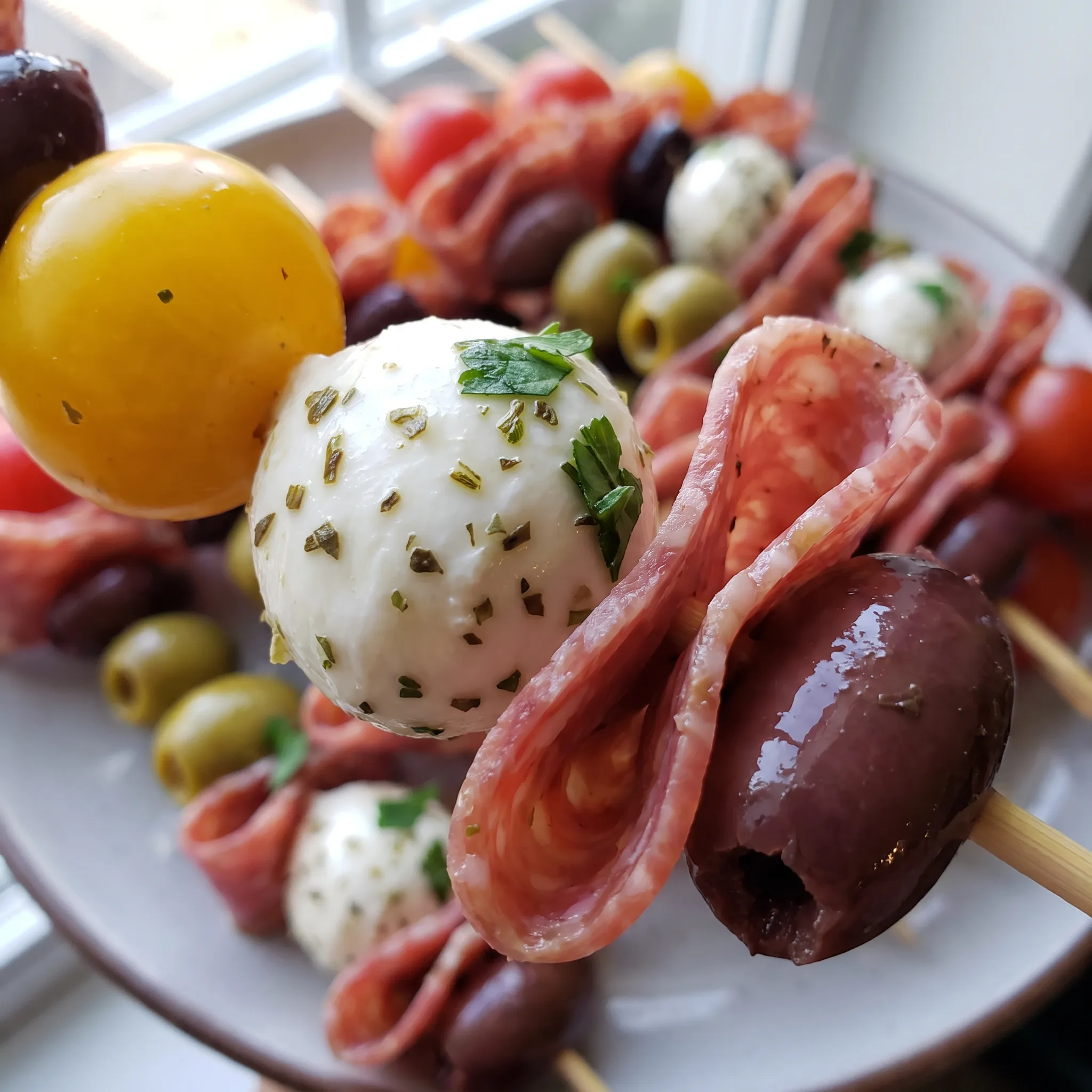
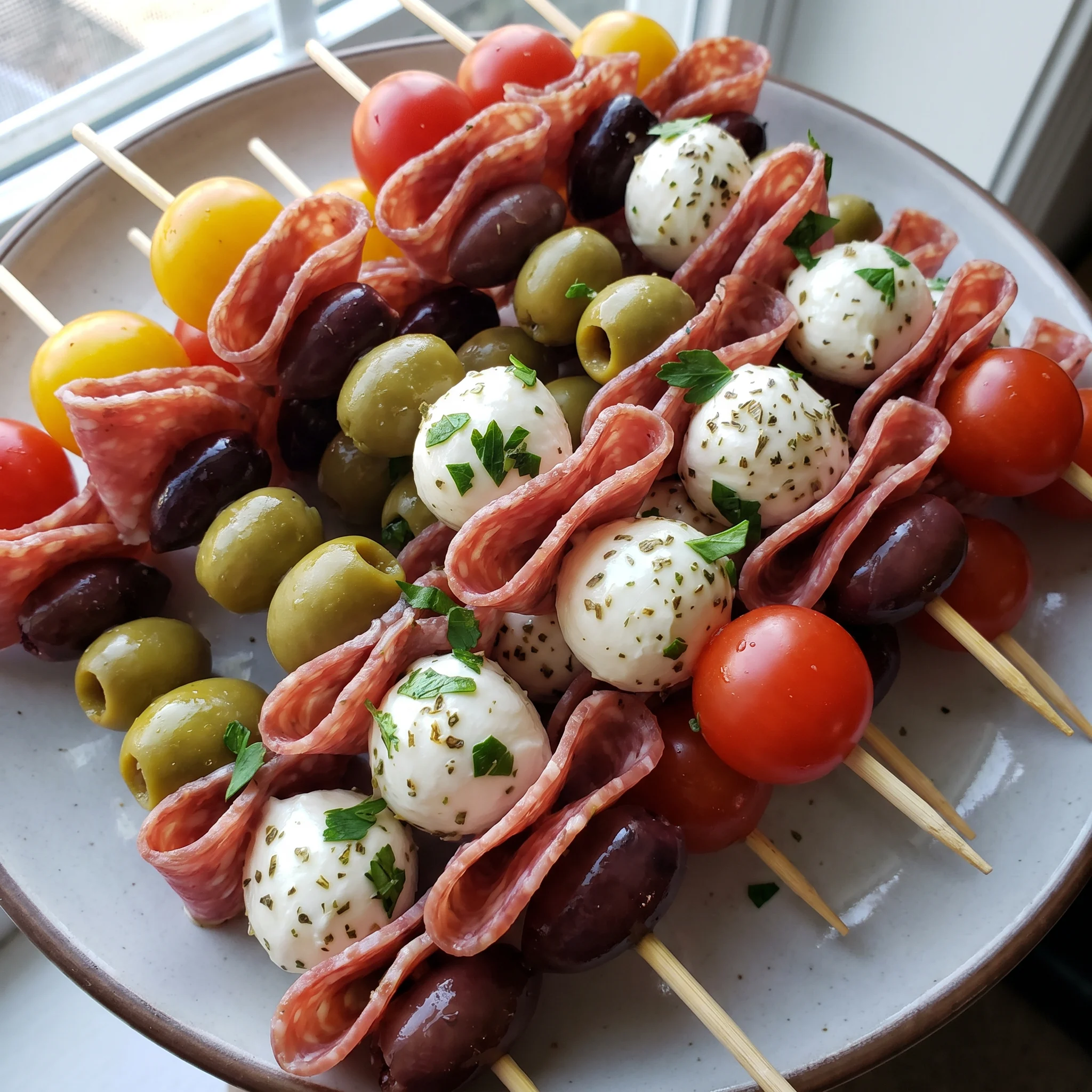
A slick sheen of olive oil catches the light on soft mozzarella, and the whole skewer reads like a little edible mosaic: deep purple Kalamata, a burst of red or yellow tomato, a ruffled fold of salami, then a firm green olive at the end. You eat it in two bites and the sequence does the work for you.
What surprises most cooks is how much rides on the mozzarella’s coating. Tossed in oil and herbs, it should cling like a thin dress, not drip. Overdo the oil and the skewer turns greasy; underdo it and the cheese tastes like a blank.
These antipasto skewers are assembly, not cooking, so there’s nowhere to hide. The tomatoes need to be firm enough to hold on the stick without splitting, and the salami has to fold into a snug packet that pins the cheese in place.
Get those details right and the platter looks deliberate, tastes balanced, and vanishes fast.
Why the Order Works on the Stick
There’s a reason each skewer follows the same sequence, and it’s not just for looks. You start with a Kalamata olive because that first bite needs to wake up your palate: briny, sharp, a little intense. Then comes a cherry tomato, whose juicy burst separates the two olives and gives your mouth a break.
Next is folded salami, a salty, fatty bridge that leads into the mild mozzarella. Finally, a green olive ends the skewer with a clean, firm, less briny finish that doesn’t overpower the cheese.
That sequence means every bite has a beginning, middle, and end, rather than a jumble of competing flavors. The colors alternate nicely, too, so the platter looks intentional.
Once you’ve made a few, the rhythm becomes second nature, and you can tell at a glance whether a skewer is built right. The result is a balanced, satisfying bite from the first olive to the last.
The Marinade That Makes the Mozzarella
Bocconcini straight from the container taste watery and flat, which is why they get tossed in olive oil, parsley, dried herbs, and black pepper before they ever hit a skewer. That mixture clings to the surface of each small ball, adding a savory, herby coating that contrasts with the briny olives and salty salami.
You don’t need to soak them; a quick toss to coat is enough because bocconcini are small and porous, so the flavors take hold fast. The oil also keeps the cheese from drying out as it sits on the skewer, which matters when you’re serving a crowd.
After a few minutes, the mozzarella tastes seasoned rather than plain, and the parsley flecks add a fresh, green note. If you skip this step, the cheese becomes just a bland filler.
With it, every bite of mozzarella pulls its weight, and the skewers taste deliberate instead of thrown together.
Two Olives, Two Jobs
Using both green and Kalamata olives isn’t just about variety for its own sake; it’s a structural choice that balances salt and texture across the platter. Green olives are firm, mild, and less salty, while Kalamatas are softer, richer, and more briny. If you used only Kalamatas, every bite would be a salt bomb.
Alternating them on each skewer prevents any single bite from being overwhelmingly salty. The color contrast, bright green against dark purple, also makes the skewers look intentional and appetizing, not like you just grabbed whatever was in the fridge.
Both are pitted, so the skewer slides through without resistance, which keeps assembly quick. When you bite into a skewer, you get that interplay: the sharp Kalamata up front, the milder green at the end, each doing its part. That balance is what makes these skewers taste refined rather than rough.
Red and Yellow for a Reason
The recipe calls for both red and yellow cherry tomatoes, and that’s not a suggestion you should ignore. Alternating colors across the platter creates a mosaic effect that reads as abundance, even if you’re only making a dozen skewers.
Visual variety signals freshness and care, which matters for an appetizer that’s served cold or at room temperature. It also subtly varies sweetness, since yellow tomatoes are often milder than red ones.
When you’re arranging the skewers, mixing the colors keeps the plate from looking monotonous. A all-red platter would still taste fine, but the yellow tomatoes add a brightness that makes the spread feel more inviting.
Plus, they’re a similar size, so they slide onto the skewers without any fuss. The result is a platter that looks as good as it tastes, with each skewer contributing to a larger, colorful picture.
No Cooking, So Quality Matters
There’s no cooking step here. Everything is assembly and a brief marinate, which means the success of these skewers depends entirely on the quality of your ingredients and how you handle them.
Because nothing is heated, the salami, mozzarella, and olives need to be fresh and good. A dry, mealy mozzarella or a salami that’s been sitting in the fridge too long will show through immediately.
Serving right away or refrigerating briefly keeps the mozzarella from drying out and the tomatoes from softening. The rosemary garnish is optional, but it adds a fresh, aromatic note that doesn’t require any heat.
When you bite into a skewer, you should taste each component clearly: the briny olives, the juicy tomato, the salty salami, the creamy mozzarella. That clarity only happens if you start with ingredients worth eating on their own. So choose well, assemble with care, and let the natural flavors do the work.
What to Buy for Skewers That Taste Like Something
Mozzarella balls (bocconcini): Buy them packed in water and check the date, since a dry or mealy ball tastes like nothing and no marinade fixes that.
Salami: Choose a firm, dry-style salami that holds a fold cleanly instead of a soft, greasy one that slumps flat on the stick.
Cherry tomatoes: Pick firm ones, red and yellow, since a soft tomato splits on the skewer and soaks the salami and cheese.
Green olives: Get firm, mild green olives and Kalamatas that are both pitted, so the skewer slides through without tearing the fruit.
Fresh parsley: Use parsley you chop yourself, because the pre-chopped stuff is dry and tastes like paper next to the briny olives.
How to Tell Your Skewers Are Built Right
Judging the mozzarella’s coating, not just the toss
After you toss the bocconcini in the oil and herbs, pick one up. It should feel slick, not dripping, and the parsley and pepper should cling in flecks rather than slide off.
If the balls are sitting in a pool of oil, you’ve overdone it, and the skewer will taste greasy. Blot the excess with a paper towel before skewering.
The coating should look like a thin dress, not a bath.
Reading the tomato’s resistance on the skewer
A cherry tomato that’s ripe will give slightly when you press the skewer through, and the skin won’t split. If it splits and leaks juice, it’s either overripe or you’re using too much force. That juice will make the salami and mozzarella soggy.
Set those tomatoes aside for salad and pick firmer ones. The skewer should slide through with gentle pressure, leaving the tomato intact.
Knowing when the salami fold holds its shape
Fold each salami slice in half or quarters before piercing. The fold should stay put on the skewer, not flop open. If it unfolds, the slice is too stiff or you’ve folded it the wrong way.
A proper fold creates a little packet that grips the skewer and keeps the salami from sliding. When you bite, it should offer a clean snap, not a chewy wad.
Spotting the difference between marinated and soggy
Let the mozzarella sit in the oil mixture for a few minutes, but no longer. After about five minutes, the oil starts to pull moisture from the cheese, and the coating turns watery. You want the herbs to perfume the cheese, not drown it.
If you see liquid pooling in the bowl, drain the balls and pat them dry. The marinade should stay on the surface, not turn into a puddle.
Italian Antipasto Skewers with Mozzarella and Salami
Ingredients
Method
- Combine olive oil, parsley, dried herbs, and black pepper in a small bowl.
- Toss the mozzarella balls in the mixture to coat; allow to marinate for a few minutes.
- For each skewer, add items in this sequence: Kalamata olive, cherry tomato, folded salami, marinated mozzarella, green olive.
- Continue with all skewers, varying colors for visual appeal.
- Place on a platter and top with rosemary if desired. Serve right away or refrigerate briefly.
Swaps That Keep the Skewer Balanced
Salami: Prosciutto or soppressata. Prosciutto is softer and saltier, so it drapes around the skewer instead of holding a fold, and you’ll taste more salt in each bite.
Soppressata is drier and spicier, with a coarser grind, so it adds heat and a firmer chew. Both work, but prosciutto can make the overall skewer saltier, so consider cutting back on the Kalamata olives if you’re sensitive.
Use the same number of slices as the recipe calls for, adjusting to taste after testing.
Bocconcini (small fresh mozzarella balls): Ciliegine or cubed low-moisture mozzarella. Ciliegine are a touch smaller, so they marinate faster and may take on more oil and herb flavor; you might want to reduce the marinating time to a minute or two. Low-moisture mozzarella is firmer and less creamy, with a rubbery bite, so the skewer loses that soft, milky contrast against the olives.
If you use it, cube it into pieces roughly the same size as bocconcini. Start with the same 12 pieces the recipe uses, adjusting to taste after testing.
Cherry tomatoes: Leave as written. They carry the skewer’s structure and juiciness.
Swapping them for something like sun-dried tomatoes or roasted peppers would change the texture and moisture balance, making the skewer drier or softer. Stick with firm cherry tomatoes, red and yellow, for the best results.
Pitted green and Kalamata olives: Leave as written. Both olives provide the salty, briny backbone and the firm texture that holds the skewer together. Using different olives, like oil-cured or stuffed ones, would alter the salt level and texture, potentially making the skewer too salty or soft.
Keep them pitted so the skewer slides through easily.
Storage, Serving, and the Short Window That Matters
These skewers are at their best within two hours of assembly. The mozzarella stays creamy, the tomatoes keep their snap, and the salami hasn’t yet given up its fat to the oil. If you need to hold them longer, refrigerate them, but know that cold mutes the cheese and the tomatoes turn mealy after a few hours.
Pull the platter out ten minutes before serving; the mozzarella softens and the herbs wake up. Leftovers keep in a sealed container in the fridge for up to two days. After that, the tomatoes collapse and the salami turns limp.
Don’t freeze the assembled skewers. The mozzarella becomes grainy and the tomatoes release water, leaving you with a soggy mess. If you must make them ahead, assemble the dry components and marinate the mozzarella separately, then skewer just before serving.
Add the rosemary garnish at the last minute, right before the platter goes out. Its aroma fades fast, and a sprig that’s been sitting for hours just looks tired.
Serve cold or at cool room temperature, never straight from the fridge.
Tips
- Drain the bocconcini in a colander for a few minutes and pat each ball dry before it goes into the oil and parsley. Bocconcini packed in water carry a film of whey on the surface, and that water keeps the oil from gripping the cheese, so the herbs slide off and the balls sit slick on the skewer instead of holding their coating.
- Skewer the mozzarella with the seam or the flat side facing the salami, not the rounded top. Bocconcini are formed by hand and have one smoother, denser face; running the skewer through that side keeps the ball from spinning or splitting, so it stays put while you push through the tomato and olive.
The most common mistake is treating the mozzarella as if it can soak up flavor like a sponge. Bocconcini are small and porous, but their surface is slick and waterlogged, so oil, parsley, dried herbs, and black pepper will not cling unless they are actively tossed to coat every ball. Without that mechanical coating, the cheese stays neutral and watery, and the skewer tastes like three salty items interrupted by a blank bite.

Frequently Asked Questions
Can I make these antipasto skewers ahead of time?
Assemble the dry parts and marinate the mozzarella separately, then skewer just before serving, since that keeps the cheese creamy and the tomatoes snappy. If you build them fully, they hold in the fridge but cold mutes the mozzarella and the tomatoes go mealy within a few hours. Either way, pull the platter out ten minutes before it goes on the table so the herbs wake up.
Add any rosemary at the last minute, because a sprig that sat overnight just looks tired.
Why did my mozzarella balls fall off the skewer?
Most likely the salami isn’t gripping, since a stiff slice that unfolds leaves nothing to hold the cheese in place. Fold each slice into a snug packet and pierce through the fold so the salami acts as a stopper on both sides of the mozzarella. Second check: an oily, dripping bocconcini slides freely, so pat the balls dry if the marinade has pooled.
Also slide the skewer through the center of the cheese, not near the edge where it tears out.
How are these different from a classic Italian antipasto platter?
A platter lets people graze and build their own bites, which means the balance is whatever the guest chooses. Skewers fix the sequence, so every single bite carries the same Kalamata, tomato, salami, mozzarella, green olive progression. That control is the whole difference: you get a set beginning and end instead of a pile of components.
It also travels better, since nothing needs a plate or a fork.
