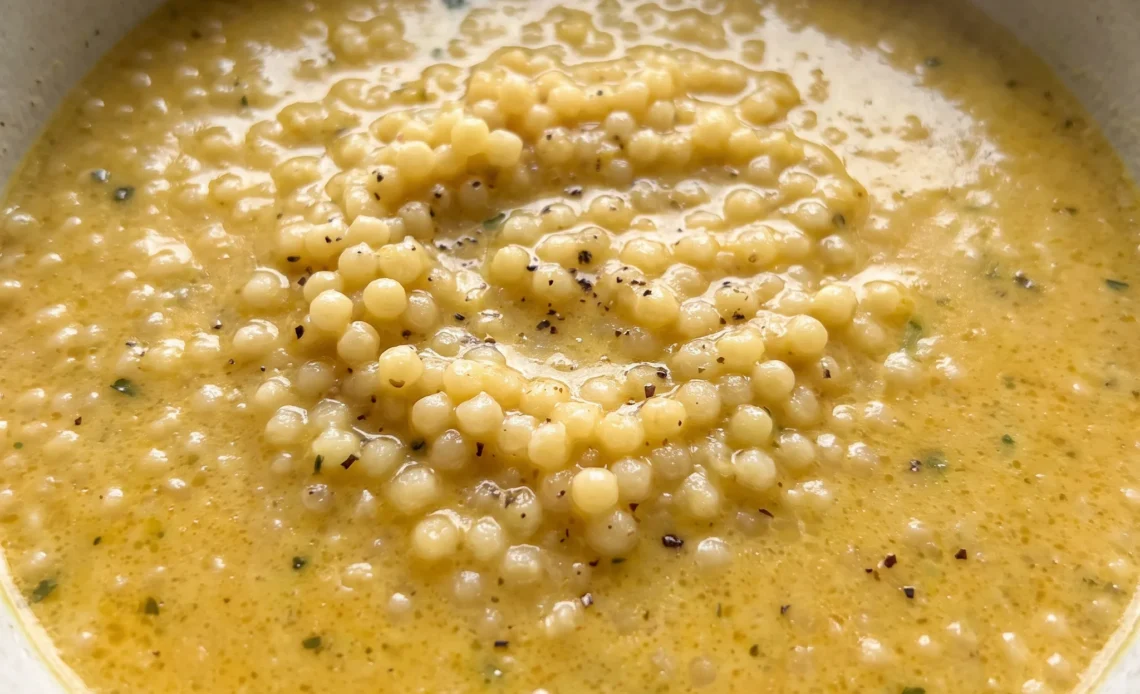
The eggs are the whole gamble in an Italian egg broth soup, and the pot has to be quiet before they go near it. Boiling broth sets them on contact into tough threads you can’t rescue.
What makes this one different is the base underneath: blended vegetables give it a creaminess that has nothing to do with dairy, so there’s no fat cushioning the eggs as they ribbon in. Get that right and the soup turns a soft, opaque gold and thickens just slightly. Get it wrong and you’ll see white strands floating apart from the broth.
Still edible, just not what you were after. The pasta stays out of the pot entirely, which surprises people who simmer everything together. A cook who’s made this once knows to taste the puree for salt before the eggs dilute it.
Everything else here is forgiving.
This soup’s creaminess comes from puréed vegetables, not dairy fat, so the eggs have no buffer against heat. Breaking raw eggs directly into simmering broth causes the proteins to set into rubbery strands, while beating them first and streaming them into low-heat soup with constant stirring disperses the egg into fine, silky ribbons. The recipe uses the streaming method at low heat because it controls coagulation and prevents large curds.
A Silky Base Without Cream
Before you blend, the pot holds softened carrots, celery, and onion swimming in golden broth. Hit it with the immersion blender and that all disappears into a silky liquid, thick enough to coat a spoon but light on the tongue. No dairy needed.
The vegetables do the work. That changes your approach to the eggs. There’s no cream to cushion them, so they need a gentle hand.
Once the soup is smooth, drop the heat to low. If you stream beaten eggs into a hard boil, they’ll seize into tough threads.
Instead, add them slowly while stirring, and they’ll ribbon through the base rather than clumping. The purée also means the eggs spread evenly, giving you a consistent silkiness in every spoonful.
You’ll see the color shift to a soft gold as they set. The result is a soup that tastes rich but never heavy, with a texture that feels intentional.
Your cue: the surface should look like liquid satin, not a scramble.
Why the Pasta Goes In Last
Acini di pepe cooked straight in the soup would keep drinking broth long after you turn off the heat. Within minutes, the pasta would swell and turn gummy, and the broth would go cloudy and thick. That’s why the recipe has you boil it separately, drain it, and spoon it into bowls before ladling the soup over.
This way, each serving gets just the right amount of pasta, still firm to the bite. The broth stays clear and brothy, not starchy.
If you have leftovers, the pasta won’t sit in the liquid overnight and turn to paste. It’s a small extra step that keeps everything in its place.
When you’re ready to eat, the pasta sits at the bottom, waiting. Pour the hot soup over, and it warms the pasta through without overcooking it. You’ll taste the difference: the pasta remains distinct, and the soup stays silky.
Spices That Build a Savory Backbone
Turmeric does more than tint the broth a cheerful yellow. It brings a warm, earthy undertone that grounds the soup, especially once the eggs go in.
Italian seasoning and thyme add herbal notes, a little piney and sweet, that lift the vegetables. Garlic powder and onion powder might seem redundant next to the fresh garlic and onion, but they reinforce that allium depth, making the flavor rounder.
These dried spices go into the pot with the broth, before the simmer. That gives them time to hydrate and blend with the vegetables, so by the time you purée, the seasoning is evenly distributed. You won’t bite into a pocket of raw powder.
The eggs are delicate, and these spices stay in the background, supporting without shouting. When you taste the finished soup, the first thing you notice is the creamy texture, then the gentle hum of herbs and warmth.
A final check: the broth should taste seasoned but not salty, leaving room for the eggs to shine.
Eggs, Stirred Not Scrambled
Two or three farm fresh eggs, added at the very end, turn this soup into something special. The heat must be low. If the broth is bubbling, the eggs will cook too fast and turn rubbery.
You can crack them straight into the pot while stirring constantly, or beat them first and stream them in. Either way, the key is motion. Keep the spoon moving so the eggs don’t have a chance to form large curds.
Instead, they’ll break into fine, silky ribbons that drift through the soup. That constant stirring also helps the eggs distribute evenly, so every bowl gets that rich texture.
You’ll see the soup thicken slightly and take on a golden hue. The eggs are what make it feel hearty without any cream. Once they’re in, give it a final taste and adjust salt if needed.
Serve immediately, while the ribbons are still soft and the broth is hot. The result is a soup that feels both comforting and light, with eggs that melt into the spoon.
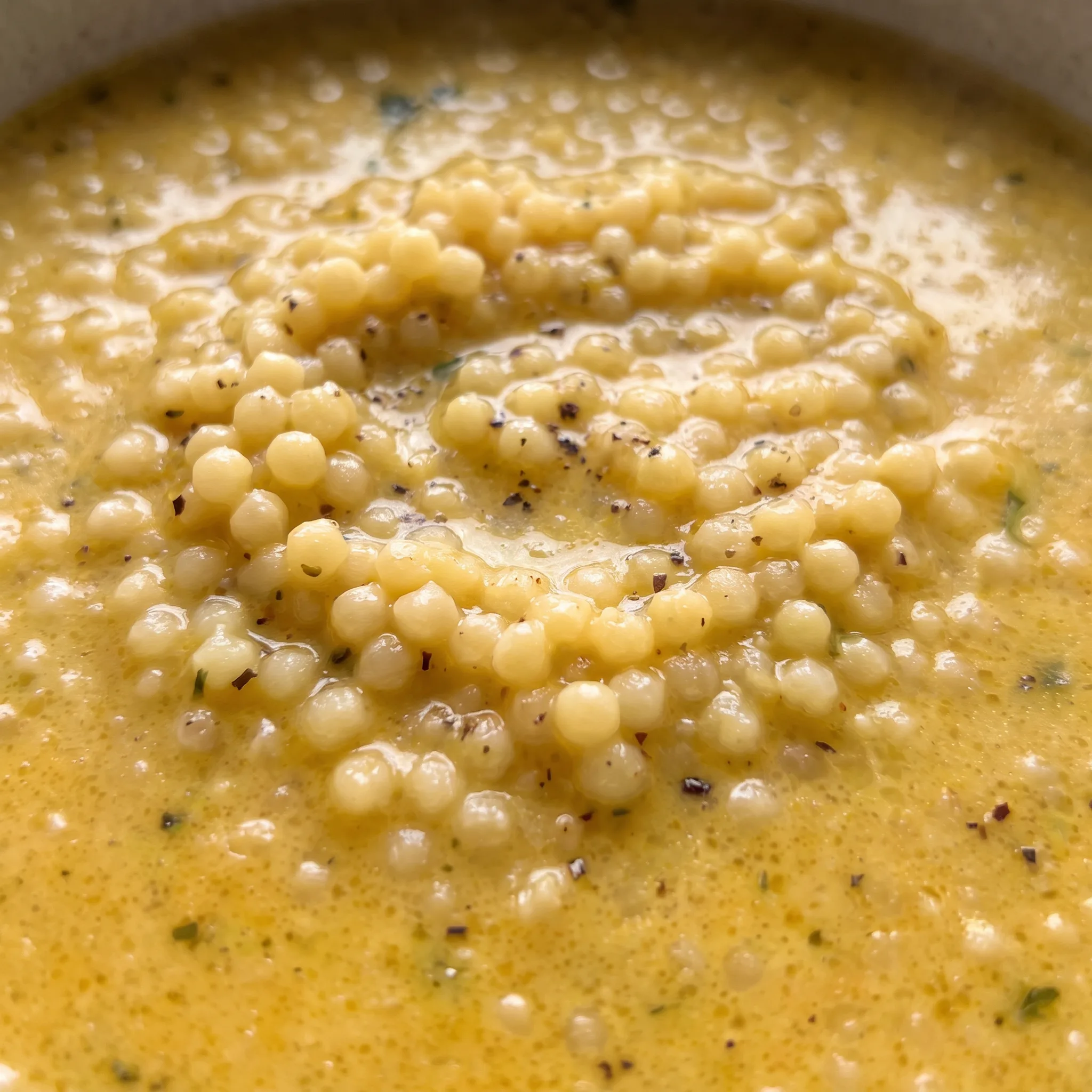
What to Look For Before This Soup Goes in the Pot
Farm fresh eggs: The freshest you can get, since older whites turn watery and thin the ribbons instead of holding them.
Turmeric: Check the jar before you measure, because stale turmeric tastes dusty and fades the gold color you want.
Acini di pepe: The tiny beads cook in a few minutes, so stay close to the pot and pull them while they still have a bite.
Carrots: Cut them into even, roughly half-inch pieces so they soften at the same rate as the celery and onion.
Reading the Pot at Four Points Where This Soup Turns
Knowing when the vegetables are soft enough to disappear
They need to give no resistance at all when you press one against the pot wall, not just taste tender. Carrots are the slowest, so test one of those. Undercook them and the blender leaves flecks and a faint grain you’ll notice against the eggs.
If they’re still firm at 15 minutes, keep going. The purée only gets as smooth as what you feed it.
The texture you’re blending toward, and when to stop
Run the blender long enough and the soup goes from coarse to glossy, thick enough to coat the back of a spoon but still loose. Stop too early and it stays slightly rough, which the eggs can’t hide. Overblend and nothing bad happens, so err long.
Scrape down the sides once; stray chunks cling there and survive the blade.
The heat level before the eggs go anywhere near the pot
Low means small bubbles at the edge, no rolling boil. If the surface is churning, pull the pot off the burner for a minute first. Eggs hitting boiling broth set on contact and turn into rubbery threads instead of ribbons.
You can’t undo that. Wait for quiet, then stir and pour.
The color shift that tells you the eggs have set
As you stir, the broth turns from yellow to a paler, opaque gold and thickens just slightly. That’s the eggs cooking through.
Keep the spoon moving the whole time they go in. If you see distinct white strands or lumps, the heat was too high or the pour too fast, but it’s still edible. Thin with a splash of broth and taste for salt.
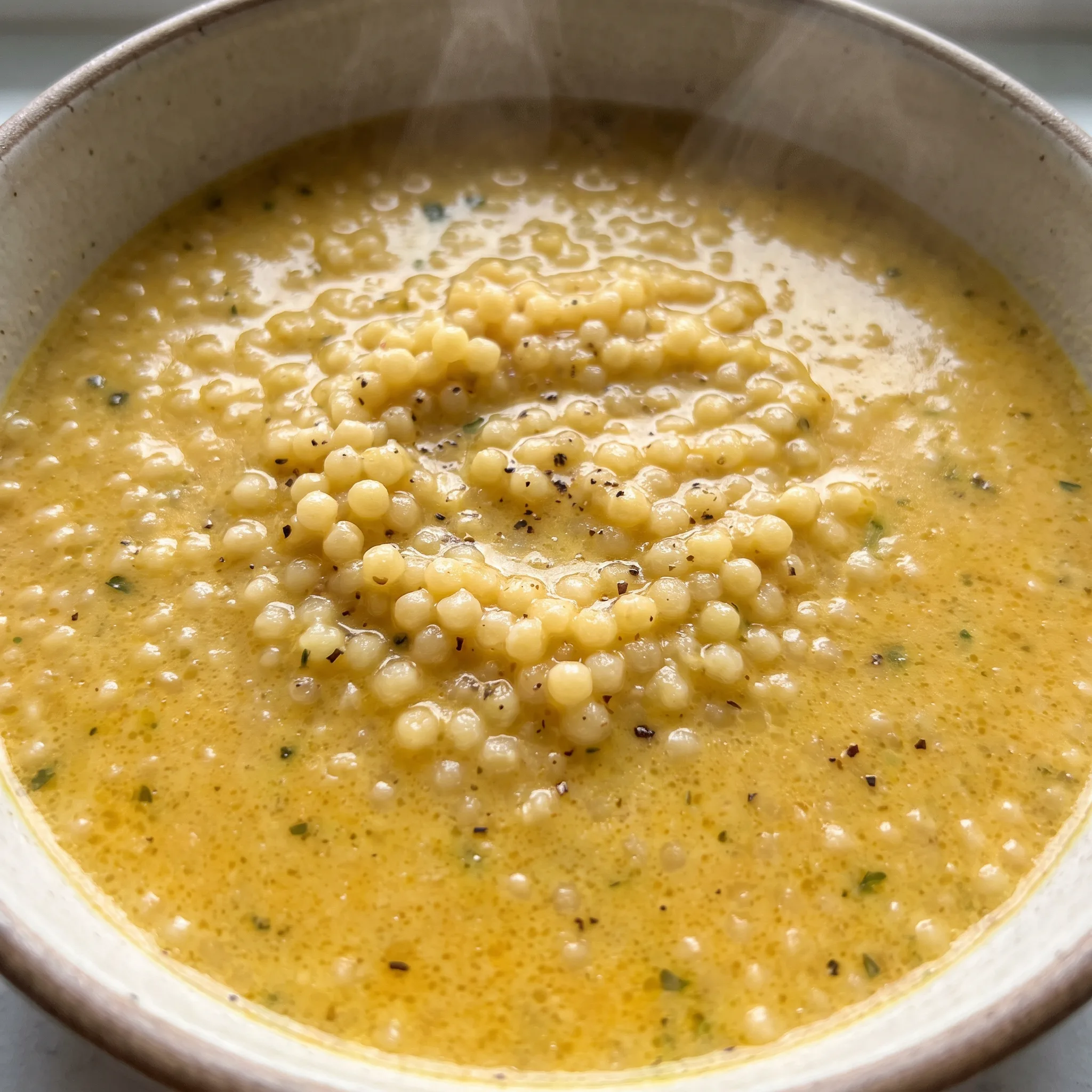
Creamy Italian Egg Broth Soup with Acini di Pepe
Ingredients
Method
- In a large pot, warm the olive oil over medium heat. Add the onion, carrots, and celery. Sauté until tender, roughly 6–8 minutes.
- Stir in the garlic and cook for 1 minute until aromatic.
- Introduce the chicken broth along with turmeric, Italian seasoning, thyme, garlic powder, onion powder, salt, and pepper.
- Let it simmer for 15–20 minutes until the vegetables are thoroughly soft.
- Employ an immersion blender to purée the soup until it reaches a smooth, creamy consistency.
- Turn the heat down to low. Gently break in the eggs while stirring constantly (or beat them first and stream them in) to achieve a silky texture.
- Prepare the acini di pepe separately as directed on the package.
- Distribute the pasta among bowls and pour the soup over it. Serve hot.
What You Can Change in This Egg Broth, and What Fights Back
Acini di pepe: Orzo, ditalini, or any small pasta you have. Cook it separately exactly as you would the acini, and start with the same one cup the recipe calls for. Orzo and ditalini are bigger, so a cup fills the bowls with more pasta per serving and leaves less room for soup.
If you want the broth to stay the star, drop to three-quarters of a cup. The cooking time shifts too, so pull them when they still have a bite; they’ll soften a little more under the hot broth.
Chicken broth: Vegetable broth, same six cups. If you keep it on hand, a store-bought vegetable broth with a deep roasted flavor works better here than a pale, thin one. The soup loses some of that savory chicken backbone, so taste after the simmer and add a pinch more salt or a extra half teaspoon of Italian seasoning.
The eggs and turmeric still carry the color and body, so the texture barely changes.
Eggs: None worth making. Leave them as they are.
The eggs are what turn this from a vegetable purée into something silky and substantial. Flax or chia eggs won’t ribbon; they’ll just sit in the broth as flecks.
If you’re avoiding eggs, this isn’t the soup to adapt.
Turmeric: Skip it if you truly can’t stand the flavor, but understand what you’re giving up. Turmeric brings the golden color and a gentle earthy note that keeps the eggs from tasting flat. Without it, the soup looks pale and the broth tastes thinner, even though nothing else changed.
If you leave it out, add a pinch more thyme to fill the gap.
Tips
- Taste the puréed soup and salt it a touch more aggressively than seems right before the eggs go in. The eggs add body and dilute the seasoning as they set, so a broth that tastes salted at this stage will read flat once the ribbons form. Aim for slightly salty now, and it lands right at the bowl.
Storing the Soup and Pasta Separately
Keep the soup base and the cooked acini di pepe in different containers. The pasta drinks broth overnight, swelling and turning pasty, while the soup thins and clouds. The base holds in the fridge for about 4 days, and it freezes well for up to 3 months; thaw overnight in the fridge, then reheat gently.
The cooked pasta keeps 3 days in the fridge. It doesn’t freeze well, so cook fresh or boil a new batch.
To serve a stored portion, warm the soup over low heat until it steams, never boils, so the egg ribbons stay soft. Taste for salt. Then spoon the pasta into a bowl and pour the hot soup over.
Eat within a few minutes; the pasta softens as it sits.
Frequently Asked Questions
Can I make this creamy Italian egg broth soup ahead of time?
Yes, but keep the soup base and the cooked acini di pepe in separate containers. The base holds in the fridge for about 4 days, and it freezes well for up to 3 months; the pasta keeps 3 days in the fridge and doesn’t freeze well. The reason to separate them is the pasta drinks broth overnight, swelling and turning pasty while the soup thins and clouds.
When you’re ready to serve, warm the soup over low heat until it steams, never boils, so the egg ribbons stay soft, then spoon the pasta into bowls and pour the hot soup over. Eat within a few minutes; the pasta softens as it sits.
Why did my eggs curdle when I added them to the soup?
The heat was almost certainly too high. If the broth is bubbling, eggs set on contact and turn into rubbery threads instead of silky ribbons.
Pull the pot off the burner for a minute and wait until you see only small bubbles at the edge, no rolling boil, then stir and pour. Another check: pour too fast and the eggs clump before they can disperse.
Keep the spoon moving the whole time and add them in a slow stream. If you see distinct white strands, thin with a splash of broth and taste for salt; it’s still edible.
What does creamy Italian egg broth soup taste like?
The first thing you notice is the texture: silky and rich, but without any cream. The flavor starts with a savory chicken broth backbone, then the vegetables come through as a gentle sweetness from the pureed carrots and celery.
Turmeric gives a warm, earthy undertone that grounds the soup, while Italian seasoning and thyme add a piney, herbal lift. The eggs bring a mild, custardy richness that softens the whole thing.
It’s seasoned but not salty, leaving room for the eggs to shine. A final taste should feel comforting and light, not heavy.
How is this soup different from classic Italian stracciatella?
Classic stracciatella keeps the broth clear and the eggs form distinct, shreddy strands. Here, the vegetables get pureed until smooth before the eggs go in, so the base is creamy and the eggs ribbon through as fine, silky threads. That puree also means there’s no dairy to cushion the eggs, so you have to keep the heat low and stir constantly.
The result is a thicker, more uniform soup, where the eggs are more integrated than in stracciatella. It also uses turmeric for color and extra spices, while stracciatella typically relies on just broth, egg, and Parmesan.
