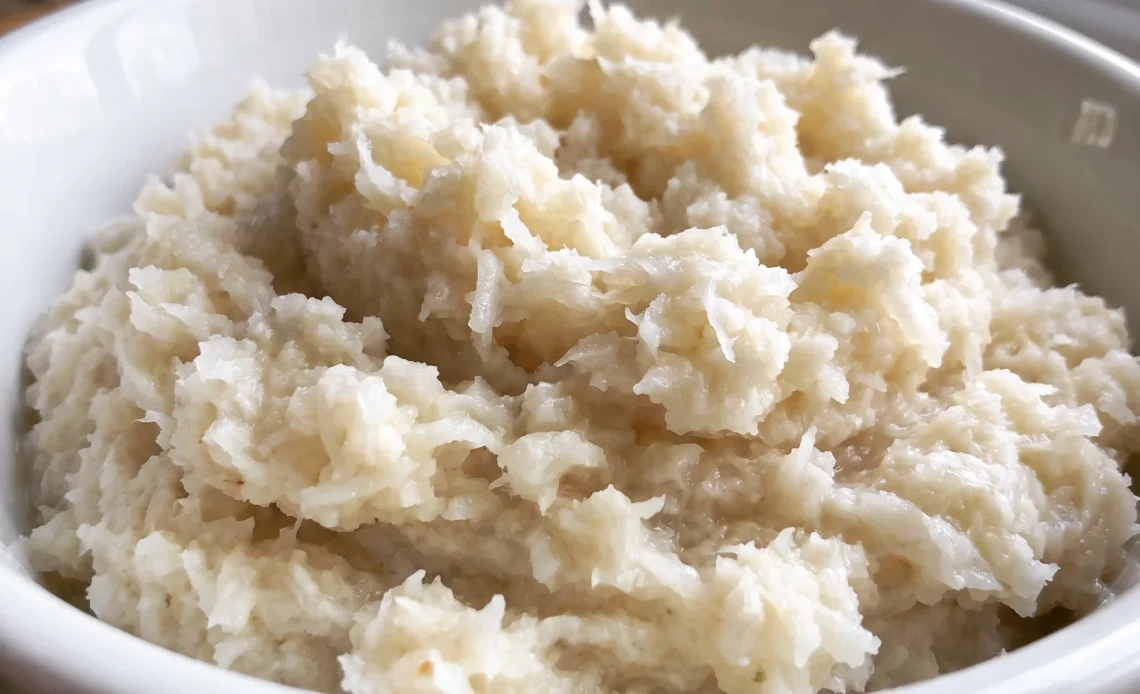
Horseradish sauce isn’t one thing, and treating it like one is how you end up with a jar that fights the food it’s meant to flatter. This page gives you two: a blended root puree that bites hard and fades warm, and a stirred mayonnaise version that spreads like aioli and stays put.
The root one is the harder sell, mostly because fresh horseradish turns on you the second it hits the blade. What you taste right after blending is roughly what you’re stuck with, so the first spoonful matters more than any later fix. Pick wrong and you’re either soaking bread or drowning a good roast.
Pick right and the condiment does exactly what it should, which is sharpen everything around it without taking over.
Two documented ways to handle freshly ground horseradish root are to blend it cold and acidify it immediately with vinegar, or to blend it and let it stand warm before adding acid. The cold-plus-acid route locks in a controlled, sharp heat because the vinegar stops the enzyme almost as soon as the cells are broken; the warm-stand route lets the enzyme run further, producing a hotter but more erratic and sometimes bitter result. This recipe uses the cold-plus-acid route by blending the root directly with 1/2 cup white vinegar, which fixes the pungency at a predictable level rather than letting it drift.
Fresh root or prepared base
These two sauces share a name and little else. The basic version starts with a cup of horseradish root, peeled and cut into half-inch cubes, and turns sharp enough to clear your sinuses. The creamed version leans on two tablespoons of prepared horseradish sauce, which is already tamed by vinegar and often cream, then softened further with half a cup of mayonnaise.
One delivers a clean, pungent bite that fades to a warm hum; the other spreads like a rich aioli with a horseradish echo. Pick the root version when you want the heat to lead, say alongside roast beef or smoked fish.
Pick the creamed when you need a sandwich spread that won’t overwhelm the meat. They don’t swap cleanly because the root brings a texture and intensity that prepared sauce can’t match, and the mayonnaise would dilute the fresh stuff into something thin and sad. Judges at the table will notice which one you chose.
Why vinegar does more than flavor
That half cup of white vinegar in the basic sauce isn’t there for tang alone. When you blend fresh horseradish root, you rupture cells that release a volatile compound. Left alone, that compound keeps building for several minutes, and the sauce can turn punishingly hot, then dull and bitter as it sits.
The vinegar steps in and stops that reaction cold. It fixes the heat at the level you tasted right after blending.
Skip the acid and you’re rolling the dice on a condiment that might be too fierce to enjoy or, hours later, taste flat and woody. The creamed version uses just half a teaspoon of vinegar, but it plays the same role for the prepared horseradish, holding its punch steady.
Both sauces rely on this acid balance, though the amounts differ hugely because the root needs far more stabilization than the jarred stuff. Taste a spoonful after mixing; the heat should be bright and clean, not burning.
Texture tells you which to make
Run the basic sauce through a blender or food processor until it’s completely smooth, and you get a fine, pourable puree that coats a spoon like heavy cream. It’s thin enough to drizzle over a steak or swirl into a bloody mary.
The creamed version never sees a blade; you just stir everything in a bowl until it comes together, leaving a thick, spoonable spread that holds its shape on a sandwich. It yields about a cup and stays put on bread.
Those textures dictate where each belongs. A dollop of the puree works on a plate, a smear of the creamed version works on a bun.
You can’t drizzle the mayonnaise-based one, and the puree would soak straight into sliced bread. Think about how you’ll serve it before you decide which recipe to follow. The wrong choice means a sauce that either runs off the food or sits too heavy.
Sugar and salt balance the bite
Two tablespoons of sugar and a quarter teaspoon of salt go into the basic sauce, and they’re doing more than seasoning. Fresh horseradish is aggressive; without something sweet to round it out, the heat can taste raw and harsh, like a punishment rather than a condiment.
The sugar doesn’t make the sauce sweet, it just tames the edges so the pungency reads as lively instead of brutal. Salt wakes up the flavor and, along with the vinegar, helps the sauce keep longer in the fridge. The creamed version gets its balance from mayonnaise, which brings richness and its own salt, so you only need to add salt and pepper to taste.
That’s why the ingredient lists look so different: one is building a sauce from scratch, the other is adjusting a pre-made base. After you blend the basic sauce, taste it. If it makes you cough, add a pinch more sugar.

What to buy and prep for horseradish sauce
Horseradish root: Pick a firm, heavy root with no soft spots, since old or dried-out roots lose their punch and turn woody.
White vinegar: Use plain white vinegar, not seasoned rice vinegar or balsamic, because you need a clean acid to stop the heat reaction.
Sugar: Granulated white sugar dissolves evenly; coarse or raw sugar can leave a gritty texture in the finished sauce.
Prepared horseradish sauce: Check the label for horseradish as the first ingredient, not cream or oil, so the bite comes through in the creamed version.
Mayonnaise: Full-fat mayonnaise gives the creamed sauce its thick, glossy body; low-fat or salad dressing makes it thin and sharp.
Judging horseradish sauce while you make it: what to look for, taste, and correct
Deciding when the blender has run long enough
The basic sauce turns smooth and creamy, and a spoon dragged through it leaves a clean line. Run it too long and the puree warms; horseradish heat fades with heat, so a sauce that tastes flat right out of the jar means you overheated it.
Stop the machine, scrape down, and pulse in short bursts if the root is still gritty. Texture you can see beats a stopwatch here.
Reading the heat right after blending
The vinegar fixes the pungency at whatever level it hits the moment the blade stops. Taste immediately: it should be bright and clean, sharp enough to make you blink, not enough to make you cough.
Too fierce means the root was old and dry, so add a pinch more sugar. Faint means the root sat too long after peeling and won’t come back.
Balancing sugar and salt by mouth, not by measure
Two tablespoons of sugar and a quarter teaspoon of salt go in, but root varies. A spoonful that tastes raw and punishing needs a little more sugar; one that tastes flat needs a little more salt. Adjust in small pinches, restir, taste again.
Overshooting the sugar turns it sweet and dull, and there’s no walking that back except by adding more horseradish.
Knowing when the creamed version is combined, not beaten
Mayonnaise breaks down when overworked. Stir the prepared horseradish, mayonnaise, and half teaspoon of vinegar just until no streaks remain, and stop.
The mixture should look thick and glossy, holding a soft peak on the spoon. If it thins or looks greasy, you stirred too hard. Fold gently instead, and taste for salt and pepper at the end.
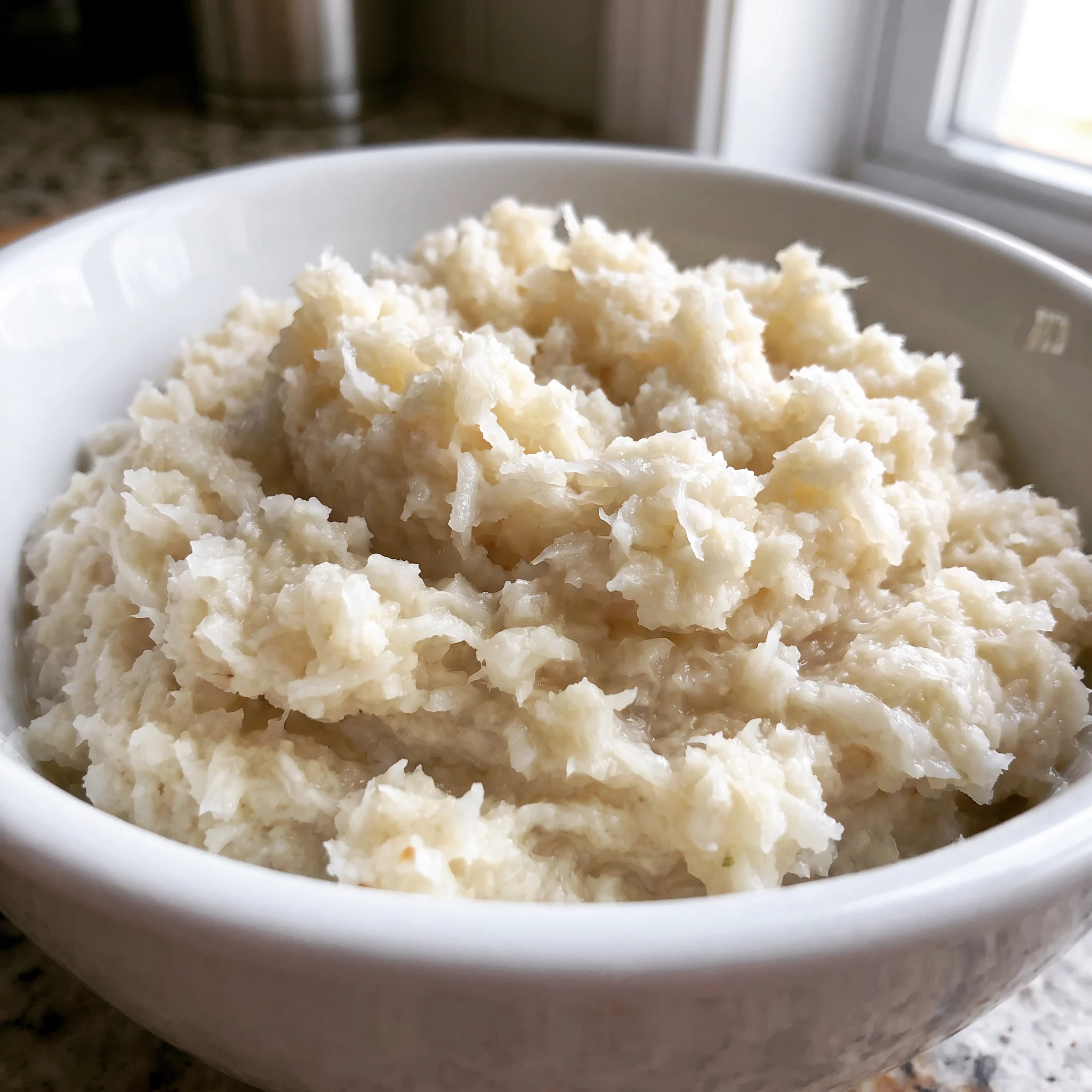
Horseradish Sauce with Mayonnaise and Vinegar
Ingredients
Method
- Place all ingredients into a blender or food processor and process on high speed until smooth and creamy. Move to a jar and keep in the refrigerator.
- In a small bowl, mix all ingredients until combined. Yields about 1 cup. Keep in the refrigerator.
Storage and Serving: Eating These Sauces at Their Best
Both sauces live in the refrigerator, and both change over time, so eat them within the first few days for the texture you made. The basic sauce is best in the first three days. After that it may separate slightly with a little liquid rising, and the heat mellows from a sharp bite to a warm hum.
Stir before each use; if it looks watery, pour off the thin liquid or blend a spoonful back in. The creamed version is best within two to three days. It thickens in the cold and the salt pulls moisture from the horseradish, so it can taste saltier by day three.
Stir it, then taste before adding more salt. Neither sauce freezes well.
The mayonnaise in the creamed version breaks when thawed, and the basic sauce loses its punch and turns grainy. Keep both in a tightly covered jar, and don’t leave them at room temperature more than two hours.
Serve the basic sauce cold or at room temperature; it loosens as it warms. The creamed version is best straight from the fridge so it holds its shape on bread.
Tips
- Peel and cube the horseradish root under a running faucet or in a bowl of cold water, and wear gloves. The volatile oils that make the sauce sharp are released as soon as the root is cut, and they irritate skin and eyes long before the blender runs. Water captures some of the airborne compound, and gloves keep your hands from stinging for hours afterward. Work near an open window or under the stove hood, and keep your face back from the cut root. This recipe uses a full cup of cubed root, so you’ll be cutting for a few minutes, not seconds.
What you can swap in each horseradish sauce, and what falls apart if you do
Fresh horseradish root (Basic Sauce): Prepared horseradish, the jarred kind, drained. Start with the same 1 cup the recipe calls for, then taste and adjust.
The heat will hit softer and fade faster because the jarred stuff is already cut with vinegar and often cream. You’ll lose the clean, lingering hum of fresh root and get a flatter bite.
The texture also turns looser, since prepared horseradish carries more liquid, so the puree may not set up as thick. If you want it closer to the original, use a little less prepared horseradish and add a spoonful of the fresh stuff back in if you have it.
Mayonnaise (Creamed Sauce): Sour cream or full-fat Greek yogurt. Use the same 1/2 cup.
Sour cream gives a tangier, looser sauce that won’t hold a peak on a spoon the way mayonnaise does. Greek yogurt tightens it back up but brings a sharper dairy note that can fight the horseradish.
Both thin out faster once stirred into anything warm, so spread them on cold sandwiches only. If you go with yogurt, add it at the end and fold gently, since overstirring makes it watery.
White vinegar (both sauces): Apple cider vinegar or rice vinegar. For the basic sauce, use the same 1/2 cup. Cider vinegar adds a faint fruitiness that reads as sweet against the horseradish, which some people like and others find distracting.
Rice vinegar is milder, so the sauce tastes less sharp and the heat feels more raw. For the creamed sauce, the 1/2 teaspoon is small enough that either swap goes unnoticed. Don’t reach for balsamic; its sweetness and color muddy both versions.
Sugar (Basic Sauce): Honey or maple syrup. Start with the same 2 tablespoons, then taste after blending. Honey brings its own flavor that can push the sauce toward sweet, and it thickens the puree slightly.
Maple syrup is thinner and adds a darker note that clashes with the clean vinegar bite. If you’re avoiding sugar entirely, leave it out and add a pinch more salt, but expect the heat to taste harsher and more one-dimensional.
You can always stir in a little more sweetener after the sauce sits overnight.

Frequently Asked Questions
How long does homemade horseradish sauce last in the fridge?
Basic sauce holds its sharpness for about three days; the creamed version is best within two to three. Past that window the basic one starts throwing a little liquid and the bite settles into a warm hum, while the creamed gets saltier as the salt pulls moisture out of the horseradish. Stir before you use either, and taste the creamed one before you add more salt.
Neither survives the freezer, so don’t count on stretching a batch that way.
Can I make horseradish sauce ahead of time for a party?
Yes, and both are better made the day before than the hour before. The basic sauce needs that first night for the vinegar to settle the heat into something even; the creamed one thickens in the cold and spreads more cleanly on bread. Keep each in its own tightly covered jar, and pull the basic one out a little early so it loosens before it hits the plate.
The creamed version goes straight from fridge to bun so it holds its shape.
Why is my homemade horseradish sauce not spicy?
The root is the usual suspect: old or dried-out horseradish, or one that sat peeled too long before it hit the blade, gives you a flat sauce no amount of vinegar brings back. Squeeze a cut piece; a good root smells sharp enough to sting your nose.
If the root was fine, you likely overheated it, since heat fades the punch, so stop the machine and pulse in short bursts instead of running it long. Too much sugar can also dull it, though the fix there is more root, not less sweetener.
What’s the difference between prepared horseradish and horseradish sauce?
Prepared horseradish is ground root held in vinegar, and it’s hot, loose, and often pink-tinged from the root’s own color. Horseradish sauce is that base already tamed with cream or mayonnaise, so it’s thick, pale, and mild enough to eat off a spoon. That’s why the two recipes here diverge so far: one starts with a full cup of cubed root and builds the sauce around it, the other uses two tablespoons of the prepared sauce just to flavor a mayonnaise base.
Reading labels matters, since a jar of prepared horseradish will turn the creamed version much sharper than the sauce called for.
Can I use this horseradish sauce as a dip or spread?
Both work, but they behave differently on the plate. The basic puree is thin enough to drizzle, so it coats rather than clings, and it will soak straight into sliced bread.
The creamed version is a thick spoonable spread that holds a soft peak and stays put on a sandwich, and it’s the one to set out with a bowl of vegetables or cold shrimp. If you want the basic sauce as a dip, keep it in a small bowl rather than pooling it on a platter, since it loosens as it warms.
