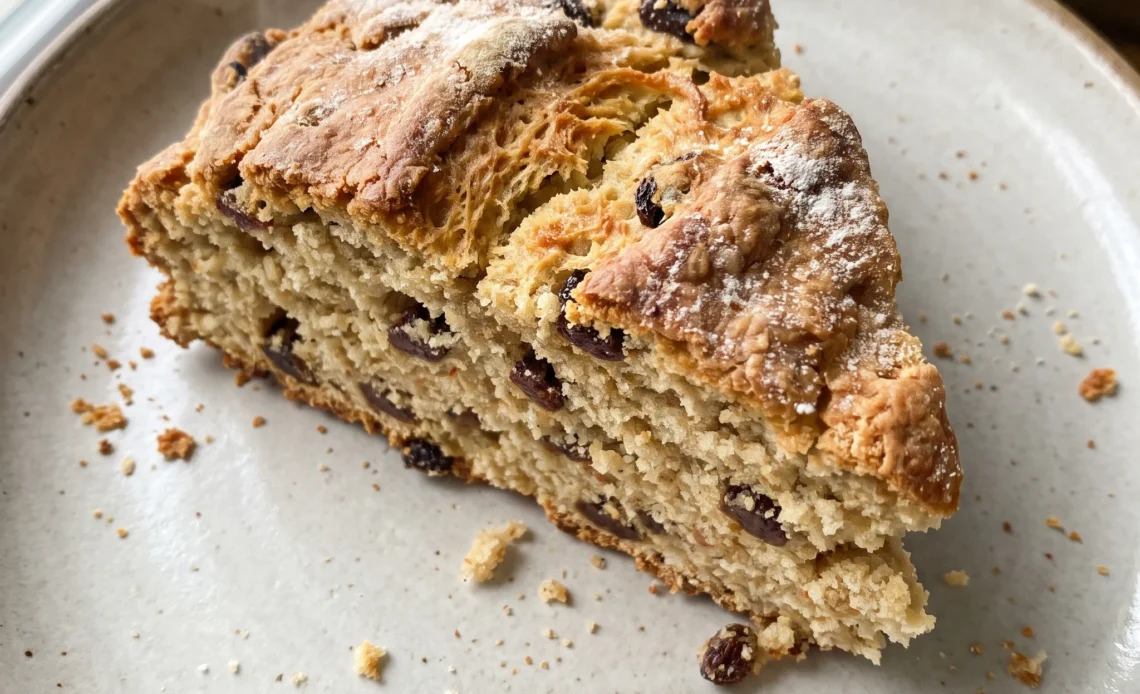
One bowl, a spoon, and a skillet, and the loaf still comes out craggy on top and tender through the middle. Irish soda bread leans on buttermilk and sour cream for lift, so there’s no yeast, no kneading, no waiting for a rise. What catches people is the dough itself.
It’s wet and sticky, closer to a thick batter than to anything you’d turn onto a counter, and it takes the shape of whatever pan it lands in. Get the moisture right and the crumb stays open and tangy, faintly sweet from the raisins.
Get it slack and the loaf bakes flat and heavy. A cross scored into the top gives the middle somewhere to open before the crust sets, which is the difference between a clean slice and a gummy center.
Why Cut a Cross in the Top?
A cross cut into the dough gives the loaf a controlled place to open. This batter is thick and heavy: sour cream, butter, and egg make it dense, so steam builds inside as the bread bakes. Without that cut, the crust sets before the middle finishes expanding, and the top cracks wherever it wants, often leaving a gummy center.
The cut lets steam escape through four even quadrants, so the middle cooks through before the outside overbakes. You end up with a loaf that rises evenly and slices clean, no dense pocket hiding under a domed top.
The four sections bake at the same rate because heat reaches each one equally. That evenness is what gets the center done without drying the edges.
What Do Buttermilk and Sour Cream Actually Do?
Baking soda needs acid to lift, and both buttermilk and sour cream supply it. Baking powder adds a second, steadier rise, but the soda is what reacts first when the wet ingredients hit the dry.
Sour cream also brings fat and tang, which keep the crumb tender and moist, though it thickens the batter enough that too much liquid makes the dough spread flat instead of holding its shape. Starting with 1 cup buttermilk and adding more only if the mixture looks dry is how you stay in control.
A slack dough will still bake, but it won’t have the same structure. The acid also tempers the raw edge of the soda, so you taste buttermilk tang rather than a soapy note.
How Many Raisins Before It Changes the Loaf?
Raisins pull in two directions: they add sweetness and moisture, but they also make the dough heavier. At ¾ cup, the bread turns noticeably sweeter and the extra moisture can push the bake time a few minutes longer.
At ½ cup, the loaf stays more savory, closer to the tangy soda bread you’d serve with butter and jam. Tossing them with the dry ingredients keeps them suspended instead of sinking to the bottom during the long, low bake. The optional sugar topping cuts through the buttermilk tang and gives the crust a faint crackle, but it does nothing for structure.
If you skip it, the bread still holds. What matters is how the raisins feel in the crumb: plump and evenly spaced, not clumped in one corner.
Skillet or Glass Pan
Cast iron preheats and holds heat, so the bottom crust comes out darker and crisper. Glass heats more gently and evenly, giving a softer, paler bottom. Either way, the batter is wet and sticky, so it takes the shape of the pan.
A 9-inch pan yields a round loaf about 2 inches high, no kneading or shaping required. Because the pan material changes how quickly the center sets, the toothpick test is the only reliable sign of doneness.
A glass pan may need a few extra minutes past 60, while cast iron often finishes right on time. Check the middle, not the edges, since the outside will look done long before the inside is. The loaf should feel firm and sound hollow when tapped.
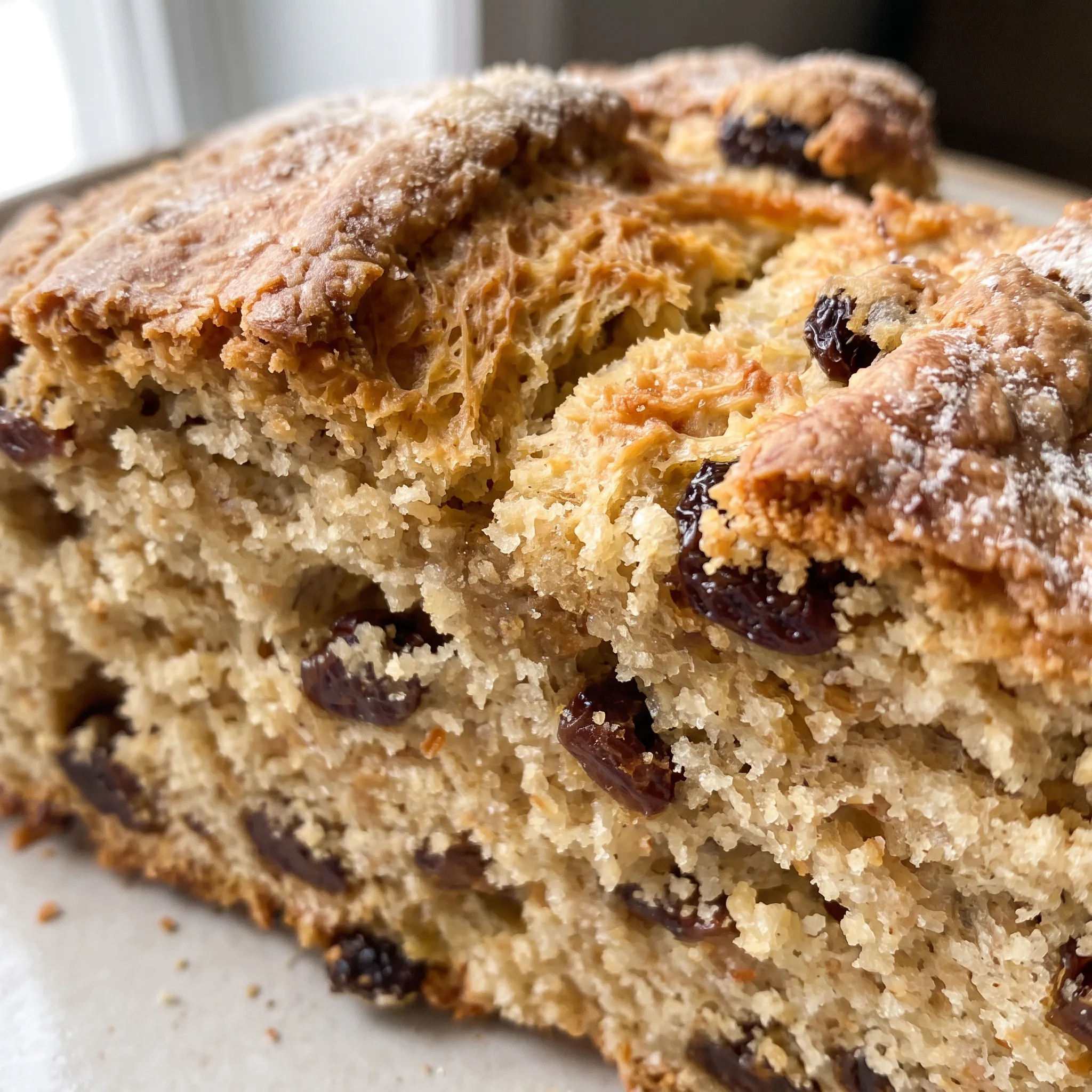
What to Buy and Prep for Irish Soda Bread
Low-fat buttermilk: Start with 1 cup and keep the rest on hand, since the dough tells you whether it needs the full 1½ cups.
Low-fat sour cream: Full-fat works, but low-fat keeps the 1 cup from making the crumb too heavy alongside the buttermilk.
Raisins: Use ¾ cup if you want a sweeter loaf, ½ cup if you’d rather taste the buttermilk tang.
Unsalted butter: Soften it at room temperature so the 4 Tbsp rub into the flour instead of smearing.
All-purpose flour: Keep 1 tsp separate for dusting the top, since the 4 cups are already spoken for.
The cross cut is not decorative: it creates four quadrants that allow steam to escape and heat to reach the center evenly. Without it, the crust sets first, trapping moisture and causing a domed top with a gummy core. By the time the exterior looks done, the interior may already be too far behind to catch up without overbaking the edges.
Judging the Dough Before It Hits the Pan
When the butter is rubbed in far enough
Stop when the mixture looks like coarse crumbs and no butter piece is bigger than a pea. Rub a pinch to the touch: it should feel like damp sand, not slick or greasy.
If you still see distinct butter bits, keep working, or they’ll leave pockets in the loaf. Overwork it and the dough turns pasty, which bakes up tough instead of tender.
Reading the dough’s moisture before adding more buttermilk
The dough should be thick and sticky, but not so slack it spreads on its own. After the first cup of buttermilk, stir and look: if dry flour still streaks the bowl and the spoon stands up, add more, up to half a cup.
If it already ribbons off the spoon, stop. Too much liquid makes a flat, dense loaf that won’t hold its shape.
Testing doneness at the center, not the edges
At 60 minutes, the top will be browned and firm, but that means nothing for the middle. Insert a toothpick into the center. If it comes out with wet crumbs or streaks, give it 5 more minutes and check again.
The edges can look done while the middle stays gummy. A clean toothpick is the only sign the crumb has set.
Waiting through the rest before cutting
The loaf needs 20 minutes on the rack. Cut into it sooner and the steam inside hasn’t redistributed, so the crumb smears and feels doughy even if it’s baked through. The crust also firms as it cools, which makes cleaner slices.
If you can hold the loaf without flinching, it’s still too hot to cut.
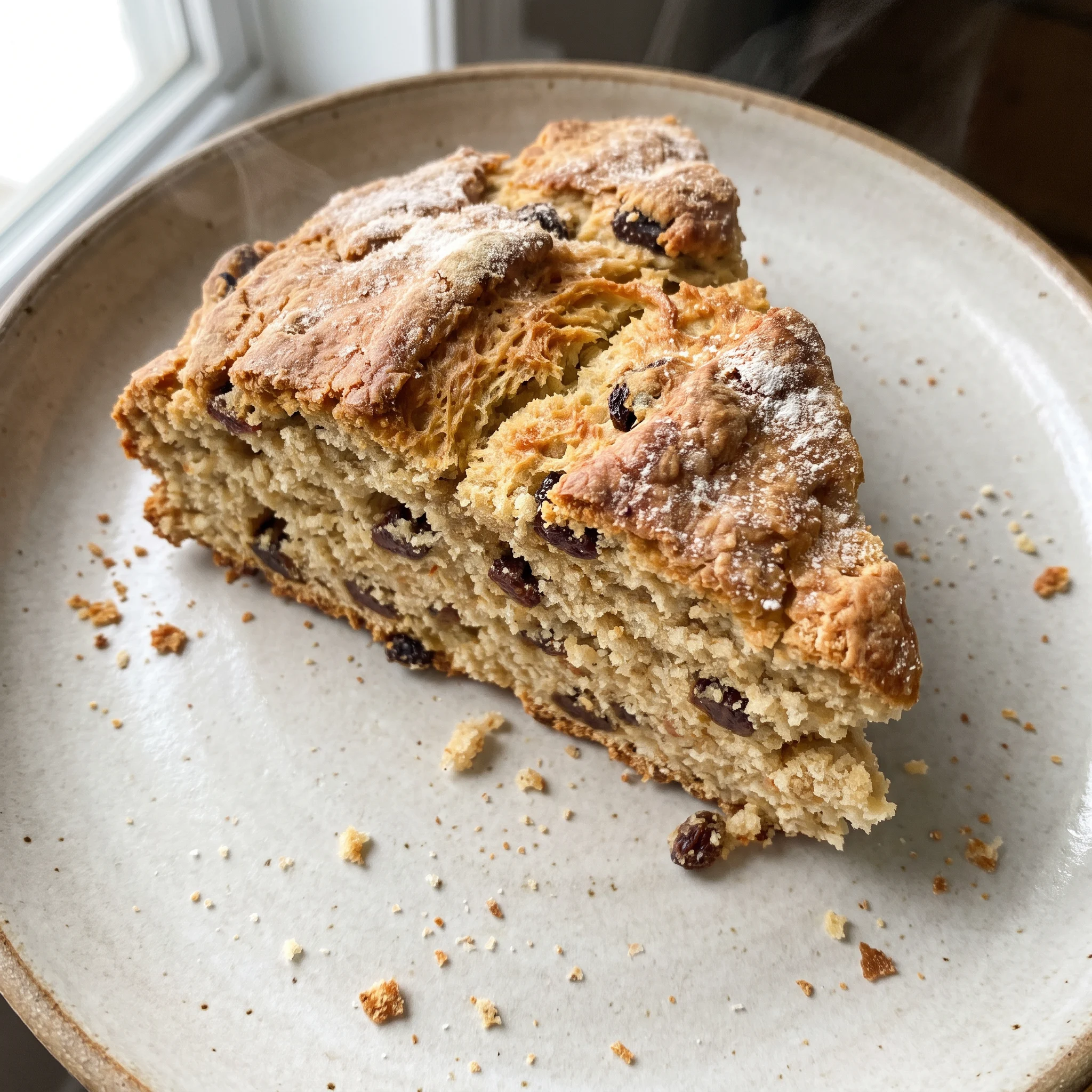
Irish Soda Bread with Raisins and Buttermilk
Ingredients
Method
- Set oven to 350°F (175°C). Using non-stick baking spray or butter, coat a 9-inch cast-iron skillet or glass pie pan; set aside.
- In a large bowl, combine 4 cups (480 g) all-purpose flour, ½ cup (100 g) sugar, 1 tsp kosher salt, 1 tsp baking powder, and 1 tsp baking soda by whisking.
- Add 4 Tbsp (57 g) softened unsalted butter to the dry ingredients. Using your hands, work the mixture until it resembles coarse crumbs with no large butter pieces. Create a well in the center.
- Crack 1 large egg into the well and lightly beat it with a spoon or whisk. Stir in 1 cup buttermilk and 1 cup low-fat sour cream.
- With a wooden spoon, gently fold the batter once, then incorporate ½ to ¾ cup raisins. If the dough appears dry, add additional buttermilk, up to ½ cup.
- Transfer the batter to the prepared pan. With a serrated knife, cut a cross into the center of the dough. Scatter 1 tsp all-purpose flour and 1 tsp granulated sugar (optional) over the top.
- Place in the preheated oven on the middle rack and bake for about 60 minutes. Test for doneness by inserting a toothpick into the center; it should emerge clean. If not, continue baking in 5-minute increments, checking after each.
- Allow the bread to cool on a wire rack for at least 20 minutes before slicing.
- Serve the bread as is, or with butter, jelly, or marmalade.
When a Swap Still Bakes a Loaf and When It Doesn’t
Buttermilk: Whole milk with 1 tablespoon lemon juice or white vinegar per cup, rested 5 minutes; or plain whole-milk yogurt thinned with milk to buttermilk consistency. The acid still wakes the baking soda, so the rise holds. Whole milk brings more fat than low-fat buttermilk, so the crumb comes out a touch richer and softer, with less tang.
Start with the same 1 cup the recipe calls for and add more only if the dough looks dry.
Sour cream: Full-fat sour cream, or plain whole-milk Greek yogurt. Full-fat sour cream makes the loaf heavier and more moist, so it may need a few extra minutes past 60 before the center sets.
Greek yogurt is thicker and tangier; thin it with a splash of buttermilk or milk so it stirs in evenly. Keep the same 1 cup measurement.
Unsalted butter: Salted butter, or a neutral oil like canola. Salted butter adds about a quarter teaspoon of salt per tablespoon, so cut the 1 teaspoon kosher salt to ½ teaspoon. Oil can’t be rubbed into flour the way butter can, so the crumb turns softer and less flaky.
If you use oil, measure 3 tablespoons in place of the 4 tablespoons butter.
All-purpose flour: A 1-to-1 gluten-free baking blend. These blends vary in how much liquid they absorb, so the dough may turn out wetter or drier than expected. Add buttermilk in splashes, not the full ½ cup at once, and expect a slightly gummier center.
The loaf will still bake and slice, but it won’t have the same tender chew.
Raisins: Dried currants, chopped dates, or dried cranberries. Currants are smaller and less sweet, so the loaf stays closer to the tangy original.
Dates and cranberries are larger and stickier; chop them to raisin size so they don’t clump. Use the same ½ to ¾ cup, and if the dough feels stiff, add a tablespoon of buttermilk.
Tips
- At 60 minutes, slide a thin metal spatula under the loaf and lift it an inch to check the bottom. It should release from the pan with a slight tug and sound hollow when you rap the underside with a spoon. If the bottom feels glued or gives a dull thud, the center is still raw even when a toothpick near the top comes out clean, so put it back for 5 minutes and test again.
- If the top is browning past deep golden before the center is set, tent it with a sheet of foil rather than lowering the oven. The sugar and flour topping can scorch in the last 15 minutes while the middle is still catching up, and foil keeps the crust from turning bitter without slowing the bake.
Storing and Serving Irish Soda Bread
Eat this loaf the day it’s baked. That’s when the crust still crackles and the crumb is tender. By the next day it tightens and turns damp, because sour cream and buttermilk hold moisture that keeps working its way to the surface.
Wrap cooled leftovers tight in plastic or foil and keep them at room temperature for two days, or refrigerate up to four. Cold makes the crumb firmer, so slice and toast it rather than microwaving, which steams it into a rubbery slab.
Toast thick slices until the edges crisp and the inside softens again. Butter, jelly, or marmalade goes on after toasting, never before storing, or the surface goes soggy. Freeze sliced bread up to two months between sheets of parchment, then toast from frozen.
The sugar topping is best the day it’s baked; it softens in storage, so add a fresh pinch after toasting if you want that crackle back.

Frequently Asked Questions
Can I make Irish soda bread ahead of time?
Not in a way that helps. This loaf peaks the day it’s baked, when the crust still crackles and the crumb is tender. By the next day it tightens and turns damp, since the sour cream and buttermilk keep releasing moisture toward the surface.
You can mix the dry ingredients a day ahead and keep them covered, but once the wet go in, the soda starts working, so the batter needs to hit the pan and then the oven. If you want bread waiting for you, bake it, cool it, and reheat slices rather than making the dough ahead.
Why is my Irish soda bread dense and gummy?
Start with the toothpick: if it came out with wet crumbs or streaks, the center never set, and five more minutes would have fixed it. That’s the most common cause because the top browns and firms at 60 minutes while the middle stays raw.
If the pick was clean, look at the liquid. Adding buttermilk past the point where the dough ribbons off the spoon makes a slack batter that bakes flat and heavy.
A third check is the butter: pieces bigger than a pea leave greasy pockets, and overworking the flour after that turns the crumb pasty. Finally, cutting in too soon smears the crumb and makes a baked-through loaf eat doughy, so let it rest the full 20 minutes.
How do I know when Irish soda bread is done?
The top will look done well before the middle is, so go by the center. A toothpick inserted there should come out clean, with no wet crumbs or streaks.
If it’s not clean, give it five more minutes and check again. You can also tap the loaf: it should feel firm and sound hollow. Those two cues together are the only reliable sign, since the edges will brown and set early no matter what.
What is the difference between Irish soda bread and traditional soda bread?
This version is the richer, sweeter American style. The ½ cup sugar, egg, sour cream, and raisins push it toward a tender, moist tea bread, where a plain traditional soda bread is flour, soda, salt, and buttermilk only. That plainer loaf bakes up with a craggy crust and a drier, more savory crumb, meant to be torn and eaten with soup or butter.
The trade-off is that all the added fat and sugar here make a loaf that stales faster and depends on that clean toothpick test even more, because the wet center hides under a browned top.
