
Thirty minutes in the fridge decides whether these slice into clean coins or smear into ovals, and it’s the step most people rush. Shortbread dough made with powdered sugar is already tender and a little slack, and fresh chopped cranberries add moisture that softens it further, so the logs need real time to firm up before the knife touches them. What makes cranberry orange shortbread cookies worth the wait is the contrast: tart pockets of fruit cutting through sweet orange zest, all of it wrapped in a butter crumb that stays crumbly instead of tough.
The margin for error is small but forgiving. Warm dough spreads and loses its edges; crumble a slice and you press it back together, and the sugar coating hides the seam.
Reach for confectioners’ sugar and almond extract
Powdered sugar isn’t just granulated sugar run through a blender. Its fine, powdery texture blends into butter without any grittiness, and that smoothness carries straight into the baked cookie. You get a tender, crumbly shortbread that seems to dissolve on your tongue rather than one with a sandy bite.
The same goes for the extracts. Almond extract brings a subtle, almost cherry-like nuttiness that plays off the cranberries and orange zest. Vanilla alone would leave a flatter, more one-note flavor.
Together with the butter and powdered sugar, the dough comes together soft but not sticky, easy to shape into logs and slice cleanly. You’ll notice the difference in the first bite: a cookie that’s rich yet light, with a gentle almond note in the background. That’s the signature of these shortbread cookies.
Chop the cranberries coarsely for even tartness
Fresh cranberries are tiny flavor bombs: tart, juicy, and firm. If you leave them whole or chop them too fine, you get either big sour pockets or a uniformly pink dough. Coarse chopping, about the size of peppercorns, strikes the right balance.
Each slice of dough gets a few pieces, so every cookie has a consistent tang. The juices that escape during chopping will tint the dough slightly, but that’s fine. It’s a sign of real fruit.
You want to see distinct flecks of red, not a uniform blush. A food processor gives a quick, even chop; a sharp knife works too, just take your time.
The goal is pieces that hold their shape but aren’t large enough to weigh down the dough. When you bite into a baked cookie, you’ll get little bursts of cranberry, not a mouthful of sourness.
Chill the logs before slicing
After you’ve rolled the dough into logs, the butter is soft and the dough is slack. Chilling for 30 minutes firms everything up. Cold butter holds its shape, so when you slice, you get clean, round coins instead of flattened ovals.
The flour also gets time to absorb moisture, which makes the baked texture more even. Skip this step and you’ll be fighting sticky dough that smears and tears. The cookies will spread in the oven, losing their neat edges.
Thirty minutes in the fridge is enough; longer is fine too. Just don’t freeze the logs solid or they’ll crack when sliced. You’ll know they’re ready when the dough feels firm but still yields slightly to a gentle press.
That’s your cue to start slicing.
A sugar coating adds crunch and sparkle
Rolling the unbaked cookies in granulated sugar might seem like a small thing, but it changes the eating experience. The sugar doesn’t fully dissolve in the oven.
Instead, it forms a thin, crackly shell that contrasts with the tender interior. It also adds a gentle sweetness that balances the tart cranberries.
Visually, the sugar catches the light, giving the cookies a frosted, finished look. You can skip this step if you like, but the cookies will be a bit plainer. If you do coat them, work quickly so the sugar adheres before the dough warms.
A light press ensures an even layer. After baking, the tops will be slightly glossy and speckled with sugar crystals, a clear sign they’re done. That texture is worth the extra minute.
Bake low and slow for classic shortbread texture
Shortbread isn’t a cookie you rush. A 300°F oven might seem low, but that’s exactly what you want.
The gentle heat dries the cookies out slowly, giving them that characteristic crumbly, melt-in-your-mouth feel. If you baked them hotter, the edges would brown and set before the centers were done, leaving you with a tough, uneven batch. At this temperature, the cookies bake evenly from edge to center, and the bottoms turn a light golden brown.
That’s your doneness cue: lift one with a spatula and check underneath. The tops will stay pale, maybe with a hint of color from the cranberries.
Let them cool on a wire rack, where they’ll crisp up further. The result is a cookie that snaps gently when you bite, then dissolves into buttery richness.
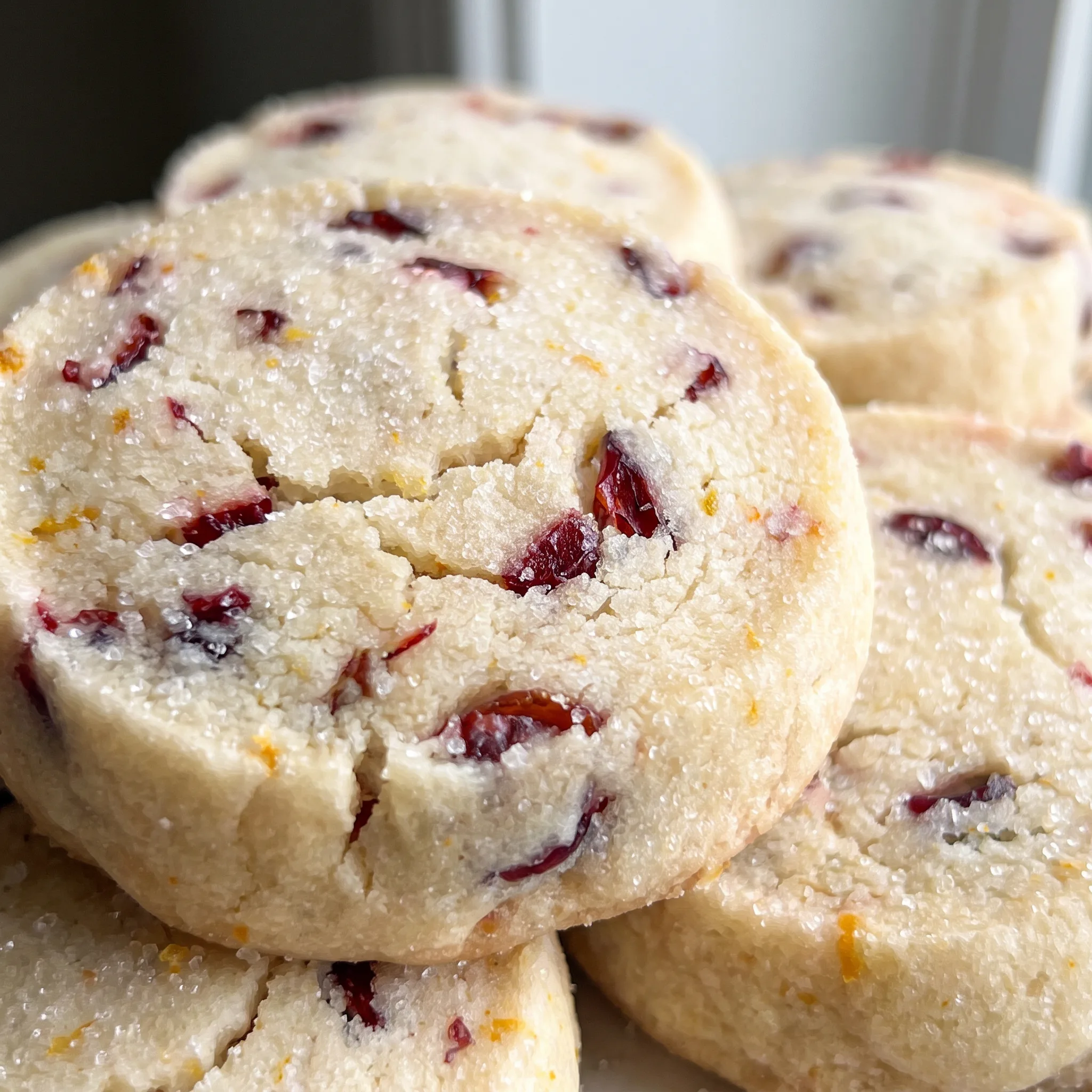
What the cranberries and zest are actually doing here
Fresh cranberries: Frozen berries release too much water and leave the dough slack, so use the 1 cup fresh and chop them while they’re still firm.
Orange zest: Zest only the outer colored peel, because the white pith underneath is bitter and one Tablespoon of it will read through the whole batch.
Butter: European-style butter with a higher fat percentage gives a shorter, crumblier bite than standard supermarket butter.
Almond extract: A half teaspoon is potent stuff, and the cheap imitation kind tastes like marzipan gone wrong, so use real extract.
All-purpose flour: Bleached or unbromated, either works, but weigh the 2 cups because scooping from the bag can pack in an extra quarter cup.
Granulated sugar: The 3 Tablespoons for dusting should be coarse-grained sanding sugar if you have it, since fine sugar dissolves into the dough and loses its sparkle.
When fresh cranberries are chopped, their cell walls rupture and release juice. That liquid hydrates the flour and softens the butter, turning the dough sticky and causing it to spread or tear during slicing. Coarse chopping limits the number of ruptured cells, so less juice escapes and the dough stays firm enough to hold its shape.
Reading the dough in your hands, not the clock
The butter is ready when your thumb leaves a dent, not a crater
Press the butter with a thumb. A dent that holds, with the stick still cool and firm underneath, gives you dough that creams and holds air. Butter so soft it slumps under its own wrapper beats into a greasy paste, and the cookies bake up flat and dense.
Cold butter just takes longer to come together, so give it a few extra minutes rather than warming it. Two minutes of beating is the card’s number, but the visual cue is a pale, fluffy mass with no visible sugar grit.
Stop mixing flour the moment the last dry streak disappears
Flour gets worked the second it meets moisture, and every extra turn of the mixer tightens the dough. You want it just combined, shaggy in spots, with a few dry patches you press in by hand.
Overmix and the baked cookie turns tough and snaps hard instead of crumbling. If the dough already feels stiff and springy, you have gone too far; it will still bake, but expect a denser bite.
Hands, not beaters, from here.
The logs are sliceable when they resist a finger but don’t fight back
Thirty minutes in the fridge is the card’s guide, but the fridge temperature and how warm the dough was going in change things. Press a log. It should feel firm and cool, yielding slightly, like cold clay.
Too soft and the knife smears the coins into ovals; slide the logs back in for ten minutes. Frozen solid and the blade cracks the cranberry pieces and shatters the edges.
If a slice does crumble, press it back together and keep going; the sugar coating hides small faults.
Pull them on the underside color, not the timer
At 300°F the tops stay pale, sometimes looking underdone when they are not. The only honest signal is the bottom.
Lift one cookie with a spatula at 17 minutes and look: light golden brown means done, a shade darker means the next tray comes out two minutes sooner. Pale white underneath and they need more time; leave them and they will taste raw and pasty in the center.
Cool on the rack and they firm as they sit.
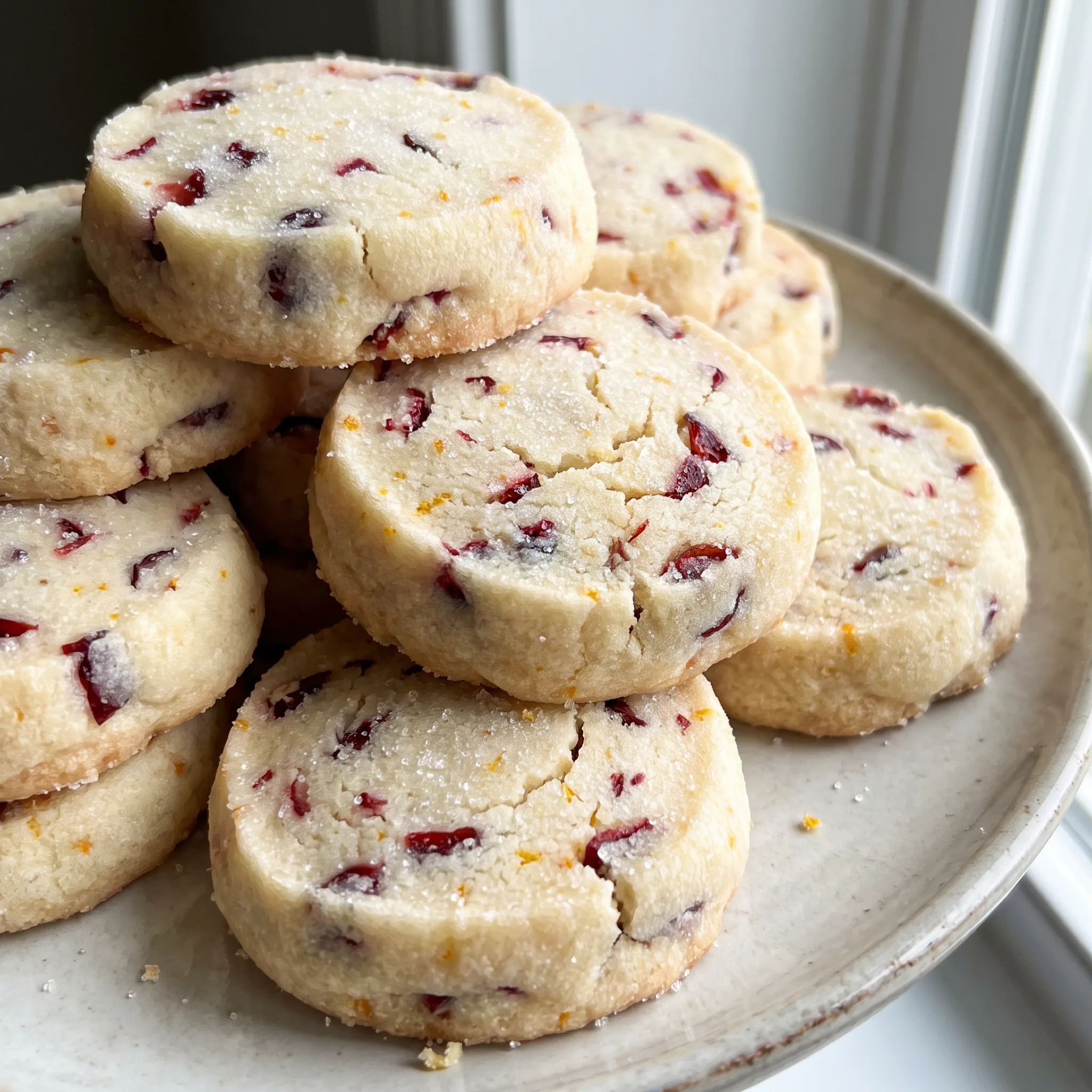
Cranberry Orange Shortbread Cookies
Ingredients
Method
- Prepare a baking sheet by lining it with parchment paper; if you don’t have any, use an ungreased baking sheet.
- Coarsely chop the fresh cranberries using a food processor or a sharp knife; set them aside.
- In a large mixing bowl or the bowl of a stand mixer, beat together the butter, powdered sugar, vanilla extract, and almond extract until light and fluffy, about 2 minutes.
- Add the all-purpose flour and mix with clean hands just until combined.
- Gently fold in the chopped cranberries and orange zest.
- Divide the dough into three equal portions and roll each into a log shape; wrap in plastic wrap and refrigerate for 30 minutes.
- Unwrap the dough and slice cookies into 1/4-inch thick slices using a sharp knife.
- Dip the top and roll the sides of the cookies in a small bowl with the 3 tablespoons granulated sugar.
- Place unbaked cookies on the prepared baking sheet, 2 inches apart.
- Bake in a 300°F (150°C) oven for 17 to 20 minutes; the bottom of the cookies will be light golden brown when done.
- Cool on a wire rack and enjoy!
Storing and serving cranberry orange shortbread cookies
These cookies are at their best within two days of baking. The sugar coating is still crackly then, and the crumb is at its most tender. After that, the coating slowly draws moisture from the air and the shortbread softens.
They’re still worth eating, just less crisp. Keep them in an airtight container at room temperature, layered between sheets of parchment if you stack them, and they’ll hold for about a week. Skip the fridge.
Cold dries out the crumb and dulls the orange zest, and the sugar coating turns tacky as it warms back up. For longer storage, freeze the baked cookies in a single layer, then bag them.
They thaw in about 15 minutes at room temperature. Reheat at 300°F for 3 to 4 minutes if you want the coating crisp again.
If you froze the dough logs instead, slice and bake them straight from the freezer, adding a minute or two to the bake time.
Tips
- Zest the orange directly over the bowl of butter, powdered sugar, and extracts, letting the peel fall in as you go. The oils that spray off the skin when the grater breaks it are what carry the orange, and they bind to the fat on contact instead of sitting on the zest and baking off in the oven. Measure the zest after it lands in the bowl, not before, since you will lose some oils to the cutting board if you pile it up first.
Swaps that work and the ones that wreck this shortbread
Butter: Margarine or vegan butter. These shorten the dough less and often carry more water, so the logs soften faster in the fridge and the slices spread in the oven. You lose some of that clean buttery snap.
If you go this route, start with the same 1 cup the recipe calls for, then chill the logs an extra 15 minutes and expect a softer, cakier bite. European-style butter, if you have it, gives a shorter crumble than standard butter.
Fresh cranberries: Frozen or dried cranberries. Frozen berries release water as they thaw and chop, leaving the dough tacky and the baked cookies a bit damp. If you use frozen, don’t thaw them: chop while still solid and fold them in fast, then add a tablespoon or two of flour if the dough feels wet.
Dried cranberries are the easier swap, but they’re sweeter and chewier, so the tart burst disappears. Start with the same 1 cup, chop them roughly, and if the dough seems dry, add a teaspoon of water.
Almond extract: Vanilla or orange extract. Almond gives that subtle cherry-like note that plays off the cranberries.
Swap in the same 1/2 teaspoon of vanilla and the cookies taste flatter, more one-note. Orange extract echoes the zest but can turn perfumey fast, so start with 1/4 teaspoon and taste the dough before baking.
You can also leave it out entirely, but the dough will lose its background warmth.
All-purpose flour: Gluten-free flour blend. Gluten-free blends vary wildly.
Some are gritty, some are beany, and most need more liquid. Start with the same 2 cups, but add a tablespoon of water if the dough won’t hold together.
The baked cookies will be more fragile and won’t have that classic shortbread snap. Chill the logs well and slice gently, as the dough crumbles easily.

Frequently Asked Questions
Can I make the dough ahead of time and bake later?
Yes, and the logs hold in the fridge for a few days. The card’s 30-minute chill is the minimum for clean slicing; a longer rest makes the dough firmer and the flour absorbs more evenly, so the baked texture is consistent.
If you go past a day, wrap tightly so the cut cranberries and zest don’t dry out. You can also freeze the logs, then slice and bake straight from frozen, adding a minute or two to the bake time. Skip the fridge for baked cookies; the storage section is clear on that.
Why did my cookies spread out too much in the oven?
Butter that’s too warm is the usual culprit. If the dough feels greasy or the logs sag when you lift them, the butter is already half melted before the oven, and the cookies slump into flat ovals. Press a log: it should feel like cold clay, firm but yielding slightly.
If it’s soft, slide it back in the fridge until it firms up. The other check is your baking sheet: a hot sheet from a previous batch warms the dough from below, so let it cool or run it under cold water and dry it before the next round.
Also make sure you’re not placing the dough on a greased surface; parchment or an ungreased sheet is what the recipe calls for.
How do I know when the cookies are done baking?
Lift one with a spatula and look at the bottom. Light golden brown means done; the tops will stay pale, sometimes with a hint of color from the cranberries, and that’s normal at 300°F.
If the underside is still white, they need more time, and pulling them early leaves a pasty center. The edges should feel set, not soft, when you touch them, and the sugar coating will look glossy and speckled. Cool them on a rack; they firm as they sit.
What’s the difference between these and traditional shortbread cookies?
Traditional shortbread is butter, sugar, and flour, baked low and slow for that crumbly snap. These keep that same tender base but add coarsely chopped fresh cranberries and orange zest, so each bite has a tart burst and a citrus note. The sugar coating on the outside is another difference: it stays crackly rather than dissolving, giving a thin shell that contrasts with the soft interior.
Almond extract also comes through in the background, a subtle cherry-like warmth you won’t find in a plain shortbread. The result is still a shortbread at heart, just with fruit and zest doing the talking.
