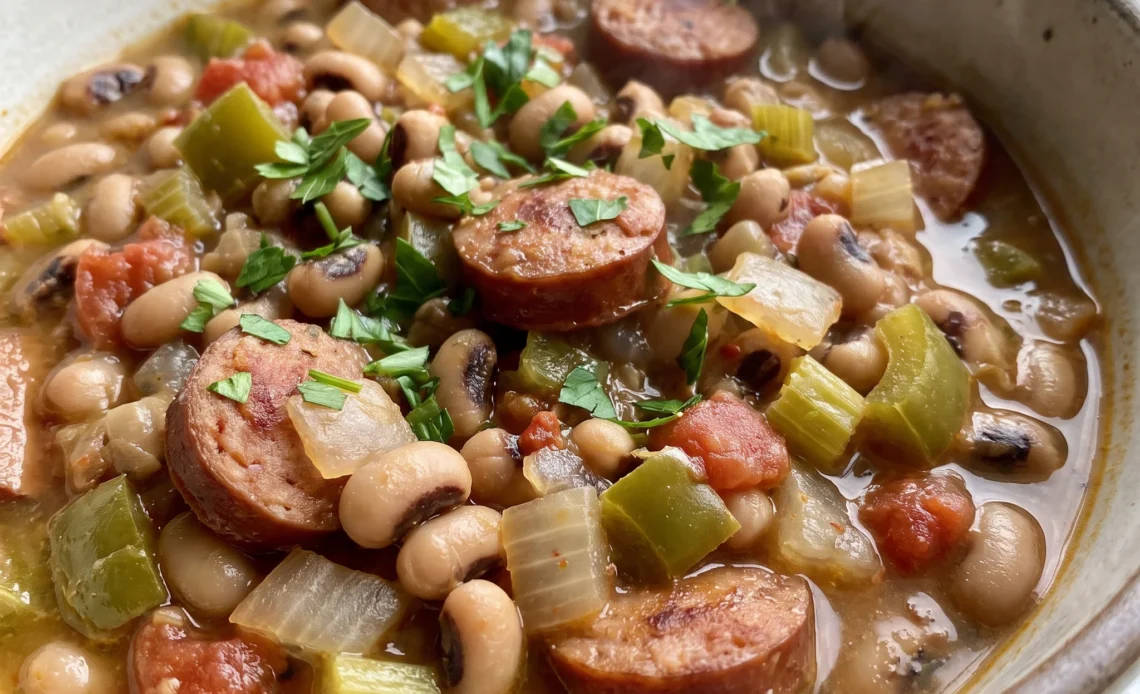
Soft peas and greasy sausage usually mean the skillet got rushed. Getting real caramelization on the links before they ever meet the crock is the difference between slices that hold up and slices that dissolve, and it’s the step most people skip when they’re trying to get dinner going before work.
Crock pot hoppin’ john rewards that extra pan, then asks nothing else of you. Dried peas go in unsoaked, which surprises people who assume they need a overnight soak, and the pot handles them anyway.
Where new cooks get nervous is the long stretch with the lid on. You can’t see much, you can’t taste much, and the urge to stir is constant. Leave it.
The pot is doing exactly what it should.
The hard step is the transition from high to low heat: if the sausage has already rendered most of its fat and the peas have begun to split, the dish is on an irreversible path to mush. At the switch point, the sausage should still feel firm when pressed with a spoon and the peas should be al dente at the center, not chalky but not creamy. Once the peas’ interiors turn uniformly soft and the sausage slices lose their bounce, no amount of low heat will restore texture.
Why the Two-Stage Slow Cooker Method Works
When you sear the sausage first, you’re not just cooking it. That caramelized exterior adds a savory depth to the pot, and the slices hold their shape through hours of heat.
Skip that step and the sausage turns soft, losing its snap. The initial hour on high gives the dried peas a jump start, softening their skins so they cook evenly. After that, low heat does the rest.
It’s gentle enough to keep the peas intact, yet steady enough to make them creamy. The result is a pot where each element keeps its character: sausage with bite, peas tender but not blown out. That first hour also brings everything up to temperature quickly, which helps the peas absorb flavor from the start.
Once you dial it down, the slow, even heat coaxes out the peas’ natural starch, thickening the broth without any flour or cornstarch. You end up with a rich, spoon-coating consistency that feels like it simmered all day.
The Liquid Ratio for Unsoaked Peas
Dried black-eyed peas are thirsty. They’ll drink up more liquid than you might expect, especially without a pre-soak. The 3 cups of broth and 4 cups of water give them plenty to rehydrate and still leave a thick, stew-like base.
Any less and you’d risk scorching; any more and you’d have soup. The can of diced tomatoes and chilies brings its own moisture, plus a tangy edge that cuts through the sausage’s richness. Those tomatoes also add body as they break down.
As for layering, it matters. Putting the sausage at the bottom means its flavors infuse the liquid from the start. The vegetables go next, then the peas on top.
This order lets the peas slowly sink and cook evenly, rather than sitting in a clump. Stir everything together before you close the lid, though. That ensures the seasoning is distributed and the peas are surrounded by liquid.
After hours of cooking, you’ll see a pot of plump peas in a savory, slightly thick broth, ready to spoon over rice.
Building Flavor with Creole Seasoning and Herbs
Creole seasoning is the backbone here. It brings a blend of paprika, garlic, cayenne, and other spices that would take a dozen jars to replicate. In a slow cooker, that mix melds with the sausage and tomatoes, giving the peas a rounded, spicy warmth.
Dried thyme may seem like a small thing, but it holds up better than fresh after hours of heat. Fresh herbs would just fade away. Garlic and onion powders do the same: they dissolve into the broth, seasoning every pea.
The diced tomatoes and chilies add a gentle acidity that keeps the dish from tasting flat. That bit of tang also balances the saltiness of the sausage and the earthy peas.
Together, these seasonings create a flavor that tastes like it simmered for hours, even though the slow cooker did most of the work. When you taste it at the end, you’ll notice the heat first, then the savory depth, and finally the slight sweetness from the tomatoes. It’s a complex bite, but you didn’t have to stand over the stove.
A New Year’s Tradition in a Crock Pot
In the South, black-eyed peas on New Year’s Day are a must. Each pea is said to bring a day of luck, and a pot full promises prosperity for the year ahead. That tradition is why this dish shows up on January 1st tables from Texas to the Carolinas.
The classic version simmers on the stove for hours, but this crock pot take fits a modern schedule. You can set it in the morning and come home to a house smelling of smoked sausage and spices.
It makes enough to feed a crowd, which is part of the point: hoppin’ John is a communal dish, often served with rice and a side of greens. The greens represent dollar bills, the peas coins. Together, they’re a wish for a wealthy year.
Even if you’re not superstitious, the combination of creamy peas, savory sausage, and tangy tomatoes is a hearty meal. And it’s flexible: serve it over rice, with cornbread, or just in a bowl. The leftovers taste even better the next day, if you have any.

What to Look For in the Peas and Sausage
Dried black-eyed peas: Buy the freshest bag you can find, since older peas stay stubborn and chalky no matter how long they cook.
Smoked sausage: A cured, fully cooked link like andouille or kielbasa gives you the firm texture that survives eight hours without falling apart.
Diced tomatoes and chilies: The 10 oz can brings both moisture and a tangy heat, so drain nothing and dump the whole thing in.
Creole seasoning: Salt is the first ingredient in most blends, so taste your broth before you reach for the shaker at the end.
Dried thyme: Crush a pinch to the touch before it goes in, which wakes up the oils that survived the drying process.
Judging the Pot Without Lifting the Lid
When the sausage has rendered enough
The slices should look darker at the edges and feel firm, not greasy. If they’re still pale, they’ll release fat into the pot and turn flabby. Wait until the exteriors are deeply caramelized, but pull them before they blacken.
That crust is what keeps them from disappearing over eight hours. If you rush this, the sausage won’t hold its shape and the broth will taste flat.
The one-hour mark on high
After an hour on high, open the lid and stir. The peas should have swelled and the liquid should be hot throughout, but not boiling. If the peas are still hard and the liquid is lukewarm, your crock pot runs cool; extend the high phase by 30 minutes.
If it’s bubbling hard, switch to low immediately. This check sets the pace for the next seven hours.
Reading the broth at hour four
Around the midpoint, the liquid should look slightly thicker and taste seasoned. If it’s watery, leave the lid off for 20 minutes on low, but no longer or the peas on top will dry out. If it’s already thick like gravy, add a splash of water.
The peas should be tender but not falling apart. This is your only chance to adjust consistency without stirring them into paste.
The final thirty minutes
With half an hour left, taste a pea from the top and one from the bottom. They should be uniformly soft, with no chalky center.
If the bottom peas are done but the top ones aren’t, gently stir to redistribute. If the broth tastes flat, add salt now, not earlier, since the sausage and Creole seasoning concentrate as liquid evaporates.
Over-salting at this stage can’t be fixed.
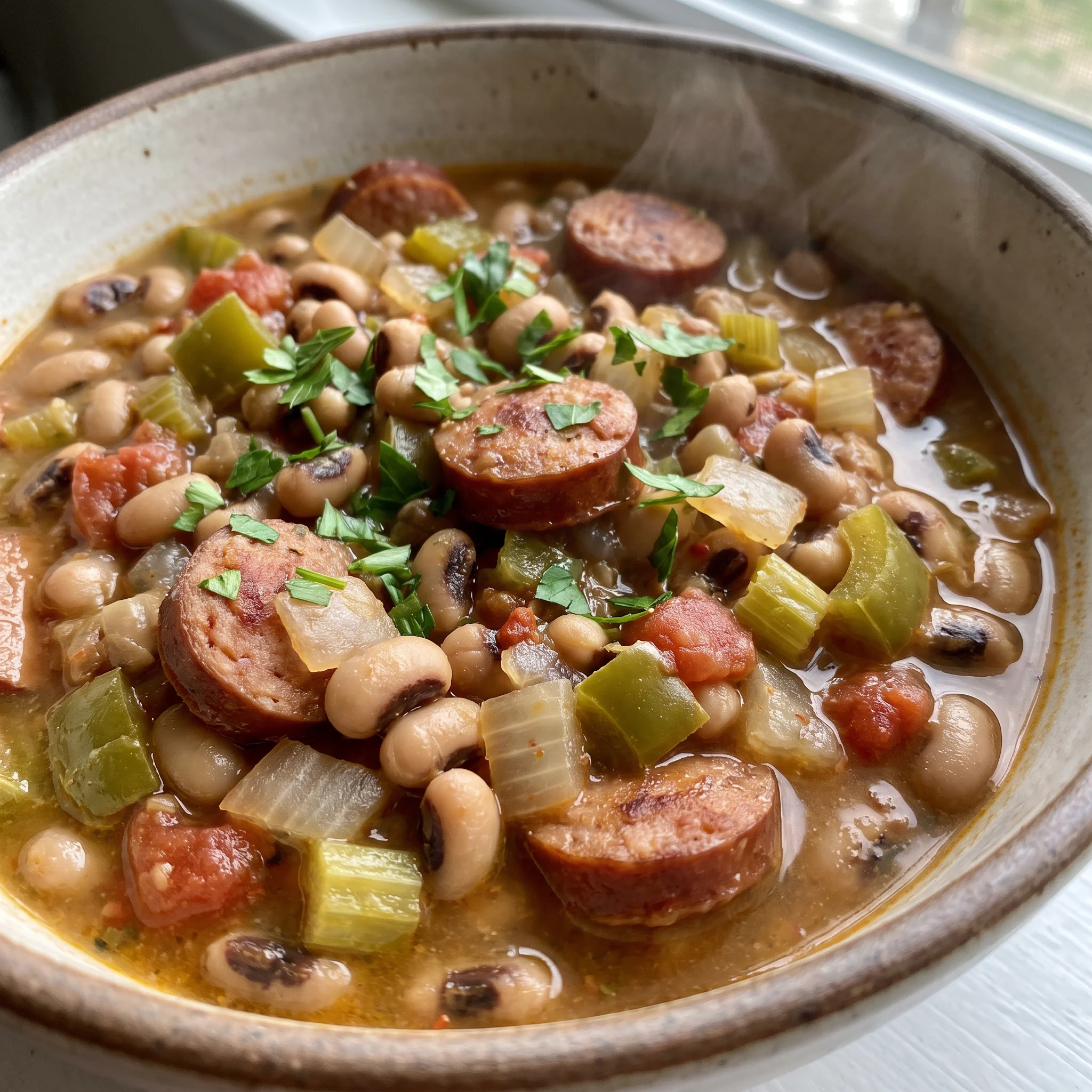
Crock Pot Hoppin’ John with Smoked Sausage
Ingredients
Method
- Cut the smoked sausage into slices and place them in a skillet set over medium-high heat. Cook only until they take on a caramelized exterior and begin to darken.
- Transfer the sausage into the crock pot together with every remaining ingredient. Mix well, then turn the crock pot to high.
- Once 1 hour has passed, switch the setting to low and continue cooking for another 7 hours.
Storage, Serving, and Reheating Hoppin’ John
This pot is at its best the day it’s made, but it genuinely improves overnight. The peas keep drinking liquid as they cool, so the broth tightens into something closer to a stew. That’s not a flaw; it’s the starch doing its job.
Serve it over rice within two hours of the final thirty-minute check for the loosest, most distinct peas. After that, the texture changes and you’ll want to manage it.
Refrigerate leftovers in a shallow container once they stop steaming, and eat them within four days. Reheat on the stove or in the microwave with a splash of water or broth per bowl.
Stir it in as it warms; the liquid loosens the starch and brings back the spoon-coating consistency without washing out the sausage. The slices won’t crisp again, but they hold their shape and their smoke.
Freeze portions for up to three months. Thaw overnight in the fridge, then reheat the same way. The peas come back soft and the broth thins slightly, so taste for salt before serving.
Swaps That Hold Up in an Eight-Hour Pot
Smoked sausage: Use the same 1 lb of a cured, fully cooked link like andouille, kielbasa, or smoked turkey sausage. If you reach for fresh raw sausage instead, brown it first and expect it to break down into crumbles rather than slices. Cured links keep their shape and their snap through the long cook, which is why the recipe calls for them.
Fresh sausage will soften into a loose texture and give up more fat, thinning the broth. Turkey sausage brings less fat and a lighter smoke, so the pot tastes cleaner but less rich.
Dried black-eyed peas: For canned peas, use about 4 (15 oz) cans, drained and rinsed, and add them during the last 30 minutes on low. Do not use the full 7 cups of liquid; cut the broth and water to about 2 cups total. Canned peas are already soft, so they only need to heat through.
If you add them at the start, they collapse into a thick paste. The reduced liquid keeps the pot from turning soupy, since canned peas bring their own moisture but won’t absorb much.
Beef broth: Chicken broth or vegetable broth can replace it cup for cup. For a gluten-free pot, check that your broth and Creole seasoning are labeled gluten-free, and use a gluten-free smoked sausage.
Beef broth gives a deeper, meatier backbone that stands up to the smoked sausage. Chicken broth is lighter and lets the peas and smoke come forward.
Vegetable broth can taste sweeter, so you might want a pinch more Creole seasoning at the end. The gluten-free swap matters because regular sausage and some Creole blends contain wheat fillers or anti-caking agents.
Creole seasoning: Make your own with 1 tbsp paprika, 1 tsp garlic powder, 1 tsp onion powder, 1/2 tsp cayenne, 1/2 tsp black pepper, and 1/2 tsp salt. Or use Cajun seasoning, but start with half the amount and taste after an hour. Creole blends lean on paprika and garlic with moderate heat.
Cajun blends usually bring more cayenne and salt, so using the full tablespoon can overpower the peas. Starting with half lets you adjust without oversalting, since the sausage and broth already carry salt.
Tips
- Spread the 1 lb of dried black-eyed peas on a sheet pan and pick out shriveled, cracked, or discolored ones before rinsing. Those peas were likely damaged before packaging and never rehydrate fully; they stay hard through the entire 8 hours and give you a chalky bite in an otherwise tender pot.
- Rinse the peas in a colander under cold water until it runs clear, then drain them well before they go into the crock pot. That rinse removes dust and any small stones that settled in the bag, and starting with drained peas keeps the 3 cups of broth and 4 cups of water at the ratio the recipe calls for instead of diluting it with rinse water.

Frequently Asked Questions
Can I make this Crock Pot Hoppin’ John ahead of time and reheat it?
Yes, and the pot often tastes better on day two. As the peas cool they keep soaking up broth, so what looked loose in the crock tightens toward a stew overnight. Reheat on the stove or in the microwave with a splash of water or broth stirred in as it warms, which loosens that starch back into a spoon-coating consistency.
The sausage slices won’t crisp up again, but they hold their shape and their smoke, which is what you browned them for in the first place.
Why are my black-eyed peas still hard after 8 hours in the slow cooker?
Old peas are the usual culprit, not your cooker. A bag that’s been on the shelf for a year or two will stay chalky no matter how long it sits in liquid, and there’s no rescue once you’re eight hours in. Buy from a store with fast turnover and check the bag for a recent date.
If the peas are fresh and still hard, your crock pot likely runs cool: the article’s one-hour check on high is where you catch that, and it’s worth doing next time before you commit the full eight hours.
How is this slow cooker version different from traditional Hoppin’ John?
The stove-top classic usually starts with dried peas simmered in a pot you watch, and the rice cooks in the same liquid at the end. Here the peas go in unsoaked with the sausage, vegetables, tomatoes and chilies, and the pot does the work unattended over eight hours.
Rice stays separate, spooned into the bowl rather than cooked into the pot, which keeps the peas distinct instead of turning the whole thing into a porridge. The trade is texture: you get a thicker, stew-like broth and softer peas than a quick stove-top simmer gives you.
What should I serve with Hoppin’ John for a complete meal?
White rice is the standard, and long-grain is the right call because it stays separate under that thick broth. Skillet cornbread on the side handles the spoon-coating texture well, and a vinegary pot of greens cuts the smoke and richness of the sausage.
A bottle of hot sauce at the table lets people push the heat where they want it without touching the pot. If you’re feeding a crowd of ten, that spread is the whole meal.
