
You can nail every step of an eggnog cheesecake and still slice it too early. That’s the part nobody warns you about. The custard carries more liquid than a standard cheesecake because eggnog is itself a thin custard, cream and sugar and spice already blended, so the filling sets softer and looser than what you’d get from cream cheese alone.
Get impatient with the chill and the first slice slumps at the edge and drags through the filling instead of cutting it. The crust has its own temperament, too; a crumb base under a wet custard wants a head start in the oven, or it goes soft from the bottom up. None of this is hard.
It just asks you to wait longer than your instincts say. Do that, and you get a spiced, tangy slice that looks like it came from a bakery case.
A cheesecake filling is an egg custard: the proteins in the eggs set into a delicate gel network. Without a water bath, the pan’s edges heat faster than the center, so the outer custard overcooks and tightens while the center is still liquid, and the resulting tension tears the surface. The water bath surrounds the pan with steam, capping the temperature near 212°F (100°C) and slowing heat transfer so the entire custard sets gently and evenly.
Why does a cheesecake need a water bath?
Cheesecake is a delicate egg custard, and custards need gentle, humid heat. Without a water bath, the outside of the cake sets long before the center does.
You get cracks radiating from the edge and a grainy texture where the egg proteins have curdled. The water bath surrounds the pan with steam, keeping the temperature even and below boiling. That steady, moist heat lets the custard set slowly and uniformly.
It also insulates the crust from direct oven heat, so the graham cracker base doesn’t burn while the filling bakes. The result is a smooth, creamy surface that tastes as good as it looks. If you’ve ever pulled a cheesecake from the oven only to watch it split down the middle, the missing water bath is usually the culprit.
This step isn’t fussy; it’s the difference between a custard that sets like silk and one that resembles scrambled eggs.
The oven’s residual heat does the rest
Once the cheesecake is baked, the way you cool it matters as much as how you baked it. Sudden temperature changes cause the custard to contract rapidly, and that contraction pulls the top apart.
Leaving the cheesecake in the oven with the door ajar allows it to cool gradually, so the structure stays intact. This slow cool-down also helps the center finish setting without overcooking, since the residual heat is gentle.
It prevents the top from sinking or forming a dense, rubbery layer. I’ve found that this step is what gives you that flat, creamy top you see in bakery cases.
The cheesecake should feel barely warm when you finally take it out. If you skip this and move it straight to the fridge, you’ll likely end up with a cracked surface and a heavier texture.
Why eggnog changes the mixing rules
Eggnog is more than a flavoring. It’s a liquid custard base itself, adding richness and moisture that plain cream wouldn’t provide.
Its sugar and spice content means you have to adjust the added sugar and nutmeg to avoid oversweetening or overpowering the other flavors. That’s why this recipe uses a measured amount of sugar and just a touch of nutmeg. The real danger comes after you add the eggs.
Overmixing at that point incorporates air, which puffs up during baking and then collapses, causing cracks. The flour helps stabilize the custard and prevent curdling, but it can’t rescue a batter that’s been whipped into a foam. Mix gently, just until each egg disappears.
The batter should look smooth and glossy, not bubbly. When you pour it into the pan, it should settle into an even layer without any froth on top.
Pre-baking the crust for a crisp base
A raw graham cracker crust would become soggy from the wet filling. Pre-baking sets the crust and caramelizes the sugars, adding a toasted flavor that complements the creamy filling.
It also helps the crust hold together when the cheesecake is sliced, so you get clean pieces instead of a crumbly base that falls apart. The crust must be cooled before adding the filling to prevent it from starting to cook. If you pour the batter onto a hot crust, the edges of the custard will begin to set immediately, creating a tough ring.
You want the crust to be firm and dry to the touch, not steaming. Once it’s cool, the filling goes in and the whole thing bakes into a cohesive cake. That crisp base is the foundation that makes each bite worthwhile.
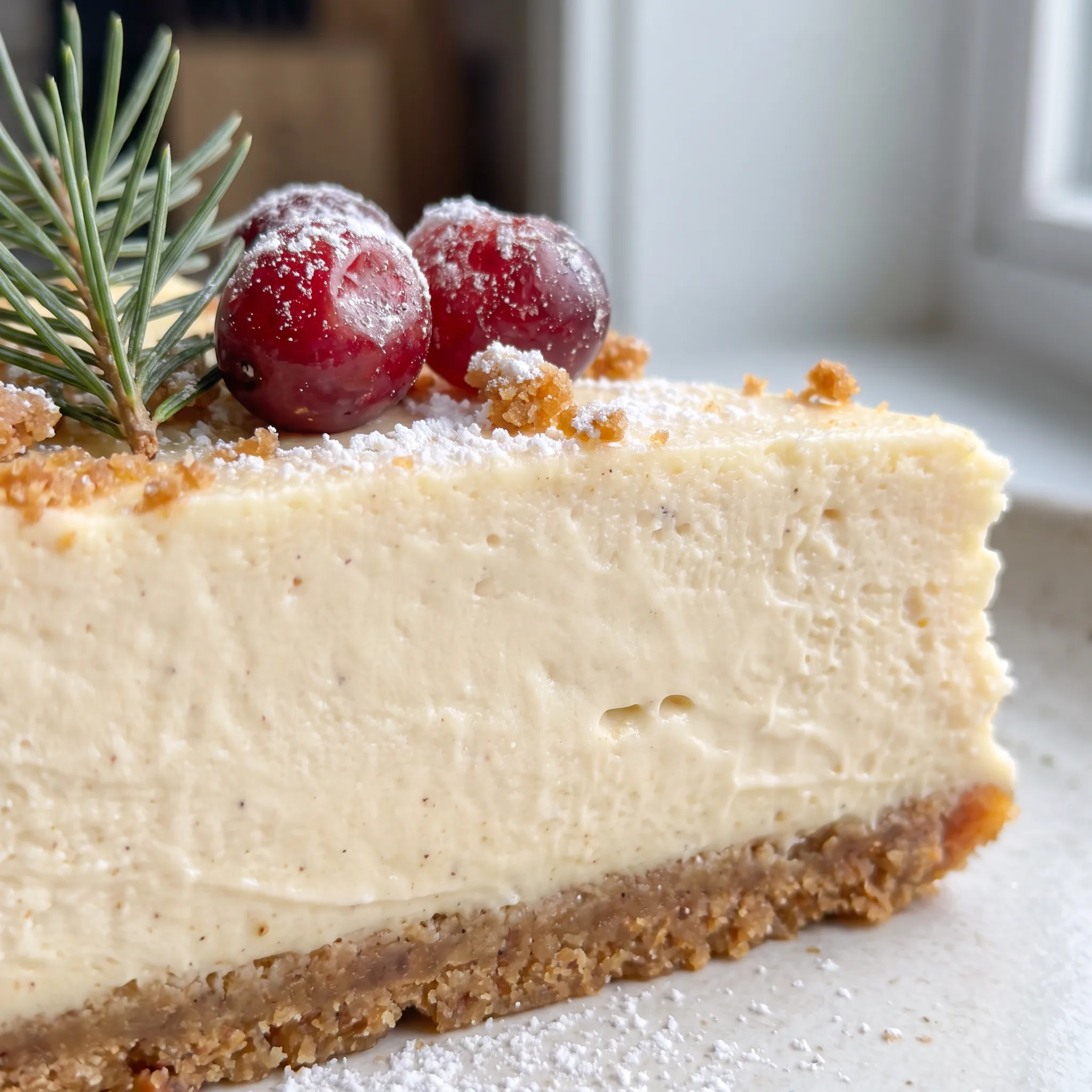
What to check before you start mixing this filling
Full-fat eggnog: Buy the refrigerated kind with real cream and nutmeg, not a low-fat or shelf-stable version that thins the custard.
Cream cheese: Use blocks, not spreadable tub cream cheese, and leave them out until they’re truly soft or you’ll chase lumps.
Ground nutmeg: Grate it fresh if you can, since the pre-ground jar loses its punch and the 0.5 tsp won’t register.
Candied cranberries: Look for ones that are glossy and pliable, not sticky clumps, or they’ll bleed onto the whipped cream.
Judging the set, the mix, and the crust before it’s too late
The batter tells you when to stop mixing
After the eggs go in, the batter should look smooth and glossy, like thick eggnog. If you see bubbles or it turns pale and fluffy, you’ve overmixed. That air will expand in the oven and then collapse, cracking the top.
Stop as soon as each egg disappears. If you’ve already whipped it, tap the bowl on the counter a few times to knock out some air, but the texture won’t be as fine.
Reading the wobble to know when to pull it
At 50 to 60 minutes, the center should still jiggle like set gelatin when you nudge the pan. The outer two inches will look firm and may have puffed slightly.
If the whole surface is liquid, it needs more time. If it doesn’t wobble at all, it’s overbaked and will crack as it cools. The wobble is your only reliable cue; a knife comes out clean long after it’s done.
Cooling it slowly to prevent cracks
Leave the cheesecake in the oven with the door ajar for 1 hour. The residual heat finishes the center gently. If you skip this and move it straight to the fridge, the sudden cold makes the custard contract fast and split.
The cake should feel barely warm when you take it out. If the top looks wet, that’s condensation, not underbaking.
Don’t touch it.
The crust is ready when it smells toasted
After 10 minutes in the oven, the crust should smell nutty and look dry, with a slightly darker edge. If it still smells like raw graham crackers, give it a couple more minutes.
But don’t let it darken too much or it will taste bitter. Cool it completely before adding filling; a warm crust will start setting the custard at the edges, creating a tough ring.
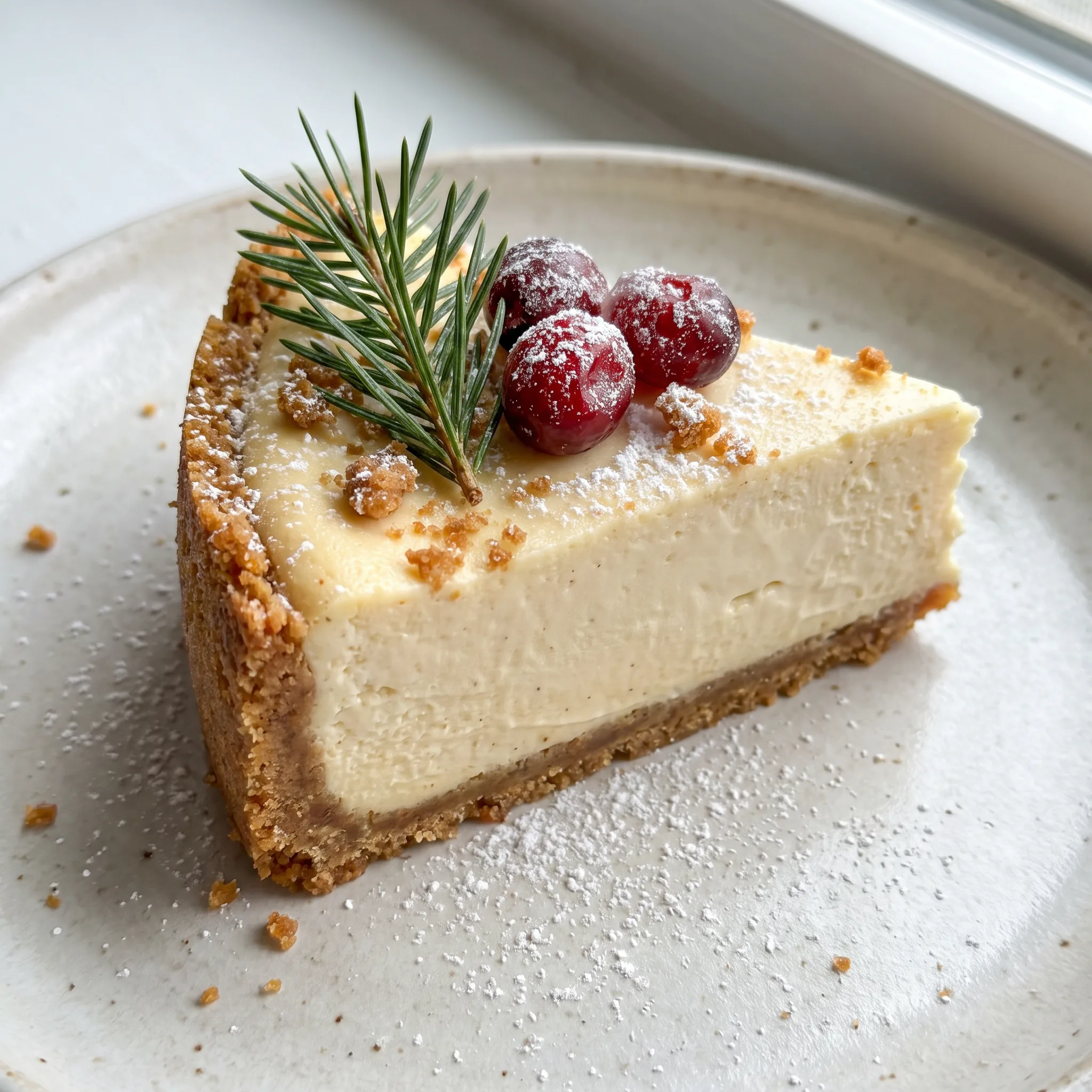
Creamy Eggnog Cheesecake with Candied Cranberries
Ingredients
Method
- Set oven to 325°F (165°C). Mix graham cracker crumbs, ¼ cup (50 g) sugar, and melted butter in a bowl. Firmly press into a 9-inch springform pan and bake for 10 minutes. Allow to cool.
- Using a hand mixer, beat cream cheese in a large bowl until smooth. Add 1 cup (200 g) sugar and 2 tbsp (16 g) flour gradually, blending until incorporated.
- Pour in ¾ cup (180 ml) eggnog slowly and mix until uniform. Incorporate eggs one at a time, stirring gently. Fold in vanilla and nutmeg.
- Transfer filling into the cooled crust. Set the pan inside a larger baking pan containing hot water. Bake for 50-60 minutes until the center is set but still wobbles slightly.
- Switch off the oven, leave the door ajar, and allow the cheesecake to cool slowly for 1 hour. Then bring to room temperature before chilling.
- Cover and refrigerate for at least 4 hours or overnight for optimal outcome.
- Prior to serving, garnish with whipped cream, candied cranberries, and a pine sprig.
Storage and Serving: Chill Time, Leftovers, and the Final Garnish
The full chill is a texture deadline, not a suggestion. Four hours minimum, overnight better, and the custard finally sets firm enough to slice clean.
Cut it early and the filling slumps at the edge and smears the blade. Serve cold, straight from the fridge, within about 30 minutes of pulling it out.
Any longer and the top sweats and the crust starts to give. The garnish of whipped cream, candied cranberries, and the pine sprig goes on right before it hits the table, never ahead; whipped cream slumps within an hour and the cranberries bleed onto the surface. Leftovers keep covered in the fridge for 3 to 4 days.
Past that, the graham base softens and the top weeps. Press plastic wrap directly against the cut surface, or park slices in an airtight container. Don’t freeze the assembled cake: the custard separates and the crust turns wet on thaw.
Eat it chilled.
What you can swap in this eggnog cheesecake, and what you can’t
Eggnog: For a dairy-free version, use a plant-based eggnog (soy, oat, or almond) that’s labeled full-fat or original, not a light or unsweetened one. The custard will still set, but the texture will be slightly less rich and the flavor less rounded. If your eggnog is spiced, you might want to cut back on the nutmeg, since the drink’s own spice mix can overpower.
Start with the same ¾ cup (180 ml) the recipe calls for, then taste the batter before baking and add more nutmeg only if it needs it.
Cream cheese: Don’t use whipped or spreadable cream cheese from a tub. It contains air and stabilizers that won’t give you the same dense, smooth set. Your cheesecake will be softer, possibly weepy, and more likely to crack.
Stick with full-fat block cream cheese, softened at room temperature. If you’re tempted by a lower-fat version, know that the fat is what carries the richness and helps the custard set firm; without it, you’ll notice a grainier texture and a less satisfying bite.
5 cups (150 g) measurement. The flavor will shift slightly depending on what you use; gingersnaps bring a spicier note that pairs well with eggnog. The texture will be very close, though gluten-free crumbs can be a bit finer and may need an extra tablespoon of melted butter to hold together.
Press firmly and pre-bake as directed.
Eggs: There’s no good substitute for the eggs here. They’re the structure of the custard; without them, you’d have a soupy filling that never sets properly. Flax or chia eggs won’t work; they add a gummy texture and don’t provide the same coagulation.
The same goes for reducing the sugar: it’s not just for sweetness, it keeps the custard moist and tender. Cut it back too much and you’ll get a dry, rubbery cheesecake.
If you’re looking to lighten the dessert, serve smaller slices rather than altering the formula.
Tips
- Wrap the pan’s outside before it goes in the water bath. Use a single wide sheet of heavy-duty foil, or two sheets of regular foil overlapped, and crimp it up around the sides of the springform so the foil reaches above the water line. One layer of thin foil tears at the latch, and any pinhole lets water wick in. Water that seeps between the pan and the foil collects around the crust and turns the graham layer wet, which shows up as a soggy band at the bottom edge after chilling.
- Set the wrapped pan into the larger baking pan first, then pour the hot water around it, not over it. Pouring water into the roasting pan while the cheesecake sits inside keeps the water level controlled and stops splashes from hitting the filling. Fill to about 1 inch up the side of the springform, roughly halfway. Deeper water takes longer to come to temperature and can boil, and boiling water moves the pan enough to slosh against the foil seam.

Frequently Asked Questions
Can I make eggnog cheesecake ahead of time?
Yes, and it’s better that way. The crust needs to cool completely and the custard needs its full chill, so a day ahead is the natural rhythm here.
Bake it, let it cool slowly in the oven, then refrigerate. On the day you serve, don’t garnish until right before it goes to the table. Whipped cream slumps within an hour and the cranberries bleed onto the surface, so those go on last.
Why did my eggnog cheesecake crack?
The usual cause is a custard that cooled too fast. If the pan goes straight from the oven to the fridge, the filling contracts quickly and the top splits. Leaving it in the warm oven with the door open lets it settle gradually, and the residual heat finishes the center without overcooking it.
A secondary check: if the batter was beaten pale and bubbly after the eggs went in, that trapped air puffs in the oven and collapses on the way down, cracking the surface. Smooth and glossy is where you want to stop.
If a crack does show up, it’s cosmetic. The filling underneath still eats the same.
How do I know when the cheesecake is done baking?
Look at the wobble, not the clock. Nudge the pan and the center should ripple like set gelatin while the outer couple of inches look firm and maybe puffed. If the whole surface sloshes, it needs more time.
If it doesn’t move at all, it’s already overbaked and will crack as it cools. A knife comes out clean long after the custard is past done, so don’t use it as your cue.
What’s the difference between eggnog cheesecake and regular cheesecake?
Eggnog brings its own custard base to the party: cream, sugar, and spice already blended, so it adds richness and moisture that plain cream alone doesn’t. That means the added sugar and nutmeg have to come down or the whole thing turns cloying and one-note. This recipe leans on a measured cup of sugar and just a half teaspoon of nutmeg to keep the balance.
The texture lands a touch softer and looser than a standard cheesecake because of that extra liquid, which is why the full chill matters so much before you slice.
