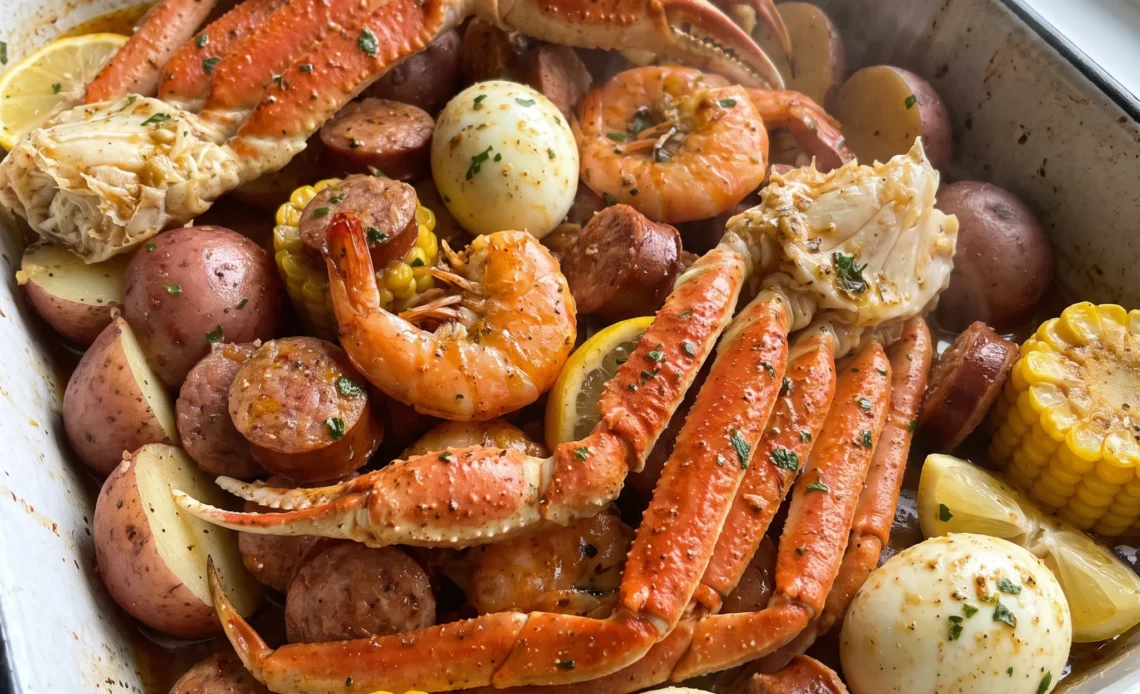
A cajun seafood boil lives or dies by the broth, and that’s the part most people rush. The liquid has to taste over-seasoned before anything else goes in, because the potatoes and sausage only pull in what’s already there.
Get that wrong and you end up with seafood that’s spicy on the surface and flat underneath. The boil also isn’t forgiving about timing. Shrimp go from snap to rubber in the time it takes to check your phone, and pre-cooked crab just needs a warm bath, nothing more.
The garlic butter comes together in a small pot while everything drains, and the whole thing lands on a lined baking sheet, dumped in the middle for six people to tear into with their hands. Nobody’s plating this. The mess is the meal.
Seasoned Boil Liquid
Water alone gives you bland seafood and flat potatoes. What you want is a broth that tastes like something before the first shrimp hits it. So the pot starts with the water and beer if you’re using it, then Creole seasoning, Old Bay, hot sauce, onion, and lemon.
Those go in early and boil for a while, which gives the spices a chance to open up and the onion and lemon to give up their flavor. The liquid should taste a little too seasoned on its own. That’s how you know it’ll carry into the potatoes and sausage and crab.
Once the boil is done, the onion and lemon have nothing left to offer. They’ve gone soft and bitter, and leaving them on the platter just makes things look tired. Toss them.
What’s left is a pot of broth that’s done its job, and a pile of seafood that tastes seasoned all the way through, not just on the surface.
Staggered Cooking for Even Doneness
Dense items need the most time in the pot. Andouille and baby potatoes go in first because they’re solid and take a while to cook through, and they can handle the full force of the boil without falling apart.
Snow crab and shrimp come later, since the crab is already cooked and the shrimp cooks in minutes. Corn goes in with them because it just needs to heat through and pick up some spice. If you dumped everything in at once, the shrimp would turn rubbery and the crab would shed meat into the water.
Hard-boiled eggs are the last thing, and they don’t even go back in the pot. They sit on the platter and get warmed by the hot seafood around them.
That way they stay intact and pick up the garlic butter without turning into a mess. The result is each item done at its own pace, all coming together at the same time.
Finishing Garlic Butter Sauce
This sauce isn’t meant to cook the seafood. It’s a finishing move, poured over everything after it’s drained.
Butter, garlic, lemon juice, Old Bay, parsley, Creole seasoning, smoked paprika, and hot sauce go into a small saucepan. You want the butter melted and the garlic softened just enough to lose its raw edge. Simmer it too long and the garlic turns bitter, the sauce breaks, and you’ve got a greasy puddle instead of a glossy coating.
Once it’s done, pour it over the drained boil on the baking sheet. Toss everything by hand, or with gloves if you like, until each piece shines.
If the sauce feels too thick, a splash of the boil broth loosens it up. The point is a sauce that clings to the shrimp and sausage, pools in the corn kernels, and gives you something to drag a piece of bread through. It should taste bright from the lemon, warm from the paprika, and rich without being heavy.
Serving on a Lined Baking Sheet
A foil or parchment lined baking sheet isn’t just for easy cleanup. It gives the garlic butter sauce somewhere to go.
As you pile the seafood, sausage, potatoes, corn, and eggs on there, the sauce runs off and collects in the corners. That’s what you want. It means every bite can be dunked or spooned over, and the last piece of corn tastes as good as the first.
This is how a Cajun boil is traditionally served anyway, dumped in the middle and everyone grabs what they want. No plates, no utensils, just hands and maybe a bib.
The onion and lemon are long gone by now, so the spread looks clean and focused. Set it down, hand out napkins, and let people dig in. The sauce stays warm and glossy for a while, but it’s best eaten right away, while the shrimp are still hot and the butter hasn’t started to firm up.
What to Look For at the Counter
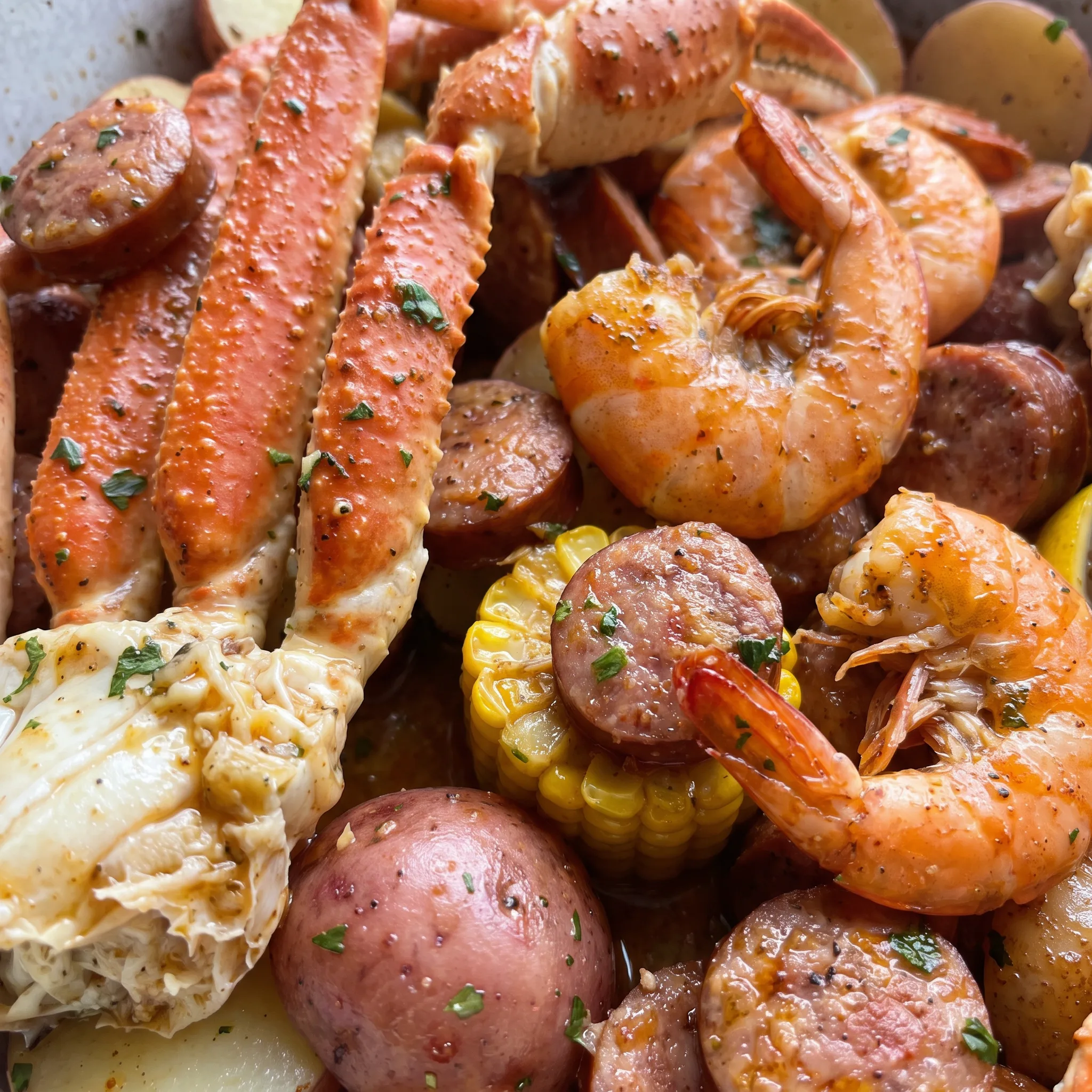
Pre-cooked snow crab leg clusters: They’re already cooked, so all they need is a few minutes to heat through before the meat turns rubbery.
Jumbo shrimp: Deveined is a given, but shell-on gives you more flavor and protection from the boil; peeled works if you want less mess.
Andouille sausage: A smoked, coarse-ground sausage with visible fat and a firm texture holds up in the boil without breaking down.
Baby potatoes: Red or gold, both waxy, keep their shape; starchy russets will fall apart and cloud the broth.
Fresh lemon: You need a large one for wedges that hold up in the boil and for squeezing over at the end.
How to Judge the Boil, the Butter, and the Toss
Tasting the broth before the first potato drops
Fifteen minutes into the boil, the liquid should be aggressively seasoned, more than you’d want to drink. If it tastes balanced now, the potatoes and sausage will come out flat.
Dip a spoon, let it cool, and taste. Too salty?
Add water. Too weak?
More Creole or Old Bay. This is the only moment you can fix the seasoning from the inside out.
Reading the potatoes for the next drop
At 15 to 20 minutes, a knife should slide into a potato with just a little resistance at the center. Not falling apart, not hard. If it’s still firm, give it a few more minutes.
If it’s already soft, pull the pot off the heat for a moment while you get the crab and shrimp ready. Overcooked potatoes will break down and cloud the broth.
Catching the shrimp at the exact shade of pink
Shrimp turn opaque and curl into a loose C within 5 to 7 minutes. The second they’re uniformly pink, get them out. An extra minute makes them rubbery.
If you’re unsure, pull one and cut it: the center should be just opaque, not translucent, not chalky. The crab is already cooked, so it only needs to heat through.
When the garlic butter is ready and when it’s gone too far
The butter should be fully melted and the garlic softened, but not browned, about 5 to 7 minutes over medium heat. If the garlic starts to color, pull the pan off the heat immediately.
Burnt garlic turns the whole sauce bitter. The sauce should look glossy and pourable, not separated. If it breaks, a teaspoon of cold water and a quick whisk can bring it back.
Tossing while everything is still hot enough to absorb
Pour the sauce over the drained boil and toss right away. The residual heat helps the butter cling instead of pooling. Use your hands or a large spoon to coat every piece.
If the sauce seems thick, add a splash of the hot broth. The goal is a shiny, even coating that reaches the corn and potatoes, not just the shellfish.
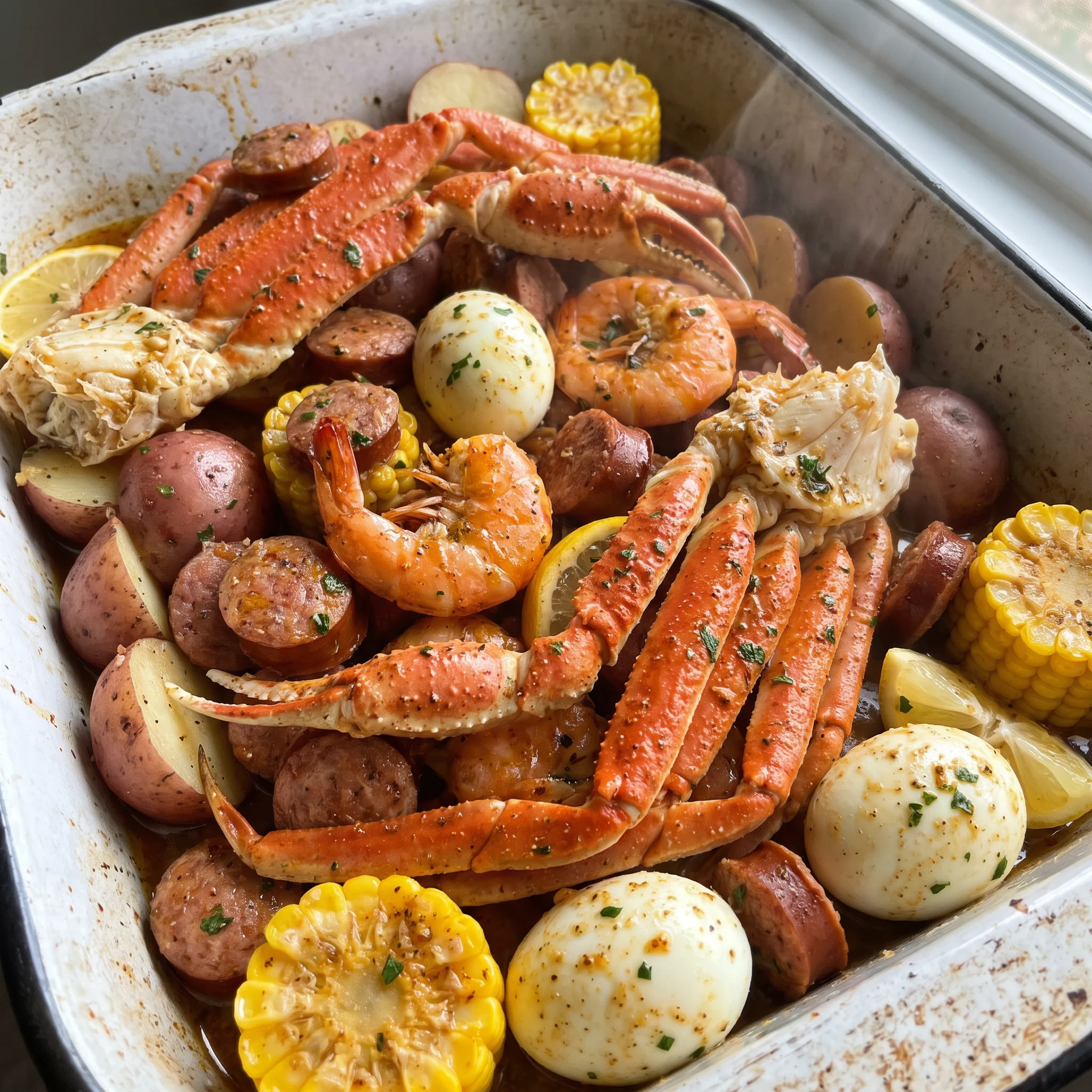
Cajun Seafood Boil with Garlic Butter Sauce
Ingredients
Method
- In an extra-large stockpot or Dutch oven (about 10 quarts or larger) over medium-high heat, combine the water and beer (if using). Bring to a boil. Season with the Creole Cajun seasoning, Old Bay seasoning, and a few dashes of hot sauce, to taste. Add the sliced onion and lemon wedges. Stir well to combine. Boil for 15 minutes.
- Carefully add the andouille sausage rounds and baby potatoes into the pot, stirring well to combine with the boil. Cook for 15 to 20 minutes, or until the potatoes are just about fork-tender.
- Gently nestle the snow crab clusters into the pot along with the shrimp and corn on the cob. Ensure everything is fully submerged under the boil and carefully stir to combine. Continue boiling for another 5 to 7 minutes, until the shrimp is pink. Meanwhile, prepare the garlic butter sauce.
- In a small saucepan over medium heat, combine the butter, garlic, lemon juice, Old Bay seasoning, parsley, Creole Cajun seasoning, smoked paprika, and hot sauce, to taste. Stir and simmer until the butter melts and the sauce is well combined, stirring often, about 5 to 7 minutes. Remove from heat.
- Line an extra-large baking sheet with foil, parchment paper, or newspaper. Use a spider strainer to remove the seafood boil contents from the pot and place onto the prepared baking sheet along with the hard-boiled eggs (if using); discard the onion and lemon bits. If a thinner garlic butter sauce is desired, add some of the seafood boil broth to adjust consistency. Pour the garlic butter sauce over the seafood boil ingredients. Use hands (with disposable gloves if desired) to toss the sauce with everything, coating thoroughly.
- Serve the Cajun seafood boil as-is, allowing everyone to grab from the baking sheet, or divide onto individual plates. Serve immediately with lemon wedges, if desired. Sop up any runaway garlic butter sauce. Enjoy!
Storage and Serving: Eat It Hot, Then Store the Parts Apart
Serve this within 20 minutes of the toss. That’s the window where the butter is still liquid and the shrimp are at their snappiest. After that, the garlic butter firms up against the cold of the room, and the corn starts soaking back the sauce it just picked up.
Leftovers hold two days in the fridge, three at the outside. The problem isn’t spoilage, it’s texture. Shrimp go rubbery, crab leaches water into the container, and corn turns soggy sitting in congealed butter.
So pack the dry items, potatoes, corn, sausage, eggs, crab, in one container, and shrimp in another if you can. Keep the sauce separate, or scrape what’s left off the tray into a jar.
Reheat potatoes, corn, sausage, and crab in a covered skillet with a spoonful of water over medium heat until steaming. Add shrimp for the last 60 seconds only. Warm the butter sauce separately and pour it on at the end.
Don’t freeze the assembled boil. The shrimp and corn suffer badly. Freeze the sausage and potatoes alone if you must.
What Swaps Keep the Boil Intact, and Which Ones Sink It
Andouille sausage: Use kielbasa or another smoked sausage, cut into rounds the same thickness. Kielbasa brings a milder, sweeter smoke and less heat, so the boil loses some of its Cajun punch. The texture holds up fine in the boil, but if you want that peppery kick back, bump up the Creole seasoning or add extra hot sauce.
Andouille’s coarse grind and fat keep it from turning rubbery, and most smoked sausages will do the same.
Pre-cooked snow crab leg clusters: Substitute lump crab meat or king crab legs. For lump crab, add it after you turn off the heat and just let it warm through; for king crab, add it at the same time as the snow crab but expect a slightly longer heat-through.
Lump crab is delicate and will fall apart in a rolling boil, so treat it gently and stir as little as possible. King crab legs are meatier and sweeter, but they’re larger and may need an extra minute or two to heat through.
Both will still soak up the garlic butter.
Jumbo shrimp: Keep the same amount, but choose shell-on or peeled based on your preference. If using frozen shrimp, thaw them first and add them frozen only if you adjust the boil time slightly. Shell-on shrimp stay juicier and add more flavor to the broth, but they’re messier to eat.
Peeled shrimp cook faster and are easier to handle, but they can overcook in seconds, so watch them closely. Either way, the cooking time stays the same: pull them the moment they’re pink.
Hard-boiled eggs: Leave them out entirely, or add more if you like. Skipping the eggs just means fewer items on the platter; the boil itself won’t change.
If you include them, they soak up the garlic butter and add a creamy contrast. They’re optional for a reason, so decide based on how you want the spread to look and eat.
Tips
- Buy shrimp frozen rather than from the thawed case. Frozen shrimp are usually frozen within hours of being caught, while thawed shrimp at the counter may have been sitting there for a day or more. For this recipe, thaw what you need in a bowl of cold water for about 15 minutes, then add them to the boil still cold. They’ll hold their texture through the 5 to 7 minute cook, and you won’t be rolling the dice on how long they’ve already been thawed.
- Thaw frozen snow crab clusters in the refrigerator overnight, not in the sink. The clusters are pre-cooked, so a fast thaw in warm water or on the counter draws moisture out of the meat and leaves it stringy before it ever hits the pot. A cold overnight thaw keeps the leg meat firm, so the few minutes in the boil only warm it through. If you forgot to plan ahead, seal the clusters in a zip-top bag and submerge them in cold water, changing it every 30 minutes, until flexible.
The most common mistake with this dish is treating the shrimp as a raw ingredient that needs to cook through. Shrimp are already cooked and need only to be heated until pink and opaque, which happens in a matter of minutes; boiling them for the full duration of the seafood stage, or leaving them in the pot while the corn finishes, drives out moisture and tightens the muscle fibers into a rubbery texture. Because the boil is already hot and seasoned, the shrimp will absorb flavor almost instantly, so longer contact does not improve taste, it only ruins texture.
Frequently Asked Questions
Can I make the garlic butter sauce ahead of time?
You can, but the texture changes when it firms up in the fridge. The sauce is best freshly made and poured over the boil while everything is hot, because that’s when it clings and pools in the corn. If you make it ahead, warm it gently in a small saucepan before pouring, and stir in a splash of the hot boil broth to loosen it back to a glossy, pourable state.
Don’t let it boil hard or the garlic will turn bitter and the sauce will break.
Why did my shrimp turn out rubbery?
Most likely they stayed in the boil past the moment they turned pink. Shrimp need just a few minutes once they hit the liquid, and the second they’re uniformly opaque and curled into a loose C, they’re done.
An extra minute or two is enough to push them from snappy to tough. If your shrimp were already peeled and you added them frozen, that’s a secondary check, but the usual culprit is time in the pot, not the shrimp themselves.
What’s the difference between this and a classic Louisiana crawfish boil?
A classic crawfish boil is built around mudbugs and a heavy dose of cayenne, with the whole thing dumped on a table and eaten with your hands. This version swaps in shrimp, snow crab, and andouille, and finishes with a garlic butter sauce poured over the drained pile instead of relying on the boil liquid alone for flavor. The spice profile is similar, but the butter sauce adds a richness that a traditional crawfish boil doesn’t have.
Both are messy, both are eaten with your hands, and both are best with a cold beer.
How do I keep the potatoes from falling apart in the boil?
Start with baby red or gold potatoes, which are waxy and hold their shape. Starchy russets break down and cloud the broth.
Beyond the variety, the real trick is pulling them out the moment a knife slides in with just a little resistance at the center. If they go past that, they’ll start to crumble and make the broth gritty. Keep an eye on them during the first stretch of cooking and don’t let them boil so hard they bounce around.
