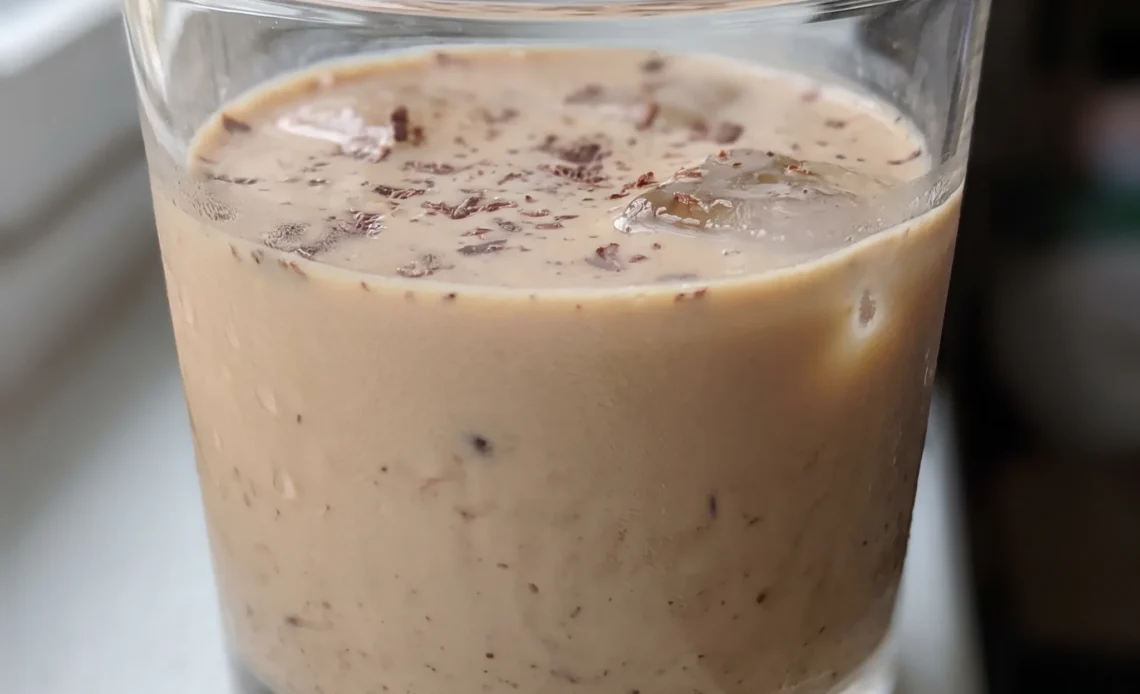
The curdle almost never comes from bad whiskey. It comes from pouring the whole cup in at once. Alcohol hits cream faster than the dairy can absorb it, and the mixture seizes into flecks that no amount of later stirring brings back.
A homemade irish cream made in five minutes asks almost nothing of you except patience at that one moment. Everything else is whisking. Get it right and you have a base that pours like melted ice cream and holds in the fridge for weeks.
Get it wrong and you’re starting over with a fresh cup of cream. The rest of this is about reading the bowl as you go, because the signs show up before the damage is done.
Whiskey in Stages
Dumping a full cup of whiskey into dairy all at once is how you end up with a grainy, curdled mess. The alcohol hits the cream faster than the proteins can adjust, and they clump.
Adding it in 1/3 cup increments gives the mixture time to take each addition without shock. You whisk gently after each pour, just until the liquid looks uniform again.
The result is a silky, stable base that stays smooth in the fridge. There’s no trick beyond patience.
If you rush, the texture turns slightly sandy, and no amount of stirring later will fix it. I once poured the whiskey too fast and watched the cream seize into little flecks.
After that, I never skip the slow add. The final pour should leave the mixture glossy and pourable, not foamy.
Espresso Powder’s Quiet Role
Instant espresso powder isn’t there to make this taste like coffee. Its job is to deepen the chocolate and give the whiskey a darker edge. A small amount dissolved in the cream adds a roasted note that you’d miss if it were gone, but you won’t pick it out as espresso.
Because it’s a powder, it disappears into the liquid with a quick whisk, leaving no grit. Brewed coffee would water down the cream and thin the body.
The powder also helps balance the sweetness of the condensed milk, so the drink doesn’t taste flat. After whisking, the cream should look lightly tan, with no visible specks. If you see any, keep whisking gently; they’ll vanish.
That faint bitterness is what keeps you coming back for another sip.
Cream and Condensed Milk Balance
One cup of heavy cream to a 14-ounce can of sweetened condensed milk is the ratio that gives you a pourable but creamy drink. Too much cream and it turns thin, more like a flavored milk than a liqueur. Too much condensed milk and it becomes thick and cloying, almost like a syrup.
This balance lets the Irish cream coat your mouth without feeling heavy. It should pour easily from a bottle but still have enough body to cling to the glass.
When you shake it, it should look uniform, not separated. That consistency is what makes it work over ice or in coffee. If you change the amounts, you’ll notice the difference right away.
Stick with these proportions for a drink that feels rich but not overwhelming.
Keeping the Emulsion Intact
Once the whiskey is in, the mixture is an emulsion, and it doesn’t take much to break it. Vigorous whisking or blending introduces air and can cause the liquid to separate or turn foamy.
Gentle stirring after each addition keeps everything together. You want a smooth, homogeneous liquid that looks like melted ice cream, not a bubbly shake.
If you whip too hard, you’ll see a layer of foam on top and a thinner liquid below. That’s a sign the emulsion is struggling. A blender is overkill here; it’s too aggressive for dairy and alcohol.
The goal is a stable, silky texture that stays mixed in the bottle. When you pour, it should flow evenly, with no patches of cream or whiskey.
That’s how you know it’s right.
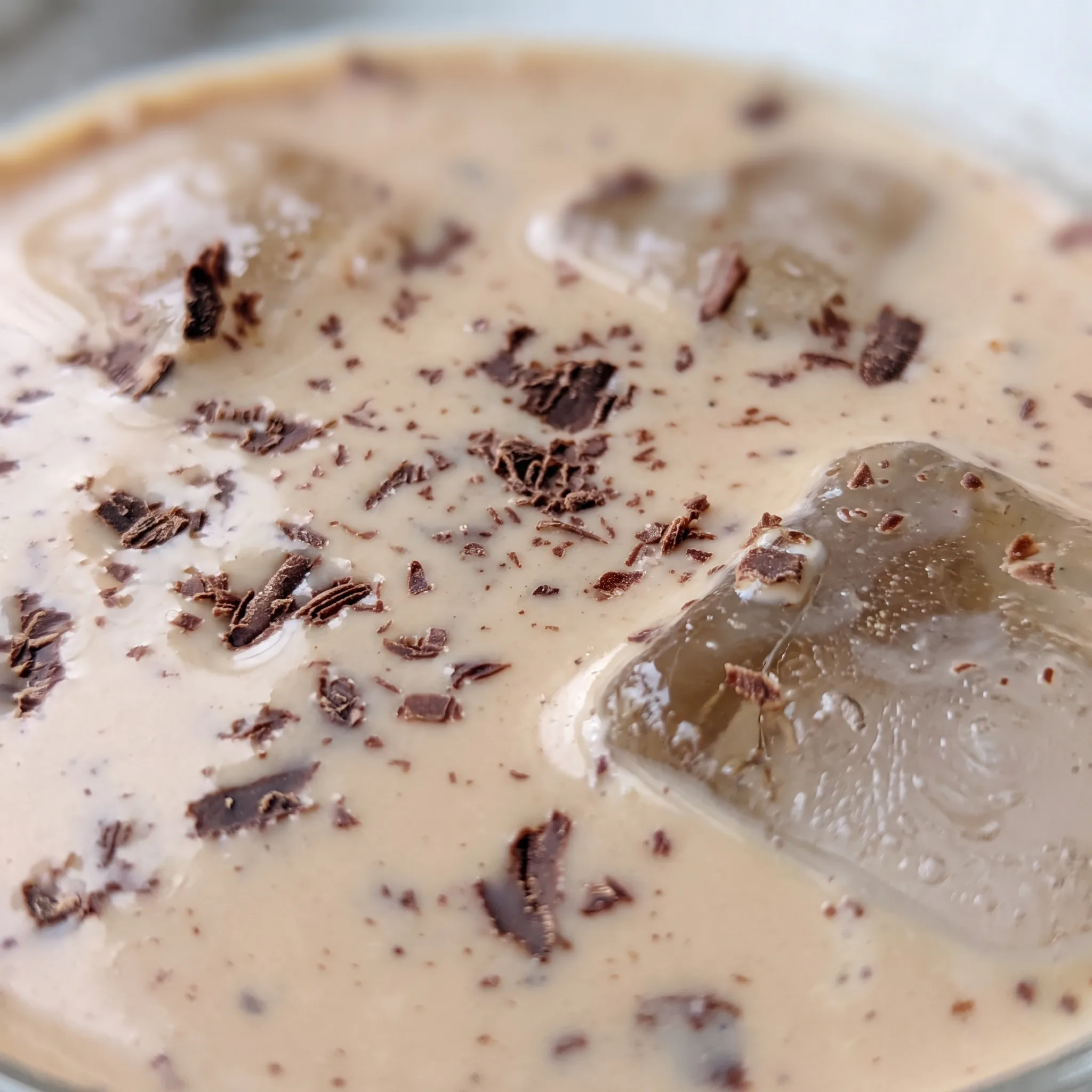
Four Ingredients That Decide How This Pours
Instant espresso powder: Buy true instant powder or granules, not ground coffee, since grounds stay gritty and never dissolve no matter how long you whisk.
Chocolate syrup: The pourable dessert syrup, not fudge topping or melted chocolate, dissolves cleanly and keeps the base thin enough to pour from a bottle.
Whiskey: A blend you’d drink neat works; harsh, overly young whiskey stays sharp against the cream even after weeks in the fridge.
Heavy cream: Check the label for at least 36 percent fat, since lighter cream gives a thin body that won’t coat a glass.
Sweetened condensed milk: Shake the can hard before opening, because the milk settles and a can left sitting pours thick sugar at the bottom.
Whiskey is roughly 40% ethanol, and dumping it into a cream-and-condensed-milk mixture in one pour creates a sudden local concentration of alcohol that can strip the fat globules of their protective protein coating. The recipe avoids this by adding the whiskey in 1/3 cup increments with gentle whisking after each addition, which gradually raises the alcohol concentration and lets the proteins and fat droplets adjust without shocking the emulsion. Without this incremental approach, the mixture can break into a grainy, separated liquid.
Reading the Mix at Each Stage
When the espresso powder has actually dissolved
Gritty specks mean the powder hasn’t fully broken down. Look for a uniform tan color with no visible dark flecks. If you see any, keep whisking gently for another 30 seconds.
Dumping in the condensed milk too early traps those specks, and they’ll show up as a sandy texture in the final drink. The cream should feel smooth to the touch, not grainy.
The texture shift as the whiskey goes in
After each 1/3 cup addition, the mixture should stay glossy and fluid. If it turns dull or starts to look slightly thick and curdled, you’ve added too much at once.
Stop pouring and whisk gently until it smooths out. Once the cream seizes into flecks, no amount of stirring will bring it back.
The final pour should leave the liquid looking like melted ice cream, not foamy or separated.
Spotting a broken emulsion before it’s too late
A healthy emulsion looks uniform, with no patches of cream or whiskey. If you see a thin liquid layer under a foam cap after whisking, you’ve overmixed. A blender or aggressive whisking whips air in and pushes the dairy and alcohol apart.
Pour it into a jar and let it sit in the fridge for an hour; sometimes it recombines on its own. If not, you’ll need to start over.
Judging the final consistency for pouring
Tilt the bowl. The mixture should flow steadily, like heavy cream, not plop or dribble. Too thick and it won’t mix into coffee; too thin and it’ll taste watery.
If it’s too thick, whisk in a tablespoon of heavy cream. If too thin, a tablespoon of condensed milk. Adjust in small increments, because both change the flavor balance.
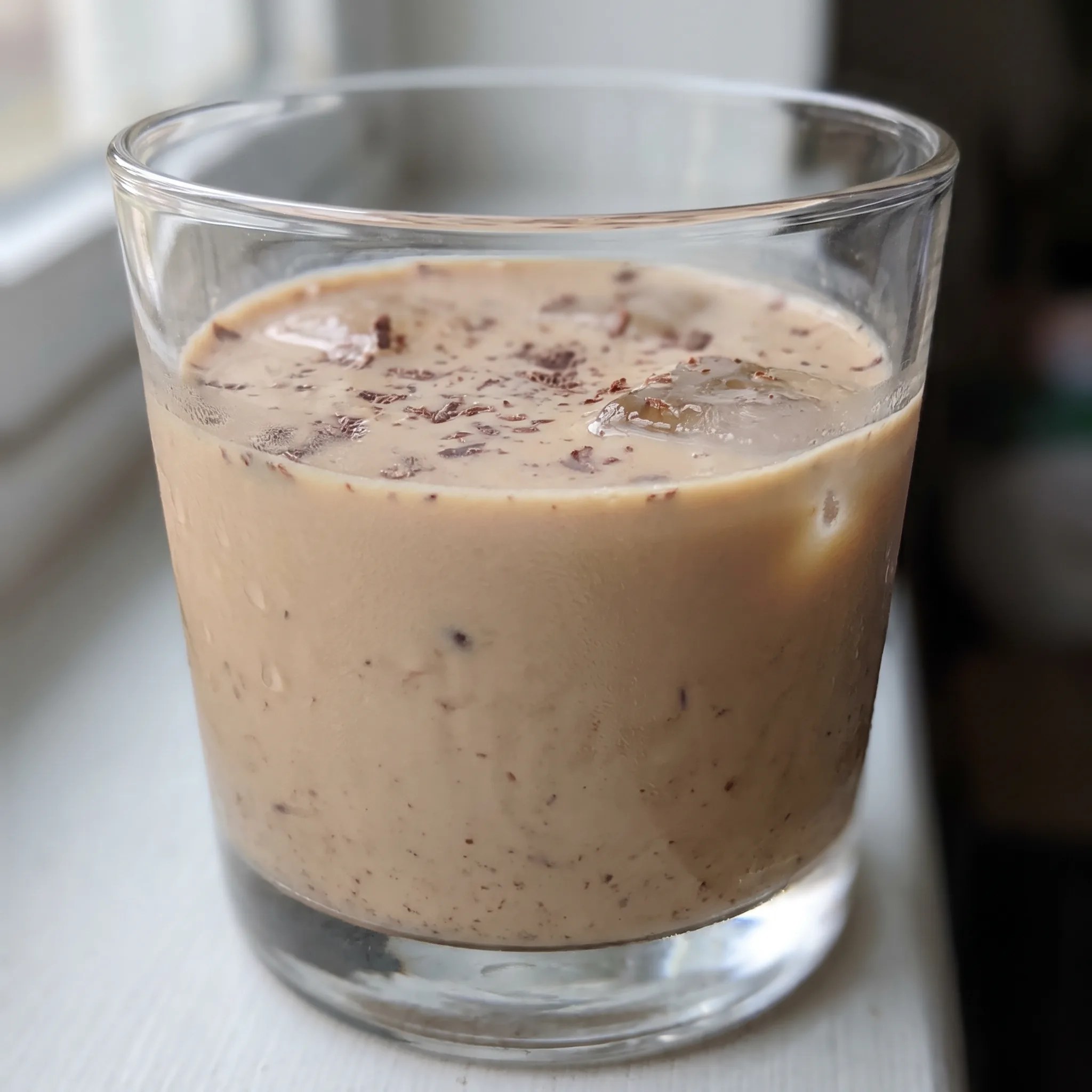
Homemade Irish Cream with Whiskey and Cream
Ingredients
Method
- In a bowl, whisk together the heavy cream and instant espresso gently until the espresso is roughly 95% dissolved.
- Whisk in the sweetened condensed milk, chocolate syrup, and vanilla extract just until blended.
- Add the whiskey in 1/3 cup increments, whisking gently after each addition until fully incorporated.
- Pour into an empty whiskey bottle, large mason jar, or other storage bottle.
- Refrigerate; it will keep for at least 3 weeks (and has stayed perfect for up to 6 weeks).
- Shake well before pouring.
Storage, Chilling, and Serving Window
Keep Irish cream in a sealed bottle or jar in the fridge, and drink it within 3 weeks for the best texture, though it holds safely for up to 6. Cold thickens the emulsion, so straight from the fridge it pours like a slow syrup.
Let a portion rest at room temperature for 10 to 15 minutes before serving; it loosens to a steady flow that mixes evenly into coffee or over ice. Shake the bottle well each time, because the cream and whiskey separate slightly as it sits. Freezing isn’t an option: the dairy will break and turn grainy when thawed, and the alcohol won’t freeze solid.
For the same reason, don’t leave it out for hours. Serve it cold but not ice-cold, and add any finishing touch, like a dusting of cocoa or a swirl of chocolate syrup, right before the glass goes out.
That’s when it looks best and stays put.
Tips
- Whiskey oxidizes once the bottle drops below half full, so if yours has been sitting open for months, pour a splash into a glass first and smell it. A flat, cardboard note carries straight through the condensed milk and cream, and no amount of chocolate syrup covers it. The 1 cup this recipe calls for is a big share of the batch, so a stale bottle ruins all 8 servings at once. Buy a fresh 750 ml for this, or at least check that the seal on your open bottle still holds.
What You Can Swap Without Breaking the Pour
Whiskey: A lower-proof spirit like brandy or dark rum, or a smaller pour of a milder whiskey. Brandy gives a rounder, fruitier edge; dark rum pushes it toward caramel. Both thin the drink slightly, so it pours faster and tastes less warming.
If you drop the whiskey to 3/4 cup, keep the rest as written. Don’t reach for vodka or gin; they bring nothing but heat and the cream tastes flat.
Chocolate syrup: Unsweetened cocoa powder whisked into the condensed milk. Cocoa has no sugar or liquid, so the drink turns thicker and noticeably less sweet, with a chalky edge if you don’t whisk it smooth. Start with 2 tablespoons and taste.
If it’s too bitter, add a spoonful of sugar. The syrup is what keeps the texture pourable, so expect a heavier body that clings to the bottle.
Heavy cream: Full-fat coconut milk or oat cream. Coconut milk adds a faint tropical note that fights the whiskey and chocolate, and it separates faster in the fridge.
Oat cream stays neutral but can taste slightly starchy. Neither whips into the same body, so shake harder before pouring and plan to drink it within a week or two.
Sweetened condensed milk: Nothing. Leave it alone. This is the sugar, the body, and the shelf life all at once.
A homemade substitute from milk and sugar won’t thicken the same way, and the drink turns watery and separates within days. If you need it dairy-free, the whole recipe has to change, not just this can.

Frequently Asked Questions
How long does homemade Irish cream last in the fridge?
At least 3 weeks for the best texture, and it’s held safely for up to 6 weeks. The drink is stable for that long because the whiskey and sugar work as preservatives, but the cream will slowly lose its silkiness.
After the three-week mark, you might notice it pours a little thinner or the chocolate flavor fades. If it smells sour or looks grainy, toss it.
Can I make this Irish cream ahead of time for a party?
Yes, and it’s actually better if you do. Mix it up to 3 weeks before serving; the flavors settle and the texture thickens slightly.
Keep it in a sealed bottle in the fridge and shake well before pouring. For a party, pull it out 10 to 15 minutes ahead so it flows easily over ice or into coffee.
Why did my Irish cream curdle or separate?
The most likely cause is adding the whiskey too fast, which shocks the cream and makes it seize into flecks. You can’t reverse that once it happens, so start over and pour in 1/3 cup increments, whisking gently after each. If the whiskey went in slowly, check your cream: ultra-pasteurized or low-fat cream separates more easily than heavy cream with at least 36 percent fat.
A third possibility is over-whisking after the whiskey is in, which whips air into the emulsion and leaves a foam layer on top. In that case, let it sit in the fridge for an hour; sometimes it recombines on its own.
