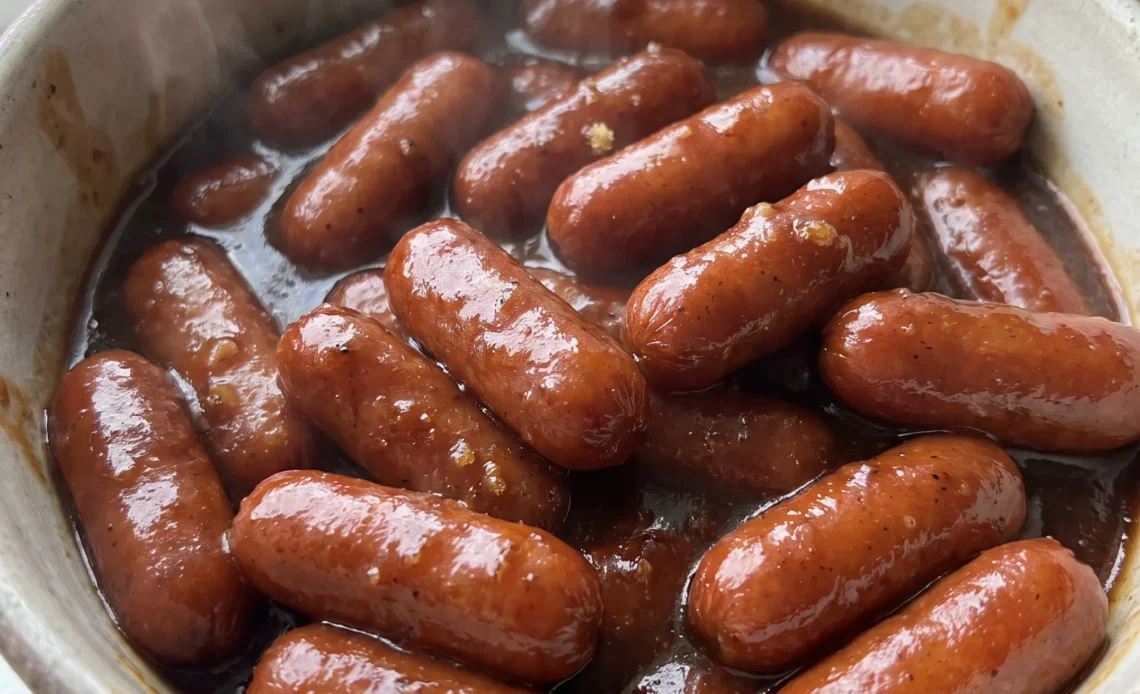
Lift one from the pot and the glaze stays on the link, a sticky coat that catches the light instead of sliding off onto the plate. That coat is where crockpot little smokies either work or don’t. Get the sauce too thin and it pools at the bottom while the links sit there pale and wet; leave it too long and the sugar grabs the base of the pot and scorches before the sausages are even hot through.
The margin is narrower than it looks. What saves you is the sealed pot: the links baste in their own steam, so they stay plump while the sauce tightens around them, and you never have to stir or watch.
The smell when you lift the lid tells you plenty. Sweet first, then tang, then a low smoky note that hangs in the air.
Keep the Links Plump in a Sealed Pot
A slow cooker locks in steam, so the smokies baste in their own juices and the sauce never evaporates away. That sealed environment is why three hours doesn’t turn them into leather.
The sauce reduces just enough to cling, not pool, and the low, even heat lets everything come together without scorching. You won’t get the crusty edges a stovetop or oven would give, but you also won’t have to stir or watch. The links stay plump and glossy, and the sauce thickens to a coat that stays put on the spoon.
When you lift the lid, the smell hits you first: sweet, tangy, a little smoky. Stick a fork in one; it should slide in with just a bit of resistance. That’s your cue they’re ready.
The pot does the work, and you can walk away.
Build a Glossy, Tangy Glaze with Pantry Staples
Brown sugar dissolves into the barbecue sauce as it heats, turning the mixture glossy and a little sticky. That gloss is what makes the smokies look lacquered rather than wet. Barbecue sauce brings the base tang and sweetness, while Worcestershire adds a savory, fermented note that keeps things from tasting flat.
Garlic powder, onion powder, and paprika round it out without shouting over the meat. You want the sauce to taste balanced before it goes in: sweet, sour, salty, with a whisper of smoke.
As it cooks, the sugar caramelizes slightly around each link, giving them a shine that plain sauce wouldn’t. The flavor deepens over time, so what starts as a simple stir-together becomes something richer. When you taste a cooled spoonful, the tang should hit first, then the sweetness, then a gentle warmth from the paprika.
Why Small Links Soak Up More Sauce
Little smokies are already bite-sized, so each piece has more surface area relative to its volume than a full-sized sausage. That means more sauce clings to every link, and you get a hit of glaze in every bite. The ratio here, two cups of sauce to two pounds of smokies, ensures they’re coated but not swimming.
You want them tucked together, not drowned. Because they’re small, they heat through quickly and evenly, so even if you leave them on warm for an extra hour, they stay tender.
The sauce thickens as it sits, so by the time you’re ready to serve, each link wears a thick coat. Pick one up with a toothpick; the glaze should stay put, not drip off.
That’s the sign the ratio is right.
A Party Appetizer That Holds for Hours
This batch serves 10 as an appetizer, about 400 calories per serving, and it’s built to sit out. Once the cooking time is up, flip the slow cooker to warm and the smokies stay ready for hours.
The sauce thickens further as it sits, so the links stay coated instead of turning soggy. That makes it ideal for a gathering where people graze over a long afternoon. You can set it up, walk away, and come back to a pot that looks and tastes just as good as when it finished.
The sweet-tangy glaze holds up at room temperature too, so even if the pot gets unplugged, they’re still good for a while. Keep a bowl of toothpicks nearby and let people help themselves. The smell alone will draw a crowd, and the pot will be empty before you know it.
What to Look For in the Smokies and Sauce
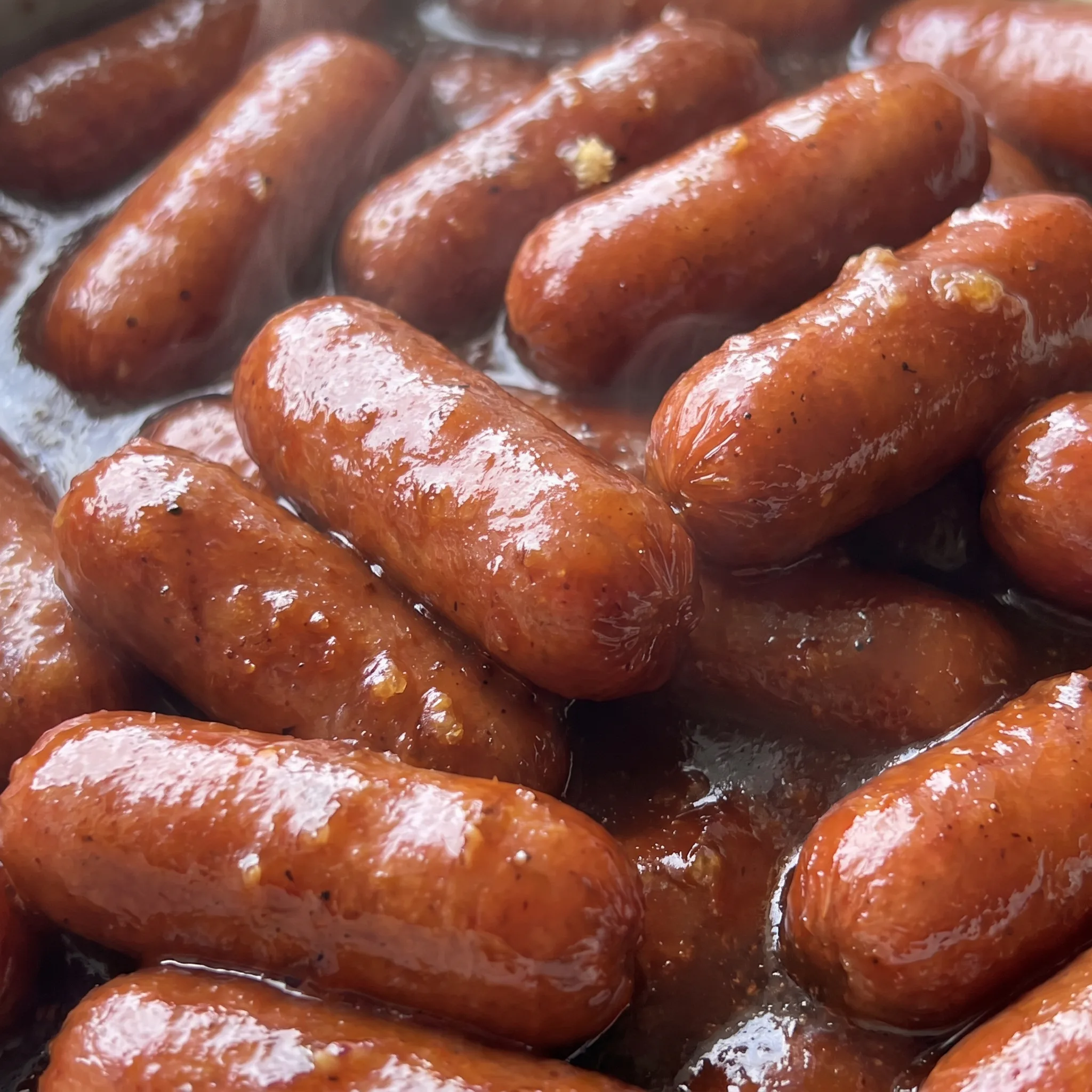
Little smokies sausage links: Buy two 16-ounce packages of small cocktail links, not full-sized sausages, so they heat evenly and stay tender.
BBQ sauce: Choose a sauce you’d eat straight from the spoon: too sweet and the glaze turns candy-like, too thin and it won’t cling.
Brown sugar: Light or dark both work, but dark brings a molasses edge that deepens the glaze; either way, measure ¼ cup and pack it.
Worcestershire sauce: A full 1½ tablespoons adds the savory tang that keeps the sweet sauce from tasting one-note.
Paprika: Sweet paprika gives a gentle warmth and color; smoked paprika will push the whole pot in a smokier direction.
The most common mistake with this dish is cooking it on high or lifting the lid to stir. The sauce is high in sugar from the BBQ sauce and brown sugar, so when moisture evaporates too fast, those sugars concentrate and can burn against the hot ceramic insert. The low, covered environment is what keeps the sauce fluid and prevents scorching while the smokies heat through gently.
How to Read the Pot While the Smokies Cook
When the sauce is thick enough to coat, not drown
Check at the two-hour mark. The sauce should look slightly reduced and cling to a link when you lift one. If it’s still thin and watery, leave the lid off for the last 30 minutes, but no more than that.
Too long uncovered and the sauce turns pasty and the smokies dry out. You want a glaze that stays on the spoon, not a pool at the bottom.
The link that tells you they’re heated through
Pierce a smokie with a fork. It should slide in with a little resistance, not push through like butter.
That slight give means they’re hot all the way and haven’t overcooked. If the fork goes in with no resistance, they’ve gone too long and will start to split. At that point, turn the pot off and serve soon, because they won’t improve.
Tasting for balance before the pot gets too sweet
Dip a spoon in the sauce after an hour. The tang from the barbecue sauce and Worcestershire should hit first, then the brown sugar. If it tastes flat or cloying, add a splash of Worcestershire or a squeeze of mustard.
You can fix it now; once the sugar caramelizes further, it’s harder to pull back. Aim for a sauce that makes you want a second taste.
Knowing when to stop stirring
Stir once or twice in the first hour to keep the links coated evenly. After that, leave them alone.
Constant stirring breaks the links and makes the sauce cloudy. The slow cooker’s even heat does the work. If you see the sauce thickening faster around the edges, give one gentle fold, then walk away.
Overhandling is the quickest way to turn a glossy glaze into a broken one.

Crockpot Little Smokies in BBQ Sauce
Ingredients
Method
- Place little smokies sausage links into the base of a slow cooker.
- In a medium bowl, combine the remaining ingredients and whisk until thoroughly mixed. Then, pour the barbecue sauce over the lil smokies.
- Cover and cook on low for 2-3 hours.
Leftovers, Reheating, and the Warm Window
Serve these straight from the pot while they’re hot. That’s the window where the glaze is loose enough to slide off a toothpick without dragging, and the links still have that slight resistance when you bite through.
Once they drop below warm, the sauce tightens into a sticky film and the casings get a little rubbery. They’re still fine to eat, just not at their best. Leftovers keep in the fridge for three to four days in a sealed container.
The sauce thickens considerably overnight, so reheat gently on the stove or in the microwave with a splash of water or extra BBQ sauce to loosen it back to a pourable glaze. Don’t boil it; high heat splits the sauce and toughens the links. Freezing isn’t worth it here.
The sauce separates and the smokies turn spongy on thaw. If you have a lot left, pick out the links and freeze them plain, then sauce them fresh later. For a stored portion, reheat only what you’ll eat and keep the rest cold.
Swap the Sauce, Sugar, and Worcestershire, but Leave the Links Alone
Little smokies sausage links: No swap. Use two 16-ounce packages of small cocktail links, not full-sized sausages or cut-up hot dogs.
Full-sized sausages won’t heat through in three hours without drying out, and their casings turn tough. Hot dogs soften too much and lose that snap.
The small links are built for this pot.
BBQ sauce: Any barbecue sauce you’d eat off a spoon. If yours is honey-sweet or has high fructose corn syrup first on the label, cut the brown sugar to 2 tablespoons.
If it’s a thin vinegar-based sauce, keep the full ¼ cup sugar and expect a sharper glaze. A sweet sauce plus the full sugar turns the glaze candy-like and one-note.
A thin sauce without enough sugar won’t thicken to a coat that stays on the link. Taste the sauce cold before it goes in; that’s the flavor you’re building on.
Brown sugar: Honey works, but start with 3 tablespoons and taste after an hour. You can also skip the sugar entirely if your barbecue sauce is already sweet. Honey is sweeter than brown sugar and browns faster around the edges.
Too much and the glaze turns sticky rather than glossy. Cutting the sugar gives a tangier, looser sauce that still clings but won’t lacquer the links.
Worcestershire sauce: A splash of soy sauce or balsamic vinegar. Start with 1 tablespoon and adjust after tasting.
Soy sauce brings salt and a darker color but less of that fermented tang. Balsamic adds sweetness and acidity, so you may want to pull back on the brown sugar. Either way, you’re replacing the savory note that keeps the sauce from tasting flat.
Tips
- Dry the links on paper towels before they go in. Two 16-ounce packages of little smokies carry a lot of surface moisture from the package brine, and that water has nowhere to go in a sealed pot. It dilutes the two cups of BBQ sauce for the first hour and keeps the glaze from tightening around the links. A quick pat takes a minute and gives the sauce a head start on thickening.
- Spread the links in one layer across the bottom of the slow cooker instead of dumping them in a pile. Stacked smokies trap liquid between them and the sauce can’t reach the ones in the middle, so those pieces stay pale while the outer ring gets lacquered. One layer, then pour the sauce over the top and let it settle down through the gaps. If your cooker is too small for a single layer, use two batches or a larger pot.
Frequently Asked Questions
Can I cook little smokies on high instead of low?
High heat is a gamble with these links. The sauce has brown sugar, and sugar grabs the bottom of the pot and scorches before the smokies are even hot through.
On low, the sealed environment keeps everything plump and the glaze reduces gradually. If you’re in a rush, keep it on low and check at the two-hour mark, not high for one.
How do I keep the sauce from drying out or burning?
The usual culprit is a pot that’s too wide for the amount of smokies, so the sauce spreads thin and hits the hot base directly. Use a smaller slow cooker or tuck the links in a single crowded layer so they sit in the sauce, not above it.
If the edges start to darken, give one gentle fold to bring the sauce back over the top. A sauce that’s thickening too fast around the rim means the heat is running hot; check that your pot isn’t set on high by mistake.
Can I make this ahead of time and reheat it?
You can, but the texture changes. The links are best straight from the pot while the glaze is loose enough to slide off a toothpick. If you make them ahead, cool and refrigerate in a sealed container, then reheat gently with a splash of water or extra BBQ sauce to loosen the glaze.
Skip the freezer; the sauce separates and the smokies go spongy.
What’s the difference between this and classic cocktail smokies?
Classic cocktail smokies usually get a grape jelly and chili sauce glaze, which is sweeter and more one-note. This version leans on barbecue sauce, Worcestershire, and a touch of brown sugar for a tangier, glossier coat that clings to each link.
The garlic and onion powders round it out without shouting, and the paprika adds a gentle warmth. The result is a savory-sweet glaze that tastes more like a barbecue sauce than a jelly dip.
