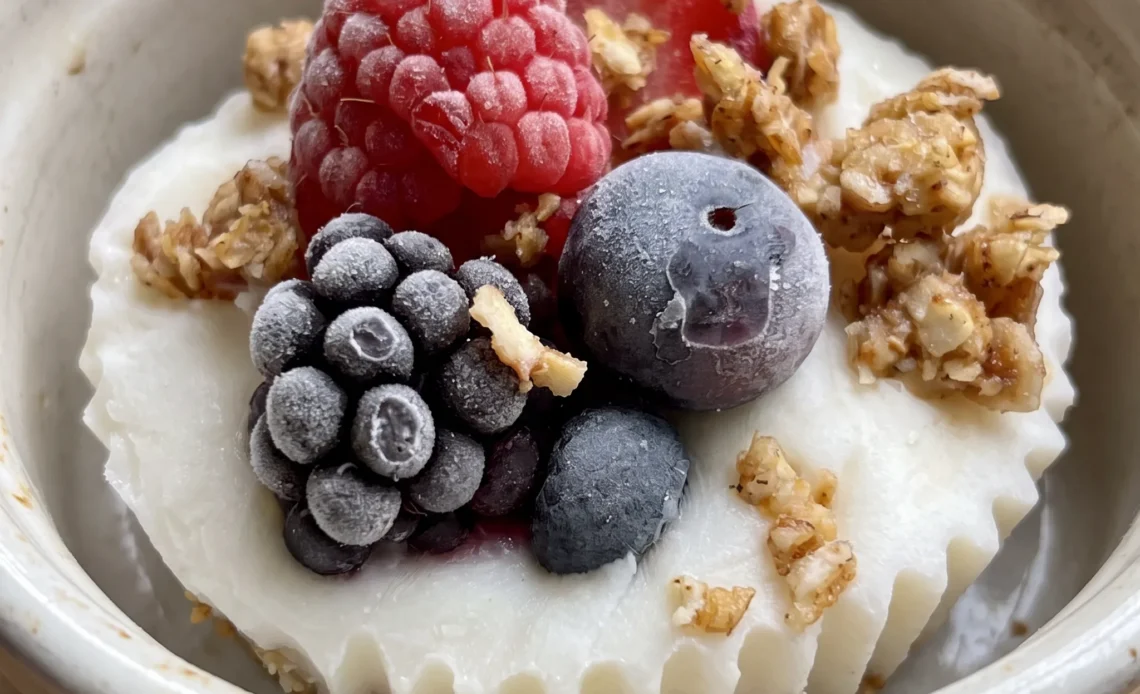
Four hours in the freezer is the easy part. Getting the base to survive it is where these cups are won or lost. Press the granola too loosely and you’ve built a cup that cracks the moment you bite, dropping yogurt and berries down your front.
Press it with enough force and the oats and almond butter knit into one chewy layer that comes off the paper liner clean. Frozen yogurt granola cups ask for that bit of hand pressure up front, and the payoff is a snack you can pull from the freezer and eat out of hand. The yogurt stays creamy because Greek is thick enough to freeze without turning icy.
Berries go on last, and their juice bleeding into the yogurt as it thaws is what you’re after.
A Base That Holds Up
A frozen yogurt cup lives or dies by its base. Press the granola mixture firmly into the paper liner with your fingers; you want it compact, no loose crumbs. That pressure is what turns oats and almond butter into a single structural layer.
A base that’s too thin or loosely packed will crack when you bite, sending yogurt and berries onto your shirt. Thick enough matters too, aim for about a quarter inch.
When you press, you should feel the mixture resist slightly, then hold its shape. If it springs back or crumbles at the edges, you need more binder.
The base also insulates the yogurt from the liner, so it releases cleanly. After freezing, the base should be firm but not rock hard. That’s your cue that it’s sturdy enough to support everything on top.
Binder Balance
Almond butter and honey are the glue here. Too little, and the oats stay separate, like granola before you add milk. Too much, and you get a dense, heavy brick that never softens.
The right amount makes a sticky dough that clumps when you squeeze a handful. If yours feels dry and won’t hold together, add another spoonful of almond butter and a drizzle of honey. But watch it: once the mixture starts to shine and feels tacky, stop.
That tackiness is what freezes into a chewy base. The honey also sweetens, so taste as you go, you might not need the full amount.
A good test: press a small piece to the touch. It should stick together without feeling greasy. That’s the balance you’re after.
Freeze, Then Thaw
Freezing does two things: it sets the yogurt so the cups hold their shape, and it firms the base so you can lift them out cleanly. Four hours is the minimum; overnight is fine. But don’t serve them straight from the freezer.
Frozen solid, the yogurt is icy and the base is hard as a rock. Let them sit at room temperature for about ten minutes, or in the fridge for twenty.
You’ll know they’re ready when the yogurt gives slightly under your thumb and the base yields when you press it. The berries will have thawed just enough to release their juices, which seep into the yogurt.
That’s when the texture is creamy and the base is chewy, not crunchy. Eat them then; refreezing makes the yogurt grainy.
Liner Choice and Pan Prep
Paper liners are the simplest way to get the cups out in one piece. They peel away cleanly, and the cups keep their shape as they freeze.
Without liners, you’re fighting a sticky mess, and the cups are likely to break when you try to pry them out. If you only have silicone liners, those work too, but you’ll need to let the cups thaw a bit longer before unmolding. A well-greased muffin pan can work in a pinch, but the edges won’t be as neat.
The liner also acts as a mold, so press the granola all the way to the sides. Once frozen, the paper pulls off easily. If it sticks, your base was too thin or not pressed firmly enough.
Yogurt and Berry Contrast
Greek yogurt is thick enough to freeze without turning into an ice block. Its tang cuts through the sweetness of the honey and granola. Fresh berries add color and a juicy burst, but they also carry water.
When frozen, that water turns to ice crystals, and upon thawing, it can make the yogurt weep. Berries like raspberries and blackberries hold up better than strawberries, which release more liquid. If you use strawberries, slice them thin and pat them dry.
The tartness of the yogurt and the sweetness of the berries should balance each other. After thawing, the yogurt should be creamy, not watery. If you see a puddle, your berries were too wet.
Next time, try firmer fruit like blueberries.
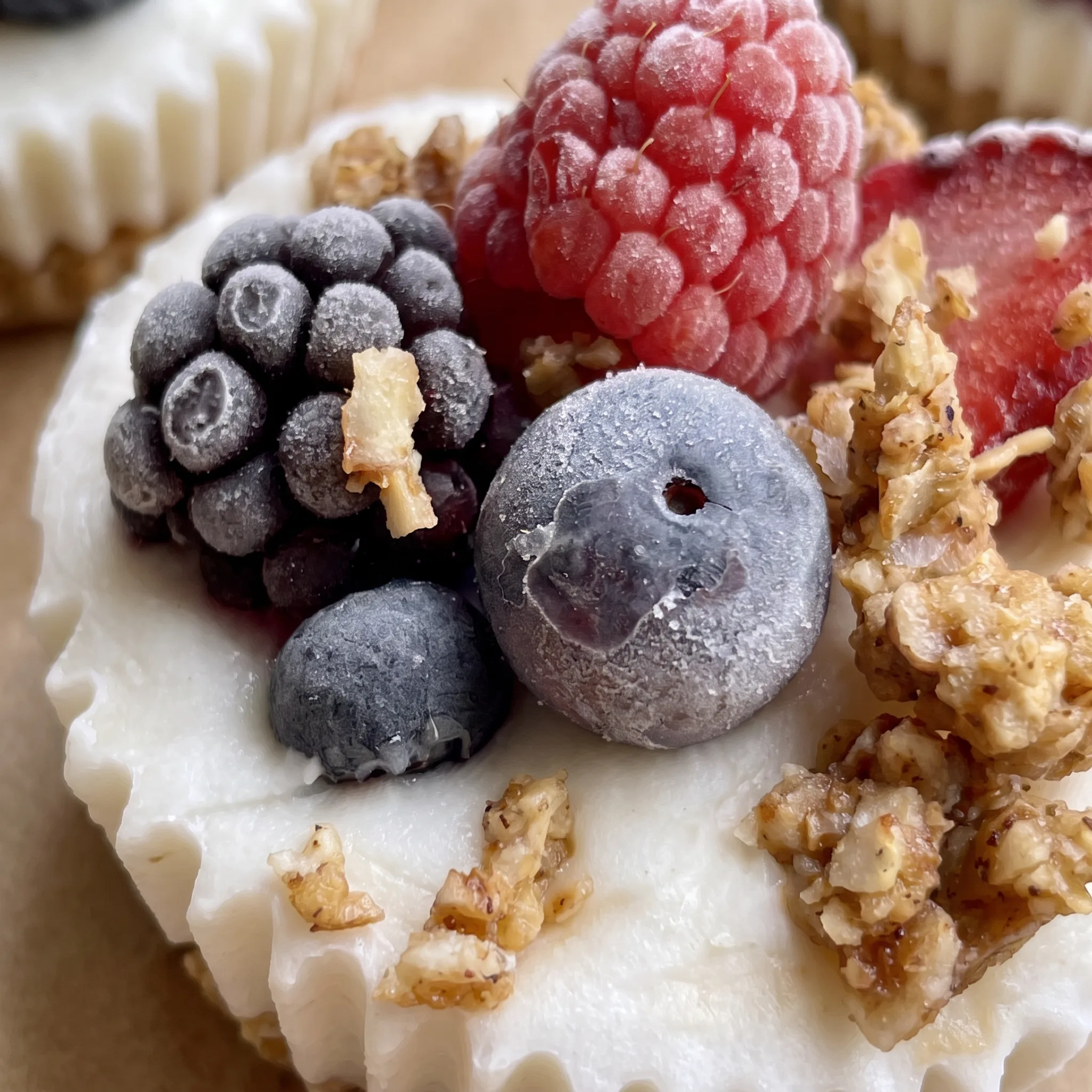
What to Buy for Cups That Freeze Right
Old-fashioned rolled oats: Not quick oats: their smaller cut turns sandy in the freezer, while rolled oats keep a chewy bite in the base.
Almond butter: Buy a jar with only almonds and salt on the label, since sweetened spreads add sugar that firms the base too much.
Greek yogurt: Regular yogurt carries more water and freezes into icy shards, while Greek yogurt freezes thick and creamy without separating.
Fresh berries: Raspberries and blueberries hold up better than strawberries, which release enough water to puddle under the yogurt.
How to Read the Mix, the Press, and the Freeze
When the granola mix is sticky enough to hold a cup
Squeeze a handful. It should clump and stay clumped when you open your hand.
If it crumbles, add almond butter a teaspoon at a time, then honey if it’s still dry. But stop when the mix looks shiny and feels tacky.
Past that, the base freezes into a hard, heavy disc that won’t soften. The sweet spot is a dough that holds together without leaving your fingers greasy.
Pressing the base so it releases cleanly after freezing
Press the mix into the liner until it feels firm and resists your fingers. You’re after about a quarter inch thick, with no loose crumbs at the edges. If it springs back, you need more binder.
A base that’s too thin or packed loosely will crack when you bite, and the cup won’t lift out in one piece. The press is what makes the base sturdy enough to support the yogurt and berries.
Judging when the cups are set, not just cold
At four hours, the yogurt should be firm and the base should feel solid. If the yogurt still gives easily or the base flexes, give it more time.
But don’t judge by the clock alone. The cups are ready when they release from the liner with a gentle tug. If the base sticks, it wasn’t pressed firmly enough or it’s still too soft.
That’s your cue to press harder next time.
Thawing just enough to bring back creaminess
Straight from the freezer, the yogurt is icy and the base is rock hard. Let them sit at room temperature for about ten minutes, or in the fridge for twenty. You’ll know they’re ready when the yogurt gives slightly under your thumb and the base yields when you press it.
The berries will have thawed just enough to release their juices. That’s when the texture is creamy and the base is chewy, not crunchy.
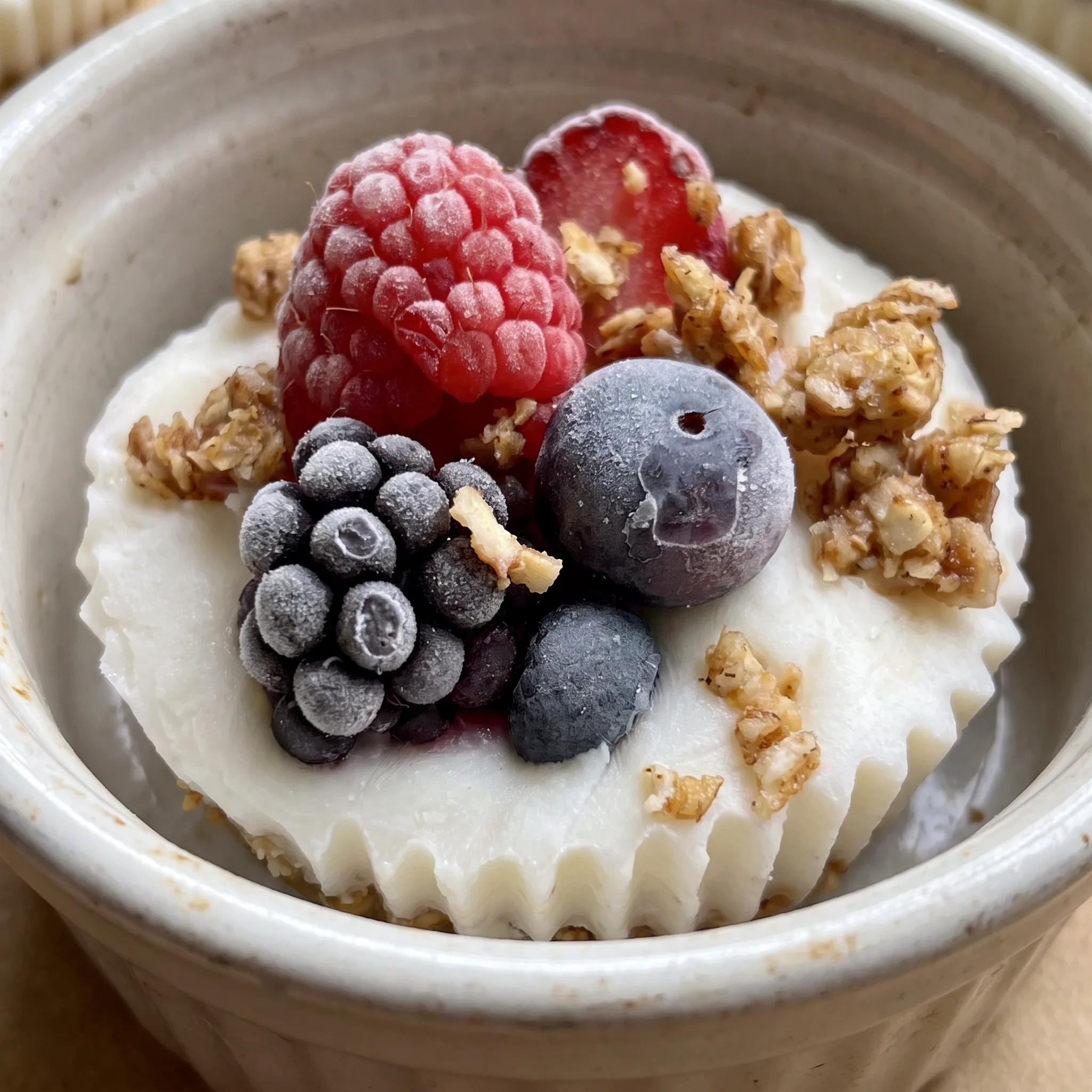
Frozen Yogurt Granola Cups with Berries
Ingredients
Method
- Combine the oats, cinnamon, almond butter, honey, and vanilla extract in a bowl; stir until a sticky dough forms. If the mixture seems too dry, add more almond butter and honey.
- Use paper liners to line a muffin pan. Drop a spoonful of the granola dough into each cup and press down firmly with your fingers to make a compact, sturdy base.
- Add yogurt on top of each base, then finish with berries and any leftover granola.
- Freeze for at least 4 hours to set. Thaw before serving.
Notes
Swaps That Keep the Cups from Turning Icy or Crumbly
Greek yogurt: Thick nondairy alternatives like full-fat coconut or soy yogurt. Start with the same 1 1/2 cups the recipe uses, then adjust after tasting.
The cups still freeze firm, but the tang is milder, so the honey and berries read sweeter. Coconut yogurt brings its own flavor; soy stays closer to neutral. If the carton looks watery, strain it through a coffee filter for 30 minutes; watery yogurt freezes into ice shards and weeps as it thaws.
Honey: Maple syrup or agave. Use the same 3 to 4 tablespoons, but expect the dough to feel slightly wetter.
Add a teaspoon more almond butter if it won’t hold together. Maple brings a darker, woodsy note that can overpower the cinnamon; agave is neutral and keeps the flavor cleaner.
The base browns a touch more in the freezer, but the chew stays similar. Taste the mix before freezing; you might want less sweetener than the honey called for.
Almond butter: No substitute. This is the binder that holds the oats together. Other nut butters work only if they’re the same drippy, unsweetened style.
Peanut butter is thicker and sweeter; it makes a heavier base that takes longer to soften. If you swap in a sweetened spread, the base freezes harder and tastes cloying.
If you use a stiff, refrigerated butter, the dough won’t clump and the cups crack. Keep the almond butter as written, or use a natural peanut butter and add a teaspoon of neutral oil to loosen it.
Old-fashioned rolled oats: Certified gluten-free rolled oats. Use the same 3/4 cup.
Do not use quick oats or steel-cut. Gluten-free rolled oats behave the same in this base, so the chew and structure stay intact. Quick oats turn sandy in the freezer and won’t hold the base together.
Steel-cut oats never soften enough to bite through, even after thawing.
Storage and Serving Window
These cups are at their best within the first week. The granola base stays chewy and the yogurt stays creamy during that stretch, but the berries keep releasing moisture as days pass, so the yogurt gradually turns icy and grainy. Freeze them in a single layer in an airtight container, then stack with parchment between once they’re solid.
They keep up to a month that way, but the texture won’t be the same after week one, so eat the earliest batches first. Serve straight from frozen after ten minutes at room temperature or twenty in the fridge.
The yogurt should give under your thumb and the base should yield when pressed. Add berries and any leftover granola right before eating. Topping ahead of time just gives the fruit more time to weep into the yogurt.
Once thawed, don’t refreeze; the yogurt goes grainy and the base softens past chewy.
Tips
- Taste the granola dough before you press it into the liners and adjust the honey then, because the yogurt contributes no sugar and the berries only add tartness, so the base is the sole source of sweetness in each cup. If the raw dough tastes flat, the frozen cup will too, and stirring honey into a frozen base afterward is not possible.
The granola base is the load-bearing layer of these cups, and it relies on almond butter and honey to coat the oats and create sticky contact points that fuse into a solid mass. When the binder is too scant, the oats remain loose and the base cannot withstand the weight of the yogurt and berries, causing it to crack or crumble after freezing. A properly bound mixture should clump when pressed, ensuring the base stays intact through freezing and thawing.
Frequently Asked Questions
Can I make these frozen yogurt granola cups ahead of time?
Yes, and they’re built for it. Assemble the whole tray, freeze it, and they hold their best texture for about a week, so a batch made on Sunday still eats well the following weekend. Past that week the berries keep leaking into the yogurt and it turns icy and grainy, even though the cups stay safe for up to a month.
If you’re planning a spread, make them a day or two out rather than a month, and eat the earliest batches first.
Why did my granola cups fall apart after freezing?
The base was too thin or too loosely packed, which is the usual culprit. Press the mix until it resists your fingers and reaches roughly a quarter inch thick, with no loose crumbs at the edges; that pressure is what fuses oats and almond butter into one layer. If it springs back instead of holding, you need more binder, so work in another spoonful of almond butter and a drizzle of honey until the dough clumps.
Also check that you used old-fashioned rolled oats, since quick oats go sandy in the freezer and won’t knit the base together.
How long do I need to thaw them before serving?
About ten minutes at room temperature, or twenty in the fridge if you’ve got the time. Pull one early and check: the yogurt should give slightly under your thumb and the base should yield when you press it, not sit there like a hockey puck.
The berries will have softened just enough to bleed a little juice into the yogurt, which is what you want. Serve them straight from frozen only if you like the yogurt icy and the base stiff.
What’s the difference between these and regular yogurt parfaits?
A parfait is layered loose in a glass and eaten with a spoon the same day; these get pressed into a liner, frozen, and eaten out of hand like a small tart. That firm base is the whole distinction, and it’s why the granola has to be compact rather than scattered, and why Greek yogurt matters, since its thickness freezes creamy instead of into ice shards.
You also get the berries suspended on top rather than stirred through, so each bite runs tart yogurt against sweet fruit. The trade-off is timing: parfaits are ready when you assemble them, these need four hours in the freezer.
