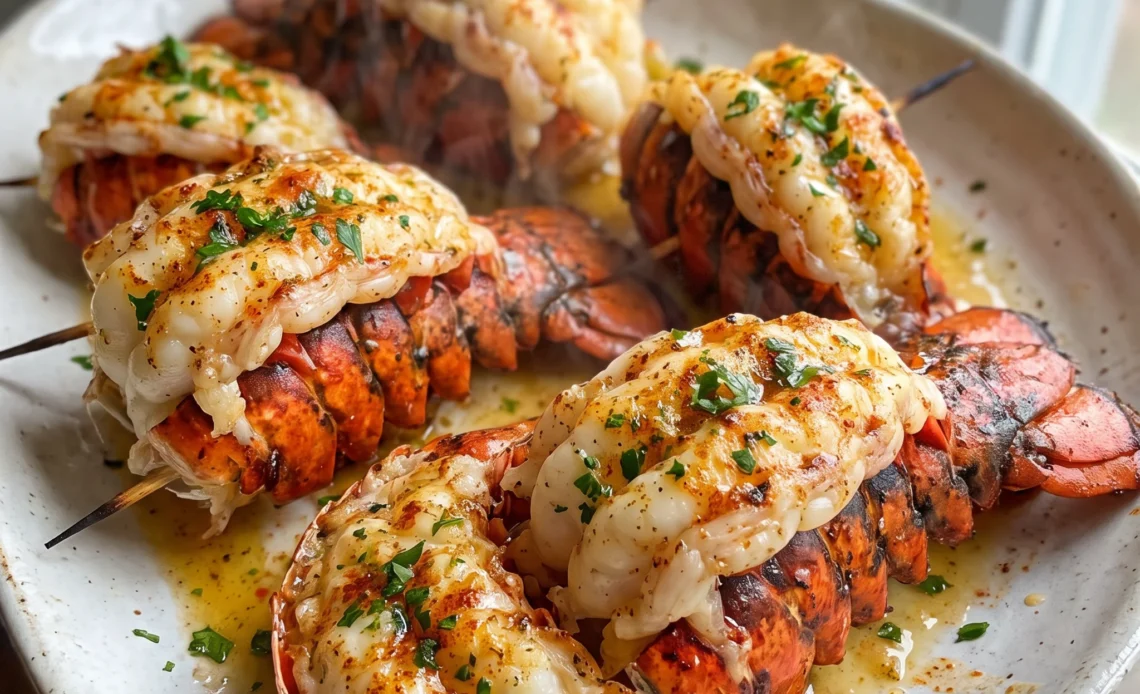
Speed is what makes grilled lobster tails work, and speed is what ruins them. A hot fire sears lean meat in minutes, so the surface browns while the inside stays glossy, but the margin is thin.
Push past it and the muscle tightens to rubber with no rescue. The sauce here is a finish, spooned over once the tails come off, not a baste. Put lemon zest and garlic over live coals and both turn acrid while the parsley goes dull.
Off the heat, the butter warms through and the lemon stays bright against the char. Frozen tails, thawed overnight and patted dry, behave like fresh. Water on the surface is the quiet enemy: it steams instead of sears, and you get gray meat where you wanted color.
Clarified Butter Keeps the Sauce Fluid and Stable
Clarified butter is pure butterfat with the milk solids and water taken out. What that means at the grill: the sauce stays liquid as it sits, so it spoon-coats the lobster instead of pooling in a slick and leaving dry patches. Regular butter would bring those milk solids along, and over a hot grill they’d darken and taste scorched before the lobster is done.
The higher smoke point of clarified butter gives you room to infuse garlic and lemon zest over low heat. That gentle warmth pulls the raw edge off the garlic and releases the citrus oils from the zest without either turning bitter.
You’re not looking for color in the pan, just a loose, glossy sauce that smells of lemon and toasted garlic. Keep the heat low and stir now and then.
If the garlic starts to brown, pull the pan off the heat right away. The sauce should taste bright and rich, ready to spoon over the tails.
Butterflying and Skewering Set Up Even Cooking
Opening the tail exposes the meat that would otherwise stay tucked inside the shell. More exposed surface means more area for the garlic butter to cling to and more contact with the grill bars, so you get browning across the whole piece instead of just at the edges. Skewering does a different job: it holds the tail flat and straight.
Without that, the shell contracts as it heats and the tail curls, which lifts parts of the meat away from the grate and leaves the thick end cooking slower than the thin end. A flat tail cooks at one rate from end to end. Before it hits the grill, coat the exposed meat with oil and sprinkle it with salt.
The oil keeps the surface from sticking and helps it color; the salt seasons the meat directly, since the shell won’t let much through. When you lay the tails down, they should sit level and steady on the bars, meat facing the heat.
Why the Lemon Garlic Butter Goes On After
This sauce is a finish, not a baste. Brushing it on during grilling would put garlic, lemon zest, and parsley directly over high heat, where the garlic scorches and the zest turns acrid. The parsley wilts to a dull olive color and the whole thing loses its snap.
Spoon it over the tails once they come off the grill and the residual heat does the work: the butter warms through, the garlic softens, and the lemon and paprika wake up against the rich meat. You want the sauce to taste bright and a little smoky, with the lemon cutting through the butter. Smoked paprika adds a low, warm note that plays off the char on the lobster.
Spoon it generously so each tail gets a pool in the shell. Taste a little on its own first: it should be sharp with lemon, savory from garlic, and not too salty. The sauce should taste lively, not cooked down.
Medium-High Heat for a Fast Sear, Not a Slow Roast
Lobster meat is lean and cooks in a blink. A medium-high grill gives you a hard, fast sear that browns the surface before the inside has a chance to dry out.
Lower heat would stretch the cooking time, and the meat would go from tender to tight and rubbery while you wait for color. Higher heat risks charring the shell and the exposed meat before the center is warm. The window here is narrow, which is why the timing matters.
You’re looking for meat that’s opaque and just firm, still glossy with juices, not chalky or shrinking away from the shell. The tails should feel heavy and release easily from the grate when they’re ready to turn. If they stick, give them another moment.
Once they come off, they carry enough heat to finish on the platter. The texture you want is a clean bite with a little spring, never a chew that resists.
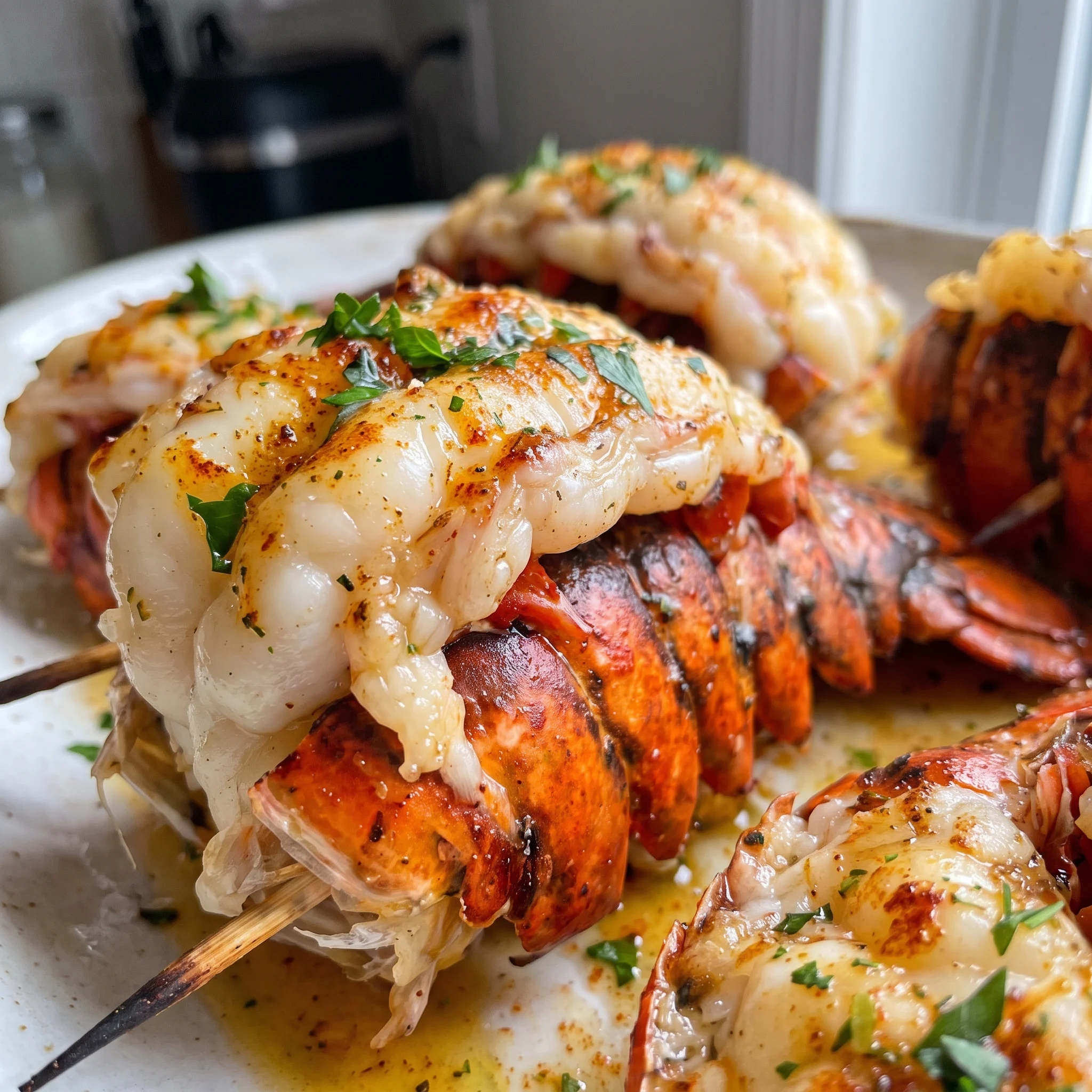
What to Grab for Grilled Lobster Tails
Clarified butter: Buy ghee or make your own; the milk solids are gone, so it won’t scorch over the grill.
Garlic: Fresh cloves, minced fine, so they soften in the warm butter instead of turning sharp.
Flat-leaf parsley: Italian parsley, chopped just before it hits the pan, keeps its color and bite.
Lemon zest: Zest only the yellow peel; the white pith underneath is bitter and ruins the sauce.
Smoked paprika: A fresh jar smells sweet and smoky; old powder tastes like dust and adds nothing.
Clarified butter can be heated to a higher temperature before smoking, so garlic added to it over anything above low heat will brown and turn bitter before the butter itself shows any sign of burning. The garlic’s allicin and sugars degrade quickly once the temperature climbs past the point where they caramelize, and that bitterness spreads through the entire batch of sauce. Because the sauce is spooned over the lobster at the end, there is no later step to dilute or mask the burnt flavor.
Reading the Lobster as It Cooks
Judging the doneness of the meat on the first side
After 5 to 6 minutes meat-side down, the exposed lobster should look opaque and lightly browned, with juices just starting to bead on the surface. If it still looks translucent and wet, give it another minute; if it’s already white and firm, flip now. Overcooking on this side makes the meat tight and dry, and no amount of butter will bring it back.
The shell will have turned bright red, and the meat should release easily from the grate.
When the internal temperature hits 140°F
The second side takes only about 1 to 2 minutes. Check the thickest part of the meat with an instant-read thermometer. At 140°F, the meat is opaque and just firm, still glossy.
If you pull it at 135°F, it will be slightly translucent and loose; if you let it go past 145°F, it turns rubbery. Carryover heat will push it a few degrees higher, so pull it right at 140°F.
Knowing when the butter sauce is infused but not browned
Over low heat, the garlic and lemon zest should soften and smell fragrant, not toasted. If the garlic starts to color, pull the pan off the heat immediately; burnt garlic turns the whole sauce bitter. The sauce should look loose and glossy, with the parsley still bright green.
If it looks dull or the garlic is dark, start over. Taste it: it should be bright with lemon and savory, not acrid.
The moment the tails stick to the grate
When you first lay the tails down, they may stick. Don’t force them.
Wait another 30 seconds; the meat will release on its own once it has seared. If you tear the meat trying to flip too early, you lose the juices and the tail looks ragged. A clean release means the surface is browned and ready to turn.
The same goes for the second side: if it sticks, give it a moment.
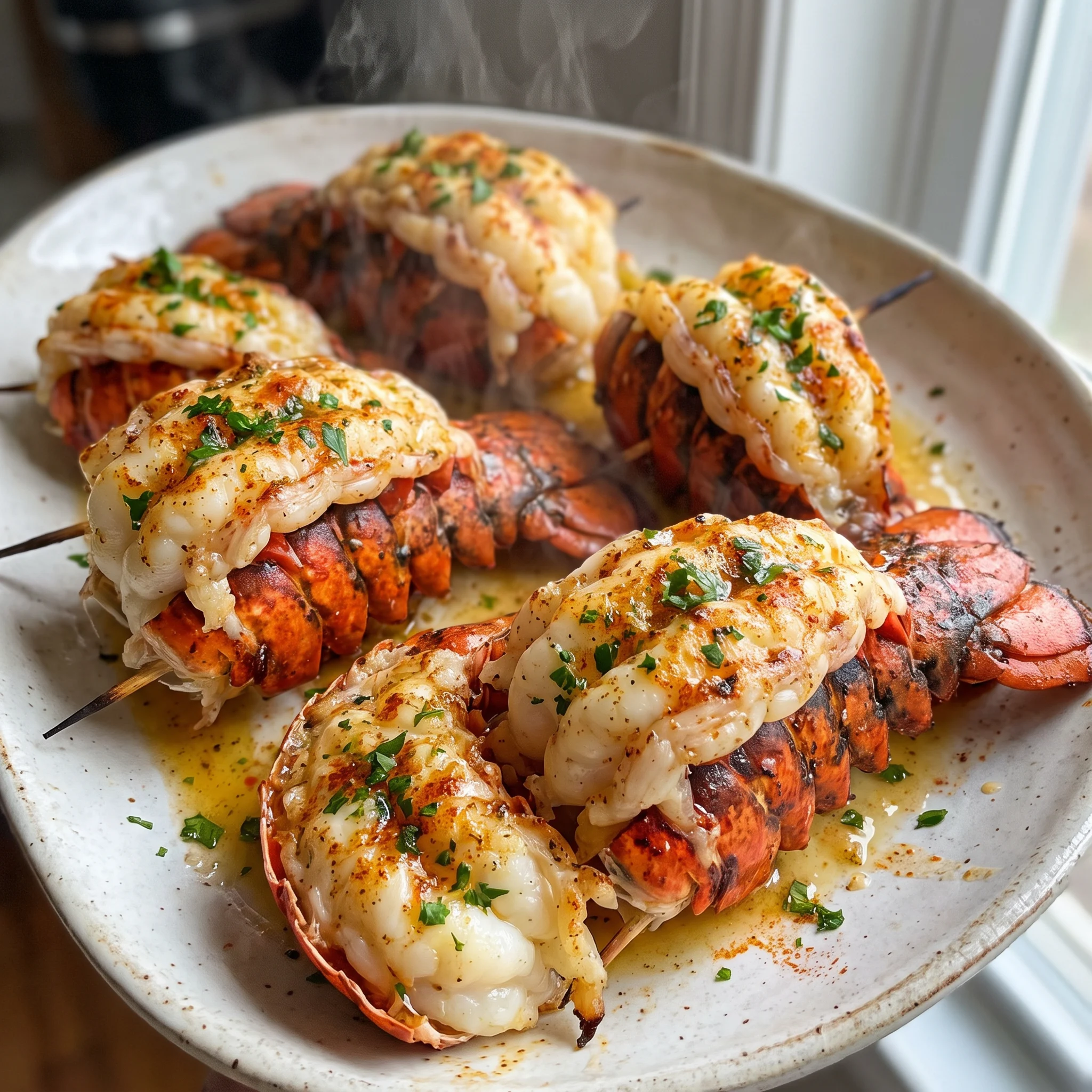
Grilled Lobster Tails with Lemon Garlic Butter
Ingredients
Method
- Melt the clarified butter in a small saucepan set over low heat. Stir in the minced garlic, lemon zest, parsley, and salt; continue heating for 1-2 minutes longer.
- Butterfly the lobster tails using kitchen shears and thread skewers through them lengthwise.
- Coat the exposed meat with olive oil and sprinkle with salt.
- Heat the grill to medium-high. Place the lobster tails meat-side down on the grill for 5-6 minutes, then turn them over and continue cooking until the internal temperature reaches 140°F (60°C), about 1-2 minutes more.
- Take the tails off the grill and spoon the lemon garlic butter sauce over them.
What to Do With Leftover Lobster and Butter
The sauce is the keeper here. Garlic butter sets solid in the fridge, so a cold spoonful won’t pour.
Warm it gently in a small pan over low heat, just until it liquefies and smells of lemon again; high heat will brown the garlic and undo the sauce. Store it in a covered jar for up to 5 days. Grilled lobster is a different story.
It’s best within a few minutes of coming off the grill, while the meat is still glossy and springy. Once chilled, the muscle fibers tighten and reheating pushes them past tender into rubbery.
If you do have leftover tails, eat them cold or barely warmed in the butter, not cooked again. Spoon the rewarmed sauce over just before serving, since it firms up as it cools on the plate.
Tips
- Pat the butterflied meat dry with paper towels, then oil it, not the other way around. Any water left on the surface flashes to steam under the grill and keeps the meat from browning, so the oil needs bare meat to bond to. Once it’s on the grate, judge doneness by pressing the thickest part with a fingertip: at 140°F it gives slightly and springs back, while a tail that feels firm and unyielding is already past done and the thermometer will read closer to 150°F.
What Swaps Work for Lemon Butter Grilled Lobster Tails, and What to Leave Alone
Lobster tails: Frozen tails, thawed overnight in the fridge and patted dry, work just as well as fresh. Cooked or pre-shelled lobster meat is not a swap. Frozen tails hold up because they’re frozen raw; once thawed and dried, they behave like fresh.
Any surface water steams instead of sears, so pat them thoroughly. Cooked meat has already set, and a second pass on the grill tightens it to rubber.
Pre-shelled meat loses the shell that insulates and holds the butter, so it overcooks before it browns.
Clarified butter: Ghee is a direct one-to-one swap. Regular butter is not. Ghee is clarified butter by another name, so the sauce stays fluid and won’t scorch.
Regular butter brings milk solids that burn over the grill and water that sputters, leaving a broken, greasy sauce. If you only have regular butter, clarify it first: melt, skim the foam, and spoon off the clear fat.
Smoked paprika: Sweet paprika adds color but drops the smoke. If you want to keep a smoky note, use a pinch of chipotle powder or ancho chile powder instead, starting with half the amount and tasting. Smoked paprika gives a low, warm backdrop that plays off the grill char.
Sweet paprika leaves the sauce tasting flat by comparison. Chipotle brings heat along with smoke, so add it gradually. Ancho is milder and fruitier, closer to the original without the burn.
Garlic: For a mellower sauce, roast the garlic first, then mash it into the warm butter. Garlic powder is not a substitute here. Roasted garlic softens the sharp bite but keeps the savory depth.
Garlic powder dissolves but tastes dusty and stale once it hits the butter. If you’re out of fresh, skip it rather than use the powder; the sauce will still be bright with lemon and parsley.

Frequently Asked Questions
Can I make the lemon garlic butter sauce ahead of time?
Yes. The sauce keeps in a covered jar in the fridge for up to 5 days.
It sets solid when cold, so warm it gently in a small pan over low heat just until it liquefies and smells of lemon again; too much heat browns the garlic and turns the whole batch bitter. Spoon it over the tails after they come off the grill.
How do I keep lobster tails from curling on the grill?
Thread skewers through them lengthwise so the tail stays flat and straight against the grate. Without that, the shell contracts as it heats and the tail cups upward, lifting the meat off the bars and cooking the thick end slower than the thin end.
A flat tail also gives the butter a level surface to pool on instead of running off. When you lay them down meat-side first, they should sit steady and level.
What’s the difference between this grilled lobster tail recipe and classic boiled lobster?
Grilling gives you a fast sear on exposed meat, so the surface browns and picks up char while the inside stays glossy and just firm. Boiling cooks the tail inside the shell, so the meat steams through with no browning at all and a softer, wetter texture.
Here the shell works as a handle and a cup, and the lemon garlic butter goes on after the tails come off the heat rather than into the cooking liquid. The result is a drier, meatier bite with a smoky edge the butter plays against.
