
Creamy lasagna soup goes wrong at the moment you pour the cream. Most people pull the pot off a rolling boil and dump it in, and the broth breaks into flecks no amount of stirring fixes.
The fix isn’t a technique so much as patience: let the pot quiet down first. That margin for error runs through the whole bowl. The noodles keep drinking broth after they hit the dairy, so the texture you ladle at minute five isn’t the one you get at minute forty.
Sausage does the seasoning work for a broth that’s otherwise liquid and cream. Break the sheets by hand, uneven, and the soup eats like lasagna instead of tomato noodle soup. Get the cream in right and the rest forgives you.
Heavy cream is an oil-in-water emulsion, and a rolling boil makes its fat globules collide and coalesce until the emulsion breaks; Parmesan, a hard aged cheese, contains casein proteins that seize into strings when heated too fast. Adding both off a hard boil, on low heat with constant stirring, lets the cheese melt gradually into the cream and keeps the sauce smooth and glossy. This recipe uses that low-heat, off-boil method rather than whisking dairy into a simmering pot, because the gentler temperature preserves the emulsion instead of fracturing it.
Break the sheets into uneven pieces
Keep a whole lasagna sheet in the pot and you fight it with a spoon. Snap each sheet by hand into pieces somewhere between a square and a shard, and the soup turns spoonable while still eating like lasagna.
Irregular pieces matter more than you’d think. A big piece holds a pocket of broth against the sausage; a small one lets tomato and cream fill the bowl evenly. Go heavy on the smaller shards and the soup drinks thin and busy, more noodle soup than lasagna.
Favor larger pieces and each spoonful turns substantial, closer to a baked slice pulled apart while hot. Both work. The bowl tells you which way you went with the first ladleful, and the sausage and Parmesan land differently depending on the size of the pieces they’re sitting against.
Adding cream and cheese
A rolling boil is the wrong moment for cream. Dairy dropped into hard-boiling broth breaks apart into tiny flecks that never come back together, and Parmesan tossed into that same heat clumps into rubbery strings instead of disappearing. Low heat gives both room to blend.
Cream stirred into a quiet pot turns the tomato broth pale orange and glossy; grated Parmesan goes in afterward and melts into the cream rather than sitting on top in a lump. Keep the spoon moving the whole time. Stirring is what pulls the cheese through every corner of the pot instead of letting it sink and fuse into one stubborn mass at the bottom.
What you’re after: a smooth, uniform base that coats the back of the spoon, no visible streaks of white, no graininess against your tongue.
Dried herbs go in late, not early
Basil and oregano dried on a shelf carry their punch in oils that heat drives off. Twenty minutes of hard simmering and most of that aroma is gone up the vent, leaving the soup tasting flat and vaguely dusty.
Late addition keeps the good part in the bowl. Stir them in near the end and the soup smells like herbs the moment you lift the lid, a brightness riding on top of the tomato and cream instead of buried under it.
Cooked from the start, the same pinches read dull and background, barely there against the sausage. You can test this at the stove with a pinch of each: rub it to the touch and smell.
That’s what you’re protecting. The finished pot should carry a clean, herbal note over the rich base, not a faint echo of one.
Sausage builds the base
Everything else in this pot is liquid, dairy, or noodle. The sausage is the only thing carrying real seasoning, so the fat and spice it leaves behind decide how the whole bowl tastes.
Browned in the pot before any broth goes in, it throws off rendered fat and leaves a sticky brown fond on the bottom. That fond dissolves once the broth and tomatoes hit and stirs back in as flavor.
Mild sausage gives you a deep, porky base where the cream and Parmesan take the lead; spicy sausage pushes heat through the tomato and keeps it there, changing where each spoonful lands. The fat itself matters too, carrying the tomato and cream across your tongue instead of letting them sit thin. Skimp on the sausage and the broth tastes like hot cream with noodles in it.
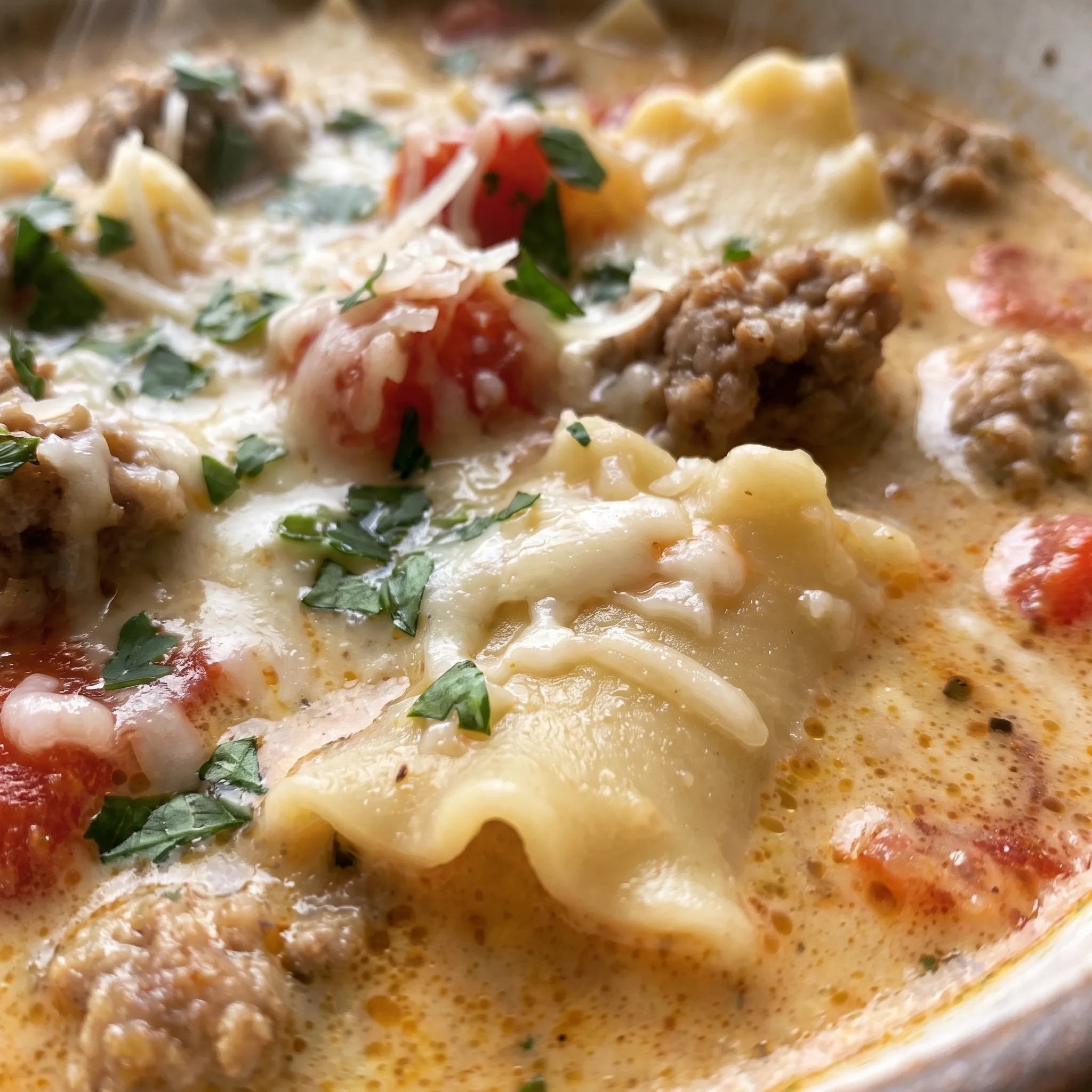
The ingredients that carry the bowl
Italian sausage: Mild or spicy both work, but the fat and spice it renders are the only real seasoning the broth gets.
Lasagna noodles: Standard dried sheets, not no-boil, since the no-boil kind drink far less broth and change the final texture.
Heavy cream: Keep it cold until the pot is off the boil, and use a cream with enough fat to coat the spoon without separating.
Parmesan cheese: Grate it yourself from a block; the pre-shredded stuff is dusted with cellulose that leaves the base grainy.
Dried basil and oregano: Check the jars by rubbing a pinch; if the smell is faint, the oils are gone and the soup will taste dusty.
Diced tomatoes: Undrained is what the card calls for, so don’t pour off the juice or the broth turns thick and pasty.
Judging the pot at four points that decide the bowl
Onion and garlic: the line between sweet and bitter
Watch the onion for the moment its edges go from sharp white to a dull, even translucence, about 3 to 4 minutes. That’s when the raw bite is gone and the sweetness is out. Miss it and the onion stays crunchy and sharp in the finished soup.
Garlic goes in after and needs only 1 to 2 minutes; pull it before it browns. Browned garlic turns the whole pot bitter, and no amount of cream covers that.
Sausage: browning versus steaming
The sausage should sizzle the moment it hits the pot. If it hisses and releases a pool of gray liquid, the heat is too low and you’re steaming it. Let that liquid cook off before you stir again, then wait for the crumbles to take on dark edges and a sticky brown film to form on the bottom.
Stop too early and the broth tastes flat, like unseasoned meat water.
Noodles: the bite that survives the cream
At 15 minutes, fish out a piece and bite it. You want a faint resistance at the center, not a clean snap and not a soft collapse. The noodles keep drinking broth while you add cream and cheese, so pull them while they’re still slightly firm.
Wait until they’re fully tender in the pot and the final bowl turns thick and pasty, with noodles that dissolve instead of holding their shape.
The cream and cheese: reading the surface
After you turn the heat to low, the cream should turn the broth a pale, even orange with no white streaks left on the surface. Parmesan goes in next, a handful at a time, and the test is the back of your spoon: drag a finger through the coating and the line should stay clean, with no grainy flecks. If the base looks separated or feels rough on your tongue, the heat was too high.
Pull the pot off the burner and stir hard; it won’t come back completely, but it stops getting worse.
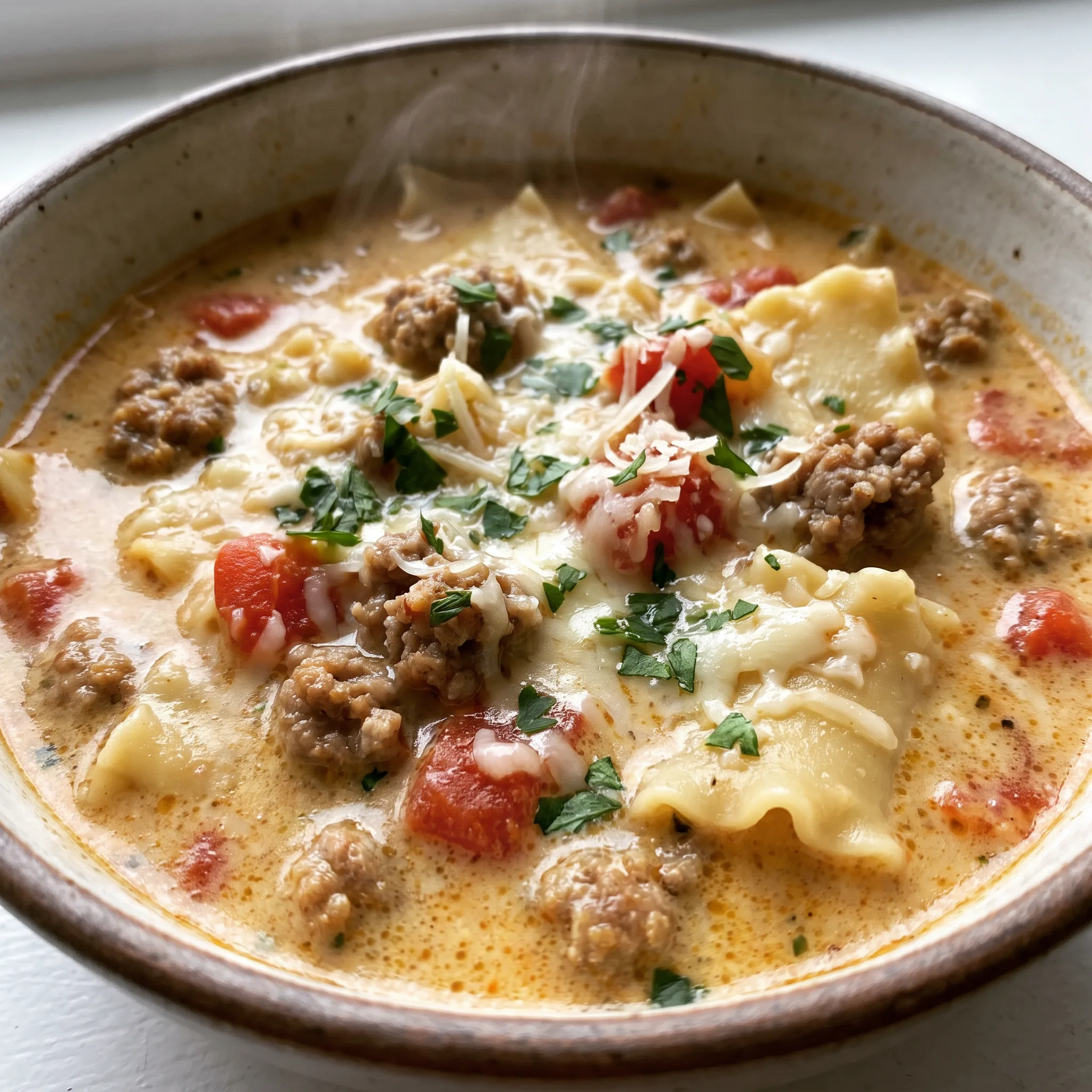
Creamy Lasagna Soup with Italian Sausage
Ingredients
Method
- In a large pot or Dutch oven, warm the olive oil over medium heat until it shimmers.
- Put in the diced onion and sauté for about 3–4 minutes, until it becomes translucent.
- Add the minced garlic and continue cooking for another 1–2 minutes.
- Introduce the Italian sausage, crumbling it as it cooks until browned.
- Add the chicken broth and diced tomatoes, stirring to blend.
- When it reaches a boil, add the broken lasagna noodles and let simmer for 15–20 minutes.
- Turn the heat down to low and mix in the heavy cream and Parmesan cheese until the mixture is smooth.
- Incorporate the dried basil and oregano, stirring thoroughly.
- Let it simmer for 2–3 minutes so the flavors meld.
- Serve with parsley and additional Parmesan as garnishes.
What moves, what breaks, and what to leave alone
Italian sausage: Ground turkey or chicken, same 1 pound. Bump the salt and add a pinch of fennel seed and red pepper flakes if you want that sausage character back.
You lose the rendered pork fat that carries the tomato and cream across your tongue, so the broth drinks thinner and the finish lands flatter. Brown it hard to build whatever fond you can, and taste for salt before serving. Spicy sausage keeps heat in the tomato; mild lets cream and Parmesan lead.
Chicken broth: Vegetable broth, same 4 cups. The pot turns more vegetal and less meaty, which reads fine under tomato but leaves the sausage working alone for depth. If you’re already swapping the sausage for turkey, use a vegetable broth with some mushroom or roasted note or the bowl tastes like seasoned water.
Heavy cream: Don’t. Coconut milk, half-and-half, or milk will not hold the finish here.
Coconut milk throws a unmistakable coconut flavor over the tomato and Parmesan, and anything lower in fat curdles or thins when it hits the hot broth. The cream is what turns the base pale orange and coats the spoon; without it you have tomato noodle soup.
If dairy is off the table, make a different soup.
Lasagna noodles: Gluten-free lasagna sheets, same 8 ounces. GF sheets break down faster and drink less broth, so check them at 10 to 12 minutes instead of 15. They’ll still hold a bite if you pull them early, but expect a slightly softer, starchier pot.
Regular no-boil sheets are a worse swap: they soak up far less liquid and leave the broth thin.
Storage, reheating, and the serving window
Eat this within an hour or two of finishing the pot, while the noodles still have a little bite and the cream reads as a smooth pale orange broth. The noodles keep drinking liquid from the moment they hit the cream, so the texture you have at minute five is not the texture at minute forty. Stored in an airtight container in the fridge, it holds about three days.
The first day is the best leftover; after that the noodles soften further and the broth tightens into something closer to a sauce than a soup. Reheat gently on the stove or in short bursts in the microwave, and loosen each portion with a splash of chicken broth or water, a tablespoon at a time, until it ladles instead of plops.
Parmesan and parsley go on after reheating, never before storing; both turn grainy or limp in the fridge. The dairy base does not freeze well, so eat what you keep rather than freezing portions.
Tips
- Salt the pot only after the Parmesan has melted in. A cup of grated Parmesan carries a lot of salt on its own, and a broth that tastes right when you check it before the cheese will taste oversalted two minutes later. Taste, then add salt in small pinches, stirring and tasting between each one.
- If you want a thicker bowl without changing the noodles, pull a ladleful of the finished soup, blend it, and stir it back in. The broken pasta and Parmesan give it enough body to bind, and it thickens the pot without adding cream or cooking the noodles any longer.

Frequently Asked Questions
Can I make creamy lasagna soup ahead of time?
You can, but the pot is at its best within an hour or two of finishing. If you need to work ahead, cook the sausage base and noodles, then stop before the cream and Parmesan go in. Cool and refrigerate the base separately, and add the dairy when you reheat.
Even then, the noodles keep drinking broth, so the texture at minute five isn’t the texture at minute forty.
Why did my lasagna soup turn out grainy or curdled?
Most likely the pot was still boiling when the cream went in. Cream needs low heat to blend into the tomato broth; a hard boil breaks it into flecks that never come back. If the heat was already low, check your Parmesan.
Pre-shredded cheese is dusted with cellulose that leaves the base gritty, so grate from a block. Also, add the cheese a handful at a time and keep stirring so it melts into the cream instead of clumping.
How is lasagna soup different from regular lasagna?
Regular lasagna is built in layers and baked; this is a one-pot soup where the noodles cook right in the broth. You get the same sausage, tomato, and cheese flavors, but the texture is spoonable and brothy rather than sliceable. The noodles are broken into uneven pieces, and the cream and Parmesan turn the base into a pale orange broth instead of a thick ricotta filling.
It’s faster and more forgiving, but it won’t hold its shape on a plate.
