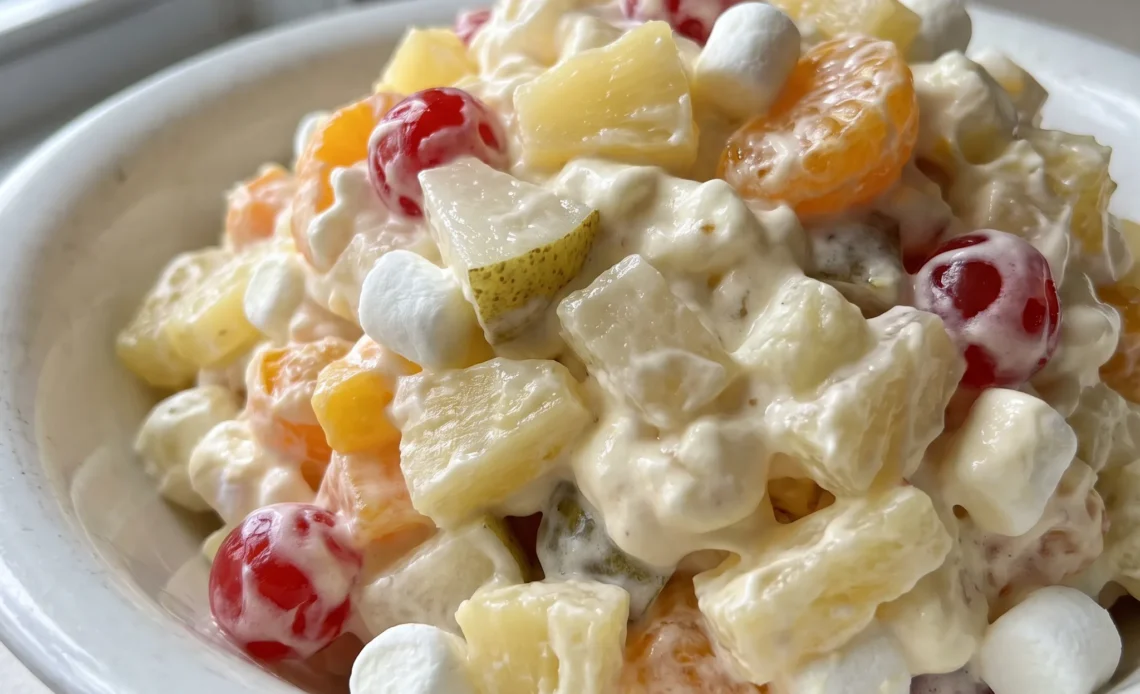
Pineapple fluff salad lives or dies on one thing, and it’s what you do with the can before anything else hits the bowl. The juice drained off those tidbits is the only liquid in the recipe. Whisk the instant pudding into it and you get a base that tastes like pineapple rather than sweet milk.
Dump that juice and no amount of stirring saves you; the powder stays gritty and the whole bowl tastes raw. From there it’s mostly a matter of restraint. The fruit gets coated, then folded with marshmallows and whipped topping, and the folding is where people wreck it.
Keep cutting through the bowl after the streaks disappear and you knock the air out, leaving something dense and soupy. Stop early and you get white pockets.
Then it chills, and the marshmallows soften into something soft while the cream sets. What comes out is scoopable and light, faintly pink from the cherries.
Use the Pineapple Juice to Set the Base
All the liquid that brings this salad together comes from the can of pineapple tidbits. That juice gets drained off first and whisked with the instant vanilla pudding mix until the mixture turns thick and smooth. It takes a minute or two of stirring to work out every lump, but the pudding will hydrate fully.
Since the juice replaces the milk or water called for on the box, the base stays bright with pineapple flavor instead of turning bland and milky. A dry pudding mix needs liquid to bloom, and here the juice is the only liquid available. If you toss that juice down the sink, the pudding never dissolves.
You’ll end up with a powdery, gritty texture and a salad that tastes thin and raw. The drained tidbits get set aside and go in with the other fruit later. Once the pudding and juice are smooth, you’ve got a glossy, pale yellow base ready for the fruit.
Fold Gently to Keep the Volume
Once the pudding base is ready, the fruit goes in and gets stirred until every piece is coated. That coating matters because it separates the fruit so the pieces don’t clump together when the lighter ingredients arrive.
Then come the mini marshmallows and the thawed whipped topping, and from that point on you fold rather than stir. A spatula works best, cutting down through the bowl and turning the mixture over. The goal is to keep as much air in the whipped topping as possible.
If you stir hard or keep going after everything is combined, the topping deflates and the salad turns dense and soupy. Stop as soon as you see no streaks of white left.
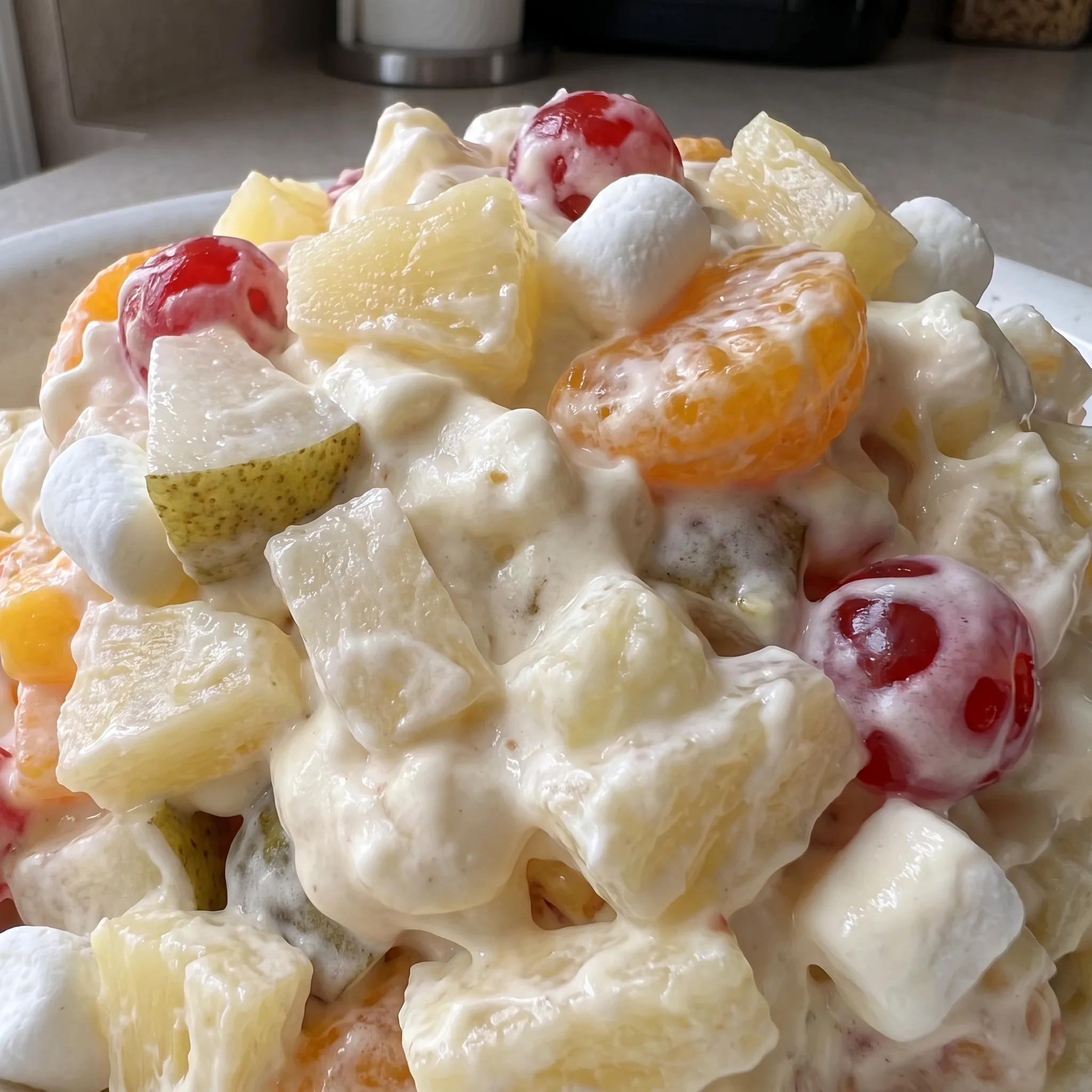
You should still see whole marshmallows and chunks of fruit suspended in a light, fluffy pink-tinged cream. That texture is what makes the salad feel airy rather than heavy on the spoon.
Chill for an Hour Before Serving
The bowl goes into the refrigerator for at least an hour, and that wait changes the texture more than any other step. During that time the pudding keeps thickening and the mini marshmallows soak up moisture from the fruit and cream.
They soften from firm little pellets into soft bites that blend right in. Skip the chill and you’ll be serving something runny with hard marshmallows floating in it, more like a loose fruit soup than a salad. After an hour, take the bowl out and give it one or two slow turns with a spoon.
Some liquid may have settled at the bottom or around the edges, and that gentle stir mixes it back in without knocking out the air. The salad should look thick, scoopable, and evenly pink. Spoon it into bowls right away, because it holds its shape best when it’s still cold from the fridge.
Why These Fruits Work Together
Pineapple tidbits bring a sharp, bright tang that cuts through the sweetness of everything around them, and mandarin oranges add a softer citrus note with just enough acidity to keep the salad from tasting flat. Maraschino cherries are the loud one in the bowl. Their flavor is often described as almond-like, and that little floral edge is what makes people ask what’s in the salad.
They also bleed a faint pink into the cream, which is part of the look. Pears and fruit cocktail do quieter work. They add bulk and a mellow, juicy sweetness that fills out each spoonful without fighting the louder fruits.
Together the canned fruits create a mix of tart, sweet, and tangy that stays interesting from the first bite to the last. The result is a salad that tastes balanced rather than sugary, with each fruit still recognizable in the bowl.
What to Buy and Watch in the Canned Aisle
Pineapple tidbits in juice: Buy tidbits packed in juice, not syrup, since that drained juice is the only liquid hydrating the pudding.
Instant vanilla pudding mix: It has to be instant, because cook-and-serve needs heat and will stay grainy and thin in a cold mix.
Frozen whipped topping: Thaw it fully in the fridge first, since cold clumps won’t fold in evenly and leave white streaks.
Maraschino cherries: Stemless ones save you the picking, and halving them spreads that almond-ish cherry flavor and pink tint through the bowl.
Pear halves: Buy halves rather than slices or chunks, since you’re chopping them yourself for pieces that hold up in the fold.
Instant pudding is a starch-and-sugar powder that only thickens once its granules absorb liquid and the starch hydrates. Here the recipe supplies no milk or water, so the drained pineapple juice is the sole liquid phase, and it is present in just the amount the can releases. If that juice is poured off and discarded, the pudding powder has nothing to dissolve into, so it stays powdery and the salad sets up dry and gritty rather than creamy.
Reading the Bowl: What to Check at Each Turn
When the Pudding Base Is Fully Hydrated
After whisking the pudding into the pineapple juice, run the whisk across the bottom of the bowl. If it drags through a layer of dry powder, keep going.
The mixture should feel slick and heavy, not sandy. Rub a drop to the touch: any graininess means undissolved pudding.
Once smooth, it’s ready for the fruit. Stop too soon and the salad will taste raw and powdery.
Judging When the Fruit Is Coated, Not Crushed
Stir the fruit into the pudding base until every piece looks glossy. The coating keeps pieces separate so they don’t clump when the lighter ingredients go in.
If you stir past that point, the mandarin oranges and pears start to break apart and release extra juice, which thins the base. Stop as soon as the fruit is evenly slick. A few stray chunks are fine; a bowl of pulp is not.
The Fold: Keeping Air in the Topping
Once the whipped topping and marshmallows go in, switch to a spatula and fold, cutting down and turning over. Stop the moment you see no white streaks.
Overfold and the topping deflates, turning the salad dense and soupy. You should still see whole marshmallows and fruit suspended in a light, fluffy cream.
If it looks runny, you’ve gone too far; there’s no fixing it, but it’ll still taste fine.
After the Chill: Checking Texture and Stirring Just Enough
After 60 minutes in the fridge, the salad should look thick and scoopable. Marshmallows will have softened and the pudding set.
If liquid has pooled at the bottom or edges, give it one or two slow turns with a spoon to mix it back in. Stir more and you knock out air, making it soupy.
If it’s still runny after an hour, chill longer; the pudding needs time to firm up.
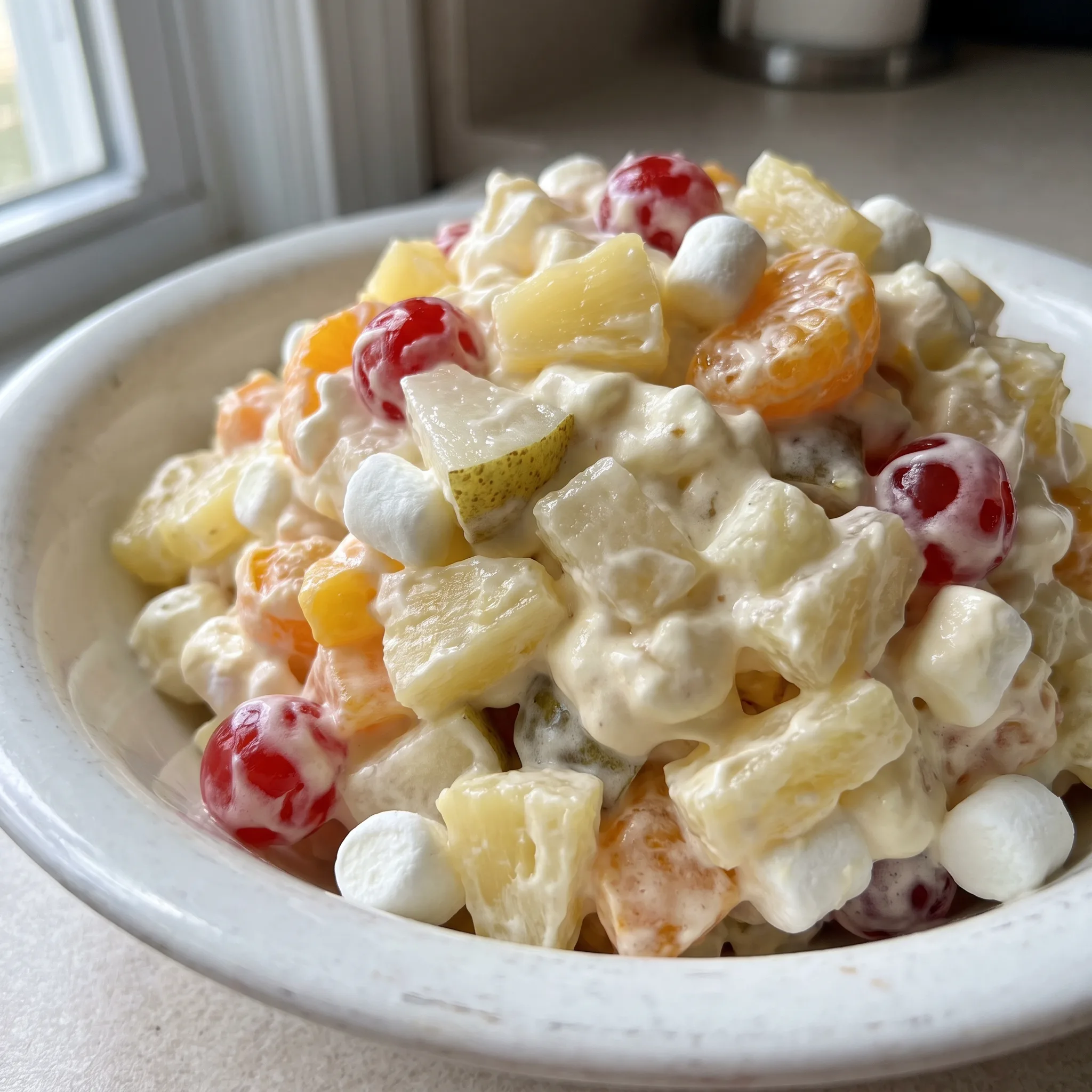
Pineapple Fluff Salad with Mandarin Oranges
Ingredients
Method
- Drain the pineapple juice into a large mixing bowl; reserve the pineapple tidbits.
- Add the instant vanilla pudding mix to the pineapple juice and whisk until smooth.
- Add the reserved pineapple tidbits, fruit cocktail, pears, mandarin oranges, and maraschino cherries; stir until evenly coated.
- Gently fold in the mini marshmallows and whipped topping until combined.
- Cover and refrigerate for at least 1 hour before serving.
- Stir gently before serving.
Switch the Pudding, Fruit, or Topping, but Keep the Juice and Marshmallows
4 oz package of instant cheesecake or white chocolate pudding. The base will taste tangier or sweeter, and the color may shift slightly. The set will be similar because both are instant puddings, but check that the mix dissolves fully in the pineapple juice.
If you use a different flavor, whisk until smooth before adding the fruit.
Fruit cocktail: Replace with an equal amount of drained mandarin oranges (about 15 oz). You’ll lose the mixed fruit texture and get more citrus pop.
The salad will be slightly tarter and the pieces more uniform. Drain the oranges well so extra juice doesn’t thin the base.
Frozen whipped topping: Use an equal amount (8 oz) of stabilized whipped cream. The salad will taste richer and less sweet. Stabilized cream holds up similarly but may deflate faster if overfolded.
Fold gently and chill as directed; the texture will be slightly softer.
Pineapple tidbits in juice: Do not substitute fresh or syrup-packed pineapple. The juice is the only liquid that hydrates the pudding.
Using syrup or fresh pineapple will leave the pudding powdery and the salad thin. Stick with juice-packed tidbits and reserve that juice.
Mini marshmallows: Leave as is. They soften during chilling and give the salad its soft texture. Omitting or swapping them changes the texture significantly.
If you must, use an equal amount of another soft candy, but expect a different result.
Storing and Serving Pineapple Fluff Salad
Keep the salad covered in the fridge, where it holds for up to three days. Eat it within the first day if you want the fluffiest texture.
After that, the marshmallows keep softening and the fruit keeps releasing juice, so the cream loosens and liquid pools at the bottom and edges of the bowl. That’s normal, not spoilage.
Stir gently before each serving, one or two slow turns with a spoon, just enough to pull the pooled liquid back through. Stir harder and you knock out the air that makes it scoopable.
Don’t freeze it. Whipped topping thawed from frozen breaks down when it’s frozen again, and the marshmallows and canned fruit go grainy and watery on the way back. Serve it cold, straight from the fridge, in bowls.
Spoon out what you’ll eat rather than stirring the whole bowl at the table, and return the rest to the fridge promptly. It firms back up as it chills.
Tips
- Drain the fruit in a colander for a few minutes, then blot the pear and fruit cocktail pieces with paper towels before they go in. Those two are the heaviest and hold the most syrup, and any liquid still clinging to them thins the pudding base after the chill.

Frequently Asked Questions
Can I make pineapple fluff salad ahead of time?
Yes, but plan around the texture, not just the clock. The salad holds in the fridge for up to three days, though it’s fluffiest within the first day. After that, the marshmallows keep softening and the fruit releases juice, so the cream loosens and liquid pools at the bottom.
A gentle stir before serving pulls that liquid back through. If you’re making it for a specific meal, assembling it a few hours ahead works well, but day-of is better than day-before.
Why is my pineapple fluff salad watery?
Most often the fruit wasn’t drained well enough, so extra juice from the fruit cocktail, pears, oranges, or cherries dilutes the pudding base as it sits. Drain each can thoroughly before adding the fruit, and don’t skip the step of draining the pineapple juice into the bowl to hydrate the pudding. A second cause is overfolding after the whipped topping goes in, which deflates the cream and lets liquid separate.
If it’s already watery, a longer chill helps the pudding firm up, but the fix starts at the colander.
How long does pineapple fluff salad last in the fridge?
Up to three days, covered, in the refrigerator. The first day gives you the best texture, with the marshmallows still soft and the cream thick.
By day three, expect more pooled liquid and softer fruit. Stir gently before each serving to reincorporate the liquid without knocking out air.
Don’t freeze it; the whipped topping breaks down and the marshmallows and fruit go grainy.
What is the difference between pineapple fluff and ambrosia salad?
Ambrosia typically centers on coconut, often with sour cream or a similar tangy base, and sometimes nuts. Pineapple fluff gets its structure from instant vanilla pudding hydrated with the drained pineapple juice, which gives a thicker, more scoopable set.
The fruit mix here leans on pineapple, mandarin oranges, maraschino cherries, pears, and fruit cocktail, with mini marshmallows and whipped topping folded in. The result is a sweeter, pink-tinged cream rather than a coconut-forward salad.
