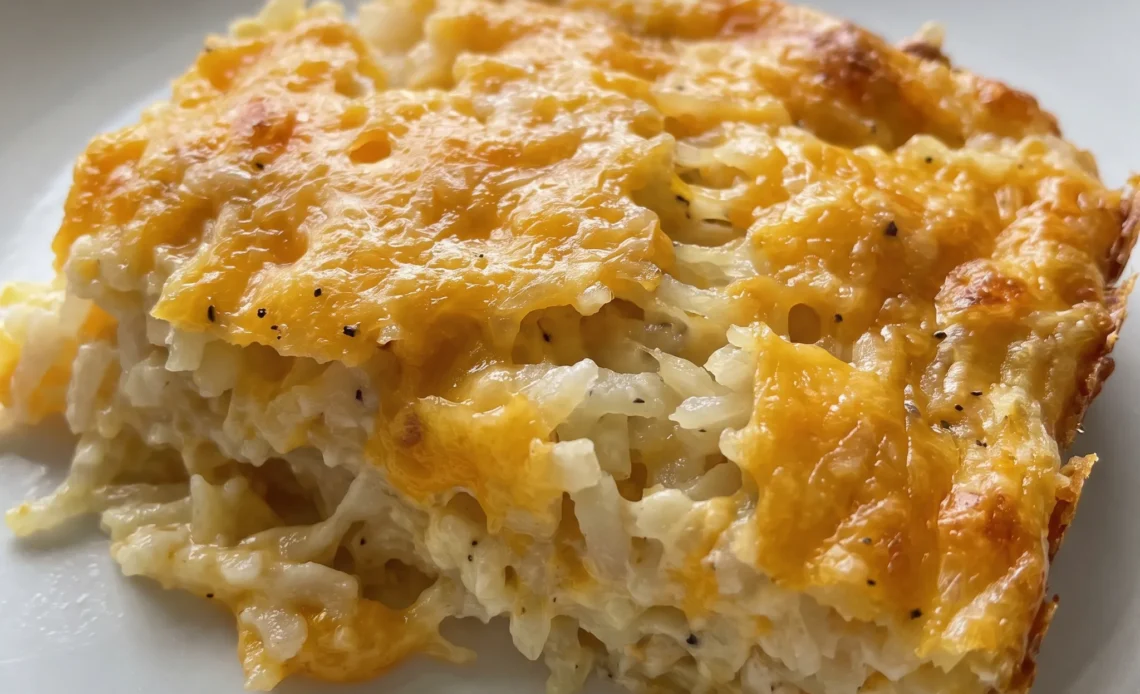
Watery hash brown casserole almost always traces back to the potatoes, not the recipe. Frozen shreds carry surface ice that has nowhere to go once the dairy seals them into the pan, and that liquid ends up pooling underneath instead of baking into the base. Thawed and blotted, the same bag bakes into something you can actually scoop.
What makes this cracker barrel hash brown casserole worth keeping in rotation is how little it asks of you: one bowl, one dish, and a bake that forgives a lazy stir but not a wet potato. The sour cream and condensed soup do the binding, which means the ratio between them sets whether you land on creamy or soupy. Get that balance right and the pan cuts clean.
Get it wrong and you’re spooning liquid around a pale center.
Keep the Ratio of Sour Cream to Soup in Check
75-ounce can of cream of chicken soup is the balance that makes this casserole scoopable but not soupy. Sour cream brings the fat and tang that sets the whole pan into a cohesive bake. The soup, with its seasoned base and moisture, acts as a binder so the potatoes aren’t dry.
Too much sour cream and you’re eating something closer to dip than dinner; too little and the casserole turns grainy and dry. That’s why the ratio matters. It ensures the mixture holds together when you lift a spoonful, yet doesn’t turn gluey.
The fat from the sour cream coats the hash browns, and the soup’s starch helps thicken as it bakes. When you pull it from the oven, the top should be golden and the inside creamy, not runny. This balance is what gives the casserole its signature texture.
Choose Shredded Hash Browns, Not Diced
Shredded hash browns are what make this casserole meld into a uniform, spoonable bake. Their thin strands weave together with the creamy base, so every scoop has the same soft, cohesive texture. Diced or cubed potatoes would stay separate, giving you a chunky, uneven bite that doesn’t match the classic version.
The shred size also affects how the casserole slices; shredded potatoes create a smooth cut, while larger pieces would fall apart. Thawing the hash browns is crucial.
Frozen shreds release excess water as they cook, which can make the casserole watery and prevent it from setting. Thawed potatoes absorb the creamy mixture evenly and bake into that familiar soft, rich texture.
When you run a knife through the baked casserole, it should cut cleanly, with no watery pooling at the bottom.
Build Flavor with Cheddar, Onion, and Butter
Sharp cheddar melts into the base, giving a savory backbone that doesn’t overwhelm. The cheese dissolves as it bakes, so its flavor spreads through every bite. Chopped yellow onion adds a gentle sweetness and a bit of bite that balances the richness of the dairy.
Butter brings its own savory note, and together with sour cream and cheese, it creates a rich, rounded richness. Salt and pepper are there to sharpen everything, not to shout over it.
A full 1½ teaspoons of kosher salt might seem like a lot, but it’s needed to season the potatoes, which are bland on their own. The pepper adds a mild warmth.
When you taste the unbaked mixture, it should be well-seasoned and cheesy, with a hint of onion. After baking, those flavors settle into a balanced, savory profile that keeps you coming back for more.
Use an 11×14-Inch Baking Dish for Even Baking
An 11×14-inch dish is the right size because it spreads the mixture into a layer that’s thin enough to bake evenly and develop a golden, cheesy top without drying out. The surface area to volume ratio matters: a larger dish means more exposed surface, so moisture evaporates at the right rate.
If you used a smaller dish, the casserole would be thicker, and the center would stay wet and gluey while the edges overcook. With this size, the heat reaches the middle in time, and the top browns nicely. The result is a casserole that holds its shape when scooped, with a tender, cohesive interior and a lightly crisped surface.
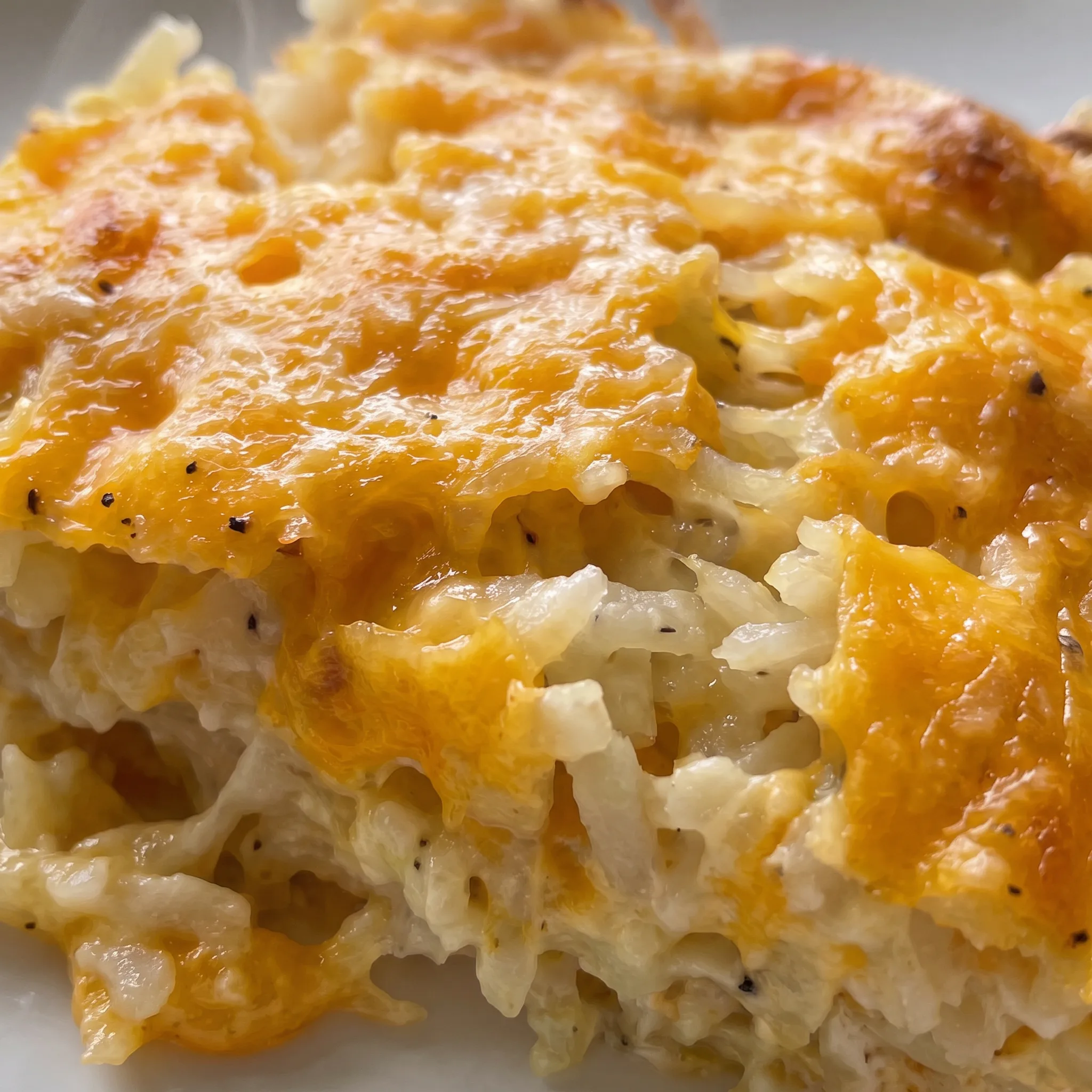
When you pull it from the oven, the cheese should be bubbly and the edges slightly browned. That’s the sign it’s ready to serve.
What to Look For in the Dairy and Potatoes
Shredded hash browns: Buy the 32-ounce bag of plain shredded potatoes, not diced or O’Brien, and thaw them completely so they don’t water out the casserole.
Sour cream: Full-fat sour cream gives the richness that sets the bake; reduced-fat or fat-free versions can turn grainy and won’t hold the same texture.
Cream of chicken soup: One 10.75-ounce can of condensed soup is the binder; don’t dilute it, and check the label for any added seasonings you might not want.
Cheddar cheese: Sharp cheddar melts into the base with a savory backbone; pre-shredded bags are coated with starch and won’t melt as smoothly.
Yellow onion: Half a yellow onion, chopped fine, gives a gentle sweetness; red or white onions are sharper and can overpower the dairy.
Thawing hash browns before mixing allows the released water to drain away, so the sour cream and soup can bind without dilution. If the potatoes are still frozen, the melting ice adds water during baking, which prevents the casserole from setting and causes a watery result. This recipe specifies thawed hash browns to avoid that excess moisture.
Judging the Bake: When the Casserole Is Set, Not Soupy
Reading the surface for doneness
At 45 minutes, the top should be golden brown and the cheese bubbly. The center might still jiggle slightly, but it should not ripple like liquid.
If it’s still pale and wet, give it 5 to 10 more minutes. The edges will brown first, so if they’re dark but the middle is pale, the oven is running hot. An instant-read thermometer in the center should read 165°F to 175°F.
If it’s below 160°F, it needs more time.
Testing the set with a knife
Insert a knife into the center and pull it out. It should come away with some creamy residue but no thin liquid.
If liquid pools in the slit, the casserole needs more time. The mixture should hold its shape when you scoop it. If it slumps and releases water, it’s underbaked.
Return it to the oven and check every 5 minutes. Overbaking dries the edges and makes the center grainy.
Adjusting for a waterier mix
If the hash browns weren’t fully thawed or were squeezed dry, the casserole can be wetter than expected. A quick fix: if it’s still soupy after 45 minutes, turn the oven up to 375°F for the last 10 minutes to drive off moisture. But watch closely; the top can go from golden to burnt fast.
The goal is a cohesive, scoopable texture, not a puddle.
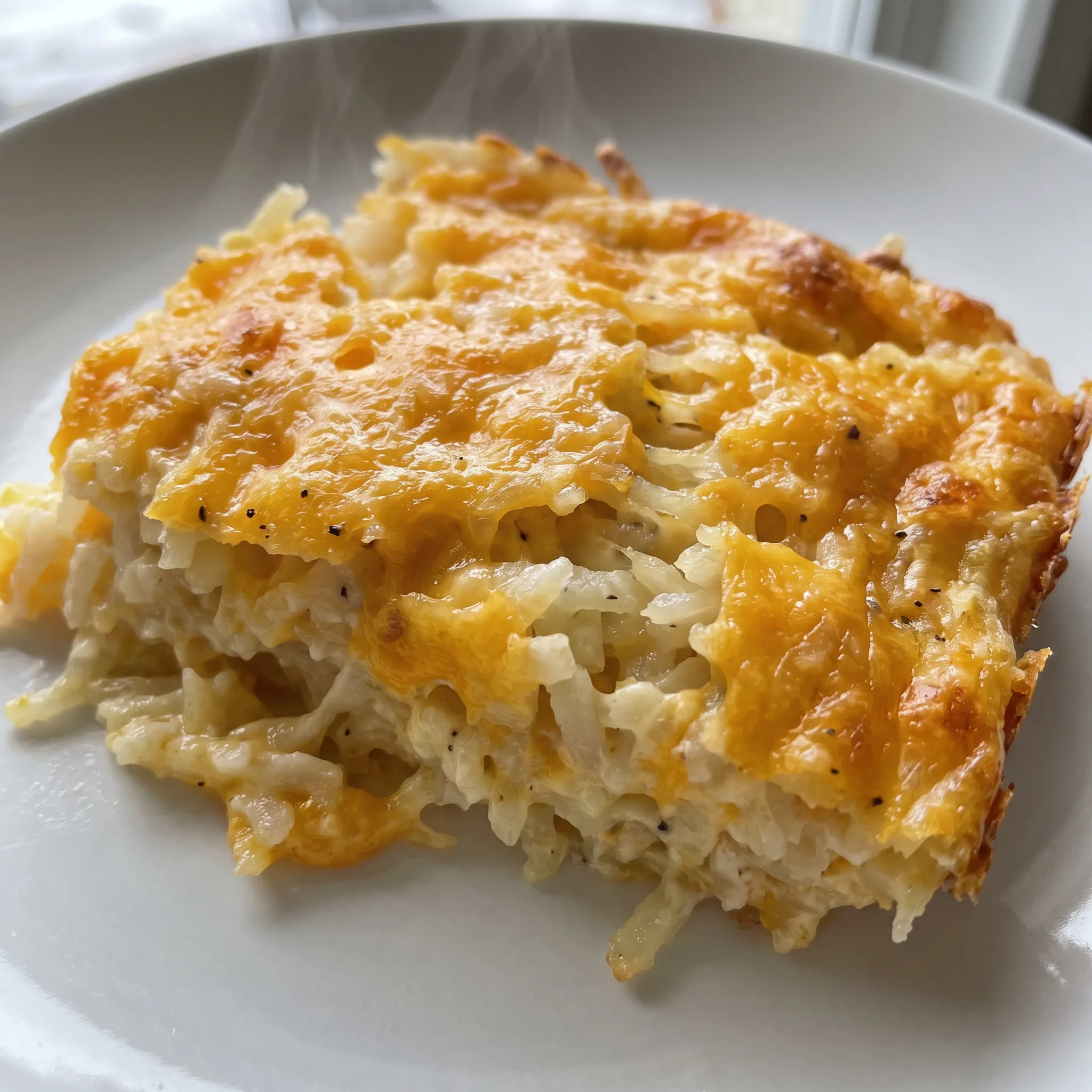
Cracker Barrel Hash Brown Casserole with Cheddar
Ingredients
Method
- Set oven temperature to 350°F (175°C).
- In a large bowl, mix together hash browns, melted butter, cream of chicken soup, sour cream, onions, cheddar cheese, salt, and pepper until fully incorporated.
- Distribute the mixture uniformly into an 11×14-inch baking dish.
- Bake for 45 minutes, until the surface is melted and browned.
Swapping the Dairy and Soup: What Holds, What Breaks
75-ounce can of cream of celery or cream of mushroom soup in its place. For a gluten-free version, use a can labeled gluten-free, or make a quick binder by whisking 1/4 cup cornstarch into 1 cup cold chicken broth and using that instead of the soup. Celery and mushroom soups bring a different savory note, but they still carry the starch that thickens the casserole as it bakes.
The cornstarch slurry works, but it won’t season the mix, so taste the unbaked mixture and add salt if it seems flat. If you skip the soup entirely and add nothing, the casserole bakes up dry and crumbly around the edges.
Sour cream: Full-fat Greek yogurt, cup for cup. For dairy-free, use a plain unsweetened coconut yogurt or a dairy-free sour cream alternative, starting with the same 2 cups and thinning with a splash of water if the mixture looks stiff. Greek yogurt gives a sharper tang and a slightly tighter set than sour cream.
The casserole will still hold together, but the finished texture reads a little less rich. Coconut yogurt brings a faint coconut taste that can come through in the back of the bite, and it won’t set as firmly, so expect a softer center.
Reduced-fat or fat-free sour cream is the swap that fails here: it turns grainy and releases water, leaving you with a wet pan instead of a cohesive bake.
Cheddar cheese: Gruyère, Monterey Jack, or a Colby-Jack blend, shredded on the same box grater. For dairy-free, use a meltable plant-based cheddar, not a crumbly vegan cheese. Gruyère melts smoothly and adds a nutty edge that plays well with the onion.
Monterey Jack is milder and melts into strings rather than a uniform sauce, so the casserole tastes a little less sharp. Plant-based cheddar often stays firm when baked, giving you pockets of unmelted shreds instead of a creamy base.
Pre-shredded bags are coated with starch and won’t melt as smoothly, so shred your own if you can.
Unsalted butter: Salted butter, same 1/2 cup melted. For dairy-free, use a plant-based butter stick, melted and cooled slightly, or 1/2 cup neutral oil like canola.
Salted butter adds about 1/4 teaspoon extra salt per stick, so cut the kosher salt in the recipe to 1 teaspoon and taste the unbaked mix before it goes in the pan. Plant-based butter melts similarly but can taste a bit flat, so the casserole may need a pinch more salt at the end. Oil coats the hash browns without the same richness, and the baked texture comes out slightly greasier at the edges.
Tips
- Pat the thawed hash browns dry with paper towels or a clean kitchen towel before they go into the bowl. A 32-ounce bag can carry a few tablespoons of surface water even after thawing, and that water has nowhere to go once the mixture is sealed into the 11×14-inch dish. Wringing them out isn’t necessary and can pack the shreds too tightly, but blotting keeps the sour cream and soup doing the binding rather than thinning into a puddle at the bottom of the pan.
- Chop the half onion fine enough that no piece is bigger than a corn kernel, and scatter it through the hash browns before adding the wet ingredients. Coarse chunks stay firm through a 45-minute bake and land as distinct crunchy bits in an otherwise uniform scoop, while fine pieces soften into the base and release their sweetness evenly. Tossing the onion with the dry shreds first also keeps it from clumping in one corner of the dish.
Storing and Reheating for the Right Texture
Hot from the oven, this casserole is creamy and scoopable. Once it cools, the same pan turns firm and sliceable, and that’s how it stays in the fridge.
Leftovers keep 3 days, covered and refrigerated. The dairy and eggs in the soup set the limit, not the potatoes. To bring a portion back to spoonable, add a splash of milk or broth, cover, and reheat at 325°F until the center is hot, about 15 minutes.
A microwave works for a single serving, but stop before it bubbles hard or the edges toughen. For the best texture, eat within 30 minutes of the first bake. The cheese topping browns in the oven, so any final touch like extra cheddar goes on before reheating, not after.
Freezing isn’t recommended: the sour cream and potatoes separate, leaving a watery, grainy thaw. If you must, freeze portions up to 1 month and reheat from frozen, but expect a softer set.

Frequently Asked Questions
Can I make this hash brown casserole ahead of time and bake it later?
Yes, you can assemble it up to a day ahead and refrigerate it covered. The reason it works is that the mixture is already bound by sour cream and soup, so a cold rest doesn’t hurt the texture. When you’re ready to bake, put the dish straight into the preheated oven and add 5 to 10 minutes to the bake time, since the cold pan and mix will slow the rise in temperature.
Just don’t stir it once it’s chilled; you want the shredded potatoes to stay settled.
Why did my hash brown casserole turn out watery?
The likely culprit is hash browns that weren’t fully thawed. Frozen shreds release their water as they heat, and that liquid pools at the bottom instead of staying in the creamy base. Thaw them completely and if they still feel wet, press them in a colander or squeeze them in a clean towel before mixing.
A secondary check: if you used reduced-fat sour cream, it can also release water and turn grainy, so stick with full-fat for the set you want.
How is Cracker Barrel hash brown casserole different from other hash brown casseroles?
The Cracker Barrel version is known for its tight, scoopable texture and a top that browns to a deep golden without any crunchy crust. That comes from the specific balance of shredded potatoes, sour cream, and condensed soup, plus a full 2 cups of cheddar that melts into the base rather than sitting on top. Many other recipes add a buttered cornflake topping or use diced potatoes, which gives a different bite.
Here, the 11×14-inch dish spreads the mix thin enough that the whole pan sets evenly.
