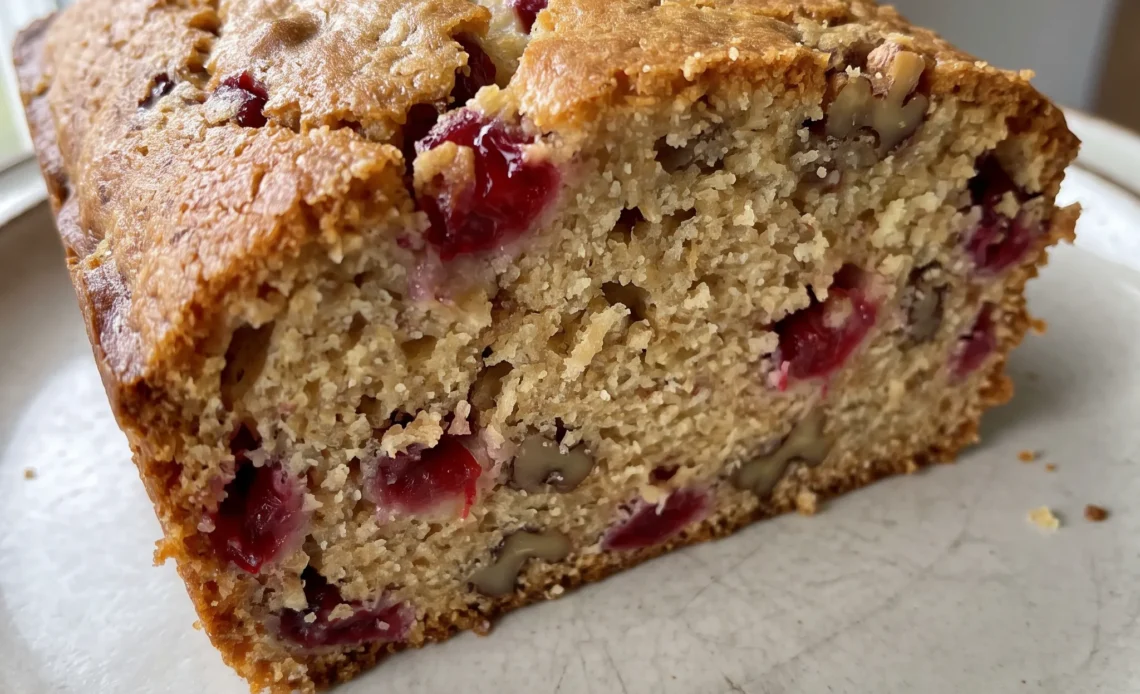
Cranberry orange walnut bread isn’t a sweet cake wearing a loaf shape, and it isn’t a holiday quick bread that leans on cinnamon to cover weak fruit. What it is: a tart, citrus-forward loaf fired by raw chopped cranberries, built so the crumb and the fruit trade places instead of one shouting over the other. The hard part is patience.
Cut it warm and you’ll taste three separate things that never quite meet; the crumb reads tender and the orange sits apart from the berries. Around the edges of walnut pockets and wet cranberry pulp, the toothpick lies to you more than once, and a loaf pulled on that false reading goes dry while the center still slumps. Give it a night, though, and the whole thing tightens into one slice.
The overnight rest does more for this loaf than any mixing trick. What that rest actually changes, and why the berries go in chopped and raw, comes later.
The Overnight Rest
You pull the loaf from the oven and the kitchen smells like a citrus grove. It’s tempting to cut a slice right then. But if you wrap it up and walk away until tomorrow, you’ll be rewarded.
That first day, the crumb is still a little tender and the flavors sit in separate corners: a jab of orange here, a burst of cranberry there. By the next morning, everything has settled into one another.
The bread firms up just enough to slice cleanly, no tearing, no gummy streaks. The orange peel’s perfume has had time to drift through the whole loaf, and the walnuts have softened from crisp to a pleasant chew. It’s the difference between a quick bread and a good one.
Leave it alone for those hours, and when you finally cut in, the texture and taste will tell you it was worth the wait. The rest isn’t storage; it’s part of the recipe.
Cranberries, Chopped and Raw
Most cranberry breads call for dried fruit or a cooked compote. This one throws in the fresh or frozen berries straight from the bag, just chopped coarse. That’s a deliberate move.
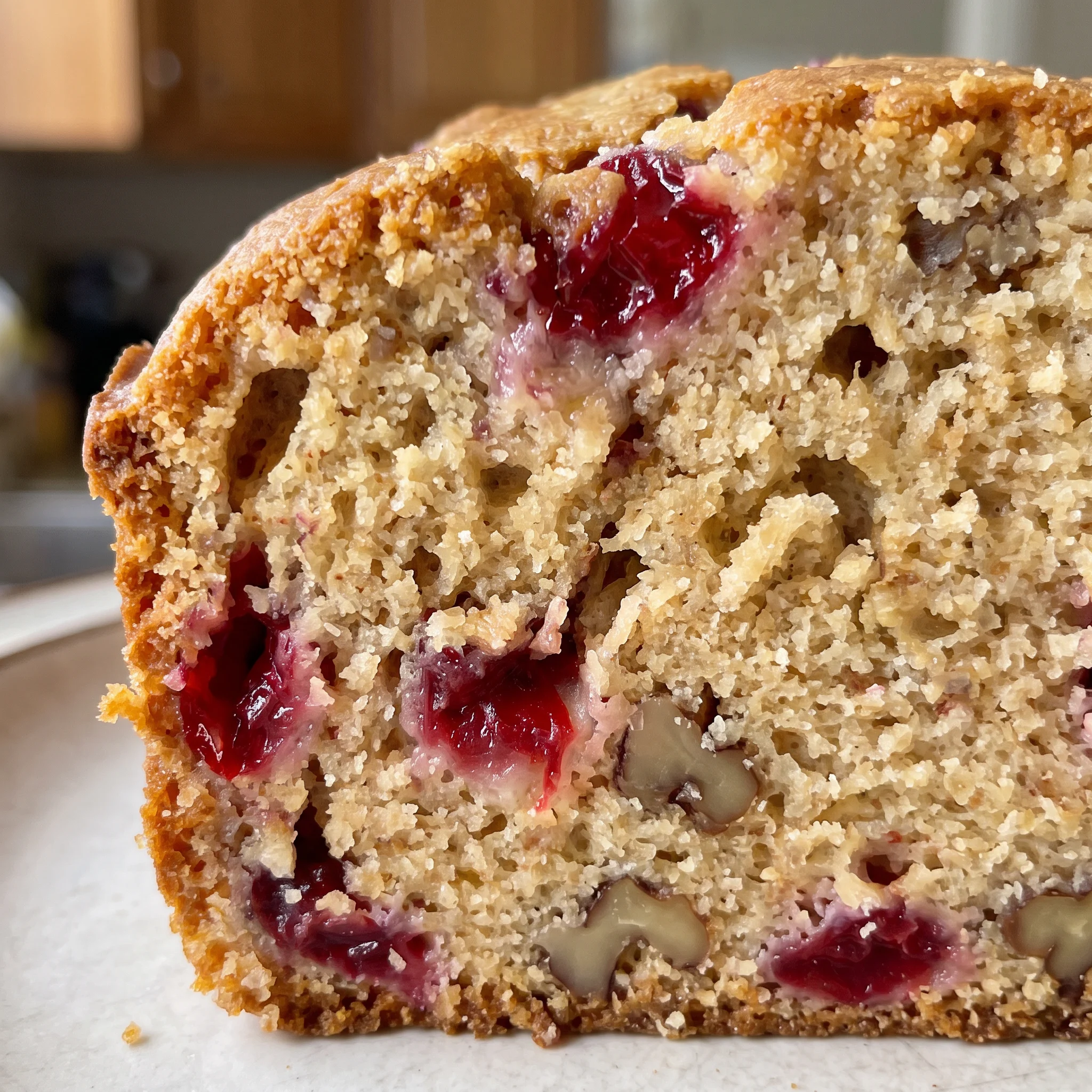
The berries stay whole enough to hold their shape, so when you bite in, you get a pocket of tart juice that cuts right through the sweet, orange-scented batter. If the pieces are too big, you’ll hit a mouthful that’s all sour, no balance. Chop them to roughly the size of a pea, and they’ll distribute evenly.
Frozen berries work just as well; no need to thaw, though they might streak the batter with a little pink. That’s fine. The point is the contrast: soft, sweet crumb against sharp, bright fruit.
Each slice should have a few bursts, not a landslide. When you portion the batter into the pan, you’ll see the berries scattered through like little rubies.
That’s what you want.
Two Kinds of Orange
Orange juice alone would give you liquid and a mild tang, but not much perfume. The grated peel is where the essential oils live, and they’re what hit your nose before the first bite.
Together, they build a citrus note that’s bright but not sharp. The juice also adds acidity that helps the crumb stay tender, and its sugar feeds the browning on top. You’ll notice the difference in the baked loaf: the aroma is rounder, more complex than if you’d used juice only.
The peel doesn’t overpower; it just deepens the orange character so it stands up to the cranberries and walnuts. When you zest, go for just the colored part. The white pith underneath is bitter and will muddy the flavor.
A microplane makes quick work of it. You want about a tablespoon, packed with oils.
That’s the difference between a bread that tastes orange and one that smells like you just walked through a grove.
Walnuts, Optional but Welcome
Leave them out and you’ll still have a fine loaf. But the walnuts earn their place. They bring a crunch that breaks up the soft crumb, and their slight bitterness acts as a counterweight to the sugar and tart fruit.
Without them, the bread can feel a little one-note: sweet, tart, sweet. With them, each bite has a savory edge that keeps you coming back.
Toast them first if you have a minute, though it’s not required. Either way, chop them to about the size of a lentil so they distribute evenly and don’t sink.
You’ll see them scattered through the slices like little pebbles. The texture they add is part of the appeal, a quiet contrast that makes the cranberries pop even more. If you’re serving someone who can’t eat nuts, just skip them.
The bread won’t suffer much, but it won’t have that same satisfying complexity.
What to Look For Before You Start
Cranberries: Fresh or frozen both work, but pick berries that are firm and deep red, since soft or shriveled ones taste flat and dull.
Orange peel: Grate only the colored zest, because the white pith underneath is bitter and will muddy the orange flavor in the loaf.
Walnuts: Buy fresh halves or pieces, not the dusty broken bits at the bottom of a bin, since stale nuts taste rancid and ruin the whole slice.
Shortening: Plain vegetable shortening, not butter or margarine, since that’s what the recipe was built around for its fat and texture.
Coarsely chopped raw cranberries hold a lot of water, and as the loaf bakes that water is released into the surrounding batter. If the crumb has not fully set by the time the water migrates, the center stays dense and wet and the loaf can collapse. The overnight rest lets the starch and protein network finish setting and redistributes that moisture so the bread becomes sliceable rather than gummy.
Reading the Loaf While It Bakes and Cools
When the toothpick tells the truth
At 55 minutes, slide a toothpick into the center. No crumbs means done.
A few moist crumbs clinging? Give it 3 to 5 more minutes.
The trap is the cranberry pockets: a pick that lands in a burst of fruit comes out wet even when the crumb is set. Poke a second spot near the edge, where there are fewer berries.
If that one is clean, pull the loaf.
The domed top and the pale center
Watch the crust color around the 40 minute mark. A golden-brown dome with a slightly paler center is right. If the top is browning fast while the middle looks wet, tent foil loosely over it.
If the whole surface stays pale past 50 minutes, the oven runs cool and the center will be gummy. An oven thermometer settles that question better than guessing.
Judging the batter before it goes in
This batter is thick, closer to a stiff muffin mix than a pourable cake. It should mound on a spoon and hold a soft shape.
If it runs off in a thin stream, the flour is under-measured or the orange juice went in heavy, and the loaf will slump in the middle. Stir in a tablespoon or two more flour until it thickens back up.
The 15 minutes in the pan
Cooling in the pan for 15 minutes lets the crumb set enough to hold together. Any longer and steam trapped against the sides softens the crust to a damp ring.
Any sooner and the loaf tears as it releases. When the pan is warm but not hot to the back of your hand, run a thin knife around the edge and turn it out onto the rack.
Reading the crumb at the first slice
A clean slice holds its shape and shows even holes, no dense streak along the bottom. A gummy band just above the crust means the loaf needed a few more minutes or the oven ran cool. Streaky pink where frozen berries bled is normal and doesn’t affect texture.
If the center feels tacky, the rest of the loaf will firm up overnight, but the very middle slice won’t.
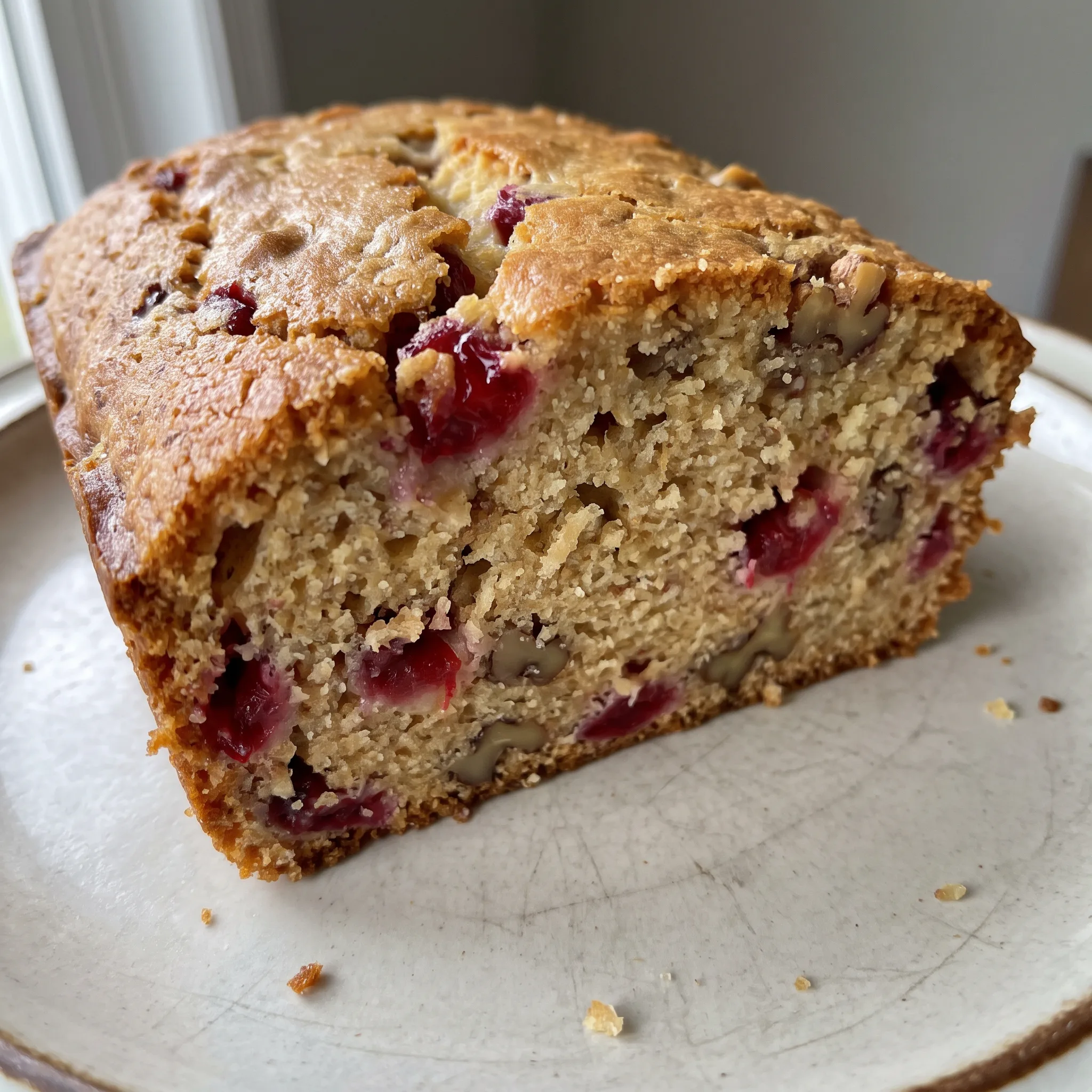
Cranberry Orange Walnut Bread
Ingredients
Method
- Set oven to 350°F (175°C). Prepare a 9 x 5-inch loaf pan by greasing it.
- Combine flour, sugar, baking powder, salt, and baking soda in a medium bowl; stir with a whisk. Incorporate orange juice, orange peel, shortening, and egg; beat until smooth. Gently stir in cranberries and walnuts (if using). Transfer batter to the greased pan, spreading evenly.
- Place in oven for 55 minutes, or until a toothpick inserted into the middle comes out with no crumbs. Let cool in pan on a rack for 15 minutes. Take out of pan and let cool fully. Cover and keep overnight.
Storage and Serving After the Overnight Rest
Once the loaf has rested overnight, it’s at its best, so cut and serve it within the first day or two. After that, the crumb keeps fine for about four to five days at room temperature, but the texture shifts: it dries from the cut surfaces inward and the crust loses its snap.
Keep it wrapped in plastic or in an airtight container, cut side pressed against the plastic, and it holds moisture longer. For a slice past its prime, a quick pass in a warm oven or toaster brings the crust back and softens the crumb, though it won’t match day one.
The walnuts go from chewy to soft as the days pass, which is fine, just different. Freeze only whole or half loaves, double-wrapped, up to three months; thaw at room temperature still wrapped.
Any finishing touch like a glaze goes on after the loaf is fully cool, before the overnight rest, so it sets into the crust. Serve slices at room temperature, not cold from the fridge, or the crumb tightens and the orange reads flat.
Substitutions That Respect the Cranberry-Orange Balance
Granulated sugar: Use the same amount of packed light or dark brown sugar (1 cup). The crumb will be a touch darker and slightly softer, with a faint molasses note that tugs the flavor away from the clean orange-cranberry brightness.
It still works, but the loaf tastes less like citrus and more like a spice cake. If you want that, fine. If you don’t, stick with white.
Shortening: Melted butter or a neutral oil, using the same 2 tablespoons. Butter brings flavor but also water, so the loaf can brown faster and turn a bit crisper at the edges. Oil keeps it tender but the crumb feels slightly greasier.
Neither ruins the bread, but the texture shifts from the soft, even crumb shortening gives. If you use butter, watch the top after 40 minutes and tent foil if it darkens too quickly.
Walnuts (optional): Leave them out entirely, or replace with the same 1/2 cup of chopped pecans or toasted pumpkin seeds. Skipping them leaves the bread sweeter and softer, with nothing to break up the tart cranberry bursts.
Pecans bring a similar crunch but a milder, slightly sweeter taste. Pumpkin seeds add a green tint and a more savory edge.
All three are fine, but the plain loaf without nuts feels a little one-note.
All-purpose flour (for gluten-free): A 1-to-1 gluten-free baking blend, same 2 cups (240 g), plus 1/2 teaspoon xanthan gum if the blend doesn’t already include it. The loaf will be more fragile and prone to crumbling, especially when warm. Let it cool completely in the pan before turning out, and slice it cold for cleaner cuts.
The flavor stays close, but the texture won’t have the same chew as wheat flour. Don’t swap in almond or coconut flour alone; they need different liquid and egg ratios and will wreck the structure.
Tips
- Set a timer for 50 minutes, not 55, and start checking then. This loaf carries 2 cups of chopped cranberries, which release steam as they heat, and a pick that lands in one of those pockets comes out wet even when the crumb is set. Checking early and poking a second spot near the edge, where the berries are sparser, keeps you from adding 5-minute increments that push the outer crumb past done while you wait on a false wet reading. The carryover heat in a 9 x 5 pan keeps cooking the loaf for a few minutes after it leaves the oven, so pulling it at the first crumb-free pick near the edge means the center finishes on the counter instead of drying out in the oven.
Frequently Asked Questions
Can I make cranberry orange walnut bread ahead of time?
Yes, and the recipe is built for it. The card already includes a 15-minute rest in the pan and then directs you to cover and keep the loaf overnight before slicing. That overnight rest is not storage, it is part of the recipe: the crumb firms up enough to slice without tearing and the orange and cranberry settle into each other.
So if you’re serving it tomorrow, bake it today and let it sit wrapped at room temperature. For anything beyond the next day or two, see the storage notes above.
Why did my cranberry orange walnut bread turn out dry?
The most common cause is overbaking, and the toothpick test is where it happens. A pick that lands in a pocket of cranberry comes out wet even when the crumb is set, so you keep baking and the rest of the loaf dries out.
Poke a second spot near the edge, where there are fewer berries; if that one is clean, pull the loaf. The other check is your flour measurement: if you scoop straight from the bag, you can pack in extra flour and the loaf will be dry and tight.
Weighing 240 grams, or spooning and leveling, solves that. Also, if you skipped the overnight rest, the crumb never gets that chance to even out and can read as dry even when it’s not.
How is this different from classic cranberry bread?
Classic cranberry bread usually uses dried cranberries or a cooked compote, and often leans on cinnamon or other warm spices. This one throws in fresh or frozen berries straight from the bag, just chopped coarse, so you get pockets of tart juice that cut through the sweet batter.
The orange comes in two forms, juice and grated peel, which gives a brighter, more perfumed citrus note than juice alone. And the walnuts, while optional, add a savory crunch that keeps the bread from being just sweet and tart. The overnight rest is also unusual: most quick breads are sliced the same day, but this one is better the next morning.
