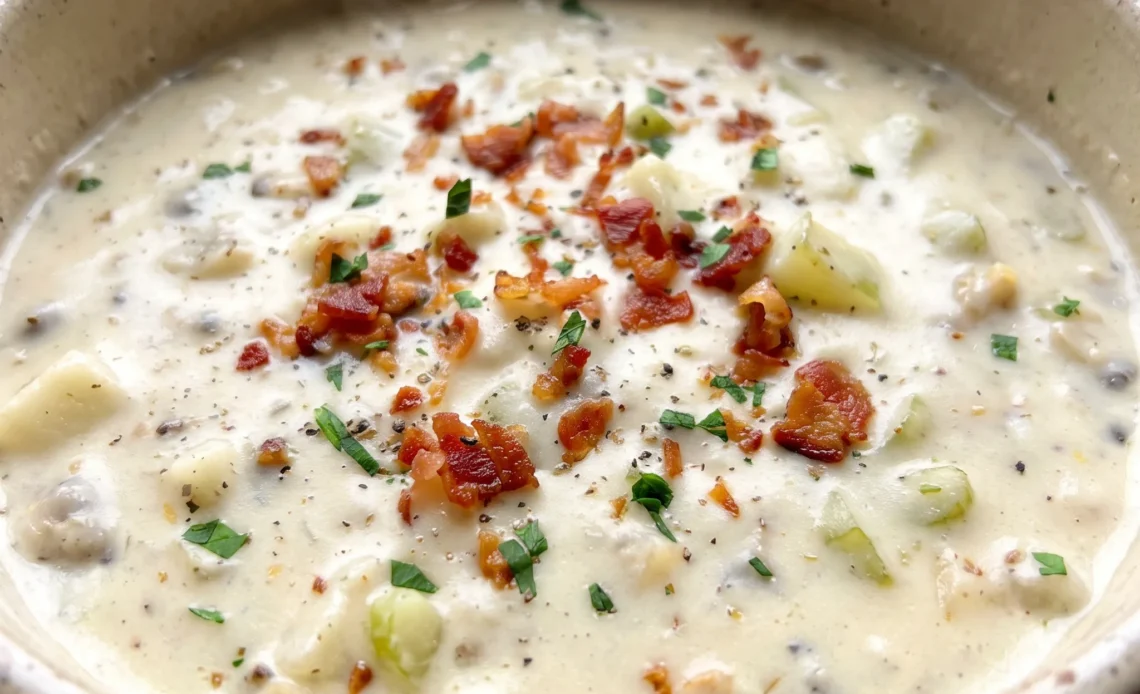
Clam chowder with bacon lives or dies on a texture that’s easy to overshoot in either direction. Too loose and you’ve made clam soup; too tight and the spoon stands up in paste.
The narrow spot is the flour, which has to coat the softened vegetables until they look dry and pasty before any liquid touches the pot. Get that wrong and no amount of cream later rescues the body. The other trap is heat at the finish.
Canned clams are already cooked, so they need warmth, not cooking, and the cream turns grainy the moment the pot boils after it goes in. Neither problem announces itself until you’re tasting the bowl.
Both are avoidable if you watch the pot at the right moments.
Why Add Flour to the Vegetables?
The flour goes in after the onion, garlic, and celery have softened. You sprinkle it over the vegetables and stir.
It clings to every piece, and that coating is what thickens the chicken broth and the reserved clam juice when they hit the pot. Without it, those liquids stay thin. The heavy cream you add later would just dilute further, and you’d end up with a brothy soup rather than a chowder that coats a spoon.
What you’re looking for is a base that feels substantial once the potatoes and clams go in. The flour doesn’t just sit there; it swells and gives the soup body.
You won’t taste raw flour if you’ve stirred it in properly, just a smooth, silky texture that holds the clams and potatoes in suspension instead of letting them sink to the bottom. This step is the difference between a chowder and a sad, watery soup.
What Does Reserved Clam Juice Do?
Canned clams are cooked and packed in their own juices, and those juices carry a briny, oceanic punch that the chopped clam meat alone can’t deliver. When you drain the clams, you’re left with a liquid that tastes like the sea. That’s why the recipe tells you to reserve it and add it with the chicken broth and potatoes.
If you toss it, you’re throwing away the deepest flavor in the dish. The juice infuses the potatoes and the broth with a savory backbone that makes the chowder taste like clams, not just cream and bacon.
It’s not about adding salt; it’s about building that marine character. The chopped clams you add later are already cooked, so they mostly contribute texture. The juice is where the real clam identity lives.
Pour it in and let it simmer with the potatoes, so they soak up that brininess from the inside out.
How Bacon Fat Builds the Base
Frying the bacon first isn’t just about getting crispy bits for garnish. The fat that renders out stays in the pot, and that’s where the chowder gets its smoky depth. You remove the bacon, but you leave behind a golden, savory fat that coats the bottom.
Then you add butter to that fat, and the onion, garlic, and celery sauté in the mixture. Every vegetable piece picks up that smoky note. It’s the foundation.
If you were to drain the fat, you’d lose the very thing that makes this chowder taste like more than just cream and potatoes. The bacon fat carries through the entire soup, even after the cream goes in.
It’s a quiet but persistent flavor, the kind that makes you pause and wonder what’s in there. The bacon itself comes back as a topping, but its spirit is already woven into the base.
When to Add Cream and Clams
The potatoes need to be tender before the cream and clams go in. Once they are, you pull the pot off the boil. The clams are already cooked from the can, so they only need to be heated through; boiling them makes them rubbery and tough.
The cream is more fragile. If it boils, it can curdle, and you’ll see little flecks instead of a smooth, unified broth.
So you stir them in at the end, when the heat is low. The residual warmth is enough to bring everything together.
What you get is a chowder that’s creamy but still tastes of clams, with potatoes that hold their shape. The texture stays silky, and the clams remain tender. It’s a gentle finish, not a furious one.
Let the pot sit for a minute after adding them, so the flavors settle without any harsh heat.
Italian Seasoning and Bay Leaves in Clam Chowder
Traditional New England clam chowder doesn’t usually call for Italian seasoning or bay leaves, but they earn their place here. The herbs go in with the broth and potatoes, and as the potatoes simmer, they steep into the liquid, releasing a subtle herbal aroma that cuts through the richness of the bacon and cream.
You won’t taste oregano or basil as distinct notes; instead, they add a quiet, savory backdrop. The bay leaves do something similar, lending a gentle woodsy flavor that rounds out the brininess of the clam juice. It’s a balancing act.
Without them, the chowder can feel heavy, all cream and smoke. With them, there’s a little lift, a faint green note that keeps you coming back for another spoonful.
They don’t shout; they just make the whole bowl taste more complete. Fish them out before serving, or leave them and warn your guests.
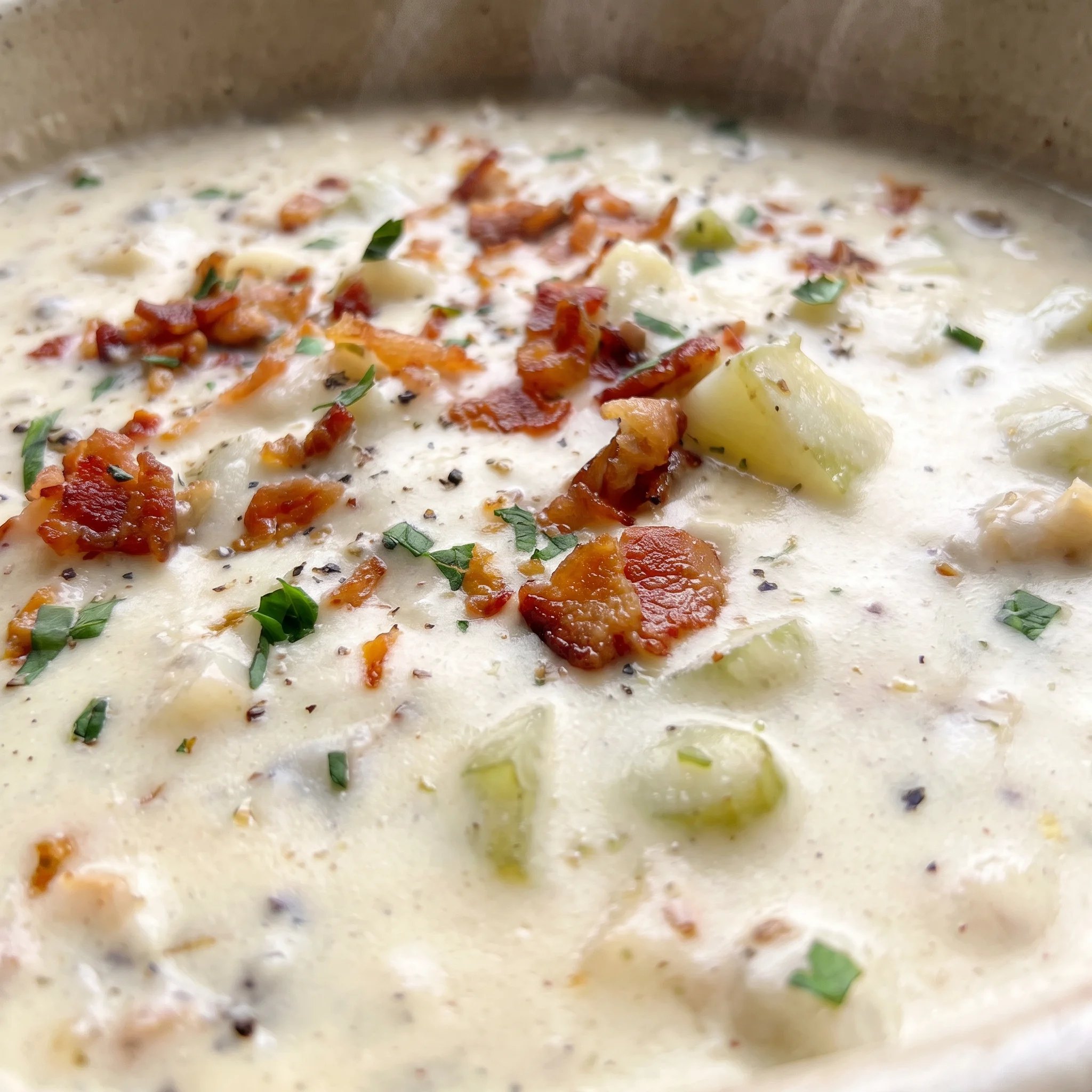
What to buy and how to prep the four ingredients that decide this chowder
Bacon: Buy sliced bacon you can chop into pieces, since thick-cut or slab bacon renders unevenly and leaves the pot greasy.
Canned chopped clams: Buy three 6.5-ounce cans packed in juice, not water, because the reserved liquid is where the clam flavor actually lives.
Russet potatoes: Pick two medium russets and dice them evenly, since waxy potatoes won’t break down enough to give the chowder body.
Heavy cream: Use cream labeled heavy or whipping, around 36 percent butterfat, not half-and-half, which thins out the finished pot.
Reading the pot at four points decides whether this chowder turns out creamy or thin, tender or rubbery
When the bacon has rendered enough fat and not too much
The bacon should be golden and crispy, and the fat in the pot should look glossy, not dark. If the bacon is still pale and the fat is watery, the vegetables won’t get that smoky base. If the bacon is dark brown or the fat smells acrid, you’ve gone too far; the chowder will taste burnt.
Pull the bacon at 5 to 6 minutes, when it’s crisp and the fat is clear.
Judging when the flour has cooked into the vegetables
After you sprinkle the flour, you stir until it coats every piece. The vegetables should look dry and pasty, not wet. If you see loose flour at the bottom, keep stirring.
The flour needs to lose that raw taste, but it shouldn’t brown. As soon as the vegetables are evenly coated and the pot smells toasty, not raw, you’re ready for the broth.
Miss this and the chowder tastes like paste.
Knowing when the potatoes are tender but not falling apart
The potatoes are done when a fork slides in with no resistance, but they still hold their shape. That’s 10 to 15 minutes of gentle simmering.
If you poke one and it crumbles, you’ve overcooked them; they’ll break down and thicken the chowder too much. If the fork meets resistance, give it another minute or two. The window is narrow, so test early and often.
The moment the cream and clams go in, and when to stop heating
Once the potatoes are tender, the pot comes off the boil. The clams are already cooked and only need to be heated through. If the chowder boils after the cream goes in, it can curdle and you’ll see flecks.
Stir them in over low heat, just until the clams are warm and the cream is incorporated. The residual heat is enough. If it looks grainy, you’ve gone too far; there’s no fixing it, but you can strain it and start over with fresh cream.
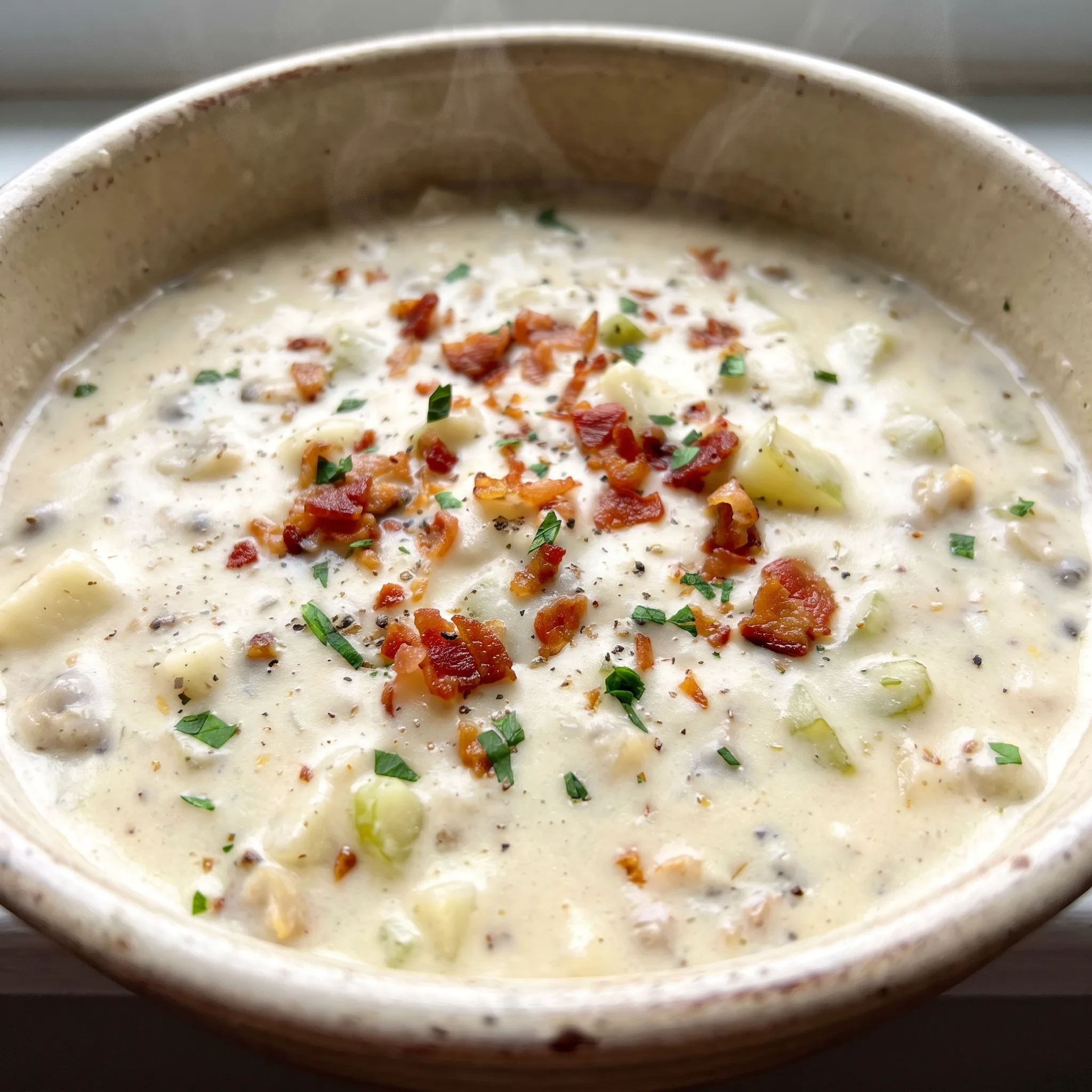
Creamy Clam Chowder with Bacon
Ingredients
Method
- Warm a large pot over medium heat. Fry the bacon for 5–6 minutes until golden and crispy. Transfer the bacon to a plate, leaving the fat behind.
- Add 2 tbsp butter to the bacon fat. Sauté the onion, garlic, and celery for 4–5 minutes until softened.
- Incorporate the flour, stirring until it coats the vegetables.
- Pour in the chicken broth, reserved clam juices, potatoes, Italian seasoning, and bay leaves. Bring to a boil, then lower to a gentle simmer. Cook for 10–15 minutes until the potatoes are tender.
- Add the heavy cream and chopped clams. Season with salt and pepper to taste.
Three swaps that change how this chowder sets, and one you should skip
Canned chopped clams: Fresh or frozen chopped clams, about 1 pound, plus 1 cup bottled clam juice to replace the reserved can liquid. Fresh clams give a cleaner, sweeter brininess, but they need to be chopped fine and added at the very end like the canned ones, just to heat through. If you add them earlier, they toughen.
Bottled clam juice can be saltier than what’s in the cans, so taste before you season. Frozen chopped clams work the same way, thaw and use their liquid if it’s not too watery.
Heavy cream: Half-and-half or whole milk, using the same 1 cup the recipe calls for. The chowder will be thinner and less rich. Half-and-half brings some body, whole milk almost none.
To compensate, you can mash a few of the cooked potatoes against the side of the pot to thicken it, or stir in a tablespoon of flour mixed with cold water and simmer a minute. The flavor stays close, but the spoon-coating quality fades.
Bacon: Salt pork or smoked sausage, same 6 slices or about 6 ounces, chopped. Salt pork gives a milder, porky saltiness without the smoke, so the chowder tastes cleaner but less complex. Smoked sausage, like andouille or kielbasa, brings a different smoke and a bit of spice.
Both render fat, so the base still works, but you may need to add a little butter if the meat is lean. The crispy bits on top will taste different, obviously.
All-purpose flour: Gluten-free all-purpose blend, same 1/3 cup. Most blends thicken similarly, but some leave a slightly gritty texture.
Whisk it into the vegetables the same way and cook a minute before adding liquid. The chowder may not get quite as silky, and it can thin out on reheating. If you want to skip flour entirely, the soup will be brothy, not creamy, no matter how much cream you add.
That’s a different dish.
Tips
- Rinse the diced russets under cold water until the water runs clear, then shake them dry before they go in. That rinse washes off surface starch, which is what makes diced potatoes glue together and cloud the broth. The starch left inside the cubes still thickens the chowder as they simmer, but the pot stays cleaner and the potatoes keep their edges for the full 10 to 15 minutes.
- Cut the potatoes into roughly 1/2-inch cubes, all the same size, and add them with the broth rather than waiting. Uniform cubes finish at the same time, so you don’t end up mashing the soft ones to thicken the pot while the firm ones still resist a fork. At that size they soften in 10 to 15 minutes and shed just enough starch to body the broth before the clams and cream go in.
Storage and Serving: How This Chowder Holds
Eat this chowder the day you make it, ideally within two hours of the pot coming off the heat. That’s when the potatoes still hold a clean edge and the clams stay tender. Cool leftovers within an hour, then refrigerate in a shallow container with the lid ajar until the middle is cold, about 30 minutes, before sealing.
It keeps 3 days. The roux and potato starch keep absorbing liquid as it sits, so day-two chowder looks thicker than what you put away.
That’s expected, not spoilage. Reheat one portion in a saucepan over low heat, adding a splash of chicken broth or cream until it pours like it did on day one.
Never let it boil or the cream can break. The bacon goes on after reheating, not before, so it stays crisp. Freezing doesn’t work here: dairy sauces separate and potatoes turn grainy, so keep it in the fridge and eat it within the window.
The hard step is the final addition of cream and clams: the pot must be off the boil or at a bare simmer, because cream’s emulsion is stable only below a boil and canned clams are already fully cooked. Watch for the surface to lose its glossy sheen and for small fat flecks or a grainy texture to appear, that is the cream beginning to break, and at that point the chowder cannot be fully re-emulsified. The clams give a different signal: they tighten and squeak against the spoon when overheated, so they should only be heated through until just firm and opaque.

Frequently Asked Questions
Can I make this clam chowder ahead of time?
You can, but keep the window tight. Cook it through, cool the pot within an hour, then refrigerate in a shallow container with the lid ajar until the middle is cold before sealing. It keeps three days, and the roux and potato starch will pull the liquid tighter overnight, so day-two chowder looks thicker than what you put away.
Reheat one portion over low heat with a splash of broth or cream, and add the bacon after, not before, so it stays crisp.
Why did my clam chowder turn out watery?
The most likely culprit is the flour step. If the flour didn’t coat the softened onion, garlic, and celery before the chicken broth went in, it never thickened anything, and the cream you poured at the end just thinned the pot further.
Check the pot for loose flour at the bottom before you add liquid; the vegetables should look dry and pasty, not wet. A second cause is skipping the reserved clam juice, which adds body and clam flavor you can’t get back.
If the potatoes broke down past holding their shape, that also thins the texture instead of giving it substance.
How do I keep the clams from getting tough?
Treat them as the last thing in the pot. Canned clams are already cooked, so they only need to warm through, and any real heat past that tightens them into rubber.
Once the potatoes are tender, take the pot off the boil, stir in the cream and clams, and let the residual warmth do the work. If you taste one and it’s springy rather than tender, you heated it too long; the fix is to pull the pot off the heat sooner next time.
What is the difference between this and traditional New England clam chowder?
Two herbs separate it. Italian seasoning and bay leaves go in with the broth and potatoes, and they steep into the liquid as it simmers, so the finished bowl has a faint green, savory backdrop you don’t get in the traditional version. Traditional chowder leans on the bacon, cream, and clam juice alone, which can read heavy by the last spoonful.
Here the herbs cut that weight without turning into distinct oregano or basil notes. Fish the bay leaves out before serving, or leave them and warn your guests.
Can I freeze this clam chowder?
No. The dairy separates and the potatoes turn grainy once thawed, and no amount of stirring brings that back. Keep it in the fridge instead and eat it within three days, reheating one portion at a time over low heat with a splash of chicken broth or cream.
Never let it boil during reheating or the cream can break and you’ll see flecks. The bacon goes on after reheating, not before.
