
Blending is where a squash soup can turn on you. The potatoes that gave the pot its body are the same thing that can drag the texture from silky to pasty, and it happens in a matter of seconds, often before you realize the last lumps were already gone. This butternut squash apple soup leans on two small Granny Smiths and a measured half teaspoon of curry powder for its depth, a sweet-savory puree that eats like a meal once the croutons go on top.
The margin between a bowl that coats a spoon and one that sits in a gummy mound is narrower than most cooks expect. Knowing where that line sits is most of the work.
Why the Vegetables Go In Stages
Start with the onion, carrot, and celery in shimmering oil. They need the direct heat first, sweating and browning to build a savory base that later ingredients can’t provide.
When you add potatoes, squash, and apple, they go into a pot that’s already hot and flavorful. But they don’t need the same aggressive treatment.
These softer vegetables and fruit release sugars that can scorch quickly. Stir them as they cook, letting them soften without coloring too much. This staged approach means the carrots and celery get the time they need to turn tender, while the squash and apple keep their sweetness intact.
If you dumped everything in at once, the squash would break down before the carrots were ready, and the apple would turn to sauce. The pot should smell sweet and earthy, not acrid.
That’s your cue that the timing is right.
The Vinegar That Wakes It Up
One tablespoon of apple cider vinegar goes in with the stock and water. You might wonder why a soup built on sweet squash and apples needs acid. Taste a spoonful of the broth before it goes in: it’s rich, but flat.
The vinegar cuts through that natural sugar, giving the soup a brightness that makes you want another spoonful. Without it, the pot tastes cloying, like dessert that forgot to be dessert. The vinegar doesn’t announce itself; it just makes the squash taste more like squash.
You won’t detect a sour note in the final bowl, only a cleaner, more balanced flavor. If you skip it, the soup still cooks, but it lacks that little lift that separates a good pot from a great one. A squeeze of lemon at the table would fix it, but why wait?
Sage Leaves In, Then Out
Two tablespoons of fresh sage leaves, or thyme if you prefer, go into the pot whole. They simmer along with the vegetables, steeping like tea.
The leaves release their herbal oils into the liquid, but they stay intact. When the vegetables are tender, you fish them out and discard. This way, you get the flavor of sage without little fibrous bits in your pureed soup.
If you chopped the sage and left it in, the blender would pulverize it into tiny green specks that taste bitter and gritty. Whole leaves give you the essence and nothing else.
The same goes for thyme sprigs. You’re after a subtle background note that makes people ask what’s in there, not a punch of herbs that overpowers the squash.
The soup should taste smooth and clean, with just a hint of something savory.
Blend Gently, Don’t Whip It
Once the vegetables are tender, puree the soup until completely smooth. An immersion blender is easiest: keep it submerged and move it around the pot. If you’re using a countertop blender, work in batches and fill it no more than halfway.
The goal is a silky texture, but there’s a limit. Potatoes release starch when they’re blended, and too much blending turns that starch gluey.
Your soup can go from silky to pasty in seconds. So blend just until the last lumps disappear, then stop. If you’re not sure, err on the side of less.
You can always give it another pulse, but you can’t undo over-processing. The finished soup should coat a spoon evenly, not sit in a gummy mound. Taste it: if it feels heavy on your tongue, you’ve gone too far.
The Croutons Make the Bowl
Croutons are not an afterthought. They’re the contrast that makes each spoonful of smooth soup interesting. Cubed white bread, tossed with olive oil and salt, then toasted until crisp.
The salt on the croutons seasons them just enough to complement the soup, not compete with it. Add them right before serving, so they stay crunchy. If they sit in the bowl, they’ll soak up broth and turn soggy.
You want that textural difference: the soft, sweet puree against the shatter of a good crouton. A few on top of each bowl, and maybe a drizzle of olive oil if you like. The soup is the star, but the croutons are what keep you coming back for the next bite.
They’re simple, but they matter.
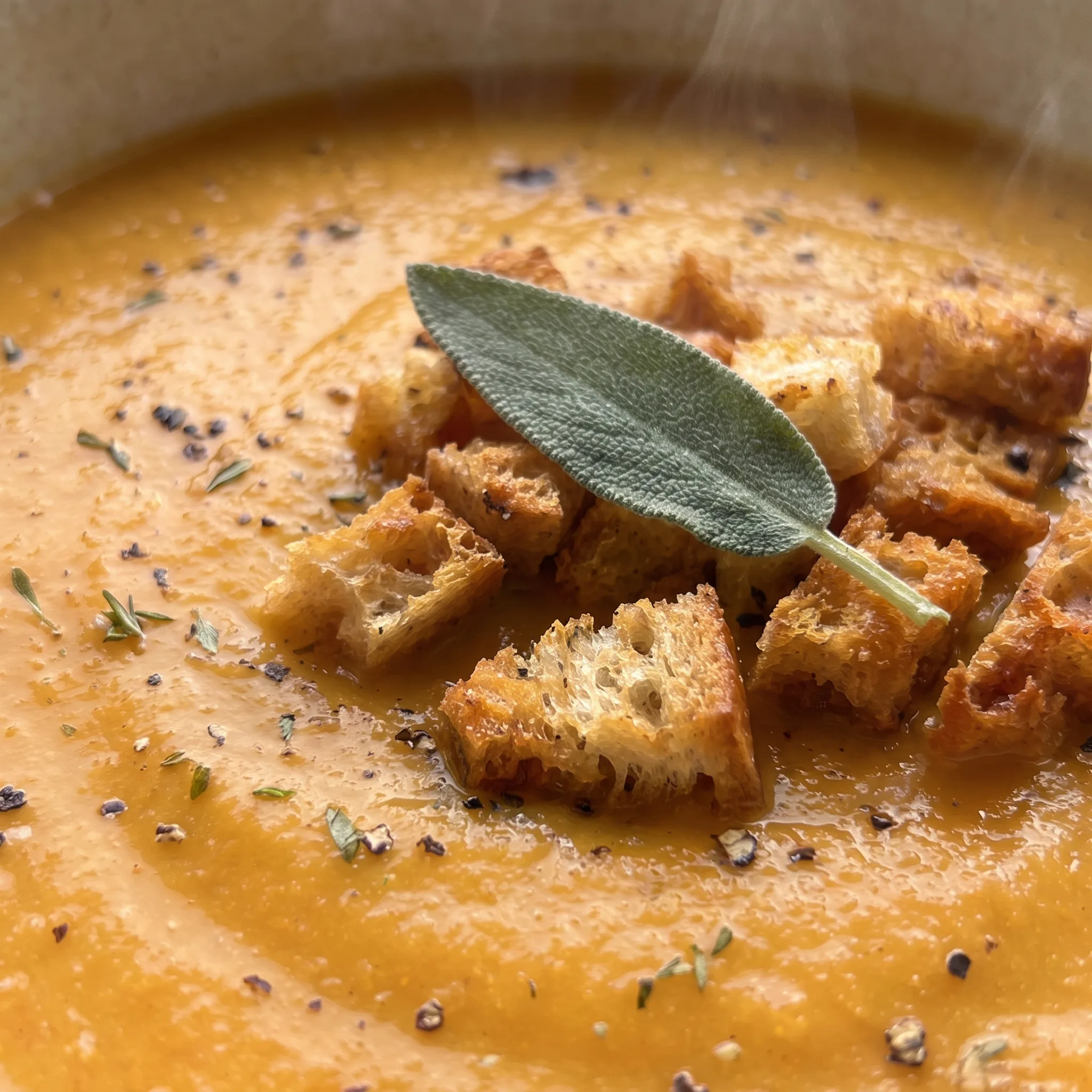
What to Buy and How to Prep for This Soup
Butternut squash: Peel and cut into 1/2-inch pieces; pieces that size cook evenly and puree smooth.
Granny Smith apples: Use 2 small Granny Smiths, peeled and cut into 1/2-inch pieces; their tartness balances the sweet squash.
Potatoes: Yukon gold or russet, peeled and cut into 1/2-inch pieces; waxy Yukons hold shape better, but either works.
Fresh sage leaves: 2 tablespoons whole leaves; keep them intact so you can fish them out before blending.
Curry powder: 1/2 teaspoon; a little goes a long way, so measure carefully to avoid overpowering the squash.
Potatoes are full of starch granules that swell and gelatinize during the 20-minute simmer. When an immersion blender or countertop blender runs too long or too fast, those swollen granules rupture and release free starch into the liquid, which thickens into a pasty, glue-like consistency rather than a silky puree. The same starch that makes the soup silky at a light blend turns gummy the moment it is over-sheared.
Reading the Pot at Four Points Where It Can Go Wrong
When the carrots and celery are ready for the next addition
After 5 to 7 minutes, the onion, carrot, and celery should be just starting to brown. That color means they’ve built a savory base. If they’re still pale and steaming, they need more time; if they’re dark, they’ll taste bitter.
The squash and apple go in next, and they need a hot, flavorful pot, not a scorched one. Pull the pot off the heat for a moment if you’re unsure.
Judging fork tenderness before you blend
At the 20-minute simmer, a fork should slide into the squash and potatoes with no resistance. If it meets any give, simmer another 5 minutes and check again.
Underdone vegetables leave gritty bits after blending, and no amount of extra blending fixes that. Overcooked ones turn watery. The fork is your only reliable test here; a knife can lie by cutting through underdone pieces.
Stopping the blender before the soup turns gluey
Potatoes release starch when blended, and that starch can turn the soup pasty. Blend just until the last lumps disappear, then stop. The texture should coat a spoon evenly, not mound.
If it feels heavy on your tongue, you’ve gone too far. There’s no fix except thinning with water, which dilutes flavor. Err on the side of less blending; you can always pulse again.
Knowing when the croutons are done
Croutons go from toasted to burnt in under a minute. At 375 F, check them at 5 minutes.
They should be lightly browned and crisp, not dark. If they’re still pale, give them another minute. Burnt croutons taste acrid and will ruin the bowl.
Pull them out when they’re just golden; they’ll crisp further as they cool. Add them right before serving so they stay crunchy.
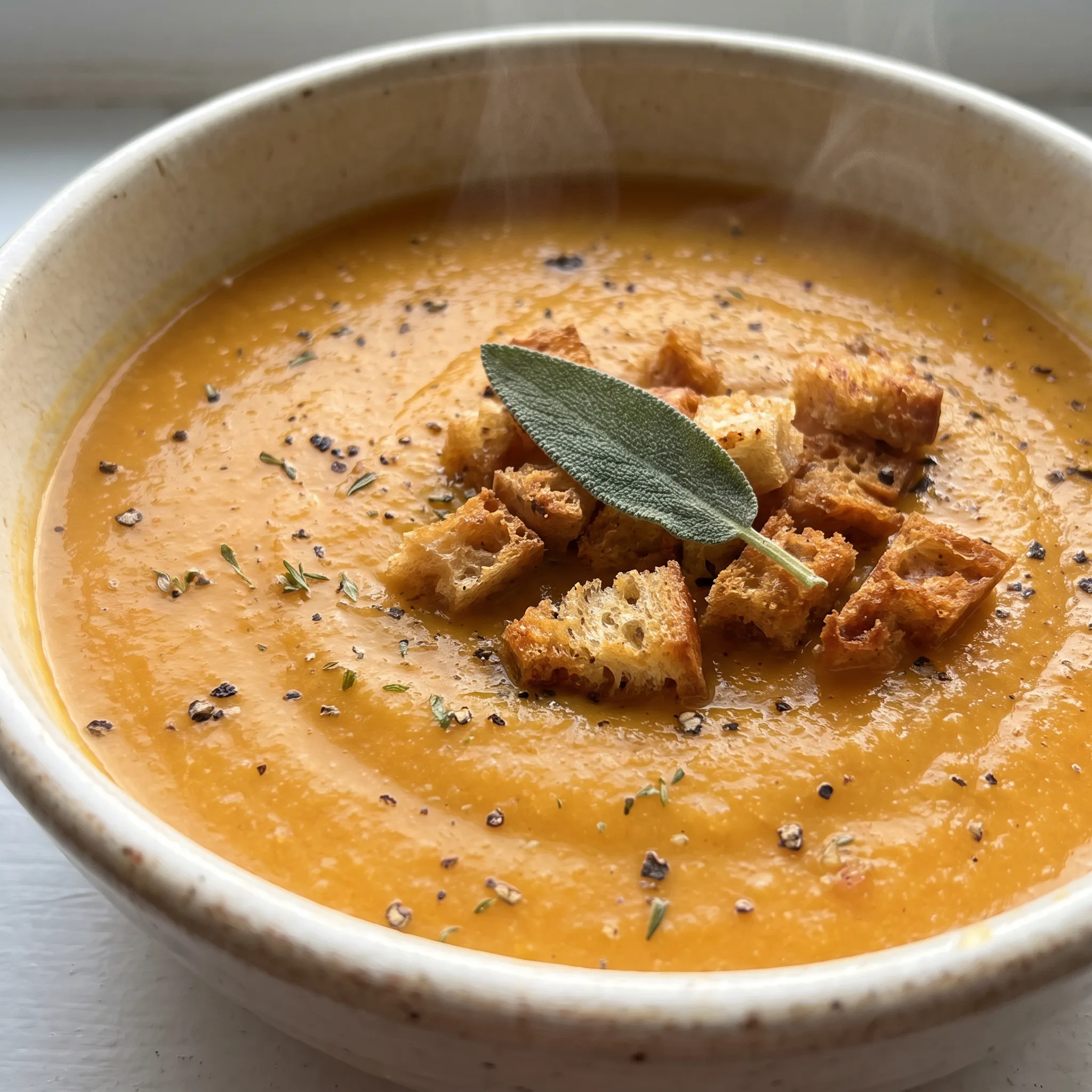
Butternut Squash Apple Soup with Croutons
Ingredients
Method
- In a large cooking pot or Dutch oven, warm oil over medium-high heat until it shimmers and is hot, about 1-2 minutes.
- Add onion, carrots, and celery; sauté, stirring frequently, until they just start to brown, about 5 to 7 minutes. Season with 1/2 teaspoon salt and pepper.
- Add potatoes, butternut squash, and apples. Cook for 10 minutes, stirring as needed.
- Pour in apple cider vinegar, stock, and water. Add remaining 1/2 teaspoon salt, curry powder, cinnamon, and whole sage leaves. Bring to a boil. Then, reduce heat and simmer, covered, for 20 minutes. Test vegetables with a fork to see if they’re cooked through and tender. If you can easily insert a fork, then they are fork tender and ready.
- Meanwhile, prepare the toasted croutons. Preheat oven, toaster oven, or air fryer to 375 F. Place cubed bread in a small mixing bowl, then drizzle with olive oil and salt. Place bread on a parchment lined baking sheet and bake for 5-7 minutes, or until bread is lightly toasted and brown.
- Once the soup is ready, discard the sage and use an immersion blender to puree the soup directly in the pot or carefully transfer the soup to a food processor or blender. Process until soup is fully puréed (do this in batches, if needed) and return the soup to the pot. If the soup is too thick, add a little water to thin it out. If it is too watery, simmer on low until soup thickens to desired consistency. Taste and adjust seasoning as needed.
- Top soup with toasted croutons and serve warm.
Storage and Serving: Eat It the Day You Blend It
This soup is at its best within a few hours of blending, and the croutons go on at the moment you serve, never before. What happens overnight in the fridge is starch. The potatoes and squash keep releasing it as the soup sits, so a cold bowl tomorrow is noticeably thicker than what you put away, and the puree dulls.
That’s not spoilage, it’s chemistry, and it’s fixable. Reheat gently on the stove, then loosen with water or stock a splash at a time until it coats a spoon the way it did fresh.
Taste and reseason: cold storage mutes salt, the curry, and the vinegar’s lift, so it usually needs a pinch more salt and a few drops of cider vinegar to wake back up. Keep the croutons in a jar at room temperature, or they’ll go soft in the fridge. They crisp back in a 375 F oven for 2 to 3 minutes.
Leftovers hold about 3 days refrigerated. Freeze the soup, not the croutons, for up to 2 months; thaw overnight in the fridge and reheat, expecting to thin it again.
Tips
- Taste the soup only after it is pureed and thinned to the consistency you want. Blending concentrates the squash and apple sweetness and changes how salt reads on your tongue, so a pinch that seemed right while the pot was chunky can taste like too much once the texture is smooth. If it tastes flat after blending, add salt a few grains at a time; if it tastes sweet and heavy, a few more drops of cider vinegar will bring it back into balance.
What You Can Swap in This Soup, and What You Can’t
Vegetable stock: Chicken stock, same 3 cups. The soup tastes a little richer and more savory. It won’t be vegetarian anymore, but the squash and apple still lead.
Use a good-quality stock; a weak one leaves the pot flat.
Potatoes (Yukon gold or russet): Either works, but they don’t behave the same. Yukon golds break down less and give a slightly silkier body. Russets soften more and thicken the soup, but they can turn gluey if you over-blend.
If you use russets, stop the blender the moment the last lumps vanish.
Fresh sage leaves: Dried thyme is a weaker stand-in. Use about 1 teaspoon, tied in cheesecloth or a tea ball so you can fish it out. You lose the piney sage punch.
Dried thyme leaves a milder, earthier note. The soup still tastes good, just less aromatic. If you have fresh thyme, use a few sprigs and discard them after simmering.
Apple cider vinegar: Don’t. Leave it alone.
That tablespoon is what keeps the sweet squash and apple from cloying. Skip it and the soup tastes flat and dessert-like.
Lemon juice at the table helps, but it’s not the same.
Granny Smith apples: Don’t swap them out. Their tartness balances the sweet squash and keeps the pot from tasting like pie filling. A sweeter apple like Fuji or Gala pushes the whole thing toward dessert.
If you must use another apple, taste and add a little more vinegar to compensate.

Frequently Asked Questions
Can I make this butternut squash apple soup ahead of time?
Blend it the day you plan to eat it if you can. The soup is at its best within a few hours of blending, because the potatoes and squash keep releasing starch as it sits, so a bowl from the next day is thicker and the puree tastes duller.
If you need to get a jump, do the chopping and keep the cut squash, apple, and potato in water in the fridge, then cook and blend fresh. Reheating leftovers is fine, just loosen with a splash of stock and taste for salt and vinegar before serving.
Why did my soup turn out too thick or too thin?
Too thick almost always means too much potato or too much blending. Russets soften more than Yukons and thicken the pot, and the blender turns that starch pasty fast, so stop the moment the last lumps vanish.
If it’s already heavy, stir in water or stock a splash at a time until it coats a spoon evenly rather than mounding. Too thin points the other way: watery squash, or vegetables simmered past tender so they’ve given up their body. Simmer uncovered on low until it thickens to where you want it, then reseason, since reducing concentrates the curry and salt.
How do I keep the croutons from getting soggy?
Add them at the moment you serve, not before, and keep any extras in a jar at room temperature rather than the fridge. Cold storage pulls moisture into the bread and they go soft within a day. If yours have already lost their snap, spread them on a sheet and crisp them back in a 375 F oven for 2 to 3 minutes.
The texture you’re after is a shatter against the soft puree, and that only lasts while the crouton stays dry.
What’s the difference between this soup and a classic butternut squash soup?
This one is built on a mirepoix base with potatoes for body, and the apple and cider vinegar push it somewhere more balanced than sweet. A classic version usually leans on squash and cream or stock alone, so it reads richer and sweeter. Here the curry powder and cinnamon sit in the background, and the sage steeps whole then comes out, leaving a clean herbal note instead of flecks.
The croutons on top add a savory, salty crunch you don’t get from a swirl of cream.
Can I freeze this soup?
Yes, the soup freezes well for up to 2 months, though leave the croutons out of it. Thaw overnight in the fridge and reheat gently on the stove.
Expect it to come back thicker than it went in, because the starch keeps working even in the freezer, so thin it with water or stock a splash at a time. Taste after reheating: cold storage mutes the salt, curry, and vinegar, so it usually wants a pinch more salt and a few drops of cider vinegar to taste like itself again.
