
Pumpkin puree is what makes these tricky. It carries enough water to slacken the batter fast, and the moment you stop stirring matters more than any single measurement.
What separates a tender ring from a rubbery one is restraint once the flour goes in. Baked pumpkin spice donuts skip the oil vat entirely, so there’s no greasy crust hiding a dense middle; the crumb has to be right on its own. The cinnamon sugar doesn’t cover for a tough interior either.
Get the mixing right and the coating is a crisp contrast. Get it wrong and you’ll know by the second bite. Room-temperature eggs help the batter come together smoothly, and plain canned pumpkin, not the presweetened pie filling, keeps the moisture where it belongs.
Why Bake Donuts Instead of Frying Them?
Baking powder provides the lift here, not yeast or hot oil. That gives a cakier, denser crumb than a fried yeast donut, closer to a tender muffin in texture. Without a vat of oil, the donuts don’t absorb extra fat; the only fats are the olive oil and butter in the batter, plus the butter brushed on later.
The result is a donut that tastes clean and breakfast-appropriate, not heavy. A donut pan shapes the batter into the familiar ring, but the eating experience is more like a baked good. You get a soft, slightly crumbly interior that pairs well with the cinnamon-sugar coating without any greasiness.
That’s the trade-off: less crisp shell, more tender crumb. For a morning treat or a snack that won’t sit heavy, this method delivers.
How Does Pumpkin Puree Affect the Batter?
Pumpkin puree brings a lot of water to the mix. That extra moisture can make the batter wet and slack, which means it’s easy to overmix once the flour goes in.
Overmixing develops gluten, and you end up with tough, rubbery donuts instead of tender ones. The fats here, olive oil and melted butter, help coat flour proteins and limit gluten development, but you still want to stop mixing as soon as the dry ingredients disappear. The batter should be thick but pipeable; if it’s too thin, the donuts may spread and lose their shape in the pan.
A thick, scoopable consistency is what you’re after. When you pipe it, the batter should hold its shape and not run. That thickness is a sign you’ve mixed just enough.
What Makes the Cinnamon Sugar Coating Stick?
Melted butter is the glue for the cinnamon-sugar coating. Brushing it all over the cooled donuts ensures the sugar mixture adheres to every surface, including the crevices and the hole.
If the donuts are even slightly warm, the butter will melt too much and the sugar will dissolve or slide off, leaving a soggy exterior. The coating adds a crunchy, sweet layer that balances the earthy pumpkin flavor and soft crumb.
That contrast is what makes each bite interesting: the slight resistance of the sugar crust against the tender interior. Wait until the donuts are completely cool before brushing and dipping.
The butter should be melted but not hot, so it sets up quickly and holds the sugar in place. The result is a donut with a crisp, even coating that doesn’t drip.
Pumpkin Pie Spice and Sugar Balance
Pumpkin pie spice is a blend of cinnamon, nutmeg, ginger, and cloves, and it delivers warmth and depth without any single spice shouting over the others. Brown sugar brings moisture and a molasses note, while granulated sugar sweetens without darkening the batter too much. Together with pumpkin puree, they create the signature pumpkin spice flavor you expect from a fall treat, no artificial syrups needed.
The cinnamon in the coating reinforces the spice blend, tying the interior and exterior flavors together. Each bite starts with the sugary crunch, then moves into the soft, spiced crumb.
The balance is important: too much spice and it turns bitter, too little and it tastes flat. This combination hits the mark, giving you a donut that tastes like pumpkin pie in ring form. The molasses from the brown sugar lingers slightly, adding a subtle depth that plain white sugar wouldn’t provide.
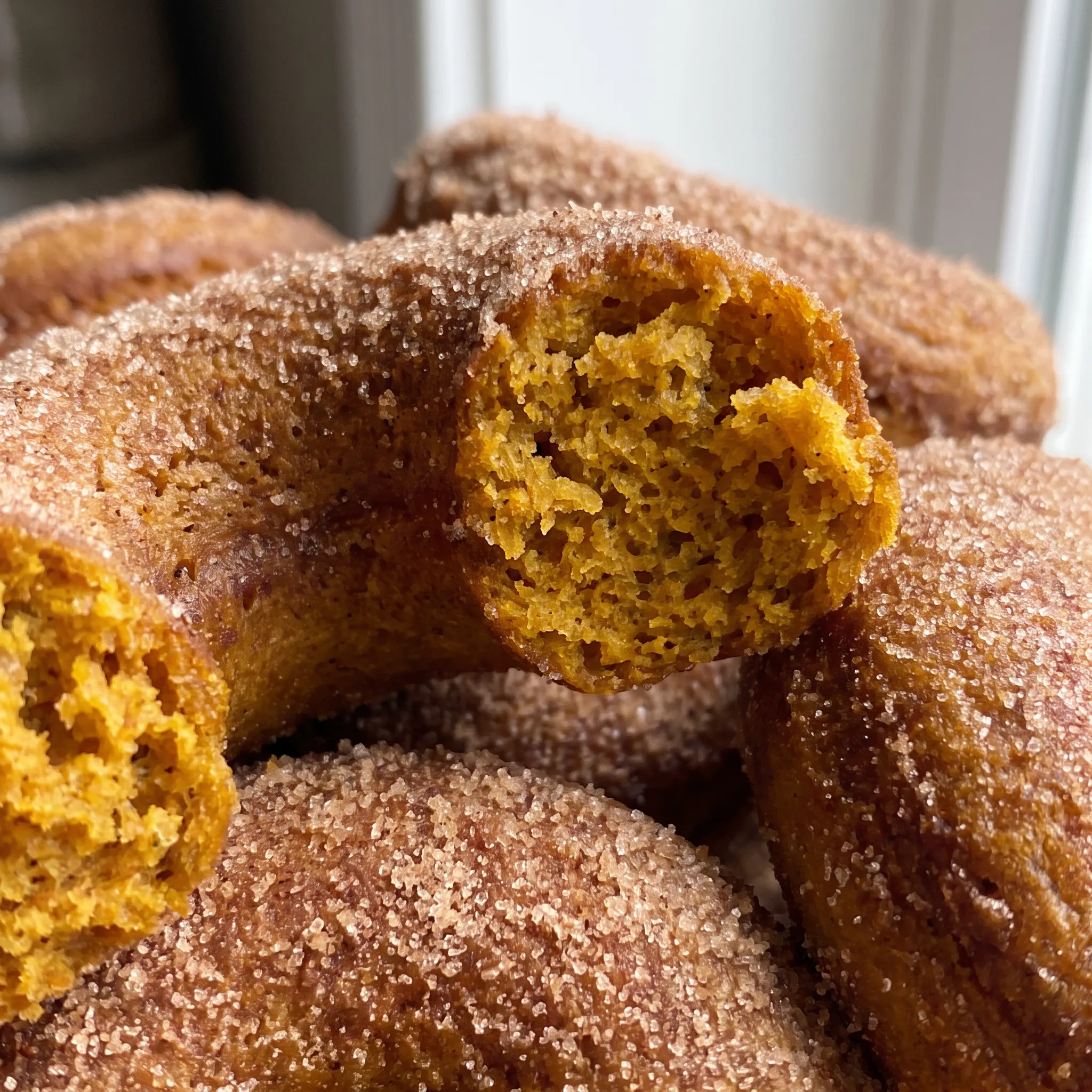
The Ingredients That Make or Break These Donuts
Pumpkin puree: Buy plain canned pumpkin, not pumpkin pie filling, which is presweetened and spiced and will throw off the batter’s moisture and flavor.
Olive oil: Use a mild or light olive oil so its flavor doesn’t compete with the pumpkin and spice; regular extra-virgin can be too grassy.
Brown sugar: Dark or light brown sugar both work, but dark has more molasses and gives a deeper color and slightly stronger caramel note.
Pumpkin pie spice: Check the date on your jar; spices lose potency after a year or so, and old pumpkin pie spice tastes dusty instead of warm.
Eggs: Room-temperature eggs blend more smoothly into the batter than cold ones, which can make the mixture look curdled before the flour goes in.
Butter for coating: Melt the 1/4 cup butter for the coating just before using; if it sits, it cools and thickens, making it harder to brush evenly.
How to Judge the Batter, the Bake, and the Coating on These Donuts
Knowing when the batter has been mixed just enough
Stop mixing the instant the last streaks of flour disappear. The batter will be thick and scoopable, not pourable. Overmix and the donuts turn rubbery as they cool.
If you’ve gone too far, you can’t undo it, but you can avoid toughening them further by piping right away rather than letting the batter sit and hydrate more flour.
Reading the batter’s thickness before it goes in the pan
The batter should hold a soft mound when dropped from a spoon. If it ribbons off and spreads, it’s too thin and the donuts will slump in the pan, losing their holes. A tablespoon or two of flour stirred in can rescue a slack batch, but only if you catch it before piping.
Thick batter that resists slightly is what you want.
Judging doneness at 25 minutes without relying on the timer alone
At 25 minutes, a toothpick inserted into the thickest part should come out with a few moist crumbs, not wet batter. The tops will feel springy and barely resist a light press. If the toothpick comes out clean but the donuts look pale, they’re done; color comes from the coating, not the bake.
Overbaking dries them out, so pull them the moment the pick is clean.
Waiting for the donuts to cool completely before coating
The donuts must be fully cool to the touch, not just warm. Any warmth and the brushed butter melts into the crumb instead of sitting on top, and the cinnamon sugar slides off or turns damp. If you’re unsure, wait the full 10 minutes in the pan, then move them to a rack and let them lose all heat.
The coating only sticks and stays crisp on a cold surface.
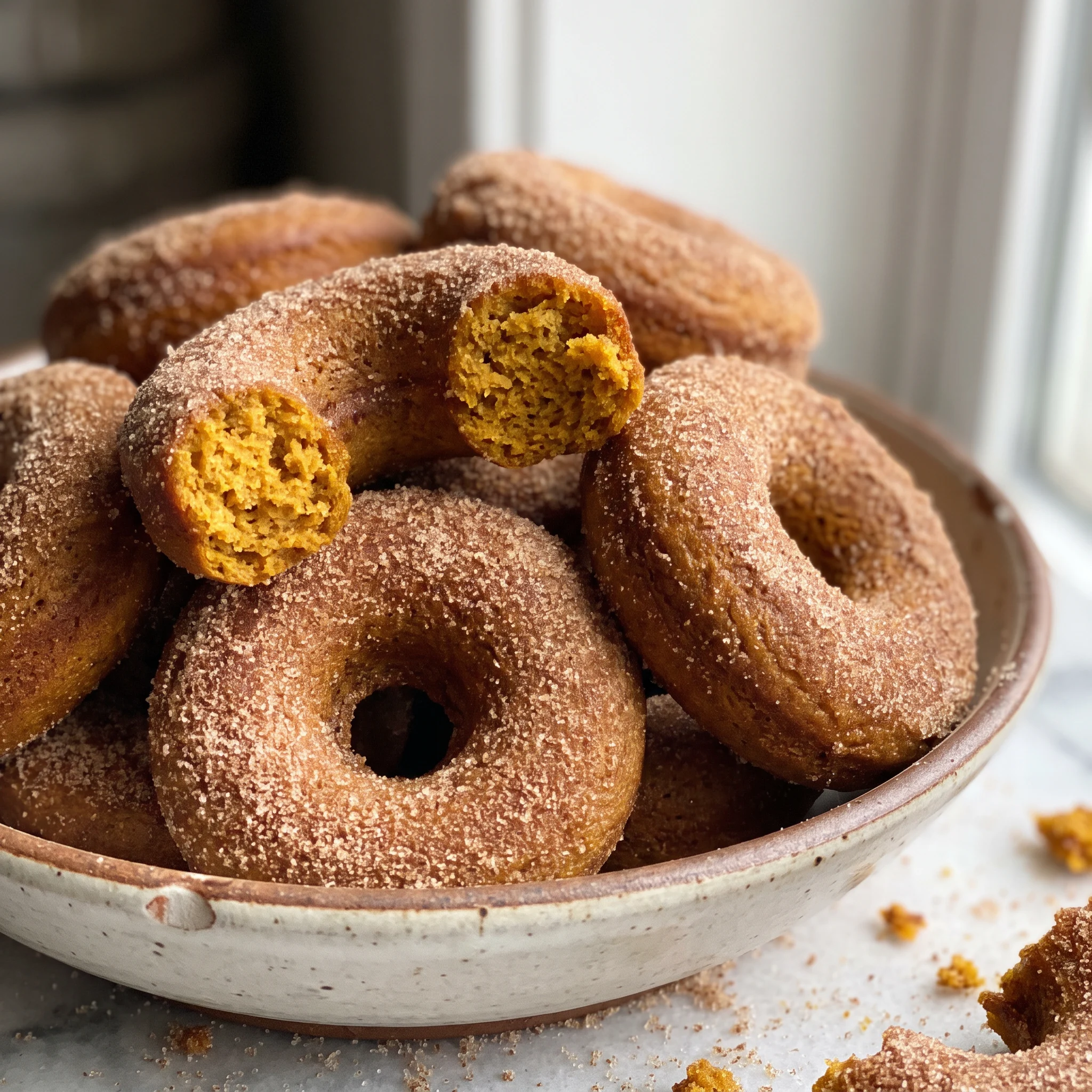
Baked Pumpkin Spice Donuts with Cinnamon Sugar
Ingredients
Method
- Set the oven to 350°F (175°C) and coat a large donut pan lightly with cooking spray.
- In a medium bowl, whisk the pumpkin puree, olive oil, melted butter, vanilla, eggs, brown sugar, and 1/2 cup granulated sugar until smooth.
- Stir in the flour, pumpkin pie spice, baking powder, and salt just until combined—avoid overmixing.
- Move the batter into a piping bag or a plastic zip-top bag placed in a cup. If using a plastic bag, cut off one corner and pipe the batter into the prepared donut pan. This recipe yields 8 large donuts.
- Bake for 25 minutes, or until a knife or toothpick inserted in the center comes out clean. Allow the donuts to cool in the pan for 10 minutes, then move them to a cooling rack.
- For the coating, combine the 3/4 cup granulated sugar and cinnamon in a shallow container.
- Once the donuts are completely cool, melt the 1/4 cup butter and brush each donut all over with the melted butter, making sure to coat every corner. One by one, dip the donuts in the cinnamon sugar to coat.
- Enjoy!
Storage and Serving for Baked Pumpkin Spice Donuts
These donuts are at their best within a few hours of coating, while the cinnamon sugar is still crisp against the soft crumb. After that, the sugar draws moisture from the donut and starts to dissolve, and the exterior turns damp and gritty. Keep leftovers in a loosely covered container at room temperature, not sealed tight, so some moisture can escape.
Eat them within a day. By the next day, the crumb dries out and the coating loses its crunch. The donuts don’t freeze well once coated; the butter and sugar turn wet and slide off during thawing.
If you want to freeze some, do it before coating: cool the plain baked donuts completely, wrap them airtight, and freeze for up to a month. Thaw at room temperature, then brush with melted butter and dip in cinnamon sugar just before serving.
To serve stored donuts, warm them briefly in a 300°F oven for 3 to 4 minutes to refresh the crumb, then recoat with fresh cinnamon sugar if needed. The coating always goes on last, right before eating.
Tips
- Check the pumpkin can’s ingredient list before you open it. Pumpkin pie filling is labeled that way and lists sugar and spices; it also carries more water than plain puree, so the batter turns slack and the donuts slump in the pan. Plain puree lists only pumpkin (sometimes with citric acid), and that is what the 366 g (1 1/2 cups) in this recipe assumes.
- If your only can is pie filling, don’t just use it as is. The 100 g (1/2 cup) brown sugar and 100 g (1/2 cup) granulated sugar in the batter plus the 150 g (3/4 cup) sugar in the coating already carry the sweetness, and the 2 tsp pumpkin pie spice carries the flavor. Pie filling adds both on top of that, so the donuts taste over-sweet and the spice turns sharp. Buy plain puree instead of trying to compensate.
What Swaps Work in This Baked Pumpkin Donut Batter, and What to Leave Alone
Pumpkin puree: Homemade roasted pumpkin or butternut squash puree can stand in for the canned, but drain it in a fine-mesh sieve for 30 minutes first. Canned pumpkin is the safe bet because its moisture is consistent; homemade often carries more water, which makes the batter slack and the donuts prone to spreading in the pan.
If you do use homemade, start with the same 366 g (1 1/2 cups) the recipe calls for, then check the batter’s thickness: it should hold a soft mound on a spoon. If it ribbons off and spreads, stir in a tablespoon of flour before piping.
Never reach for pumpkin pie filling: it’s presweetened and spiced, and it will throw off both the moisture and the flavor of the batter. Homemade puree can make the crumb slightly denser and less sweet, but the donuts still bake up tender if you adjust the flour.
The pumpkin flavor comes through a bit more assertively than with canned.
Olive oil: A neutral oil like canola, grapeseed, or vegetable oil can replace the olive oil measure for measure. Use the same 79 ml (1/3 cup).
If you keep olive oil, make sure it’s a mild or light one; regular extra-virgin can taste grassy and compete with the pumpkin and spice. Melted butter or coconut oil also work, but coconut oil adds a faint flavor of its own and butter makes the crumb a touch firmer once cool.
Neutral oil lets the pumpkin and spice lead. The texture stays soft either way, though butter-based batches can feel slightly more set after cooling.
Pumpkin pie spice: No jar on hand? Mix your own: for the 2 teaspoons the recipe calls for, combine 1 teaspoon ground cinnamon, 1/4 teaspoon ground ginger, 1/4 teaspoon ground nutmeg, and a pinch each of ground cloves and allspice.
If you’re out of one of those, a straight swap of 2 teaspoons ground cinnamon will still work, but the donuts will taste flatter, more like a cinnamon donut than a pumpkin spice one. Don’t increase the total amount of spice to compensate; too much turns bitter.
A homemade blend tastes fresher and warmer than a jar that’s been sitting for a year. Cinnamon-only donuts lose the roundness that nutmeg and ginger bring, and the coating’s cinnamon flavor starts to dominate.
All-purpose flour and baking powder: Don’t swap these. The 240 g (2 cups) flour and 2 teaspoons baking powder are the structure and lift of the whole recipe.
Gluten-free flour blends absorb liquid differently, and most need added binder (like xanthan gum) to keep the donuts from crumbling; if you try one anyway, expect a denser, more fragile donut and plan to adjust the liquid by feel. Swapping baking powder for baking soda will leave the donuts flat and soapy-tasting because there’s no acid in the batter to activate it.
If you’re avoiding gluten, this isn’t the recipe to experiment with on a first try. Changing the flour or leavener wrecks the rise and the tender crumb. The donuts may not hold their shape in the pan or may come out tough or gummy.
When flour meets the wet ingredients, stirring activates gluten proteins; the more you mix, the more they cross-link into a rubbery network. Pumpkin puree adds water that can make the batter look loose, tempting you to keep stirring, but the batter should be thick and pipeable, not thin. Stop as soon as the last dry streaks disappear, any extra strokes past that point are already developing gluten, and once the batter is smooth and elastic, the damage is done.

Frequently Asked Questions
Can I make the batter ahead of time and bake the donuts later?
Mixing ahead works against you here. Baking powder starts reacting the moment it hits the wet ingredients, and the pumpkin puree keeps hydrating the flour while the batter sits, so a batch held in the fridge pipes thicker and bakes up tighter than one that goes straight into the pan.
If you need to split the work, measure the dry ingredients into one bowl and the wet into another the night before, then combine them right before piping. The coating is the other half of this: it goes on last, right before eating, so any advance work should stop at the plain baked donut, which the storage notes cover.
Why did my baked pumpkin donuts turn out dense and rubbery?
Nine times out of ten it’s overmixing once the flour goes in. Pumpkin puree is heavy with water, and every extra stir past the point where the last dry streaks vanish builds a tougher crumb; the batter should look thick and scoopable, not smooth and glossy. Pull the spoon out and stop while a few flour pockets still show, since they disappear as you fold the batter into the bag.
Overbaking is the second thing to check: a toothpick at the center should come out with a few moist crumbs, and if it comes out bone dry, the donuts were in too long. Old baking powder is a distant third, and you’d see it as a flat, sunken top rather than a chewy one.
How are these baked pumpkin spice donuts different from traditional fried donuts?
The crust is the giveaway. Fried dough hits hot oil and puffs almost instantly, giving a thin, crisp shell and a stretchy interior; here the batter rises on baking powder in a ring pan and comes out with a soft, slightly crumbly crumb, more like a muffin that happens to be shaped like a donut. With no oil to drain, the only fat is the olive oil and butter in the batter plus the butter brushed on before the cinnamon sugar, so the donuts eat light rather than greasy.
The hole matters too: this batter is thick enough to hold its shape when piped, which is what keeps the ring from closing up in the oven.
