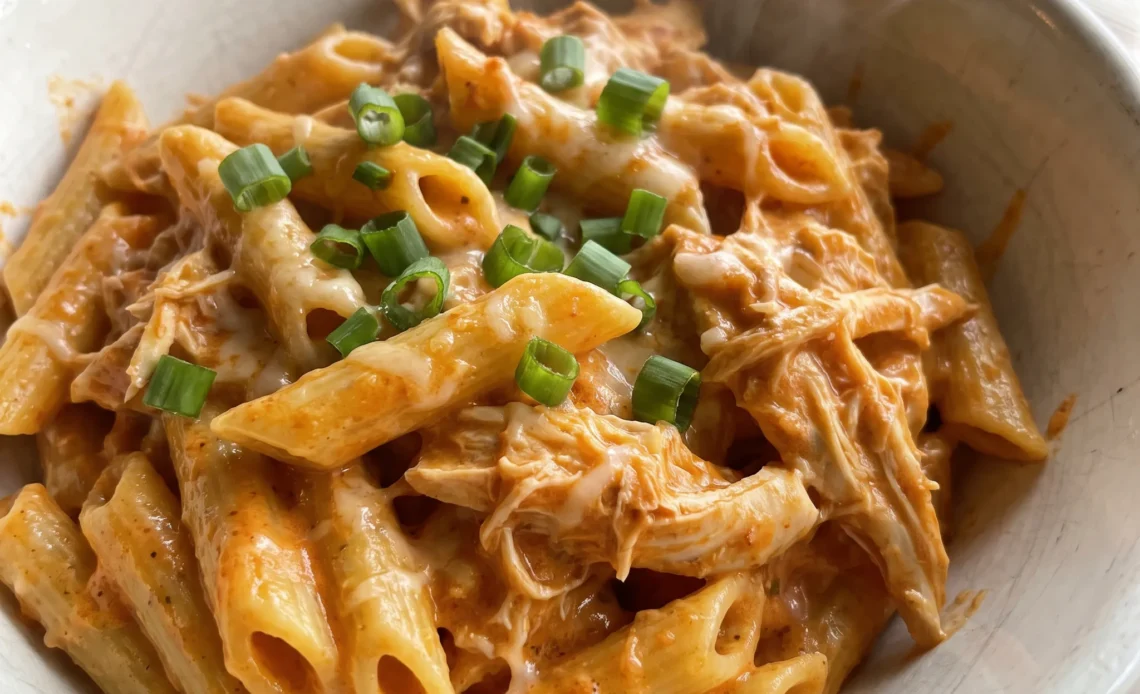
Buffalo chicken pasta, when it’s right, smells like vinegar and cream fighting it out, and the sauce clings to each noodle instead of sliding off. The tang hits first, then the dairy rounds it out.
That balance is the hard part. Push the heat too far and the sauce tightens around the pasta; pull it early and you’re eating noodles in pink broth. The window between those two is where the pot goes from fine to good, and it’s narrower than the ingredient list suggests.
What makes this a weeknight candidate is that everything happens in one pot, and the starch from the pasta does the thickening on its own. But that same shortcut is what makes the margin so tight. You’re not just boiling pasta and adding sauce at the end.
You’re building the sauce as the pasta cooks, and every minute past tender pulls it further from where you want it.
Buffalo sauce is vinegar-based, and when its acid hits the dairy-heavy base, it lowers the pH around the milk proteins, causing them to curdle and squeeze out water. If the sauce is also at a rolling boil when the cheese goes in, the heat makes the fat globules merge and separate instead of staying suspended. The result is a grainy, oily sauce rather than a smooth, clingy one.
Starch Thickens Without Flour
Pasta cooked right in the sauce throws off starch, and that starch is what gives the finished dish its body. The liquid has to be in the right proportion to the pasta or you end up with something that coats your mouth like paste.
Two cups of broth and one cup of heavy cream to twelve ounces of fettuccine or penne is the ratio that lets the starch thicken without overdoing it. Eyeball the liquid and you’re guessing at how much the pasta will drink up, and the sauce can turn gluey or thin.
The cream and cream cheese aren’t just for richness; they help keep the sauce smooth even as the buffalo sauce’s vinegar hits it. A proper batch of this buffalo chicken pasta clings to the noodles without pooling in the pot. That’s what you’re after when you stir everything together.
How Vinegar Affects the Sauce
Buffalo sauce is built on vinegar, and vinegar makes dairy tighten up. Pour it straight into hot cream and you can watch the sauce turn grainy or separate. Cream cheese is the insurance here: it’s soft and tangy, and it helps hold the sauce together when the acid comes in.
Heavy cream does some of that work too, but cream cheese is what gives the sauce a stable base. Parmesan and mozzarella go in later, once the pasta is tender and the pot is off the boil.
High heat plus acid plus cheese is a recipe for a broken sauce. If you’ve ever watched a cheese sauce go from smooth to stringy, you know the signs. This one stays glossy and pourable because the dairy has a chance to settle before the cheese melts in.
The buffalo chicken pasta should look like a cohesive sauce, not a curdled mess.
Cooked Chicken Keeps Timing Tight
Starting with cooked chicken is what makes a 25-minute pot of pasta possible. Raw chicken would need to cook through before the pasta goes in, and that changes everything: the liquid would have to account for juices, the simmer time would stretch, and the pasta would either overcook waiting for the chicken or the chicken would overcook waiting for the pasta.
Sautéing cooked chicken first isn’t about cooking it; it’s about waking up the garlic powder and getting some browned edges on the meat. Shredded chicken soaks up sauce and gives you a different forkful than diced, which holds its shape and stays distinct. Both work, but the texture of the finished buffalo chicken pasta changes.
Shredded feels more integrated; diced gives you bites of chicken that stand apart. Neither is wrong, but you’ll notice the difference when you sit down to eat.
Parmesan, Mozzarella, Cream Cheese
Each cheese in this buffalo chicken pasta does a separate job. Parmesan is dry and salty, so it dissolves into the sauce and seasons it through. Mozzarella is soft and moist, and it gives the sauce a little stretch without turning stringy.
Cream cheese adds body, the kind that makes the sauce feel substantial rather than watery. Toss all three in at once over high heat and you risk a grainy texture because the proteins tighten before they melt. Residual heat from the pot is enough.
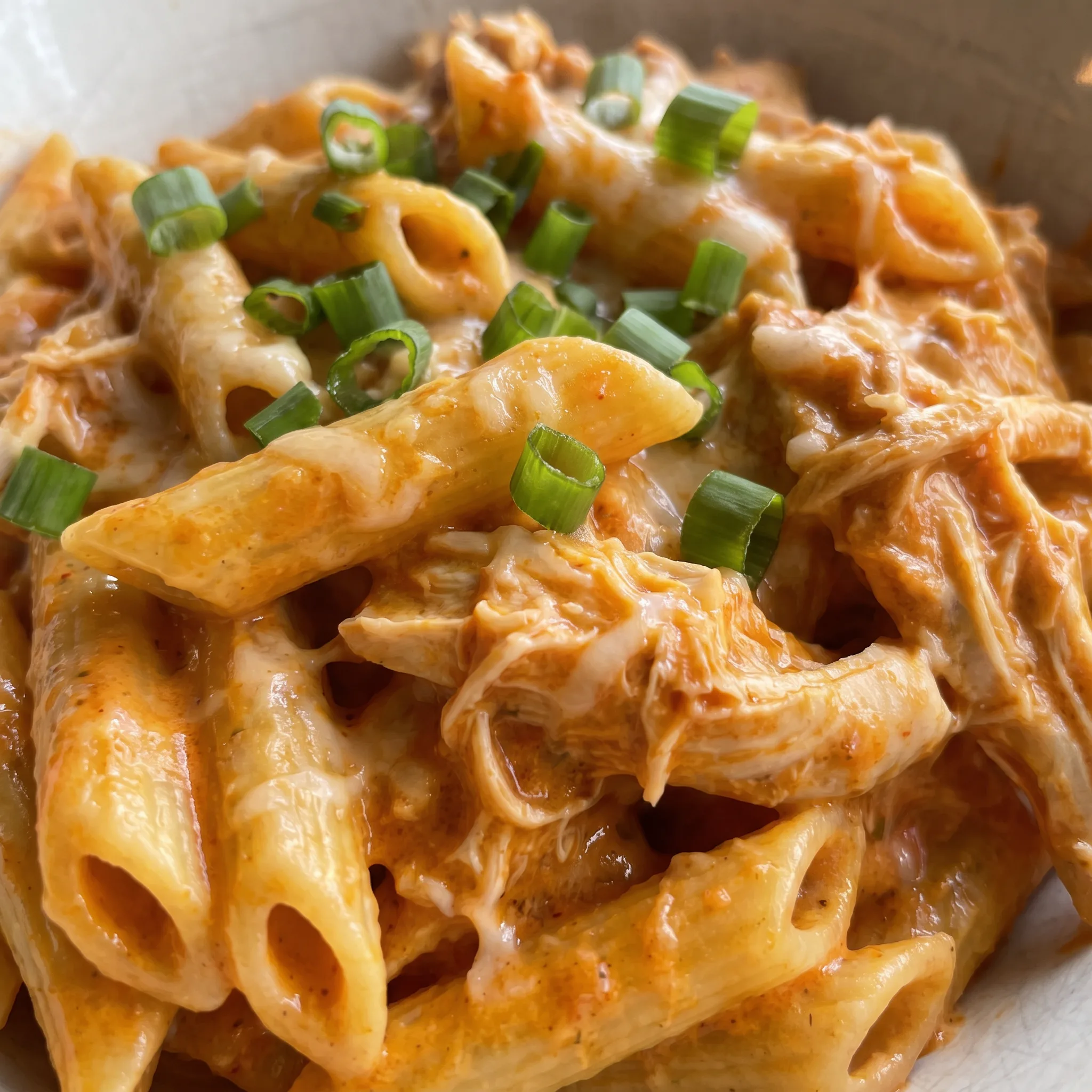
Stir them in after the pasta is tender and the burner is off, and they’ll melt into a smooth, even sauce. The sauce should look glossy and hold onto the noodles.
If it looks oily or separated, the heat was too high. A good stir is all it takes to bring it back together.
What to Buy and Prep Before the Pot Goes On
Buffalo sauce: Brands range from mild and buttery to sharp and vinegary, so taste yours first because it sets the whole pot’s character.
Heavy cream: Buy the real thing, not half-and-half, since the fat is what keeps the sauce from breaking when the vinegar hits.
Parmesan cheese: Grate it yourself from a block, because the pre-shredded stuff is dusted with starch that turns the sauce grainy.
Cream cheese: Let it sit out while you prep so it melts into the hot sauce instead of leaving little cold lumps behind.
Cooked chicken: Shredded or diced, your call, but shredded drinks up sauce while diced keeps distinct bites you can feel on the fork.
Reading the Pot at the Three Points That Decide This Dish
Judging the liquid level when the pasta first goes in
Two cups of broth and one cup of cream against twelve ounces of dry pasta looks like barely enough, and it is. The pasta sits above the liquid at first. That is normal.
If you add more liquid now because it looks dry, the starch has nothing to cling to and the finished sauce runs. Trust the ratio through the first few minutes of the boil, then judge by sound and sight: the surface should be moving gently, not foaming up the sides.
Catching the simmer before the pasta drinks the pot dry
Ten to twelve minutes uncovered at a low simmer is a narrow window. Around minute eight, tilt the pot and watch how the liquid moves. If it sheets off the bottom in a thin film, you are close.
If the pasta is still stiff at the center and the liquid is nearly gone, add a splash of broth or water, a tablespoon at a time. If the pasta is tender but the sauce is thin, keep it on the heat a minute longer to tighten.
Knowing when the pasta is done before the sauce is
Bite a piece of penne or a strand of fettuccine at minute ten. Tender with no chalky core is the target.
Pull the pot off the burner even if a little liquid remains, because the pasta keeps drinking as it sits. Overcooked pasta in this sauce goes slack and the whole pot reads as soft. If you catch it early, leave it covered off the heat for a minute; the residual warmth finishes it without turning it to paste.
Reading the sauce when the cheeses go in
Cheese goes in off the heat, and the pot should still be warm enough that the Parmesan, mozzarella, and cream cheese melt on contact with a stir. Watch the surface: it should turn glossy and coat the back of a spoon. If it looks oily at the edges or the cheese clumps rather than disappears, the pot was too hot.
Let it cool a minute, then stir again. A broken look now can still come back with slow stirring, no extra heat.
Tasting for the vinegar before you call it finished
Buffalo sauce varies by brand, and the vinegar bite is the thing to judge, not the salt. Taste a noodle with sauce on it. If the tang sits at the back of your throat and drowns the cream, add a tablespoon more cream cheese or a splash of cream.
If it tastes flat, a pinch of salt and a shake of garlic powder wakes it up. Adjust before the garnish goes on, because that is your last clean look at the pot.
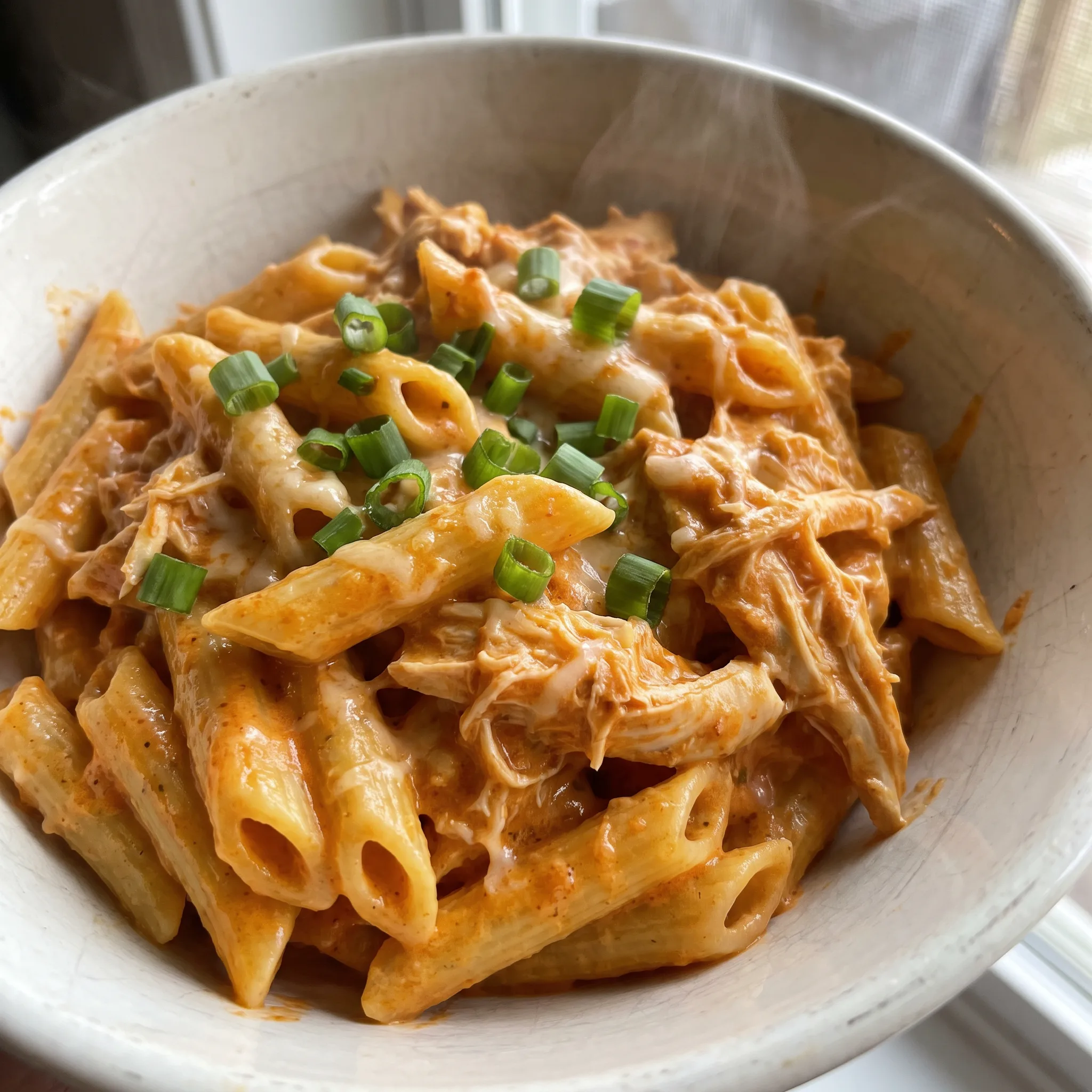
One-Pot Buffalo Chicken Pasta
Ingredients
Method
- In a large deep pot, heat olive oil or butter over medium heat. Add the cooked chicken, season with garlic powder, salt, and pepper, and sauté for 2–3 minutes until fragrant.
- Pour in the chicken broth, heavy cream, and buffalo sauce; stir to combine. Add the uncooked pasta directly into the mixture.
- Bring to a gentle boil, then reduce heat to low and simmer uncovered for 10–12 minutes until pasta is tender.
- Stir in Parmesan cheese, mozzarella cheese, and cream cheese until melted and smooth.
- Adjust seasoning as needed; garnish with chopped green onions or parsley before serving.
Storage, Serving Window, and Reheating Leftovers
Eat this buffalo chicken pasta within about 30 minutes of the cheese going in. That is the window where the sauce still coats each noodle without slackening.
Past an hour on the counter, the pasta keeps drinking, the sauce tightens, and the noodles go soft. Cool leftovers within two hours and refrigerate in a shallow container with a tight lid. The dairy and cooked chicken mean this keeps about 3 to 4 days in the fridge.
Cold, it firms up hard because the starch keeps absorbing liquid and the cream cheese sets. Reheat gently on the stovetop or at 50 percent power in the microwave, adding a splash of broth or cream per serving and stirring until loose. Skip freezing the assembled dish: heavy cream and cream cheese break when thawed, and the pasta turns grainy.
The cooked chicken alone freezes fine for up to 3 months. Garnish only what you are serving, right before it hits the plate.
Tips
- Pour a spoonful of your buffalo sauce into a small bowl and taste it cold before measuring the half cup. Vinegar and heat vary enough between brands that a sharp bottle can make the finished pot taste like hot cream with a bite, while a buttery one reads mild even at the full amount. If the sauce tastes aggressively sour on its own, start with a third of a cup and add more after the cheeses melt, since the Parmesan and cream cheese will already be pulling the sauce toward salty and rich.
Swaps That Survive the Vinegar, and the Ones That Sink It
Buffalo sauce: Any brand works, and you can dial heat up or down by mixing in a milder or hotter one, or cutting it with a tablespoon of melted butter for less bite. Heat and vinegar track together most of the time, so a hotter sauce usually carries more acid and hits the cream harder. Taste your bottle before it goes in the pot.
If the brand is sharp, the sauce can tighten around the dairy and read grainy even when nothing curdled. A buttery, mild sauce gives you a rounder pot that leans rich.
Start with the half cup the recipe calls for, taste a sauced noodle at the end, then adjust. Going hotter than you like means the vinegar sits forward and the cream disappears behind it.
Penne vs fettuccine: Either shape is in the card, and they are not interchangeable in how the sauce behaves. Fettuccine gives you long strands that drag sauce along in ribbons, and the flat surface holds a coating well when the sauce is loose.
Penne traps sauce inside the tubes and in the ridges, so each bite carries more, but the outside stays slicker and the pot can look like the sauce is pooling at the bottom even when it is not. The starch each shape throws off differs too, and penne tends to tighten the liquid faster. If you switch to penne, watch the pot a minute earlier than you would for fettuccine.
Heavy cream: Skip milk, half-and-half, or evaporated milk here. There is no swap that keeps the sauce intact.
The fat in heavy cream is what holds the sauce together when the buffalo vinegar comes in. Milk and half-and-half are mostly water, and that water thins the body while the acid has less fat to work against.
You will see it separate at the edges within a minute of the simmer, and no amount of stirring brings it back. If you need less richness, cut the cream to three quarters of a cup and add a quarter cup of broth, but keep real cream in the pot.
Cream cheese: Sour cream and Greek yogurt are the common stand-ins, and both fail the same way. Cream cheese melts into the hot sauce and gives it the stable base that keeps the vinegar from tightening the dairy. Sour cream and yogurt carry more water and less fat, and they break when they hit heat and acid, leaving a grainy, weeping sauce.
If cream cheese is unavailable, a tablespoon of butter whisked in at the end adds fat but not the same body, and the sauce will be thinner. Better to leave it in.
Parmesan cheese: Grate from a block, or use Pecorino Romano for a sharper, saltier pot. Pre-shredded Parmesan is dusted with starch and cellulose that do not melt, so the sauce turns sandy instead of smooth. A block you grate yourself dissolves into the sauce and seasons it through.
Pecorino brings more salt and a sharper bite, so pull back on the salt you add at the start and taste before the final seasoning. Same half cup either way, then adjust.
Pasta (gluten-free): Gluten-free penne or fettuccine works, but it drinks liquid differently. Gluten-free pasta throws off less starch and can go from tender to falling apart faster, so the sauce may not thicken the way you expect and the noodles can turn slack.
Keep the same twelve ounces, watch the pot starting at minute eight, and be ready to pull it early. A splash of broth at the end loosens a tight sauce if the pasta soaked up more than you planned.
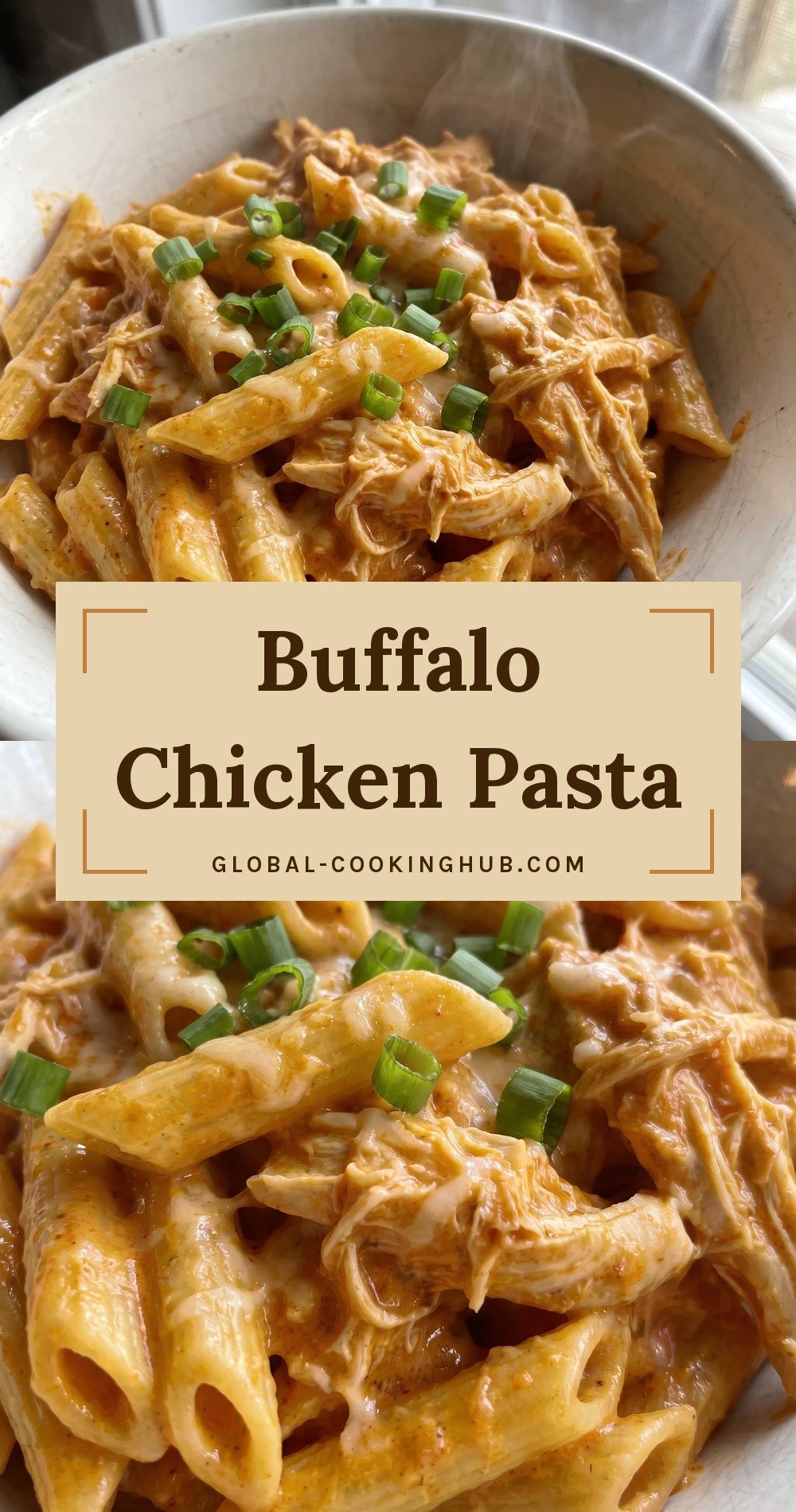
Frequently Asked Questions
Can I make this buffalo chicken pasta ahead of time and reheat it without the sauce breaking?
Make it ahead and you are reheating a pot of starch that has already set. The cream cheese firms in the fridge, and the pasta keeps pulling liquid, so cold leftovers look solid and dry. Reheat gently with a splash of broth or cream per serving, stirring until the sauce loosens and coats again.
A hard boil is what breaks it, so keep the heat low. It holds up best within the 3 to 4 day fridge window.
Why did my one-pot buffalo chicken pasta turn out dry or sticky instead of creamy?
The pot usually ran past the point where the pasta had drunk all the liquid and the starch had nothing left to loosen it. You can spot it coming: around minute eight the liquid sheets off the bottom in a thin film, and if you wait much longer the sauce tightens into a paste.
A splash of broth at the end brings it back. If the sauce looks oily instead, the heat was too high when the cheese went in, not a liquid problem.
How is this different from classic buffalo chicken dip or buffalo chicken pasta bake?
Dip is a thick, scoopable mixture built on cream cheese and served cold or warm with chips; the sauce here is looser and clings to noodles. A bake layers pasta, sauce, and cheese and goes into the oven, which gives you a browned top and a firmer set.
This version stays on the stovetop, finishes in the pot, and the sauce stays glossy and pourable. The texture is closer to a creamy pasta than a casserole.
What should I serve with buffalo chicken pasta to balance the heat and richness?
You want something cold and crisp to cut the cream and vinegar. A simple green salad with a sharp vinaigrette works, or celery and carrot sticks with a blue cheese dressing on the side. Bread is fine but adds more richness, so keep it plain if you go that route.
The garnish of green onions or parsley on the pasta already gives a fresh bite, so build around that.
Can I use rotisserie chicken or leftover grilled chicken for this recipe?
Yes, either works because the chicken is already cooked and only needs to warm through and pick up the garlic powder. Rotisserie chicken is seasoned and salty, so pull back on the salt you add at the start.
Grilled chicken brings a charred edge that can read smoky against the buffalo sauce, which some people like and some don’t. Shred it or dice it, and expect shreds to soak up more sauce than cubes.
