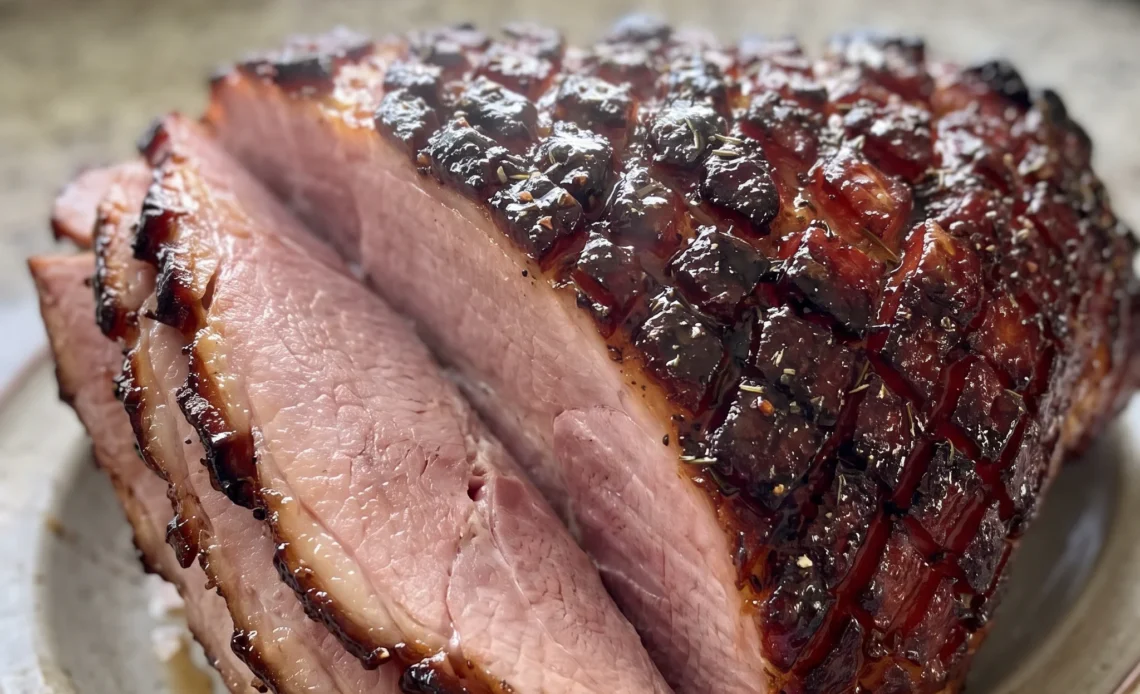
The hardest part of a brown sugar glazed ham isn’t the meat. It’s the sugar. A fully cooked bone-in ham only needs to come up to serving temperature, so the window between a lacquered, deeply caramelized crust and a bitter, scorched one is narrower than it looks, and the glaze gives you almost no warning before it crosses over.
That’s the real tension in this dish, and it’s why the basting schedule and the thermometer matter more than any single ingredient. Brown sugar, honey, and pineapple juice reduce into something thick enough to cling and darken in place; get the balance right and each slice carries smoke, caramel, and a little tang from the mustard.
Rest it before you carve, or the juice runs onto the board instead of staying in the meat. Feed a crowd without last-minute panic.
Why the Glaze Sticks and Browns
Brown sugar and honey do the heavy lifting here, and both are thick and sticky enough to grab the ham’s surface and stay put as they cook down. Pineapple juice keeps that sweetness in check. Without its acidity and liquid, the glaze would lean cloying and run thin, sliding off in the pan instead of clinging.
Mustard, cinnamon, and cloves work the other direction, cutting through the richness of a smoked ham so the sweetness reads as savory rather than candy. What a cook tastes at the end is a glaze that’s balanced, a little tangy, warm with spice, and thick enough to coat the back of a spoon.
That texture is what makes it grab the meat and caramelize in place. If the balance tips too sweet, the whole thing flattens out on the tongue. Get it right and each bite carries smoke, sugar, and spice together.
What the Diamond Cuts Actually Do
Those shallow cuts across the top aren’t decoration. Every one of them opens up surface area, and more surface means more places for the glaze to grab and hold as it bakes. The diamond pattern matters too.
It gives the glaze a set of little pools to collect in, so instead of sheeting off the rounded top of the ham, it settles into the crevices and caramelizes right there, giving you darker, stickier patches between the lines. A bit of fat renders out of those cuts as the ham heats, and that fat bastes the meat from the inside while the glaze works the outside.
Between the two, the top of the ham comes out glossy and burnished rather than pale and wet. You can see the difference across the surface as it cooks.
Layering Glaze Without Burning It
Basting on a schedule is a deliberate choice, not busywork. Each pass adds fresh glaze over what’s already there, so the sugars keep building in thin coats instead of one thick layer that would scorch before the ham is hot. The ham is already fully cooked, which changes the whole job.
You’re not cooking raw meat through; you’re heating it to serving temperature and building a glaze at the same time. That’s why the target is 140°F in the thickest part. Hot all the way through, still juicy, never dried out from sitting in the oven too long.
The glaze darkens gradually with each baste, going from pale amber to a deep, sticky brown. When it reaches that color and the thermometer reads right, the ham is where it needs to be.
Let It Rest Before You Carve
Pulling the ham out and cutting right away costs you juice. Give it time and the juices that pushed toward the surface during baking settle back into the meat, so the slices come out moist instead of leaking onto the board. A bone-in ham holds heat well, so a rest won’t leave it lukewarm; the bone and the mass of the roast keep it plenty warm for serving.
Carving is cleaner too. The meat firms up just enough that the knife moves through in even slices rather than tearing and shredding at the edges. Set it on the board, leave it alone, and come back to a ham that slices neat and stays juicy.
The glaze has set by then as well, so it clings to each piece instead of pooling underneath.
The Ingredients That Actually Matter for This Ham
Bone-in, fully cooked, smoked ham: Buy one that’s at room temperature before it goes in the oven, and bone-in for better heat retention and flavor.
Brown sugar: Use fresh, soft brown sugar; if it’s hardened, it won’t dissolve smoothly into the glaze.
Pineapple juice: Use unsweetened pineapple juice; the sweetened kind pushes the glaze toward cloying.
Whole grain mustard: The coarse seeds add texture and a pop of tang; don’t substitute smooth Dijon if you want that.
Fresh thyme and rosemary: Strip the leaves and chop them fine; dried herbs won’t give the same fresh, piney lift.
Ground cloves: A little goes a long way; measure carefully, as too much can overpower the whole glaze.
Reading the Ham as It Cooks: The Moments That Decide the Outcome
When the glaze is thick enough to cling
After 3 to 4 minutes of simmering, the glaze should coat the back of a spoon and leave a clear line when you drag a finger through it. If it’s still watery, it’ll run off the ham and pool in the pan, leaving the meat bare. Simmer it longer, but watch closely: once it’s thick, it can scorch in seconds.
Pull it off the heat the moment it reaches that coating consistency. The color deepens slightly as it reduces, too, so if it’s still pale and thin, it’s not ready.
The first baste tells you if the heat is right
At the 30-minute mark, the glaze should be bubbling gently at the edges and just starting to darken. If it’s already blackening in spots, your oven runs hot; drop the temperature by 25°F and tent the ham loosely with foil.
If the glaze looks exactly as it did when it went in, the oven is running cool and the ham will take longer to reach 140°F. Use that first baste as your calibration point.
Reading the crust as it builds
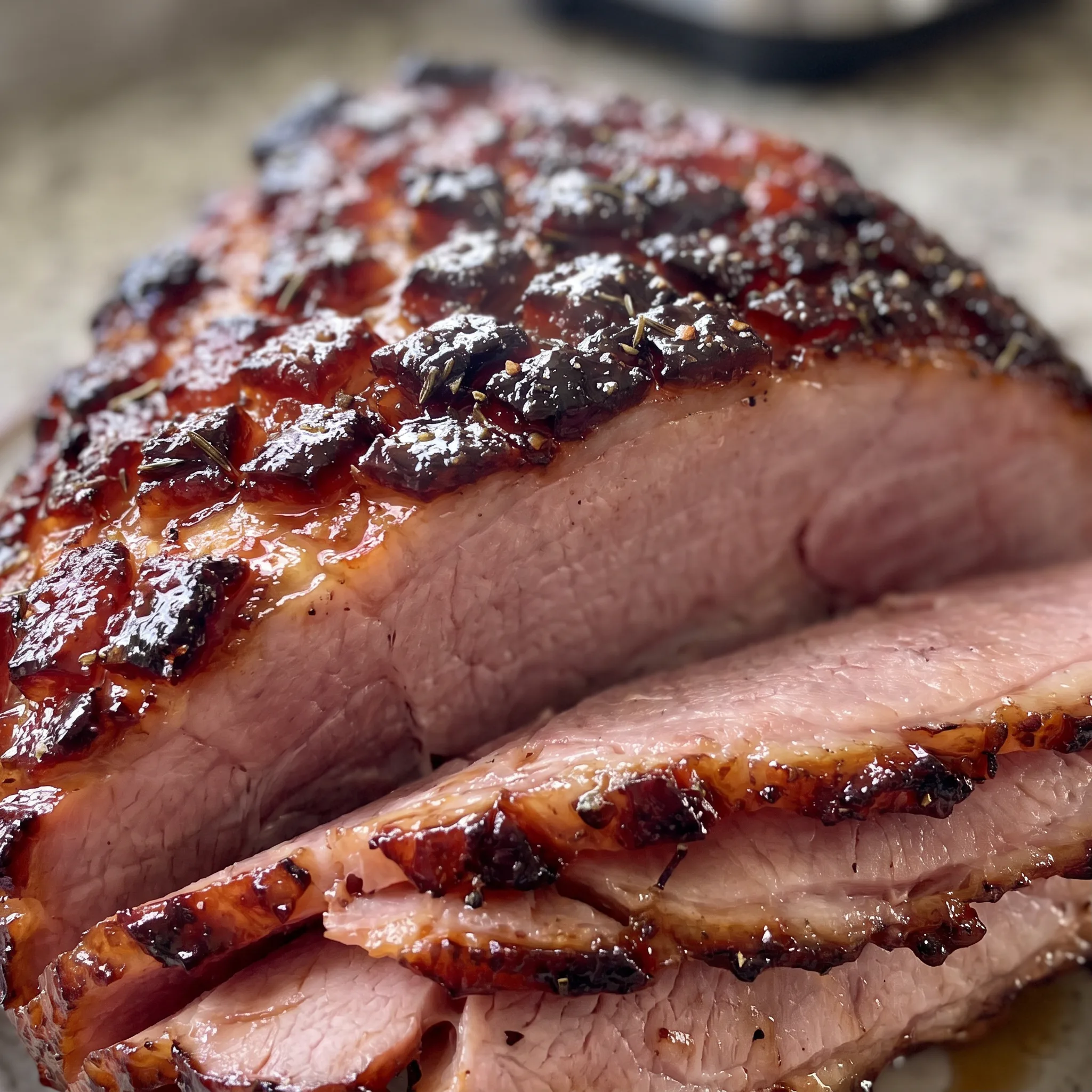
By the second or third baste, the glaze should be a deep amber with darker patches in the diamond cuts. Those darker spots are where the sugar has caramelized against the ham; they’re what you want.
If the whole surface is uniformly dark, the glaze is on too thick or the ham is too close to the heating element. If it’s still pale and wet, the oven temperature is too low or the glaze was too thin to begin with. Adjust accordingly.
When the thermometer hits 140°F
The ham is fully cooked, so 140°F is about serving temperature, not safety. Check in the thickest part, away from the bone. If you hit 140°F early, pull it: every extra minute dries the meat.
If the glaze isn’t as dark as you’d like at that point, you can broil for a minute or two, but stay right there. The sugars will go from caramelized to burnt in under a minute.
The rest is not optional
After the ham comes out, the juices are still moving. Cut it immediately and they’ll run onto the board, leaving the slices dry.
Fifteen minutes gives them time to settle back in. The bone and the size of the roast hold heat well, so it won’t go cold. The glaze also firms up slightly, so it clings to each slice instead of sliding off.
Use that time to finish your sides.
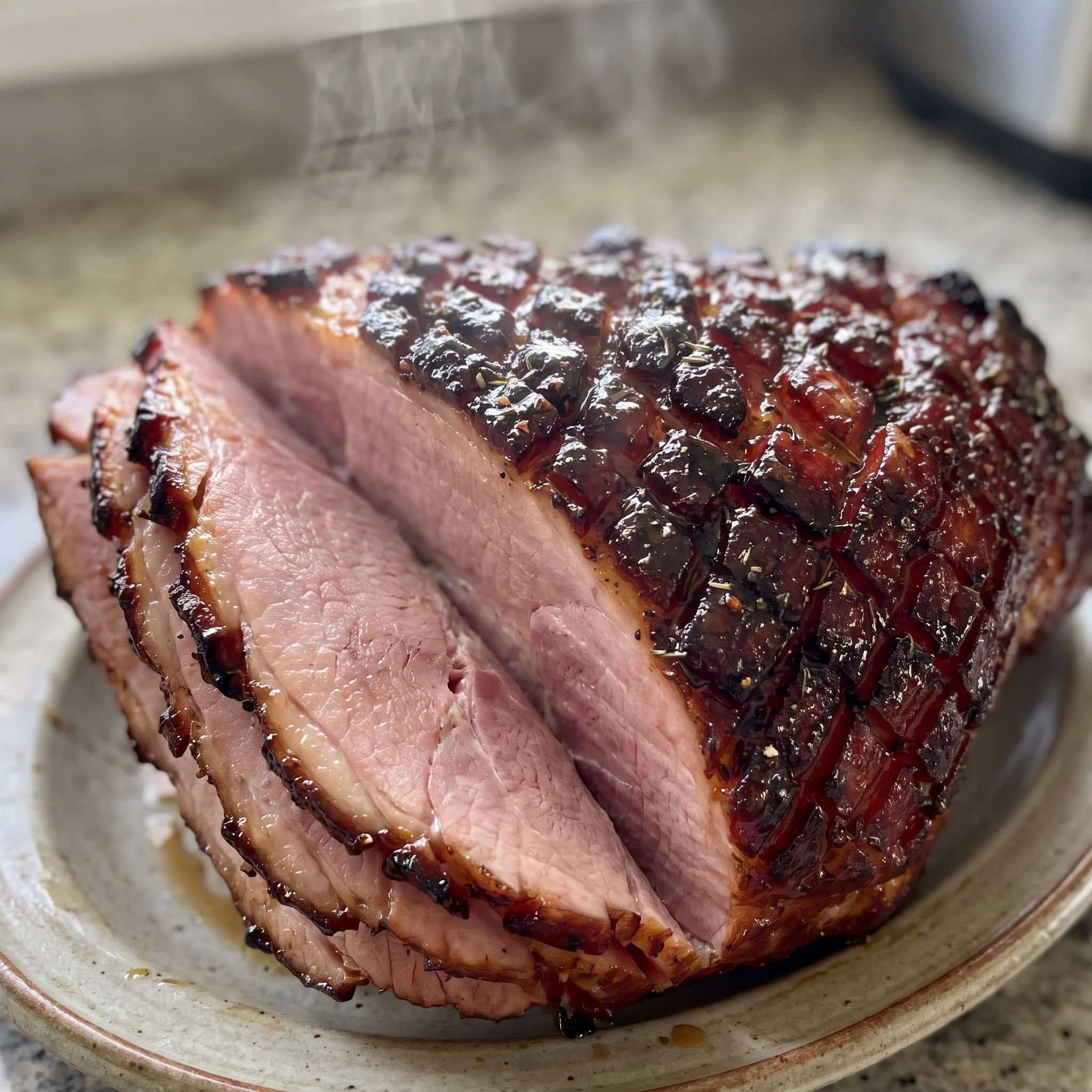
Brown Sugar Glazed Ham with Pineapple
Ingredients
Method
- Set oven to 350°F (175°C). Prepare a baking sheet by lining it with foil.
- Use paper towels to dry the ham. With a sharp knife, make shallow cuts across the top of the ham in a diamond pattern.
- In a small saucepan over medium heat, stir together brown sugar, pineapple juice, honey, mustard, thyme, rosemary, cinnamon, cloves, and 1/2 teaspoon pepper. Bring to a boil, then lower heat and simmer, stirring occasionally, until the mixture reduces and thickens slightly, about 3–4 minutes.
- Arrange the ham cut side down on the lined baking sheet. Evenly brush 1/2 cup of the brown sugar mixture over it.
- Put the ham in the oven and baste with the remaining brown sugar mixture every 30 minutes, until heated through and an instant-read thermometer inserted into the thickest part reads 140°F (60°C), about 2 hours 30 minutes. Allow to rest 15 minutes before carving.
- Serve right away.
Storing and Serving Leftover Ham
Carve only what you’ll eat. A whole bone-in ham holds heat and moisture far better than slices, so keep the uncarved portion intact and refrigerate it within two hours of coming out of the oven. Sliced ham keeps best in its juices: pack the slices in a shallow container, spoon the pan drippings over them, and refrigerate.
They hold three to four days. The glaze is mostly sugar, and sugar firms and dries when it gets cold, so leftover slices will look stiff and matte straight from the fridge.
That’s the glaze, not the meat. Serve them gently warmed or cold rather than blasted in a microwave, which tightens the meat and leaves the edges rubbery.
A quick covered skillet over low heat, or a few seconds per slice in the oven, loosens the glaze without cooking the ham further. The bone and any ham clinging to it freeze well, wrapped tight, for later soup or beans. Slices don’t: they dry out and the glaze turns grainy.
Eat sliced leftovers within those three to four days.
Substitutions That Won’t Wreck the Glaze
Pineapple juice: Orange juice or apple cider. Use the same 1/2 cup. Orange juice brings a rounder, sweeter citrus note with less of a tropical edge; the glaze still thickens the same way because the sugar and acid balance is close.
Apple cider is sharper and a little more rustic, and it can make the glaze taste slightly darker and more autumnal. Both will still bubble down to the right coating consistency in 3 to 4 minutes.
If you use orange juice from a carton with added sugar, cut back on the honey by a teaspoon or so to keep it from going too sweet.
Honey: Maple syrup. Start with the same 1/4 cup.
Maple syrup is thinner and a touch less sweet than honey, so the glaze may take an extra minute to reduce. It also brings its own woodsy flavor that plays well with the smoked ham and spices. Expect a slightly looser glaze at first; simmer until it coats the back of a spoon.
If you’re out of both, dark corn syrup works but tastes flatter, so bump up the mustard by a teaspoon to keep the tang.
Whole grain mustard: Dijon mustard. Use the same 1 tablespoon. Dijon is smoother and hotter, so you lose the little seeds that pop against the ham.
The glaze will still cut through the sweetness, but the texture will be uniform. If you want to keep some of that seed texture, stir in a teaspoon of poppy seeds or leave it as is. Don’t swap in yellow mustard; it’s too mild and vinegary, and the glaze will taste flat.
Brown sugar: No good swap. Leave it alone. Brown sugar is the backbone of this glaze.
It’s what gives the ham its sticky, caramelized crust and that deep, molasses note. Coconut sugar or regular white sugar won’t behave the same way: white sugar lacks the moisture and molasses, so the glaze turns brittle and can burn before the ham is hot. If you’re avoiding refined sugar, you’re better off making a different dish.
The same goes for cinnamon and cloves. They’re the warm spice signature here; swapping them out changes the whole character of the glaze.
If you must skip one, drop the cloves first, but expect a milder, less aromatic result.
Tips
- An 8-pound bone-in ham pulled cold from the fridge can add 30 to 45 minutes to the bake, so leave it on the counter for a full hour before it goes in. The glaze schedule stays tied to the clock at 30-minute intervals, and if the ham starts cold, that first baste lands on a surface that is still chilled, so the sugars sit on top instead of caramelizing. A room-temperature ham also hits 140°F closer to the 2 hour 30 minute mark, which keeps the glaze from over-darkening while you wait for the center to catch up.
The glaze’s sugars begin caramelizing as soon as they hit the oven, and because the ham is already fully cooked, the only goal is to heat it to 140°F, a process that can take 2.5 hours. During that time, any glaze applied too early or left in one position will darken from amber to deep brown and then to black, releasing a sharp, acrid smell and bitter taste. The moment the glaze turns from glossy and bubbling to matte and dark at the edges, it is already past the point of no return; scraping off the burnt layer is the only remedy, and the flavor of the whole ham will be tainted.

Frequently Asked Questions
Can I glaze the ham ahead of time and bake it later?
Yes, but glaze the ham just before it goes in the oven, not hours ahead. The glaze is mostly brown sugar and honey, and brushed on cold it sets into a stiff, sticky shell that won’t caramelize evenly once the ham heats. If you need to work ahead, make the glaze and refrigerate it in a jar; it’ll firm up when cold, so warm it gently with a splash of juice until it pours and coats a spoon again.
Then dry the ham, score it, and brush the glaze on right before baking.
Why did my glaze burn or turn bitter?
Most often the oven runs hot and the sugars hit the element before the ham is hot through. At the first baste, look for gentle bubbling at the edges and a slight darkening; if spots are already blackening, tent the ham loosely with foil and check your oven with an thermometer.
A second cause is a glaze that simmered too far and got too thick, so it sits in a heavy layer that scorches on top while the ham underneath is still cool. If that happened, thin the remaining glaze with a spoonful of juice before the next baste.
How do I know when the ham is fully heated through?
An instant-read thermometer in the thickest part, away from the bone, reading 140°F is the signal. The ham is already fully cooked, so that number is about serving temperature, not safety; past it, the meat dries out. Don’t rely on the glaze color alone, because a dark crust can happen while the center is still cool.
If you’re close but the glaze isn’t as dark as you want, a minute under the broiler will finish it, but stay at the oven door.
What’s the difference between this brown sugar glazed ham and a classic honey-baked ham?
This one leans on brown sugar and pineapple juice, with mustard and warm spices to keep it from going candy-sweet. A classic honey-baked ham is mostly honey, so the flavor is rounder, stickier, and sweeter, often with a spiral-cut surface that soaks up more glaze. Here the mustard and thyme come through, and the glaze sets to a gloss rather than a thick honey shell.
If you want that honey-baked character, you’d be making a different dish.
