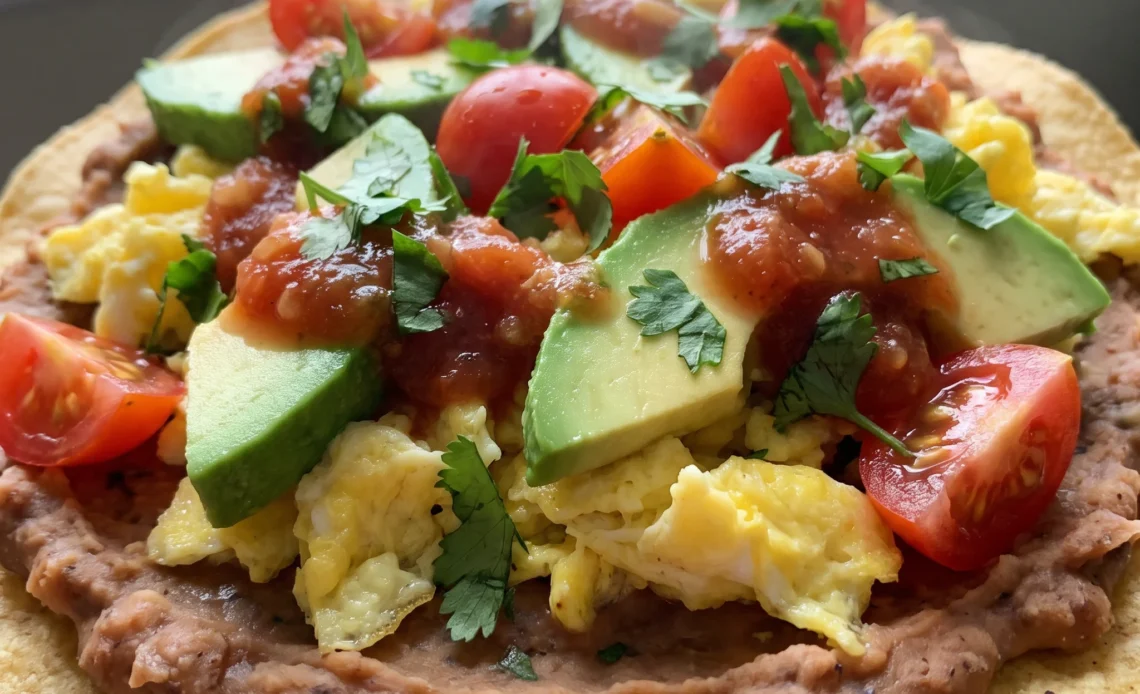
Crisp enough to lift with one hand, and the payoff is a base that refuses to bend under a full load of eggs and beans. Most breakfast tostadas lose that fight before the second bite.
The trouble is moisture: tomatoes and salsa start bleeding the moment they hit the tortilla, and a soft or thick base soaks it up fast. Thin corn tortillas baked until they feel like tiles, not leather, are what make breakfast tostadas work as finger food instead of a fork situation. Get the base rigid and the rest is assembly.
Miss that, and the whole thing collapses on the plate, which is the one failure worth caring about here. Fifteen minutes, pantry staples, and a texture you can hear.
Build a base that shatters, not bends
Corn tortillas vary wildly in thickness, and the extra-thin ones dry out faster in the oven. That’s why they’re called for here. Less dough between the heat and the surface means they firm up quickly and stay rigid enough to pick up with one hand.
Spray both sides before baking. The oil isn’t for flavor; it’s for structure. A light coat on each face helps the tortilla stiffen evenly instead of steaming in its own moisture.
You’re not frying, so the result is crisp and clean rather than greasy. When you pull them, they should feel like thin tiles, no give in the middle. That rigidity is what lets you pile on beans, eggs, and salsa without the whole thing folding.
A soft tortilla would turn into a sad fork situation. These stay flat and snappy from the first bite to the last, and that’s the whole reason to seek out the thin ones.
The spread that shields and seasons
Refried beans do more than sit under the eggs. They’re insurance. A thin, even layer across the tortilla creates a barrier that keeps wet toppings from touching the crisp surface.
Tomatoes and salsa release water as they sit, and without that shield, the base would soften within minutes. The beans also carry the spice. Mixing chili powder, garlic powder, and cumin into hot beans lets them bloom and distribute evenly, so every bite gets a hit of warmth.
If you stirred those spices into cold beans, they’d stay gritty and taste raw. The layer should be about a quarter cup per tostada, spread to the edges but not so thick it dominates. You want enough to taste the earthy, seasoned spread against the shatter of the tortilla, but not so much that it becomes a bean dip with eggs on top.
The contrast between creamy beans, crunchy base, and soft eggs is what makes each bite work.
Scramble eggs dry enough to hold
Eggs for tostadas need to be cooked past the soft, glossy stage. Any runny curd will leak liquid onto the tortilla and undo the crispness you worked for. That’s why a splash of water goes into the bowl instead of milk.
Water steams off during cooking, helping the eggs set into firm, dry curds without adding fat or dairy that could weep later. Whisk them well so the whites and yolks are fully combined and no streaks remain.
Cook them until no visible liquid remains in the pan, stirring to break them into small, even pieces. They should look matte, not shiny.
Portion about a quarter of the scramble per tostada. That’s enough to feel substantial without overwhelming the base. The eggs are the warm, soft element here, but they must be dry enough to sit on the beans without turning the tortilla soggy.
Firm curds, no puddles.
A bright finish that cuts the richness
Avocado, tomatoes, salsa, lime, and cilantro aren’t garnish. They’re balance. The warm beans and eggs bring earthiness and weight, and the fresh toppings bring acid, coolness, and crunch.
Squeeze the lime over the finished tostada, not into the salsa or beans. The juice stays on the surface, hitting your tongue first and brightening each bite. If it were mixed in, its edge would dull.
Tomatoes and salsa are watery, but the bean layer and the crisp tortilla keep that moisture from turning the base limp. You’ll still get a little drip, and that’s fine. Cilantro adds a clean, aromatic note that cuts through the richness, while avocado offers a creamy, cooling contrast to the warm eggs.
Each component plays a role: acid, freshness, creaminess. Leave one out and the tostada tastes heavier, flatter.
With them, the whole thing feels light even though it’s a full breakfast. Serve immediately, while the base is still crisp.
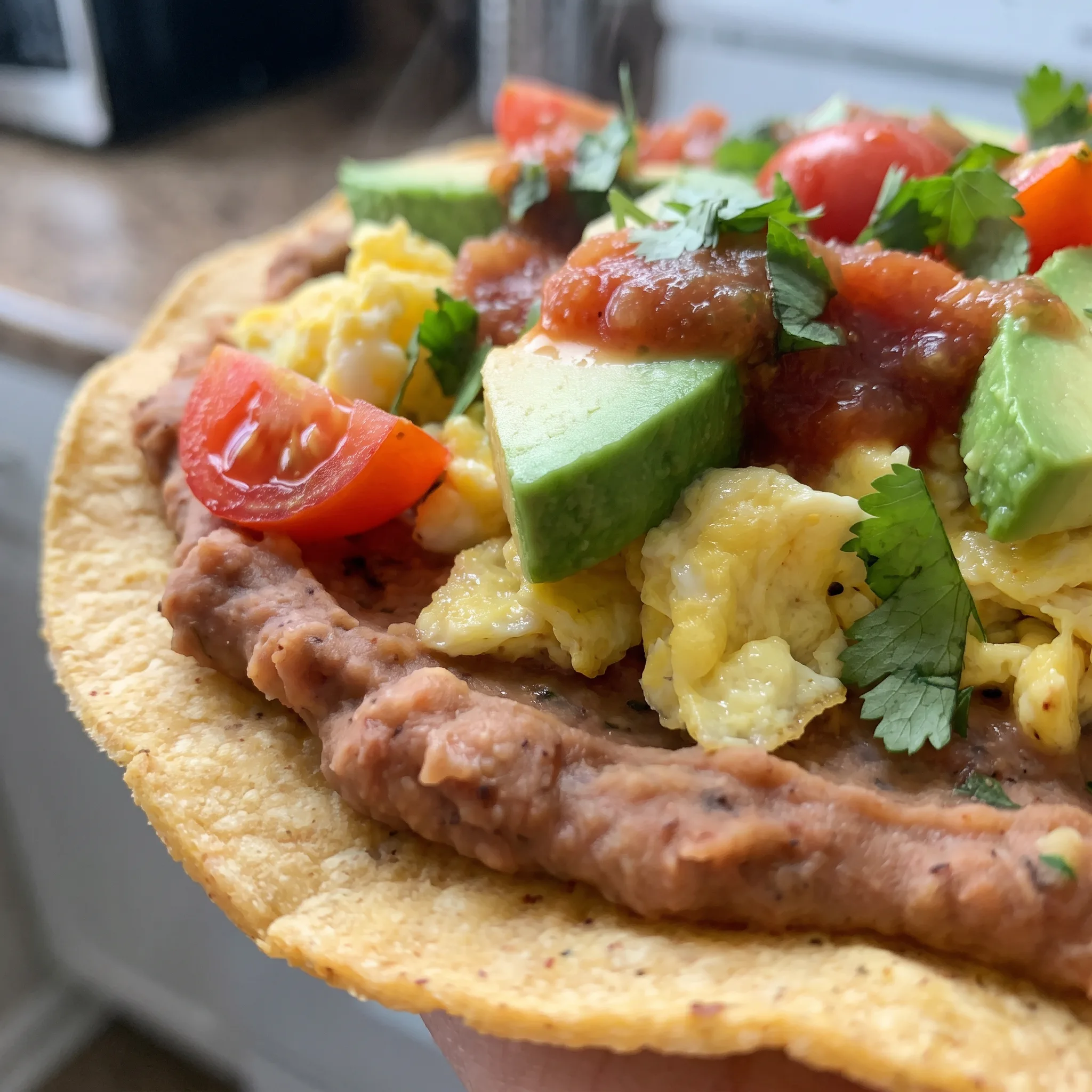
What separates a tostada that holds from one that collapses
Corn tortillas: Extra-thin ones like Mission bake into crisp tiles; thicker ones stay pliable and turn a fork situation.
Refried beans: Fat-free beans spread without greasiness, but they stiffen as they cool, so they need to be hot.
Avocado: Two ounces of ripe but firm avocado slices cleanly; soft ones smear and leave no distinct pieces.
Cherry tomatoes: Sliced or chopped, they release water, so keep pieces small and let the bean layer shield the base.
Read the tostada at three points and it tells you if the base will hold
Judging the tortillas by feel, not by the timer
Five minutes per side is a starting point, not a guarantee. Pull one at the flip and press the center with a fingertip. If it gives, it needs the full second five.
If it already feels like a thin cracker, pull the whole sheet early or the edges will darken and taste burnt. Thick tortillas may need longer; the thin ones called for here usually don’t. The test is rigidity, not color.
The moment scrambled eggs stop being fixable
Stop stirring when no liquid slides across the pan and the curds look dry and matte. Past that point they keep cooking from residual heat and tighten into rubbery pebbles.
If you catch them looking wet but the pan is still hot, pull it off the burner; they’ll finish in the next thirty seconds. Small, even curds sit better on the bean layer than large wet clumps, which dump water onto the tortilla.
When the beans are loose enough to spread without tearing
Hot beans spread thin and even; cold or stiff beans drag and tear the crisp tortilla. After a minute in the microwave, stir and check texture.
If they clump or look dry, add a teaspoon of water and stir again. The spices go in while the beans are hot so they lose their raw edge. If the mixture tastes flat or gritty, it needed more heat, not more spice.
Building fast enough that the base never softens
Once beans hit the tortilla, the clock runs. Spread, egg, avocado, tomato, salsa, lime, cilantro in quick succession, then hand it over. Pausing between toppings gives the tomatoes and salsa time to bleed water into the base.
If a tostada sits more than a minute or two before it’s picked up, the center goes limp and the shatter is gone. Build all four in one pass, not one at a time.
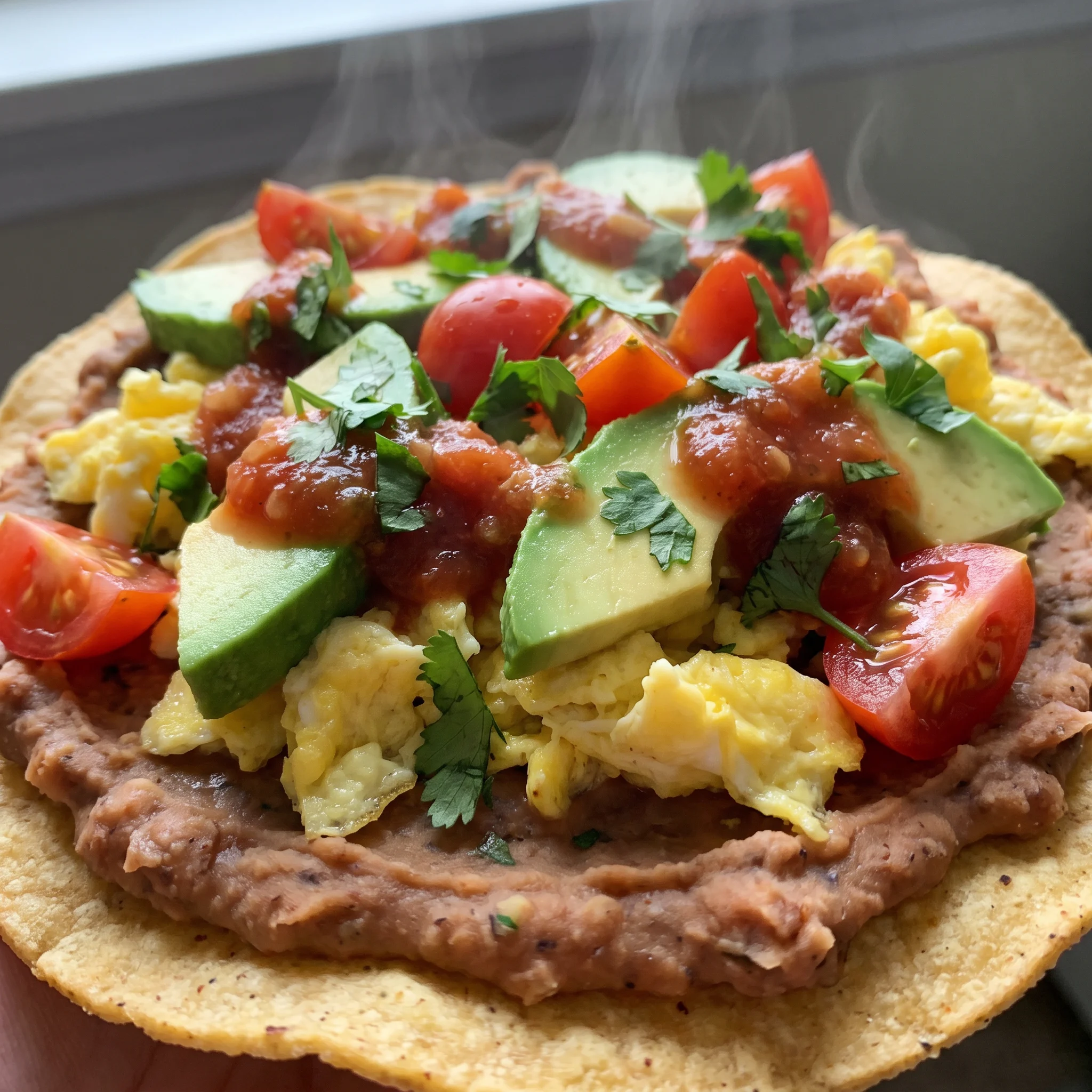
Breakfast Tostadas with Scrambled Eggs and Beans
Ingredients
Method
- Set oven to 400°F (205°C). Place parchment paper on a baking sheet and spread the tortillas out in one layer. Coat the tortillas with cooking spray, turn each over, and spray the second side. Bake for 5 minutes. Turn each tortilla and bake for another 5 minutes, until firm and crispy. While the first 5 minutes pass, cut the avocado, cherry tomatoes, and cilantro so the toppings are ready. After flipping the tortillas and returning them to the oven for the second 5 minutes, prepare the eggs and refried beans as follows.
- Break the eggs into a bowl and add a splash of water (run the bowl under the faucet briefly). Add salt and pepper as desired, then whisk to combine. Spray a small skillet with cooking spray and heat over medium on the stovetop. Once hot, pour in the eggs and cook, stirring with a spatula, for 1–2 minutes until fully cooked and scrambled.
- Put the refried beans in a microwave-safe bowl and microwave on high for about 1 minute, until hot. Mix in the chili powder, garlic powder, and cumin until combined.
- After the tortillas come out of the oven, spread ¼ cup of the warm refried beans over the surface of each tortilla. Top the beans on each tostada with ¼ of the scrambled eggs and ½ ounce of the sliced avocado. Add the tomatoes and 1 tablespoon of salsa, then squeeze a lime wedge over the top. Sprinkle with cilantro, if using, and serve warm.
Eat them now, store the parts later
These tostadas peak in the first two minutes after you build them. The tortilla is still rigid, the eggs are warm, and the cold toppings haven’t bled.
Wait longer and the beans and salsa soak into the base, turning that shatter into a chew. So serve immediately, one tostada per person, and don’t hold a plate for a late eater.
If you have leftovers, don’t refrigerate assembled tostadas. They’ll go soft in the fridge within an hour.
Instead, keep components separate: crisp tortillas in a paper towel lined container at room temperature for up to a day, beans and eggs in covered containers in the fridge for three days, and avocado, tomato, salsa, and lime cut fresh when you eat. Reheat beans and eggs gently, then build and eat right away.
Freezing doesn’t work for the assembled dish, but the baked tortillas can be frozen up to a month and recrisped in a 400°F oven for three minutes. The finish, lime and cilantro, goes on last, right before the first bite.
Swaps that keep the base crisp and the toppings balanced
Corn tortillas: Flour tortillas, even if you bake them the same way. They’ll soften as they sit and turn pliable. You’ll lose the shatter that makes a tostada a tostada.
If you can’t find extra-thin corn tortillas, use regular corn tortillas but bake them an extra minute or two per side; they’re thicker and need more time to stiffen. Watch them closely after the first five minutes so they don’t burn.
Refried beans: A different style of refried beans, like traditional (with fat) or black beans mashed with a fork. Fat-free refried beans spread without greasiness and stiffen as they cool, so they need to be hot. If you use beans with fat, they’ll be looser and may not shield the tortilla as well, but they’ll still taste fine.
Black beans won’t have the same smooth texture; they’ll be chunkier and may let more moisture through. Start with the same 1 cup and adjust the spices after tasting.
Salsa: Pico de gallo or a hotter salsa. Pico de gallo is chunkier and wetter, so it can release more water onto the base.
Use a slotted spoon to drain off excess liquid before spooning it on. A hotter salsa will bring more heat; start with the same 4 tablespoons and add more if you want.
The acidity still cuts through the richness.
Avocado: Guacamole or mashed avocado. Mashed avocado will smear rather than give distinct pieces, so you lose the creamy contrast. If you use guacamole, it often has lime and salt already, so taste before adding extra lime.
Start with the same 2 ounces and spread it thinly to avoid weighing down the tortilla.
Tips
- Press the flat center of a baked tortilla, not the edge. The rim crisps first and will feel done while the middle still flexes. A center that gives under your fingertip means the beans will soak through and the tostada will fold when you lift it.
- Let the baked tortillas cool on the sheet for one minute before spreading beans. Straight from the oven, the surface is still venting steam, and beans applied to a hot tortilla slide toward the edges instead of staying put. A minute of rest lets them set into a layer that grips.
A baked corn tortilla is crisp because its moisture has been driven off, leaving a rigid starch network. When wet toppings are added, water migrates into that network, plasticizing the starch and causing the tortilla to lose its crunch. The recipe counters this by spreading a layer of refried beans over the tortilla before adding other toppings; the beans act as a hydrophobic barrier that slows moisture transfer.
Frequently Asked Questions
Can I make these breakfast tostadas ahead of time for a crowd?
Bake the tortillas in advance and keep them crisp in a paper towel lined container at room temperature for up to a day. Cook the eggs and beans, refrigerate them separately for up to three days, then reheat gently and build just before serving. For a crowd, set out the components and let people assemble their own.
Do not assemble the tostadas ahead; they go soft within minutes, and the fridge only speeds that up. The finish, lime and cilantro, goes on last, right before the first bite.
Why did my tostadas get soggy after I assembled them?
The tomatoes and salsa bled water into the base because the bean layer was too thin or the tostada sat too long before eating. Spread a full quarter cup of beans to the edges to shield the tortilla. If the beans were cold or stiff, they dragged and left gaps; hot beans spread thin and even.
Once you start topping, keep it quick: spread, egg, avocado, tomato, salsa, lime, cilantro, then hand it over. A tostada that waits more than a minute or two will lose its shatter.
How is this different from a classic Mexican tostada?
Classic Mexican tostadas often start with a fried tortilla and pile on shredded chicken, beef, or ceviche, plus lettuce and crema. Here, the tortillas are baked, not fried, so they stay crisp without grease. The toppings are breakfast: scrambled eggs, warm spiced refried beans, avocado, tomato, salsa, and lime.
The result is lighter and built for a morning meal, not a heavy antojito.
What can I do if my scrambled eggs turn out watery?
Watery eggs usually mean they were undercooked or the heat was too low. Return the pan to medium heat and stir until no liquid slides across the pan and the curds look dry and matte.
If they’re already past that point, they’ll keep cooking from residual heat and tighten; pull them off the burner before they turn rubbery. A splash of water in the bowl instead of milk helps them set firm without weeping. If they still release liquid, drain them in a fine-mesh strainer before piling on the beans.
How do I keep the tortillas crispy if I need to serve them later?
Bake them fully, then cool completely and store in a paper towel lined container at room temperature for up to a day. Do not refrigerate; moisture will soften them.
To recrisp, put them in a 400°F oven for about three minutes. Build the tostadas only when you’re ready to eat, and serve immediately.
If you must hold them, keep the toppings off until the last second.
