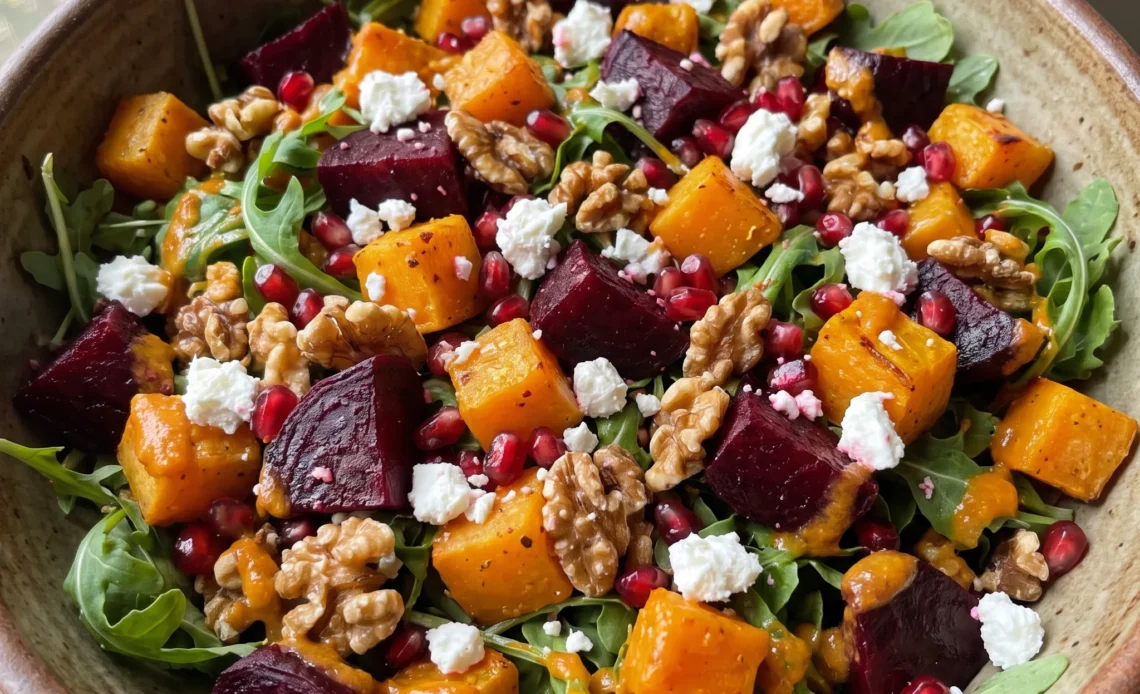
A roasted butternut squash beet salad lives or dies on what happens in the oven, and the trouble is that beets and squash don’t finish together. Sugars in the beets catch and darken while the squash is still firm, so you’re watching two clocks instead of one. Get that right and everything after is easy: the orange maple dressing is sharp enough to cut the caramelized edges, pomegranate seeds pop against the earthy roots, and goat cheese softens into the warm cubes.
This is make-ahead food that still lands like something you’d serve guests. Leftovers keep, but only if you store the parts apart and dress at the last minute.
Beets contain more sugar than butternut squash, so they caramelize and finish roasting earlier at the same oven temperature. Without uniform cube sizes and a reserved area on the pan, some pieces will overcook and turn mushy while others remain firm. The recipe’s instruction to keep an eye on the beets and cut all pieces uniformly directly addresses this timing gap.
Why Roast Beets and Squash on One Pan?
Both beets and butternut squash are dense root vegetables, so they take to the same high heat without one turning to carbon before the other softens. Cut them to a uniform dice and they’ll hit the same doneness window. The catch is sugar.
Beets carry more of it, which means they caramelize and darken sooner. That’s why leaving a clear zone on the sheet pan matters: you can slide the beets off early with a spatula if they start to look lacquered at the edges while the squash still needs a few more minutes.
The beets will also stain the squash if they’re piled together, so keeping them apart preserves the clean orange and deep red. Use a metal spatula to flip once, aiming for browned spots on two sides.
When a paring knife slides through a squash cube with no resistance, pull the pan.
What Makes the Orange Maple Dressing Work?
Orange juice and maple syrup bring a rounded sweetness that plays off the roasted vegetables’ caramelized edges. Apple cider vinegar and Dijon mustard cut that sugar with tang, and the mustard also helps hold the oil in suspension so the dressing doesn’t separate in the bowl.
Olive oil gives it body, enough to cling to arugula leaves without soaking them. This dressing is bold on purpose: the acidity needs to stand up to creamy goat cheese and crunchy walnuts, which would otherwise flatten the whole salad into softness. Taste a leaf after tossing: the bite should feel bright, not sharp.
If it’s too puckery, a pinch more salt will round it out. Whisk or shake until the mixture looks uniform and slightly thickened, then use it right away.
Does Layering Order Matter for This Salad?
Arugula goes down first for a reason: its loose, peppery leaves create a bed that catches the dressing and keeps the heavier toppings from crushing everything below. If you dump the roasted beets and squash on top of a pile of greens all at once, the warm vegetables will start to wilt the arugula before anyone gets a fork.
Instead, scatter the roasted pieces over the greens in a single layer, letting them sit lightly. The goat cheese, walnuts, and pomegranate seeds come last so they stay visible and intact.
Toss just before serving, using a light hand, so the leaves get an even coat without collapsing. The final look should be a jumble of colors, not a uniform mix.
Eat it soon after tossing; the arugula won’t stay perky forever.
The Balance That Defines This Salad
Roasted beets and squash bring an earthy sweetness that deepens as they cool. Arugula answers with a peppery bite, sharp enough to keep the roots from feeling like dessert.
Goat cheese adds a cool creaminess that softens the edges, while walnuts bring a crunch you can hear across the table. Pomegranate seeds burst with tart juice, a bright pop that cuts through the richness.
Each forkful should hit at least two of those notes: sweet and bitter, creamy and crunchy, juicy and earthy. That contrast is what makes this salad work as a main course or a side. It’s a modern American combination because it doesn’t try to blend everything into one flavor.
Instead, it lets each ingredient speak. Serve it while the roasted pieces are still slightly warm, when the cheese just begins to soften.
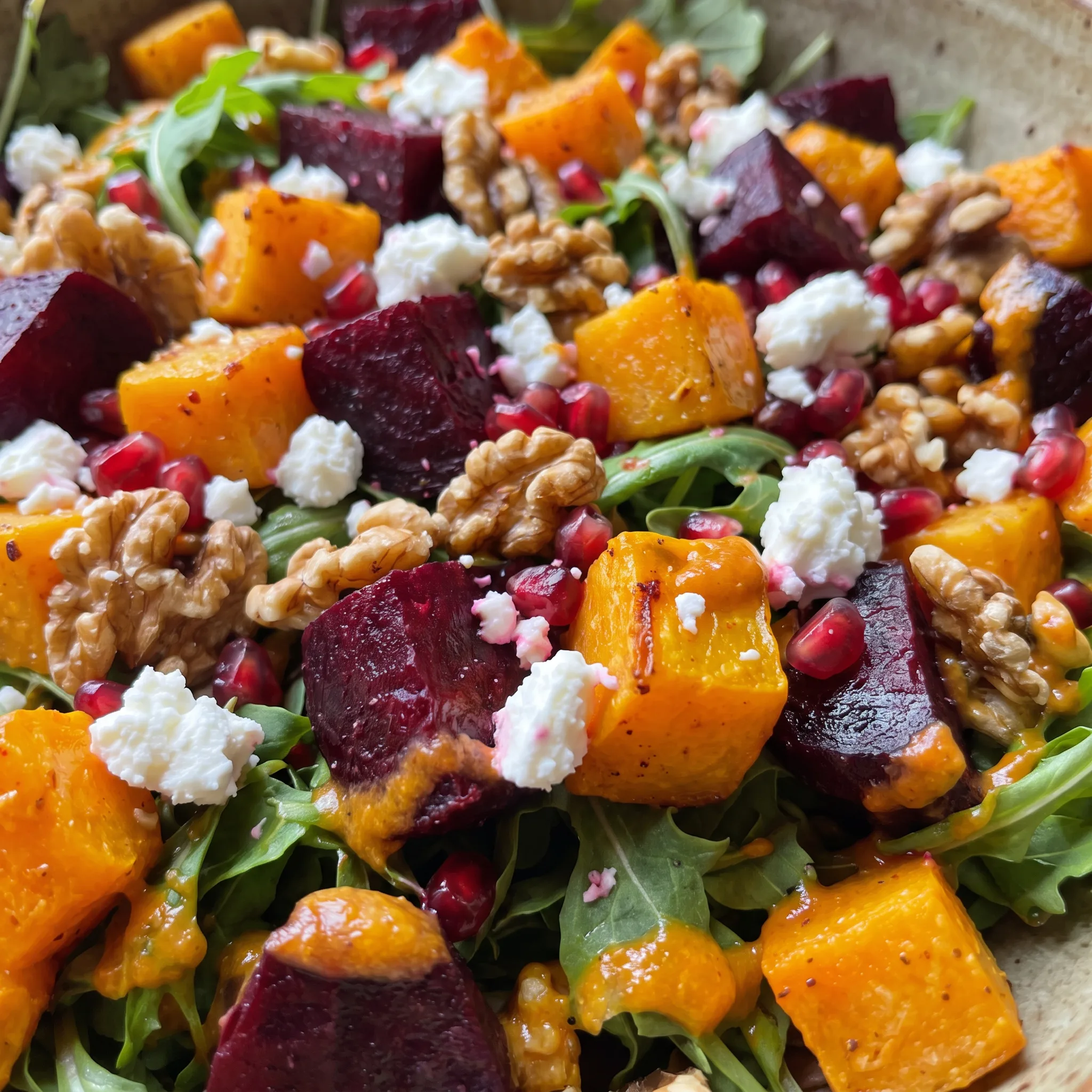
Four Ingredients That Decide This Salad
Beets: Buy small to medium beets, since the large ones turn woody and take longer to soften than the squash alongside them.
Butternut squash: Pick a squash with a solid, heavy feel and no soft spots, then cut the cubes no bigger than the beets so they cook in step.
Arugula: Choose crisp, dark green leaves with no yellowing or slime, because wilted arugula collapses the moment the warm vegetables hit it.
Goat cheese: Buy the fresh, soft log rather than a firm aged round, so it crumbles into cool pockets instead of dry pebbles.
How to Judge Doneness, Dressing, and Toss for This Roasted Squash and Beet Salad
Judging when the beets are done before the squash
Beets darken and shrink as they roast, and their sugars can catch and char before the squash softens. At the 20-minute mark, pierce a beet cube with a paring knife: it should slide in with little resistance.
If it’s tender but the squash is still firm, pull the beets off the pan with a spatula and let them sit while the squash finishes. Waiting until both are soft means burnt beets.
Judging when the squash is fully tender
Squash cubes are done when a knife meets no resistance at the center and the edges are browned. If the center still feels dense after 25 minutes, return the pan for 3 to 5 minutes, but watch closely: squash can go from firm to collapsed quickly. Overcooked cubes turn watery and lose their shape in the salad.
Judging the dressing’s emulsification
After whisking or shaking, the dressing should look uniform and slightly thickened, not separated into oil and vinegar. If it still shows streaks of oil, whisk harder or shake again. A broken dressing pools on the arugula instead of coating it, leaving some bites oily and others sharp.
Use it immediately; if it sits, whisk again before drizzling.
Judging how much dressing to add and when to stop tossing
Pour the dressing in a thin stream and toss gently with a light hand. The arugula should be evenly coated but not dripping. Stop as soon as the leaves glisten; extra dressing weighs them down and makes the salad soggy.
If you overshoot, add a handful more arugula to absorb the excess.
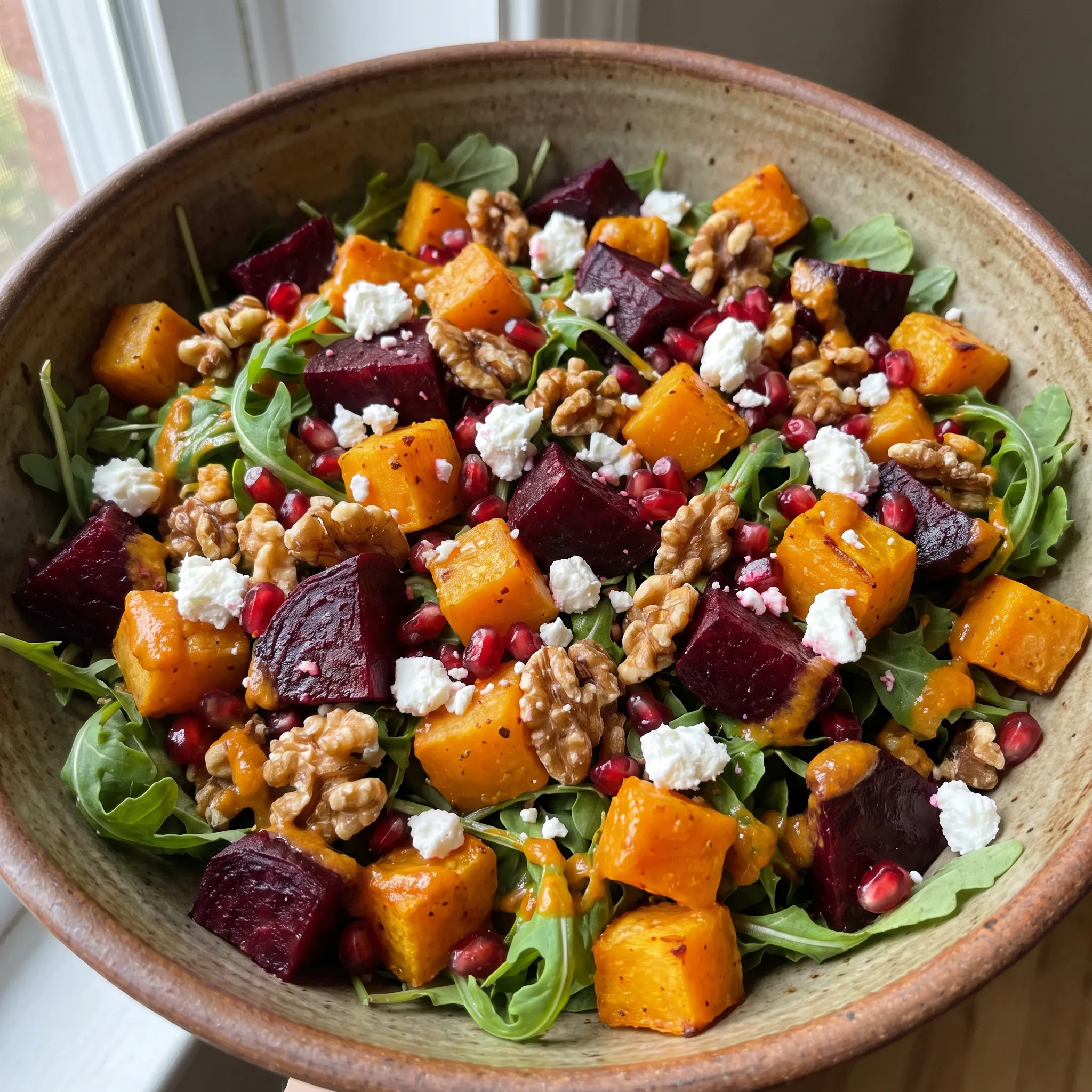
Roasted Butternut Squash Beet Salad with Goat Cheese
Ingredients
Method
- Turn oven to 425°F (220°C) and prepare a baking sheet by covering it with parchment paper to simplify cleaning.
- Distribute the cubed butternut squash uniformly across the lined baking sheet, reserving an area for the beets. Place the beets onto the sheet alongside the squash. Coat the beets and squash with 1–2 tbsp olive oil and sprinkle with salt and pepper; mix to ensure even coverage.
- Place the beets and squash in the oven for about 20–25 minutes, flipping them once at the midpoint. Keep an eye on the beets, as they might finish cooking before the squash. Take out of the oven and let rest for a few minutes. Tip: Ensure all pieces are cut to uniform size so they finish cooking simultaneously.
- In a medium bowl, mix together all dressing ingredients and whisk vigorously until emulsified. Alternatively, place all dressing ingredients into a mason jar with a lid and shake thoroughly.
- In a large bowl, layer the arugula, roasted squash, roasted beets, goat cheese, walnuts, and pomegranate seeds.
- Drizzle the dressing over the salad and toss to combine.
- Serve and enjoy!
How to Store and Serve This Roasted Beet and Squash Salad
Keep the roasted beets and squash in a sealed container in the fridge for up to 4 days; they firm up and their sweetness dulls, so reheat them in a 350°F oven for 8 minutes to bring back the caramelized edges. The dressing holds a week in a jar, but shake it again before pouring. Store arugula, walnuts, goat cheese, and pomegranate seeds separately, because the greens wilt and the seeds bleed once tossed.
Never freeze the assembled salad; the arugula and pomegranate seeds collapse when thawed. Eat it within 20 minutes of tossing for the best texture, while the roasted pieces are still slightly warm and the arugula keeps its snap.
If you’re serving leftovers, keep the components apart, warm the vegetables just until they lose their fridge chill, then toss with fresh arugula and dressing so nothing sits soggy. Add the goat cheese, walnuts, and pomegranate seeds last, right before the bowl hits the table.
Where You Can Bend This Salad and Where It Snaps
Orange juice: Grapefruit juice or a mix of lemon and orange, or bottled OJ if you must. Grapefruit pushes the dressing tart and a little bitter; taste before you pour and add a pinch of sugar if it bites too hard.
Bottled juice tastes flat next to fresh, but it works in a pinch. Start with the same 1/4 cup and adjust after one taste.
Maple syrup: Honey or agave. Honey is thicker and sweeter, so use a shy 2 tablespoons and whisk longer to blend.
Agave pours thin and tastes neutral, so the dressing loses some of that caramel note. Both still balance the vinegar.
Goat cheese: Feta for a sharper, drier crumble; skip cheese entirely for dairy-free. Feta stays in distinct salty chunks instead of softening into cool pockets. Leave the cheese out and the salad turns lean and sharp; add sliced avocado if you want some creaminess back.
If you skip cheese, you may want a pinch more salt in the dressing.
Walnuts: Pepitas or toasted almonds. Pepitas bring a greener, seedier crunch; almonds are harder and more neutral. Both keep the textural contrast that walnuts provide.
Toast whichever you use to wake up the flavor, and keep the same 1/4 cup.
Tips
- After peeling and cubing, spread the beets and squash on a clean kitchen towel or paper towels and blot every face of each cube until the towel comes away dry, then let them sit five minutes and blot once more. Beets and squash both hold surface water from washing and peeling, and that film has to evaporate in the oven before browning can start. Dry cubes hit the 425°F pan and begin caramelizing within minutes; wet ones spend the first ten minutes steaming, which leaves them pale and slightly limp by the time the timer goes off.
- If you cut the beets and squash ahead, keep the two in separate bowls and don’t oil them until the pan is already hot in the oven. Oil sitting on raw cubes for more than about fifteen minutes starts to draw out moisture and beads up on the surface, so the pieces slide around instead of gripping the parchment and browning. Toss each bowl with its share of the oil and the salt and pepper right as you pull the hot sheet out, then spread the cubes on the lined pan immediately. The heat under them starts the sear before any moisture has a chance to pool.

Frequently Asked Questions
Can I roast the beets and squash ahead of time?
Yes. Keep them in a sealed container in the fridge for up to 4 days. They firm up and their sweetness dulls in there, so reheat them in a 350°F oven for 8 minutes to bring back the caramelized edges.
If you’re pulling them straight from the fridge, warm them just until they lose the chill before they hit the arugula.
How do I keep the arugula from getting soggy when I add the dressing?
Toss with a light hand and stop as soon as the leaves glisten. Extra dressing weighs them down and the greens collapse. If you overshoot, add a handful more arugula to absorb the excess.
The other cause is warm roasted pieces sitting on the greens too long before you toss, so scatter them over the arugula in a single layer and dress right before serving.
What’s the best way to serve this salad, warm or cold?
Serve it while the roasted pieces are still slightly warm, when the goat cheese just begins to soften against them. Cold straight from the fridge, the beets and squash feel dense and their sweetness reads flat. Eat it within 20 minutes of tossing for the best texture.
Leftovers should be kept in separate containers and warmed just until the chill is gone before you toss with fresh arugula and dressing.
How is this roasted butternut squash beet salad different from a classic beet and goat cheese salad?
A classic beet and goat cheese salad usually leans on one roasted root, often chilled, with the cheese doing most of the work. Here the squash brings a second sweetness that’s lighter and less earthy than the beets, so the two don’t taste like the same vegetable twice. Arugula adds a peppery bite instead of the mild greens you often see, and the pomegranate seeds burst with tart juice that cuts the richness.
The orange maple dressing is bolder and more acidic than a plain vinaigrette, built to stand up to walnuts and creamy cheese without flattening.
