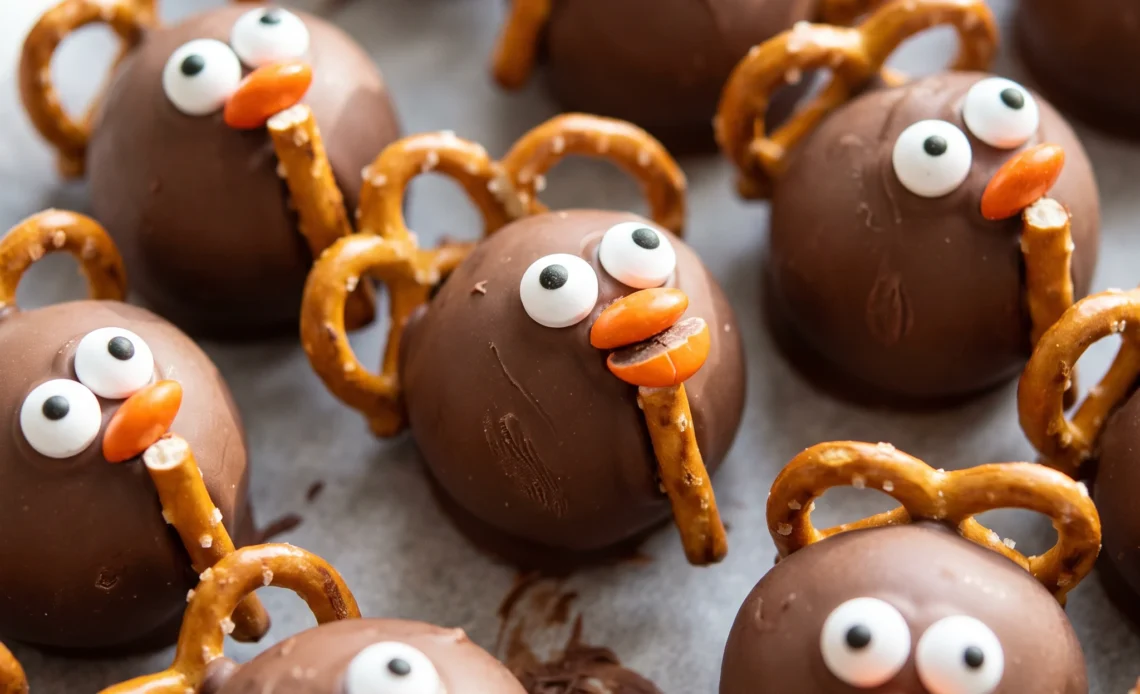
Forty-five minutes of prep sounds like a lot for candy, and most of it disappears into rolling and decorating, which is where these turkeys live or die. Get the crumb-to-cream-cheese ratio right and the mixture rolls like firm cookie dough, holding a pretzel neck without sagging; get it wrong and you’ll be fishing slumping balls out of chocolate. Every turkey oreo ball needs its pretzel neck and candy face pressed in while the shell is still tacky, a window that closes fast once the chocolate sets.
Work out of order and you’re gluing parts onto a hard surface, which never holds as cleanly. The rolling itself warms the dough through your hands, so the mixture stiffens back up in the freezer and softens again on the counter, and that back-and-forth is the rhythm of the whole batch. It’s fussy work, but the payoff is a platter of something people actually stop and look at.
Get the Oreo and Cream Cheese Balance Right
The backbone of a turkey that holds together is the ratio of crumbs to cream cheese: one 14-ounce package of Oreos to 8 ounces of cream cheese. Work with less cookie and the mixture turns slack, so the balls slump on the fork and smear in the chocolate. More cookie and it fights the scoop, then crumbles at the edges when you roll.
Whole Oreos, filling included, keep both structure and flavor in line. That filling is already sweet and creamy, so it counts toward the moisture, and the crumbs carry the deep cocoa edge that balances the tang of the cream cheese.
Skip the filling and the balls read dry and one-note. Tasting the mixture before chilling tells you plenty: it should feel like firm cookie dough, not frosting. Press a small piece to the touch; it should hold a clean shape without feeling greasy.
That balance is what carries the finished turkey, and it starts right here.
Why the Chill Matters Before Dipping
A cold ball is a stable ball. After shaping, 15 minutes in the freezer sets the surface firm, and a stretch in the refrigerator keeps it that way until you coat. Warm dough is soft and heavy; set it on a fork and it sags, cracks along the bottom, or sheds crumbs into the chocolate.
You end up with a lumpy shell and a bowl full of debris. The cold also gives you a working window.
When a chilled ball hits melted chocolate, the coating sets on contact, so the shell tightens around the shape instead of sliding off. That quick set is what gives you a glossy, even coat with no bare patches.
The difference is obvious the moment you lift one: a properly chilled ball comes off the fork clean, keeps its round form, and the chocolate stops running. Let the tray sit out too long and you’re back to soft centers and smeared sides.
Keep them cold and the dipping goes quickly.
Anchor Every Turkey Part While the Chocolate Is Soft
Decorating succeeds or fails on timing. The chocolate on the ball needs to be soft enough to grip but set enough not to run. That is why the neck goes in right after coating.
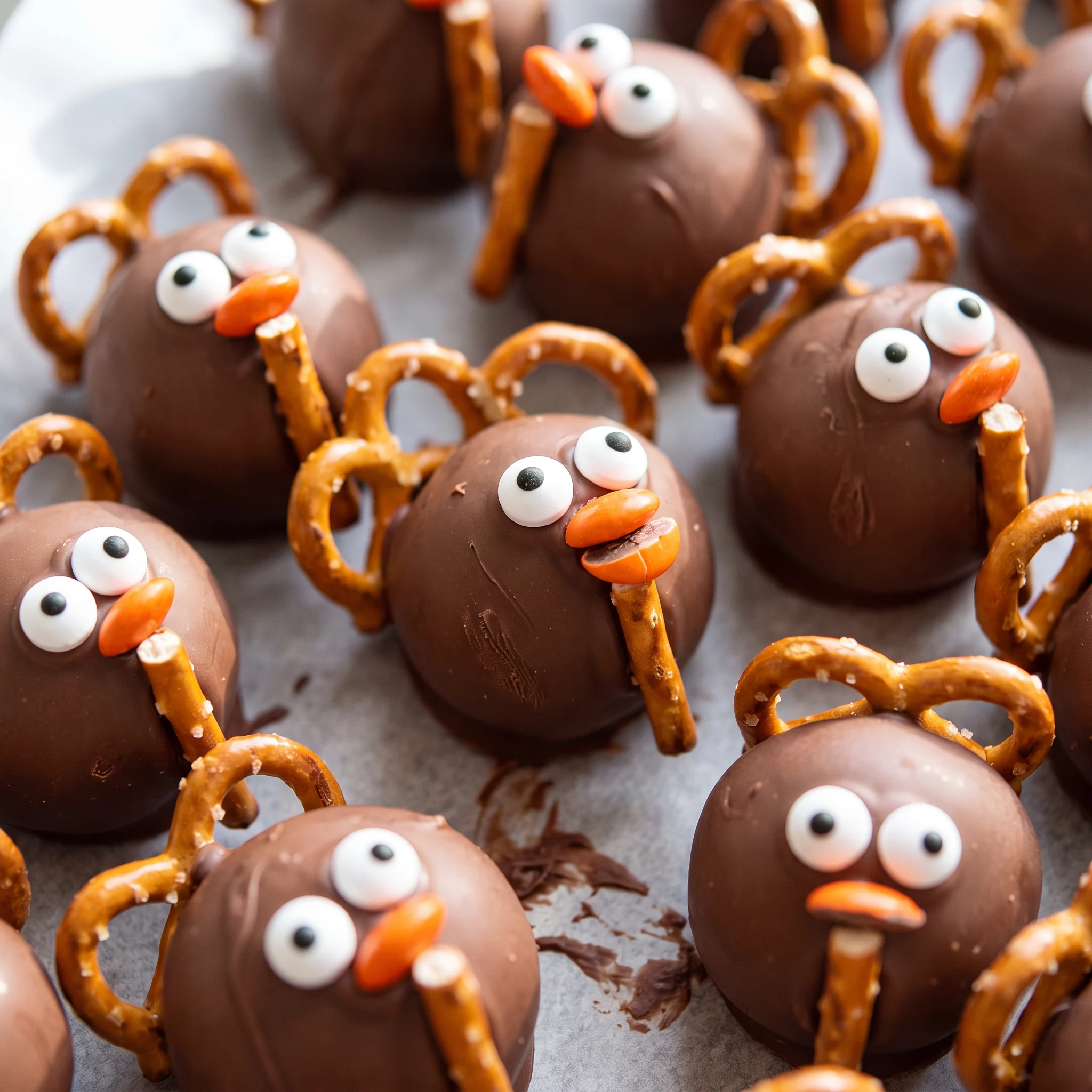
A straight pretzel snapped to length pushes into the ball and the soft shell closes around it, so the head stays put. The tail works the same way: dip the bottom of a regular pretzel in chocolate and press it against the ball, or fan several straight pretzels into the back.
The chocolate acts as glue and the pretzel’s rough surface gives it something to bite into. For the face, the eyes and half an M&M sit on the chocolate oval you built on the neck pretzel earlier. That oval is a flat, firm base, so the candies don’t slide down the curved ball.
Push them in while the oval is still tacky, then let everything firm up. A turkey whose parts are anchored this way survives the trip from tray to fridge without losing its tail.
Melt Chocolate Gently in Small Batches
Milk chocolate melting discs are forgiving because they’re made to flow, but they still scorch if you rush. Low power and short bursts, stirring every 30 seconds, keep the chocolate from overheating.
Once it gets too hot, it turns grainy and thick, and no amount of stirring brings it back. Working with just enough to coat about five balls at a time solves two problems. First, a small bowl heats evenly, so you’re less likely to hit hot spots.
Second, the chocolate stays fluid while you work; a big batch cools and stiffens before you finish dipping. If it does thicken, a few more seconds at low power brings it back.
Chocolate chips are a poor substitute here because they contain less cocoa butter and set up dull and stubborn. The discs give you a smooth, glossy shell that snaps when you bite.
Keep the batches small, the heat low, and the coating will look as good as it tastes.
What to Grab and What to Watch in the Store
Oreo cookies: Use the standard package and leave the filling in; scraping it out throws off the moisture that keeps the balls from cracking.
cream cheese: Full-fat block cream cheese, not the spreadable tub, gives the dense, sliceable texture that rolls clean and holds a pretzel tail.
Ghirardelli milk chocolate melting discs: Melting discs are the right form here; chocolate chips have less cocoa butter and set up thick and dull instead of a thin shell.
pretzels: Regular twisted pretzels for the tail and thin straight ones for the neck, since thick sticks crack the chocolate when you push them in.
M&M’s: You need 12 total, so pick a color that reads as a beak against the milk chocolate rather than one that disappears.
Milk chocolate is sensitive to heat: once it exceeds its melting range, the cocoa butter and milk solids separate, so the chocolate turns stiff, dull, and grainy instead of fluid and glossy. The recipe deliberately melts at 50% power with stirring every 30 seconds and uses only enough chocolate to coat about five balls, because a large bowl holds heat unevenly and cools into a thick paste before the dipping is finished. The discs also melt more evenly than chips, which contain stabilizers that resist flowing.
Judging the Moments That Make or Break Your Turkey Oreo Balls
Reading the Crumb Before You Roll
After pulsing the Oreos, feel a pinch. It should clump when squeezed but break apart when poked. If it’s powdery and won’t hold, the cookies are underprocessed; pulse longer.
If it’s greasy or pasty, you’ve gone too far and the cream cheese will make the balls dense. The texture you want is like damp sand that just holds its shape.
When the Balls Are Firm Enough to Dip
Fifteen minutes in the freezer sets the surface. Test one: it should feel cold and firm, not rock-hard. If it’s still soft, the chocolate will slide and the ball will shed crumbs.
If it’s frozen solid, the chocolate will crack. You want a firm exterior with a slightly yielding center.
Return to the fridge if they soften while you work.
The Window for Anchoring the Tail and Neck
The chocolate on the ball needs to be soft enough to grip but set enough not to run. Press a pretzel in: if it slides or the chocolate smears, it’s too warm; wait a few seconds. If it resists and cracks the shell, it’s too set; you’ve lost the glue.
Work one ball at a time so the coating stays tacky. The parts should hold without drooping.
Spotting Scorched Chocolate Before It’s Too Late
Milk chocolate melting discs turn grainy and thick if overheated. At 50% power, stir every 30 seconds. The moment you see lumps that won’t smooth out or a dull sheen, it’s scorched.
Stop. A few more seconds won’t fix it; start over with fresh chocolate. The right consistency is fluid and glossy, like warm syrup.
If it thickens as you dip, a quick burst at low power brings it back.
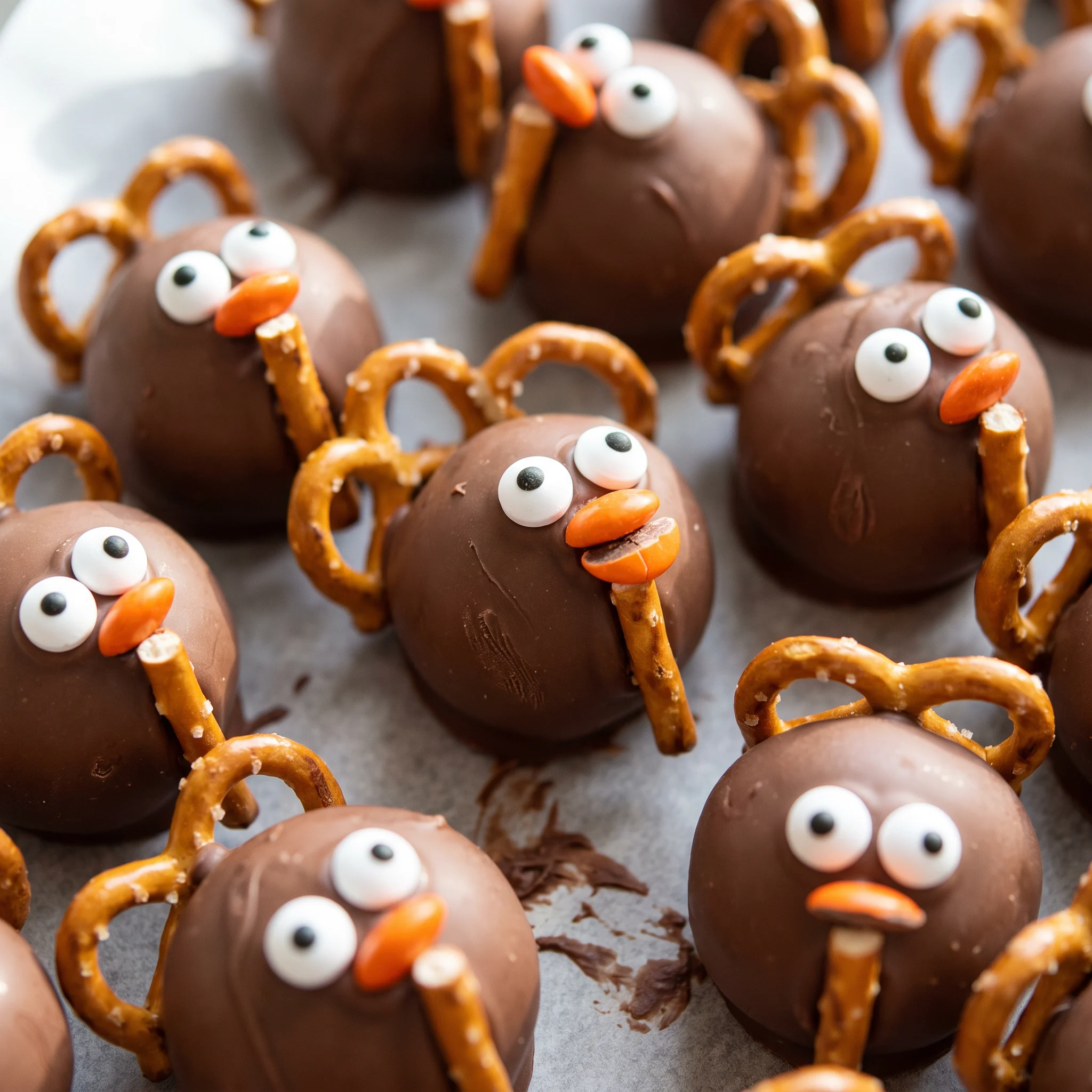
Turkey Oreo Balls with Pretzel Tails
Ingredients
Method
- Put the Oreos into a food processor; leave them whole. Pulse until they become fine crumbs. Incorporate the cream cheese and process until fully blended.
- Using a small ice cream scoop, shape the mixture into balls, then roll each by hand to achieve a smooth surface. Arrange on a rimmed cookie sheet covered with parchment paper and freeze for 15 minutes, then move to the refrigerator until you are ready to coat.
- Snap the straight pretzels into the desired length for the necks. Cover a cookie sheet with parchment paper and arrange the pretzels in a row with about 2 inches between them. In the microwave at 50% power, melt a small quantity of chocolate, then spoon 1/2 teaspoon over the top of each pretzel, shaping it into an oval. Attach the eyes and half of an M&M. Freeze for a few minutes until firm.
- Put sufficient chocolate in a microwave-safe bowl to coat about 5 balls. Microwave at 50% power, stirring every 30 seconds until fluid and smooth. Set an Oreo ball on the flat part of a fork and immediately submerge it in the chocolate, or pour the chocolate over the ball. With a sharp knife, slide the ball off the fork onto parchment paper. Repeat with the remaining balls, melting more chocolate as needed. Keep the balls refrigerated until needed.
- While the chocolate is still soft, decorate the turkeys. For the tail, dip the bottom portion of a regular pretzel into chocolate and press it against the ball. Or if making a fan tail, dip the end of some straight pretzels in chocolate and push them into the back of the ball. For the head, gently push the neck into the ball.
- Freeze for a few minutes until set, then store in the refrigerator. They can be frozen.
Storage and Serving: Keeping the Turkeys Intact and Tasting Fresh
These turkey Oreo balls hold up because the chocolate shell seals the filling. In the refrigerator, they stay soft and fresh for up to a week.
The shell keeps the interior from drying out, so the Oreo-cream cheese center remains tender. You can move them straight from fridge to table; the chocolate won’t sweat or bloom if they’re cold. For longer storage, freeze them for up to two months.
Thaw overnight in the refrigerator, not on the counter, so the pretzel tails and candy eyes stay glued in place. The chocolate won’t crack and the decorations won’t slide off. If you’re making them ahead, complete the turkeys through step 6, then refrigerate until serving.
For the best texture, eat them within three days; after that, the pretzels begin to soften, though they’re still fine. Serve them chilled. No final touch is needed once they’re set, so any last-minute decoration should be done before chilling.
What Swaps Keep the Turkey Standing and What Sinks It
cream cheese: Full-fat block cream cheese is the only kind that works. The spreadable tub version, even full-fat, has more water and gums.
If you use it, the mixture will be slack. You can try adding an extra tablespoon or two of crushed Oreos to firm it up, but the texture won’t be the same. Start with the same 8 ounces the recipe calls for, then adjust with more crumbs if needed.
Block cream cheese gives the dense, sliceable texture that rolls clean and holds a pretzel tail. The tub kind makes the balls soft and they may slump on the fork.
They’ll still taste fine, but the shape and the way they hold decorations will suffer.
Ghirardelli milk chocolate melting discs: Milk chocolate almond bark or chopped milk chocolate bars work. Almond bark is formulated to melt smoothly and sets up with a similar snap.
Chopped bars need gentle melting but give good flavor. Use the same 12 ounces the recipe calls for. Start with that amount and melt in small batches as directed.
Melting discs are forgiving and flow well. Almond bark behaves almost the same.
Chopped bars can be a bit thicker when melted, so you might need to work a little faster before it sets. The coating will still be glossy and taste like milk chocolate.
Oreo cookies: Standard Oreos are what you want. Don’t use Double Stuf or other flavors.
The filling ratio is calibrated for one standard package. If you only have Double Stuf, you’d need to scrape out some filling, but that’s a hassle and throws off the moisture.
Stick with standard. Standard Oreos give the right balance of crumbs to filling. Double Stuf adds too much moisture and sweetness, making the balls greasy and soft.
They won’t hold their shape as well and might crack when dipped.
pretzels: Thin, crisp straight pretzels are best for necks. Regular twisted pretzels work for tails.
Don’t use thick rods or stale pretzels. If you can’t find straight pretzels, you can snap thin twisted ones into straight pieces, but they may be harder to push in without breaking. Thin pretzels push into the chocolate and ball without cracking the coating.
Thick ones can break the shell or not stay put. Stale pretzels are soft and won’t hold up. The crispness also gives a nice contrast to the soft filling.
Tips
- Chill your hands before rolling. Hold a cold can or run them under cold water and dry them, because the friction of rolling 22 balls warms the mixture quickly, and warm hands turn the cream cheese soft so the balls pick up a greasy sheen and roll unevenly.
- Dust your palms with a little cocoa powder or powdered sugar rather than flour. The mixture is tacky from the cream cheese, and a thin coat keeps it from sticking to your hands without adding raw flour taste or changing the ratio of crumbs to moisture that the recipe depends on.

Frequently Asked Questions
Can I make these turkey Oreo balls ahead of time?
Yes, and they hold up well. Complete the turkeys through step 6, then refrigerate until serving; they stay fresh for up to a week. For longer storage, freeze them for up to two months, then thaw overnight in the refrigerator so the pretzel tails and candy eyes stay glued in place.
For the best texture, eat them within three days, after which the pretzels begin to soften but are still fine.
Why did my Oreo balls crack after dipping?
The most likely cause is that the balls were too cold when they hit the chocolate. A frozen solid center expands as it warms, and the set shell has no give, so it splits.
Aim for a firm exterior with a slightly yielding center; if they’ve been in the freezer longer than planned, let them sit in the refrigerator for a few minutes before dipping. A secondary check is the chocolate temperature: if it’s too hot, it can also cause the coating to contract and crack as it cools. If the cracks are along the bottom, the fork may have pressed too hard when sliding the ball off.
How do these turkey Oreo balls differ from classic Oreo truffles?
The base is the same: crushed Oreos and cream cheese, rolled and chilled. The difference is in the build.
These are shaped and decorated to look like turkeys, with a pretzel neck, a candy face, and a pretzel tail pressed into the soft chocolate. Classic truffles get a plain coating and nothing more.
The assembly turns each one into a small project, and the decorations also change how you store and serve them, since the pretzels and candies need to stay put.
