
Black cherry granita is not a sorbet you churn, and it isn’t Italian ice either. It’s a fork-scraped ice, built here on four things, one of them a can of black cherry sparkling water that does quiet structural work while the almond extract handles the flavor. The hard part is timing, not technique: the puree has to be scraped while the middle is still soft, and if you miss that window you’re breaking up a block instead of lifting flakes.
Get it right and the crystals stay dry and separate on the spoon. Get it wrong and you’ll still have something cold and cherry-sweet, just coarser than you wanted.
Fresh cherries make the better version, though frozen ones work when the season’s gone. Taste the puree before it freezes. That’s your only chance to adjust.
Granita’s fluffy, crystalline texture depends on mechanical disruption during freezing, not on the recipe itself. When the sweetened cherry liquid sits untouched, water molecules lock into large, interlocking ice crystals and the whole pan sets into a single hard block that a fork cannot break apart. The temptation is to treat the freezer time as passive, but the scraping at the 4-hour mark is what creates the texture.
The Sparkling Water Difference
Using Black Cherry Sparkling Ice instead of still water or juice is what makes this granita scoopable rather than rock-hard. Carbonation introduces air bubbles that create a lighter, more crystalline ice structure.
The dissolved sugars and flavorings in the sparkling water lower the freezing point slightly, preventing a solid block. The specific black cherry flavor reinforces the fruit without adding extra sugar or liquid volume.
When you pulse the mixture and freeze it, you’ll notice it doesn’t set up like a brick. Instead, it stays slightly soft and easy to scrape into fluffy crystals.
That’s the sparkling water at work. It’s a small swap that makes a big difference in texture.
Almond Extract as Flavor Bridge
Almond extract is not a background note here; it is a structural flavor bridge that mimics the natural benzaldehyde in cherry pits, giving the granita a more complex, authentic cherry taste. Cherries contain trace benzaldehyde, which almond extract amplifies.
A small amount of almond extract deepens the fruit flavor without tasting like marzipan. This pairing is classic in Italian cherry desserts, from amarena to granita. When you add it to the blender, the scent will hit you first, nutty and sweet, then it melds into the cherry puree.
The finished granita tastes more like true cherries, not just sweet fruit. It’s a trick that Italian cooks have used for generations, and it works because the two flavors share a common aromatic compound.
Just a tablespoon is enough to change the whole batch.
Sugar, Optional but Impactful
The sugar in this recipe is optional because the sparkling water already contains sweetener, and the natural sugars in ripe cherries may be enough. Adding sugar changes both sweetness and final texture. Sparkling Ice contributes sweetness, so extra sugar can be redundant.
Sugar lowers the freezing point, making a softer granita; omitting it yields a firmer, icier texture. Taste the cherry puree before deciding to add sugar, as cherry sweetness varies by season and variety. If your cherries are at peak ripeness, you might skip the sugar entirely and still get a sweet, refreshing granita.
But if they’re a bit tart, a quarter cup will balance the flavors without making it cloying. The choice is yours, and it’s easy to adjust based on what you have.
Why Metal Loaf Pan Works Best
A metal loaf pan is the ideal vessel because its high thermal conductivity and shallow depth speed up freezing and make it easy to scrape the granita into fluffy crystals. Metal conducts cold faster than glass or plastic, so the mixture freezes more evenly.
The shallow, rectangular shape creates a thin layer that is easy to scrape with a fork. A wider pan exposes more surface area to the freezer air, reducing large ice block formation. When you pull it out after a few hours, you’ll see the edges have set but the center is still slushy.
That’s for scraping. The pan’s material ensures you don’t get hard pockets that are tough to break up. It’s a simple choice that makes the whole process smoother.
What to Look For in the Cherries, Sugar, and Sparkling Water
fresh cherries: Dark, firm cherries with stems attached and no soft spots give the puree a deeper flavor and better texture.
sugar (optional): If you add it, use the full 1/4 cup (50 g); adding less just makes the granita firmer without enough sweetness.
Black Cherry Sparkling Ice: Use it cold from the fridge; warm sparkling water loses carbonation and won’t give the same light crystal structure.
almond extract: Pure almond extract, not imitation, has a cleaner flavor that won’t turn bitter or smell like marzipan.
Reading the Freeze: What to Look For at Every Stage of This Granita
Judging the puree before it goes in the pan
Pulse the cherries until no solid chunks remain, but stop before the mixture turns foamy. Foam means air whipped into the liquid, and those bubbles freeze into a grainy, uneven sheet. You want a dense, pourable puree that coats a spoon.
If it looks frothy, let it sit a minute so the foam settles, then stir gently before pouring it into the pan.
Tasting the puree to decide on sugar
Cherries vary wildly by variety and week. Taste the blended liquid before it hits the freezer. If it’s sweet and full, skip the sugar.
If it tastes flat or sharp, a quarter cup will round it out. Go by what you taste right then, not by what the recipe says. Once it’s frozen, you can’t fix the sweetness.
Knowing when the center is still slushy at four hours
At four hours, the edges will be set and the middle will still be soft and spoonable. That’s the window for scraping.
If the whole pan is rock solid, you waited too long and the crystals will be too large. Scrape anyway, breaking up the block, and return it to the freezer.
The texture won’t be as fine, but it will still work.
The overnight set and how to read the scrape
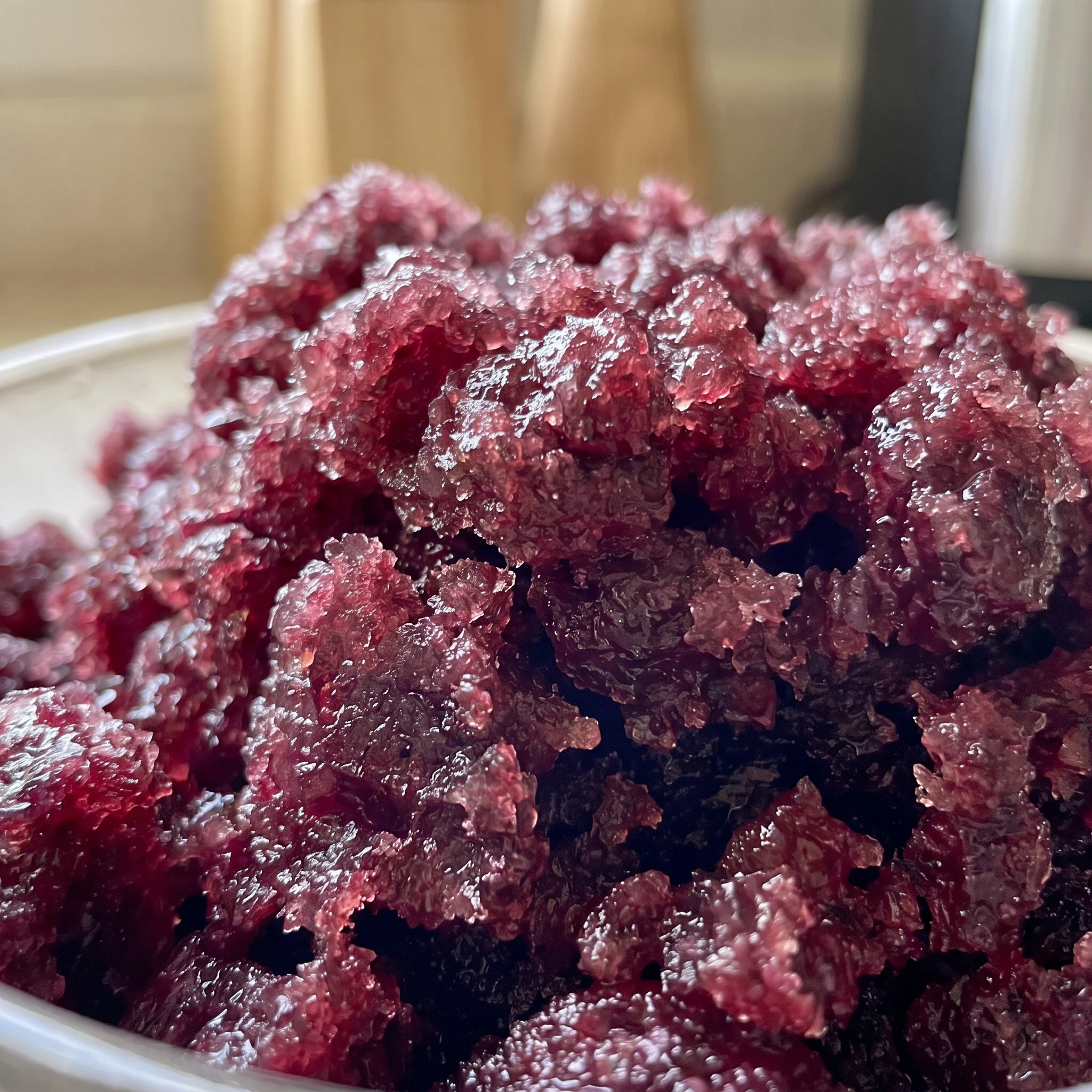
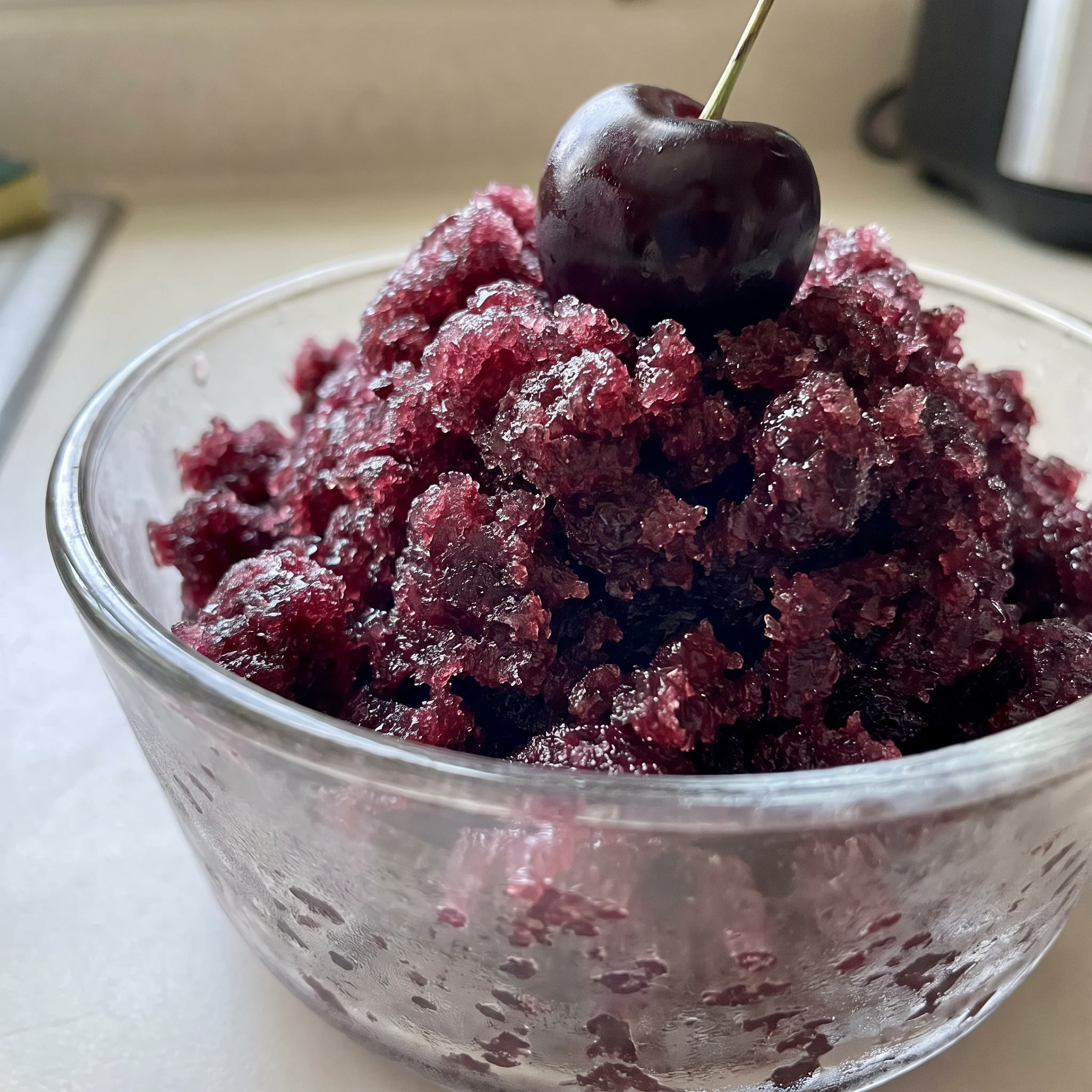
After a full night, the granita will be firm but not brick-hard, thanks to the sparkling water. Drag a fork across the surface.
If it lifts into dry, separate flakes, it’s ready. If it comes up in wet clumps, it’s slightly underfrozen and needs another hour. If it’s solid and glassy, let it sit on the counter for a few minutes, then scrape.
Scraping technique that keeps crystals separate
Scrape in long, shallow strokes across the whole pan, not deep digs in one spot. Deep digging compacts the ice into clumps.
Work quickly and move the scraped portions to chilled dishes right away. If you leave them sitting, they’ll melt at the edges and refreeze into a solid sheet. The goal is dry, separate flakes that hold their shape on the spoon.
Black Cherry Granita with Almond Extract
Ingredients
Method
- Put the cherries into a food processor or blender and pulse until a smooth liquid forms.
- Add sugar, Black Cherry Sparkling Ice, and almond extract. Pulse until the mixture is smooth.
- Transfer into a metal loaf pan or any bowl of equal size. Put it in the freezer.
- After about 4 hours, use a fork to scrape the granita. Repeat as desired.
- Freeze overnight. Take it out and scrape the mixture with a spoon. Move the scraped portions to serving dishes.
- Serve with a big old Black Cherry loving smile!
Storage, Serving Window, and Reviving a Stored Portion
Granita is at its best scraped and eaten within 10 minutes. The crystals are dry and separate then; past that, they melt at the edges and slump.
So scrape only what you’re serving. Leftovers keep in the freezer, covered tightly, for up to 2 weeks. The texture shifts: the crystals re-fuse into a solid block within a day.
That’s expected. To serve a stored portion, let the pan sit on the counter for 5 to 10 minutes, then scrape with a fork, exactly as you did before the overnight set.
The fresh scrape breaks the block back into flakes, and the result is close to the original. If the block is too hard, give it another few minutes.
Don’t thaw it fully; you’ll lose the crystal structure and end up with sweet cherry water. The almond extract is already in the mix, so no finishing touch goes on at serving. Just scrape and eat.
Tips
- Pit the cherries over the blender jar so the juice that runs off lands in the puree instead of on the cutting board. That liquid is where the cherry’s sugar and acidity live, and losing a few tablespoons of it means the blended mixture tastes weaker than the fruit did whole.
Two Swaps That Work and One That Doesn’t
Fresh cherries: If fresh cherries are out of season, use an equal weight (1 pound) of frozen dark sweet cherries, thawed, with their juice. You can also swap in 2 cups of another fruit puree, like raspberry or peach, but note that seedless raspberry puree will taste sharper and set a bit softer. Frozen cherries are picked and frozen at peak ripeness, so the puree often tastes sweeter and more consistent than out-of-season fresh ones.
Thaw them completely and include the liquid that collects, since that juice is part of the cherry flavor and helps the granita freeze into a smoother, less icy block. If you use a different fruit puree, expect a different flavor profile and a slightly different texture depending on the fruit’s natural sugar and water content.
Black Cherry Sparkling Ice: You can use another flavor of Sparkling Ice, like Cherry Limeade or Black Raspberry, or plain sparkling water with a tablespoon of sugar added. Do not swap in still water or flat juice; the carbonation is what keeps the granita light and scoopable.
Another flavor of Sparkling Ice will change the dominant taste but still provide the carbonation and dissolved sugars that prevent a solid freeze. Plain sparkling water with a little sugar works similarly, though you’ll lose the black cherry reinforcement. Still water or flat juice will give you a hard, glassy block that’s difficult to scrape and eats like an ice cube, not a granita.
Almond extract: Leave it alone. There’s no good substitute for what it does here.
If you must avoid it, omit it entirely rather than swapping in vanilla or another extract. Almond extract is doing structural flavor work, bridging the cherry’s natural benzaldehyde and making the fruit taste more like true cherries. Vanilla or other extracts won’t mimic that and will just add a foreign note.
Omitting it gives a flatter, more one-dimensional cherry flavor, but it’s better than a bad swap.
Sugar (optional): If you’re watching sugar, you can skip it entirely. If you want a less refined option, try an equal amount of honey or agave, but start with 3 tablespoons and taste the puree before freezing.
Sugar lowers the freezing point, so omitting it yields a firmer, icier granita. Honey and agave are sweeter than sugar and add their own flavor, so use less and adjust based on how sweet your cherries are.
Remember, once frozen, you can’t fix the sweetness, so taste the puree first.
Frequently Asked Questions
Can I make black cherry granita ahead of time and keep it in the freezer?
Yes, and it actually needs the overnight freeze, so it’s a natural make-ahead. The catch is texture: once it sits for a day, the crystals re-fuse into a block.
When you’re ready to serve, leave the pan on the counter for 5 to 10 minutes, then scrape with a fork exactly as you did before the overnight set. That fresh scrape breaks the block back into flakes, close to the original. Scrape only what you’re serving, since a scraped portion slumps within about 10 minutes.
Why did my granita turn into a solid block of ice?
Most likely you skipped the scrape in step 4, the one at the four-hour mark. That pass breaks up the ice as it forms, and if the mixture freezes undisturbed, the crystals grow together into one block. Another check: the recipe calls for Black Cherry Sparkling Ice, and still water or flat juice won’t stay scoopable.
If you’re already at the block stage, let the pan sit on the counter for a few minutes, then scrape anyway. The flakes won’t be as fine, but it still works.
How is granita different from sorbet or Italian ice?
Granita is scraped by hand into dry, separate flakes, never churned, so it eats light and crystalline rather than smooth. Sorbet is churned, which whips air in and gives it a uniform, creamy body.
Italian ice sits between the two, denser and smoother than granita, closer to a slush than a flake. This recipe leans on carbonation and a shallow metal pan to keep the ice from setting into a brick, which is what makes the fork-scraped texture possible.
Do I need an ice cream maker to make granita?
No, and it wouldn’t help here. A machine churns the mixture continuously, which gives you sorbet, not the dry flakes you’re after. Granita is built on the opposite approach: freeze the puree in a metal loaf pan, then scrape it with a fork after about 4 hours and again after the overnight set.
That scraping is what creates the texture. The blender does the only mechanical work this recipe needs.
