
Cut a slice cold and the butter in the frosting goes dense, the wine aroma pulling back into the crumb until you’d swear the sparkle never made it in. Let that same slice sit out and the whole thing loosens, the champagne note rising soft and yeasty, closer to the smell of a poured glass than anything you’d expect from cake. That swing is the real challenge of a pink champagne cake, and it’s why this one leans on reduction and careful butter instead of dumping wine into the bowl and hoping.
Frosting made that way either turns slack and won’t hold a swirl or firms up grainy against the crumb, and the layers beneath it go tough fast if you work the batter too long. Get it right and you get a tall, pink, faintly boozy slice that tastes like the bottle, not the perfume.
Why the Champagne Gets Reduced
Champagne is mostly water. Pour it straight into butter and powdered sugar and you get a soupy, curdled mess. To avoid that, the wine goes into a saucepan and simmers down to about a quarter cup.
What’s left is concentrated, slightly syrupy, and tastes like champagne should: bright, a little yeasty, with a faint sweetness. That reduction is what gives the frosting its backbone. It has to cool completely before it meets the butter.
Warm liquid will melt the butter and leave you with a greasy puddle instead of fluffy frosting. For the cake batter, though, the champagne goes in straight from the bottle. The batter can take the extra liquid; the frosting cannot.
So when you taste the finished frosting, you’re tasting wine that’s been boiled down to its essence, not watered-down sparkle.
Reverse Creaming Builds a Tender Crumb
Butter and sugar go into the bowl first, beaten until pale and airy. That step traps air bubbles that expand in the oven, helping the cake rise along with the baking powder.
Egg whites go in gradually, one at a time, so the mixture doesn’t deflate. Then flour and champagne alternate, starting and ending with flour, to keep the emulsion stable. Stop mixing the moment the last streaks of flour disappear.
Overmix and you’ll develop gluten, which makes the cake tough. This method produces a fine, delicate crumb that feels light on the tongue.
The champagne flavor comes through in the background, not as a punch. You’re after a cake that’s tender enough to compress to the touch but still holds up under frosting. That balance is what makes each slice feel celebratory.
Drip and Berries Add Contrast
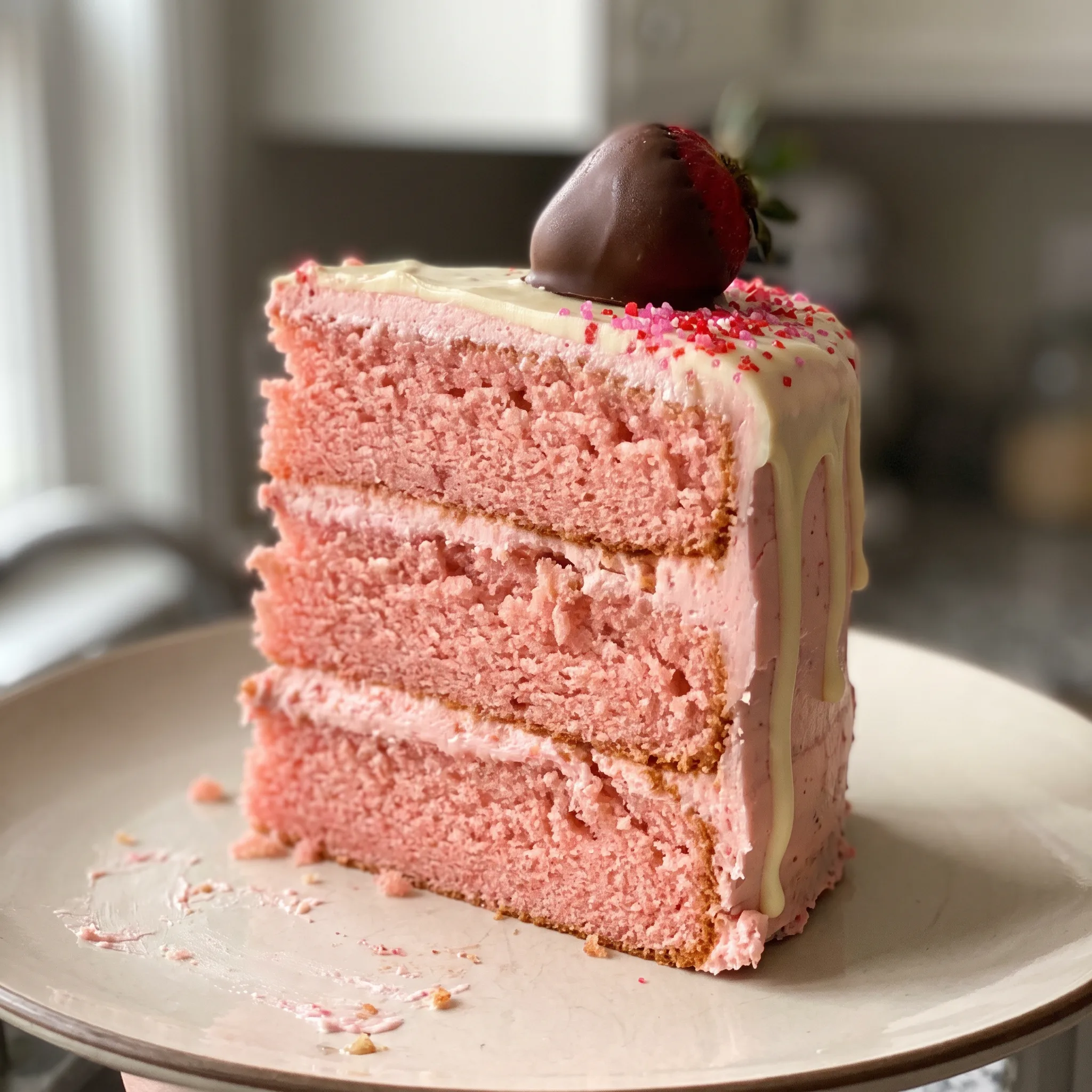
The white chocolate drip isn’t just for looks. It brings a creamy, sweet note that cuts through the tangy champagne frosting. Chocolate-covered strawberries add a burst of fresh acidity and a snap of chocolate, balancing the cake’s richness.
Champagne marshmallows, soft and airy, reinforce the theme and offer a soft texture against the crumb. Together, they create a mix of textures: smooth frosting, juicy fruit, crisp chocolate, and fluffy marshmallow. Add them just before serving.
The chocolate on the strawberries stays glossy, the marshmallows stay soft, and the drip doesn’t weep. A slice with all the components gives you a bit of everything in each bite, and the cake itself stays the star, not the decorations.
Stacking Three Layers for Height
Three 6-inch pans yield thin layers that bake quickly and evenly. That means no domed tops or undercooked centers. Divide the batter evenly so each layer stacks level.
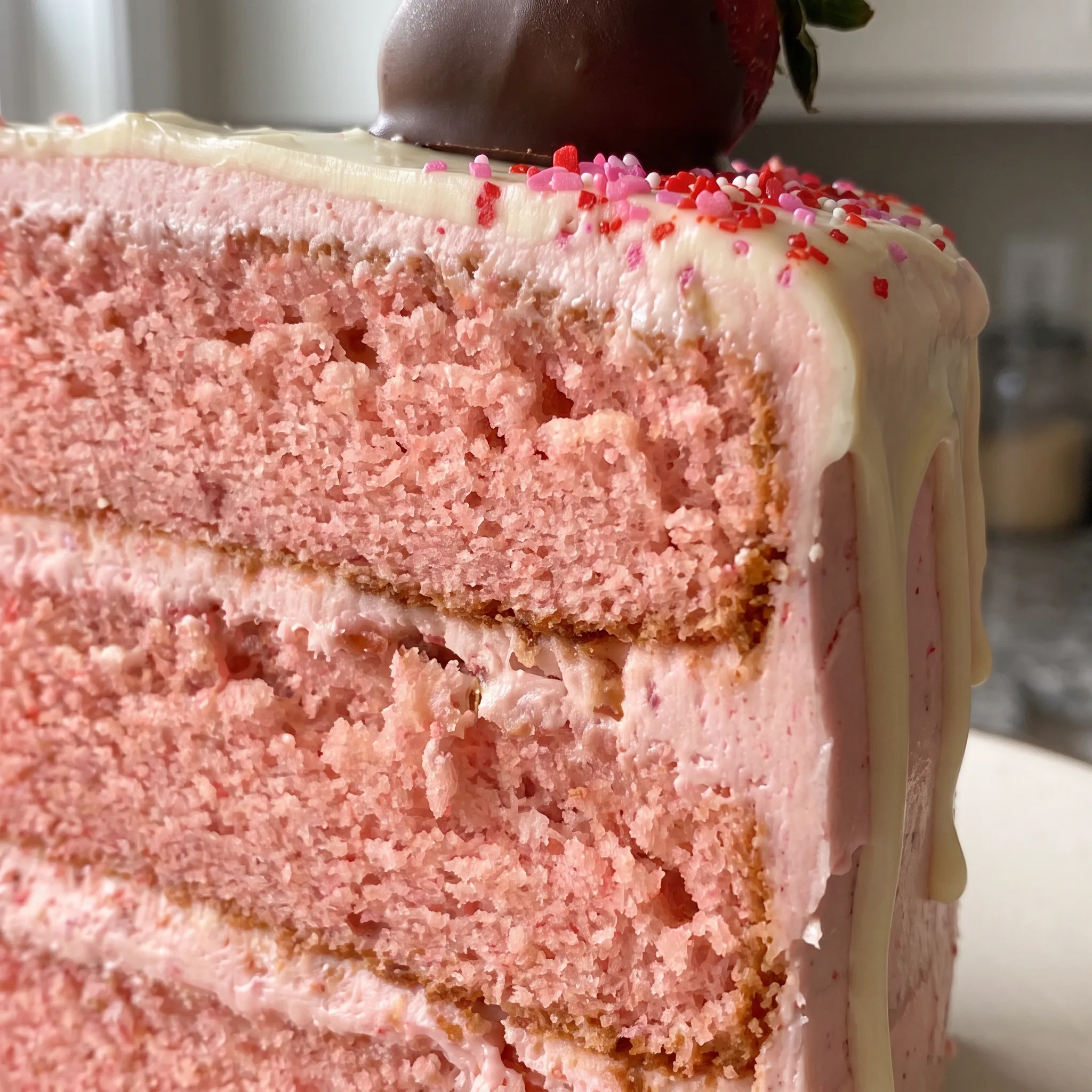
Thin layers also absorb frosting well, giving you a high frosting-to-cake ratio in every slice. The small diameter makes the cake tall and elegant, for celebrations.
When you cut into it, you see distinct layers of cake and frosting, not a squat two-layer affair. The height alone signals something special, and the even layers ensure a clean slice.
A tall, majestic cake that’s as impressive to look at as it is to eat.
What Matters in the Bottle, the Butter, and the Whites
Pink champagne or sparkling wine: Go dry or brut, since a sweet bottling turns the reduction cloying and the frosting tastes like syrup.
Unsalted butter, softened: It should dent under a finger but still feel cool, because butter soft enough to slump will never whip up fluffy.
Egg whites: Boxed carton whites work fine here, and they pour in slowly without the stop-and-scrape rhythm of cracking five eggs.
Pink gel food coloring: Gel, not the watery drops, since liquid color thins the batter and it takes half a bottle to show up pink.
Chocolate covered strawberries: Buy them the day you serve, because refrigeration beads up on the chocolate and dulls the gloss.
Champagne is mostly water, and buttercream is a fat-in-water emulsion held together by the right balance of fat, sugar, and liquid. Pouring in unreduced champagne adds excess water that overwhelms the butterfat, causing the mixture to separate into a grainy, soupy mess instead of a smooth, fluffy frosting. The temptation is to skip the reduction step because it seems fussy, but without it the frosting cannot hold its structure.
Judging the Champagne, the Butter, and the Crumb
When the champagne has reduced enough
The reduction is ready when it coats the back of a spoon and the volume has dropped to about ¼ cup. If it’s still watery, the frosting will be slack and won’t hold a pipe.
If it’s gone syrupy and dark, the flavor turns bitter. The card says 5 to 8 minutes, but the visual cue matters more.
Let it cool completely; warm reduction will melt the butter.
Judging the frosting’s texture after adding champagne
Once the champagne goes in, the frosting may look curdled or loose. That’s normal, but if it stays soupy after a few minutes of mixing, the butter was too soft or the champagne wasn’t cool enough. If it’s stiff and crumbly, add a teaspoon of champagne.
Aim for a spreadable, fluffy consistency that holds a peak but doesn’t resist the spatula.
When the cake layers are baked through
A toothpick inserted in the center should come out with a few moist crumbs, not wet batter. If it’s clean, the cake is overbaked and will be dry. Start checking at 25 minutes; the range is 25, 30.
The layers will pull away from the pans slightly and spring back when pressed. Cool 10 minutes in the pan, then turn out.
Keeping the batter from overmixing
Stop as soon as the last streaks of flour disappear. Overmixed batter turns tough and tunnels. The alternating flour and champagne helps, but the final stir is where you decide.
If you’re adding food coloring, do it after the second flour addition so you can adjust without extra mixing. A few lumps are fine.
Pink Champagne Cake with White Chocolate Drip
Ingredients
Method
- Pour the champagne into a medium saucepan and place over medium-high heat until it reaches a boil. Keep a close eye; once boiling, lower to a simmer and cook 5–8 minutes until reduced by more than half.
- After you have about ¼ cup reduced champagne, let it cool completely before continuing, or it will melt the frosting.
- After the champagne has cooled, put the softened butter into the bowl of a stand mixer or hand mixer and beat 2–3 minutes until light and fluffy.
- Add the powdered sugar and mix on low until crumbly. Add the vanilla, champagne, and salt; mix until combined.
- Cover and set aside until ready to frost the cake. Can be made 1–2 days ahead and stored in an airtight container in the fridge; bring to room temperature and remix before using.
- When crumbly, increase speed to medium/medium-high and mix 3–5 minutes until light and fluffy. Add the champagne, vanilla, salt, and food coloring; mix until combined.
- Cover until ready to frost the cake.
- Preheat oven to 350°F (175°C).
- Line the bottoms of three 6-inch round cake pans with parchment paper and spray with baking spray or coat with butter and flour. Set aside.
- Whisk the flour, salt, and baking powder in a medium bowl; set aside.
- In a bowl, cream the softened butter and sugar on medium speed 2–3 minutes until light and fluffy.
- Mix in the vanilla and egg whites one at a time, or slowly add boxed egg whites while mixing on low speed. Scrape down the sides of the bowl as needed to ensure everything is fully mixed.
- Alternate adding the dry flour mixture and the champagne, starting and ending with the flour (three additions of flour and two of champagne). Do not over-mix; stop as soon as all the flour is incorporated.
- If adding pink food coloring, start adding after the second addition of flour so you can add more if needed without overmixing the batter.
- Divide the batter evenly between the 3 prepared cake pans and smooth with an offset or regular spatula.
- Bake 25–30 minutes, or until a toothpick inserted in the middle comes out mostly clean with only a few crumbs.
- Let cool in the pan for 10 minutes, then cool completely on a wire rack before frosting.
- Frost the layer cake and add any decorations. Enjoy!
What to Swap and What to Leave Alone in a Champagne Cake
Pink champagne or sparkling wine: Any dry sparkling wine works: cava, prosecco, or a brut sparkling from California. Skip anything labeled doux or sec, and don’t reach for a still white wine unless you have no other option.
The cake and frosting will still taste like celebration, though the yeasty note that champagne brings will be quieter. A sweeter bottling makes the reduced syrup cloying, and the frosting ends up tasting like sugar syrup rather than wine.
If you use still wine, the reduction tastes flatter and less bright. Start with the same 1 cup for the cake and 2/3 cup for the frosting, then reduce as directed; you may need to simmer a minute or two longer if the wine is lower in acidity.
Boxed egg whites: Fresh egg whites from 5 large eggs. Separate them cold, then let them sit at room temperature for 10 to 15 minutes before adding. Fresh whites whip up a little more easily and give the cake a slightly lighter texture, but the difference is small.
Boxed whites are already pasteurized and pourable, so they go in without the stop-and-scrape rhythm. If you use fresh, add them one at a time as the card says, and watch for any stray yolk; even a trace of yolk keeps the whites from incorporating smoothly.
Unsalted butter plus a pinch of salt: Salted butter, omitting the added salt. Use the same 3 sticks for the frosting and 3/4 cup for the cake.
The frosting will taste a touch saltier, which can actually sharpen the champagne flavor, but brands vary in salt content. If your salted butter is very salty, the frosting may taste more savory than sweet. For the cake, the salt difference is less noticeable.
Start with the same amounts and taste the frosting before spreading; if it’s too salty, a tablespoon or two of extra powdered sugar can help balance it.
All-purpose flour: A 1-to-1 gluten-free flour blend that contains xanthan gum. Use the same 2 1/4 cups (281 g). The cake will be more fragile and may not rise as high.
The crumb tends to be a bit gummy and the layers are harder to stack without tearing. The flavor is still good, but the texture won’t match the original. If you try it, handle the layers gently and consider chilling them before frosting to firm them up.
Storage, Serving, and Timing the Finish
Frosted cake keeps at room temperature for a day, covered, and that’s your best window for texture. The crumb stays tender and the buttercream spreads like silk.
After that, refrigerate it. Cold firms the butter in the frosting, so slices taste dense and the champagne flavor mutes. Let a cold slice sit out 20 to 30 minutes before serving; the butter softens and the aroma returns.
For leftovers, press plastic against cut faces, then wrap the whole cake or individual slices airtight. They hold in the fridge up to three days. Freeze only unadorned slices, double-wrapped, for up to a month.
Thaw overnight in the fridge, then bring to room temperature. Do not freeze the drip, strawberries, or marshmallows; they weep and lose texture. Add all decorations just before serving.
Once decorated, eat within a few hours for the best contrast.
Tips
- Weigh the egg whites instead of counting them: 150 g is the target, and a large egg white can run anywhere from 28 to 35 g, so five whites from small eggs can land near 140 g and five from jumbo eggs can push past 175 g. Too little and the cake bakes up dry and crumbly; too much and the layers turn rubbery and sink in the middle. Pour the whites into the bowl on the scale and add or remove a splash until it reads 150 g. Then check the reduced champagne with a clean finger before it goes near the butter. It should feel no warmer than room temperature, roughly 70°F. Even a reduction that looks cool in the pan can hold warmth at the bottom, and 2 tablespoons of it will slacken 3 sticks of buttered frosting into a loose, unpipeable state. If it still feels warm, set the pan in a bowl of ice water and stir for a minute or two.

Frequently Asked Questions
Can I make the champagne reduction ahead of time?
Yes, and it’s the smart move. The reduction needs to be completely cool before it hits the butter, so making it the day before takes that waiting time out of your baking day. Store it covered in the fridge; it will thicken to a soft solid.
Let it sit out until it’s room temperature before you add it to the frosting, because cold syrup will seize the butter and leave you with lumps.
Why did my buttercream curdle after adding champagne?
The champagne was probably still warm. Even a few degrees too warm melts the butter on contact, and once that happens the emulsion breaks into a slick, grainy mess. Next time, touch the bottom of the saucepan; it should feel cool, not just lukewarm.
If the mixture looks curdled but the bowl still feels cool, keep beating on medium for a minute or two. It often comes back together once the butter re-emulsifies.
How far in advance can I assemble and decorate the cake?
Frost the layers the day you plan to serve, or the night before at the earliest. The buttercream sets up firm in the fridge, so a cake assembled further ahead loses that soft, spreadable texture.
Add the drip, strawberries, and marshmallows right before serving; they don’t hold up overnight. If you need to work ahead, bake and freeze the unfrosted layers, then thaw and frost on serving day.
Can I use this recipe to make cupcakes instead of a layer cake?
Yes, the batter works fine as cupcakes. You’ll get a lighter, more open crumb because the smaller cups bake faster and don’t have the weight of three stacked layers pressing down.
Fill the liners about two-thirds full and watch them closely; they’ll be done well before the layer cake time. The frosting amount is generous, so you’ll have plenty to pipe a tall swirl on each one.
What is the difference between this pink champagne cake and a classic white cake?
Classic white cake gets its flavor from vanilla and its tenderness from cake flour or a high ratio of egg whites to butter. This one swaps the liquid for reduced champagne, which brings a faint yeastiness and a tart edge that cuts through the sweetness. The crumb is still fine and light, but the frosting carries most of the wine flavor.
Where a white cake tastes clean and simple, this one tastes like a celebration with a little bite.
