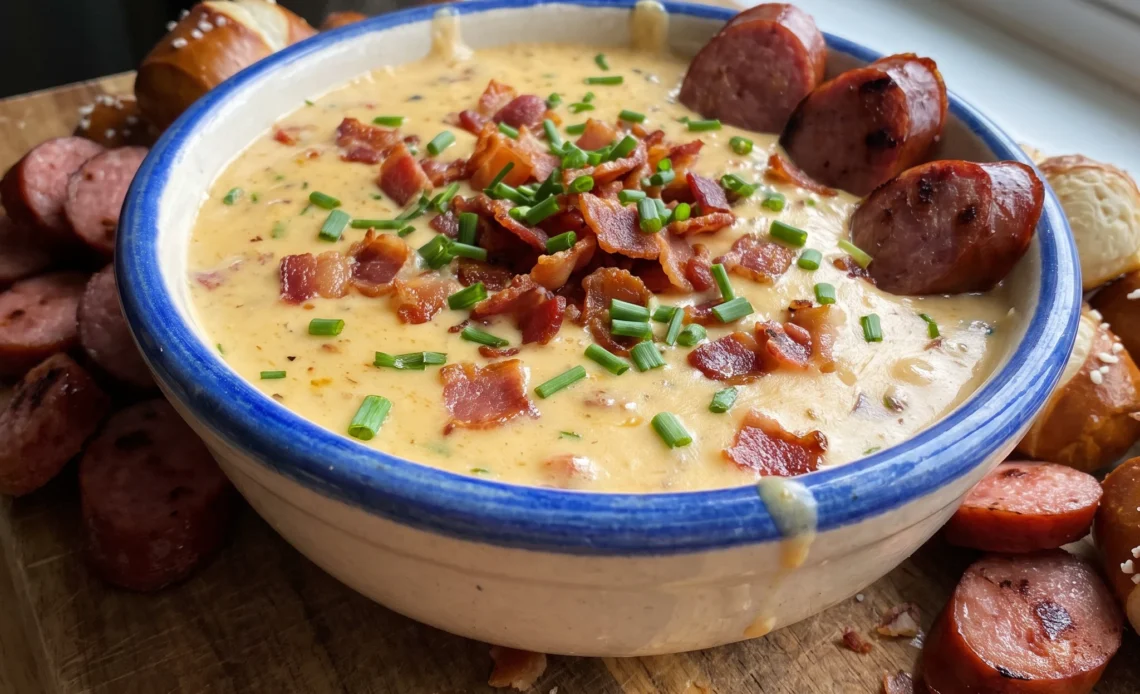
Grainy beer cheese dip usually isn’t a cooking mistake. It’s the cheese you bought. Pre-shredded cheddar is dusted with starch to keep the shreds loose in the bag, and that starch is what leaves a sandy texture no amount of whisking fixes.
The other failure is quieter: a dip that tastes flat and boozy, because the beer never got its moment alone in the pan to cook down. Everything that makes a bacon beer cheese dip work sits in those two details, plus one more the recipe sections cover.
What you get when they’re handled is a skillet dip that moves like fondue, coats a pretzel without sliding off, and holds a scatter of crisp bacon on top. For six people, it’s a pub night in one pan.
A Roux That Holds
Flour and butter cooked together give the dip a structure that melted cheese alone can’t. Without it, the beer and milk stay thin, and the cheese sinks into a greasy pool at the bottom of the pan. The roux thickens those liquids into a silky base that suspends every shred.
When you stir in the cheese, it melts into that base instead of separating. Under-cooked roux leaves a raw flour taste that no amount of sharp cheddar can hide, a pasty note that coats your tongue.
Three minutes of steady whisking over medium heat lets the flour cook through and lose that rawness. A 1:1 gluten-free flour substitute works the same way here. It browns and thickens much like wheat flour, so the dip still clings to a pretzel without turning soupy.
You’re building a sauce that can carry a full two cups of cheddar without breaking. That’s what keeps each scoop cohesive from the first dip to the last.
Why Two Cheddars and Cream Cheese
White cheddar brings a sharp, tangy bite and melts into a smooth ribbon. Sharp yellow cheddar adds a deeper orange color and a little more acidity, so the dip tastes layered rather than flat. Cream cheese does the quiet work.
It melts into the base and keeps the shredded cheeses from turning stringy or leaking fat. Without it, you’d get a pool of grease on top and a rubbery clump underneath.
The combination gives you a dip that’s scoopable straight from the pan, thick enough to coat a piece of kielbasa but loose enough to flow around a pretzel. Pre-shredded cheese often contains anti-caking agents, usually potato starch or cellulose, that keep the shreds from sticking in the bag. Those same agents can prevent the cheese from melting smoothly, leaving a slightly gritty texture.
Grating your own block of cheddar takes a few extra minutes but rewards you with a silkier finish. The dip should look glossy and uniform, not separated or oily.
Beer, Simmered Not Raw
Lager brings a mild, slightly sweet grain flavor that stays in the background while the cheese takes center stage. A hoppy IPA or a dark stout would bully the cheddar, leaving bitterness or roast that fights the cream. When you pour the beer into the roux and let it bubble, the alcohol cooks off and the liquid reduces, concentrating that malty note.
Skip the simmer and you’ll taste a harsh, boozy edge that cuts through the richness. The beer goes in before the milk because it needs that alone time to reduce and thicken with the flour.
Adding milk too soon would dilute the beer and slow the whole process, leaving a thinner sauce that never quite comes together. After a couple of minutes of gentle bubbling, the sharpness fades and the base smells like toasted grain instead of raw alcohol. That’s your cue to add the milk.
The finished dip should taste of cheese first, with beer as a warm hum underneath.
Serve It Hot and Thick
As the dip sits, it thickens. The cheese firms up and the sauce tightens around it, turning a glossy pour into something you’d have to spread with a knife. That’s fine for a moment, but for dipping you want it molten.
A warming pot or fondue set keeps the temperature steady so every dunk comes back coated, not clumped. The pan itself holds enough residual heat to keep things loose for a few minutes after you pull it off the burner, but that fade is quick.
Sturdy dippers matter for the same reason. Soft pretzels, grilled kielbasa, and corn chips have the backbone to scoop through a thick cheese pull without snapping. A delicate potato chip would shatter under the weight.
You’re after a dip that clings and stretches, not one that drips off in sheets. Serve it while it still moves in the pot, and let the bowl come to the table before it sets.
The last scoop should be as smooth as the first.
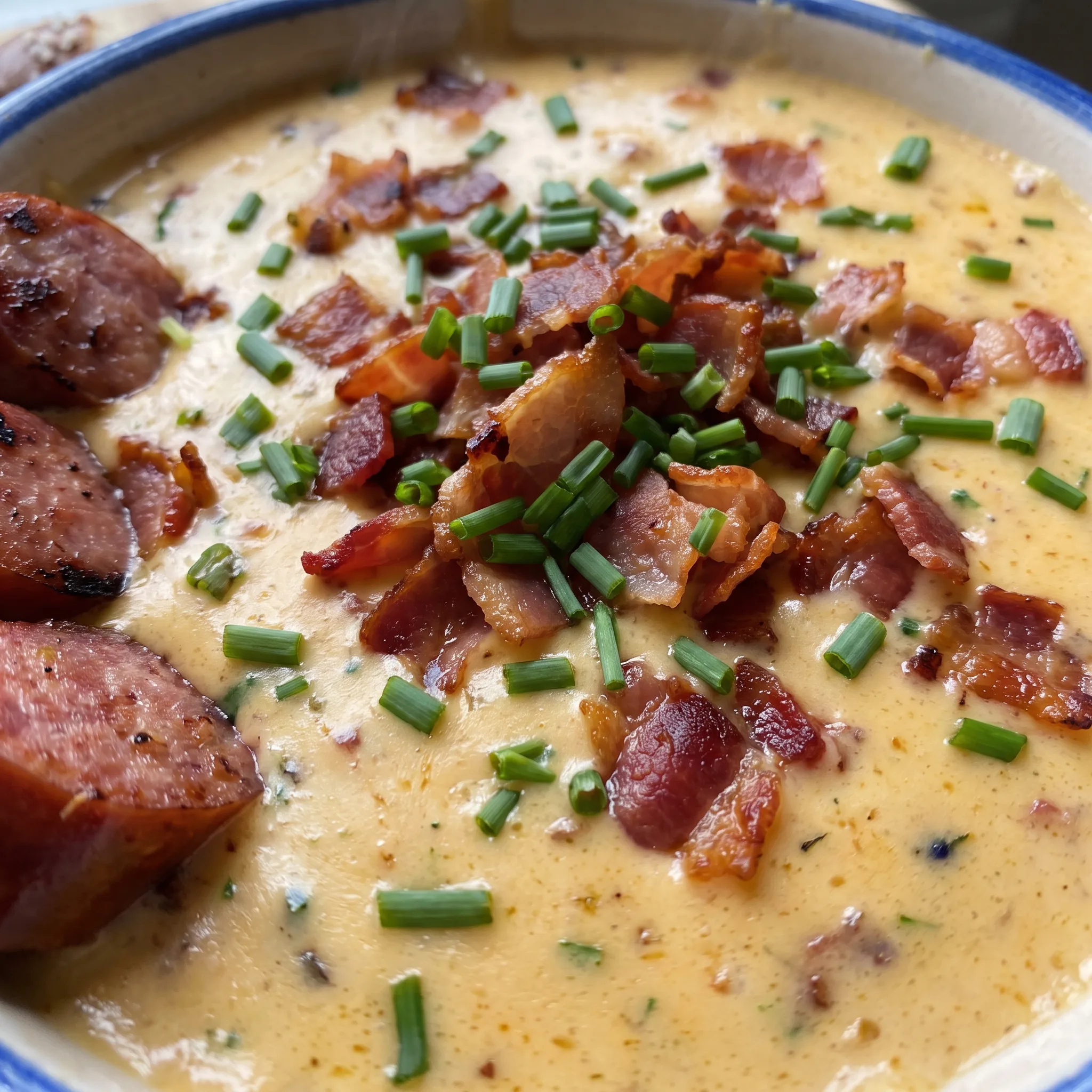
The Ingredients That Make or Break This Dip
Lager beer: A mild, slightly sweet lager stays in the background; hoppy IPAs or dark stouts bring bitterness that fights the cheddar.
White cheddar and sharp yellow cheddar: Grate your own blocks, since pre-shredded cheese carries anti-caking agents that leave the melted dip gritty instead of glossy.
Cream cheese: The quiet insurance against a greasy pool and rubbery clumps, since it melts into the base and keeps the shredded cheddar from leaking fat.
Bacon: Chopped small so it crisps fast and scatters evenly across the top rather than clumping in a few heavy bites.
When shredded cheese hits a liquid that is too hot, the fat melts out of the protein matrix before the proteins can disperse, leaving a greasy, grainy sauce. The visual cue is a slick of orange oil on the surface and a texture that feels like sand on the tongue; the smell turns acrid and the sauce loses its glossy sheen. At that point the proteins have already coagulated and no amount of stirring will bring the emulsion back.
Reading the Dip at the Pan
When the roux stops smelling like flour
Three minutes of whisking over medium heat is the difference between a sauce that tastes of cheese and one that tastes of paste. Lean in and smell: raw flour has a dull, papery note. When it fades and you catch toasted grain instead, the roux is ready for liquid.
Pull it early and no amount of sharp cheddar covers that pasty coating on your tongue.
The beer’s bite fading before the milk goes in
Pour the beer into the roux and let it bubble for two minutes. You’re waiting for the harsh, boozy sting to cook off and the smell to turn malty and warm.
If it still smells sharp, give it another thirty seconds. Add the milk too soon and you dilute the beer, slowing the reduction and leaving a thinner base that never quite thickens.
Watching the cheese melt without breaking
Once the cream cheese and shredded cheddar go in, drop the heat to low and stir. The cheese should melt into the base within two minutes, turning glossy and uniform.
If you see a slick of orange oil separating, the heat is too high. Pull the pan off the burner and whisk hard; the cream cheese will pull it back together. Gritty texture means pre-shredded cheese, not a ruined sauce.
Judging the final consistency before it sets
The dip should flow around a pretzel but cling to kielbasa. If it coats the back of a spoon and drips off in heavy ribbons, it’s right.
Too thick and it’ll set to spread before the first dunk; stir in a splash of milk off the heat. Too thin and it’ll slide off chips; simmer another minute, stirring, to tighten it.

Bacon Beer Cheese Dip with White Cheddar
Ingredients
Method
- Place the chopped bacon in a medium cast-iron pan over medium heat and stir until it becomes crispy. Take out and set aside the bacon; throw away the bacon fat.
- Using the same pan over medium heat, combine the flour and unsalted butter. Whisk together. After the butter has fully melted, keep stirring often for 3 minutes to develop the roux. See chef’s note below about the roux.
- Pour in the beer, stir, and allow it to simmer for 2 minutes, stirring frequently. Adjust the heat as necessary to keep a simmer. After 2 minutes, pour in the milk and let it simmer for another 2 minutes.
- Put in the cream cheese and shredded cheeses and turn the heat down to low. Stir. Within 2 minutes, the cheese will melt and blend.
- Stir in the remaining ingredients: Dijon, Worcestershire, and chives, and mix again.
- Scatter the reserved bacon on top and serve right away, or move to a fondue or warming pot to keep hot and melted. Serve with fresh pretzels, corn chips, and grilled sausage for dipping.
Where a Swap Helps and Where It Wrecks the Dip
Lager beer: Non-alcoholic lager, or an extra 1 cup of whole milk. A near-beer keeps the malt backbone without the alcohol bite you’d otherwise simmer off. Using milk in its place adds richness but loses that grainy hum, so the dip tastes more like straight cheese sauce.
Start with the same 1 cup the recipe calls for, then taste after the cheese melts. If it seems flat, a squeeze of Dijon or a pinch more Worcestershire can bring it back. Avoid hoppy IPAs and dark stouts here; their bitterness and roast will fight the mild cheddar and leave an acrid edge that no amount of cream cheese can soften.
All-purpose flour: 1:1 gluten-free flour blend. A cup-for-cup blend thickens the beer and milk much like wheat flour, so the dip still clings to a pretzel without turning soupy.
Use the same 2 tablespoons the recipe lists. Some blends absorb liquid a little faster, so watch the first minute of simmering and add a splash more beer if the base tightens too quickly. The finished texture stays glossy and scoopable.
Skip almond flour or coconut flour; neither has the starch to build a roux, and you’ll end up with a thin, broken sauce.
Dijon mustard and Worcestershire sauce: Adjust the ratio between them, or use one if you’re out of the other. Dijon brings a sharp tang that cuts through the cheese, while Worcestershire adds a savory, fermented depth. If you only have Dijon, start with the same 1 tablespoon and taste; the dip will be brighter but miss that umami bass note.
If you only have Worcestershire, use the same 1 tablespoon and expect a slightly darker, more savory profile with less bite. Don’t swap in yellow mustard or ketchup; their sugar and vinegar levels will throw off the balance.
Whole milk: Half-and-half or a plain unsweetened oat milk. Half-and-half makes the dip richer and slightly thicker, so you might need a splash more beer to keep it flowing.
Oat milk works if you want to avoid dairy, but the dip won’t thicken quite as much; you may need an extra minute of simmering. Start with the same ½ cup the recipe uses. Avoid sweetened or vanilla-flavored plant milks, which will taste odd against the cheddar.
If you’re skipping dairy entirely, note that the cream cheese and shredded cheddar are what make this dip what it is, so a dairy-free version will be a different dish altogether.
Storage, Reheating, and the Serving Window
This dip is at its best within 30 minutes of finishing. The bacon goes on right before it hits the table, so it stays crisp instead of steaming under the lid of a warming pot.
Past that half hour, the sauce tightens around the cheese and a dunk comes back heavy. Leftovers keep in the fridge for three days in a sealed container, but expect the texture to change. Cold, the dip sets stiff, and the fat separates slightly from the sauce.
Reheat it gently in a pan over low heat with a splash of milk, stirring until it loosens. A microwave blast breaks the emulsion and leaves you with oil pooling at the edges.
The assembled dip doesn’t freeze well; the dairy splits on thawing and the texture never comes back. If you want to work ahead, cook the bacon and grate the cheese a day in advance.
Tips
- Grate the cheddar on the large holes of a box grater, not the fine side. Coarse shreds melt into the base at different rates than fine ones, and the larger surface area lets them blend within the 2 minutes the recipe calls for instead of clumping into a single mass you have to chase around the pan.
- Take the cream cheese out of the fridge 15 minutes before you start, or cut the 4 ounces into cubes and let them sit while the bacon crisps. Cold cream cheese drops the pan temperature when it hits the base, which stalls the melt and can leave small curds that never fully smooth out even after the shredded cheddar goes in.

Frequently Asked Questions
Can I make this bacon beer cheese dip ahead of time?
Cook the bacon and grate the cheese a day ahead, then build the dip the day you serve it. The finished dip is best within 30 minutes of coming off the heat.
Reheated leftovers loosen with a splash of milk in a pan over low heat, but the texture won’t match a fresh batch, and the bacon should go on right before serving so it stays crisp. The assembled dip doesn’t freeze well; the dairy splits on thawing.
Why did my beer cheese dip turn out grainy?
Check your cheese first. Pre-shredded cheddar carries anti-caking agents, usually potato starch or cellulose, that keep the shreds from melting smoothly, so grate your own blocks next time. If the cheese was fine, look at the heat: a hard boil after the cheese goes in can break the sauce into a slick of orange oil.
Pull the pan off the burner and whisk hard, and the cream cheese will usually pull it back together. Grit that stays after whisking points to the cheese itself.
How is this different from a classic beer cheese dip?
Most versions are cheese melted into beer with a little mustard, and they set up greasy once they cool. This one starts with a roux, so the beer and milk thicken into a base that actually holds two cups of cheddar, plus cream cheese as insurance against a pool of fat.
Bacon goes on top at the end rather than through the dip, so it stays crisp. The result is scoopable straight from the pan and thick enough to coat a piece of kielbasa.
