
Skillet creamed corn lives or dies on whether the corn plumps before the cream breaks, and that window is unforgiving. Frozen kernels give back their own starchy liquid as they heat, which is what actually thickens the pan. Miss that, and you’re just stirring corn in hot cream that never comes together.
The starch slurry you whisk cold before it hits the pan is the other half of the job; dump it in dry and you’ll be picking lumps out of the sauce for good. Blend a cup or two, keep the rest whole, and the texture lands somewhere closer to a loose risotto than the sweet paste you get from a can.
A skillet this fast leaves little room to correct course, which is exactly why it works when you pay attention.
Whisk a Starch Slurry Before It Hits the Skillet
Heavy cream feels like enough on its own. Heat it with corn and you get a loose, watery pool that never quite coats a spoon. The fat in cream separates when it simmers too long, leaving a slick on your tongue and a thin liquid underneath.
A slurry fixes that. Whisking flour into cold milk first lets the starch particles separate before they meet heat. If you dump dry flour straight into the skillet, it seizes into lumps that no amount of stirring breaks apart.
The milk carries the flour, spreading it evenly through the corn and cream. As the mixture heats, the starch swells and traps liquid, and the sauce gains a silky body that clings to every kernel. Arrowroot or cornstarch work the same way, though each thickens a little differently.
You see it when the corn stops floating in liquid and starts sitting in a glossy, thickened base. That’s your signal the slurry did its job.
Blend Only Part of the Corn for Body and Texture
A full purée gives you baby food. Blending every kernel turns the whole skillet into a uniform paste with no bite. Pull out just one or two cups and leave the rest whole.
Those intact kernels give you something to chew, little pops of sweetness against the creamy base. The blended portion does a different job.
It breaks down into a thick, smooth purée that coats the whole kernels and holds them together. Without it, you’d have corn swimming in sauce rather than corn dressed in it.
A few short pulses are enough; you want a coarse slurry, not a velvet soup. An immersion blender works, but it sits in one spot and can over-process before you realize it. Pulse and check, pulse and check.
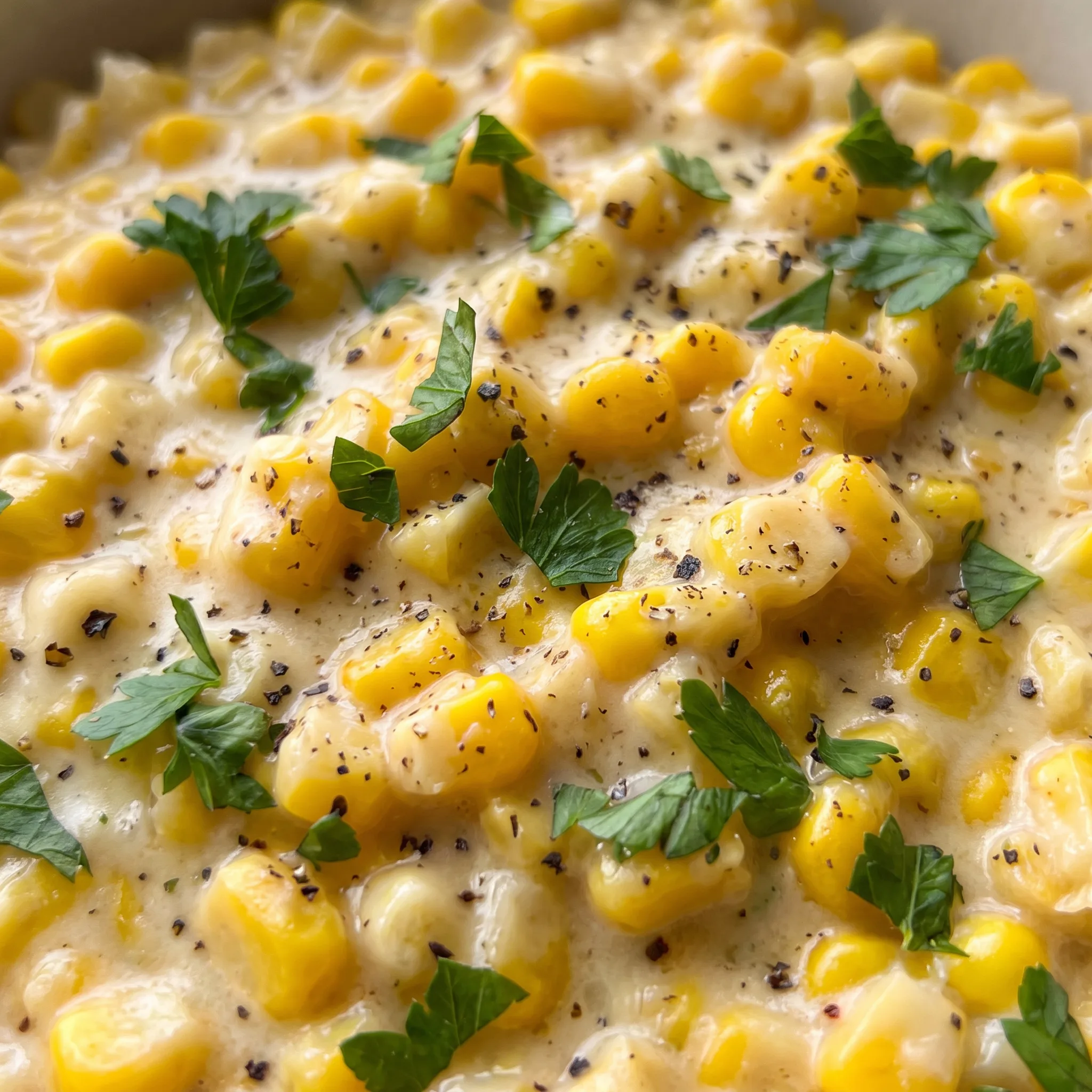
When you stir the blended corn back in, the texture should look like a loose risotto, creamy but still showing individual kernels.
Shallot, Thyme, and Cayenne Build the Backbone
Sweet corn needs a savory counterweight or it tastes like dessert. Shallot gives you that allium depth without the aggressive bite raw garlic brings. It softens into the butter and disappears into the background, leaving only a mild, round savoriness.
Dried thyme holds up better than fresh here because it can simmer without turning bitter or losing its woodsy edge. Fresh leaves would wilt into nothing after a few minutes in hot cream. Cayenne does more than heat.
A small pinch wakes up the palate and keeps the sweetness from flattening out, the way a squeeze of lemon would in a fruit salad. You won’t taste pepper; you’ll just notice the corn tastes more like corn.
Parmesan is optional, but it adds a salty, nutty note that can replace some of the salt you’d otherwise add. A little goes far.
When the sauce tastes balanced, with no single element shouting, the trio has done its work.
Frozen Corn Is the Right Call for a Skillet This Fast
Fresh corn off the cob in January tastes like nothing. Frozen kernels are picked and locked at peak sugar, so they often beat out-of-season fresh corn for sweetness. That matters when your whole cook time is 20 minutes.
Thawed corn plumps in the cream, absorbing liquid and fat until each kernel turns tender and juicy. As it heats, the corn releases its own starchy liquid, which helps the sauce thicken without any extra work. Canned corn can’t do that.
It’s already cooked and packed in brine, so it stays limp and watery no matter how long you simmer it. The texture never recovers.
Frozen corn, on the other hand, starts firm and finishes soft but intact, with a slight resistance when you bite. You’ll see the kernels swell and the cream take on a golden tint. That’s the corn giving back what it absorbed.
Pick the Right Corn, Dairy, and Aromatics Before You Start
Frozen sweet corn: Thawed kernels plump in cream; frozen holds sweetness that out-of-season fresh corn lacks.
Heavy cream: Use a carton labeled heavy cream, not half-and-half; lower-fat dairy won’t coat the corn.
Whole milk: Whole milk carries the flour slurry evenly; skim or low-fat can leave a thinner sauce.
Dried thyme: Dried leaves hold their woodsy edge through simmering cream; fresh would wilt into nothing.
Shallot: Finely dice one shallot to soften into butter without raw garlic’s sharp bite.
Cayenne pepper: A pinch wakes up the palate so the corn tastes sweeter, not just hot.
Cream alone cannot thicken creamed corn because its fat droplets are suspended, not dissolved, and the corn releases additional water as it heats. The flour in the milk slurry gelatinizes when it reaches a simmer, swelling its starch granules and trapping free liquid in a network that gives the sauce body. If the slurry is added before the flour is fully dispersed, or if the mixture never reaches a gentle bubble, the starch stays inert and the dish remains soupy.
Reading the Skillet: When the Corn Is Ready for the Next Move
Judging whether the slurry is smooth before it goes in
Lumps in the bowl become lumps in the pan, and once they hit hot cream there’s no whisking them out. Run a finger down the side of the bowl: the milk should leave a clean line with no visible dry pockets.
If you see streaks of unincorporated flour, keep going. Cornstarch and arrowroot dissolve faster than flour, so check those sooner. A gritty slurry poured in now means gritty sauce at the table.
The four-to-five-minute window when corn plumps and the cream takes on color
Thawed kernels start pale and firm, sitting in a loose white pool. As they heat they swell and the cream picks up a golden tint from the corn’s own liquid.
Stir and watch for that shift. Pull too early and the corn stays dense, the sauce thin. Let it go past and the cream reduces hard, coating the pan instead of the kernels.
The color change is the cue, not the clock.
Knowing when the sauce has thickened enough to stop stirring
After the slurry goes in, the sauce needs another three to four minutes to tighten. Drag a spoon across the pan: the trail should hold its shape for a beat before the sauce creeps back. If it floods closed immediately, the starch hasn’t set.
If the spoon leaves a dry trench, you’ve pushed it too far and the sauce will turn pasty as it cools. Pull it off while the trail is still slightly slow to close.
Tasting before you blend to catch seasoning that will get lost
Blending dulls salt and heat perception because the sauce spreads across more surface. Season lightly now, then taste again after the purée goes back in.
If it tastes flat before blending, it’ll taste flatter after. The cayenne should register as a warmth in the back of the throat, not a burn. Salt should make the corn taste sweeter, not saltier.
Pulsing the blender instead of running it, and stopping at coarse
The difference between a creamy base and a uniform paste is a few seconds. Pulse two or three times, then look. You want a coarse, spoonable slurry with some kernel fragments still visible.
A steady blend breaks every cell and turns the mixture into something closer to soup. If you’ve gone too far, fold the purée back into the whole kernels gently; the texture won’t fully recover, but the whole corn will carry it.
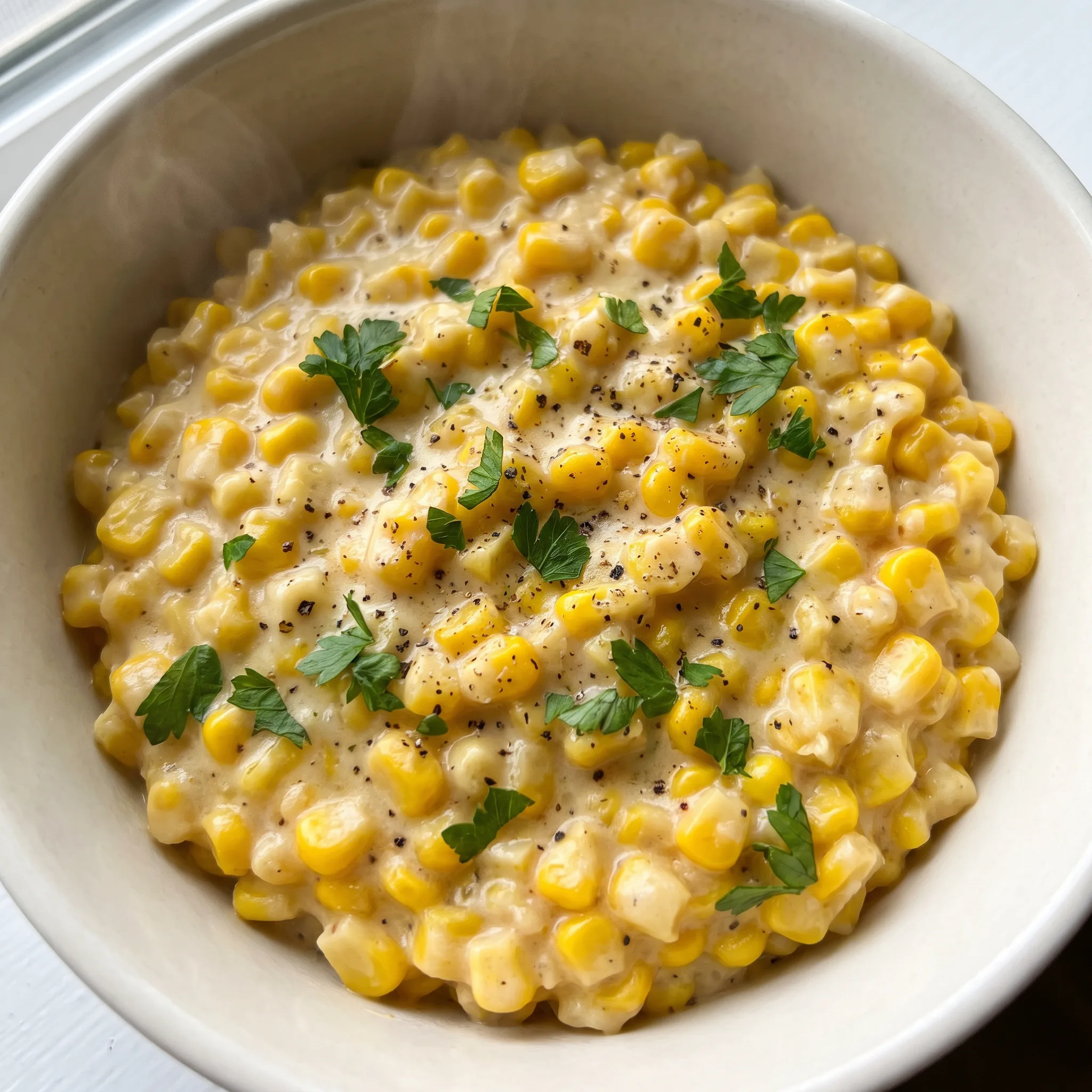
Creamy Skillet Creamed Corn with Thyme
Ingredients
Method
- Whisk the flour and milk in a small bowl until the flour dissolves; set aside.
- Melt the butter in a large skillet over medium heat. Add the shallot and sauté for 1 minute, until softened.
- Add the corn, heavy cream, and dried thyme to the skillet. Stir for 4 to 5 minutes, until the corn has plumped up. Then add the milk mixture and stir for another 3 to 4 minutes, until the sauce has slightly thickened.
- Transfer 1 to 2 cups of the creamed corn to a blender or food processor and blend until smooth. Alternatively, use an immersion blender and pulse a few times. Return the blended corn to the skillet and stir to combine. Optional: For extra creaminess, stir in ¼ cup freshly grated Parmesan cheese.
- Season the creamed corn with cayenne pepper, salt, and black pepper. Stir again, then serve warm.
Three Swaps That Hold Up in Creamed Corn, and One That Won’t
All-purpose flour: For gluten-free, use an equal amount of arrowroot powder, cornstarch, or a gluten-free all-purpose blend in the slurry. Start with the same 1 tablespoon the recipe calls for. Cornstarch and arrowroot thicken faster than flour, so your sauce may set up a minute sooner.
Watch for the trail from a spoon to hold its shape, then pull the pan off the heat. A gluten-free blend behaves more like flour but can taste slightly gritty if you don’t whisk it fully into the cold milk.
Whole milk: Use 2% or whole plant milk (soy or oat work best) in the same 1 cup measure. Skip skim and thin nut milks. Skim and thin almond milk leave the sauce watery and slow to thicken because they lack the fat and protein that carry the flour.
Soy and oat come closest to whole milk’s body, though the finished sauce may be a shade less rich.
Heavy cream: There’s no direct substitute that keeps the same body. If you must avoid dairy, use full-fat coconut cream in the same 1 cup measure. Coconut cream will thicken and coat the corn, but it brings a distinct coconut flavor that fights the thyme and cayenne.
Half-and-half or whole milk alone won’t coat the kernels; you’ll get a thin sauce that pools on the plate.
Parmesan cheese (optional): Replace with an equal amount of finely grated Pecorino Romano or aged Asiago. If you need dairy-free, omit it entirely.
Pecorino and Asiago are both salty and nutty, so they season the corn similarly. They melt a little differently, but in this sauce the difference is minor.
Leaving it out is fine; just taste and add a pinch more salt before serving.
Tips
- Add the optional ¼ cup Parmesan before you taste for salt, not after. The cheese is salty enough to season the whole skillet on its own, and a batch that tasted flat a minute earlier can turn too salty once it melts in. Stir it through, give it 30 seconds, then adjust with salt and black pepper.
- Grate the Parmesan fine enough that it disappears into the sauce rather than sitting in visible shreds. Coarse gratings clump in the hot cream and leave chewy bits against the corn. A microplane or the smallest holes on a box grater gets it to melt in seconds, which matters because the sauce is already off the heat by the time it goes in.
Storage, Reheating, and the Window for Serving
Creamed corn holds its best texture for about 20 minutes off the heat. Past that, the sauce tightens as it cools and the kernels lose the plump bite they had in the skillet. Serve it warm, straight from the pan, with any Parmesan stirred in right at the end so it melts into the cream instead of sitting on top.
Leftovers keep in a sealed container in the fridge for 3 days. The corn thickens considerably overnight because the starch keeps absorbing liquid and the butter resolidifies. Reheat gently on the stovetop or in short bursts in the microwave, and loosen with a splash of milk or cream until the sauce coats a spoon again.
Expect the kernels to soften a little more each time.
Freezing works, but only for the corn itself, not the finished creamed sauce; the dairy separates on thaw and turns grainy. If you have extra, freeze plain thawed kernels for another batch instead.

Frequently Asked Questions
Can I make this creamed corn ahead of time and reheat it?
Cook it, cool it fast, and refrigerate it sealed; it keeps 3 days. Reheating is where texture slips, because the starch keeps drinking liquid as it sits and the butter firms up cold, so the sauce comes out stiffer than it went in.
Warm it gently on the stovetop or in short microwave bursts, adding a splash of milk or cream until a spoon dragged through leaves a trail that closes slowly. The kernels soften a little more with each pass, so the second day eats softer than the first.
Why did my creamed corn turn out watery?
Nine times out of ten the slurry never got a chance to set, either because it went in too thin or the pan came off the heat before the starch swelled. Check the bowl first: if you can still see dry flour streaks when you drag a finger down the side, it wasn’t fully dissolved and it won’t thicken the cream.
Then check the pan, because the sauce needs to tighten after the milk mixture goes in until a spoon trail holds its shape for a beat. A thinner dairy base is the other suspect. Heavy cream and whole milk carry the body here; half-and-half, skim, or a thin nut milk will leave you with liquid pooling around the kernels no matter how long you stir.
What’s the difference between this skillet creamed corn and the canned or baked versions?
Canned corn is already cooked and packed in brine, so it arrives limp and stays that way; the kernels never plump and the sauce stays thin. Baked versions lean on eggs and a long oven stint, which sets the corn into a custardy slab rather than a sauce that coats each kernel. This one is a 20-minute skillet job: thawed frozen kernels swell in cream and give back their own liquid, and a partial blend leaves you with whole kernels sitting in a glossy base, closer to a loose risotto than a casserole.
You eat it with a spoon, not a knife.
