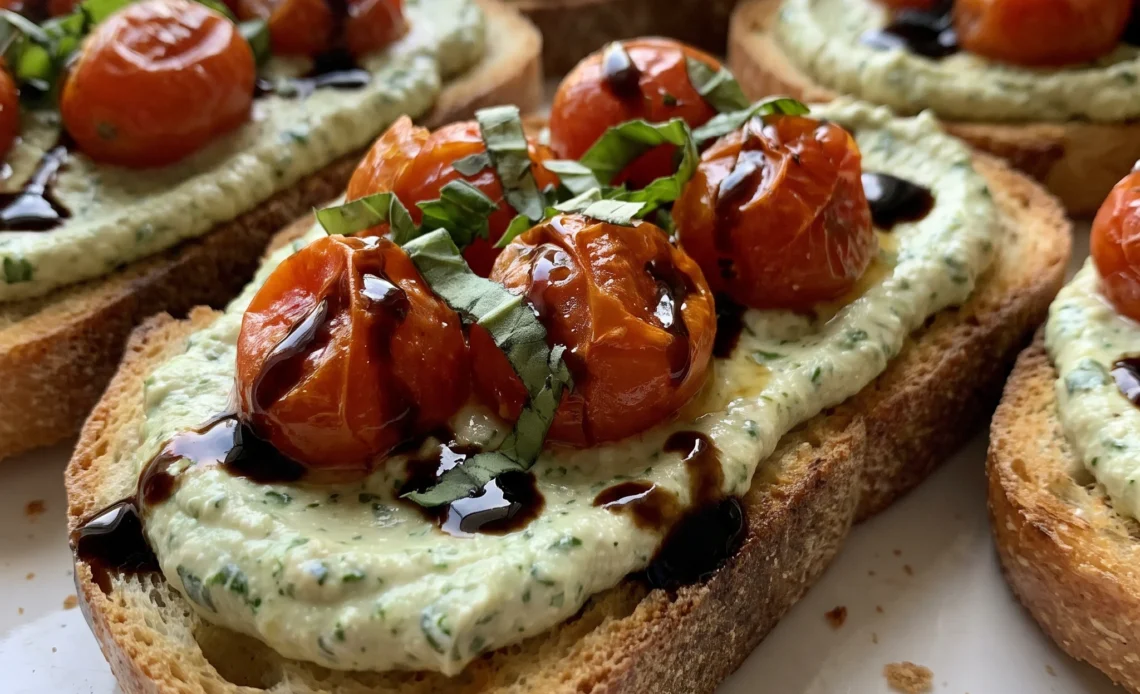
Tomato bruschetta this is not. The tomatoes go into a hot oven first, and what comes out tastes closer to fruit jam than salad, so the whole thing lands somewhere between a spread and a warm appetizer. Anyone who’s assembled bruschetta too early knows the failure mode: bread that goes soft from the bottom up, ricotta sliding off in clumps, tomato water pooling on the plate.
Here the ricotta gets whipped until it grips, and the tomatoes roast until their juices thicken instead of run. That buys you a wider window than the raw version ever gives, though not an unlimited one. Sweet, jammy tomatoes against cold basil-flecked ricotta on garlicky toast is a contrast worth protecting, and the ingredient list is short enough that there’s nowhere to hide a dull tomato or gummy cheese.
Pick Cherry Tomatoes and Roast Them Jammy
Cherry tomatoes beat their bigger cousins here because they’re mostly sugar and seeds. A beefsteak tomato holds too much water and too little sweetness; roasted, it collapses into a wet, bland puddle that soaks the toast.
A cherry tomato, given heat, tightens, darkens, and its skin splits just enough to let the juices thicken. That’s what you want: little globes that taste like tomato paste crossed with fruit, with a texture that pops against the cold ricotta. Olive oil carries the garlic, which goes mellow and nutty in the oven instead of sharp and raw.
The salt pulls moisture to the surface so the tomatoes brown rather than steam, and the pepper balances the sweetness. When you bite one, it should be tender but still hold shape, not dissolve.
That’s the difference between a topping that stays put and one that turns the bread into a sponge.
Blend Ricotta Smooth for a Spreadable Base
Ricotta straight from the tub is lumpy and wet. Those curds taste fine on their own, but on toast they sit unevenly and slide off in clumps. In a blender or food processor, the blades break the curds and whip air into the cheese, turning it into something closer to a thick frosting.
That smoothness matters because it lets you spread a thin, even layer that grips the tomatoes. Basil and garlic get pulverized at the same time, so their flavors distribute through every bite instead of landing in one spot. A pinch of salt and pepper wakes up the dairy without overpowering it.
Then it goes into the fridge. Chilling firms the mixture so it doesn’t run when it hits the warm bread. Cold ricotta against hot tomatoes: that contrast is the whole point of the bite.
Use a Crusty Loaf, Brush with Garlic Oil, Toast Both Sides
A soft sandwich loaf won’t work here. It soaks up the tomato juices and turns limp before you pick it up. What you need is a crusty loaf, something with a sturdy crumb and a shell that shatters when you bite it.
Sliced half an inch thick, those slices can carry a spoonful of ricotta and a few tomatoes without bending. The garlic oil does two jobs: it adds flavor, and it helps the surface crisp.
As the bread bakes, the oil fries the outside just a little, creating a barrier that keeps moisture out. Toasting both sides matters.
One side alone gives you a soft underside that steams against the plate. Both sides get evenly crunchy, and the garlic perfume spreads through the whole slice.
When you tap the finished toast, it should sound hollow and feel light. That’s your cue it’s ready for topping.
Assemble Right Before Serving
Bruschetta waits for no one. The moment ricotta hits the toast, the clock starts.
The bread begins to pull moisture from the cheese, and the tomatoes release their juices. Ten minutes is fine; thirty and you’ve got a soggy cracker.
So you assemble at the last minute: cold ricotta spread thick, tomatoes piled on top, a scatter of fresh basil, and a zigzag of balsamic glaze. That glaze is not just decoration.
Its syrupy sweetness and acidity cut through the creamy cheese and the sweet tomatoes, tying everything together. Basil adds a bright, peppery note that keeps the whole thing from tasting heavy. Each layer should register separately: the crunch of toast, the cool spread, the burst of warm tomato, the sharp finish of vinegar.
When you bite in, you want all four at once. That’s the reward for waiting until the table is set.
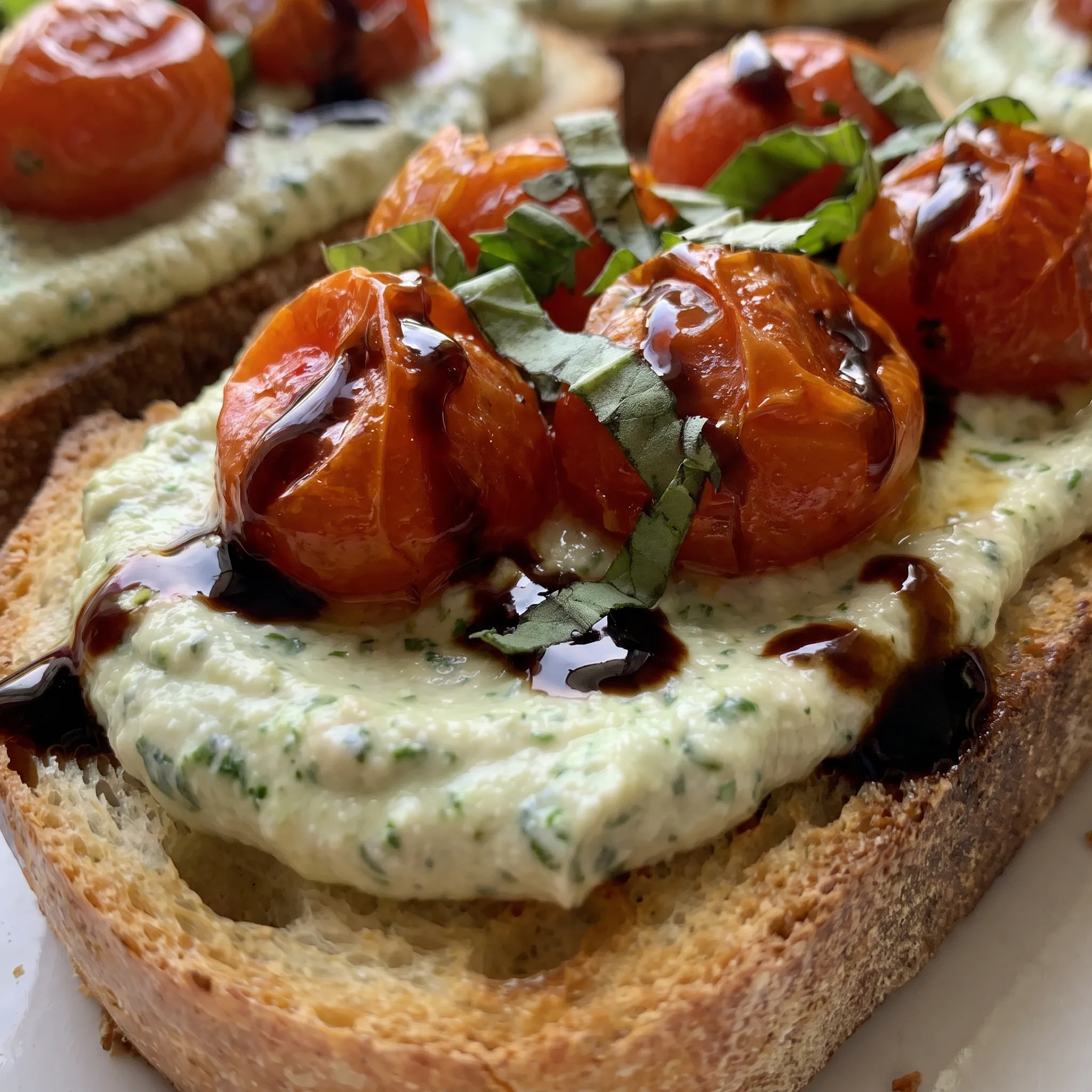
Buy and Prep Notes for Ricotta Bruschetta with Roasted Tomatoes
Cherry tomatoes: Sweet cherry tomatoes, about 1 lb, small enough to sit two or three per slice without rolling off.
Ricotta: Whole-milk ricotta in an 8 oz tub has the fat to whip smooth; part-skim stays grainy no matter how long it blends.
Fresh basil: The 1/2 cup goes into the blender and the garnish basil gets torn at the last minute, since cut leaves darken fast.
Crusty bread loaf: A loaf with a firm crust and tight crumb slices clean at half an inch, one that yields 12 usable slices.
Balsamic glaze: Glaze, not vinegar: it’s already reduced to a syrup that drizzles in ribbons instead of soaking the bread.
Toasting bread with a garlic oil brush creates a moisture-resistant barrier, but only if the bread is fully dried and crisped. A single-side toast leaves the interior soft, so moisture from the ricotta and tomatoes quickly penetrates and turns the base soggy. This recipe bakes the bread at 400ºF for 10 to 12 minutes after brushing both sides with garlic oil, which dehydrates the surface and polymerizes the oil, forming a hydrophobic layer that delays moisture absorption.
Judging Doneness at Four Points That Decide the Bite
When the tomatoes have burst just enough
At 20 minutes, some skins have split and the juices have thickened to a syrup that clings to the fruit. Press one with the back of a spoon: it should give easily but still hold its shape. If the tomatoes have collapsed into a wet, uniform sauce, they’ve gone too far and will soak the toast.
Pull them earlier next time. The garlic should smell sweet, not sharp.
The ricotta’s texture after blending
Stop the machine when the mixture is smooth but still has a little body. It should ribbon off a spoon, not pour like cream. Over-blending whips in too much air and makes it fluffy and thin, so it slides off the toast.
If it’s loose, let it sit in the fridge; the cold firms it back up. Taste for salt: it should be seasoned enough to make you want a second bite, not flat.
Toasting the bread to a hollow tap
At 10 to 12 minutes, the slices should be evenly golden and feel light for their size. Tap the center with a fingertip: a hollow sound means the moisture has driven off. If the edges darken before the middle crisps, the oven is running hot; drop the temperature or pull them sooner.
Pale, bendy toast will go limp under the ricotta. Let them cool on a rack; steam trapped underneath softens the crust.
The spread that grips, not soaks
Spread the ricotta thick enough to cushion the tomatoes but not so thick it dominates. A tablespoon or two per slice is right.
If it tears the toast, the bread is too thin or under-toasted. You want a layer that stays put when you bite, so the tomato juice doesn’t run straight into the crumb. A thin, even coat does that; a slathered one just makes a mess.
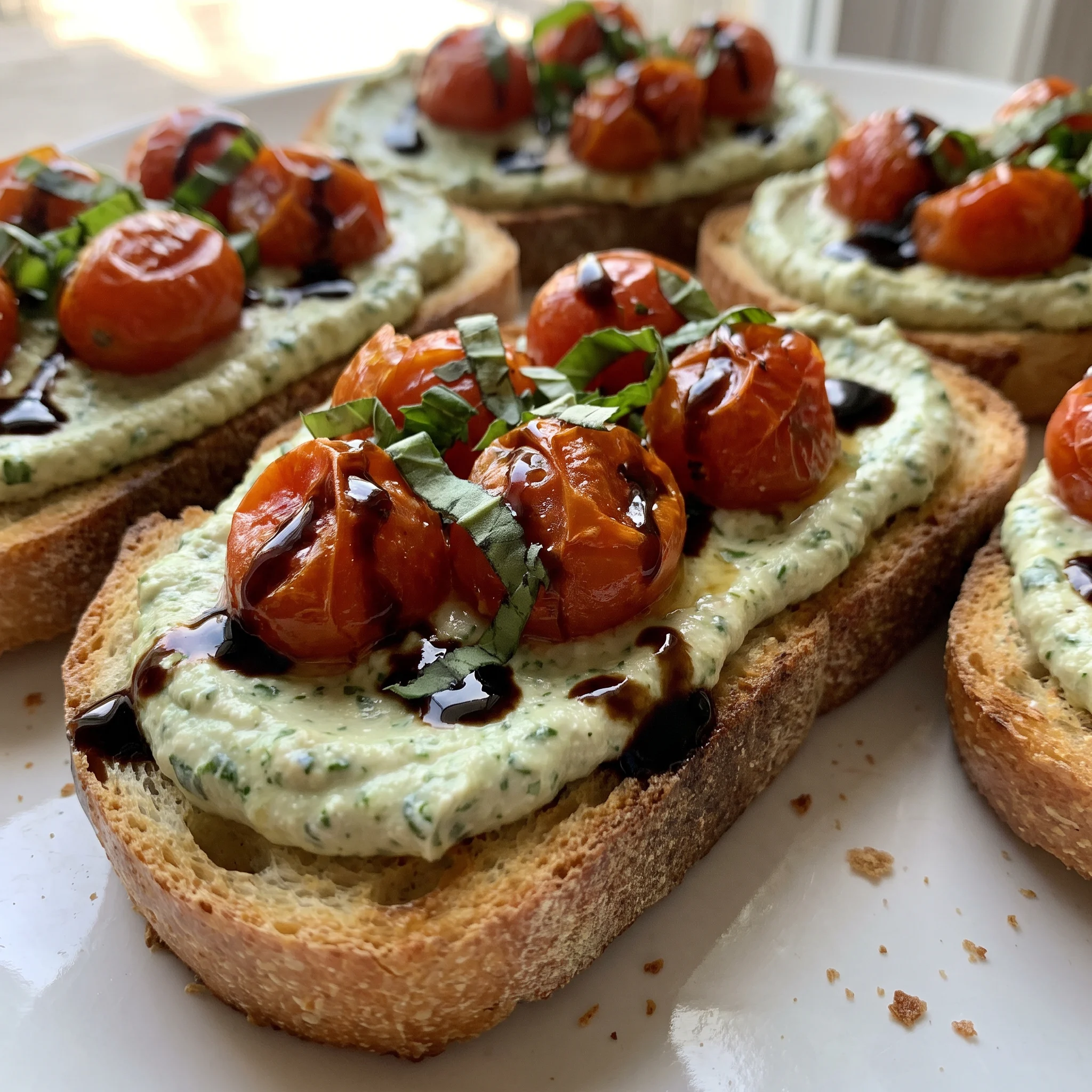
Ricotta Bruschetta with Roasted Cherry Tomatoes
Ingredients
Method
- Set oven temperature to 400ºF (200ºC).
- In a small baking dish, mix the cherry tomatoes, 1 tbsp olive oil, 2 minced garlic cloves, and 1/4 tsp each salt and pepper. Bake for 20 minutes, or until the tomatoes have slightly burst. Refrigerate until ready to use.
- In a blender or food processor, combine the ricotta, 1 minced garlic clove, 1 tbsp olive oil, 1/2 cup fresh basil, and 1/4 tsp each salt and pepper. Blend until smooth, then refrigerate until ready to use.
- Slice the bread into 12 half-inch slices. In a small bowl, whisk together 1 tbsp olive oil and 1 minced garlic clove. Brush both sides of each bread slice with the garlic olive oil and sprinkle with salt and pepper. Bake at 400ºF (200ºC) for 10–12 minutes, or until well toasted.
- When ready to serve, spread each cooled bread slice with 1–2 tbsp of the ricotta mixture, top with 2–3 tomatoes per toast, sprinkle with fresh basil, and drizzle balsamic glaze on top.
Swap Smart: What Works and What Wrecks the Bite
Ricotta: Part-skim ricotta for whole-milk. Part-skim ricotta stays grainy even after a long spin in the blender, and the spread won’t get as smooth.
It also tastes leaner, so you may want a pinch more salt. If you only have part-skim, blend it longer and expect a slightly thicker texture.
A dairy-free ricotta alternative can work, but check that it’s firm and not watery; you may need to drain it first.
Balsamic glaze: Homemade reduction from balsamic vinegar. Simmer balsamic vinegar until it coats a spoon and let it cool. It’ll be thinner than store-bought glaze, so drizzle lightly or it’ll soak the toast.
The flavor is sharper and less sweet, so you might want a touch of honey or sugar in the reduction. Start with the same amount the recipe uses and adjust after tasting.
Crusty bread loaf: Baguette or sourdough. A baguette gives you more crust per slice and a lighter crunch; slice it on a sharp diagonal so pieces are wide enough to hold toppings.
Sourdough brings a tang that plays well with the tomatoes, but its chew can be tough if sliced too thick. Both need the same garlic oil brush and toasting. Avoid soft sandwich bread; it’ll go limp under the tomatoes.
Fresh basil: Dried basil. Dried basil in the ricotta mixture works if you rub it to the touch first to wake it up.
Use about a third of the fresh amount, then taste. For garnish, dried basil won’t give the same fresh pop, so consider skipping it or using a little fresh parsley instead. Start with the same amount the recipe uses for fresh and adjust after testing.
Tips
- Squeeze a tomato gently before buying: it should feel dense for its size with no give, and the skin should be taut and glossy. A pound of watery tomatoes will shed liquid in the baking dish and roast to flat, limp skins instead of the jammy burst the recipe needs.
- If your tomatoes are on the soft side, halve them and roast cut-side up. Whole soft tomatoes burst early and dump their liquid, but halving lets the exposed surfaces dry and concentrate, so you still get thick juices at 20 minutes rather than a pool.
Make Ahead, Then Serve Within the Hour
The roasted tomatoes and the blended ricotta are your make-ahead components. Keep each in its own airtight container in the fridge. The tomatoes hold about four days; their juices thicken and the garlic sweetens further.
The ricotta holds three to four days, but it firms and its basil darkens, so stir before using. Neither freezes well: the tomatoes turn watery and the ricotta separates. Toast the bread the same day you serve it; it loses its crunch overnight.
Don’t assemble ahead. Once the ricotta hits the toast, the bread starts pulling moisture, and the tomatoes release juice.
Serve within an hour of assembly for the best texture. Any longer and the toast softens from the bottom up.
If you must hold assembled bruschetta, keep it cool and uncovered, but the window is short. Add the basil and balsamic glaze only at the moment of serving; both sit on the surface, and the glaze thins and soaks in if it waits. Leftover assembled bruschetta won’t recover.
Eat it cold or re-crisp the bread separately, but don’t expect the original contrast.
Frequently Asked Questions
Can I make the roasted tomatoes and ricotta mixture ahead of time?
Both are built to be made ahead. The tomatoes keep about four days in an airtight container, and their juices thicken and the garlic sweetens as they sit. The ricotta holds three to four days, though it firms up and the basil darkens, so give it a stir before you spread it.
Neither one freezes well, so keep them in the fridge. The bread is the piece to leave until the day you serve.
How do I keep the bruschetta from getting soggy?
The bread is your first defense: it needs to be toasted to a hollow tap on both sides, because that dried-out crumb resists the moisture that follows. Anything pale or bendy will go limp once the ricotta lands.
The second defense is timing, since the moment the spread hits the toast the bread starts pulling water from the cheese and the tomatoes start releasing juice. Assembled bruschetta is at its best within an hour, so build it when the table is nearly ready rather than before. Hold the basil and the balsamic glaze until the last second too, since the glaze thins and soaks in if it waits.
What’s the difference between this ricotta bruschetta and classic tomato bruschetta?
Classic tomato bruschetta is raw chopped tomatoes, garlic, and basil sitting on toasted bread, and it leans sharp and juicy. Here the tomatoes get roasted first, so they turn jammy and sweet and their juices thicken instead of running. Underneath them sits a whipped ricotta layer, which is cool and creamy where the classic version is all acid and crunch.
The balsamic glaze on top adds a syrupy sweetness and tang that ties the cheese and the fruit together. Same toast, different balance: warm sweet tomatoes against cold dairy.
