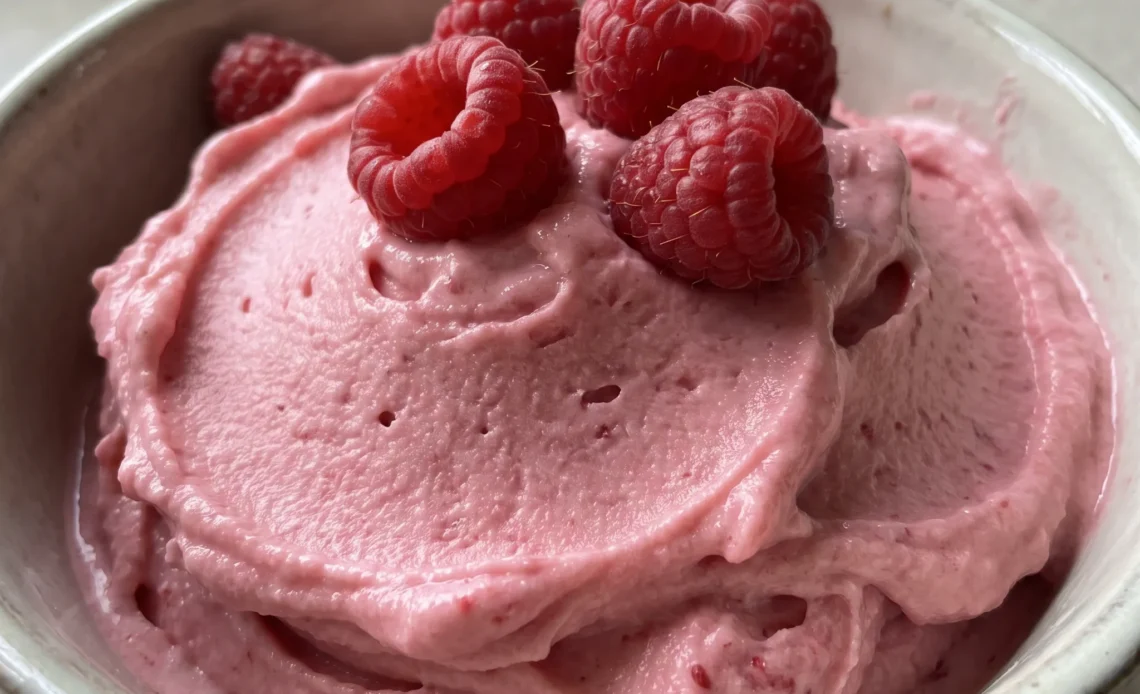
One pint, one serving, no leftovers to fight over. That’s the whole appeal here, and it’s also where things go sideways.
A raspberry frozen yogurt built for the Ninja CREAMi lives or dies on the block you put in the machine, and the margin between a dense, tangy scoop and a dry pile of pink shavings is narrower than the short ingredient list suggests. The payoff is real: berries, yogurt, milk, and honey go into a blender, and a day later you’re eating something with the tartness of fresh raspberries and the body of good Greek yogurt, cold enough that the honey reads rounder than it tasted going in.
Get the base dense, get the pint solid, and the machine does the rest. Miss either, and you’ll know by the first spoonful.
Blending raspberries for 20 to 30 seconds purees the soft flesh but leaves the seeds intact because they are tough and silica-like. When the mixture is frozen and then shaved by the CREAMi, those seeds are dispersed throughout the pint and become gritty specks in every bite. The mistake is tempting because the blended mixture looks smooth and bright, making the extra straining step seem unnecessary.
Why the Pint Needs a Full Day
A pint of raspberry yogurt mixture needs every bit of that 24 hours. Pull it early and the center stays soft while the edges harden, and the Creami’s blade meets uneven resistance. The machine doesn’t churn a soft base into frozen yogurt; it shaves a solid block into fine, creamy ribbons.
That only works when the whole pint is frozen through, top to bottom, with no pockets of slush. Cold this deep also tames the raspberry’s tartness and lets the honey’s sweetness settle into something rounder. You can feel the difference through the pint’s side: rock hard, no give when you press.
Freezing with the lid off matters for a different reason. A lid traps moisture that rises and freezes into a domed hump, and that hump sits right where the blade descends.
The machine can jam or the blade can catch. A flat surface means the blade enters cleanly.
Leave the lid off, set the pint level, and let it go the full day.
Strain Out Every Seed
Raspberry seeds are small and hard, and a blender doesn’t destroy them, it just breaks them loose from the fruit. Run the puree through a fine-mesh strainer and you’ll see what stays behind: a thick, gritty paste of seeds and skin.
That paste is what turns a smooth frozen yogurt into something you have to chew. Push the mixture through with a spatula, working it against the mesh until only dry pulp remains.
What passes through is glossy, deep pink, and completely smooth. The flavor doesn’t suffer.
Most of the raspberry’s brightness lives in the juice and soft flesh, not the seeds. Skip this step and the Creami will shave those seeds right into the final pint, where they’ll feel like sand against your tongue.
Ten minutes at the strainer buys you a texture that’s clean from the first spoonful to the last.
Yogurt Gives It Body
Whole-milk Greek yogurt is what separates this from a berries-and-cream ice cream. Its fat and thick texture give the base substance, so the frozen result scoops instead of shattering. The yogurt’s tang also does quiet work against the honey.
Raspberries are sharp on their own, and without that cultured sourness the sweetness would sit flat and one-dimensional. Too little yogurt and the pint freezes into a hard, icy block that shaves into flakes.
Too much and the mixture turns dense and slow, more like frozen cheese than a light dessert. The milk loosens things just enough to keep the base pourable before freezing and creamy after. That balance is why the ratio matters more than any single ingredient.
Taste the mixture before it goes in the freezer: it should be tangy, a little sweet, and rich enough to coat the back of a spoon.
When to Respin
The first spin rarely gives you a pint. What comes out often looks crumbly and dry, like shaved ice piled in the container. That’s normal.
The blade has carved a solid block into pieces, and those pieces haven’t yet come together. A single re-spin is the fix.
It knocks the crumbles against the walls and folds them into each other, and within seconds the texture turns smooth and scoopable. One pass is usually enough.
Run it a second time and the friction starts warming the pint from the inside. You’ll see the edges soften and slump, and the mixture that was crumbly a moment ago turns glossy and wet. A third spin and you’re looking at soup.
If the pint still looks dry after one re-spin, let it sit on the counter for a minute before deciding. Often it just needs that short rest to relax into the right consistency.
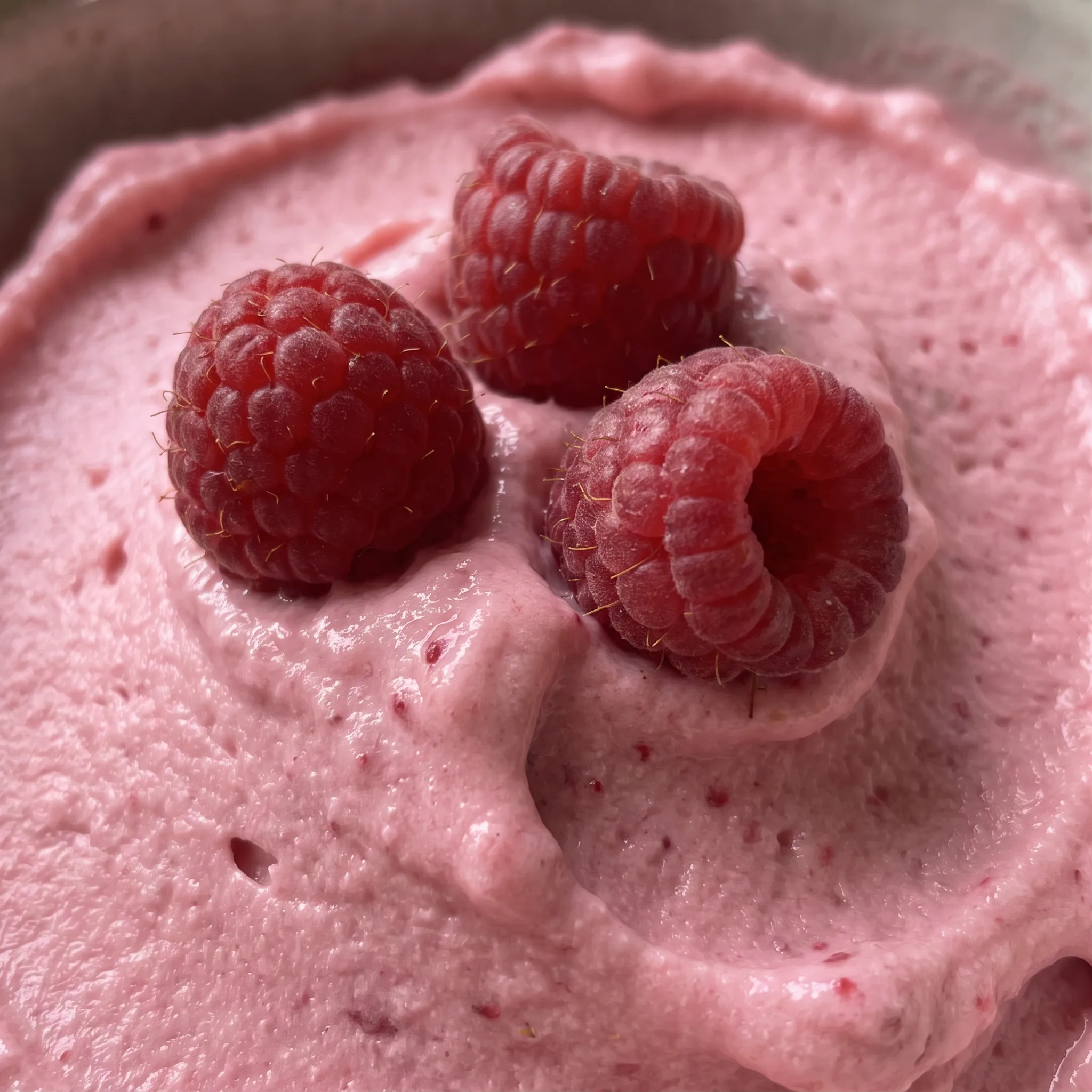
What to Look For Before You Blend
Fresh raspberries: Pick berries that are deep red and give slightly when pressed, since pale or firm ones carry less juice and more seed.
Plain full-fat Greek yogurt: Buy the thick, full-fat kind rather than low-fat or regular yogurt, because its fat and body are what keep the frozen pint scoopable.
Whole milk: Whole milk is what the card calls for, and its fat keeps the base rich enough to freeze creamy instead of icy.
Honey, sugar, or sweetener: Any of the three works, but honey brings a flavor of its own while plain sugar lets the raspberry come through clean.
Vanilla extract: Real extract, not imitation, since a teaspoon is enough to round out the tart raspberry without reading as vanilla.
Reading the Pint Before the Machine Does
Tasting for the right balance before it freezes
Cold mutes sweetness, so a base that tastes right at room temperature will taste flat once frozen. Aim for a mixture that’s slightly sweeter and tangier than you want the final result to be.
If it already tastes now, add another teaspoon of honey. Too sweet is harder to fix later, but you can always stir a spoonful of plain yogurt into the finished pint to bring it back.
Judging when the puree is smooth enough to strain
Stop blending the moment the mixture looks uniform, usually around 20 to 30 seconds. Over-blending whips in air, which makes the base foamy and changes how it freezes. You want a liquid that pours, not a mousse.
If you see a thick ring of foam on top, let it settle for a minute and skim it off before straining. The texture of the frozen pint depends on starting with a dense, bubble-free base.
Checking that the frozen block is uniformly hard
After 24 hours, press the center of the pint with your thumb. It should feel rock hard, with no soft spot and no give. If the middle yields even slightly, put it back and wait.
A partially frozen center will shave into icy shards while the edges turn to powder, and no amount of re-spinning fixes that. The block needs to be solid top to bottom for the blade to work.
Deciding whether one re-spin is enough
After the first spin, the pint often looks like dry crumbles. One re-spin usually pulls it together.
Watch the texture through the lid: when it turns glossy and starts climbing the walls, stop. If it still looks dry after that, let it sit for a minute before running it again. A third spin warms the mixture and turns it soupy.
The goal is smooth and scoopable, not liquid.
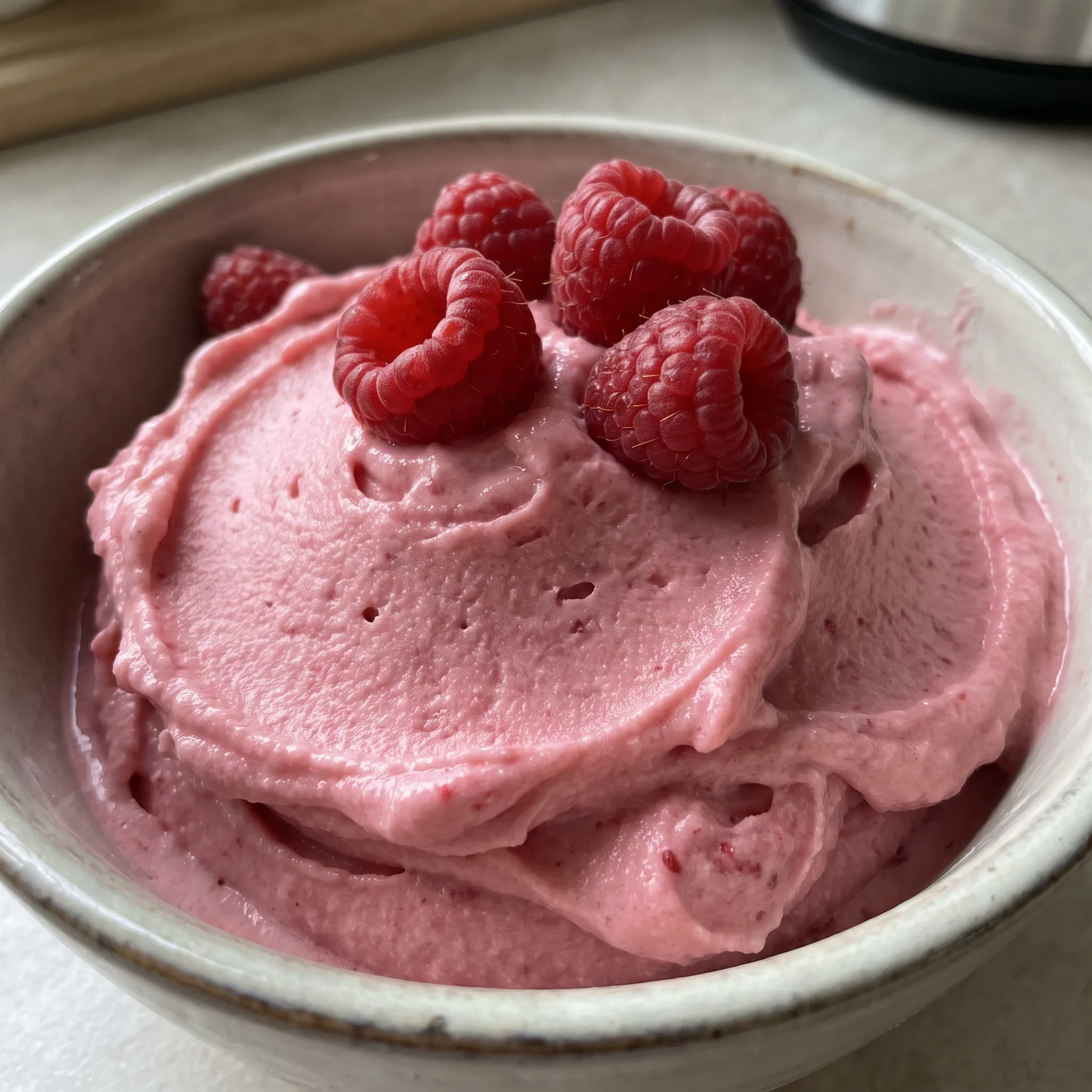
Raspberry Frozen Yogurt in the Ninja Creami
Ingredients
Method
- Into a blender, place the raspberries, milk, yogurt, honey, salt, and vanilla.
- Process for about 20–30 seconds, until just smooth.
- Position a fine-mesh strainer over a bowl or large measuring cup and force the mixture through it; throw away the seeds.
- Transfer the smooth mixture into an empty CREAMi™ Pint. Freeze on a level surface with the lid off for 24 hours. (Freezing with the lid on creates a hump at the top that can damage the blade, so leave it off.)
- Take the pint out of the freezer, set it in the outer bowl, and secure the lid on top. Put the bowl assembly on the motor base, twist the handle right to raise the platform, and lock it in place. Choose the frozen yogurt program. Respin once if needed.
- Remove the pint and enjoy right away, garnishing if desired.
Swaps That Keep the Pint Creamy, Not Icy
Honey: Granulated sugar, or a liquid alternative like maple syrup or agave. Honey brings its own flavor and a bit of moisture, so swapping in plain sugar lets the raspberry come through clean, but sugar also freezes harder, so the pint may be a touch more icy. If you go with a liquid sweetener like maple or agave, start with the same 2 to 3 tablespoons the recipe uses and taste the base before freezing; adjust after you’ve spun it once, since cold mutes sweetness.
A granulated alternative measures closer to sugar, but you’ll need to blend a few extra seconds to dissolve it fully.
Whole milk: 2% or skim milk. Whole milk’s fat is what keeps the base rich enough to freeze creamy.
Drop to 2% and you lose some of that, so the frozen pint leans icier and shaves drier. Skim makes it worse: the block gets harder, the first spin throws more powder, and you may need that re-spin just to pull it together. If you only have 2%, use it, but expect a lighter, less scoopable result.
A splash of half-and-half in place of some of the milk would bring the fat back up.
Plain full-fat Greek yogurt: Low-fat or regular yogurt, or a dairy-free yogurt like coconut or almond. The fat and thick texture in full-fat Greek yogurt give the base substance, so the frozen result scoops instead of shattering. Low-fat or regular yogurt is thinner and less rich, so the pint freezes harder and tastes less tangy.
Dairy-free yogurts vary widely: coconut is creamy but adds its own flavor, almond is thin and icy. If you swap, start with the same 1/2 cup and expect a softer, less dense pint. You may need to eat it faster before it melts.
Fresh raspberries: Frozen raspberries, thawed. Frozen berries are picked riper and often carry more juice, but they release a lot of water when thawed.
That extra water makes the base looser before freezing and can lead to a harder, icier block. If you use them, thaw and drain well, then measure 1 1/2 cups of the drained fruit.
The flavor stays bright, but you might need to strain a little longer to remove all seeds. Fresh is still the better bet for texture.
Tips
- Taste the raspberries before they go in the blender. Press one against the roof of your mouth: if it’s sour or underripe, the base will read sour after freezing no matter how much honey you add later, because cold mutes sweetness and you can’t stir anything into a solid block. Bump the honey to the full 3 tablespoons now, and if the berries are genuinely sharp, add another teaspoon beyond that.
- If the berries are watery or bland rather than sour, add a tablespoon of the Greek yogurt before blending instead of more sweetener. Extra honey on weak fruit just tastes like sweetened milk, while the yogurt’s tang gives the base something to push against and keeps the raspberry from disappearing into the background.
Eat It Now, Not Tomorrow
The pint is at its best the moment the re-spin finishes. That texture, glossy and soft enough to scoop, comes from the blade working the block and the slight warmth of friction. It doesn’t last.
Within ten or fifteen minutes the surface starts to dry and the edges firm up. Eat it right then, garnishes and all: scatter the raspberries, chocolate chips, or mint over the top before the first spoonful goes in, not after, so they sit on soft yogurt instead of sliding off a hardened surface. Leftovers are a different food.
Refreezing a spun pint drives the water back into ice crystals, and the second thaw never returns the original creaminess. If you can’t finish it, press plastic wrap directly onto the surface, close the pint, and freeze it. It keeps about a week, but expect a hard, icy block.
Re-spin that block once to make it scoopable again, though the result will be coarser than the first serving.
Frequently Asked Questions
Can I make this raspberry frozen yogurt ahead of time and store it in the freezer?
You can freeze the unspun pint 24 hours ahead, but not longer without a texture trade-off. After the full day, the block is ready to spin whenever you want it, so the make-ahead step is really just the initial freeze. Once you’ve spun it and re-spun it, the pint is at its best right away; leftovers keep about a week, but they firm into a hard, icy block and a re-spin brings back scoopability at a coarser texture.
So yes, you can make it ahead, but the best version is the one you eat minutes after the machine stops.
Why did my frozen yogurt turn out crumbly after the first spin?
Crumbly after the first spin is normal; the blade has shaved a solid block into dry-looking pieces that haven’t knit together yet. A single re-spin folds those crumbles into each other and turns the texture glossy and scoopable. If it’s still crumbly after that, let the pint sit on the counter for a minute before deciding; often it just needs that short rest to relax.
The other check is the block itself: if the center wasn’t uniformly rock hard before spinning, you’ll get icy shards mixed with powder, and no amount of re-spinning fixes that.
How is Ninja Creami frozen yogurt different from regular churned frozen yogurt?
A churned machine paddles a soft base while it freezes, so the texture builds from air and constant movement. The Creami does the opposite: you freeze a solid pint, then the blade shaves that block into fine ribbons.
That’s why the base here is dense and bubble-free, and why the machine needs a uniformly hard block top to bottom. The result is closer to a smooth, dense scoop than the lighter, airier texture a churn gives you.
Do I really need to freeze the pint for a full 24 hours, or can I freeze it longer?
The full 24 hours is the minimum for the block to freeze solid, and longer is fine within reason. Past a couple of days the pint gets harder and drier, so the first spin throws more powder and you’ll likely need that re-spin to pull it together. Press the center with your thumb before spinning: it should feel rock hard, no soft spot, no give.
If it yields even slightly, it needs more time, not a longer spin.
