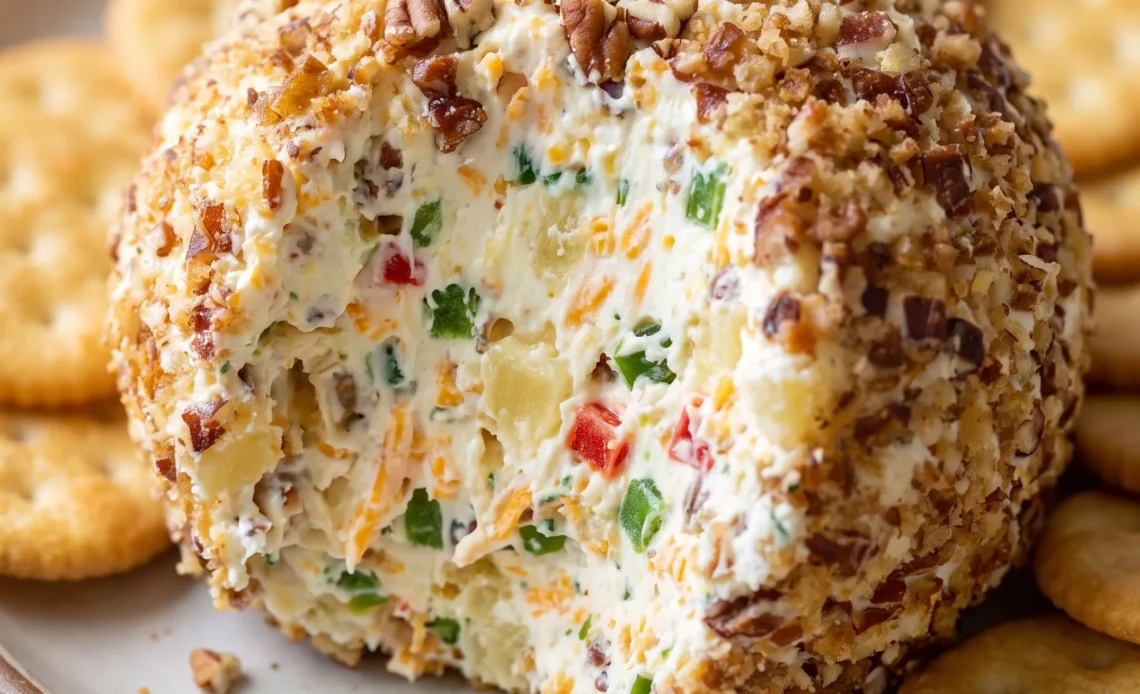
Crushed pineapple is the thing that trips people up here, and it isn’t close. A pineapple cheese ball tastes like a contradiction that works, sweet fruit against sharp cheddar with a pecan shell holding it together, but that same fruit carries enough water to keep the mixture from ever setting into a shape.
Drain it in a colander and you’ve done almost nothing. The chill does its own work on the seasoning, and there’s a version of this that tastes flat because someone skipped it.
What separates a ball that slices clean from one that slumps on the plate comes down to a couple of decisions made before anything goes in the fridge, and the margins are narrower than most party food.
Squeeze the Pineapple Until It Stops Dripping
A pineapple cheese ball lives or dies by how dry the fruit is. Crushed pineapple carries a lot of juice, and every drop of it works against the cream cheese.
If the fruit goes in wet, the mixture turns slack and soft. You’ll beat it smooth, fold everything together, and still end up with a bowl that won’t shape into a ball. The fix is simple: squeeze the crushed pineapple in your hands or press it hard against a fine strainer until it feels dry to the touch.
No visible liquid should run when you press a handful. That dryness protects more than texture.
Watery pineapple also washes out the sharp cheddar and the garlic and onion powders, so the finished ball tastes flat instead of savory. Do this before the pineapple ever meets the cream cheese.
Once it’s in the bowl, there’s no undoing it. Get the fruit dry first, and the rest of the recipe behaves.
Give the Seasonings an Hour to Sink In
You could shape the ball and serve it right away, but it would taste thin. The one-hour chill is doing two jobs. The first is firmness: the cream cheese stiffens, so the ball holds its shape and slices cleanly.
The second is flavor. Garlic powder, onion powder, and minced green onion need time to spread through the cream cheese. Right after mixing, those seasonings sit in isolated pockets.
An hour in the fridge lets them bleed into the surrounding cheese, so every bite tastes seasoned rather than raw. If you roll and serve too soon, the ball will be too soft to coat well, and the flavor will seem separated: a hit of garlic here, a plain patch there. Sixty minutes is the minimum for both texture and taste.
A little longer does no harm. What you’re after is a ball that tastes unified, not like a list of ingredients.
Two Pecan Amounts, Two Different Jobs
The pecans inside the ball and the pecans on the outside are not the same thing. The half cup that goes into the mix adds richness and a little crunch to the body of the cheese ball. Those nuts get folded in with the pineapple and cheddar, so they’re part of the interior texture.
The full cup on the outside is a crust. It needs to be finely chopped so the pieces are small enough to press onto the surface evenly. Bigger chunks leave bare patches and fall off when you cut in.
Fine pieces cling to the chilled cream cheese and form a complete coating. Use the wrong amount or the wrong chop for either one and you’ll notice.
Too few interior pecans and the ball tastes flat; too coarse a coating and it sheds onto the plate. Keep the two separate as you work, and the finished ball has both a tender inside and a neat, nutty shell.
Peppers and Onion Need Drying Too
Green bell pepper and green onion give this cheese ball its fresh crunch. Without them, the mix is all cream cheese and sweet pineapple, which can taste heavy.
The vegetables cut that richness with a clean, grassy bite. They also add water. Bell pepper and onion release moisture when they’re chopped, and that liquid will seep into the cream cheese over time.
If you dice them and throw them in wet, the ball will weep and soften after an hour or two. So dice them small and pat them dry before they go in the bowl.
Their flavors develop during the chill, losing some of their raw sharpness and settling into the cheese. The red bell pepper is optional and only there for color. It doesn’t change the balance; leave it out if you don’t have it.
What matters is that the green vegetables go in dry.
No Oven, No Heat, Just Cold and Firm
This is a chilled, rolled cheese ball, not a baked spread or a warm dip. That choice keeps the pineapple tasting bright and the vegetables crisp. Heat would wilt the green onion and dull the fruit, and you’d lose the contrast that makes this thing work.
The rolled form also gives you a firm, sliceable texture. A spread stays soft; a chilled ball holds its shape on the plate and cuts into clean wedges. The structure depends on cold.
At room temperature the cream cheese loosens and the ball slumps, so it has to stay cold until you serve it. Pineapple adds sweetness and moisture that a classic cheese ball doesn’t have, which is why the draining and chilling steps matter even more here. Everything about this format, from the mixing to the coating, is built around that cold, firm finish.
Serve it well chilled, and it will hold together on the cracker.
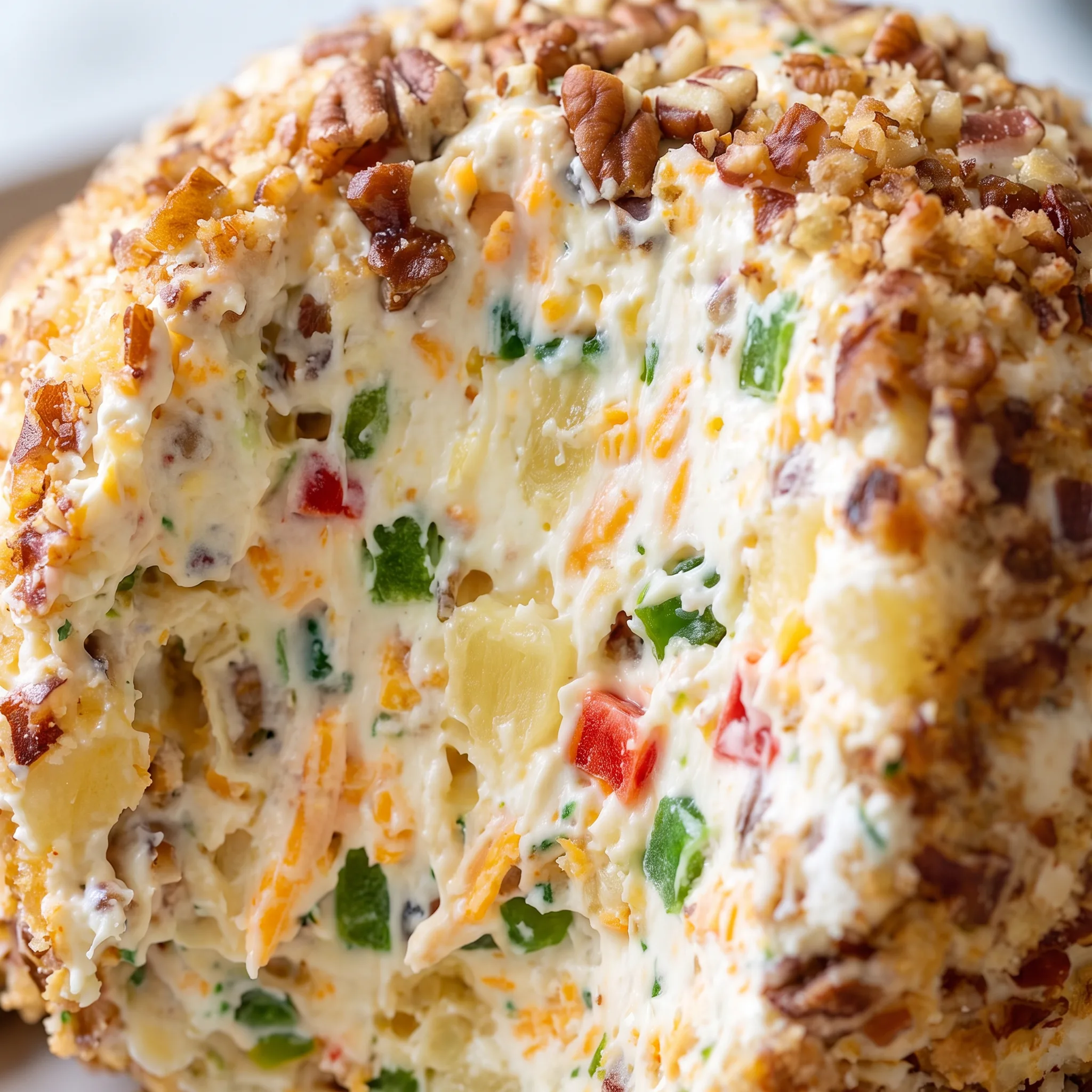
The Ingredients That Decide How This Ball Sets
Cream cheese: Let the 16 oz block sit out until a thumb press leaves a dent with no resistance, or it beats into permanent lumps.
Crushed pineapple: The 1 cup has to feel springy and dry when squeezed, since any lingering juice turns the mix slack before it ever chills.
Sharp cheddar: Shred it fine off a block rather than reaching for pre-shredded, which is dusted with starch that dulls the sharpness.
Pecans: Keep the ½ cup for the inside and the 1 cup for the coating chopped fine and separate, since coarse pieces shed off the surface.
Green bell pepper: Dice the ½ cup small and pat it dry, because wet pepper bleeds water into the cream cheese as the ball sits.
Green onion: Mince the 2 tbsp fine from the green tops, as larger pieces stay raw and sharp instead of settling into the cheese.
Reading the Mix Before It Chills
When the cream cheese is actually soft enough to beat
Cold cream cheese beats into lumps that never fully smooth out, and those lumps stay visible in the finished ball. Press a thumb into the block: it should dent without resistance and feel like softened butter, not cool and firm.
If it’s still cold in the middle, wait. Beating cold cheese just smears it against the bowl. Lumps you miss now won’t disappear during the chill.
Telling whether the pineapple is dry enough
Squeeze a handful over the sink. Dry pineapple feels springy and light, and no stream runs to the touch.
Wet fruit leaves the mix slack, so the ball slumps instead of holding a shape once wrapped. If the bowl looks glossy or loose after mixing, the fruit wasn’t dry enough. You can press the whole mixture against a strainer, but you’ll lose some cheddar and seasoning with the liquid.
The texture the mix should have before it’s wrapped
Stop mixing when everything is evenly strewn and the mixture holds a soft peak on the spatula. It should look thick and slightly tacky, not runny or slick.
Overworking warms the cream cheese and loosens it, so the ball sags. If it feels warm, chill the bowl for fifteen minutes before shaping. Under-mixing leaves pockets of plain cheese that taste flat next to the seasoned parts.
Shaping a ball that will hold its form
Gather the plastic wrap and twist it tight, pressing the mixture into a compact round with your palms. The surface should feel firm under the wrap, not squishy. A loose, uneven bundle chills into a lopsided shape and cracks when you unwrap it.
If it won’t tighten, the mix is too wet or too warm. Rewrap and give it the full hour before you judge the shape.
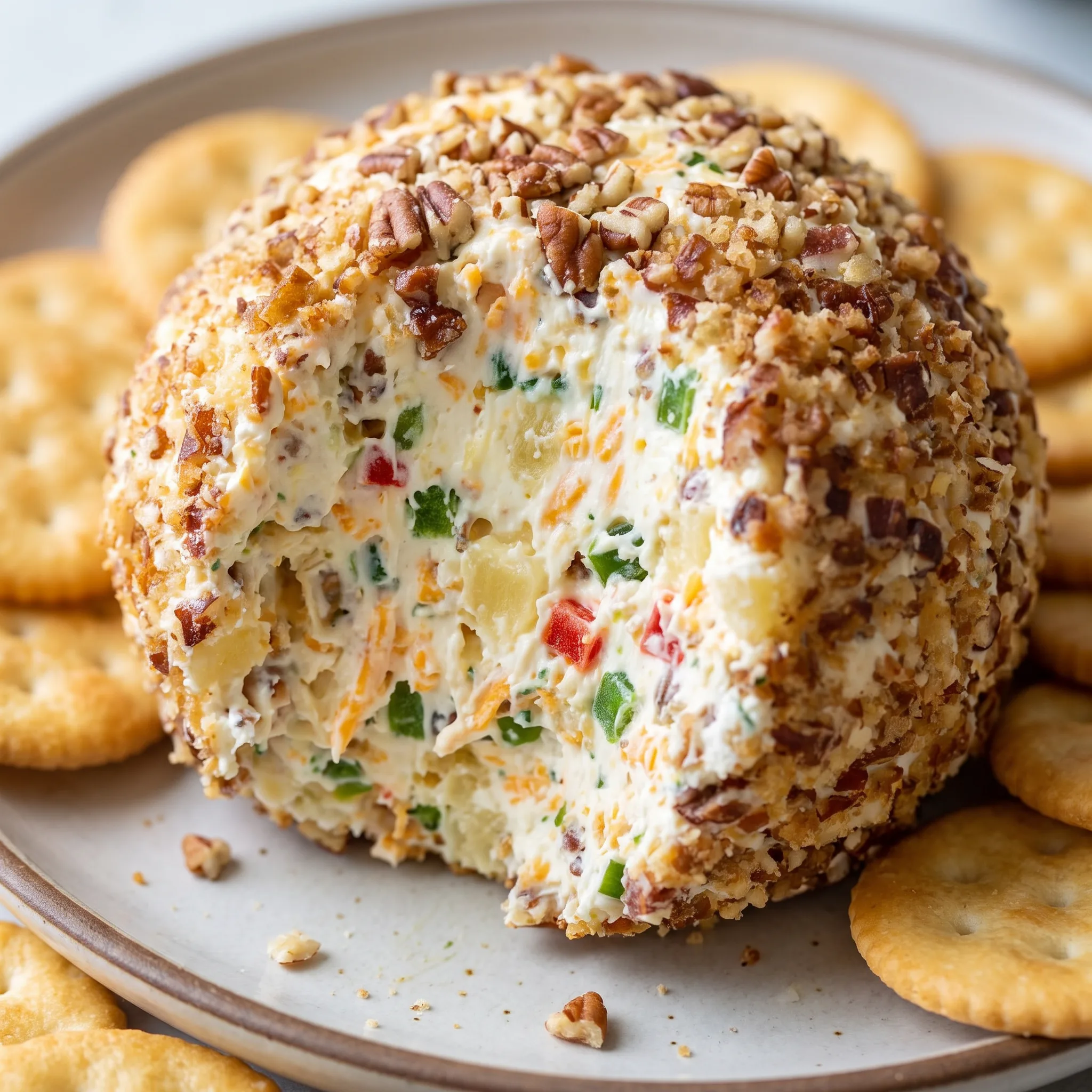
Pineapple Cheese Ball with Pecans
Ingredients
Method
- Place the softened cream cheese in a large mixing bowl and beat until smooth and creamy.
- Add the crushed pineapple, shredded cheddar, ½ cup pecans, chopped green bell pepper, green onion, red bell pepper (if using), garlic powder, onion powder, and salt.
- Using a spatula or clean hands, mix until everything is evenly incorporated.
- Transfer the mixture onto a sheet of plastic wrap, gather the wrap around it, and shape into a tight ball.
- Refrigerate for at least 1 hour to firm up and blend flavors.
- Place the remaining 1 cup chopped pecans on a plate. Unwrap the chilled cheese ball and roll it in the nuts, pressing lightly so they adhere.
- Serve chilled with buttery crackers, pretzel thins, or vegetable sticks.
Storing the Ball and Timing the Pecan Coat
Roll the ball in the chopped pecans right before you plan to eat it, not the day before. The coating is the first thing to go: the nuts sit against the cream cheese, pull moisture from it, and soften within a day or so. A ball coated and served the same day has a crisp, nutty shell.
By day two, the pecans have gone tender. That doesn’t ruin it, but the texture contrast that makes a cheese ball worth cutting into is gone. So coat it and serve it within a few hours for the best version.
The uncoated ball holds in the fridge, wrapped tight, for up to three days. Keep it in plastic wrap pressed directly against the surface, or in a lidded container with no air gap.
The vegetables will continue to release moisture, so expect the ball to soften slightly each day and the pepper crunch to fade. If it gets too soft to slice, press it back into shape with cold hands and chill it again for thirty minutes. Don’t freeze it.
The cream cheese breaks down, the peppers go limp, and the whole thing weeps when it thaws. Serve cold, straight from the fridge, with crackers, pretzel thins, or vegetable sticks.
Let it sit out no longer than an hour at the table; past that, it slumps. Return leftovers to the fridge within two hours of serving and finish them within a day or two, coating or not.
Tips
- Grate the cheddar on the small holes of a box grater, not the large ones. The 1 cup called for here is measured after shredding, and fine shreds disappear into the cream cheese as you beat, so the ball slices without hitting a cold pocket of cheese. Coarse shreds leave distinct strands that read as chunks in the finished texture.
- If you only have bagged shredded cheddar, rinse it in a strainer under cold water for a few seconds and pat it dry before adding it. That rinses off most of the potato starch or cellulose that coats the shreds, which is what keeps them from absorbing into the cream cheese and leaves the mix looking curdled. You lose a little sharpness down the drain, so add an extra pinch of salt after tasting.
When a Swap Still Makes a Cheese Ball, and When It Doesn’t
Cream cheese: For a firmer set, swap in an equal weight of brick-style cream cheese, the kind sold in a foil-wrapped block, not the whipped tub. It has less water and more fat, so the ball stands taller and slices cleaner.
If you go with a softer style, expect a looser mix that may need an extra half hour in the fridge before it holds a round shape. The firmer cheese gives you a denser, more sliceable ball right out of the chill. A whipped or spreadable version will taste fine but will slump faster on the plate, so keep it cold until the last minute.
Sharp cheddar: A mild melting cheese like Monterey Jack or low-moisture mozzarella can replace the cheddar if you want less bite. Use the same 1 cup, shredded fine.
The cheese won’t bring the sharp tang that cuts the pineapple’s sweetness, so the ball will taste rounder and sweeter overall. You lose the savory edge that balances the fruit. If you make this swap, taste the mix before chilling and add a pinch more salt or a dash of onion powder to bring back some depth.
Pecans: Walnuts or almonds work in either the ½ cup inside or the 1 cup coating. Chop them as fine as the pecans called for.
Walnuts have a slightly bitter skin that can taste raw against the sweet pineapple, so toast them first if you have a minute. Almonds are harder and crunch more sharply.
The texture changes: walnuts are softer and a bit oily, almonds are denser. Both will coat and press on just like pecans. Just keep the two amounts separate, since the inside nuts and the coating do different jobs.
If you use a softer nut for the coating, press a little harder so it sticks.
Red bell pepper (optional): This is only for color. Leave it out, or swap in a tablespoon of finely diced yellow or orange bell pepper if you want a different fleck.
Don’t use a hot pepper like jalapeño unless you want the heat, and if you do, mince it very fine and pat it dry. The flavor barely shifts with a sweet pepper swap. A hot pepper will change the whole character, so only go there if you’re after spice.
Either way, dry the dice well so it doesn’t weep into the cheese.
The recipe’s hard step is managing the pineapple’s water: if it goes into the cream cheese with its juice, the mixture will never firm up enough to roll or hold a ball shape. The trade-off is between squeezing the pineapple by hand or pressing it in a fine-mesh strainer; hand-squeezing removes more liquid but can crush the fruit, while a strainer leaves more moisture behind. This recipe calls for draining thoroughly and squeezing out excess liquid, which uses mechanical pressure to remove the maximum amount of free water before the pineapple ever meets the cream cheese.

Frequently Asked Questions
Why is my pineapple cheese ball too soft to hold its shape?
The usual culprit is crushed pineapple that still holds juice. Even after draining, press a handful; if liquid runs, the fruit needs more squeezing.
A second check is the cream cheese itself: cold blocks beat into lumps that never smooth out, and those lumps leave the ball uneven and prone to slumping. You can also overmix, which warms the cheese and slackens the mix.
If the mixture already feels loose, chilling the bowl for fifteen minutes before shaping can help, but the real fix is dry fruit and softened cheese from the start.
Can I make this pineapple cheese ball ahead of time?
Yes, but leave the pecan coating for the day you serve. The uncoated ball keeps in the fridge, wrapped tight, for up to three days.
The vegetables will release moisture as it sits, so expect it to soften a little each day and the pepper crunch to fade. If it gets too soft to slice, press it back into shape with cold hands and chill it again for thirty minutes.
Don’t freeze it; the cream cheese breaks down and the whole thing weeps when it thaws.
How do I keep the pecans from falling off the cheese ball?
Chop the coating pecans fine, smaller than you might think. Bigger chunks leave bare patches and shed onto the plate when you cut in. The chilled surface of the ball gives the nuts something to cling to, so roll it straight from the fridge and press lightly as you go.
If you’re using a softer nut like walnuts, press a little harder. Serve it within a few hours of coating, because the nuts pull moisture from the cheese and soften over time.
What makes this pineapple cheese ball different from a classic cheese ball?
Pineapple brings sweetness and moisture that a classic cheese ball doesn’t have, which is why the draining step matters even more here. The mix also includes green bell pepper and green onion for a fresh, grassy crunch that cuts the richness.
Sharp cheddar and a hit of garlic and onion powder keep it savory rather than dessert-sweet. The result is a ball that tastes bright and a little sweet, not just creamy and salty.
