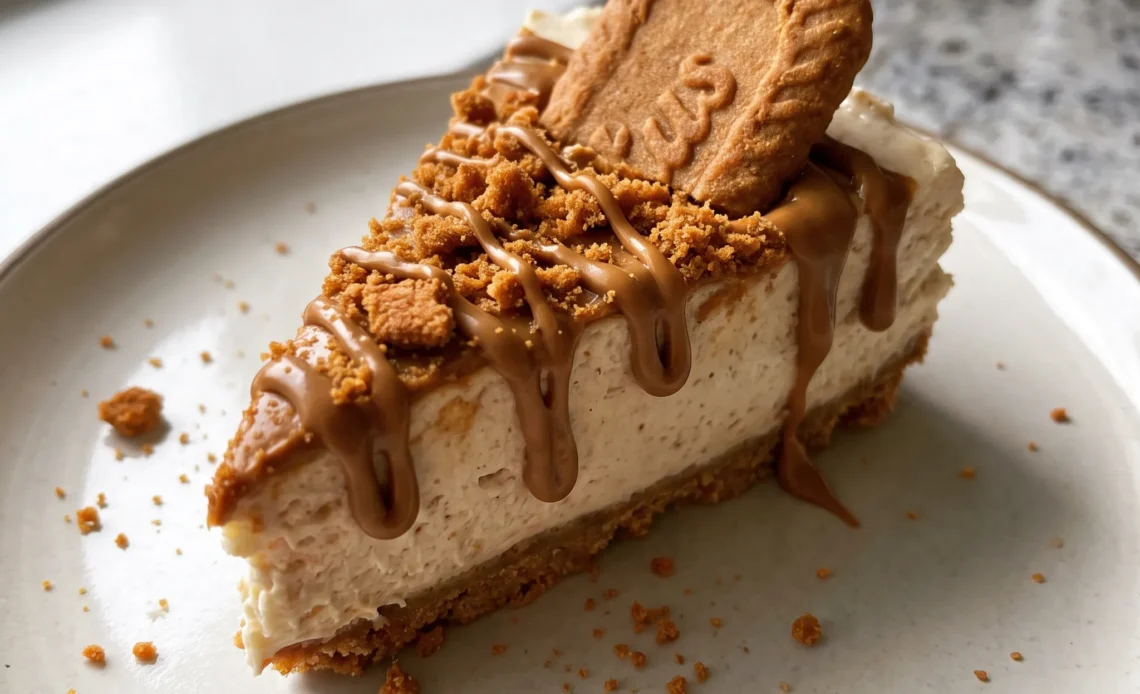
Whipped cream and cream cheese hold this one up, no oven involved, and that’s exactly where the trouble starts. Get the cream past stiff peaks, or leave cold cream cheese unbeaten, and the filling never recovers. Fold with a heavy hand and you knock the air out; the slices turn dense and the crust slumps when you release the pan.
Biscoff does the rest of the work on its own, spice and caramel running through crust, filling, and topping so every bite tastes finished. Make a no-bake biscoff cheesecake and the oven stays off, but the fridge earns its keep.
Whipping cream to stiff peaks incorporates air bubbles that give the filling its light, airy texture. When those bubbles are folded gently into the cream cheese mixture, they remain intact and create a stable network that sets upon chilling. Stirring vigorously shears the bubbles, causing the filling to lose volume and become dense and flat.
A Firm Base Prevents Soggy Slices
Compacting the crust firmly and evenly is what keeps it from shifting or crumbling when you add the filling and later release the pan. Press hard enough that the crumbs feel solid under your fingers, with no loose patches.
A level crust ensures the cheesecake sits flat and cuts into uniform pieces; any high spot will make the filling pool unevenly. Chilling the crust before adding the filling helps it set, so the filling doesn’t disturb the base.
This is why the crust goes into the fridge while you make the filling. When you spread the filling over a cold, firm crust, it stays put.
The result is a clean edge when you unlatch the springform. Without that initial firmness, the whole thing can slump. So take the extra minute to pack it tight, and let the cold do its quiet work before the filling ever touches it.
Air and Cream Cheese Build Structure
Whipping the cream to stiff peaks incorporates air, which gives the filling a light, airy texture. When you fold that whipped cream into the cream cheese mixture gently, you preserve the air bubbles, preventing deflation. The combination of cream cheese and whipped cream provides structure that sets upon chilling, mimicking a baked cheesecake’s density.
This isn’t about adding gelatin or eggs; it’s about using what’s already there. The cream cheese brings richness and a slight tang, while the whipped cream lightens the load. As you fold, you’ll feel the mixture become fluffy and billowy.
Stop as soon as it’s uniform. Overworking it will knock out the air and leave you with a dense, heavy filling. Once chilled, that trapped air helps the filling hold its shape, so each slice stands tall on the plate.
A Long Chill Makes All the Difference
During a long, cold rest, the filling firms up, enabling clean slices without collapse. This isn’t just about setting; the flavors settle together, and the Biscoff taste infuses throughout the cheesecake.
What starts as a soft, spreadable mixture becomes sliceable and cohesive. Rushing this stage results in a soft, messy texture that won’t hold a clean edge.
You’ll know it’s ready when the surface feels set and a gentle touch leaves no indentation. The wait also deepens the caramel notes from the Biscoff, so the final flavor is more unified.
I’ve found that a full six hours in the fridge is the sweet spot, but overnight is even better. Patience here pays off with a cheesecake that cuts cleanly and tastes fully developed.
Biscoff Brings Spice and Caramel
Biscoff spread in the filling adds a deep caramelized, spiced flavor that complements the tangy cream cheese. That contrast keeps each bite interesting, never cloying.
The crust made from Biscoff cookies reinforces the flavor theme and provides a crunchy contrast to the creamy filling. You get a double dose of the same profile, which makes the dessert feel intentional.
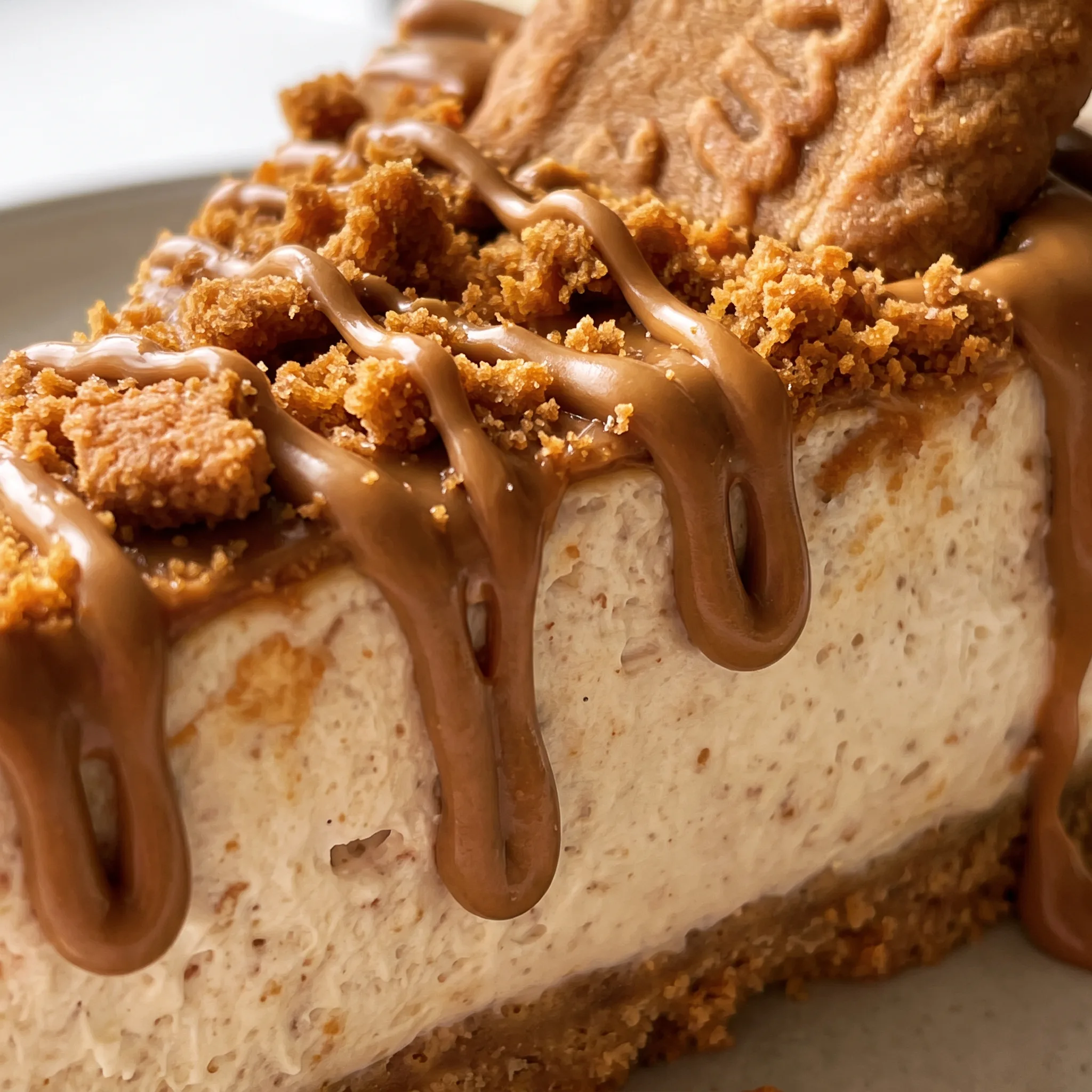
On top, a drizzle of warmed spread and a scatter of crushed cookies add texture and intensify the Biscoff experience. The cookies stay crisp against the soft filling, and the drizzle seeps into the crevices.
Together, they create a cohesive dessert where the spice and caramel are present in every component. It’s a unified taste, not just a flavored cheesecake with a cookie stuck on.
Four Ingredients That Decide the Set
Biscoff cookies: Grind them to a fine, even crumb, since a coarse grind leaves the crust loose and crumbly under the filling.
Cream cheese: It must sit at room temperature until it spreads like soft butter, because cold cream cheese stays lumpy no matter how long you beat it.
Heavy whipping cream: Use a carton labeled heavy whipping cream, not half-and-half or light cream, since only the high-fat version whips to stiff peaks.
Biscoff spread: The smooth variety folds in cleanly, while crunchy spread leaves cookie bits that interrupt the filling’s even texture.
Powdered sugar: Sift it if the bag looks clumpy, because lumps of sugar won’t dissolve into the cold cream cheese mixture.
How to Read the Mixture at Every Stage
When the cream is whipped stiff enough and no further
Pull the beaters straight up: the peak should stand with just a slight bend at the tip, not fold over. If it flops, keep going in short bursts. Stop the moment the beaters leave a trail that holds its shape.
A second too long and the cream turns grainy, and those grains won’t fold back into anything smooth.
When the cream cheese mixture is truly smooth
Rub a bit to the touch or press it against the side of the bowl with the spatula. Any resistance means cold or undermixed cream cheese, which will leave lumps you can’t fold away later. The mixture should feel like soft butter and look glossy.
If it’s still cool, let it sit a few minutes and beat again before adding the whipped cream.
Folding without knocking the air out
Use a spatula and cut down through the middle, then sweep up and over. Turn the bowl a quarter each time.
Stop as soon as you see no white streaks. The mixture should look billowy and hold a soft mound on the spatula.
If it turns soupy or glossy, you’ve stirred too hard and the filling will set dense.
Judging the chill by feel, not just the clock
At six hours, press the center with a finger. It should feel firm and leave no dent.
If it’s still tacky or gives, give it more time. A filling that hasn’t fully set will slump when you release the pan, and slicing will drag. Overnight is safer, but the finger test is what tells you it’s ready.
Creamy No-Bake Biscoff Cheesecake
Ingredients
Method
- Reduce the Biscoff cookies to fine crumbs in a food processor. Should a food processor be unavailable, seal the cookies in a bag and break them down with a rolling pin. Liquefy the butter and drizzle it over the cookie crumbs. Toss until all crumbs are uniformly moistened.
- Move the mixture into a springform pan. Compact the crumbs firmly against the bottom using the back of a spoon or a flat measuring cup. Ensure the crust is level and tightly packed. Refrigerate the pan while you make the filling.
- Empty the heavy whipping cream into a chilled mixing bowl. With an electric mixer, beat the cream until stiff peaks hold. The cream must be thick enough to retain its shape when the beaters are withdrawn. Set the whipped cream aside. This step contributes to a light, airy cheesecake filling.
- In another large bowl, combine the softened cream cheese, powdered sugar, vanilla extract, and Biscoff spread. Beat until the mixture is smooth and creamy. No lumps should remain. Proceed patiently; a lump-free mixture yields a smoother final cheesecake.
- Add the whipped cream to the cream cheese mixture gently. Using a spatula, fold the components together gradually. Keep folding until fully incorporated and fluffy. Do not stir vigorously, as that deflates the whipped cream. Gentle folding preserves a light texture.
- Take the prepared crust out of the refrigerator. Deposit the cheesecake filling onto the crust. Distribute the filling evenly with a spatula or spoon. Smooth the surface carefully so the finished cheesecake appears neat and professional.
- Refrigerate the cheesecake for at least 6 hours. Chilling overnight is preferable because it lets the filling set firm and slice cleanly. Patience matters here. Adequate chilling produces the ideal texture.
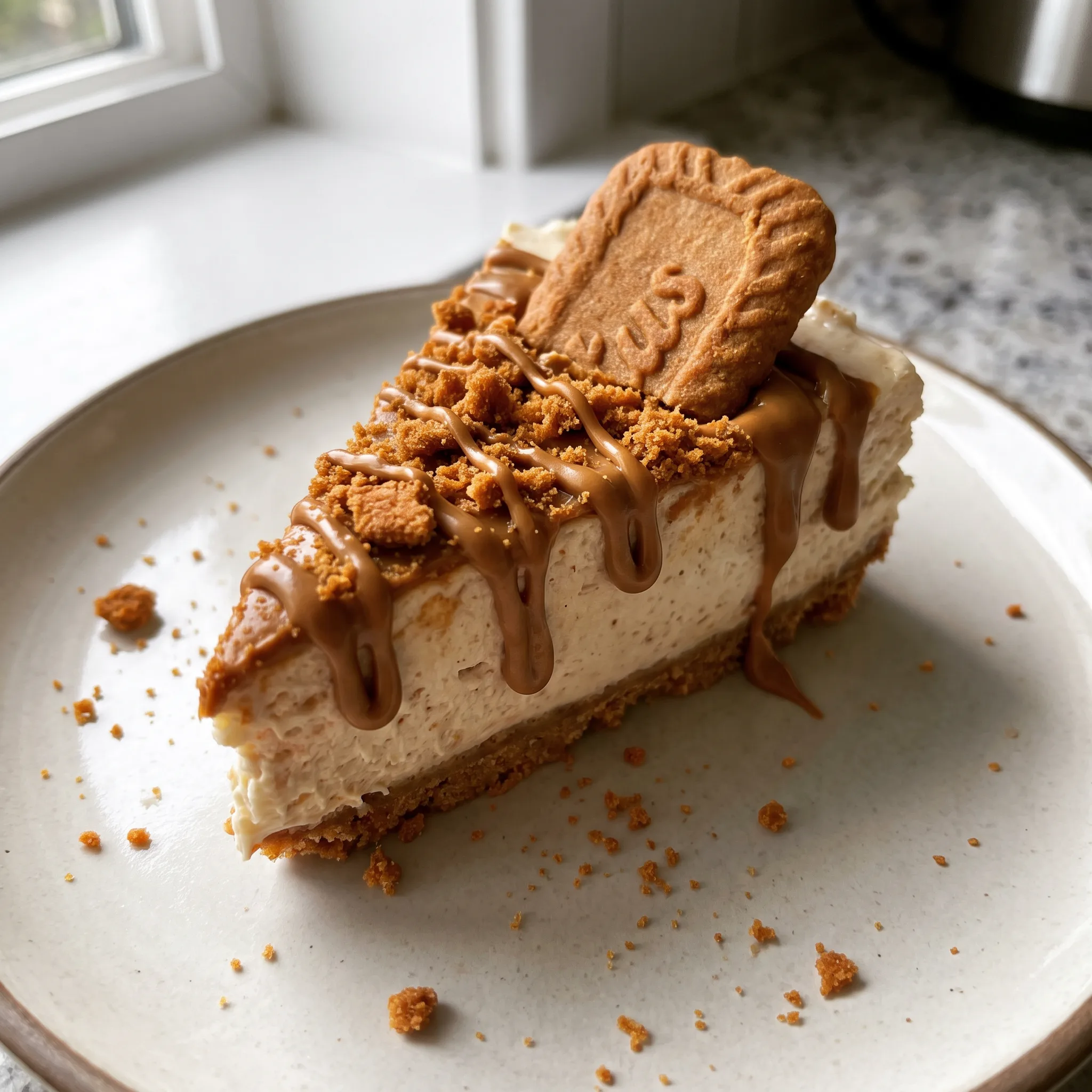
- Heat a small amount of extra Biscoff spread until it flows easily. Drizzle it over the chilled cheesecake. Scatter crushed Biscoff cookies on top for texture and visual appeal. These garnishes beautify the dessert and deepen the flavor.
- Gently release the cheesecake from the springform pan. Slice clean portions with a sharp knife. Wipe the blade between cuts for the tidiest presentation. Serve cold and savor each creamy, crunchy bite.
Storing, Chilling, and the Serving Window
Keep the cheesecake in the springform pan, covered, in the fridge for up to four days. Past that, the crust softens and the filling starts weeping. The filling is at its best from six hours to about two days after chilling; after that the whipped cream structure slowly slackens and slices lose their clean edge.
Put the warmed Biscoff drizzle and crushed cookies on right before serving, never earlier, or the cookies go soft against the cold surface. A cut slice can sit out fifteen to twenty minutes before serving; longer and the filling slumps and the crust loses its snap.
For a slice from the fridge, let it stand ten minutes so the texture relaxes, then eat. Freezing doesn’t work for this filling: the whipped cream breaks and the crust turns damp on thaw. If you must, freeze only the crust, well wrapped, for up to a month, and build fresh.
What You Can Swap Without Ruining the Set
Cream cheese: Neufchâtel or reduced-fat cream cheese. Both have a higher moisture content and less fat, so the filling won’t firm up as reliably. You may need to chill it longer than six hours, and slices will be softer.
The tang is a bit sharper, which competes with the Biscoff. 6 oz the recipe calls for and adjust only if the mixture seems loose after beating.
Heavy whipping cream: No good swap exists here. Half-and-half or light cream won’t whip to stiff peaks, and the filling will stay soupy.
Coconut cream might whip, but it brings a coconut flavor that clashes with the spice and caramel of Biscoff. Without the air from properly whipped cream, the filling sets dense and heavy, more like a cream cheese frosting than a cheesecake.
Biscoff spread: Any smooth cookie butter or speculoos spread. The flavor will shift slightly depending on the brand, but the texture stays the same. Crunchy varieties add cookie bits that interrupt the smooth filling, so stick with smooth.
3 oz and taste the filling before spreading it; if it seems mild, a spoonful more won’t hurt.
Biscoff cookies: Gingersnaps or graham crackers. Gingersnaps bring a sharper spice and less caramel, while graham crackers are milder and sweeter. Either will make a crust that holds, but the flavor won’t be as deep.
8 oz by weight and pulse to fine crumbs. The butter amount stays the same.
Tips
- Press a spoonful of the Biscoff spread against the side of the bowl before you measure it. If it holds a stiff ridge instead of slumping, the jar is too cool to blend evenly and will leave streaks in the filling. Set the jar in a bowl of warm water for a few minutes, or microwave it in five-second bursts, until it ribbons off the spoon. The recipe calls for 5.3 oz, so warm only what you need and let it come back to room temperature before beating it into the cream cheese.
- Sift or shake your cookie crumbs through a coarse strainer after pulverizing, and regrind whatever stays behind. The recipe wants 8.8 oz of fine crumbs, and a bag-and-rolling-pin job often leaves pebbles that press into the crust as hard spots and cut the yield short once you discard them. You should end up with roughly 2 cups of crumbs. If you come up short, grind a few extra cookies rather than stretching the 7 tbsp of butter over a thin crust.
Frequently Asked Questions
Can I make this no-bake Biscoff cheesecake ahead of time?
Yes, and it’s better that way. The filling needs at least 6 hours to set firm, and overnight gives you cleaner slices.
Keep it covered in the springform pan in the fridge, where it holds up to four days. Wait to add the warmed Biscoff drizzle and crushed cookies until right before serving, or they’ll soften against the cold surface. Past about two days the whipped cream structure slackens and slices lose their clean edge.
Why is my no-bake cheesecake filling too soft?
Most likely the cream wasn’t whipped far enough before folding. Pull the beaters straight up: the peak should stand with just a slight bend at the tip, not fold over.
If it flops, keep going in short bursts. The other common cause is under-chilling.
Press the center with a finger at six hours; it should feel firm and leave no dent. If it’s still tacky or gives, give it more time.
How does this no-bake Biscoff cheesecake differ from a classic baked cheesecake?
Structure here comes from whipped cream and cream cheese rather than eggs and oven heat. The whipped cream brings air, and folding it in gently preserves that air so the filling sets light instead of dense. On the plate you get a softer, billowy texture rather than the tight, custardy crumb of a baked one.
The trade-off is that the set depends entirely on cold and time, so the chill isn’t negotiable.
