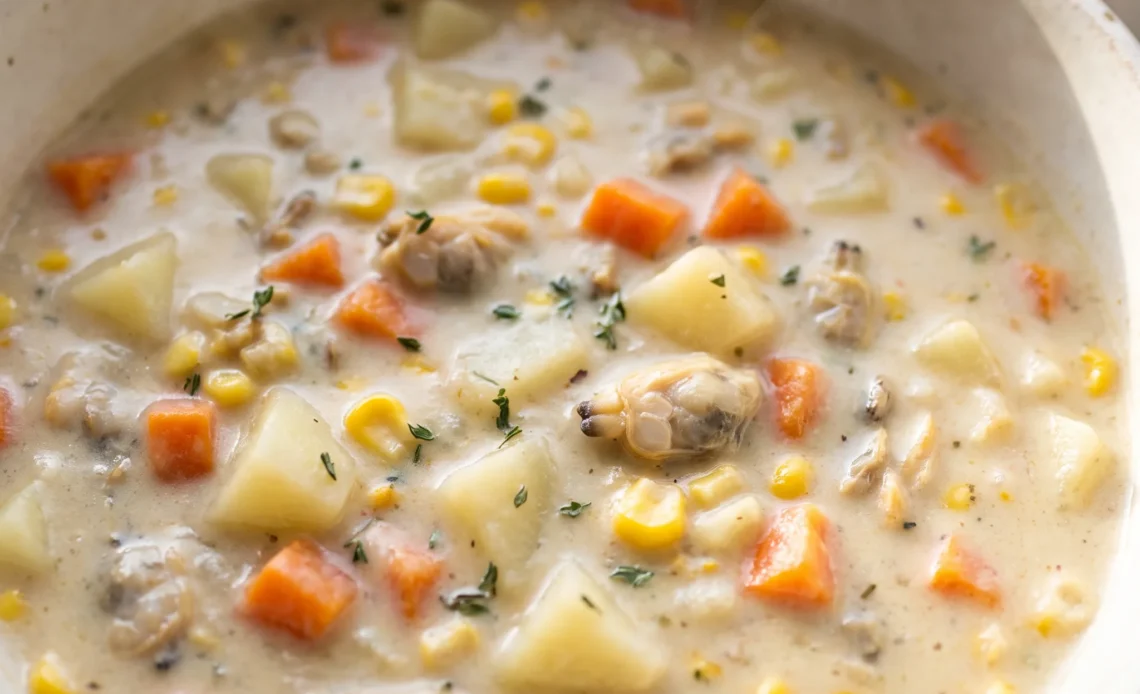
A spoon dragged through the pot leaves a channel that fills in slowly, and the smell is bacon and thyme before it’s ever brine. What makes a bowl of new england clam chowder read as a meal rather than a starter comes down to where you put it: hollowed sourdough, torn into as you eat, the crust going soft against the hot broth while the outside stays firm enough to hold.
That bread is doing more work than people give it credit for. Get the base too loose and it soaks through before you reach the bottom; too tight and it sits there like paste.
The window is narrower than it looks, and most of the decisions that keep you inside it happen before the clams ever hit the pot.
Body Without Cream
Flour does the thickening here. Not a cornstarch slurry, not a quart of cream.
Right after the vegetables soften, 1/3 cup of all-purpose flour goes over them and gets stirred until it disappears into the fat. What you’re left with is a paste that coats every piece of onion, carrot, leek, and potato. That coating matters later.
When the clam juice hits the pot, each grain of flour swells and grabs liquid, and the starch it releases is what turns a thin broth into something that can hold a spoon upright. The vegetables get a head start on thickening because the flour is already clinging to them, so the chowder tightens faster and more evenly than if you whisked flour into liquid alone. Milk goes in at the end, and the base it lands in is already creamy enough to carry it.
Skip this and you get soup with clam flavor, sure, but the texture stays watery and the potatoes sink to the bottom of the bowl.
Clam Juice Does the Heavy Lifting
Water would dilute everything. Stock would add a flavor that competes with the clams. So the pot gets 2 1/2 cups of clam juice, which is a lot compared to the 1 3/4 cups of milk that follows.
That ratio is deliberate. For most of the cooking time, the liquid in the pot tastes like the sea, not like dairy.
The juice goes in after the flour has coated the vegetables, poured in a steady stream while you whisk, and it simmers until the base thickens around it. By the time the clams and milk show up, the broth has already absorbed all that briny depth. What you end up with is a chowder where every spoonful carries clam flavor from two sources: the juice in the base and the chopped clams themselves.
The milk softens the edges without muting what’s underneath. It tastes like clams, not like cream of potato soup with a few clam bits floating around.
When the Clams and Milk Go In
Chopped clams are tender. Milk curdles if you push it.
Both facts point to the same move: add them late. Once the base has thickened and the potatoes are nearly done, the clams and milk get stirred in together, and the pot drops to a gentle simmer.
No hard boil. No long cook. The clams just need to heat through, and the milk needs to warm without breaking.
What you’re watching for is a broth that stays smooth and slightly thickened, with clam pieces that still have a little bounce when you bite them. If the pot bubbles hard, the milk separates into grainy flecks and the clams tighten into rubber.
Keep it lazy. Stir often, scrape the bottom, and pull it off the heat the moment the clams are hot.
The chowder should look creamy and uniform, not curdled or watery.
Bacon, Butter, and the Vegetables That Follow
Three strips of bacon go into a cold pot over medium heat. They render slowly, leaving behind smoky fat that coats the bottom. Then 5 tablespoons of butter melt into that fat, and the two together make a rich base for the onion and carrot.
Those vegetables hit the hot fat and start to soften, picking up the bacon’s smokiness as they go. Leek and potato join a few minutes later, and they soak up the same flavor. None of this is subtle.
The fat is carrying the savory backbone of the chowder before a single drop of liquid enters the pot. What you’re building is a foundation where every vegetable tastes seasoned from the inside out, not just salted from the outside. When the clam juice finally goes in, it’s dissolving all that flavor off the bottom and into the broth.
The bacon doesn’t just garnish. It’s part of the cooking liquid.
The Ingredients That Decide How This Chowder Tastes
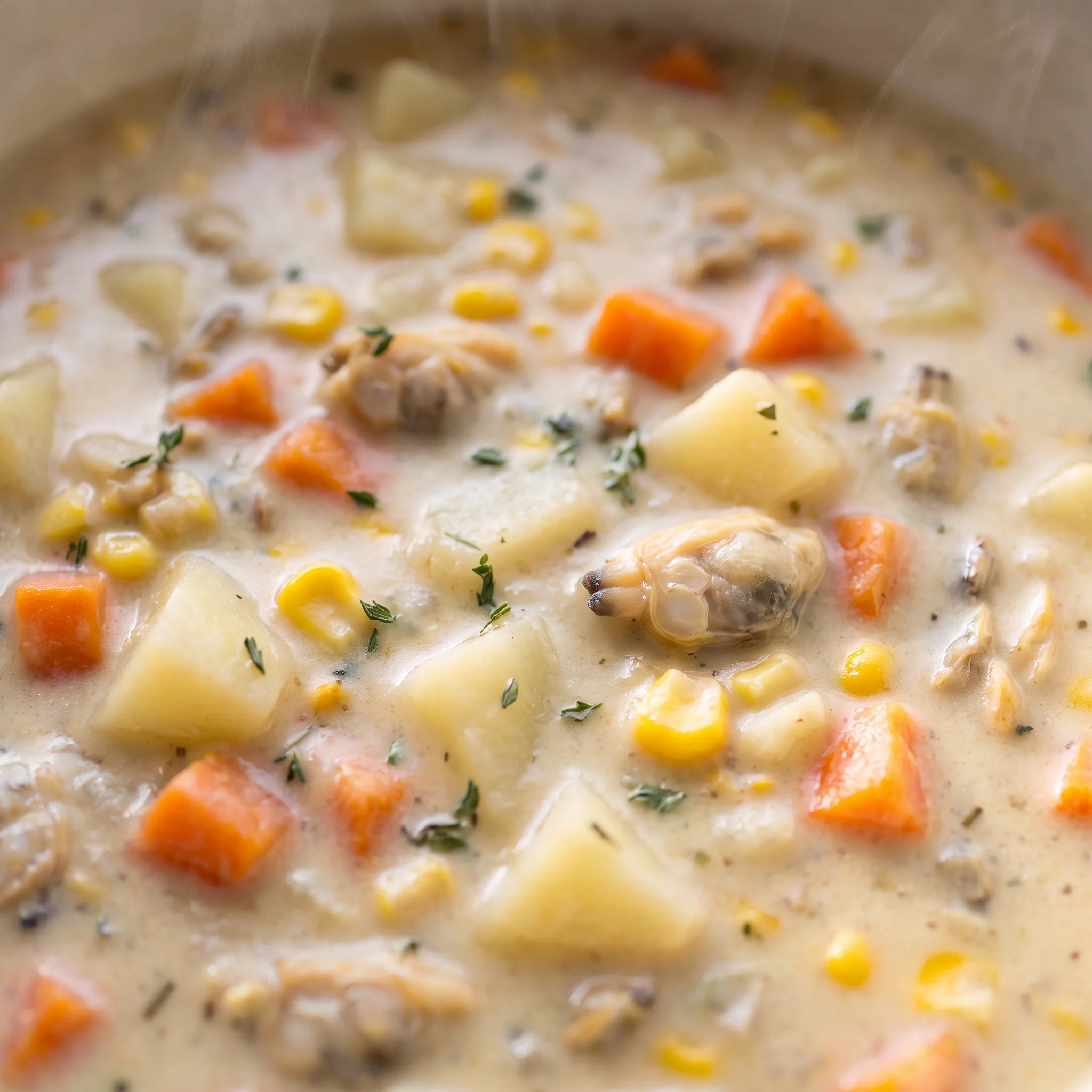
Bacon: Three strips chopped fine render their fat slowly, and that smoky grease is what the onion and carrot cook in.
Clam juice: Buy the bottled stuff and taste it first; some brands are saltier than the clams, so season the pot later.
Chopped clams: Fresh shucked or frozen both work, but drain them well or the extra liquid thins the base you just built.
New potatoes: Waxy, thin-skinned, diced to match the carrot so every piece in the spoon cooks at the same rate.
Leek: Only the white and light green parts; the dark tops stay tough and stringy no matter how long they simmer.
Sprinkling flour over the sautéed vegetables and stirring for about 3 minutes cooks the raw starch granules in the butter and bacon fat, allowing them to absorb fat and begin gelatinizing. When clam juice is then whisked in, the gelatinized starch swells and thickens the liquid into a stable emulsion, giving the chowder body. Without this roux step, the flour would clump or remain raw, and the final chowder would stay thin and watery rather than creamy.
Reading the Pot: The Moments That Decide This Chowder
When the vegetables are ready for thyme and corn
Look at the onions and leeks. They should be soft enough to bend without resistance and slightly see-through at the edges.
If they still crunch or look opaque, give them another minute or two. Adding thyme and corn too early means the herbs scorch and the corn loses its snap. If you’ve already added them and the onions aren’t soft, keep going; the corn will cook a little more but the chowder will still work.
Judging the roux before the liquid goes in
After the flour goes over the vegetables, stir for about 3 minutes. You’re looking for the raw flour smell to fade and the mixture to look like a thick paste that coats every piece.
If it smells sharp or powdery, keep stirring. If it browns, you’ve gone too far and the chowder will taste toasted. The paste should be pale and uniform.
When you drag a spoon through, it should leave a clean line that fills in slowly.
Reading the thickness as the clam juice simmers
After you whisk in the clam juice and it simmers for about 8 minutes, the base should thicken enough to coat the back of a spoon. Run a finger across the spoon; if the line holds, it’s ready.
If it’s still watery, simmer a few more minutes. If it’s too thick, splash in more clam juice.
This is your only chance to adjust before the clams and milk go in, since those will thin it slightly.
Knowing when the clams and milk are done
Once the clams and milk go in, keep the pot at a gentle simmer for 12 to 16 minutes. You’re watching for the broth to stay smooth and slightly thickened, not curdled or watery.
The clams should be hot and still have a little bounce. If the pot bubbles hard, the milk will separate into grainy flecks. If that happens, pull it off the heat and whisk vigorously to bring it back together.
Taste a clam; if it’s rubbery, you’ve overcooked them.
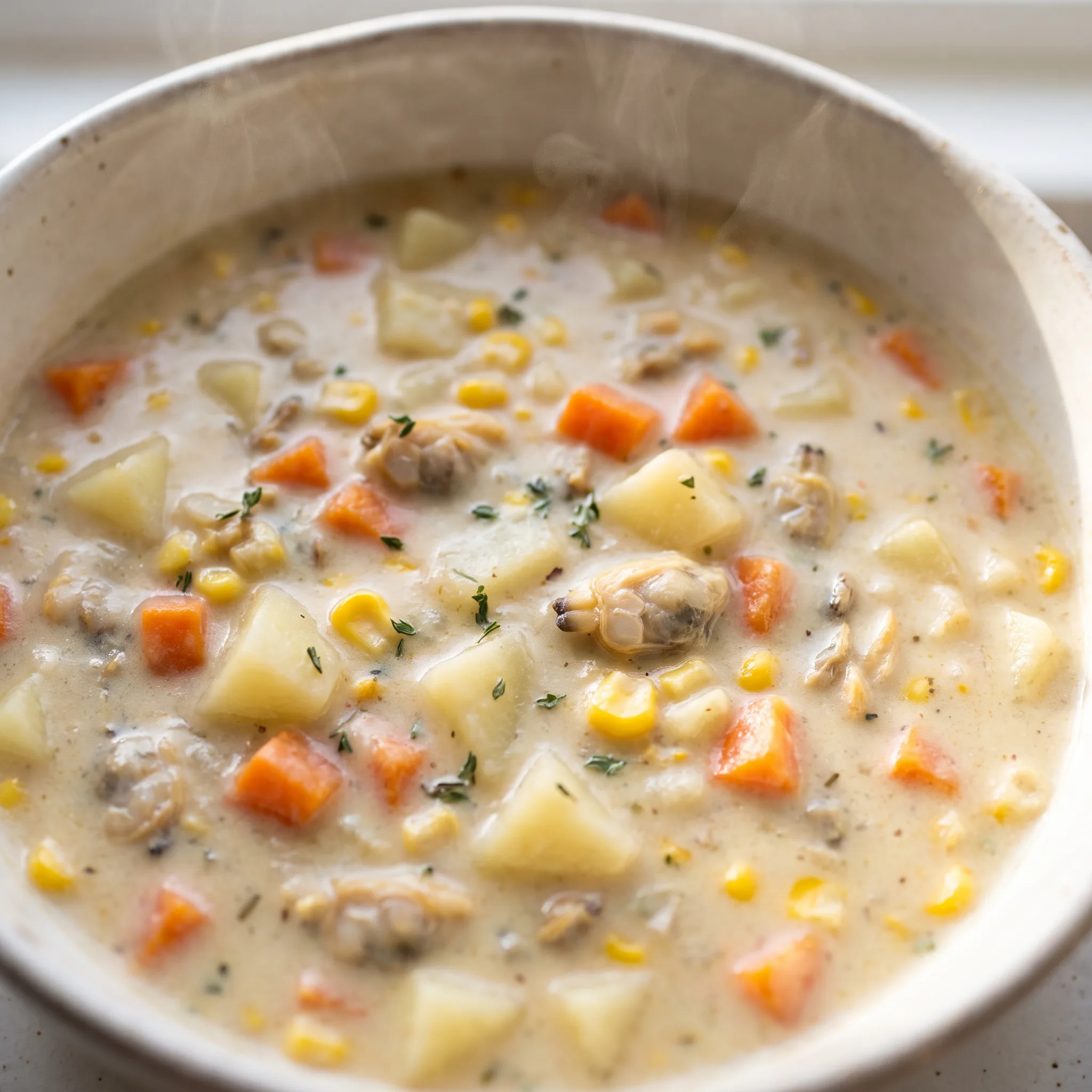
New England Clam Chowder with Bacon and Corn
Ingredients
Method
- In a large pot over medium heat, cook the bacon until crisp, about 5 minutes.
- Add the butter and melt.
- Stir in the onion and carrot; sauté for 5 minutes.
- Add the leek and potatoes; continue sautéing for 2 to 3 minutes more. Season with salt and pepper.
- Once the onions and leeks have softened and become slightly translucent, add the thyme and corn; stir to combine.
- Sprinkle the flour over the vegetable mixture and stir well to form a thick roux, about 3 minutes.
- While whisking, pour in the clam juice in a steady stream until fully incorporated and no lumps remain. Reduce heat to medium-low and simmer for about 8 minutes, or until the mixture thickens, stirring frequently to prevent burning on the bottom.
- Stir in the clams and milk; continue to simmer for an additional 12 to 16 minutes, stirring frequently.
- Adjust seasonings and serve hot, in hollowed-out sourdough bread bowls if desired.
Storage, Reheating, and When to Eat It
Chowder is at its best the day you make it. Within a few hours, the flour-thickened base tightens further and the clams firm up, so the texture shifts from creamy to pasty. Eat it within 24 hours for the best spoonful.
Leftovers keep in a sealed container in the fridge for up to 3 days. The dairy and clams won’t improve with time.
Reheat gently on the stovetop over low heat, stirring often. A hard boil breaks the milk and turns the potatoes grainy. If it’s too thick, splash in clam juice or milk.
Don’t freeze the finished chowder; the milk separates and the potatoes go mealy. You can freeze the base before the milk and clams go in, then finish it later.
The sourdough bread bowls are best the day you buy them. Hollow them right before serving, or they’ll go stale.
Tips
- Canned chopped clams vary a lot in salt, and the brine they sit in carries most of it. Drain them, then taste a piece before you season the pot. If the clams are already salty, hold back on the salt until after they go in at step 8, since the 2 1/2 cups of clam juice plus salted canned clams can push the whole pot past where you want it.
- Fresh chopped clams should smell like clean ocean, sweet and briny, with no ammonia or fishy edge. If you are buying them already chopped, ask when they were shucked; the flavor fades fast and older clams taste flat no matter how much clam juice you add. Buy them the day you cook, keep them cold, and add them straight from the fridge at step 8.
Swaps That Won’t Sink This Chowder
Bacon: For a smoky, meatless pot, leave it out and start with 2 tablespoons of olive oil or butter to sweat the onion and carrot. If you miss the smoke, add 1/2 teaspoon smoked paprika with the flour. The bacon’s rendered fat carries the savory backbone, so without it the chowder tastes flatter; you’ll want to taste for salt and maybe add a pinch more.
The paprika gives a hint of smoke but not the same depth, and the pot won’t have those little crisp bits to bite into.
Fresh corn: Frozen corn kernels work fine, straight from the bag. Canned corn is sweeter and softer, so drain it well and add it with the clams instead of early. Fresh corn keeps a slight pop and a milky sweetness that frozen mimics closely.
Canned corn loses that snap and can make the chowder taste a touch sweeter, but it won’t ruin the pot. If you use canned, hold off adding it until the last few minutes so it doesn’t fall apart.
Milk: For dairy-free, replace with unsweetened oat milk or full-fat coconut milk. Start with the same 1 3/4 cups the recipe calls for, then adjust after tasting: oat milk is thinner, coconut milk richer.
Oat milk won’t curdle as easily as dairy, but it won’t thicken the broth quite as much, so the chowder may look a little looser. Coconut milk adds a faint tropical note that fights the clams unless you use a brand with no added sweetener. Either way, add it off a hard boil and stir gently.
Sourdough bread bowls: Skip the bowls and serve in regular bowls with a slice of toasted sourdough on the side, or use a crusty roll. For a gluten-free option, serve over cooked rice or with gluten-free bread.
The bread bowl soaks up chowder and gives you something to tear into, but it’s not essential. Without it, you lose that contrast of crusty bread against the creamy soup.
A slice of toast on the side does the same job with less fuss. Gluten-free bread tends to fall apart in the broth, so keep it on the side.

Frequently Asked Questions
Can I make New England clam chowder ahead of time?
Yes, but plan to eat it within 24 hours. The base tightens as it sits, and the clams firm up, so a pot made two days ahead tastes pasty rather than creamy. If you want to get a jump on it, cook everything up to the point before the clams and milk go in, cool that base, and refrigerate it.
Finish it later by reheating gently and adding the clams and milk at the end.
Why did my clam chowder turn out thin?
The roux is the usual suspect. After the flour goes over the vegetables, it needs to cook until the raw smell fades and the mixture looks like a thick paste clinging to every piece; if it still smells powdery, that flour won’t thicken the broth properly. A second check is the clam juice simmer: the base should coat the back of a spoon before the clams and milk go in.
If it’s still watery at that stage, simmer a few more minutes, because once the milk and clams are added you can’t tighten it without risking curdling.
How is this New England clam chowder different from Manhattan clam chowder?
Manhattan chowder has a tomato broth, and this one never sees a tomato. That means the liquid here is clam juice and milk, thickened with a flour roux, so the color stays pale and the flavor leans briny and creamy rather than acidic and red. You also won’t find the same vegetables: this pot gets leek, corn, and new potatoes, while Manhattan typically has celery and no dairy at all.
Can I use canned clams instead of fresh chopped clams?
You can, but drain them well and add them at the very end. Canned clams are already cooked and often packed in salty liquid, so dumping them in early turns them rubbery and thins the base you built. Taste the clam juice you’re using too, since some brands are saltier than the clams themselves, and hold off on extra salt until you’ve tasted the finished pot.
