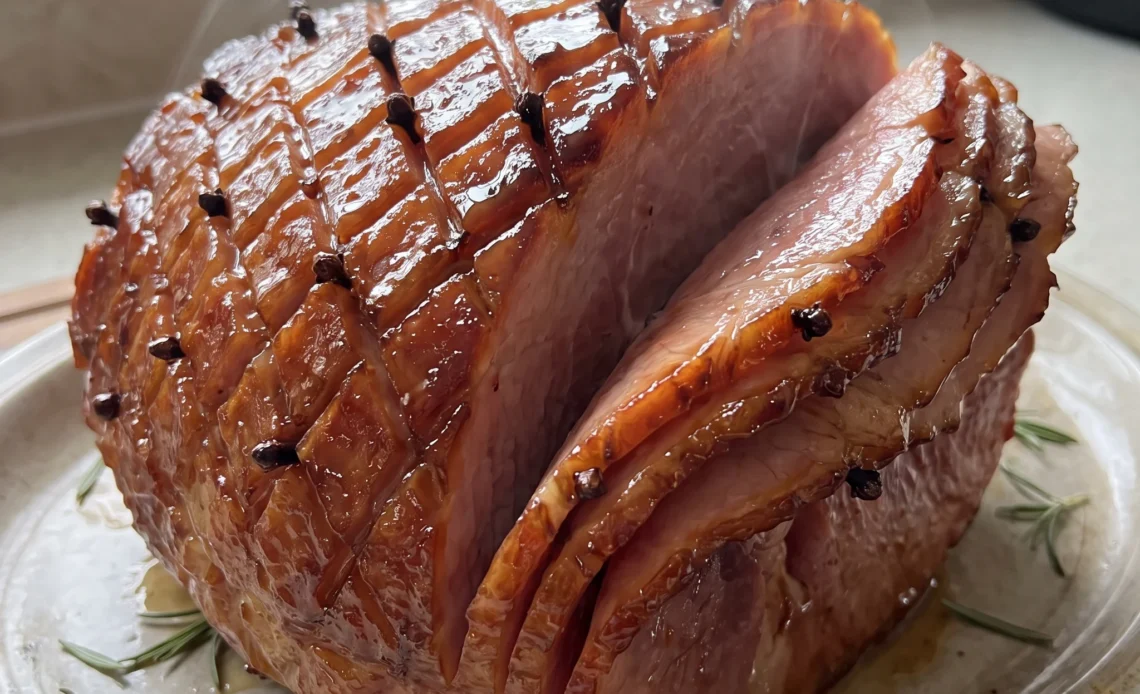
A plain baked ham comes out of the oven pale, wet, and forgotten on the platter. The glaze is where a honey glazed ham either works or falls apart, and most people reach for the baster far too soon.
Sugar doesn’t wait patiently for the meat to warm through; paint it on at the start and it blackens into something bitter long before the center is hot. The window is narrow, and the difference between a lacquered crust and a scorched one is a matter of attention, not skill.
Get that timing right and you have a centerpiece that looks like it took all day. Get it wrong and no amount of pan juices hides the taste.
The glaze is mostly honey and brown sugar, and those sugars begin to caramelize and then burn when exposed to high heat for extended periods. Basting with the remaining glaze only in the final 30 minutes limits the sugar’s total oven time, so it thickens into a sticky, glossy coating instead of turning dark and bitter. Tenting with foil during the initial bake traps heat for even warming without drying the ham, and removing the foil for the last half hour allows the glaze to reduce and adhere in layers.
Score the Surface for a Better Glaze
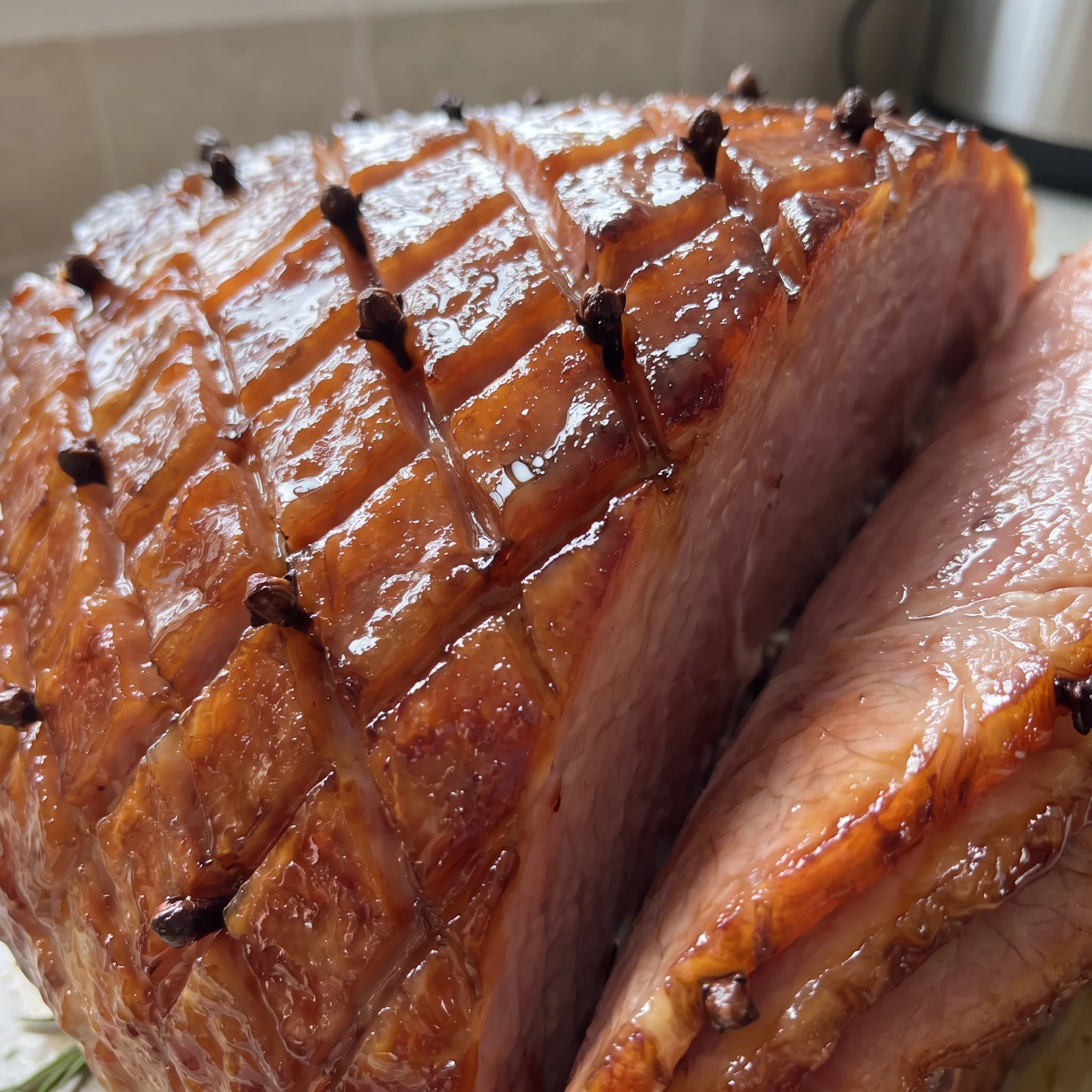
Diamond cuts do more than make the ham look like a holiday centerpiece. Each slit opens the surface so the glaze has somewhere to sit instead of sliding off in a sheet.
When you press the glaze into those cuts, it stays put and seeps just under the skin, where it flavors the meat closest to the surface. The cuts also expose more fat, which crisps and browns as the ham bakes. Whole cloves are optional, but they earn their place.
Pushed into the intersections, they release a warm, peppery burst exactly where the glaze pools. They also give you a built-in guide when you slice, marking neat portions.
Keep the knife shallow. You want to cut through the fat layer only, not into the meat itself.
Go deeper and the ham loses juices from those channels and the slices dry out at the edges. A quarter-inch is plenty. The surface should look crosshatched, not hacked.
Build the Glaze to Cling and Shine
Honey and brown sugar supply the body and the stick. Honey brings a floral sweetness and a natural thickness, while brown sugar adds molasses depth and helps the glaze set as it cools.
Dijon mustard cuts through that sugar with a sharp tang and also helps everything stay mixed, so the glaze doesn’t separate into a honey slick and a watery puddle. Apple cider vinegar is the balance point.
Without it, the coating tastes flat and cloying; with it, the sweetness has a tart edge that keeps you reaching for more. Ground cloves and black pepper add a warm, almost smoky note that lingers behind the honey. Simmering the mixture for a minute or two dissolves the sugar crystals and lets the flavors combine, so the glaze coats evenly instead of tasting raw and grainy.
It should look glossy and slightly thickened, like warm syrup, ready to brush on and build up in thin layers.
Baste Late, Not Early
Sugar burns. That’s the simple truth behind waiting to baste. If you paint the glaze on at the start, the honey and brown sugar sit in the oven for two hours and turn black and bitter before the ham is even warm through.
Tenting with foil for the first stretch traps steam and heat around the meat, so it cooks evenly without the surface drying out. Then, in the last half hour, you uncover and start basting. Every ten minutes, a fresh coat goes on.
Each layer sets slightly in the oven’s heat, building a sticky, lacquered shell that clings to the scored surface. The ham should look glossy and deep amber by the end, not burnt.
You’re not cooking the glaze so much as letting it caramelize just enough to turn sticky and rich. Stop when the surface shines and the edges of the cuts are darkened.
A Rest Before the Knife
Straight from the oven, the ham is still tense. The heat has pushed juices toward the center, and if you slice right away, they run out onto the board and leave the meat dry.
Fifteen minutes of quiet lets those juices redistribute back through the muscle, so every slice stays moist. The glaze also benefits. As the ham cools slightly, the sticky coating firms up just enough to hold its shape, so it doesn’t slide off the blade and leave you with bare meat and a puddle of syrup.
The pan juices, meanwhile, settle and concentrate. Once you’ve rested the ham, those juices are easy to spoon over the slices without turning the crust soggy.
You’ll know it’s ready when the surface is tacky, not wet, and the first cut releases a clear trickle rather than a flood. That’s the moment to start carving.
What to Buy and Prep Before the Glaze Goes On
Bone-in ham, 8 to 10 lb: Fully cooked and bone-in, since the bone keeps the meat moist and the cut face gives you a flat side to set down.
Honey, 1 cup: A pourable clover or wildflower honey works; the thick, cloudy raw stuff sets up hard once it hits the pan.
Brown sugar, 1/2 cup: Pack it into the cup so the measure is honest, and break up any hard lumps before they hit the saucepan.
Dijon mustard, 1/4 cup: Smooth Dijon, not the grainy country style, so the glaze stays glossy enough to brush on in thin coats.
Ground cloves, 1/4 tsp: Cloves go a long way, so measure this one level and keep it light, or the whole ham tastes like a spice cabinet.
Reading the Ham at the Oven Door
When the cut side belongs down
A bone-in ham has a flat, cut face and a rounded, rinded one. Cut side down keeps the ham from rocking, so the glaze stays where you put it. If it wobbles, the pan juices pool to one side and the exposed face dries.
Check by pressing the top. It should sit still. If it doesn’t, shim the low side with a folded strip of foil.
Judging the glaze before it hits the ham
Pull the saucepan off while the mixture still looks like warm syrup, not cold honey. If it bubbles hard and darkens, the sugars have gone past dissolving and will taste bitter under the ham’s heat. A spoon dragged through should leave a line that closes slowly.
Too thick and it won’t press into the cuts; too thin and it runs straight off. A splash of warm water loosens it.
The last thirty minutes, minute by minute
Uncover and start basting when the ham is hot through, not before. Every ten minutes, look at the surface: it should go from wet to tacky to glossy amber. If the glaze darkens to the color of coffee before the ham’s time is up, tent it again and drop the heat by 25°F.
Burnt sugar on the crust tastes acrid and no pan juice will cover it.
Reading the rest, not the clock
Fifteen minutes of quiet is the target, but the ham tells you when it’s ready. Touch the surface: tacky, not wet.
Press near the bone and the meat should feel springy, not tight. Cut too early and juices run clear and thin, leaving the slices dry and the board sticky. If it’s still wet at fifteen minutes, give it five more.
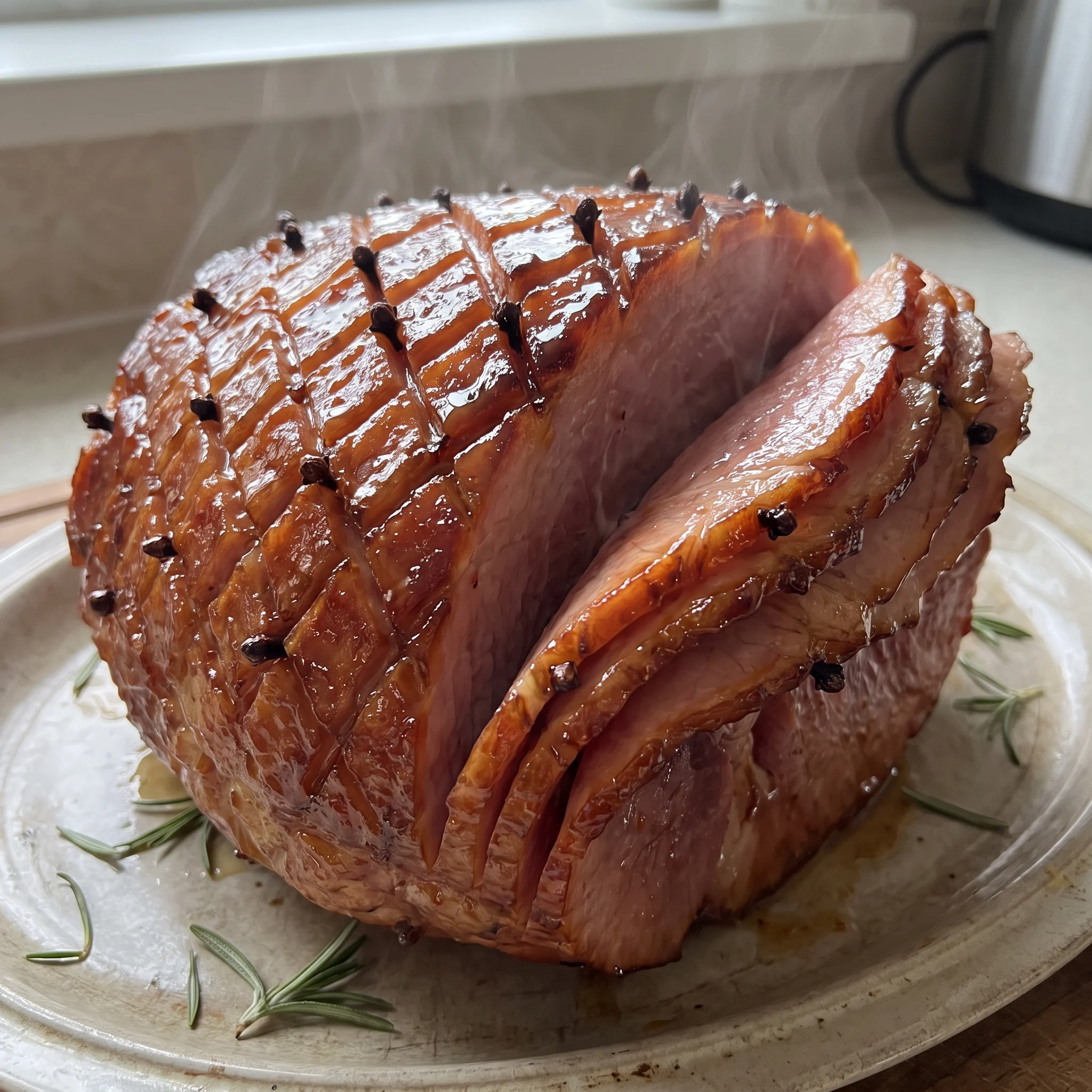
Honey Glazed Ham with Whole Cloves
Ingredients
Method
- Set oven to 325°F (165°C). Arrange the ham in a roasting pan with the cut side facing down.
- In a saucepan over medium heat, mix honey, brown sugar, Dijon mustard, ground cloves, black pepper, and apple cider vinegar. Stir until the mixture is smooth and just starts to bubble. Take off the heat.
- With a sharp knife, cut a diamond pattern into the ham’s surface. If you like, insert whole cloves at the intersections for added flavor and decoration.
- Coat the ham with half of the glaze, pressing it into the scored cuts.
- Loosely tent the ham with aluminum foil and bake for about 1.5 to 2 hours, or until hot throughout. In the final 30 minutes, uncover and baste with the remaining glaze every 10 minutes to create a sticky finish.
- Take out of the oven and let rest for 15 minutes before slicing. Serve warm, with the pan juices for extra flavor.
Two Swaps That Work on This Ham, and Two That Don’t
Honey, 1 cup: Maple syrup, same 1 cup. Maple brings a darker, almost woody sweetness that sits differently against the cloves and black pepper, and the finished glaze reads more autumnal than floral. Use the same cup the recipe calls for.
Grade A amber or dark syrup has more flavor than the pale stuff; the lightest grade gets lost under the mustard. The glaze will look a shade browner as it bastes on, which is the syrup, not burning, so judge doneness by tackiness at the surface rather than by color alone.
Dijon mustard, 1/4 cup: Whole-grain mustard, same 1/4 cup. You trade the smooth, blended tang for a coarser texture and a more mustardy bite that pops against the sweet glaze. The seeds stay visible on the ham, so the crust looks rustic rather than lacquered, and the glaze won’t brush on quite as evenly.
Press it into the cuts with the back of the spoon instead of painting it. Dijon’s job here is to keep the honey and sugar from separating, and whole-grain still does that, so the glaze holds together fine.
Brown sugar, 1/2 cup: No real substitute. Leave it.
This is the one that drives the caramelization, and nothing else in the pantry sets up the same way. Coconut sugar browns too fast and turns bitter before the ham’s two hours are up.
White sugar plus a spoon of molasses gets close in flavor but the glaze stays softer and won’t firm into that sticky shell as it cools. If you’re cutting sugar for dietary reasons, cut the honey instead and keep the brown sugar.
The glaze will still set, just with less bulk.
Apple cider vinegar, 1/4 cup: Don’t swap it. The vinegar is the acid that keeps a cup of honey and half a cup of sugar from tasting like candy. Lemon juice is the tempting stand-in, but it reads brighter and more citrus-forward, and it fights the cloves instead of rounding them out.
Balsamic turns the glaze dark and syrupy and tastes like salad dressing on ham. If you’re out of cider vinegar, white wine vinegar is the closest in sharpness, but the glaze loses that faint apple note underneath the sweetness. Measure it as written, a quarter cup, and don’t cut it back.
Tips
- Buy the ham bone-in, fully cooked, and whole, with the rind and fat cap still intact. A spiral-cut or pre-glazed ham has its surface already opened in tight parallel slices, so there is no continuous fat layer left to score a diamond pattern into, and the glaze you brush on runs straight down into those gaps and pools in the pan instead of sitting on the surface. Check the label for the words “spiral” or “glazed” and pass on those. If you can only find a spiral-cut one, skip the scoring step entirely and tent it earlier, because the exposed faces will dry out faster than an intact ham would.
- Compare the weight against the pan you plan to use before you buy. An 8 to 10 lb bone-in ham is a bulky, uneven shape, and it needs a roasting pan with at least an inch of clearance on all sides and a rack or a bed of foil underneath so the cut face sits flat. If the ham touches the pan walls, the glaze on those sides scorches against the hot metal while the rest of the surface is still pale. A pan that is too small also forces the drippings to pool deep around the base, which steams the bottom of the ham and keeps it from browning at all.
Storing and Serving the Glazed Ham
Eat it within an hour of carving. The glaze is at its best when it’s still tacky and glassy, and that finish fades as the ham sits. Leftovers keep in the fridge for three to four days, wrapped tight or in a shallow container with the pan juices spooned over the slices.
The meat stays moist that long, but the coating softens and turns syrupy, so don’t expect the same lacquered shell. Reheat gently, covered, at 300°F until just warm, or in a skillet with a splash of those juices. High heat toughens the edges and re-burns the sugars.
The bone and any stray whole cloves don’t belong in the container. Freezing works for sliced ham only, up to two months; the glaze weeps and never sets back the same way, so freeze the meat plain and add fresh pan juices after reheating.
For serving, warm slices beat cold ones every time.
Frequently Asked Questions
Can I glaze the ham ahead of time and bake it later?
You can make the glaze up to a few days ahead and keep it in the fridge, but don’t coat the raw ham and park it. The honey and brown sugar would sit on the surface and start to draw out moisture, leaving you with a wet, slippery ham and a glaze that slides right off.
Instead, score the ham, cover it, and chill it, then bring the glaze back to a pourable state and coat it just before the ham goes in the oven. If you’ve already glazed it, you can still bake it, but expect the surface to look mottled rather than evenly lacquered.
Why did my glaze burn or turn bitter?
The most likely cause is that the glaze went on too early or stayed in the oven too long on a hot spot. Sugar in the honey and brown sugar starts to scorch once the surface gets past a deep amber, and the acrid taste carries through the whole crust. If your oven runs hot, tent the ham again and drop the temperature by 25°F for the rest of the bake.
Another check: if you simmered the glaze until it was dark and thick before it ever touched the ham, that’s already bitter and no amount of basting will fix it.
How do I know when the ham is fully heated through?
The ham is ready when a probe or skewer slid into the thickest part near the bone comes out hot to the touch, and the surface is tacky and glossy rather than wet. You can also press the meat near the bone: it should feel springy, not tight or resistant. If the center still reads cool, tent it and give it more time, but keep an eye on the glaze so it doesn’t darken past amber.
The final 30 minutes of basting is your window to judge both the internal heat and the crust at the same time.
What’s the difference between this honey glazed ham and a classic spiral-cut ham?
A spiral-cut ham comes pre-sliced in a spiral around the bone, so the glaze mostly runs between the slices and the meat dries out faster because so much surface is exposed. This recipe starts with a whole bone-in ham that you score yourself in a diamond pattern, which lets the glaze pool in the cuts and cling to the uncut surface. The result is a stickier, more lacquered crust and slices that stay juicier because you’re cutting them fresh after the rest.
The trade-off is that you do the carving, but you get better texture and more control over how much glaze ends up on each portion.
