
Creamy lobster ravioli isn’t a project. It’s the kind of dinner that lands on the table while the pasta water is still warm, and the trick isn’t in the sauce, it’s in knowing when to stop.
Those thin wrappers and soft lobster filling turn from tender to torn faster than most cooks expect, and the skillet is where that shows up. A gentle fold beats a hard stir every time, and a sauce that clings rather than pools is what tells you the texture is right. Get that part down and the dish reads as something you’d order, not something you assembled from a package.
Lobster ravioli are made with thin dough and a moist, soft filling, so the pasta hydrates and softens much faster than a dense, dry filling would. Once the pasta absorbs too much water, its gluten network weakens, and the seams, already the thinnest part, give way under the gentle boil, letting the filling leak into the water. The result is torn pasta and a sauce that never gets the chance to coat intact pieces.
Lemon Cuts the Cream
Heavy cream and a half cup of Parmesan make a sauce that coats your tongue. Without something sharp, that coating sits there and the next bite feels heavier than the last. You know it from the first spoonful: rich, then dull, then you want water.
Lemon fixes that. The zest brings a perfumed edge you catch before the cream, and the juice brings a clean sourness that makes you swallow and reach for more.
They do different jobs, and the recipe uses both. A squeeze of juice alone would taste thin; zest alone would smell nice but leave the sauce flat.
Together they keep each bite of lobster and pasta lively. If you taste the sauce before adding them, you’ll notice the difference immediately. This isn’t about making it lemony.
It’s about making the richness readable, so the lobster still comes through.
Why Delicate Ravioli Need Gentle Handling
These ravioli are not the thick, sturdy kind you might find in a dried pasta box. The wrapper is thin, and the filling is soft lobster meat, so they cook in just a few minutes.
Let them go longer and the pasta starts to tear. You’ll see it happen: first a small split at the edge, then the filling clouds the water. What you end up with is a broken pouch and a sauce that tastes mostly of cream.
A slotted spoon does the work here. You lift each one out without piercing it, and you don’t dump them into a colander where they’d pile up and crush each other.
Set them aside on a plate or in a bowl while you make the sauce. When they hit the skillet later, they should still be whole enough to hold their shape through a gentle toss.
That’s the texture you’re after: tender, not falling apart.
Pasta Water Brings the Sauce Together
The water you boil the ravioli in isn’t just for cooking. It’s full of starch from the pasta, and that starch does something useful when it meets a cream sauce.
It thickens without flour or a long reduction, and it helps the butter, cream, and Parmesan stay mixed instead of separating into a greasy film. You’ll notice the sauce clinging to the ravioli rather than sliding off.
Add it a tablespoon at a time, stirring after each addition, because the sauce thickens as it sits. Too much at once and you’re looking at a puddle on the plate. Too little and the sauce turns pasty as it cools.
The sweet spot is when it coats the back of a spoon but still runs. If you forget to save any, you can use warm water, but the result won’t have the same body or the faint salty note that ties everything together.
Butter and Oil Together
Butter gives the sauce its flavor, but alone over medium heat it browns fast and can turn bitter before the garlic even hits the pan. Olive oil raises the temperature at which that starts to happen, so the butter melts and foams without scorching. It also carries the garlic and red pepper flakes more evenly, since oil spreads where butter might sit.
You get the best of both: the nutty richness of butter and the clean heat of oil. The garlic only needs about thirty seconds.
You’re looking for a pale gold color and a smell that fills the pan, not a dark brown crunch. If it goes too far, the whole sauce tastes acrid and there’s no fixing it. So keep the heat moderate and stir constantly.
That brief moment is where the sauce’s backbone gets built. Everything after this is just adding cream and cheese.
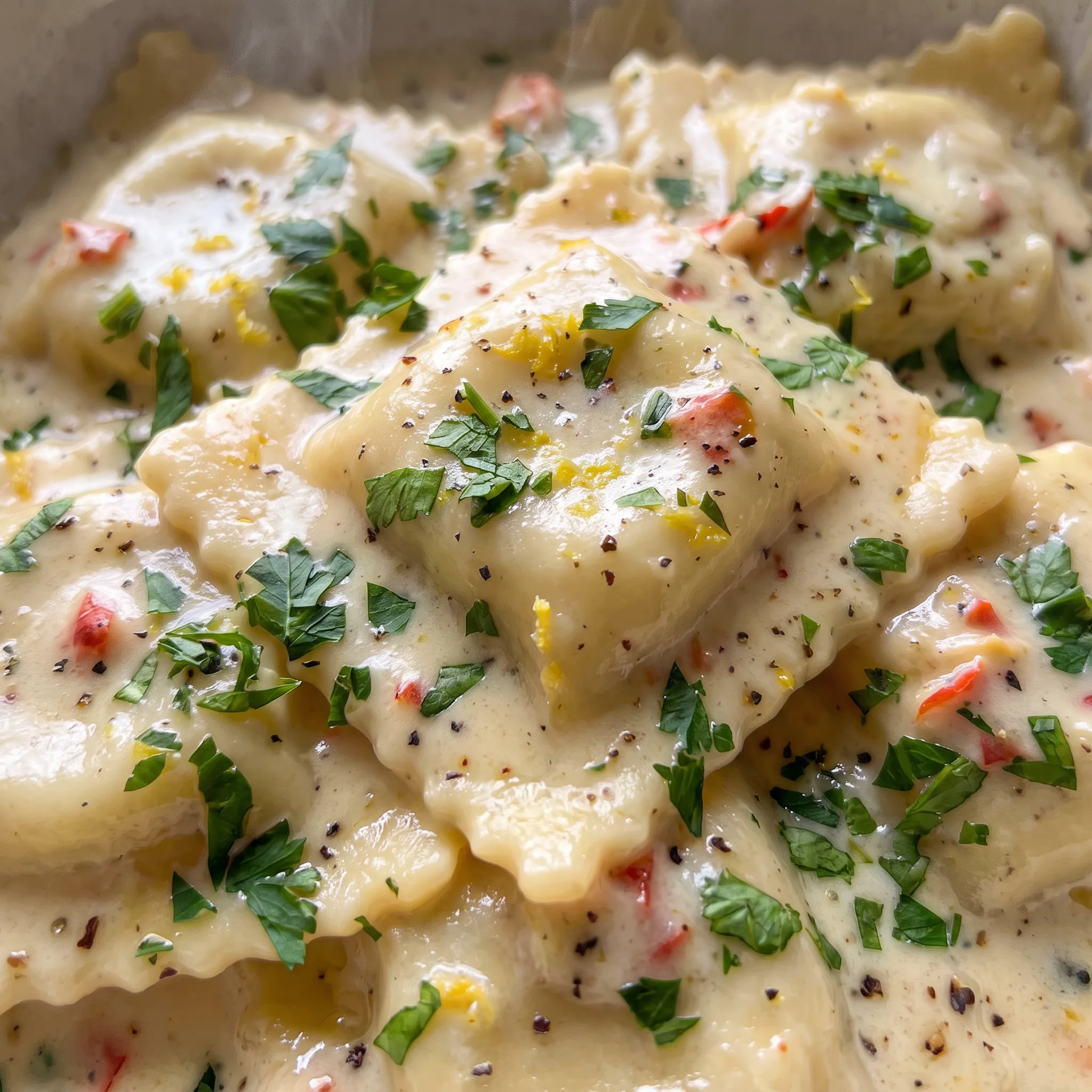
What to Buy and How It Should Look
Costco Lobster Ravioli: One 1 lb package; thin wrappers and soft lobster filling mean they cook in 3 to 4 minutes, so check the date and keep them cold until the water boils.
Heavy cream: One cup of actual heavy cream, not half-and-half or milk; lower-fat dairy will thin out and can separate when it hits the Parmesan.
Parmesan cheese: ½ cup grated from a block; pre-shredded bagged cheese is coated with starch and won’t melt smoothly into the cream.
Red pepper flakes: ½ tsp is optional; they bring heat that cuts the cream, but stale flakes taste like dust, so smell them first.
Fresh parsley: 2 tbsp chopped, plus more for garnish; flat-leaf holds up better than curly and won’t taste like grass if you dry it well.
Judging the Sauce, the Pasta, and the Toss
When the garlic is done and not a second later
Garlic goes from pale gold to bitter in the time it takes to glance away. At 30 seconds, it should smell sweet and fill the pan. If it darkens past light brown, the sauce will taste acrid and there’s no fixing it.
Pull the pan off the heat and start over if you catch it early; otherwise, the whole batch is compromised.
Reading the cream’s thickness before the cheese goes in
The cream needs 2 to 3 minutes of simmering to lose its raw edge and thicken enough to hold the Parmesan. Look for it to coat the back of a spoon without running off.
If it’s still watery, the cheese will sink and clump. If it’s too thick, the sauce will seize when the cheese hits. Adjust with a splash of cream or a tablespoon of pasta water before you stir in the cheese.
The moment the ravioli are done, not a minute more
These ravioli cook in 3 to 4 minutes. The wrapper turns from opaque to translucent, and the edges soften. If you wait until they float, they’re already past done and may split.
Lift one out with a slotted spoon and pinch the edge; it should give slightly but not tear. Overcooked, they’ll break in the skillet and cloud the sauce.
Tossing without breaking the filling
Once the ravioli are in the skillet, use a gentle folding motion, not a stir. The sauce should coat each piece without tearing the wrapper. If you see filling start to leak, stop tossing and just spoon sauce over the top.
The goal is whole ravioli on the plate, not a creamy pasta scramble.
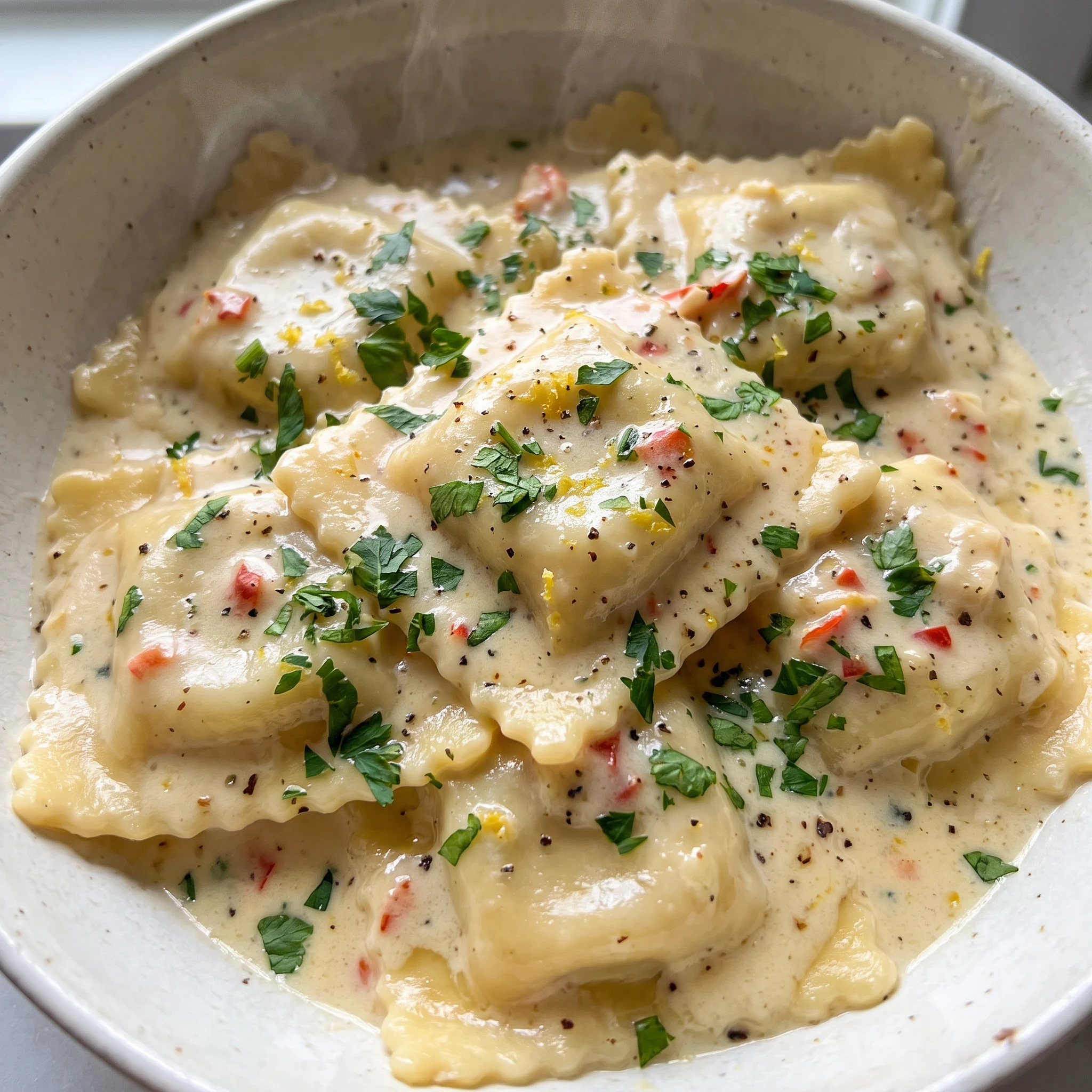
Creamy Lobster Ravioli with Parmesan Sauce
Ingredients
Method
- Heat a large pot of salted water until it reaches a gentle boil. Slide in the lobster ravioli and cook following the package directions, typically 3–4 minutes; since these ravioli are delicate and cook rapidly, take care not to overcook them or they may break apart. Lift them out using a slotted spoon and set them aside. Keep approximately ½ cup of the pasta cooking liquid to adjust the sauce thickness later if necessary.
- In a large skillet over medium heat, combine the butter and olive oil until the butter melts; this mixture keeps the butter from scorching while adding a rich flavor. After melting, stir in the minced garlic and red pepper flakes. Cook for roughly 30 seconds, stirring continuously until aromatic; avoid letting the garlic take on too much color—it should be just golden and fragrant.
- Turn the heat down to low and gradually introduce the heavy cream, stirring as you pour. Let it simmer for 2–3 minutes to thicken a bit. Stir in the grated Parmesan cheese until it fully incorporates into the sauce. Add salt, black pepper, lemon zest, and lemon juice; the lemon lifts the flavors and cuts through the cream’s richness.
- Carefully transfer the cooked lobster ravioli into the skillet, tossing gently to coat each piece evenly. If the sauce seems too thick, stir in the reserved pasta water, 1 tablespoon at a time, until it reaches the consistency you prefer.
- Scatter the freshly chopped parsley over the ravioli and finish with additional Parmesan cheese. Serve right away while hot.
Leftover Lobster Ravioli: Eat It Today, Store It Right
This dish is at its best straight from the skillet. The cream sauce is loose and glossy, and the ravioli are tender but intact.
Once it cools, the sauce thickens and the pasta keeps drinking it up. Leftovers are still worth eating, but you’re reheating, not recreating. Put what you don’t finish in a shallow container and get it into the fridge within an hour.
It holds for two days, maybe three, but the ravioli soften each day and the sauce loses its shine. Reheat gently on the stovetop over low heat with a splash of water or cream, stirring only until the sauce loosens. The microwave works in a pinch, but it heats unevenly and can toughen the edges.
Don’t freeze it. The cream will separate and the wrappers will break down. If you have extra parsley or Parmesan, add it after reheating, not before, so it stays fresh.
What You Can Swap and What You Shouldn’t Touch in Lobster Ravioli
Costco Lobster Ravioli: There’s no good stand-in for the star here. A different brand or a homemade version will have its own wrapper thickness and filling, so the 3 to 4 minute cook time won’t apply. If you must use another fresh lobster ravioli, start checking at 2 minutes: pull one out and pinch the edge.
It should give slightly but not tear. For a completely different route, cheese ravioli or mushroom ravioli will work, but the sauce was built around sweet lobster, so expect a milder, less briny result.
The delicate wrapper and soft lobster filling are why these cook so fast and why you lift them with a slotted spoon. A sturdier ravioli can take a rougher toss, but the sauce may need a splash more pasta water to cling.
The flavor shift is real: you lose the sweet seafood note that plays against the lemon and cream.
Heavy cream: Half-and-half or whole milk will thin the sauce and can separate when the Parmesan goes in. If you’re set on using them, start with the same 1 cup and expect a looser sauce; you may need less pasta water later. For a dairy-free version, canned coconut milk (full-fat) will thicken similarly, but it brings a distinct coconut taste that competes with the lobster.
A better dairy-free option is unsweetened oat cream or cashew cream, though neither will thicken quite like dairy cream. Start with 1 cup and simmer a minute longer if needed.
Lower-fat dairy makes a sauce that coats less and tastes leaner, so the lemon and Parmesan have to work harder. Coconut milk makes a richer, tropical sauce that can overwhelm the lobster. Oat or cashew cream gets you closer in texture but may need a touch more Parmesan to round out the flavor.
Parmesan cheese: Pecorino Romano is sharper and saltier, so use ⅓ cup instead of ½ cup and taste before adding the ½ teaspoon of salt. Grana Padano is milder and melts similarly; keep the same ½ cup. For a dairy-free sauce, nutritional yeast (2 tablespoons) plus a pinch of salt can mimic some of the savory note, but it won’t melt into the cream the same way.
If you use a plant-based Parmesan alternative, start with ½ cup and stir until smooth; some brands need a little extra pasta water to incorporate. Pecorino brings a sharper bite that can overshadow the lobster if you’re heavy-handed.
Grana Padano is softer, so the sauce tastes less assertive. Nutritional yeast adds a tangy, cheesy flavor but leaves a slightly grainy texture unless you whisk it in well. Plant-based alternatives vary widely; some melt smoothly, others stay gritty.
Fresh parsley: Basil or chives can step in. Use the same 2 tablespoons chopped for either.
Basil adds a sweeter, more aromatic note that works with the lemon, while chives bring a mild oniony edge. Dried parsley is a poor substitute here: 1 teaspoon dried for 2 tablespoons fresh, but it tastes dusty and won’t give the fresh pop.
If you’re out of herbs, skip the garnish altogether rather than force a bad match. Basil makes the dish taste more Mediterranean and can slightly overpower the lobster if you use too much. Chives keep the color but add a gentle allium flavor that some people prefer.
Dried parsley mostly disappears, so you lose the fresh, grassy lift that cuts through the cream.
Tips
- Taste the sauce for salt only after the Parmesan has fully melted in. The cheese carries its own salt, and a half cup stirred into one cup of cream adds a good amount before you ever reach for the shaker. If you salt right after the cream thickens, you’re seasoning a sauce that doesn’t exist yet, and the ½ teaspoon measure will push it past where you want it. Wait until the Parmesan is smooth, then taste and add salt in small pinches.
- Grate the Parmesan on a Microplane or the smallest holes of a box grater rather than buying it pre-shredded or grating it coarse. Fine shreds melt into the cream in seconds with just a stir, while coarse shreds sit in the sauce and leave you stirring longer than the 2 to 3 minute simmer allows, which overcooks the garlic and tightens the sauce. Fine grating also means the cheese dissolves before the sauce has a chance to reduce too far.
Frequently Asked Questions
Can I make creamy lobster ravioli ahead of time?
You can prep the components ahead, but keep them separate until the last minute. The sauce thickens as it cools, and the ravioli keep drinking it up, so a fully assembled dish sits heavy and the wrappers soften. Boil the ravioli, toss them with a little oil so they don’t stick, and refrigerate.
Make the sauce, cool it, and store it covered. When you’re ready to eat, warm the sauce gently, add a splash of water or cream to loosen it, then fold in the ravioli just long enough to heat through.
Why did my lobster ravioli fall apart in the sauce?
Most likely you overcooked them before they ever hit the skillet. These wrappers are thin and the filling is soft, so they go from done to splitting in under a minute. Check one at 3 minutes by pinching the edge; it should give slightly but not tear.
If they’re already fragile, treat them like dumplings in the pan: spoon sauce over the top instead of tossing. Also, if the sauce is too thick, it’ll grab and tear the pasta, so thin it with pasta water before adding them.
How is this different from traditional lobster ravioli?
Traditional versions often use a heavier tomato or cream sauce and thicker pasta, but this one leans on a light Parmesan cream with lemon to keep the lobster forward. The ravioli themselves are store-bought and thin, so they cook in 3 to 4 minutes, not the 8 to 10 a dried or handmade version might need.
That means the sauce has to come together fast, and the whole dish is on the table in about 12 minutes. It’s built for a weeknight, not a project.
