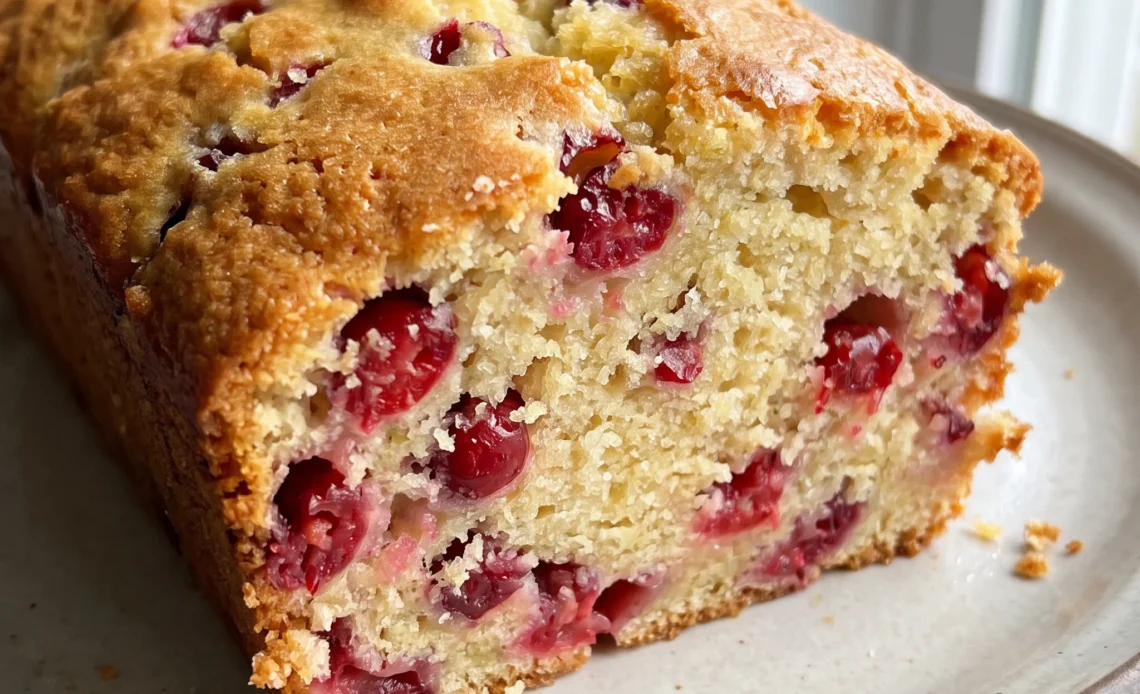
Cranberry lemon bread lives or dies on what the fruit does in the oven, and twelve ounces of it against a small measure of flour is a lopsided ratio that scares off most bakers. Berries that go in thawed leak their water and color, and the crumb around them turns loose and sad. Still frozen, they hold long enough for the batter to set, then collapse into pockets of tart juice.
Lemon does the rest, keeping all that sourness from running in one direction. The loaf straddles quick bread and fruit cake, and it cuts clean only after it has cooled.
Warm, it smears. That’s a tradeoff worth knowing before you start.
A Cranberry-Dominant Loaf
Twelve ounces of cranberries against 180 grams of flour is the whole story. The fruit weighs nearly as much as the dry base, so it sets the character of every slice.
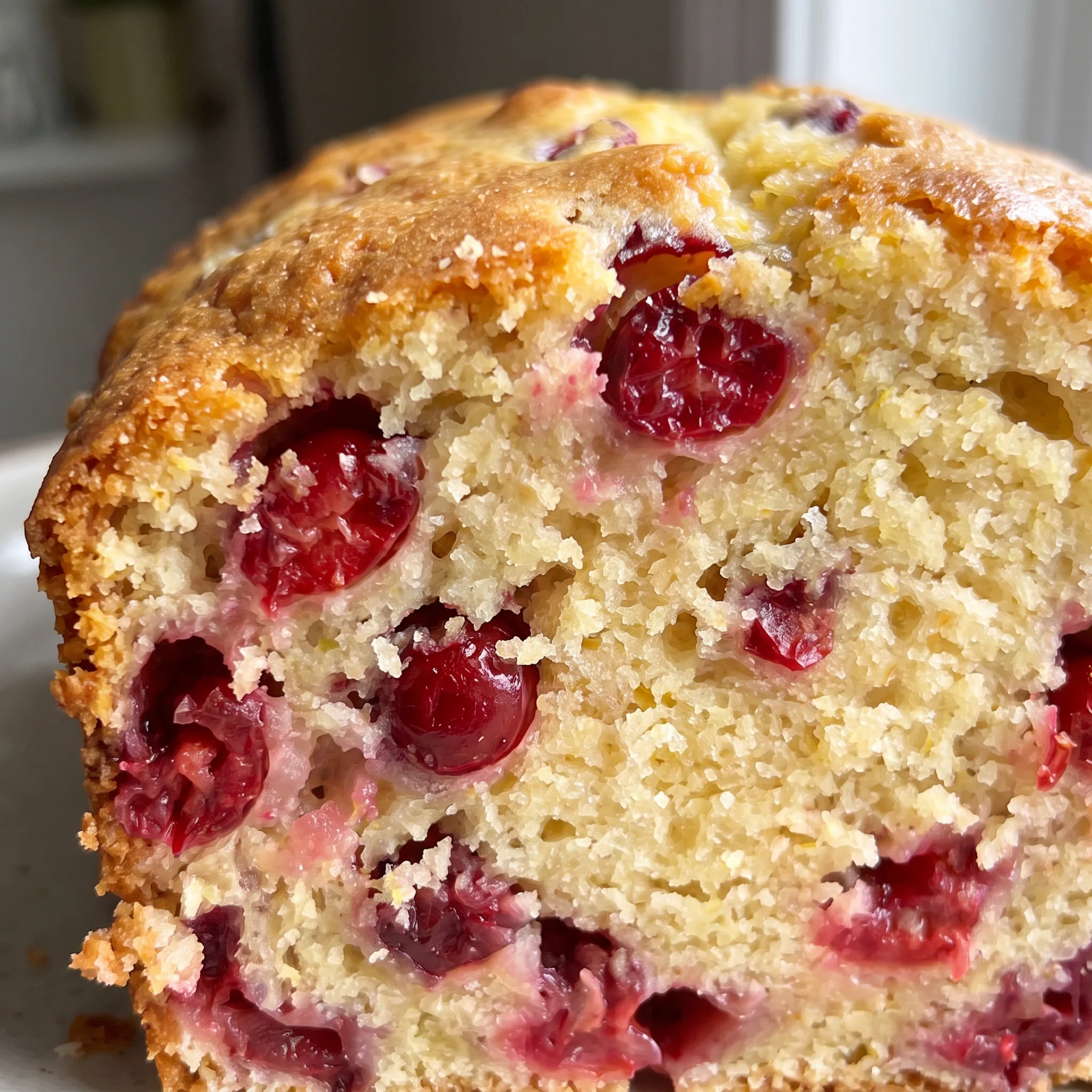
You get jammy pockets where berries collapse and release their juice, surrounded by tender cake that tastes more of lemon and butter than of sugar alone. Frozen berries work without any fuss, but they must go into the batter still frozen.
Thawed, they bleed their color and water into the mix, and you end up with a streaky, loose crumb instead of distinct fruit. The zest and juice are measured to sharpen the cranberry’s edge rather than cover it. Each bite should land tart first, then soften into the loaf.
That push and pull is what keeps this from being a plain sweet bread with a few red dots.
Zest and Juice Do Different Jobs
Lemon appears twice here, and the two forms are not interchangeable. Zest carries the oils that survive the oven and rise off the top of the loaf when you slice it, a bright citrus lift that juice alone cannot give.
Juice brings liquid and acid, which tenderizes the crumb and keeps the texture from turning tight and bready. The ratio, 2 tablespoons of zest to 4 tablespoons of juice, is set on purpose.
More zest would turn bitter against the cranberries; more juice would slacken the batter and leave the center gummy. That acid also gives the baking powder something to work with, so the loaf rises evenly instead of doming and cracking. When the bread cools, the lemon should read as a clear note above the fruit, not as a separate flavor fighting it.
Creaming for a Heavy Batter
Butter and sugar go first for a reason beyond tradition. Beating them creates air pockets that later help hold up 12 ounces of cranberries, which are dense enough to sink in a thin batter.
Eggs, lemon juice, and zest join the creamed butter before any flour, so the mixture stays smooth instead of curdling the way it would if acid hit the dairy all at once. From there, dry ingredients and milk alternate into the bowl, which keeps the batter from splitting once the lemon juice is already in.
A uniform base is what stops the berries from dropping to the bottom of the pan. When you fold the cranberries in by hand, they should stay suspended. If the batter looks broken or slick before the fruit goes in, the loaf will bake up greasy at the edges.
Why an 8×4 Pan
An 8×4-inch loaf pan is the size that lets a dense, fruit-loaded batter bake through without drying at the edges. The pan is deep and narrow, so the loaf sits tall and the interior stays moist during a long stay in the oven. Grease and flour matter here more than in a plain cake, because cranberry juice can weld the bread to the metal, and you will lose the bottom crust trying to free it.
In a wider pan, the batter would spread thin, the berries would hit the hot surface and scorch before the center set. The batter should fill the pan to about two-thirds, leaving room for rise.
If yours comes up higher, you are on your way to a loaf that mushrooms over the rim and bakes unevenly.
Quick Bread Meets Fruit Cake
This loaf sits somewhere between a quick bread and a fruit cake, and the texture shows it. The crumb is soft and a little dense, not airy like a muffin, because the cranberries take up so much room. During baking, they release steam and juice, leaving moist pockets that can make the loaf seem underdone if you cut it hot.
It is not. Give it time in the pan, then on a rack, and the crumb firms up around those pockets.
Lemon keeps the whole thing from reading as one long sour note. Sliced warm, it is tender and a bit fragile; cooled, it cuts clean and the flavor has settled. Eat it plain, or toast a slice and let the butter melt into the berry pockets.
What the Fruit and Lemon Ask of You
Cranberries: Frozen berries go in still frozen; anything thawed bleeds water and color into the batter and leaves the crumb streaky.
Lemon zest: Grate only the yellow peel, since the white pith underneath turns bitter against 12 ounces of tart fruit.
Lemon juice: Squeeze it fresh, because bottled juice tastes flat once the loaf cools and the cranberries dominate.
Butter: Softened means it dents under a finger but still holds its shape, so it creams with the sugar instead of greasing the bowl.
Whole milk: Skip skim here; the fat in whole milk keeps the crumb tender around all those berry pockets.
All-purpose flour: Spoon it into the cup and level off, since a packed cup adds enough flour to dry the loaf.
In this recipe, 12 oz of cranberries is nearly equal to the weight of the flour, so the fruit is heavy relative to the batter. If the butter and sugar are not beaten until pale and airy, the batter will not trap enough air to increase its viscosity and buoyancy. Without that air, the cranberries sink during baking, creating a dense, wet layer at the bottom and a dry, underfilled top.
Reading the Loaf Before It Cools
When the creamed butter is ready for the eggs
Butter and sugar need to go pale and visibly fluffy, not just combined. Stop at the point where the mixture still looks grainy and the eggs will slip instead of emulsify, leaving a slick, curdled base. You can rescue a split mix by adding a spoonful of the flour before the rest of the liquid, but the texture of the finished loaf will be tighter.
Two to three minutes on a stand mixer is the window.
The batter’s consistency before the cranberries go in
After the flour and milk alternate in, the batter should fall from the beater in a thick ribbon that briefly holds its shape on the surface. If it pours thin, the berries will sink and the loaf will bake up dense at the bottom. If it’s stiff and clumpy, the crumb will be dry.
A tablespoon of milk or flour can bring it back, but only if you catch it before folding.
Judging doneness by the toothpick, not the clock
At 60 minutes, a toothpick into the center should come out with a few moist crumbs, not wet batter. Because the cranberries release juice, a baked loaf can still look slightly damp around a pocket.
If the pick is coated in thick batter, give it another 5 minutes and check again. Overbaking past clean crumbs dries the edges and turns the fruit leathery.
Why the loaf must cool in the pan before turning out
Straight from the oven, the crumb is set but fragile, and the berry pockets are still molten. Invert it too soon and the bottom crust tears, leaving half the fruit stuck to the pan.
Let it sit in the pan until the sides pull away slightly and the pan is warm, not hot, to the touch. Then run a thin knife around the edge and turn it onto a rack.
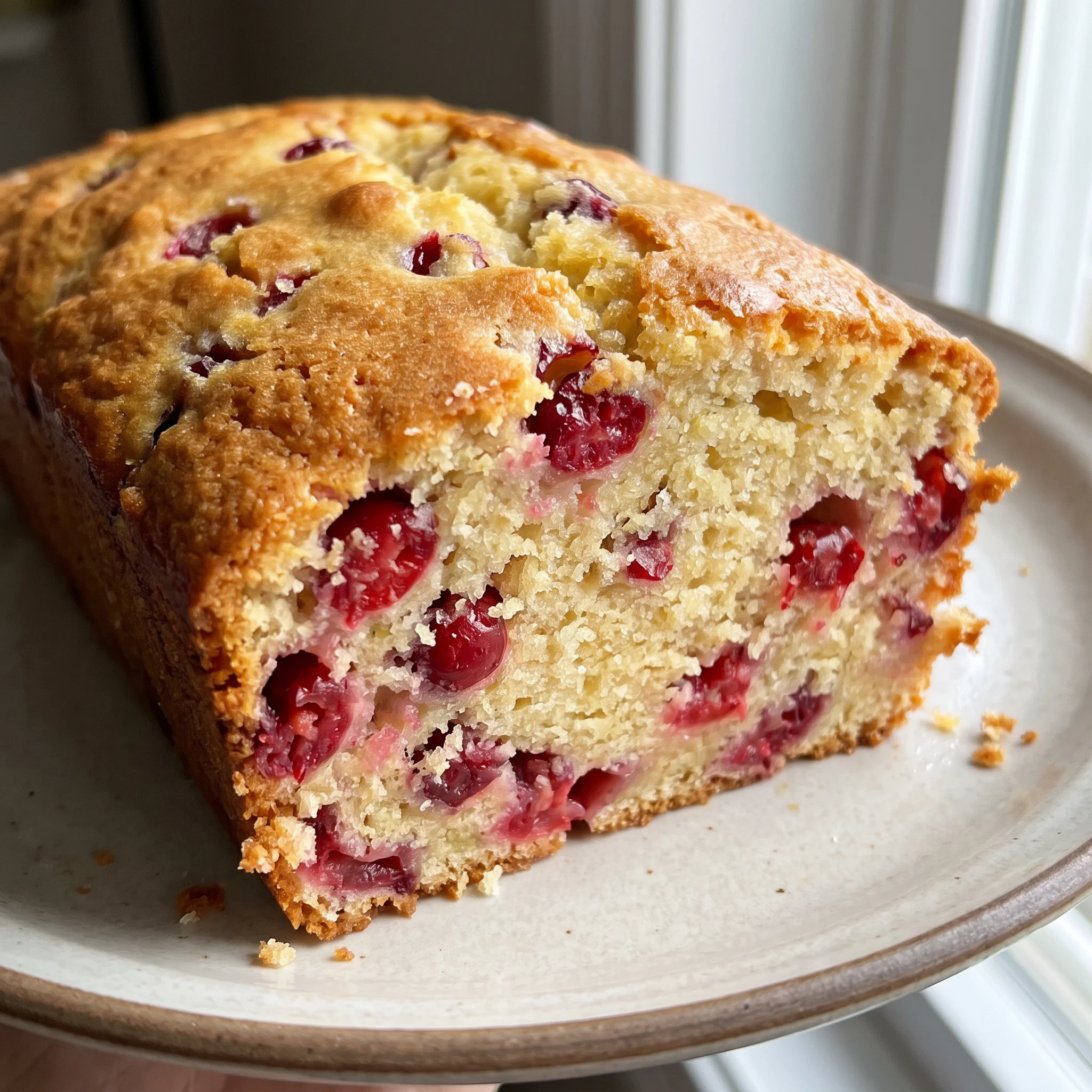
Cranberry Lemon Bread Loaf
Ingredients
Method
- Set oven to 350°F (175°C). Grease and flour an 8×4-inch loaf pan.
- Using a stand mixer, beat butter and sugar until pale and airy, about 2–3 minutes. Incorporate vanilla, lemon juice, lemon zest, and eggs; blend until uniform.
- In another bowl, whisk flour, salt, and baking powder. With mixer on low, add dry mixture alternately with milk, mixing until just incorporated.
- Fold in cranberries by hand until evenly distributed. Transfer batter to the pan and bake for 60 minutes, until a toothpick inserted in the center emerges clean.
Storing and Serving the Loaf
Cool the loaf completely before wrapping. The jammy cranberry pockets that keep it moist for days also make it fragile, so slicing while warm tears the crumb and smears those pockets.
Once set, wrap tightly in plastic or foil and leave at room temperature; the texture actually improves by the next day as the lemon and fruit settle. For longer keeping, refrigerate, but expect the crumb to firm and dry.
Slices hold a few days at room temperature, closer to a week chilled. Freeze only individual slices, well wrapped, for up to two months; the whole loaf doesn’t thaw evenly.
To serve from cold, let slices sit at room temperature or toast them, which softens the crumb and warms the berry pockets. The best eating window is the day after baking through the next two days.
Add any finishing touch, such as a glaze or butter, only after the loaf is fully cool, never before.
Tips
- Toss the cranberries with about 1 tablespoon of the whisked flour mixture before folding them in. The starch coats the berries and gives the batter something to grip, so they stay suspended instead of sinking to the bottom of the pan. With 12 ounces of fruit against only 1 1/2 cups of flour, the batter is already crowded, and this small step keeps the fruit evenly spread through every slice.
- Bake the loaf on the middle rack with a sheet pan on the rack below it. The cranberries release a lot of juice, and the loaf can drip over the rim of an 8×4 pan during the 60 minutes in the oven. The lower pan catches the drips and keeps them from burning onto the oven floor, which saves you a scrubbing job later.
What Swapping Does to a Fruit-Heavy Loaf
Fresh cranberries: Frozen cranberries, used straight from the freezer. Frozen berries go in still frozen and need no adjustment in amount.
If you thaw them first, they release water into the batter and the loaf bakes up streaky and loose around the fruit. Frozen berries hold their shape a little longer in the oven, so you get distinct pockets instead of pink streaks.
Whole milk: Buttermilk or oat milk, same 3/4 cup. Buttermilk adds acid that tenderizes the crumb and sharpens the lemon, though the loaf may brown a touch faster.
Oat milk works but brings less fat, so the crumb around the cranberries can feel drier. If you use a thinner plant milk, expect a slightly tighter texture.
Start with the same 3/4 cup the recipe calls for and adjust only if the batter looks too thin before folding.
All-purpose flour: A gluten-free flour blend, same 1 1/2 cups. A one-to-one gluten-free blend will bake, but the loaf comes out denser and more crumbly, and the cranberries weigh it down more.
The crumb won’t have the same tender chew. If you go this route, let the loaf cool completely before slicing, or it will fall apart at the berry pockets. Don’t add extra liquid unless the batter is stiff; gluten-free blends absorb differently.
Unsalted butter: No swap worth making. Butter does the structural work here, creaming with sugar to trap air that holds up 12 ounces of cranberries.
Margarine or a spread with a high water content will leave the batter slack, and the berries sink. Coconut oil can work but makes the loaf greasy at the edges and the crumb heavy. Keep the butter.

Frequently Asked Questions
Can I use frozen cranberries without thawing them first?
Yes, and you should. Thawed berries bleed water and color into the batter, so the crumb turns streaky and loose around the fruit; still-frozen berries hold their shape a bit longer in the oven, which gives you distinct jammy pockets instead of pink smears. The 12 ounces goes in straight from the freezer, no adjustment in amount.
Toss them in frozen and fold by hand just until they’re evenly scattered.
Why did my cranberry lemon bread sink in the middle?
The most likely cause is undercreaming the butter and sugar. If that mixture never went pale and visibly fluffy, it can’t trap enough air to hold up 12 ounces of cranberries, and the center caves as it cools. Two to three minutes on a stand mixer is the window; stop before that and the batter never gets the structure it needs.
A secondary check is the batter’s consistency before the fruit goes in: it should fall from the beater in a thick ribbon that briefly holds its shape. If it poured thin, the berries sank and dragged the middle down with them.
How far ahead can I make this bread, and does it taste better the next day?
Make it a day ahead if you can. The texture improves by the next day as the lemon and fruit settle, and the best eating window runs from the day after baking through the next two days.
Cool it completely first, then wrap tightly in plastic or foil and leave at room temperature; don’t slice while warm or you’ll tear the crumb and smear those jammy pockets. Slices hold a few days at room temperature, closer to a week chilled, and freeze individually for up to two months.
What’s the difference between this and a classic cranberry orange bread?
The citrus changes the whole read of the loaf. Orange rounds off the cranberry’s tartness and blends into it, while lemon sits above the fruit as a clear, sharp note that keeps each bite from turning into one long sour stretch. The proportion here is 2 tablespoons of zest to 4 tablespoons of juice, measured to sharpen the cranberry’s edge rather than cover it.
You should taste tart first, then the lemon lift, then the softening crumb. It’s a leaner, more pointed flavor than the orange version.
Should I serve this bread warm or at room temperature?
Room temperature, or toasted if you want it warm. Sliced hot, the crumb is tender and a bit fragile, and the berry pockets are still molten, so it smears instead of cutting clean. Cooled, the loaf cuts neatly and the lemon and fruit have settled into place.
If you want it warm, toast individual slices rather than reheating the whole loaf; that softens the crumb and warms the pockets without wrecking the structure. Add butter or a glaze only after the loaf is fully cool.
