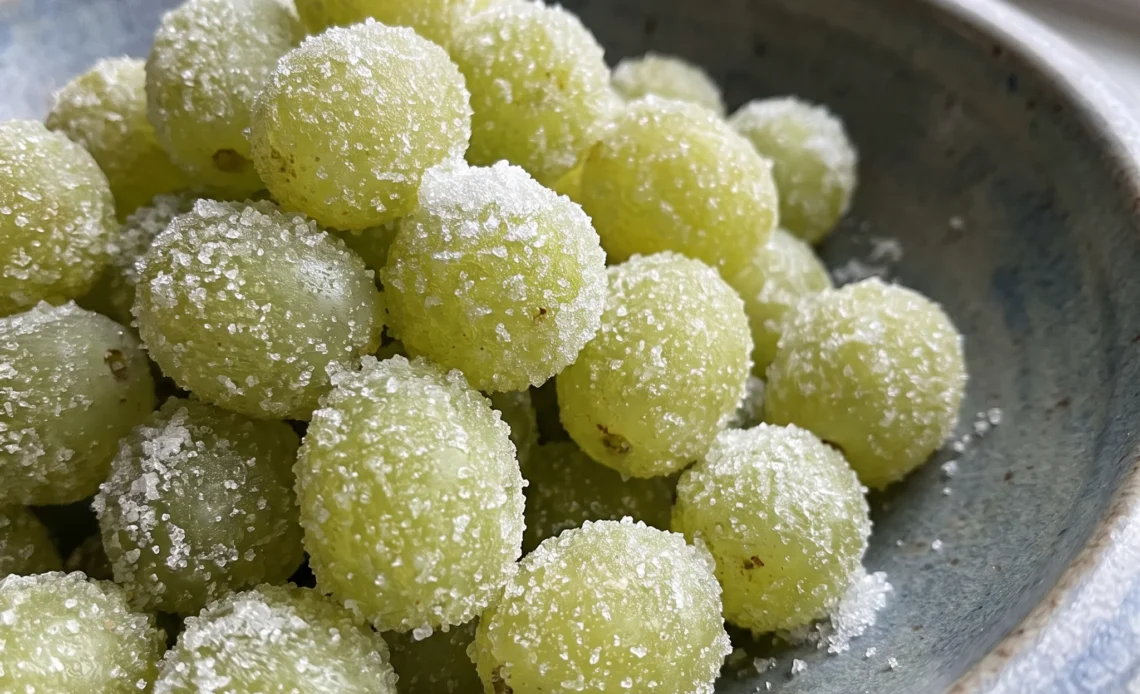
A frosted grape that cracks between your teeth, then gives way to something cold and firm at the center, is a texture you can’t rush. The overnight champagne soak does the work here, and it’s slow, quiet work: the wine tightens the skins while the cold keeps them from going soft. What surprises cooks is how narrow the window gets once the sugar goes on.
A damp grape sheds its coating in clumps; one left too dry wears it in patches. The finished champagne grapes look best right after they come out of the freezer, when the crust is dry and matte, and they lose that fast.
Knowing which stage matters most, and how the texture shifts when it slips, is what separates a frosted bite from a sticky one.
Why Does an Overnight Soak Change the Grape?
Soaking grapes in champagne for a full day isn’t only about picking up flavor. The alcohol and acid in the wine work on the skins and the flesh underneath. They firm up the outer layer, so the grapes hold their shape instead of collapsing into soft spots.
Skip that long rest and you get two problems: the grapes stay too plain, or they drink up so much champagne that each one tastes like a shot. Refrigeration matters too. Cold slows the exchange, so the grapes take on flavor without turning wrinkly.
After a good soak, they look plump and feel slightly taut when you press one. That texture is what makes the final dessert worth the wait.
The Sugar Coating Race
Wet grapes and dry sugar are not friends. The second the two meet, the clock starts: sugar clings where the champagne still glistens, and slides off where it doesn’t. Drain the grapes well, but don’t pat them bone dry.
A little moisture left on the skin gives the sugar something to grab. Work with one handful at a time, because a big pile steams up and the sugar turns clumpy.
Small batches mean each grape gets rolled in loose sugar before the surface dries. You’ll see a thin, even crust form, not a patchy dusting.
That crust is what later cracks under your teeth, giving way to a cold burst of grape. Rush it, and you get bald spots and sticky clumps.
Slow down, and the coating looks like frost.
What Freezing Does to the Sugar Shell
Freezing isn’t about keeping the grapes longer. It’s about turning the sugar coating from a gritty dust into a thin, glassy shell.
The cold sets the sugar against the skin, and the grape itself firms up like a soft sorbet. You won’t get a solid ice cube, because the sugar and the bit of alcohol left in the flesh lower the freezing point. They stay slightly yielding, not rock hard.
Texture changes with temperature: frozen gives you a crackly shell and a firm center, refrigerated is softer but still coated, and room temperature turns the sugar back to a wet sparkle. Pull them when the coating looks dry and matte, before ice crystals form inside. That’s when they taste best.
Does the Champagne You Pick Matter?
Brut champagne works better here than a sweet one. The dry, acidic bite cuts through the sugar coating, so each grape tastes bright instead of cloying.
A sweeter sparkling wine would push the whole thing into candy territory. Grape variety matters too. Red grapes give a deep, almost jewel-like look under the sugar, while green grapes stay pale and let the champagne flavor come forward.
Either works, but the contrast changes. Sugar isn’t just a coating. It balances the acidity and pulls out the grape’s own sweetness, so the final bite feels juicy, not sour.
Choose a champagne you’d drink on its own. If it’s too sweet to sip, it’s too sweet to soak. The grapes take on whatever you pour.

What to Look For Before the Grapes Hit the Bowl
Grapes: Buy 3 cups of firm, unblemished grapes, since soft spots turn worse after a 12-hour soak.
Champagne: Use 1 cup of brut, because a sweet sparkling wine pushes the soaked grapes into candy territory.
White granulated sugar: Reach for 3 tbsp of fresh, lump-free white granulated sugar so the coating clings in a thin, even crust.
How to Tell When the Grapes Are Ready at Each Stage
Judging the end of the soak
After 12 hours in the fridge, pull one grape and press it. It should feel slightly taut, not soft or wrinkled. If it gives easily, the champagne has gone too far and the grape will taste boozy.
You want plumpness with a little resistance. If they’re still firm and plain, they need more time. Check a few, since grapes vary in size.
The right texture means flavor has penetrated without turning the flesh to pulp.
Draining without drying
When you drain the grapes, shake the strainer just until no champagne streams off. You want them glossy but not dripping. If they’re too wet, sugar will slide off in clumps; if too dry, it won’t stick at all.
The surface should look damp, like a peeled apple. If you overshoot and they dry, a quick dip in the reserved champagne brings back the tack. This is the moment that decides whether the coating will be even.
Coating in small batches
Work with one handful at a time. As you toss, watch for a thin, even layer of sugar to cling.
If the sugar starts to look wet or clumpy in the bowl, stop and dump it out; the moisture from the grapes has overwhelmed it. Fresh sugar keeps the coating crisp. The grapes should look frosted, not patchy.
Any bald spots won’t get sugar later, so take the extra second to roll each one.
Freezing to the right texture
Two hours in the freezer sets the coating without turning the grapes into ice. Check at the two-hour mark: the sugar should look dry and matte, and the grape should feel firm but not rock hard.
If you leave them longer, ice crystals form inside and the texture gets icy. If they’re still soft, give them more time. The goal is a crackly shell around a slightly yielding center.
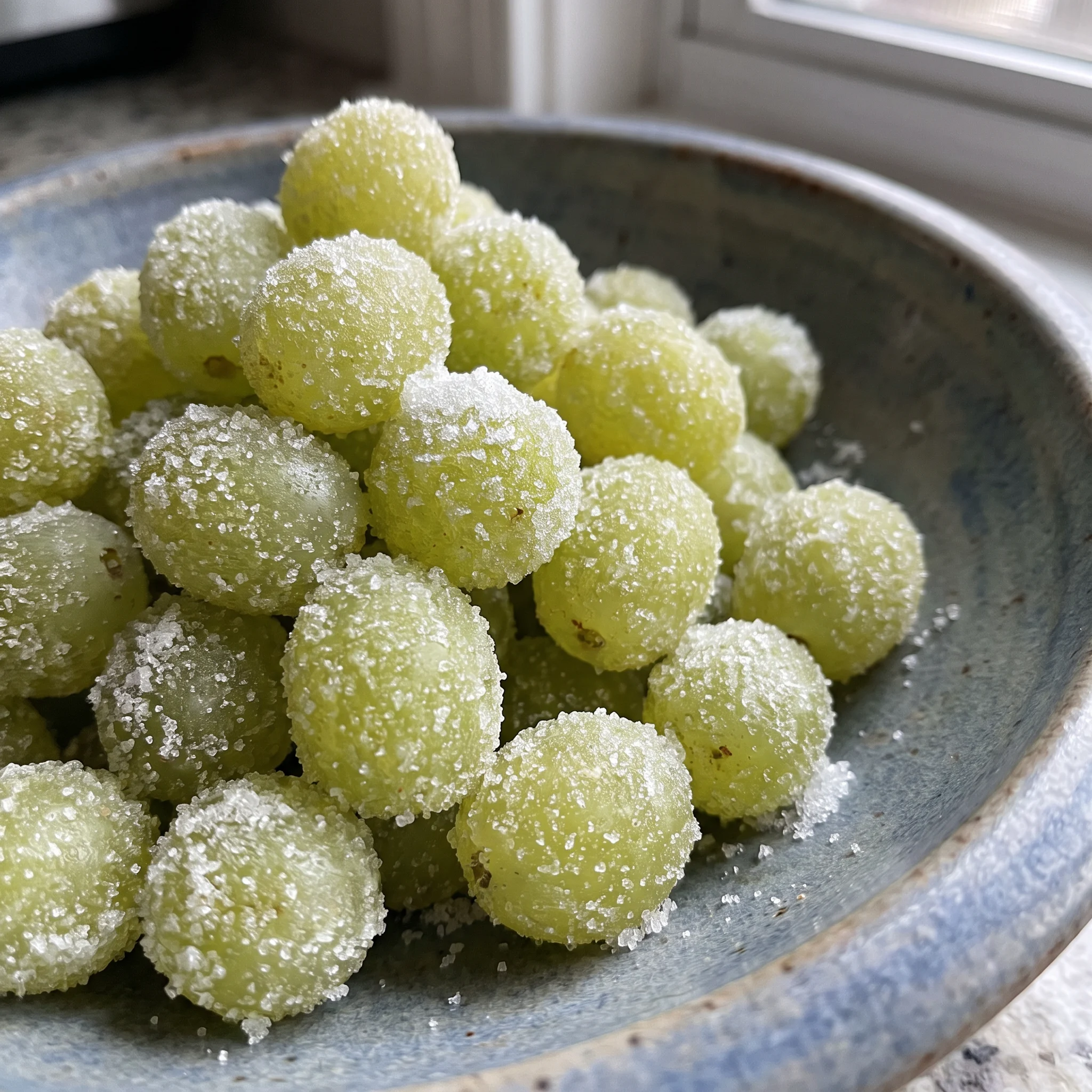
Champagne Grapes Coated in Sugar
Ingredients
Method
- Put grapes into a medium bowl. Pour champagne on top. Cover and refrigerate overnight or 12 hours.
- Take out of refrigerator and drain grapes with a strainer.
- Put sugar into a small bowl. Using one handful at a time, coat grapes by tossing in sugar. A powdered sugar spoon is not required, but makes this process less messy. Shake off excess and move to a bowl, platter, or baking sheet. Repeat.
- Freeze 2 hours, refrigerate, or serve at room temperature.
Storage, Serving Window, and How the Sugar Shell Holds Up
Eat these the day you coat them. The sugar crust is at its best within a few hours of the two-hour freeze, when it’s dry, matte, and crackly. After that the shell starts pulling moisture from the grape underneath, and by the next day it looks wet and sparkly instead of frosted.
You can still eat them, but the crunch is gone.
Keep leftovers in a single layer in a lidded container in the fridge. They hold there for about two days before the coating turns syrupy and the grapes soften. Don’t stack them; the sugar rubs off where they touch.
To bring back some snap, spread them on a sheet pan and freeze for 30 minutes. That dries the surface and firms the center without redoing the whole chill. Serve straight from the freezer for the crackliest bite, or let them sit 10 minutes for a softer shell.
Skip the counter for long stretches; room temperature undoes the coating fastest.
Tips
- Before sugaring, roll the drained grapes across a clean kitchen towel just until the surface is tacky rather than shiny. Leaving a little champagne on the skin gives the sugar something to grip, but a fully wet grape lets the crystals slide into the bowl instead of building a shell, so you end up using more than 3 tbsp and getting a patchy crust.
Where Swapping Helps and Where It Backfires
Champagne: A dry sparkling wine like brut cava or prosecco, or non-alcoholic sparkling cider for a booze-free version. Keep the same 1 cup. Brut cava or prosecco brings similar acidity and bubbles, so the grapes taste bright, not sweet.
Non-alcoholic cider lacks alcohol, so the grapes won’t firm up as much during the soak; they’ll be a bit softer, and the flavor leans fruitier. Both work, but the texture shifts slightly.
Grapes: Firm seedless red or green grapes. Avoid mushy or overripe ones.
Red grapes give a deeper color and a slightly more intense, wine-like flavor after soaking. Green grapes stay pale and let the champagne come through more clearly. Either way, use 3 cups.
Soft grapes break down in the champagne and turn wrinkly; you want ones that feel taut when you press them.
White granulated sugar: Coarse sanding sugar for a crunchier coat, or leave it out entirely if you want to skip the sugar. Sanding sugar’s larger crystals create a thicker, more crackly shell that holds up better in the freezer. If you skip the sugar, the grapes will still taste of champagne but won’t have that sweet, frosted contrast.
The coating also helps balance the acidity; without it, each bite is more tart.
After a long champagne soak, the grape surface is slick with liquid. If the grapes are not drained well, that liquid immediately dissolves the sugar, turning it into a sticky syrup that slides off instead of clinging. The result is a patchy, clumpy coating rather than a uniform crust.
Frequently Asked Questions
Can I soak the grapes for less than 12 hours?
You can pull them early, but you’ll notice the difference when you press one. At 12 hours the grape feels plump and slightly taut, and the champagne has worked its way in without leaving a boozy hit.
Cut it to a few hours and you’re mostly soaking the skin; the flesh stays plain and the whole thing tastes like a grape with a wine rinse. If you’re short on time, go ahead and drain at whatever hour you’ve got, but expect a milder result and don’t be surprised if the texture never firms the way a full overnight chill does.
Why are my champagne grapes still wet and sticky after coating?
Most likely the grapes went into the sugar too wet, so the coating slid instead of clinging and left a syrupy film. Shake the strainer just until no champagne streams off, then work one handful at a time so the sugar stays loose. If the sugar in your bowl starts looking damp or clumpy, dump it and start with fresh; wet sugar can’t build a crust.
One more thing to check: if they sat out a while before you froze them, the surface pulls moisture back up and the frosted look goes shiny.
How far in advance can I make champagne grapes for a party?
Coat them the day you plan to serve, ideally within a few hours of that two-hour freeze, when the shell is dry and matte. The crust starts drawing moisture from the grape underneath, and by the next day it looks wet and sparkly instead of frosted, so the crunch you want is gone. If you need a head start, soak and drain the grapes ahead, keep them cold, and do the sugar coating close to serving.
Leftovers keep in a single layer in the fridge for about two days, and a 30-minute sheet-pan freeze brings back some snap.
