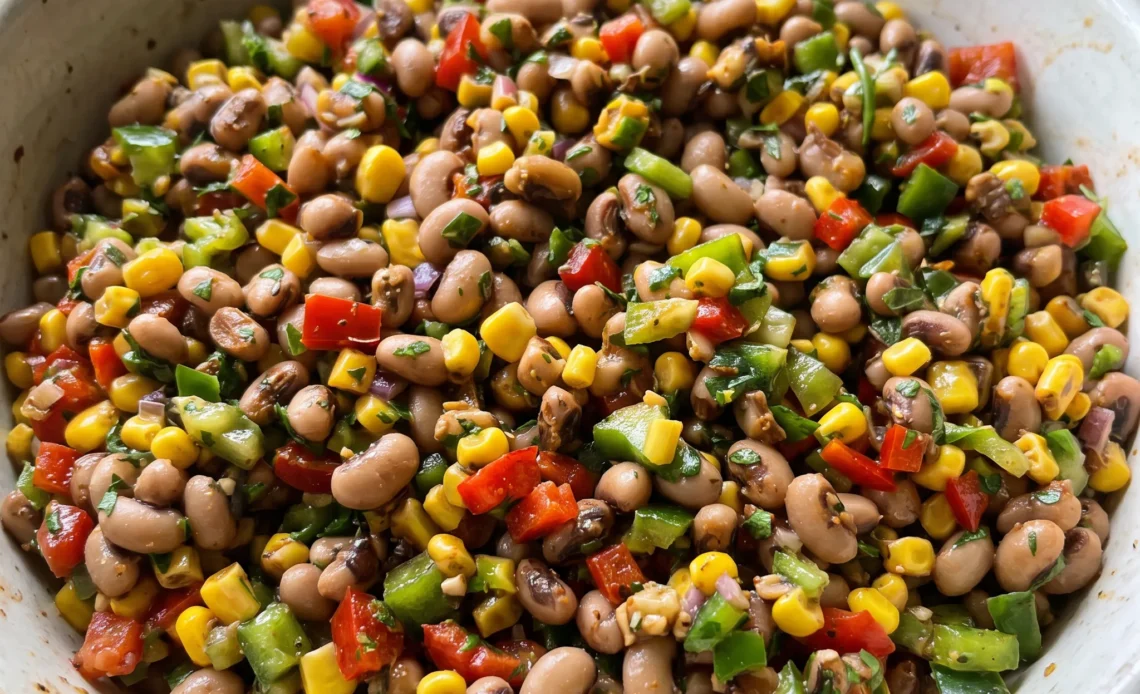
Canned black-eyed peas are already soft, so the salad’s texture lives or dies on how you treat everything around them. Rinse the peas and corn well and shake the colander dry: whatever liquid rides along turns the dressing thin and metallic at the bottom of the bowl.
Chop the peppers, onion, and jalapeño small enough that no piece outranks a pea, and the whole bowl eats as one thing instead of separate bites. The real margin for error sits in the dressing, where too much oil leaves a slick pool and too much vinegar makes you pucker.
This black-eyed pea salad is pantry work and one whisk, and it genuinely improves after a short rest, which is why it travels well to a cookout. Just don’t push that rest too far, or the peppers lose their snap.
Thirty Minutes in the Fridge Does Real Work
Thirty minutes in the fridge isn’t a suggestion. Right after mixing, the peas and corn sit in a loose coating, and each bite tastes like its separate parts.
During that half hour, the Creole seasoning, garlic paste, and vinegar soak into the peas and corn, so their flavor goes past the surface. The bell peppers and onion lose their raw sharpness and become softer, more integrated. The vinegar tames their bite, and they start tasting like part of the salad rather than crunchy add-ins.
When you pull the bowl out, you’ll notice the oil and vinegar have separated, with a shiny pool at the bottom. That’s natural.
Toss it again before serving, and the dressing re-coats every piece. Without that toss, the top of the salad tastes dry and the bottom tastes oily.
The salad should taste even, with no pool left behind. The chill time is what turns a pile of ingredients into a dish that eats as one thing.
A Dressing That Clings and Balances
Three tablespoons of olive oil to two of white balsamic vinegar gives you a dressing thin enough to coat but thick enough to stick. White balsamic brings mild acidity, so the vegetables keep their own flavor instead of getting drowned. Garlic paste disperses evenly through the dressing, leaving no hot pockets of raw garlic.
If you used minced garlic, you’d bite into a sharp chunk here and there, and the flavor would be uneven from spoon to spoon. The Creole seasoning already carries salt, pepper, and heat, so it does most of the seasoning work. Taste after tossing, and you’ll likely need only a pinch of salt, if any.
The dressing should look glossy and feel slightly thick, not watery. When you spoon it over the peas, it slides down and coats each one.
That coating is what carries the Cajun flavor into every bite. A dressing that’s too oily would sit on top, and too much vinegar would make you pucker.
This ratio keeps the salad bold but balanced, with the earthy peas and sweet corn still in charge.
Small, Even Pieces Make Every Spoonful Balanced
Finely dicing the bell peppers, onion, and jalapeño isn’t about looks. Small, uniform pieces mean no single vegetable takes over a bite.
If the peppers were cut in big chunks, you’d get a mouthful of crunchy pepper and miss the peas. The same goes for onion: a large piece would bring a sharp punch that drowns out the rest.
The deseeded jalapeño gives you controlled heat. Leaving the seeds in would add bitterness along with the burn, and that bitterness lingers.
Removing them keeps the heat clean and even.
Parsley needs to be chopped fine, too. When it’s left in big leaves, it acts like a salad green, and you taste parsley more than anything else. Chopped small, it distributes as a herb, adding freshness in every spoonful without taking over.
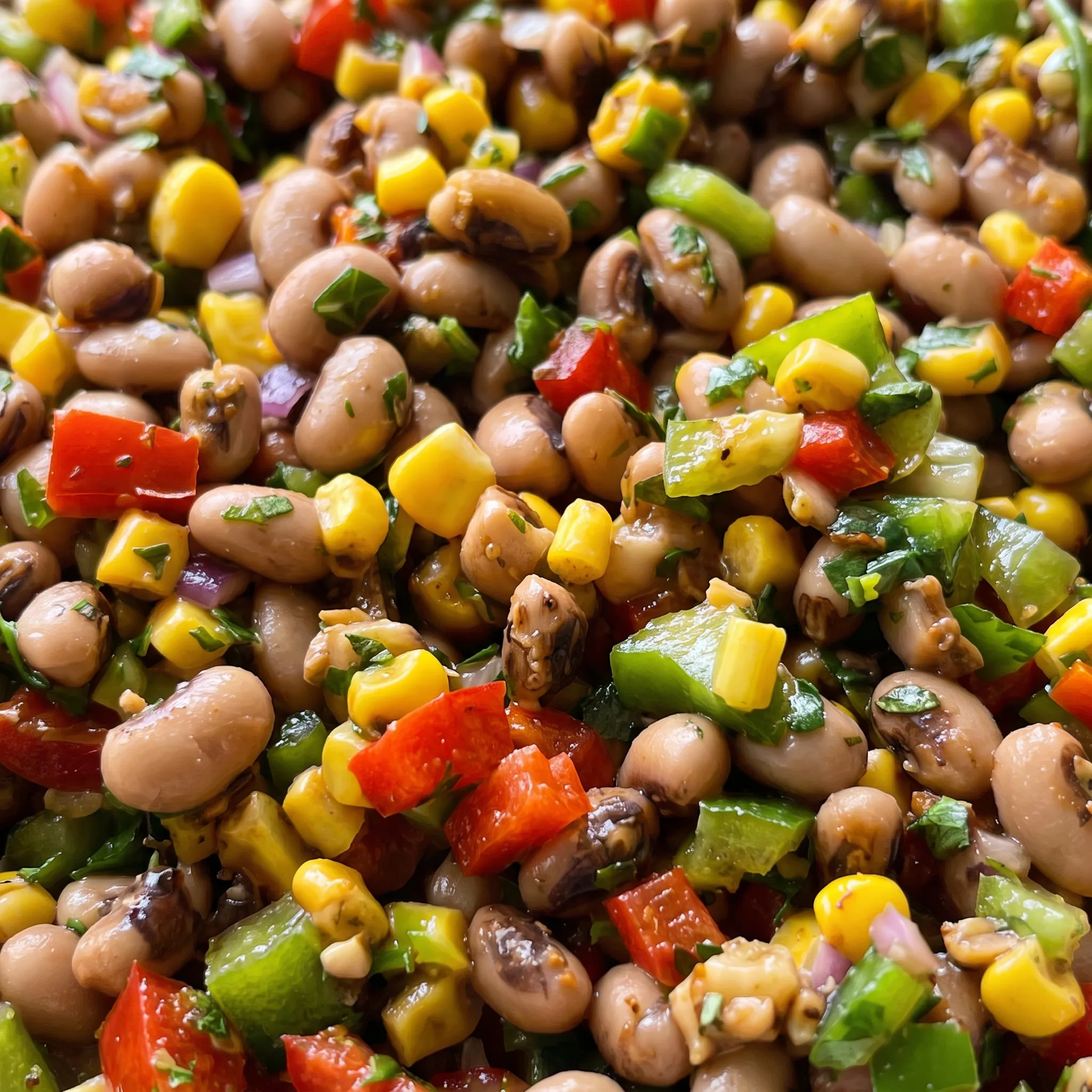
After you’ve mixed everything, the salad should look like a confetti of colors and textures, with no piece bigger than a pea. That’s when you know the balance is right. Each bite should taste like a little of everything.
The Southern Trio That Defines This Salad
Black-eyed peas, corn, and Cajun seasoning give this salad its character. The peas have a creamy, earthy flavor that absorbs the dressing, so they taste seasoned all the way through.
Corn adds bursts of sweetness that pop against the spicy jalapeño and Cajun seasoning. That back-and-forth between sweet and spicy keeps you coming back for another bite.
Raw bell peppers and parsley keep things bright and crunchy. They don’t cook or soften much, so they add a fresh snap that contrasts with the softer peas and corn.
When you taste it, the first thing you notice is the savory, slightly spicy note from the seasoning. Then the sweetness of the corn comes through, followed by the cool crunch of peppers.
The parsley lifts it all with a clean, green finish. This isn’t a heavy bean salad; it’s fresh and lively, with enough spice to wake up your palate. Serve it cold or at room temperature, and it holds up alongside grilled meats, fried chicken, or just a bag of tortilla chips.
The balance of creamy, sweet, and spicy is what makes it work.
What to Buy and How to Prep It
Black-eyed peas: Canned peas are already soft, so drain and rinse them well to wash off the canning liquid that tastes metallic.
Corn: Sweet whole kernel corn from a can brings pops of sweetness, but drain and rinse it so the salad doesn’t turn watery.
Jalapeño: A small jalapeño, deseeded and finely diced, gives controlled heat without the bitterness that seeds add.
Creole Cajun seasoning: This blend already carries salt, pepper, and heat, so it does most of the seasoning work for the salad.
Garlic paste: Garlic paste disperses evenly through the dressing, unlike minced garlic that leaves sharp chunks in some bites.
Judging the Mix, the Seasoning, and the Rest
Checking that the dressing coats without pooling
After you pour the oil, garlic paste, and vinegar over the peas, toss until every piece looks glossy. The dressing should cling lightly to the peas and corn, not leave a puddle at the bottom of the bowl. If it pools, you’ve added too much oil or not tossed enough.
Keep tossing, or add a spoonful of the peas to soak it up. The goal is an even, thin coating on everything, so each bite carries the garlic and vinegar.
Tasting for salt before the chill
The Creole seasoning already brings salt, pepper, and heat, so taste the salad right after you toss it with the dressing. You’re checking for two things: whether the salt level is right, and whether the heat from the jalapeño and seasoning is where you want it.
If it tastes flat, add a pinch of salt. If it’s too spicy, a squeeze of vinegar or a few more peas will calm it down. Adjust now, because the chill will mute the flavors slightly.
Knowing the chill time is for flavor, not just cold
Thirty minutes in the fridge lets the vinegar and seasoning soak into the peas and corn, and takes the raw edge off the onion and peppers. If you skip it, the salad tastes sharp and disjointed. But don’t leave it much longer than that before serving; after a few hours, the peppers start to lose their crunch.
The half hour is enough to blend the flavors while keeping the vegetables crisp. Set a timer if you’re prone to forgetting.
Re-tossing before serving to fix separation
When you pull the bowl from the fridge, you’ll see the oil and vinegar have separated, with a shiny pool at the bottom. That’s normal.
Toss the salad again until everything is evenly coated. Without that toss, the top tastes dry and the bottom tastes oily. After a good toss, the dressing should be back on every piece, and no pool should remain.
That even coating is what makes each spoonful taste the same.
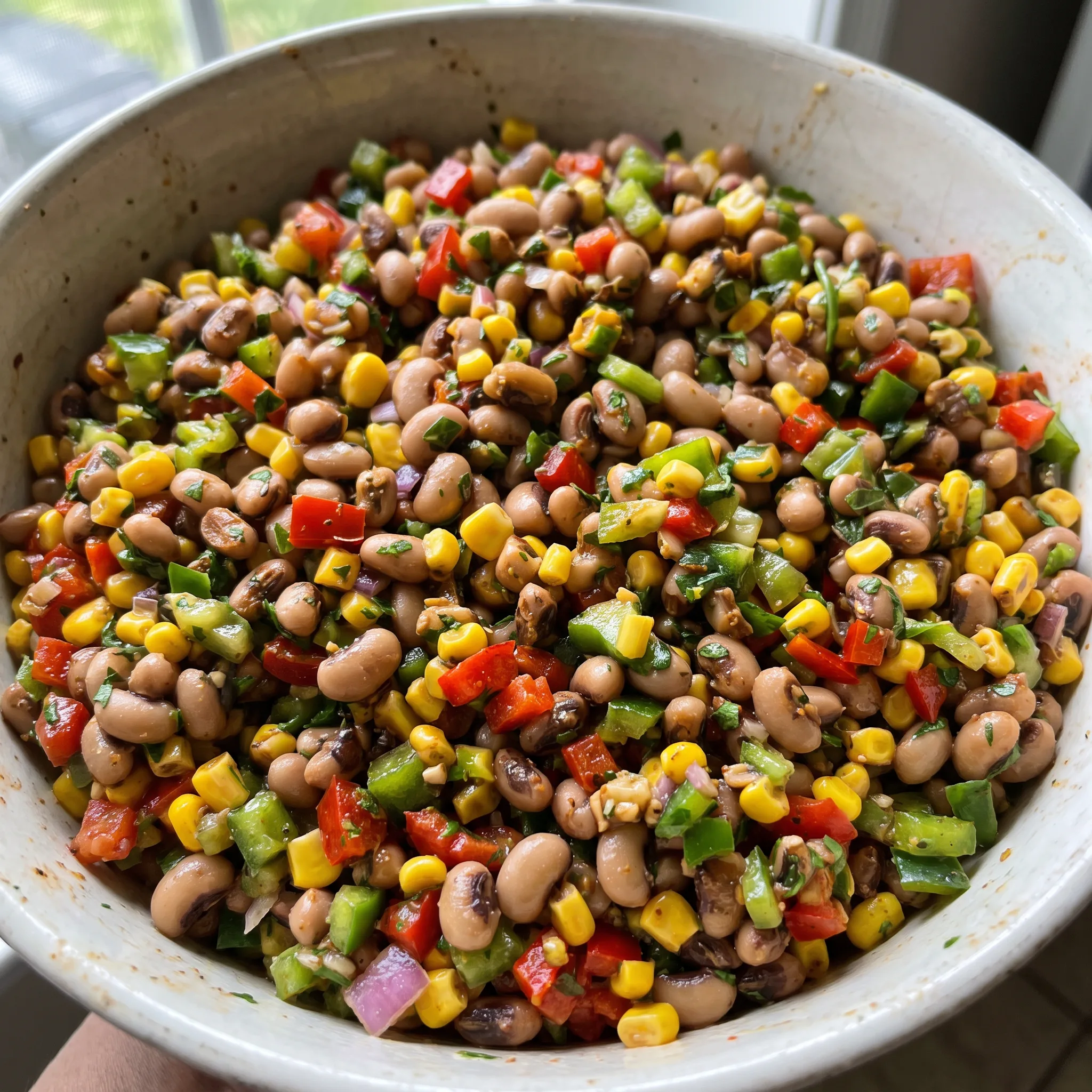
Southern Black-Eyed Pea Salad with Corn and Peppers
Ingredients
Method
- In a large bowl, combine the black-eyed peas, corn, bell peppers, onion, jalapeño, chopped parsley, and Cajun seasoning.
- In a small bowl, combine the olive oil, garlic paste, and vinegar and whisk together until well combined. Pour the olive oil mixture over the black-eyed pea mixture and toss well to fully combine. Give the black-eyed pea salad a taste and season with salt/pepper (or more Cajun seasoning) to personal preference.
- Transfer the black-eyed pea salad to an airtight container and store it in the fridge for at least 30 minutes for the flavors to meld. Always toss the salad before serving as natural separation may occur. Serve as-is, alongside your favorite main entrees, or enjoy as a snack with tortilla chips. Enjoy!
How This Salad Holds and When to Eat It
Best within a day or two. The peas and corn keep drinking the dressing, so by day three they taste stronger but the peppers have gone soft and lost their snap. The parsley darkens and its clean bite fades first.
Keep it in an airtight container in the fridge, and plan on three days max for good texture. Don’t freeze it. The bell peppers and parsley collapse when thawed, and the dressing separates past fixing.
Toss before every serving. Oil and vinegar settle, and you want the dressing back on every piece, not pooled at the bottom. Then taste a spoonful for salt.
Cold dulls seasoning, so what tasted right on day one might need a pinch now. Serve straight from the fridge or let it sit fifteen minutes for a softer chill.
The initial thirty-minute chill is for flavor, not storage; after that, it’s leftovers.
Tips
- Taste a spoonful of the salad right after the first toss, then again after the 30-minute chill before you serve it. The Creole seasoning’s salt and heat bloom as the dressing soaks into the peas and corn, so a salad that tasted balanced at mixing can read flat and slightly spicy once cold. Adjust with a pinch of salt or a splash of white balsamic (start with 1 teaspoon) after the chill, not before.
- If the salad tastes too spicy after chilling, don’t add more peas or corn to dilute it. Stir in 1 to 2 teaspoons of olive oil instead. The fat coats your tongue and mutes the capsaicin from the jalapeño and Creole seasoning without thinning the dressing or watering down the vinegar balance.
Swap the Peas and the Vinegar, Not the Seasoning or the Ratio
Canned black-eyed peas: Cook dried black-eyed peas from scratch, or thaw frozen ones. 5-ounce cans, roughly 3 cups.
Fresh-cooked or frozen peas hold their shape better and taste less tinny, but they also soak up the dressing more slowly. Give the salad an extra 15 minutes in the fridge, or add a splash more vinegar if it tastes flat after the first chill.
White balsamic vinegar: Champagne vinegar or apple cider vinegar, same 2 tablespoons. Champagne vinegar is sharper and cleaner, so the salad tastes brighter but less round. Apple cider vinegar brings a faint sweetness and a bit of cloudiness, which won’t hurt the flavor.
Either way, the dressing will still coat the peas, but you might want a pinch more salt to balance the extra bite.
Creole Cajun seasoning: None. Leave this blend alone. The blend already carries salt, pepper, and heat, and it’s the backbone of the salad’s flavor.
Swapping it for plain Cajun seasoning or a homemade mix with different salt levels will throw off the balance. If you must change it, add the same 1 tablespoon, then taste and adjust salt separately.
Olive oil and white balsamic vinegar: Don’t change the 3-to-2 ratio. Three tablespoons of oil to two of vinegar gives a dressing that clings without pooling. More oil makes the salad greasy and the flavor flat; more vinegar makes it sharp and watery.
Stick to the ratio, and if you want a different acid, swap within the same amount.
After the initial toss the salad looks glossy and evenly dressed, but within minutes the oil and vinegar begin to separate by density, and liquid drawn out of the peppers, onion, and rinsed canned goods adds to the pool at the bottom of the bowl. The visual signal is a clear or cloudy layer of liquid under the salad and a matte, dry-looking surface on the peas and corn; if the salad is left undisturbed until serving, the top portion tastes flat and under-seasoned while the bottom turns sharp and oily, and by then the dressing cannot be redistributed evenly without over-wetting the vegetables.
Frequently Asked Questions
Can I make black-eyed pea salad ahead of time?
Yes, and it’s a better move than mixing it at the last minute. The peas and corn keep drinking the vinegar and Creole seasoning, so by the next day the flavor goes deeper than it does after the initial rest. The trade-off is texture: the bell peppers and parsley soften and the parsley darkens, so a day out is the sweet spot.
Toss it cold from the fridge and taste a spoonful before it goes out, since cold mutes the seasoning and it may want a pinch of salt.
Why is my black-eyed pea salad watery?
Most likely the canned peas and corn went in wet. They’re packed in liquid that tastes flat and metallic, and whatever rides along on them ends up at the bottom of the bowl, thinning the dressing. Drain them, then rinse and shake the colander so no puddle forms before they hit the bowl.
A second check: the peppers and onion, diced fine, release their own water as the salad sits, which is another reason this one eats best within a day or two rather than sitting for a week.
How long does black-eyed pea salad last in the fridge?
Plan on three days, airtight, with the understanding that day three is a different salad. The peas and corn taste stronger because they’ve kept soaking the dressing, but the peppers have lost their snap and the parsley has gone dark and limp.
Keep it out of the freezer; the peppers and parsley collapse on thawing and the dressing won’t come back together. Toss before each serving and taste for salt, because cold dulls what you seasoned on day one.
What makes black-eyed pea salad different from Texas caviar?
Texas caviar is built as a dip, a loose mix of beans, corn, and chopped vegetables in a thin vinaigrette that you scoop with chips. This one leans on Creole seasoning and garlic paste for a seasoned, slightly spicy backbone, and the dressing is meant to cling to each pea rather than pool. The parsley goes in chopped fine so it reads as a herb, not a salad green.
Serve it either way, but the texture here is firmer and the flavor is more savory than tangy.
